

P0403 on 2016-2019 Dodge Charger 3.6L V6: EGR Circuit Malfunction Causes and Fixes
On a 2016-2019 Dodge Charger with the 3.6L V6, code P0403 almost always points to a failed EGR valve assembly (OEM Part #05281256AI). The internal electronics of the valve's solenoid fail, causing a circuit malfunction. The repair requires removing the upper intake manifold for access. Expect to pay $150-$350 for a new valve, with a DIY difficulty of 4/5 due to the intake removal.
- P0403 is an electrical circuit code, not a flow code. The most likely culprit is a failed EGR valve assembly.
- Before buying parts, always inspect the wiring and connector at the EGR valve for obvious damage.
- Replacing the EGR valve on the 3.6L V6 is a significant job for a DIYer because the upper intake manifold must be removed for access.
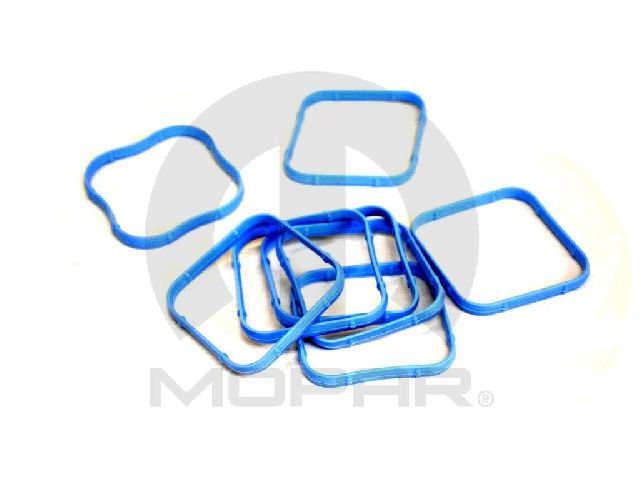
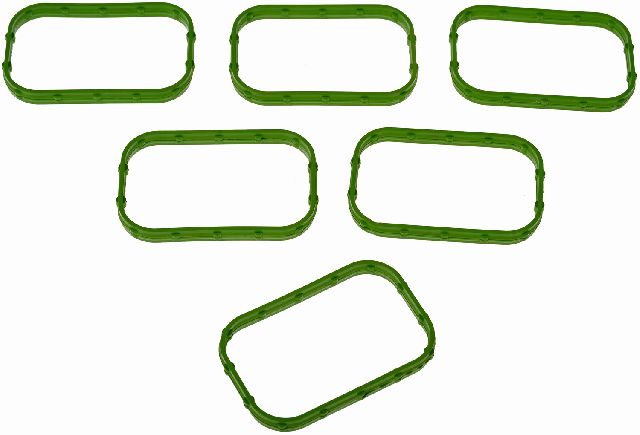
- Always replace the EGR valve gaskets and the upper intake manifold gaskets when performing this repair to avoid exhaust and vacuum leaks.
- Consider using an OEM Mopar part (05281256AI) as some aftermarket EGR valves have high failure rates.
What's Unique About the 2016-2019 Dodge Charger
Unlike earlier Pentastar 3.6L V6 engines (pre-2016) which did not have an external EGR valve, models from 2016 and later were equipped with one. This code is very common on this platform, and the cause is almost always the electronic portion of the EGR valve assembly failing, rather than a simple wiring issue. While a recall for a sticking EGR valve was issued for other 2021 model year vehicles using this same engine family, it highlights a known weakness in the valve design from the supplier, BorgWarner. Accessing the valve is also more involved than on many other vehicles, requiring the removal of the upper intake manifold.
Symptoms You May Notice
- Check Engine Light is on
- Rough or unstable idle
- Engine stalling, especially at low speeds or when stopping
- Reduced engine power and sluggish acceleration
- Failing a vehicle emissions test
- Engine knocking or pinging noises
- Odor of fuel from the exhaust 🎬 Watch: Learn more about bad EGR valve symptoms
- Replacing oxygen sensors or other emissions components without diagnosing the EGR circuit specifically.
- Assuming the code is for a clogged EGR passage and attempting to clean it, when the fault is purely electrical.
- Replacing the EGR valve with a cheap aftermarket part that is dead-on-arrival or fails quickly. Many forum users report issues with non-OEM brands.
Most Likely Causes
- Failed EGR Valve Assembly 🔴 High Probability The internal solenoid or stepper motor within the EGR valve is a known failure point on this platform. Heat and vibration cause the internal windings to develop an open or short circuit. Recalls on similar models with the same engine point to reliability issues with the valve supplier.
How to confirm: After confirming power and ground are present at the EGR connector with a multimeter, the valve's failure to respond to a scan tool command confirms it is faulty. You can also measure the resistance across the solenoid pins; an infinite reading (OL) indicates an open circuit, which is the most common failure mode.
Typical fix: Replace the entire EGR valve assembly (Mopar P/N 05281256AI 🎬 Watch: How to diagnose and replace the valve) and the associated gaskets.
Est. part cost: $150-$350 - Damaged Wiring or Connector 🟡 Medium Probability The wiring harness is located at the back of the engine and can be subjected to heat and vibration, potentially leading to chafing or broken wires over time. The connector pins can also corrode.
How to confirm: Visually inspect the wiring harness and connector for any signs of melting, corrosion, or broken wires. Use a multimeter to check for continuity and proper voltage/ground at the connector. Wiggle the harness while testing to expose intermittent faults.
Typical fix: Repair the damaged section of wiring or replace the connector pigtail.
Est. part cost: $10-$50 - Carbon Buildup Causing Valve to Stick ⚪ Low Probability While P0403 is an electrical code, excessive carbon can cause the valve's pintle to bind, putting stress on the internal motor and causing it to fail electrically. This is less common than a direct electronic failure but can be the root cause.
How to confirm: This is typically discovered upon removing the old valve, where heavy carbon deposits are visible. Cleaning a valve that has already set an electrical fault code is unlikely to be a permanent fix, as the internal motor is likely already damaged.
Typical fix: Replace the EGR valve. Cleaning is not a reliable fix for a P0403 code.
Est. part cost: $150-$350
Rare But Worth Checking
- Faulty Powertrain Control Module (PCM): This is extremely rare. The PCM's internal driver for the EGR circuit can fail. This should only be considered after the EGR valve and all wiring have been thoroughly tested and confirmed to be good.
Diagnosis Steps
- Read the code with an OBD-II scanner to confirm P0403 is present.
- Visually inspect the EGR valve connector and wiring harness for obvious damage, corrosion, or loose connections. The connector is located on the back of the engine, right behind the throttle body on the upper intake manifold.
- With the engine off and ignition on, use a bidirectional scan tool to command the EGR valve open and closed. Listen for a clicking sound from the valve.
- If no sound is heard, disconnect the EGR valve connector. Use a multimeter to check for battery voltage on the power supply wire and for a good ground on the ground wire. A wiring diagram is essential for this step.
- If power and ground are correct, measure the resistance of the EGR solenoid's control circuit pins on the valve itself. Compare the reading to the manufacturer's specification. An open circuit (OL) or a short (near zero ohms) confirms a failed valve.
- If power or ground is missing, inspect the wiring harness for an open or short circuit between the EGR valve and the PCM.
- After replacing the EGR valve, be sure to also replace the metal gaskets to prevent exhaust leaks.
- Clear the code and perform a test drive, including varied speeds and loads, to ensure the repair was successful.
Parts You'll Likely Need
- EGR Valve Assembly
(OEM #05281256AI)— This is the most common failure point for a P0403 code on this specific engine and year range. The internal electronics of the valve fail. This part number supersedes previous versions including 5281256AD, AE, AF, AG, and AH.
Trusted brands: Mopar, BorgWarner (OEM Supplier), Standard Motor Products (SMP)
OEM price range: $190-$290
Aftermarket price range: $150-$220 - EGR Valve Gaskets — The gaskets are one-time use and must be replaced anytime the EGR valve is removed to prevent high-pressure exhaust leaks. The new EGR valve assembly often includes them.
Trusted brands: Mopar, Fel-Pro, Mahle
OEM price range: $10-$20
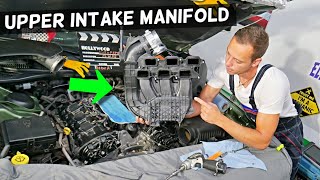
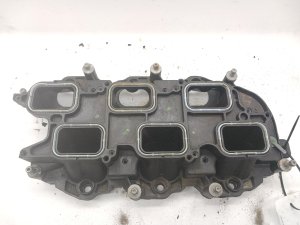
Aftermarket price range: $5-$15 - Upper Intake Manifold Gaskets — Since the upper intake manifold must be removed to access the EGR valve, its gaskets must be replaced to prevent vacuum leaks upon reassembly. 🎬 Watch: Step-by-step upper intake manifold removal guide
Trusted brands: Mopar, Fel-Pro
OEM price range: $20-$40
Aftermarket price range: $15-$30
Related Codes That Often Appear With This One
- P0300-P0306 — If the EGR valve is stuck open, it creates a vacuum leak condition that can lean out the air-fuel mixture and cause random or specific cylinder misfires.
- P0406 — This code indicates "EGR Sensor 'A' Circuit High," which often appears alongside P0403. It points to a problem in the same circuit, reinforcing the diagnosis of a failed EGR valve or wiring issue.
Platform-Specific Known Issues
- Accessing the EGR valve requires removing the entire upper intake manifold, making the job more time-consuming than on other vehicles.
- FCA issued a recall for other 2021 models with the 3.6L engine for EGR valves (from supplier BorgWarner) that could stick open, indicating a known design or manufacturing weakness that may affect these earlier models as well.
- Some owners on forums have successfully replaced the valve themselves, noting the difficulty is primarily the time it takes to remove the intake manifold. A video for a Grand Caravan with the same engine shows the general process.
Mechanic-Grade Diagnostic Values
- EGR Valve Solenoid Resistance — expected: 25-40 ohms (typical, may vary slightly). Failure: An infinite resistance reading (OL) indicates an open circuit, while a near-zero reading indicates a short circuit. Both confirm a failed valve.
- EGR Control Circuit Voltage (at valve connector, KOEO) — expected: Should be near battery voltage when the solenoid is commanded OFF. Should drop to near 0V when the PCM commands it ON (provides ground).. Failure: No voltage when OFF, or voltage that does not drop when commanded ON, points to a wiring issue or a failed PCM driver.
- EGR Position Sensor 5V Reference (at valve connector, KOEO) — expected: Between 4.8 and 5.2 volts.. Failure: No voltage or voltage outside this range indicates a problem with the PCM's 5V reference circuit or a short in the harness.
Scan Tool Commands That Help
- wiTECH or equivalent professional scanner: EGR Valve Solenoid Duty Cycle Actuation / Actuator Test — This is the definitive non-intrusive test. It allows the technician to command the EGR valve's solenoid to open and close while observing circuit voltage and engine response. If the valve does not click or respond to the command, and wiring has been verified as good, it confirms the EGR valve assembly has failed internally.
Wiring & Ground Locations
- EGR Valve Connector — Located on the back of the engine, right behind the throttle body, mounted to the upper intake manifold.. This is the primary point for all electrical testing (power, ground, control signal, and resistance). Corrosion or damage here is a common cause of P0403.
- EGR Connector Pinout (Typical 5/6-pin) — On the EGR valve itself.. A common pinout is: Pin 1 (EGR Signal), Pin 2 (5V Supply), Pin 3 (Sensor Ground), Pin 5 (Chassis Ground), and Pin 6 (EGR Control/Solenoid). Knowing these pin functions is critical for accurate multimeter testing to isolate the fault between the valve, wiring, or PCM. Note: Always verify with a vehicle-specific diagram.
- G104 / G107 (Engine Ground) — Typically found on the right side of the engine block, near the alternator.. While the EGR has a dedicated sensor ground return to the PCM, a poor main engine block ground can cause floating voltages and erratic behavior in multiple sensors and actuators, including the EGR system. It should be checked if other unrelated electrical codes are present.
Real Owner Repair Stories
- Ram 1500 Forums (user with 2014 3.6L Pentastar) (2014 Ram 1500 3.6L V6 (engine introduced EGR in 2016, but user was chasing similar symptoms)) — P2173 (High Airflow/Vacuum Leak) and P0507 (Idle Air Control System RPM Higher Than Expected), which can be caused by a stuck EGR valve.
❌ Tried (didn't work) Initial inspection of hoses and connections.
✅ What actually fixed it The user discovered stripped upper intake manifold bolts from a previous repair, causing a vacuum leak. The final fix was replacing the lower intake manifold (to repair the stripped threads) and all fuel injector O-rings, which had become worn. This highlights the importance of checking for vacuum leaks from the intake manifold, a necessary step for the P0403 EGR valve replacement. - NHTSA ODI #11701888 (Dodge Grand Caravan — same make) — An owner reported being informed that their vehicle was missing the Exhaust Gas Recirculation (EGR) valve after being provided with DTCs P0403 and P0404. The issue was eventually resolved in 2019 when an EGR valve was installed at a tire business.
OEM Part Supersession History
5281256AD, 5281256AE, 5281256AF, 5281256AG, 5281256AH→05281256AI— Standard part evolution to improve reliability and address failure modes in earlier designs.
Heads up: All previous part numbers are replaced by 05281256AI. Using the latest version is highly recommended for longevity.
Model Year Variations Within This Range
- Pre-2016: Most 3.6L Pentastar engines before the 2016 model year did not use an external EGR valve and relied solely on variable valve timing (VVT) for emissions control. Therefore, code P0403 is not applicable to most 2011-2015 models with this engine.
Diagnostic Flowchart
Other Known Issues on This Vehicle
Issues unrelated to this code that are worth knowing about as an owner of this generation:
- Cracked Oil Filter Housing/Cooler Assembly 🔴 High — Very common, typically occurs between 60,000-100,000 miles. Can cause severe oil and/or coolant leaks. (Ref: No recall, but TSBs exist discussing diagnosis and advising against unnecessary replacement for minor leaks. Many owners upgrade to an aftermarket aluminum housing.)
- Rocker Arm / Lifter Failure ('Pentastar Tick') 🔴 High — Common, especially on earlier (pre-2016) models but still occurs. Presents as a distinct ticking sound from the valve cover. Can lead to camshaft damage if ignored. (Ref: A class-action lawsuit was filed regarding this issue, but no official recall was issued by FCA. FCA released service bulletins in 2014 and updated the part multiple times.)
- Cylinder Head Failure (Left Bank) 🟠 Medium — More common on 2011-2013 models but can still happen. Caused by overheating valve seats, leading to misfires (often P0302). FCA extended the warranty for this specific issue on earlier models. (Ref: Extended warranty for early models, not a formal recall for the 2016-2019 range.)
- Cooling System Component Failures 🟠 Medium — Water pumps and radiators can fail, leading to overheating. Not as frequent as the oil cooler leak but a known weak point.
- Sluggish Throttle Response / Shifting Issues 🟡 Low — Owners report the transmission's adaptive learning can lead to a sluggish feeling over time. A throttle calibration procedure can often resolve this without any parts.
- Active Exhaust Valve Failure (HEMI models) 🟠 Medium — While not applicable to the V6, it's a very common issue on V8 Chargers. The valve actuator fails, causing a rattling noise and error codes (U113F, U1140). Requires an OEM replacement due to LIN bus communication.
Used vs. New Parts: Buying Guide for This Vehicle
When a used part is the smart pick: For this specific repair, buying a used EGR valve is NOT recommended. The part is a known high-failure item due to internal electronics failing from heat and vibration. A used part from a junkyard has an unknown history and is highly likely to fail soon after installation, wasting significant labor costs due to the required intake manifold removal.
What to inspect on the donor part:
- Not applicable, avoid used parts for this repair.
OEM-only on this vehicle (don't cheap out):
- EGR Valve Assembly
Aftermarket brands forum-validated for this vehicle:
- Standard Motor Products (SMP)
- BorgWarner (often the OEM supplier)
Brands owners have reported issues with on this vehicle:
- Unbranded, 'white-box' parts from online marketplaces are frequently reported on forums as being dead-on-arrival or failing within a few months. Given the labor involved, sticking to OEM or a reputable aftermarket brand is critical.
Real Owner Stories
Aggregated from forums and TSBs cited above. Mileages and costs reflect what owners reported in those sources.
2007 Dodge Charger
Symptoms: The vehicle was throwing both P0403 and P0406 codes simultaneously.
What fixed it: Replacing the EGR valve resolved both circuit-related codes.
Source hint: dodgeforum.com
2016-2019 Dodge Charger 3.6L V6
Symptoms: Check engine light with P0403; owner noted the difficulty of the repair was mainly the time required to pull the intake manifold.
What fixed it: DIY replacement of the EGR valve after removing the upper intake manifold.
Source hint: vehicle_specific_issues
Related OBD-II Codes
Frequently Asked Questions
Where is the EGR valve located on my 2016-2019 Dodge Charger 3.6L?
Can I just clean the EGR valve to fix a P0403 code on my Pentastar V6?
Is there a specific part number I should use for the replacement EGR valve?
Why is the labor for this repair more expensive than on other cars?
Has there been a recall for the EGR valve on the 3.6L Pentastar engine?
What are the common failure modes for the EGR valve on this platform?
Helpful Videos
Used OEM Parts in Stock


New Aftermarket Parts Available


The information in this article is provided for general reference and educational purposes only. Vehicle specifications, procedures, and part compatibility can vary by production date, trim level, and region. Always consult your vehicle's factory service manual and verify part numbers before purchasing or performing repairs. Safety-critical components such as airbags, seat belts, and braking systems should be installed by a qualified professional.
- Dodge Charger:
- 🎬 Helpful Videos
- 🛍️ Shop This Part
- What's Unique About the 2016-2019 Dodge Charger
- Symptoms You May Notice
- Most Likely Causes
- Rare But Worth Checking
- Diagnosis Steps
- Parts You'll Likely Need
- Related Codes That Often Appear With This One
- Platform-Specific Known Issues
- Mechanic-Grade Diagnostic Values
- Scan Tool Commands That Help
- Wiring & Ground Locations
- Real Owner Repair Stories
- OEM Part Supersession History
- Model Year Variations Within This Range
- Diagnostic Flowchart
- Other Known Issues on This Vehicle
- Used vs. New Parts: Buying Guide for This Vehicle
- Real Owner Stories
- 2007 Dodge Charger
- 2016-2019 Dodge Charger 3.6L V6
- Related OBD-II Codes
- Frequently Asked Questions
- 🎟️ Get 5% Off