

P0402 on 2011-2018 Audi A6: EGR Excessive Flow Causes & Fixes (TDI Focus)
On the 2011-2018 Audi A6, the P0402 code almost exclusively affects the 3.0L TDI diesel engine. The most common cause is the EGR valve sticking open due to heavy carbon buildup, preventing it from closing at idle. Cleaning may work temporarily, but replacement of the EGR valve (OEM part numbers vary, e.g., 059131501H) is often required for a permanent fix. Expect costs of $200-$450 for the part from brands like Pierburg or Bosch. This issue is also common on platform mates like the Audi Q7, VW T
- This code is almost always an issue with the 3.0L V6 TDI (diesel) engine, not the TFSI (gasoline).
- The most likely cause is the EGR valve being stuck partially open due to heavy carbon buildup.
- Cleaning the EGR valve is a possible fix, but if the valve's motor is weak or the buildup is severe, replacement is the only long-term solution.
- Always use new gaskets when removing and reinstalling the EGR valve.
- If you own a 2014 model, check with an Audi dealer about Service Action 26L9 regarding the EGR cooler.
What's Unique About the 2011-2018 Audi A6

This code is highly specific to the 3.0L V6 TDI engine due to its complex emissions system and the nature of diesel exhaust, which produces significant soot and carbon. The EGR valve and cooler are prone to clogging and sticking, which is the root cause of this code in the vast majority of cases. In contrast, the 3.0L V6 TFSI (gasoline) engine does not have a traditional EGR system in the same way; it uses variable valve timing to achieve a similar effect for emissions control. While some secondary air system components on the TFSI are sometimes misidentified as EGR valves, a P0402 code is not a common or well-documented issue for the gasoline engine. Therefore, this guide focuses on the TDI model, where this fault is prevalent.
Symptoms You May Notice
- Check Engine Light is on
- Rough or surging idle, especially when the engine is warm
- Engine hesitation or stumbling on acceleration
- Stalling at low speeds or when coming to a stop
- Reduced fuel economy
- Noticeable black smoke from the exhaust under acceleration
- Engine running rough with reduced power output
- Replacing the Mass Airflow (MAF) sensor. While EGR flow affects the air mass going into the engine, the MAF sensor itself is rarely the cause of a P0402 code, unless its connecting hose is disconnected.
- Replacing oxygen sensors. A P0402 is an EGR system-specific code; while excessive EGR can affect exhaust readings, the O2 sensors are reporting a condition, not causing it.
Most Likely Causes

- EGR Valve Stuck Open (Carbon Buildup) 🔴 High Probability The 3.0L TDI engine produces significant soot, which accumulates on the EGR valve's pintle and seat, preventing it from closing completely. This allows exhaust gas to flow into the intake at all times, especially at idle when it should be fully shut.
How to confirm: With the engine off, remove the EGR valve and visually inspect it for heavy carbon deposits that would prevent the valve from seating. A scan tool like VCDS can also command the EGR valve position and compare it to the actual position sensor reading, often showing it's not closing to 0%.
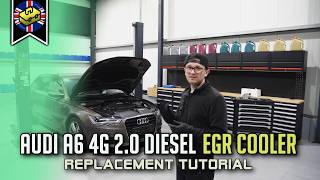
Typical fix: In many cases, the valve can be removed and cleaned with a dedicated EGR/carb cleaner and a brush. Soaking the valve for several hours can help break down hardened deposits. However, if the valve's internal motor has failed or the buildup is too severe, replacement is necessary. A YouTube video provides a visual guide for the replacement process on the C7 3.0 TDI.
Est. part cost: $200 - $450 - Clogged or Leaking EGR Cooler 🟡 Medium Probability The EGR cooler, which sits before the valve, can also become clogged with carbon. While this typically causes insufficient flow (P0401), internal leaks or partial blockages can create abnormal pressure readings that might contribute to a P0402 code. An internal coolant leak in the cooler can also cause white smoke from the exhaust.
How to confirm: Inspect the EGR cooler passages for heavy soot accumulation during EGR valve service. A forum post on Audi-Forums shows a user documenting the process of cleaning the cooler, which can be very labor-intensive. A leak may be harder to detect and could involve pressure testing the cooler or observing a gradual loss of coolant with no external signs.
Typical fix: The cooler can sometimes be cleaned, but this is a difficult process. More often, if it's internally leaking or severely clogged, it is replaced. Audi issued a service action (26L9) for some 2014 models where an incorrect EGR cooler may have been installed during a prior service, which could be related to emissions compliance issues.
Est. part cost: $400 - $600 - Faulty EGR Position Sensor or Motor ⚪ Low Probability The electric motor that actuates the EGR valve or the integrated sensor that reports its position to the ECM can fail. The sensor may send incorrect data, making the ECM believe the flow is excessive when it isn't, or the motor may fail to close the valve fully.
How to confirm: Use a diagnostic scan tool (like VCDS) to monitor the 'commanded' vs. 'actual' EGR position. If the actual value is erratic, does not change when commanded, or shows a value greater than 0% at idle, the sensor/motor unit is likely faulty.
Typical fix: The sensor and motor are typically integrated into the EGR valve assembly. The entire EGR valve must be replaced.
Est. part cost: $200 - $450
Rare But Worth Checking
- Faulty Differential Pressure Sensor: Some EGR systems use a differential pressure sensor to measure flow. If this sensor provides incorrect readings to the ECM, it could falsely trigger a P0402 code. This is less common than a stuck valve but worth considering if a new valve doesn't fix the issue.
- Disconnected MAF Sensor Hose: In one documented case on an Audi Q7 with the same 3.0 TDI engine, a P0402 code was triggered because the large intake hose after the Mass Airflow (MAF) sensor was not reconnected properly after service. This created a massive air leak, confusing the engine management system and leading to EGR and boost pressure faults.
Diagnosis Steps
- Read the fault codes with an OBD-II scanner to confirm P0402 is the primary code. Note any other codes like P0401, P242F, or P0299.
- Using a capable scan tool (like VCDS), monitor the EGR valve commanded vs. actual position while the engine is idling. At idle, the valve should be commanded closed (0% duty cycle). If the actual position is greater than 0% or the duty cycle is high, it indicates a problem.
- Perform a visual inspection of the engine bay. Ensure all intake hoses, especially the large hose between the air filter box/MAF sensor and the engine, are securely connected.
- Turn off the engine and allow it to cool completely.
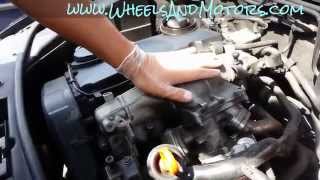
- Locate the EGR valve, typically at the top rear of the engine, near the EGR cooler. A YouTube guide shows its location and removal process.
- Disconnect the electrical connector and remove the bolts holding the EGR valve to the intake manifold and the EGR cooler pipe.
- Visually inspect the valve and intake port for heavy carbon buildup. If the valve is visibly caked with soot and not fully closed, this is the likely cause.
- Attempt to clean the EGR valve and the mounting surfaces thoroughly using EGR cleaner and brushes. Ensure the valve moves freely after cleaning.
- If cleaning is not possible or the valve's motor/actuator is confirmed to be faulty, replace the EGR valve with a new unit, using new gaskets.
- Reassemble all components, clear the fault codes, and perform a test drive. Use the scan tool to run an EGR system test or adaptation if available.
- If the code returns, further investigation of the EGR cooler for blockages, the differential pressure sensor, or wiring may be needed.
Parts You'll Likely Need

- EGR Valve
(OEM #059131501H (example, varies by engine code like CLAB, CGQB, CZVB).)— This is the most common failure point. The valve gets stuck open due to carbon buildup, directly causing the 'excessive flow' condition.
Trusted brands: Pierburg, VDO, Valeo, Bosch, MAHLE
OEM price range: $350-$500
Aftermarket price range: $150-$450 - EGR Valve Gasket Kit — New gaskets are required anytime the EGR valve is removed to prevent exhaust and coolant leaks. Most new EGR valves come with them.
Trusted brands: Victor Reinz, Elring
OEM price range: $20-$40
Aftermarket price range: $10-$25
Related Codes That Often Appear With This One
- P0401 — P0401 (Insufficient EGR Flow) can appear intermittently if the EGR valve is sticking, sometimes not opening enough and other times not closing enough. A user on CarKiller.com reported both codes simultaneously.
- P242F — P242F (Diesel Particulate Filter Restriction) can occur alongside EGR faults, as issues in the emissions system can impact each other. A forum post showed a 3.0 TDI with both P0402 and P242F codes.
- P0299 — P0299 (Turbo/Supercharger Underboost) can appear with P0402, especially if there is a major leak in the intake system, such as a disconnected MAF sensor hose, which affects both boost pressure and EGR calculations.
- P0403 — P0403 (EGR Control Circuit Malfunction) may appear alongside P0402 if there is an electrical fault in the valve's motor or wiring, causing it to stick open.
Technical Service Bulletins (TSBs) & Recalls
- 26L9 - Emissions Service Action: Subject: Exhaust Gas Recirculation (EGR) Cooler. Affects certain 2014 3.0L TDI vehicles and involves inspecting and, if necessary, replacing the EGR cooler due to a parts catalog error.
Platform-Specific Known Issues
- Emissions Service Action 26L9: Audi issued a service campaign for some 2014 3.0L TDI models (A6, A7, A8, Q5) because an incorrect EGR cooler may have been installed during a previous service visit. An authorized dealer can check if a vehicle qualifies for inspection and replacement, which is performed free of charge.
Mechanic-Grade Diagnostic Values
- EGR Valve Solenoid Resistance — expected: Generally in the region of 4-12 ohms between the coil terminals.. Failure: A reading of 0 ohms (short circuit) or infinite/very high resistance (open circuit) indicates a failed solenoid coil.
- VCDS EGR Adaptation - MAF Reading at Idle — expected: With EGR correction set to 0 mg/stroke, a typical MAF reading is around 250-300 mg/stroke. With maximum correction (50 mg/stroke), the MAF reading should increase to ~370 mg/stroke as less exhaust gas is displacing fresh air.. Failure: If adjusting the EGR correction value in VCDS does not produce a corresponding change in the MAF reading, it indicates the valve is not responding to commands.
- VCDS EGR Valve Duty Cycle at Idle — expected: With 0 mg/stroke correction, the duty cycle should be around 8-15%. With 50 mg/stroke correction, the duty cycle should reduce to ~1.5% as the valve is commanded to open less.. Failure: A duty cycle that is stuck high at idle, or does not respond to adaptation changes, points to a stuck or faulty valve.
Scan Tool Commands That Help

- VCDS (VAG-COM): Engine -> Output Tests -> EGR Valve (N18) — This function allows you to manually cycle the EGR valve to check for mechanical movement. You can visually inspect the valve (if partially removed but still connected) to see if it opens and closes on command, helping to determine if it's mechanically stuck or electrically dead.
- VCDS (VAG-COM): Engine -> Adaptation -> Channel 074 (on some ECUs) — This is used to perform a basic setting/adaptation of the EGR valve after replacement. The screen will show min/max voltage positions and an adaptation status, which should change to 'ADP OK' after running. This is required for the ECU to learn the new valve's position endpoints.
- VCDS (VAG-COM): Engine -> Login (Code 12233) -> Adaptation -> EGR Correction — On some TDI engines, this allows for adjusting the amount of EGR flow. A user can input a value (e.g., up to 50 mg/stroke) to command the ECU to reduce EGR flow, which can be a temporary diagnostic step to see if symptoms improve with less EGR. Note: Some forum users report this does not work on all C7 engine controllers.
Wiring & Ground Locations
- EGR Valve Connector (E-15) — On the EGR valve body, located at the top rear of the 3.0L TDI engine.. This 8-pin connector provides power and sends position signals. A loose or corroded connection here can cause P0402 or P0403. Pin 1 is 5V reference, Pin 5 is low reference/ground, and Pins 2,3,4 are for the position sensor signal. Testing for correct voltage and signal at these pins can diagnose a wiring or sensor fault without removing the valve.
- Engine Ground Point (12) — In the engine compartment on the left side (driver's side for LHD).. A poor engine ground can cause erratic behavior in various sensors, including the EGR position sensor, leading to incorrect readings and fault codes. Ensuring this ground strap is clean and tight is a crucial step in diagnosing electrical faults.
- Engine Ground Point (13) — In the engine compartment on the right side (passenger's side for LHD), near the alternator.. Similar to the left-side ground, this point is critical for the proper function of engine electronics. A Reddit user identified this as a key grounding point when troubleshooting electrical issues on a C7 A6.
- Ignition Coil Ground (306) — Located in the engine pre-wiring harness, providing ground for the ignition coils.. While not directly for the EGR, issues with shared grounds in the engine harness can sometimes cause unpredictable sensor readings across multiple systems. A user on Reddit noted that a faulty ground connection for the ignition coils was causing wider electrical issues.
Real Owner Repair Stories
- Audi Owners Club (UK) forum user (2010 Audi A6 Allroad 3.0 TDI (C6 platform, but same engine family and issue)) — Check engine light with a P0401 (Insufficient Flow) code, which later became intermittent.
❌ Tried (didn't work) Removed and cleaned the EGR valve and all associated piping., Replaced the EGR valve with a new unit., Performed an 'auto electrician reset' (likely clearing adaptations).
✅ What actually fixed it The owner eventually got so fed up with the recurring light that they had the EGR system 'deleted' via a software remap of the ECU. This permanently prevented the code from returning. - MHH Auto forum user (2018 Audi A6 C7 2.0 TDI (Different displacement but same platform and code)) — Persistent P0402 code.
❌ Tried (didn't work) Replaced both EGR valves (on models with high and low pressure EGR)., Replaced the EGR cooler., Replaced the MAF sensor., Performed relearns with VCDS., Performed a smoke test, which showed no leaks.
✅ What actually fixed it Another technician suggested the root cause was a clogged intake manifold, which was preventing air from flowing correctly and disrupting the pressure balance the ECU expected, leading to the excessive flow calculation. The final fix was cleaning the intake manifold.
"I Checked Everything" — The Actual Cause
- In one documented case on a 2018 A6 TDI, a persistent P0402 code remained even after replacing the EGR valves, cooler, and MAF sensor, with a smoke test showing no leaks. The actual cause was found to be a heavily clogged intake manifold, which altered air/exhaust pressures and tricked the ECU into calculating excessive EGR flow.
Model Year Variations Within This Range
- 2011-2018 (All C7 TDI): The specific 3.0L TDI engine code (e.g., CGQB, CLAB, CZVA, CRTF) can determine the exact OEM part number for the EGR valve. While functionally similar, there may be minor revisions. For example, the EGR for a 313hp 'CGQB' engine may differ from a 218hp 'CZVB' engine. Always verify the part number with the vehicle's VIN.
- Approx. 2014 onwards: Later C7 models may use a different control logic for EGR adaptation in VCDS. The older method of adjusting flow via Login code 12233 and Adaptation may not be available or effective, requiring only a basic setting or output test to diagnose.
Diagnostic Flowchart
Other Known Issues on This Vehicle
Issues unrelated to this code that are worth knowing about as an owner of this generation:
- 3.0T TFSI Timing Chain Tensioner Rattle 🟠 Medium — Common on 2011-2015 models, especially noticeable as a 1-3 second rattle on cold starts. Can occur from 60,000 miles onwards. (Ref: Audi TSB 2039995/1 (or later revisions) addresses the noise but states it does not cause damage. Lawsuits have been filed over this issue.)
- S-Tronic (DL501) Mechatronic Failure 🔴 High — Can occur at various mileages, sometimes even below 80,000 miles. Symptoms include jerky shifting, gearbox overheating warnings, getting stuck in gear, or total loss of drive.
- 3.0T TFSI Water Pump & Thermostat Leaks 🟠 Medium — Coolant leaks are common, often originating from the plastic water pump or thermostat housing located under the supercharger. Typically occurs after 60,000-100,000 miles.
- 3.0 TDI Diesel Particulate Filter (DPF) Clogging 🟠 Medium — Common for vehicles used primarily for short trips, preventing the DPF from reaching temperature for active regeneration. Leads to warning lights and 'limp mode'.
- Carbon Buildup on Intake Valves (TFSI) 🟠 Medium — A characteristic of all direct-injection engines, including the 3.0T TFSI. Causes misfires, rough idle, and hesitation, usually becoming noticeable after 60,000 miles. Requires walnut blasting to clean.
Used vs. New Parts: Buying Guide for This Vehicle
When a used part is the smart pick: For this specific P0402 issue on a TDI engine, buying a used EGR valve or EGR cooler is strongly discouraged. The primary failure mode is internal clogging and sticking from carbon soot, a condition that is directly related to age and mileage. A used part is highly likely to have the same or impending issues.
Donor-vehicle mileage cap: roughly under 15000 miles for the part to have meaningful remaining life.
What to inspect on the donor part:
- If considering a used part against advice, demand to see inside the passages.
- Look for any signs of heavy, thick carbon buildup. A light coating of dry soot is normal, but thick, oily, or chunky deposits indicate a part near the end of its life.
- Check the valve pintle for free movement (if possible).
- For EGR coolers, look for any signs of coolant residue (white or pink crust) in the exhaust passages, which indicates an internal leak.
Aftermarket brands forum-validated for this vehicle:
- Pierburg (often the Original Equipment Manufacturer)
- Bosch
- Valeo
- MAHLE
- VDO
Brands owners have reported issues with on this vehicle:
- Unbranded, no-name parts from online marketplaces. For a critical emissions component deeply integrated into engine management, the risk of premature failure, incorrect sensor readings, or poor fitment is very high and can cause persistent codes and drivability issues.
Real Owner Stories
Aggregated from forums and TSBs cited above. Mileages and costs reflect what owners reported in those sources.
2015 Audi Q7 3.0L TDI
Symptoms: Check engine light triggered with P0402, DPF, and boost-related codes immediately after performing maintenance.
What fixed it: Reconnecting the MAF sensor hose that was left disconnected after an air filter change.
Source hint: AudiWorld Forums, 'Help: 2015 TDI P0402, EGR, DPF, Boost prob'
2014 Audi A6 3.0L TDI
Symptoms: Potential emissions compliance issues or incorrect EGR cooler performance.
What fixed it: Inspection and replacement of the EGR cooler by an authorized dealer under Service Action 26L9.
Source hint: 26L9 - Emissions Service Action
2013-2016 Porsche Cayenne Diesel 3.0L V6
Symptoms: Check engine light (CEL) for EGR flow issues occurring immediately after vehicle purchase.
What fixed it: Cleaning or replacement of the EGR valve (identical to the Audi 3.0L TDI system).
Source hint: Rennlist, 'Cayenne 3.0 diesel CEL (EGR)'
Related OBD-II Codes
Frequently Asked Questions
Does the Emissions Service Action 26L9 apply to my 2014 Audi A6 3.0L TDI?
Can I clean the EGR valve on my 3.0L TDI instead of paying for a $450 replacement?
I just changed my air filter and now I have a P0402 code. Is the EGR valve already bad?
Why is my Audi A6 3.0L TDI stalling when I come to a stop?
Is the EGR cooler failure on the A6 TDI related to the white smoke from my exhaust?
How can I use VCDS to confirm if my EGR valve is failing?
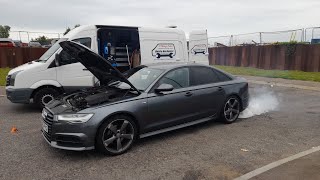
Helpful Videos
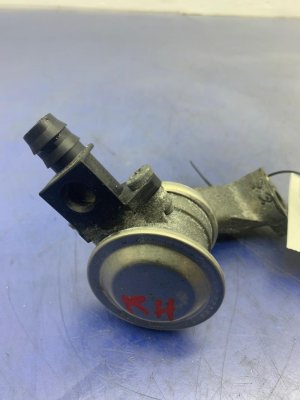
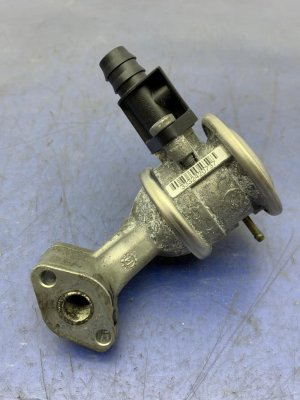
We Have This Part in Stock

The information in this article is provided for general reference and educational purposes only. Vehicle specifications, procedures, and part compatibility can vary by production date, trim level, and region. Always consult your vehicle's factory service manual and verify part numbers before purchasing or performing repairs. Safety-critical components such as airbags, seat belts, and braking systems should be installed by a qualified professional.
- Audi A6:
- 🎬 Helpful Videos
- 🛍️ Shop This Part
- What's Unique About the 2011-2018 Audi A6
- Symptoms You May Notice
- Most Likely Causes
- Rare But Worth Checking
- Diagnosis Steps
- Parts You'll Likely Need
- Related Codes That Often Appear With This One
- Technical Service Bulletins (TSBs) & Recalls
- Platform-Specific Known Issues
- Mechanic-Grade Diagnostic Values
- Scan Tool Commands That Help
- Wiring & Ground Locations
- Real Owner Repair Stories
- "I Checked Everything" — The Actual Cause
- Model Year Variations Within This Range
- Diagnostic Flowchart
- Other Known Issues on This Vehicle
- Used vs. New Parts: Buying Guide for This Vehicle
- Real Owner Stories
- 2015 Audi Q7 3.0L TDI
- 2014 Audi A6 3.0L TDI
- 2013-2016 Porsche Cayenne Diesel 3.0L V6
- Related OBD-II Codes
- Frequently Asked Questions
- 🎟️ Get 5% Off