

P0390 on 2011-2017 Dodge Durango 3.6L: Camshaft Sensor Causes and Fixes
On a 3.6L Durango, code P0390 is most often caused by either a faulty driver's side camshaft position sensor or the need for a powertrain software update. Before replacing parts, check with a dealer for TSB 18-049-20, as a simple reflash may solve the problem. If not, a new sensor costs about $40-$100. Also, inspect the sensor connector for oil contamination, a common issue from a leaking oil cooler housing.
- First, check if your Durango needs a software update per TSB 18-049-20, as this can fix the code without replacing any parts.
- The most likely failed part is the driver's side (Bank 2) camshaft position sensor. A good way to confirm this is to swap it with the passenger side sensor and see if the code follows it (changing to P0365).
- Before replacing the sensor, inspect its electrical connector for engine oil. A very common oil leak from the oil cooler housing can cause this code, and the leak must be fixed to solve the problem long-term.
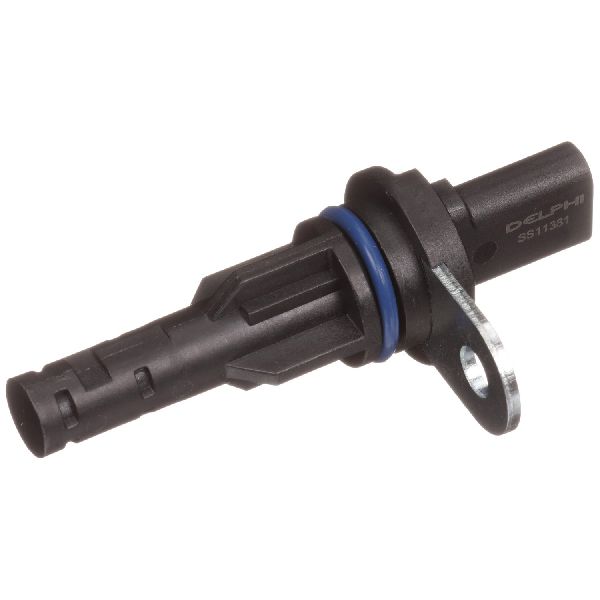
- Use a quality OEM (Mopar) or reputable aftermarket (NTK, Delphi) sensor, as cheap sensors are known to be unreliable.
What's Unique About the 2011-2017 Dodge Durango
For this specific Durango, particularly 2016-2017 models, a P0390 code is frequently a software issue, not a hardware failure. Chrysler issued Technical Service Bulletin (TSB) 18-049-20 because the PCM's original software was too sensitive and could trigger the check engine light for a minor, temporary signal glitch. The official fix is a software update that changes the fault logic from a one-trip to a two-trip fault, making it less sensitive. Additionally, the 3.6L Pentastar engine is widely known for oil leaks from the oil filter/cooler housing assembly, which can saturate the Bank 2 sensor connector and cause this code.
Symptoms You May Notice
- Check Engine Light is on
- Engine is hard to start or will not start
- Engine stalling, especially when coming to a stop
- Rough idling
- Reduced engine power and poor acceleration
- Decreased fuel economy
- Remote start feature is disabled
- Replacing the camshaft position sensor without first checking for the PCM software update (TSB 18-049-20), especially on 2016-2017 models.
- Replacing the sensor without checking for oil contamination from a leaking oil cooler housing. The new sensor will soon fail or the code will return if the underlying leak is not fixed.
- Using cheap, low-quality aftermarket sensors, which are known to be unreliable and may not resolve the code or fail prematurely.
Most Likely Causes
- Outdated Powertrain Control Module (PCM) Software 🔴 High Probability FCA released TSB 18-049-20 (which supersedes 18-024-17) because the original software was too sensitive to minor sensor signal interruptions, especially on 2016-2017 models.
How to confirm: Contact a Dodge dealership or a qualified shop with a wiTECH scan tool to check if your vehicle's VIN has had the TSB performed. They can check the software calibration level against the one specified in the bulletin.
Typical fix: Reprogramming ('flashing') the PCM with the latest software. This changes the code from a one-trip to a two-trip fault, making it less likely to trigger from a momentary glitch.
Est. part cost: $0 (if under warranty) or typically one hour of labor cost ($100-$200) - Failed Camshaft Position Sensor (Bank 2) 🔴 High Probability The sensor is located in a high-heat area on the back of the driver's side cylinder head, near the firewall. Heat cycles and potential oil contamination can cause it to fail over time.
How to confirm: Swap the Bank 2 (driver's side) sensor with the Bank 1 (passenger's side) sensor. They are identical parts. Clear the codes and drive. If the code changes to P0365 (Camshaft Position Sensor 'B' Circuit - Bank 1), the original sensor is faulty.
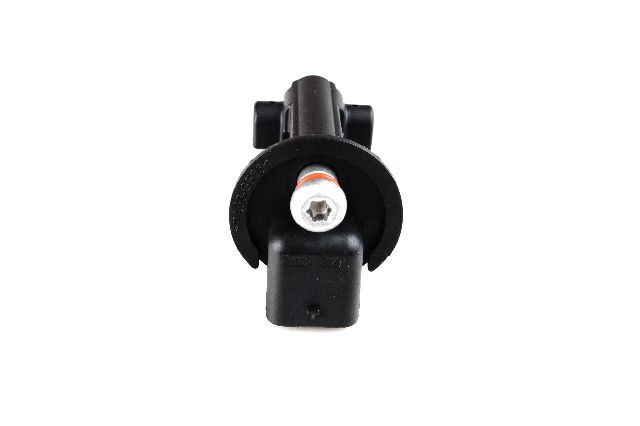
Typical fix: Replace the Bank 2 camshaft position sensor. It is held in by a single 10mm bolt, though access can be tight. Using an OEM Mopar sensor is highly recommended for reliability.
Est. part cost: $30-$100 - Oil Contamination of Sensor Connector 🟡 Medium Probability The 3.6L Pentastar engine is notorious for a leaking oil filter/cooler housing, which sits in the 'V' of the engine. When it leaks, oil runs down the back of the engine and can saturate the Bank 2 camshaft sensor connector, causing a poor connection.
How to confirm: Visually inspect the sensor connector on the driver's side cylinder head. If it is wet with engine oil, the oil cooler housing is the likely source of the leak.
Typical fix: The primary fix is to replace the leaking oil filter/cooler housing assembly. After the leak is repaired, clean the electrical connector thoroughly with electrical contact cleaner. If the connector or sensor is heavily saturated, it should be replaced.
Est. part cost: $150-$300 for the oil cooler assembly - Damaged Wiring or Poor Connection ⚪ Low Probability The harness can be damaged during other repairs or chafe against engine components over time.
How to confirm: Visually inspect the wiring harness leading to the Bank 2 sensor for any signs of chafing, melting, or breaks. Unplug the connector and check for bent, corroded, or pushed-out pins.
Typical fix: Repair the damaged section of the wiring harness or replace the connector pigtail.
Est. part cost: $15-$50
Rare But Worth Checking
- Internal Engine Mechanical Issues: A stretched timing chain or a failing camshaft phaser can cause the camshaft's position to be out of sync with the crankshaft, triggering this code. This is usually a higher-mileage issue and is often accompanied by other codes like P0019 (Crank-Cam Correlation).
- Missing Oil Gallery Plug: In some documented cases on the 3.6L engine, a small oil gallery plug located under the driver's side valve cover can become loose or fall out entirely. This causes a significant loss of oil pressure to the cam phasers on Bank 2, leading to persistent P0390/P0394 codes even after sensor and wiring checks.
- Powertrain Control Module (PCM) Failure: While extremely rare, the PCM itself can fail. This should only be considered after all other possibilities, including wiring and mechanical faults, have been exhaustively ruled out by a professional.
Diagnosis Steps
- Check for TSBs: Contact a Dodge dealer or use a professional scan tool to see if TSB 18-049-20 is open for your VIN, particularly for 2016-2017 models. If so, performing the PCM update is the first and most likely fix.
- Check Engine Oil: Ensure the engine oil is full and at the correct viscosity. Low or dirty oil can affect the VVT system and trigger timing-related codes.
- Inspect the Sensor and Connector: Locate the camshaft position sensor on the rear of the driver's side (Bank 2) cylinder head, near the firewall. Unplug the connector and inspect it and the sensor for engine oil contamination. If oil is present, the oil filter/cooler housing is the root cause and must be repaired.
- Inspect Wiring: Check the wiring harness leading to the sensor for any visible damage, such as melting, chafing against other components, or loose connections.
- Swap Sensors (if no TSB or oil leak is found): Swap the driver's side (Bank 2) sensor with the passenger's side (Bank 1) sensor. They are identical parts (Mopar P/N 5149141AF). Clear the codes with a scanner and drive the vehicle.
- Re-scan for Codes: If the code returns as P0390, the problem is in the wiring or PCM. If a new code, P0365 (Bank 1, Sensor 'B'), appears, the sensor you moved is faulty and needs to be replaced.
- Test the Circuit: If P0390 returns after the swap, use a multimeter to check for a 5-volt reference, a good ground, and a signal at the sensor connector to rule out a wiring issue before suspecting a deeper mechanical problem or a faulty PCM.
- Advanced Mechanical Check: If all else fails, the issue could be mechanical. This involves removing the valve cover to inspect for issues like a loose oil gallery plug, a failed cam phaser, or timing chain problems, which typically requires professional diagnosis.
Parts You'll Likely Need
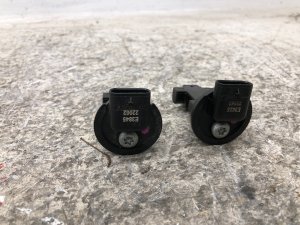
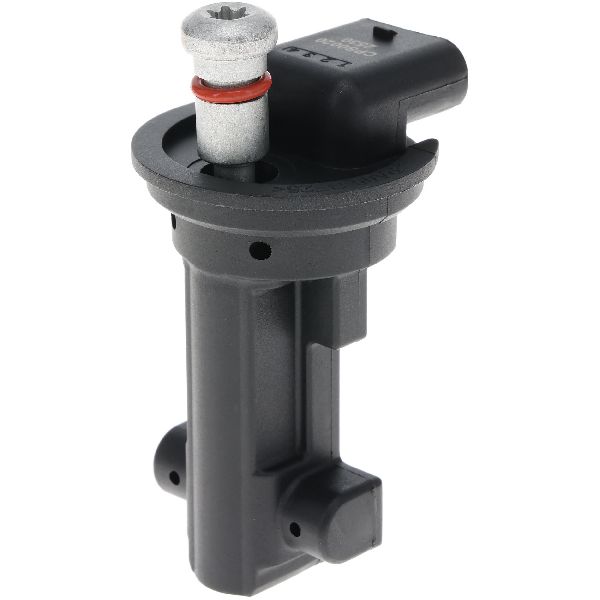
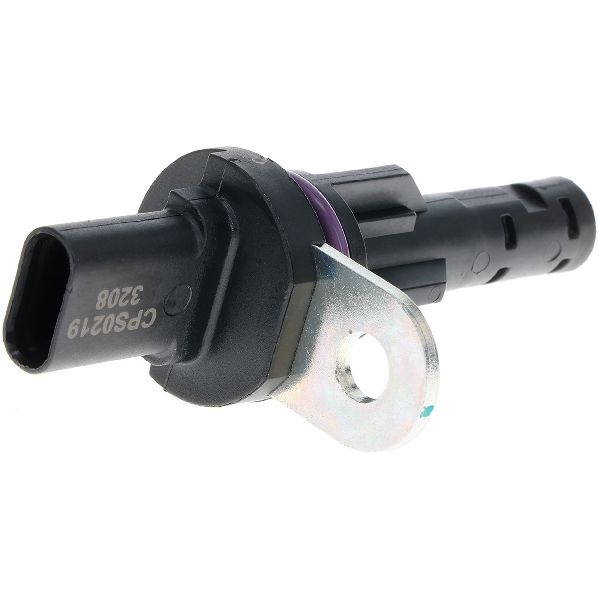
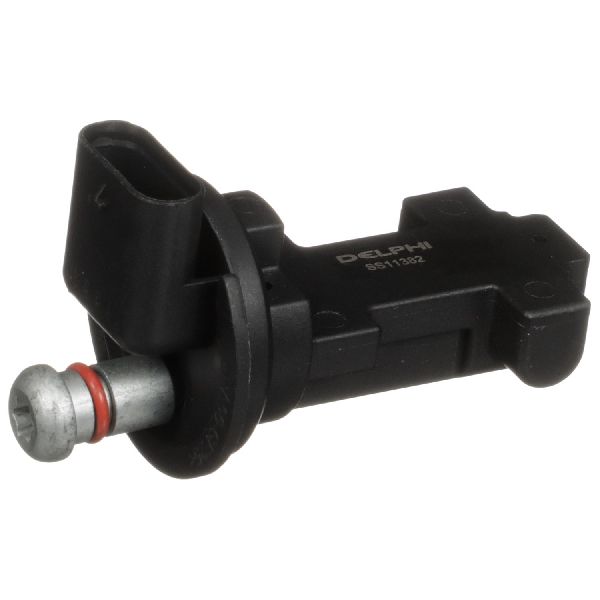
- Camshaft Position Sensor
(OEM #5149141AF)— This is the most common hardware failure for this code after the software has been updated. The sensor fails from heat and oil exposure.
Trusted brands: Mopar, NTK, Delphi, Standard Motor Products
OEM price range: $60-$100
Aftermarket price range: $30-$70 - Engine Oil Cooler / Filter Housing Assembly
(OEM #68105583AF (supersedes 68105583AA, AB, AC, AD, AE))— This is the source of the oil leak that contaminates the sensor connector. If the connector is oily, this part must be replaced to permanently fix the issue. Note that 2011-2013 models used a different design, but the 2014+ housing (68105583AF) is a common upgrade.
Trusted brands: Mopar, Dorman
OEM price range: $200-$300
Aftermarket price range: $100-$180
Related Codes That Often Appear With This One
- P0345 — This code is for the Bank 2 *intake* camshaft sensor circuit. Since one physical sensor unit reads both cams on Bank 2, seeing P0390 and P0345 together strongly points to a bad sensor unit, a connector/wiring issue at that bank, or a mechanical problem on Bank 2.
- P0394 — This code indicates an *intermittent* fault in the same circuit, whereas P0390 indicates a 'hard' or continuous fault. Seeing them together suggests a wiring issue, a failing sensor, or the software sensitivity issue addressed by the TSB.
- P0302, P0304, P0306 — These are misfire codes for the cylinders on Bank 2 (driver's side). An incorrect camshaft position signal leads to improper ignition timing and fuel delivery, which can cause misfires on that bank.
Technical Service Bulletins (TSBs) & Recalls
- 18-049-20: Supersedes 18-024-17. Involves a PCM software update for 2016-2017 Durango and Grand Cherokee models with 3.6L, 3.0L, or 5.7L engines. It changes P0390 and other cam/crank sensor codes from a one-trip to a two-trip fault to reduce MIL illumination from intermittent glitches.
- 18-024-17 REV. C: The older version of the PCM flash TSB, now superseded by 18-049-20. It addressed the same issue of sensitive fault logic for cam sensor codes.
Platform-Specific Known Issues
- A leaking oil filter/cooler housing assembly is a well-documented pattern failure on the 3.6L Pentastar engine. The plastic housing can crack or the seals can degrade, causing oil to pool in the engine valley and run down the transmission bell housing, soaking the Bank 2 cam sensor connector on its way down.
Mechanic-Grade Diagnostic Values
- Camshaft Sensor 5-Volt Supply Circuit (KOEO) — expected: 4.5 - 5.2 Volts. Failure: Voltage below 4.5V suggests an open or short in the supply circuit from the PCM.
- Camshaft Sensor Ground Circuit Resistance — expected: Below 5.0 Ohms. Failure: Resistance above 5.0 Ohms indicates a poor or open ground connection.
- Camshaft Sensor Signal Circuit Voltage (KOEO, sensor unplugged) — expected: 4.5 - 5.0 Volts. Failure: No voltage or low voltage indicates an open or short in the signal wire to the PCM.
- Camshaft Sensor Signal Waveform (Engine Idling) — expected: Clean, repeating square wave pattern on an oscilloscope.. Failure: A missing, erratic, or flat-line waveform indicates a faulty sensor or damaged tone ring.
Scan Tool Commands That Help
- wiTECH: Reprogram the PCM with the latest available software. — This is the primary repair step if TSB 18-049-20 applies to the vehicle. It updates the fault logic to prevent false positives for P0390.
- wiTECH: Clear all DTCs. — This must be done after the PCM reprogramming is complete to clear any codes set during the flash process.
Wiring & Ground Locations
- Bank 2 Cam Sensor Connector — Rear of the driver's side cylinder head, near the firewall.. This is the direct connection point for the sensor. The four pins are for the intake and exhaust cam signals, a shared 5V supply, and a shared ground. It is highly susceptible to oil contamination from a leaking oil cooler housing.
- Engine Ground Strap (Mopar P/N 5064962AA) — Connects the engine block to the chassis/frame rail, often in the left front of the engine compartment.. A corroded or loose main engine ground can create a floating ground for all engine sensors, including the camshaft sensor, leading to erratic signals and codes like P0390.
- Alternator Ground Strap — A smaller ground strap that often attaches to the back of the alternator.. While not the primary ground, damage to this strap can contribute to overall electrical noise and grounding issues that may affect sensitive sensor circuits.
- G305 — A primary chassis ground point noted in some diagrams as being in the left front of the engine compartment, on or near the fender.. This is a potential termination point for sensor ground circuits. Corrosion here can cause difficult-to-diagnose sensor issues.
Real Owner Repair Stories
- Reddit user on r/MechanicAdvice (2013 Jeep Wrangler (with 3.6L Pentastar)) — On extended drives under load, especially in warm weather, the cruise control would kick off, the vehicle would hesitate, and then throw code P0390, disabling stability control and drastically cutting power.
❌ Tried (didn't work) Replaced passenger side (Bank 1) sensor., Replaced driver side (Bank 2) sensor., Swapped sensors between banks to test the new sensor., Visually inspected wiring and connectors, which appeared to be in good condition.
✅ What actually fixed it The user did not post a final resolution, but the symptoms (heat-related, under load) strongly point towards either a failing sensor that is sensitive to temperature, a wiring harness issue that manifests when hot, or the software sensitivity issue addressed by the TSB.
OEM Part Supersession History
68105583AA, AB, AC, AD, AE→68105583AF— The original parts were a plastic design prone to cracking and leaking. The superseding part number is an updated design, often made of aluminum, for improved durability.
Heads up: If a 2011-2013 vehicle is upgraded to the 2014+ style housing (68105583AF), it MUST use the oil filter for a 2014+ model (e.g., Mopar MO-349) for all future oil changes, as the original 2011-2013 filter (e.g., Mopar MO-744) will not fit.
Model Year Variations Within This Range
- 2011-2013: These models were originally equipped with a plastic oil filter/cooler housing assembly that is highly prone to cracking from heat cycles. The replacement part is often an upgraded aluminum design from the 2014+ models.
- 2014-2017: These models came from the factory with an improved, more durable oil filter/cooler housing design. While they can still leak, failure is less common than on the earlier models.
- 2016-2017: These model years are the primary target for TSB 18-049-20, which addresses overly sensitive PCM software that can falsely trigger P0390. A software reflash is the first recommended diagnostic step for these years.
Diagnostic Flowchart
Other Known Issues on This Vehicle
Issues unrelated to this code that are worth knowing about as an owner of this generation:
- Rocker Arm / Lifter Failure ('Pentastar Tick') 🔴 High — Common on higher-mileage engines (typically over 70,000 miles). An audible ticking noise from the top of the engine is the primary symptom. (Ref: While no recall exists, TSB 09-002-14 Rev B was issued for earlier models. The issue is caused by premature wear of the rocker arm needle bearings.)
- Leaking Oil Filter / Cooler Housing Assembly 🔴 High — Extremely common across all model years. The plastic housing can crack from heat cycles, causing oil and/or coolant to leak into the engine valley and down the back of the engine. (Ref: No recall, but it's a widely recognized design flaw. Upgraded aluminum aftermarket housings are available.)
- Totally Integrated Power Module (TIPM) Failure 🔴 High — More prevalent in 2011-2013 models. Symptoms are erratic electrical issues: fuel pump not engaging (no-start), horn or wipers activating randomly, battery drain. (Ref: A recall (NHTSA #14V530000) was issued for the fuel pump relay portion on some models, but broader TIPM issues persist.)
- Radiator and Cooling System Leaks 🟠 Medium — Leaks can develop from the radiator side tanks, water pump, or thermostat housing over time.
- Alternator Failure 🟠 Medium — Premature alternator failure is a commonly reported issue, sometimes occurring before 100,000 miles. (Ref: Recall P60 / NHTSA #14V634000 was issued for some 2011-2014 models for alternator failure that could cause stalling.)
Used vs. New Parts: Buying Guide for This Vehicle
When a used part is the smart pick: A used wiring harness pigtail or a complete engine wiring harness from a low-mileage donor vehicle can be a cost-effective solution if the original wiring is damaged. A used oil cooler housing from a 2014+ model can also be a viable upgrade for a 2011-2013 vehicle, provided it is thoroughly inspected for cracks and includes good sensors.
Donor-vehicle mileage cap: roughly under 75000 miles for the part to have meaningful remaining life.
What to inspect on the donor part:
- For an oil cooler housing, inspect all plastic and aluminum surfaces for hairline cracks, especially around sensor ports and mounting holes.
- Ensure all threaded holes are clean and not stripped.
- Verify the donor vehicle did not have a catastrophic engine failure or signs of heavy oil sludge.
- For wiring, check for flexibility (not brittle), intact connector locks, and no signs of corrosion on the pins.
OEM-only on this vehicle (don't cheap out):
- Camshaft Position Sensor: Aftermarket sensors for this application are notoriously unreliable and can cause persistent or intermittent codes. It is strongly recommended to use an OEM Mopar sensor to ensure compatibility and longevity.
- Powertrain Control Module (PCM): Due to the need for VIN-specific programming, a new or professionally refurbished and programmed PCM is the only reliable option if the original has failed.
Aftermarket brands forum-validated for this vehicle:
- NTK (for sensors)
- Delphi (for sensors)
- Dorman (for oil cooler housing, though OEM is preferred)
Brands owners have reported issues with on this vehicle:
- Unbranded, 'white-box' sensors from online marketplaces are frequently reported to be dead-on-arrival or fail within a few months.
Real Owner Stories
Aggregated from forums and TSBs cited above. Mileages and costs reflect what owners reported in those sources.
Dodge Durango 3.6L Pentastar
Symptoms: Check Engine Light with code P0390. Visual inspection revealed oil dripping down the transmission bell housing and soaking the Bank 2 camshaft sensor connector.
What fixed it: The root cause was a leaking oil filter/cooler housing assembly. Replacing the entire housing and cleaning the oil-saturated electrical connector with contact cleaner resolved the issue.
Cost: $150-$300
Source hint: Vehicle-specific issues: Leaking oil filter/cooler housing assembly
Jeep 3.6L Pentastar
Symptoms: A multi-year saga with recurring camshaft position sensor codes, including P0345, P0349, P0390, and P0394.
What fixed it: After extensive diagnosis, the problem was ultimately traced to a missing oil gallery plug located under the valve cover.
Source hint: Our Next Chapter - 'The Jeep is Finally....Fixed!(?) P0345, P0349, P0390, P0394'
Dodge Durango 3.6L
Symptoms: Multiple camshaft sensor errors appeared after performing a timing job, and simple sensor swaps did not resolve the codes.
What fixed it: The issue was noted as being more complex than a simple sensor failure, highlighting that when sensor swaps don't work, the problem is likely deeper in the wiring or mechanical timing components.
Source hint: JK-Forum.com - '3.6L - Both camshaft Sensor errors driving me crazy!'
Related OBD-II Codes
Frequently Asked Questions
My 2016 Durango has a P0390 code. Should I replace the sensor first?
I see oil on the wiring connector for the camshaft sensor on my Durango. What's causing this?
How can I test the camshaft position sensor on my Durango without special tools?
What is the recommended replacement part for the camshaft position sensor?
What does the PCM flash in TSB 18-049-20 actually do to fix the P0390 code?
Where is the P0390 sensor located on the 3.6L Pentastar engine?
Used OEM Parts in Stock

New Aftermarket Parts Available

The information in this article is provided for general reference and educational purposes only. Vehicle specifications, procedures, and part compatibility can vary by production date, trim level, and region. Always consult your vehicle's factory service manual and verify part numbers before purchasing or performing repairs. Safety-critical components such as airbags, seat belts, and braking systems should be installed by a qualified professional.
- Dodge Durango:
- 🛍️ Shop This Part
- What's Unique About the 2011-2017 Dodge Durango
- Symptoms You May Notice
- Most Likely Causes
- Rare But Worth Checking
- Diagnosis Steps
- Parts You'll Likely Need
- Related Codes That Often Appear With This One
- Technical Service Bulletins (TSBs) & Recalls
- Platform-Specific Known Issues
- Mechanic-Grade Diagnostic Values
- Scan Tool Commands That Help
- Wiring & Ground Locations
- Real Owner Repair Stories
- OEM Part Supersession History
- Model Year Variations Within This Range
- Diagnostic Flowchart
- Other Known Issues on This Vehicle
- Used vs. New Parts: Buying Guide for This Vehicle
- Real Owner Stories
- Dodge Durango 3.6L Pentastar
- Jeep 3.6L Pentastar
- Dodge Durango 3.6L
- Related OBD-II Codes
- Frequently Asked Questions
- 🎟️ Get 5% Off