

P0366 on 2004-2011 Audi A6 3.2L V6: Cam Sensor or Timing Chain?
On the Audi A6 3.2L V6, code P0366 is a serious warning. While it points to the exhaust camshaft position sensor on the passenger side, it is most often a symptom of failing timing chain tensioners. A rattling noise on startup is the key indicator. Do not ignore this code, as it can lead to catastrophic engine failure if the chain jumps time.
- P0366 on an Audi A6 3.2L is a serious code that should be addressed immediately.
- A rattling noise from the engine on a cold start is a critical symptom that points directly to failing timing chain tensioners.
- Do not simply replace the camshaft position sensor without further diagnosis; the sensor is often just reporting a deeper mechanical problem.
- The cost to fix the most common cause (timing chains) is extremely high due to the engine-out labor required.
- Failure to address this issue will likely lead to the timing chain jumping, causing catastrophic engine damage.
What's Unique About the 2004-2011 Audi A6

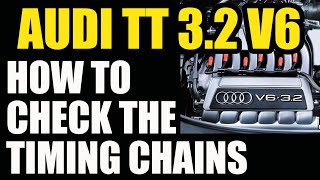
The 3.2L FSI V6 engine (engine codes AUK, BKH, CALA) in the C6 generation A6 is notorious for timing chain issues. The timing components, including four chains, multiple guides, and hydraulic tensioners, are located at the rear of the engine, making service an engine-out procedure with very high labor costs. Code P0366 is frequently the first and sometimes only code to appear when the upper timing chain tensioners begin to fail, allowing slack in the chain. This slack causes an implausible reading from the cam sensor long before other more catastrophic timing correlation codes may appear. A brief, 1-3 second engine rattle on a cold start is the classic sign that the tensioners 🎬 Watch: Hear the classic 3.2L V6 cold start timing rattle are the root cause, not the sensor itself.
Symptoms You May Notice
- Engine rattle or knocking noise on cold startup that may quiet down after a few seconds.
- Illuminated Check Engine Light (MIL).
- Rough, unstable idle.
- Poor acceleration and loss of power.
- Engine shaking or vibrating.
- Increased fuel consumption.
- Hard starting or engine stalling.
- Misfire codes (P0300, P0301, etc.) may accompany the P0366 code.
- Replacing only the camshaft position sensor without investigating the timing system. If a startup rattle is present, the new sensor will not fix the underlying mechanical problem, and the code will likely return.
Most Likely Causes

- Failing Upper Timing Chain Tensioners and/or Guides 🔴 High Probability The hydraulic tensioners can lose oil pressure when parked, or the plastic/thermoplastic guide rails can wear out and break. This is a well-documented weak point on the 3.2L FSI engine, with failures reported even on meticulously maintained vehicles. The chain itself rarely stretches; the failure is almost always in the guides and tensioners.
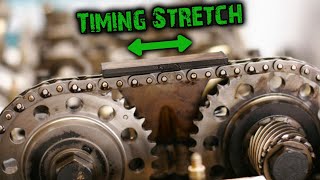
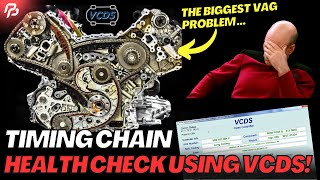
How to confirm: Listen for a distinct 1-3 second rattle from the back of the engine on a cold start. A mechanic can use a scan tool (like VCDS) to check camshaft adaptation values in measuring block 093. 🎬 Watch: How to check timing chain stretch using VCDS An AudiWorld forum member states that the value should be less than 8 degrees; higher values indicate the timing system is compensating for slack.
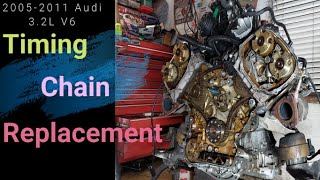
Typical fix: This is a major repair. The engine and transmission must be removed to access the rear timing cover. All four timing chains, all tensioners, and all guides should be replaced. This is not a DIY-friendly job, with quotes ranging from $4,500 to over $10,000.
Est. part cost: $800-$1500 for a full OEM or OE supplier timing kit 🎬 See this DIY walkthrough for replacing upper timing chain tensioners
- Faulty Camshaft Position Sensor (G300) 🟡 Medium Probability While less common than timing issues, the sensor itself can fail electronically or become contaminated with oil from a leaking valve cover gasket. It is a much less expensive potential failure point to rule out first.
How to confirm: Swap the Bank 1 exhaust sensor (G300) with the Bank 2 exhaust sensor (G320). Clear codes and run the engine. If the code changes to P0391 (Camshaft Position Sensor 'B' Circuit Range/Performance Bank 2), the sensor is faulty. Also, inspect the sensor's wiring and connector for oil contamination, corrosion, or damage.
Typical fix: Replace the faulty camshaft position sensor. It is located on the top of the passenger-side valve cover, near the center.
Est. part cost: $40-$120 - Faulty Camshaft Adjuster Solenoid (N205) ⚪ Low Probability The solenoid that controls the variable valve timing adjuster can get clogged with oil sludge or metal debris, or fail electrically, preventing it from actuating properly. Ross-Tech notes this as a possibility for the 3.2 FSI.
How to confirm: A user on a Ross-Tech forum found metal debris clogging the solenoid. You can remove the solenoid and test it by applying 12V to see if it actuates cleanly. You can also swap it with the one from the other bank to see if the fault follows.
Typical fix: Clean or replace the camshaft adjuster solenoid.
Est. part cost: $50-$150
Rare But Worth Checking
- Low Oil Pressure/Level or Incorrect Oil: The timing chain tensioners and camshaft adjusters are hydraulic. Low oil pressure, often due to a low oil level or using oil that does not meet VW/Audi 502.00 specification, can prevent them from functioning correctly and mimic tensioner failure.
- Damaged Wiring or Connector: Oil leaks from the valve cover gasket can saturate the sensor connector, causing a poor connection. Inspect the harness for brittle insulation or damage.
- Stretched/Jumped Timing Chain: While the tensioners and guides are the primary failure point, if they are ignored long enough, the chain can jump a tooth. In this case, the engine may run very rough or not at all, and there is a high risk of valve damage. A compression test is needed to check for bent valves.
- Engine Control Module (ECM) Issue: This is extremely rare, but a fault within the ECM's driver for the camshaft sensor could theoretically cause this code. This should only be considered after all other possibilities are exhausted.
Diagnosis Steps

- Scan the ECM for all stored fault codes. Note any other codes that are present with P0366, especially misfire or other timing codes.
- On a cold engine (sitting overnight), start the vehicle and listen carefully for a 1-3 second rattle or grinding noise from the rear of the engine. The absence of this noise does not completely rule out a timing issue, but its presence makes it highly likely.
- Inspect the engine oil level and condition. Ensure the correct oil specification for the 3.2L FSI (VW 502.00) is being used.
- Inspect the wiring and connector for the Bank 1 exhaust camshaft position sensor (G300) on the passenger side valve cover. Look for oil contamination, corrosion, or physical damage.
- If diagnostic tools are available (like VCDS), check the camshaft adaptation values in Measuring Value Block 093. Values approaching or exceeding +/- 8 degrees indicate a significant timing problem that the ECU is struggling to correct.
- As a simple test, swap the Bank 1 exhaust cam sensor (G300) with the Bank 2 exhaust cam sensor (G320). Clear codes and see if the fault moves to Bank 2 (P0391). If it does, the sensor is bad.
- If the fault does not move, the problem is likely mechanical (tensioners, guides, or adjusters). At this point, the vehicle should be taken to a qualified Audi specialist for a definitive diagnosis of the timing chain system.
- DO NOT assume it is just the sensor. Replacing the sensor without confirming the mechanical timing is correct can lead to a false sense of security while the engine is at risk of catastrophic failure.
Parts You'll Likely Need

- Timing Chain Kit (Chains, Tensioners, Guides)
(OEM #06E109218AJ, 06E109217AH (Upper Tensioners))— This is the most probable root cause of P0366 on this engine, especially if accompanied by a startup rattle. A full kit is required for the engine-out service.
Trusted brands: Iwis (OEM chain manufacturer), Genuine Audi
OEM price range: $800-$1500
Aftermarket price range: $500-$900 - Exhaust Camshaft Position Sensor (Bank 1, G300)
(OEM #07L905163C)— If diagnosis confirms the sensor itself is faulty (e.g., by swapping with the other bank), this is the part to replace. It's a much cheaper and simpler fix.
Trusted brands: Bosch, Genuine Audi
OEM price range: $80-$120
Aftermarket price range: $40-$70
Related Codes That Often Appear With This One
- P0014 — 'B' Camshaft Position - Timing Over-Advanced or System Performance (Bank 1). This code often appears with P0366 because if the chain has slack or has jumped, the camshaft timing will be out of its specified range.
- P0341 — Camshaft Position Sensor 'A' Circuit Range/Performance (Bank 1). This code for the intake camshaft sensor on the same bank can appear alongside P0366, indicating a significant timing deviation affecting the entire bank.
- P0300, P0301-P0306 — Random or specific cylinder misfire codes can occur because incorrect camshaft timing disrupts the proper sequence of ignition and valve events, leading to incomplete combustion.
Technical Service Bulletins (TSBs) & Recalls
- TPI 2012630 - Mentioned in Ross-Tech forums as relating to binding Camshaft Adjusters on the 3.2 FSI engine, a possible cause for this code.
- TSB 2039995/1 (15-15-26) - While officially for the 3.0T engine, this TSB addresses the exact same symptom (1-3 second rattle on cold start) and recommends replacing upper chain tensioners with improved parts, corroborating the known tensioner issue in the V6 engine family.
Platform-Specific Known Issues
- The 3.2L FSI V6 is well-known for premature failure of the plastic timing chain guides and hydraulic tensioners, leading to chain slack, noise, and timing faults. This is considered the engine's primary design flaw.
- The rear-mounted timing chain system requires engine removal for service, turning a parts job of ~$1,200 into a labor-intensive repair costing upwards of $5,000-$10,000.
Mechanic-Grade Diagnostic Values
- Camshaft Adaptation Phase Value (Non-UDS Engines) — expected: The sum of values in fields 1 and 3, and the sum of values in fields 2 and 4, should each be less than +/- 8.0 degrees at idle.. Failure: Values approaching or exceeding +/- 8.0 degrees indicate significant chain slack that the system is compensating for. Values over 20 degrees can indicate a jumped tooth.
- Camshaft Position Sensor (G300) Reference Voltage — expected: Approximately 5.0V DC with key on, engine off.. Failure: No voltage or significantly lower voltage indicates a wiring or ECM issue.
- Camshaft Adaptation (UDS Engines, e.g., CALA) — expected: Values should be stable at idle. One user with a fresh timing job reported values between -46 and -48 degrees.. Failure: Large deviation values or values that are wildly fluctuating. A value of -45 degrees was seen on a car that would not start.
Hidden / Shadow Codes Worth Checking
- 16750 / 000870: This is the VAG-specific fault code that corresponds to the generic OBD-II code P0366. It specifies 'Camshaft Position Sensor B Bank 1 (G300): Implausible Signal'. (see via VCDS (VAG-COM) or other advanced VW/Audi compatible scan tools.)
Scan Tool Commands That Help
- VCDS (VAG-COM): Read Measuring Block 093 — On pre-UDS engines (AUK, BKH), this is the primary method to quantitatively assess timing chain stretch by observing the phase deviation values. This is the most important diagnostic step after listening for a rattle.
- VCDS (VAG-COM): Read Advanced Measuring Values for 'Camshaft Adjustment' — On later UDS-protocol engines (CALA), Measuring Block 093 is not available. This function replaces it for checking camshaft phase deviation.
- Dealer/Specialist Tool (ODIS): Look up TPI 2012630 — If a timing issue is suspected but the chains are known to be good, this Technical Product Information bulletin addresses cases of binding camshaft adjusters (phasers), which is a known edge case.
Wiring & Ground Locations
- Engine Harness Ground Point — A small gauge ground wire that exits the main engine wiring harness behind the oil filter housing. It attaches to one of the bolts on the oil filter housing itself.. This ground is often forgotten or improperly attached after major engine work (like a timing job or engine replacement). A poor ground can cause a host of erratic electrical issues, including implausible signals from sensors like the G300.
Real Owner Repair Stories
- AudiWorld Forums (2006 Audi A6 3.2 Quattro) — Knocking/clicking noise, car shaking, poor acceleration, bad idle, codes P0366 and P0014.
❌ Tried (didn't work) The user did not list attempted fixes, but the forum discussion warned against replacing only the upper tensioner guides in-situ.
✅ What actually fixed it The final fix was a complete, engine-out service to replace all timing chains, guides, tensioners, and gears. The post also warns that an incomplete job can cause broken plastic guide pieces to fall into the oil sump and block the oil pump pickup, leading to oil pressure failure. - quattroworld.com Forums (Audi A6 3.2 FSI (year not specified, but C6 platform)) — Chain would jump time after sitting for a few days, causing rough running. VCDS Measuring Block 93 would show Bank 2 values way out of spec (e.g., 28-32 kW).
❌ Tried (didn't work) Replacing the driver's side tensioner twice., Re-timing the engine five separate times.
✅ What actually fixed it The user's chain eventually jumped far enough to cause piston-to-valve contact, requiring cylinder head removal and valve replacement. The story serves as a cautionary tale about the ultimate consequence of failing tensioners and not addressing the root cause.
OEM Part Supersession History
7L905163, 7L905163A, 7L905163B→07L905163C— Part revision and improvement by the manufacturer.
Heads up: The newest revision (07L905163C) should be used for all replacements.06E109218H (Right Upper Tensioner)→06E109218AJ, 06E109218AQ— Revisions to address the guide failure issue. Multiple updates have been released.
Heads up: Always use the latest available revision when performing a timing service. Check with an Audi dealer for the most current part number at the time of repair.
Model Year Variations Within This Range
- Approx. 2004-2008: Engines are typically AUK or BKH codes. Diagnosis of timing chain slack is done using VCDS Measuring Block 093.
- Approx. 2009-2011: Engines are typically CALA code, which use the UDS diagnostic protocol. VCDS Measuring Block 093 is not available. Technicians must use 'Advanced Measuring Values' and search for 'camshaft adjustment' to check timing deviation. These engines also feature Audi Valvelift System (AVS).
Diagnostic Flowchart
Other Known Issues on This Vehicle
Issues unrelated to this code that are worth knowing about as an owner of this generation:
- Intake Valve Carbon Buildup 🔴 High — Very common on all FSI (direct injection) engines. Performance degradation is often noticeable by 60,000-80,000 miles. Symptoms include rough idle, misfires, and loss of power.
- Thermostat Failure 🟠 Medium — The plastic thermostat housing can become brittle and fail, often getting stuck open or closed. This can cause overheating or prevent the engine from reaching operating temperature. Failure is common on higher mileage vehicles (over 60k miles).
- MMI System Failure (Black Screen) 🟠 Medium — The Multi Media Interface (MMI) screen can go black or become unresponsive. This is often caused by a break in the fiber optic loop due to a failed module (e.g., radio, amplifier in the trunk) or water damage to components.
- High Oil Consumption 🟠 Medium — As the engine ages, wear on piston rings and valve seals can lead to higher than normal oil consumption. Some oil leaks are also common from various gaskets.
Used vs. New Parts: Buying Guide for This Vehicle
When a used part is the smart pick: For simple, external electronic parts like the Camshaft Position Sensor (G300) or the Camshaft Adjuster Solenoid (N205). Using a known-good used part can be a very cost-effective way to diagnose the issue by swapping components.
Donor-vehicle mileage cap: roughly under 100000 miles for the part to have meaningful remaining life.
What to inspect on the donor part:
- Verify the part is from a vehicle that was running without timing-related fault codes.
- Inspect the electrical connector for any signs of corrosion, oil contamination, or broken locking tabs.
- For solenoids, check that the screen is clean and free of metallic debris.
OEM-only on this vehicle (don't cheap out):
- Timing Chain Kit (Chains, Tensioners, Guides)
- Timing Cover Sealant (Use OEM spec D176501A1)
Aftermarket brands forum-validated for this vehicle:
- Iwis (Often the OEM supplier for timing chains)
- Bosch (For the camshaft position sensor)
Brands owners have reported issues with on this vehicle:
- Unbranded, 'white box' timing chain kits from online marketplaces. The plastic guides in these kits are a common failure point, and given the labor-intensive nature of the job, the risk of premature failure is not worth the cost savings.
Real Owner Stories
Aggregated from forums and TSBs cited above. Mileages and costs reflect what owners reported in those sources.
2006 Audi A6 3.2L V6
Symptoms: The only symptom reported was the P0366 check engine light code.
What fixed it: The owner did not complete the repair but was quoted by a dealer for a full timing chain service.
Cost: $12000-$12000
Source hint: Reddit r/MechanicAdvice thread titled '2006 Audi A6 P0366 engine code advice wanted'
2004-2011 Audi A6 3.2L V6
Symptoms: Owner experienced a P0366 code, rough idle, and poor acceleration after previously dealing with timing chain tensioner issues.
What fixed it: A full timing chain service was required, as the owner confirmed the chain had jumped time.
Source hint: AudiWorld.com forum titled 'tensioners now cam position problem'
2004-2011 Audi A6 3.2L V6
Symptoms: The car experienced P0366 and P0341 codes, which ultimately led to the timing chain jumping.
What fixed it: The cause was a stuck camshaft adjuster. The failure was catastrophic, resulting in bent valves and major engine damage.
Source hint: Audiforums.com forum titled 'codes p0341 p0366'
Audi A6 3.2L V6
Symptoms: A P0366 code was present, caused by a malfunctioning camshaft adjuster solenoid (N205).
What fixed it: The owner found and cleared metal debris that was clogging the solenoid, restoring its function.
Source hint: Ross-Tech forum discussion related to TPI 2012630
Related OBD-II Codes
Frequently Asked Questions
I hear a distinct 1-3 second rattle from my A6's engine on a cold start. Is this related to the P0366 code?
My mechanic quoted me over $5,000 for a timing chain job to fix P0366. Is this a reasonable price?
Can I just replace the camshaft position sensor to fix the P0366 code?
How can a mechanic check for timing chain slack on my 3.2L V6 without taking the engine apart?
Is the timing chain itself known to stretch and fail on these Audi engines?
Do other Audi models with the 3.2L V6 have the same timing chain problems that cause P0366?
Helpful Videos


We Have This Part in Stock


The information in this article is provided for general reference and educational purposes only. Vehicle specifications, procedures, and part compatibility can vary by production date, trim level, and region. Always consult your vehicle's factory service manual and verify part numbers before purchasing or performing repairs. Safety-critical components such as airbags, seat belts, and braking systems should be installed by a qualified professional.
- Audi A6:
- 🎬 Helpful Videos
- 🛍️ Shop This Part
- What's Unique About the 2004-2011 Audi A6
- Symptoms You May Notice
- Most Likely Causes
- Rare But Worth Checking
- Diagnosis Steps
- Parts You'll Likely Need
- Related Codes That Often Appear With This One
- Technical Service Bulletins (TSBs) & Recalls
- Platform-Specific Known Issues
- Mechanic-Grade Diagnostic Values
- Hidden / Shadow Codes Worth Checking
- Scan Tool Commands That Help
- Wiring & Ground Locations
- Real Owner Repair Stories
- OEM Part Supersession History
- Model Year Variations Within This Range
- Diagnostic Flowchart
- Other Known Issues on This Vehicle
- Used vs. New Parts: Buying Guide for This Vehicle
- Real Owner Stories
- 2006 Audi A6 3.2L V6
- 2004-2011 Audi A6 3.2L V6
- 2004-2011 Audi A6 3.2L V6
- Audi A6 3.2L V6
- Related OBD-II Codes
- Frequently Asked Questions
- 🎟️ Get 5% Off