

BMW P0363: Misfire Detected - Fueling Disabled (Causes & Fixes 2000-2026)
P0363 on a BMW indicates a severe misfire where the engine computer (DME) has shut off fuel to a cylinder to prevent damage. The most common cause is a failed ignition coil or spark plug. Swapping the coil from the misfiring cylinder to another is the fastest way to diagnose the issue. A new OE-brand coil costs approximately $40-$80.
- P0363 is a serious misfire code on a BMW, indicating the computer has cut fuel to a cylinder to prevent damage.
- The most common causes are a failed ignition coil or a worn spark plug, which are regular maintenance items on these cars.
- A simple diagnostic step is to swap the ignition coil from the misfiring cylinder to another to see if the fault follows the coil.
- On N54 engines, faulty direct fuel injectors are another very common cause.
- Driving with this code is not recommended as it can quickly destroy the expensive catalytic converter.
What's Unique About the 2000-2026 BMW Various
BMW engines are engineered for high performance, which makes them particularly sensitive to the condition of ignition and fuel system components. While ignition coil and spark plug failure are common across many brands, they are frequent maintenance items on BMWs. Furthermore, certain BMW engine generations have well-documented, specific weaknesses. For instance, the popular N54 twin-turbo engine (mid-to-late 2000s) is notorious for failures of its piezoelectric fuel injectors, which can directly lead to a P0363 code. Later direct-injection engines like the N55 and B58 are more robust in the fuel department but still treat ignition coils and spark plugs as regular wear items.
Generation note: The 2000-2026 range covers many BMW engine families. Key differences include: - 2000-~2006 (e.g., M54, M62): These port-injected engines most commonly see P0363 from failed ignition coils and, to a lesser extent, spark plugs. Oil leaks from the valve cover gasket are a very common source of misfires, as the oil pools in the spark plug wells and shorts out the coils. - ~2007-~2016 (e.g., N52, N54, N55): This era introduced direct injection. N54 engines are highly prone to fuel injector failure, which is a very common cause for this code alongside ignition coils. These injectors have 'index numbers' and cannot be mixed within the same bank. N55 engines have more reliable injectors but still see frequent coil and plug failures. - ~2016-2026 (e.g., B48, B58): These modern engines are generally more robust, but ignition coils and spark plugs remain the primary culprits for misfires leading to P0363. On the B58, overheating of coils in cylinders 5 and 6 at idle has been noted as a potential issue. These are considered regular wear-and-tear items.
Symptoms You May Notice
- Engine running very rough or shaking noticeably
- Flashing Check Engine Light
- Significant loss of engine power and poor acceleration, sometimes referred to as 'limp mode'
- Engine may struggle to stay running or stall
- Increased fuel consumption
- Backfiring or popping sounds from the exhaust during the misfire event
- Strong smell of unburnt fuel from the exhaust before the fuel cut is initiated
- Replacing only spark plugs when an ignition coil is the actual cause.
- Replacing a fuel injector when the issue is a simple vacuum leak or a bad spark plug.
- Assuming an expensive mechanical engine failure before thoroughly testing the ignition and fuel systems.
- Replacing a fuel injector because the scan tool shows it is off, without realizing the DME intentionally disabled it for protection.
Most Likely Causes
- Faulty Ignition Coil 🔴 High Probability Ignition coils on BMWs are a very common failure item due to high performance demands and heat exposure. Aftermarket coils can sometimes be problematic, with Eldor, Bosch, and Delphi being common OE suppliers.
How to confirm: Use a scan tool to identify the misfiring cylinder (e.g., P0304 for cylinder 4). Swap the ignition coil from the misfiring cylinder with one from a known good cylinder. Clear the codes and see if the misfire code follows the coil to the new cylinder. A physically damaged or burnt coil is also a clear indicator.
Typical fix: Replace the faulty ignition coil. It is often recommended to replace all coils at the same time, especially on higher mileage vehicles or if they are from an older production date. Mixing brands is not recommended.
Est. part cost: $40 - $80 per coil - Worn or Fouled Spark Plugs 🔴 High Probability Turbocharged and direct-injection BMW engines are hard on spark plugs, requiring more frequent changes than older, naturally aspirated engines. An incorrect spark plug heat range or gap, especially on tuned cars, can cause issues.
How to confirm: After ruling out the ignition coil, inspect the spark plug in the misfiring cylinder. Look for wear on the electrode, carbon fouling, oil contamination, or cracks in the porcelain. Swap the plug with another cylinder to see if the misfire follows.
Typical fix: Replace the spark plug. It is best practice to replace all spark plugs as a set at the manufacturer's recommended interval, which can be as low as 15,000 miles on tuned N54 engines.
Est. part cost: $15 - $35 per plug - Faulty Fuel Injector 🟡 Medium Probability Direct injection (DI) fuel injectors, especially the piezoelectric type on the N54 engine, are a well-known failure point. They can become clogged from carbon buildup or develop leaks where they drip fuel into the cylinder even when off.
How to confirm: If swapping the coil and plug doesn't resolve the misfire on a specific cylinder, the injector is the next likely cause. A leaking injector may cause a fuel smell on the spark plug. Diagnosis can be confirmed by a mechanic using a BMW-specific scan tool to monitor injector function or by pulling the plug to check for fuel.
Typical fix: Replace the faulty fuel injector. On DI engines, this is more complex as it requires coding the new injector's flow rate value to the DME. It's often recommended to replace them in sets (e.g., Bank 1 or all of them). N54 injectors use index numbers (e.g., Index 12) that cannot be mixed on the same bank.
Est. part cost: $150 - $500+ per injector for DI engines
Rare But Worth Checking
- Low Engine Compression: If ignition and fuel components are confirmed to be good, a mechanical issue like a burnt valve, damaged piston, or failed piston rings could be the cause. This is a much more serious and expensive problem. A compression test is required for diagnosis.
- Leaking Valve Cover Gasket: A common oil leak on many BMW engines is the valve cover gasket. If oil leaks into the spark plug tubes, it can saturate and destroy the ignition coil and foul the spark plug, causing a misfire. If you find oil when you pull a coil, the valve cover gasket is the root cause.
- Faulty Engine Computer (DME): In very rare cases, the MOSFET driver circuit within the DME that controls an ignition coil or injector can fail, mimicking a component failure. This should only be considered after all other possibilities, including wiring, have been exhaustively checked. This can sometimes be repaired by specialists who replace the failed MOSFET on the circuit board.
- Clogged Catalytic Converter: A severely clogged catalytic converter can create excessive backpressure, leading to misfires, especially under load. This is often a consequence of long-term misfires rather than a root cause.
Diagnosis Steps
- Connect an OBD-II scanner and read the fault codes. Note P0363 and any accompanying P030x codes (e.g., P0302) to identify the exact misfiring cylinder. Using a BMW-specific tool like ISTA or a capable scanner can provide more detailed shadow codes.
- Visually inspect the engine bay for obvious issues like disconnected vacuum hoses, loose electrical connectors, or oil leaking from the valve cover onto ignition components.
- Move the ignition coil from the identified misfiring cylinder to a different, working cylinder.
- Clear the fault codes and start the engine. Let it run or drive it briefly until the Check Engine Light reappears.
- Re-scan for codes. If the misfire code has moved to the new cylinder (e.g., P0302 became P0304), the ignition coil is faulty and must be replaced.
- If the misfire remains on the original cylinder, repeat the process by swapping the spark plug. Inspect the old plug for signs of oil, fuel, or excessive wear.
- If the misfire still persists in the same cylinder after swapping the coil and plug, the issue is likely a fuel injector or a mechanical engine problem.
- For suspected fuel injector issues (especially on N54 engines), check the spark plug for a strong fuel smell after running the engine. Professional diagnosis is often needed to confirm.
- If all else fails, a mechanical compression test and cylinder leak-down test should be performed to rule out internal engine damage.
Parts You'll Likely Need
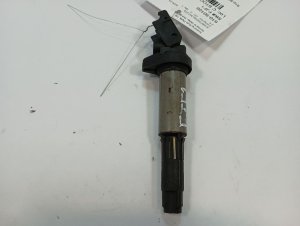
- Ignition Coil
(OEM #12138657273 (Eldor, for N54/S54 etc.), 12138616153 (Delphi, for N20/N55 etc.))— This is the most frequent cause of a P0363 code on virtually all modern BMW engines.
Trusted brands: Bosch, Delphi, Eldor
OEM price range: $50-$80
Aftermarket price range: $30-$60 - Spark Plug
(OEM #ZR5TPP33 (Bosch, for N55))— A worn, fouled, or incorrect spark plug is the second most common cause of a misfire.
Trusted brands: NGK, Bosch
OEM price range: $20-$35
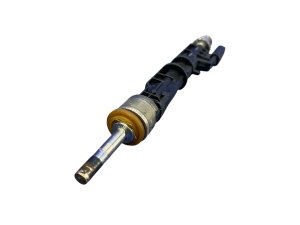
Aftermarket price range: $15-$25 - Direct Fuel Injector
(OEM #13538616079 (Index 12, for N54/N63 etc.))— A primary cause of P0363 specifically on direct-injection engines like the N54.
Trusted brands: Bosch, Vitesco (Continental)
OEM price range: $250-$500
Aftermarket price range: $150-$300
Related Codes That Often Appear With This One
- P0300 — P0300 indicates a random or multiple cylinder misfire. P0363 is a more specific version of this, triggered when the misfire is severe enough for the DME to cut fuel.
- P0301-P0308 — These codes specify which cylinder is misfiring (e.g., P0301 for Cylinder 1, P0306 for Cylinder 6). This is extremely helpful for diagnosis, as it tells you exactly where to start looking for a bad coil, plug, or injector.
- 29CD, 29CE, 29CF, 29D0, 29D1, 29D2 — These are BMW-specific fault codes for misfires on particular cylinders (e.g., 29D1 is a misfire on cylinder 5, 29CF is cylinder 3). A BMW-specific scanner will show these alongside the generic P-code, providing more diagnostic detail.
- 29E2 — This BMW-specific code indicates an issue with the fuel injection rail pressure sensor. It can sometimes appear alongside misfire codes if a failing High Pressure Fuel Pump (HPFP) or leaky injector is causing pressure drops.
Technical Service Bulletins (TSBs) & Recalls
- SIB 11 03 17: This Service Information Bulletin from BMW addresses a warranty extension for the timing chain and oil pump drive chain on N20 and N26 engines due to defects in materials of the chain guides. While not a direct cause of P0363, a jumped timing chain due to this failure would cause severe misfires.
Platform-Specific Known Issues
- N54 Engines: These engines are widely known for having issues with their piezoelectric direct fuel injectors. Early 'Index' versions were particularly failure-prone. When one fails, it is often recommended to replace all six with the latest 'Index 12' version.
- Valve Cover Gasket Leaks: On many BMW 6-cylinder engines (M54, N52, N55), the valve cover and its gasket will eventually leak oil. This oil can seep into the spark plug wells, saturating the ignition coil boot and causing a misfire.
Mechanic-Grade Diagnostic Values
- N54/N55 Low-Pressure Fuel System (LPFP) — expected: ~72 PSI, relatively constant.. Failure: Pressure dropping significantly below 50-60 PSI under load, especially with ethanol blends.
- N54 High-Pressure Fuel System (HPFP) — expected: ~700-750 PSI at idle/low load, rising to 2,000-2,500+ PSI under load.. Failure: Failure to build pressure above idle values when under load, or dropping below 500-600 PSI.
- N55 High-Pressure Fuel System (HPFP) — expected: ~700-800 PSI at idle, 1300-1800+ PSI under normal throttle, and over 2000 PSI under heavy load.. Failure: Struggling to get above a few hundred PSI on startup or failing to exceed 1000 PSI under acceleration.
- B58 High-Pressure Fuel System (HPFP) — expected: Maintains target pressure of 200+ bar (2900+ PSI) at full load. Idle pressure is around 100 bar (1450 PSI). Gen 2 B58TU pumps operate up to 350 bar (5075 PSI).. Failure: Significant deviation or inability to maintain target rail pressure under load, long cranks, intermittent misfires.
- N55 Fuel Trims (STFT/LTFT) — expected: Values should be between 0.70 and 1.30 (representing +/- 30% correction from a baseline of 1.0).. Failure: Trims consistently maxing out at 1.30 (DME adding fuel to compensate for a lean condition) or 0.70 (DME pulling fuel for a rich condition) can indicate vacuum leaks or injector issues.
- Ignition Coil Primary/Secondary Resistance — expected: Not a reliable test for modern BMW 'stick' coils.. Failure: Unlike older coils, modern ones contain internal electronics that prevent a simple multimeter resistance test from giving a conclusive good/bad reading. The swap test is the definitive method.
Hidden / Shadow Codes Worth Checking
- 30BA / 30BB: DME internal fault or injector circuit failure for Bank 1 (30BA) or Bank 2 (30BB). These are notorious codes on MSD80/MSD81 DMEs used with N54 engines and often point to a failing MOSFET driver in the DME itself, though they can also be triggered by a bad injector or wiring. (see via BMW-specific scanner like ISTA, INPA, or a high-end aftermarket scanner.)
- 29CC: Combustion misfire on several cylinders. This is a BMW-specific companion to the generic P0300 code. (see via BMW-specific scanner like ISTA, INPA, or a high-end aftermarket scanner.)
- 29CE, 29CF, 29D0, etc.: Combustion misfire codes for specific cylinders (e.g., 29CE for Cyl 2). These are the BMW-specific versions of P0301, P0302, etc. (see via BMW-specific scanner like ISTA, INPA, or a high-end aftermarket scanner.)
Scan Tool Commands That Help
- ISTA (BMW Dealer Software): Injector Test Plan / Service Function — To diagnose a suspected faulty injector. The software can run tests on individual injectors and guide the technician through diagnostic steps.
- ISTA / INPA: Register Injector Replacement / Enter Calibration Values — This is a mandatory step after replacing a direct fuel injector. The unique flow rate value printed on the new injector must be coded into the DME for the engine to run correctly.
- High-End Scan Tool (e.g., Autel, Snap-on): Live Data Monitoring (Fuel Rail Pressure) — To diagnose a potential fuel pump (LPFP or HPFP) issue. Monitor the requested vs. actual fuel pressure under various loads (idle, snap throttle, full load) to see if the pump can keep up with demand.
OEM Part Supersession History
Bosch (e.g., 12138647689) / Delphi (e.g., 12138616153)→Eldor (e.g., 12138657273 / R3516S00100)— BMW switched OEM suppliers over the years. Eldor became an OEM supplier in 2016 and its part is often considered the latest and most robust revision, superseding earlier Bosch and Delphi versions for many N-series engines.
Heads up: While technically interchangeable, it is strongly recommended to replace all ignition coils as a set and not to mix brands (e.g., three Bosch and three Eldor) to ensure consistent performance.N54 Injectors Index 1 through 10→Index 11 and Index 12 (e.g., 13538616079)— Early N54 piezoelectric injectors had a high failure rate. BMW released numerous revisions, culminating in the more reliable Index 11 and 12 designs.
Heads up: Injectors with an index number of 11 or higher can be mixed with each other. However, injectors with an index of 10 or lower cannot be mixed with injectors 11 or higher within the same engine bank (cylinders 1-3 or 4-6). If replacing a single failed injector that is index 10 or lower, all injectors in that bank must be replaced with the newer index version.
Model Year Variations Within This Range
- 2007-~2010 (N54 Engine): These engines use piezoelectric direct injectors that are a very common failure point and have a complex supersession history with 12 different index numbers. Diagnosis of P0363 on these engines must heavily consider the injectors.
- ~2010-~2017 (N55 Engine): Switched to more reliable solenoid-type direct injectors, making them a less common cause for P0363 compared to the N54. Ignition coils and spark plugs are the more dominant causes. Some early N55s also lack a low-pressure fuel sensor, requiring a manual gauge for LPFP diagnosis.
- ~2016+ (B58 Engine): Features a more robust fuel system. The Gen 1 B58 (pre-2018/19) uses a 200-bar HPFP, while the Gen 2 'B58TU' uses an upgraded 350-bar HPFP. While generally reliable, HPFP failure is still a possible, though less common, cause of misfires.
Diagnostic Flowchart
Other Known Issues on This Vehicle
Issues unrelated to this code that are worth knowing about as an owner of this generation:
- N20/N26 Timing Chain Guide Failure 🔴 High — Common on pre-2015 models, often presenting as a whining noise between 60,000-100,000 miles. Failure can be catastrophic. (Ref: BMW SIB 11 03 17 extended the warranty to 7 years/70,000 miles for this issue.)
- N54/N55 Oil Filter Housing Gasket (OFHG) Leak 🔴 High — Extremely common failure after 60,000-80,000 miles. Leaking oil drips onto the serpentine belt, causing it to slip off, get ingested by the front main seal, and lead to engine failure.
- S65/S85 Rod Bearing Wear 🔴 High — A well-documented issue in V8/V10 M-engines due to tight clearances and oil specifications. Considered a preventative maintenance item every 60,000-80,000 miles to avoid catastrophic engine failure.
- N54 High Pressure Fuel Pump (HPFP) Failure 🔴 High — Very common on the N54 engine, leading to long cranks, limp mode, and fuel pressure-related fault codes. Multiple recalls and warranty extensions were issued. (Ref: Multiple warranty extensions were issued by BMW.)
- N52/N54/N55 Valve Cover & Gasket Failure 🟠 Medium — The plastic valve cover can crack and the gasket becomes brittle, causing oil leaks (often into spark plug wells, causing misfires) and PCV system vacuum leaks. Common after 70,000 miles.
Used vs. New Parts: Buying Guide for This Vehicle
When a used part is the smart pick: For this code, buying used parts is generally not recommended for the primary failure components. The only exception might be a complete, low-mileage engine computer (DME) from a reputable recycler if a rare DME failure is confirmed, but this will require professional programming.
Donor-vehicle mileage cap: roughly under 40000 miles for the part to have meaningful remaining life.
What to inspect on the donor part:
- For a used DME, verify the part number exactly matches the original.
- Ensure the donor vehicle was not involved in a flood or fire.
- Ask for the VIN of the donor car to check its history if possible.
OEM-only on this vehicle (don't cheap out):
- Direct Fuel Injectors (especially N54): Aftermarket or remanufactured injectors are notoriously unreliable. Only use new, genuine BMW or the OE supplier (Vitesco for N54).
- High-Pressure Fuel Pump (HPFP): Given the complexity and precision required, using a new OEM or OE supplier part is critical for longevity and performance.
- Engine Computer (DME): While a used one can work, it requires specialist knowledge to clone or program. For most owners, a new or professionally repaired unit is the only viable path.
Aftermarket brands forum-validated for this vehicle:
- Ignition Coils: Eldor, Delphi, and Bosch are all OEM suppliers and are considered the best choices. Many enthusiasts have a preference, but all three are generally reliable when bought from a reputable source like FCP Euro.
- Spark Plugs: NGK and Bosch are the primary OEM suppliers and are the recommended choice.
Brands owners have reported issues with on this vehicle:
- Unbranded 'no-name' ignition coils and fuel injectors from online marketplaces. These are a very common source of repeat failures and misdiagnoses. The cost savings are not worth the risk of continued engine problems.
Real Owner Stories
Aggregated from forums and TSBs cited above. Mileages and costs reflect what owners reported in those sources.
2003 BMW X5 4.6is (M62 engine)
Symptoms: P0363 misfire code with fueling disabled for a specific cylinder.
What fixed it: Replaced all ignition coils and spark plugs.
Source hint: Xoutpost.com thread titled 'p0363-misfire-code-fueling-disabled.html'
BMW F30 3-Series (B58 engine)
Symptoms: Experienced P0363 and related BMW codes after a hard pull while tuned.
What fixed it: Suspected failed fuel injector.
Source hint: F30POST Bimmerpost: User experiences a P0363 (and related BMW codes) on a tuned B58 engine
BMW (N55 engine)
Symptoms: Engine went into limp mode with a misfire; found a physically burnt and broken ignition coil.
What fixed it: Replacement of the damaged ignition coil.
Source hint: Reddit r/BmwTech: A user with an N55 engine shares photos of a physically burnt and broken ignition coil
Related OBD-II Codes
Frequently Asked Questions
I have an N20 engine with a severe misfire; does SIB 11 03 17 apply to my P0363 code?
Which ignition coil brands should I use for my BMW to avoid recurring misfires?
My N54 engine is misfiring; can I mix different index numbers for the fuel injectors?
Why did my BMW disable fuel to one of my cylinders when the P0363 code appeared?
How often should I change spark plugs on my tuned N54 engine to prevent P0363?
Can an oil leak cause a P0363 misfire code on my N52 or N55 engine?
We Have This Part in Stock


The information in this article is provided for general reference and educational purposes only. Vehicle specifications, procedures, and part compatibility can vary by production date, trim level, and region. Always consult your vehicle's factory service manual and verify part numbers before purchasing or performing repairs. Safety-critical components such as airbags, seat belts, and braking systems should be installed by a qualified professional.
- BMW Various:
- 🛍️ Shop This Part
- What's Unique About the 2000-2026 BMW Various
- Symptoms You May Notice
- Most Likely Causes
- Rare But Worth Checking
- Diagnosis Steps
- Parts You'll Likely Need
- Related Codes That Often Appear With This One
- Technical Service Bulletins (TSBs) & Recalls
- Platform-Specific Known Issues
- Mechanic-Grade Diagnostic Values
- Hidden / Shadow Codes Worth Checking
- Scan Tool Commands That Help
- OEM Part Supersession History
- Model Year Variations Within This Range
- Diagnostic Flowchart
- Other Known Issues on This Vehicle
- Used vs. New Parts: Buying Guide for This Vehicle
- Real Owner Stories
- 2003 BMW X5 4.6is (M62 engine)
- BMW F30 3-Series (B58 engine)
- BMW (N55 engine)
- Related OBD-II Codes
- Frequently Asked Questions
- 🎟️ Get 5% Off