

P0355 on 2014-2018 GMC Sierra: Ignition Coil 'E' Circuit Malfunction Causes and Fixes
On a 2014-2018 GMC Sierra, code P0355 is almost always caused by a failed ignition coil on cylinder #5. Replacing the coil is a simple DIY fix, with an OEM part costing around $45-$90. Before replacing, swap the coil with another cylinder to confirm the failure.
- P0355 points to a circuit problem with the ignition coil for cylinder #5 (driver's side, third from front).
- The most likely cause is a bad ignition coil, which is a simple and affordable DIY replacement.
- Before buying parts, swap the coil with another cylinder to confirm it's the problem. If the code moves (e.g., to P0353), the coil is bad. If P0355 returns, the issue is in the wiring or PCM.
What's Unique About the 2014-2018 GMC Sierra
For the 2014-2018 (K2XX platform) Sierra, this code is a straightforward ignition system fault. Unlike the later 2019+ T1 platform models which are known for widespread wiring harness chafing issues (per TSB 21-NA-149), this generation does not have a common, documented pattern of harness failure causing P0355. The cause is most often a simple component failure like the coil itself or its connector. It's also important to note that on the V8 engines, cylinder #5 is not an Active Fuel Management (AFM) cylinder, so this code is unrelated to the AFM lifter problems that can cause misfires (like P0305) on other cylinders (1, 4, 6, and 7).
Symptoms You May Notice
- Engine misfire, which feels like a stutter or shake, especially under acceleration.
- Rough or unstable idle.
- Flashing Check Engine Light.
- Reduced engine power or hesitation.
- A noticeable "pop-pop" sound from the exhaust during the misfire.
- Vehicle may stumble or hesitate when accelerating from a stop.
- Replacing the fuel injector on cylinder #5. While a bad injector can cause a misfire (P0305), it will not cause an ignition coil circuit code like P0355.
- Assuming the issue is related to the Active Fuel Management (AFM) system. Cylinder #5 is not an AFM cylinder on V8 models.
Most Likely Causes
- Failed Ignition Coil 🔴 High Probability Ignition coils are wear-and-tear components that operate in a high-heat, high-voltage environment, and they eventually fail over time. This is the most frequent cause for a P035x code.
How to confirm: Swap the ignition coil from cylinder #5 with an adjacent one (like cylinder #3). Clear the codes and run the engine. If the code changes to P0353, the coil is bad. If P0355 returns, the coil is not the issue.
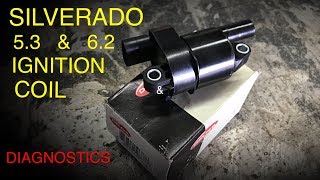
Typical fix: Replace the faulty ignition coil. It is held on by two 10mm bolts. 🎬 See this walkthrough for replacing the ignition coil on your Sierra. It's also wise to replace the spark plug at the same time, as a worn plug can stress the new coil.
Est. part cost: $45-$90 - Wiring or Connector Issue 🟡 Medium Probability The connection at the ignition coil can become loose or corroded from moisture and heat cycles. A forum user on GM-Trucks.com reported fixing a similar misfire code (P0305) by simply re-securing a loose spark plug wire at the coil. On V8 models, the spark plug wire for cylinder #5 is near the steering shaft, and some aftermarket wires can be long enough to rub against it, causing damage over time.
How to confirm: Visually inspect the wiring harness connector at the cylinder #5 coil for corrosion, backed-out pins, or damage. Ensure the spark plug wire is firmly clicked onto both the coil and the spark plug. Check for chafing on the spark plug wire near the steering shaft.
Typical fix: Clean the connector terminals or repair the damaged section of the wiring harness. Ensure all connections are secure. Applying dielectric grease to the connector can prevent future moisture intrusion. If a spark plug wire is chafed, replace it and use a zip tie to secure it away from moving parts.
Est. part cost: $5-$50 - Worn or Faulty Spark Plug ⚪ Low Probability While spark plugs are durable, a plug with excessive electrode wear, a cracked porcelain insulator, or heavy fouling can increase the electrical load on the ignition coil, potentially contributing to the circuit fault or coil failure.
How to confirm: Remove the spark plug from cylinder #5 and inspect it. Look for a cracked porcelain insulator, excessive electrode wear (a very large gap), or heavy fouling from oil or carbon. A fuel-soaked plug points to a lack of spark.
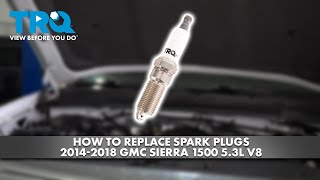
Typical fix: Replace the spark plug. It is recommended to replace all spark plugs as a set if they are near the end of their 100,000-mile service life. 🎬 Watch: How to replace the spark plugs on a 5.3L V8.
Est. part cost: $8-$25
Rare But Worth Checking
- Powertrain Control Module (PCM) Fault: While very rare, the internal driver circuit in the PCM that controls the ignition coil can fail. This should only be considered after the coil, spark plug, and wiring have been definitively ruled out.
Technical Service Bulletins (TSBs) & Recalls
Manufacturer service bulletins indicate that P0355 can sometimes appear as part of a larger electrical or engine management fault. TSB Bulletin #PIT5677 and TSB Bulletin #PIT5677E note that P0355 may be found in combination with a wide array of other DTCs, such as P001A, P0107, and P0340, during electrical system diagnostics. Additionally, TSB Bulletin #PIP5038B (cross-reference for GMC Acadia) mentions that technicians may find P0355 alongside other ignition coil circuit codes (P0351-P0356) and misfire codes (P0300-P0306), advising that published service information diagnostics should be followed first.
Diagnosis Steps
- Read the code with an OBD-II scanner to confirm P0355 and check for any other codes, like P0305.
- Locate cylinder #5 (driver's side, third from the front for V8s).
- Inspect the ignition coil connector for loose pins, corrosion, or damage. Ensure the spark plug wire is secure at both ends. Check for chafing near the steering shaft.
- If the wiring looks good, swap the cylinder #5 ignition coil with the coil from cylinder #3 (an adjacent, easy-to-access cylinder).
- Clear the diagnostic trouble codes with the scanner.
- Start the engine and let it run for a few minutes, including a short test drive if safe.
- Re-scan for codes. If the code is now P0353 ('Ignition Coil C Circuit'), the coil you moved is faulty and must be replaced.
- If the code P0355 returns, the problem is in the wiring harness or, rarely, the PCM. The coil and plug are likely good.
- If the wiring is the suspected cause, use a multimeter to check for 12V power at the coil connector (with key on) and for continuity on the ground and signal wires back to the PCM.
Parts You'll Likely Need
- Ignition Coil
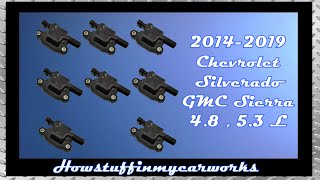
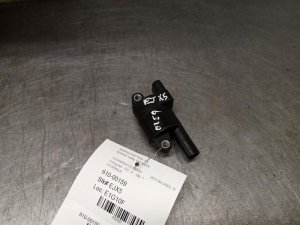
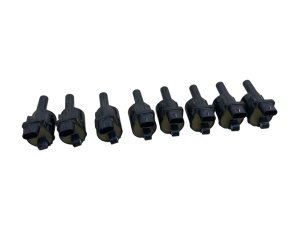
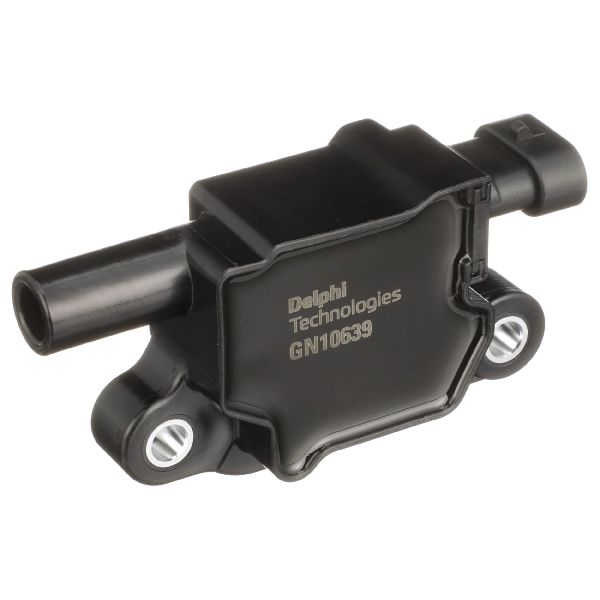
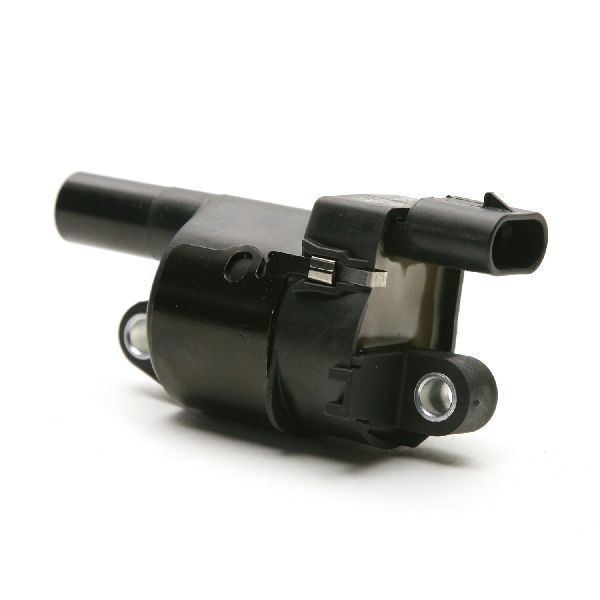
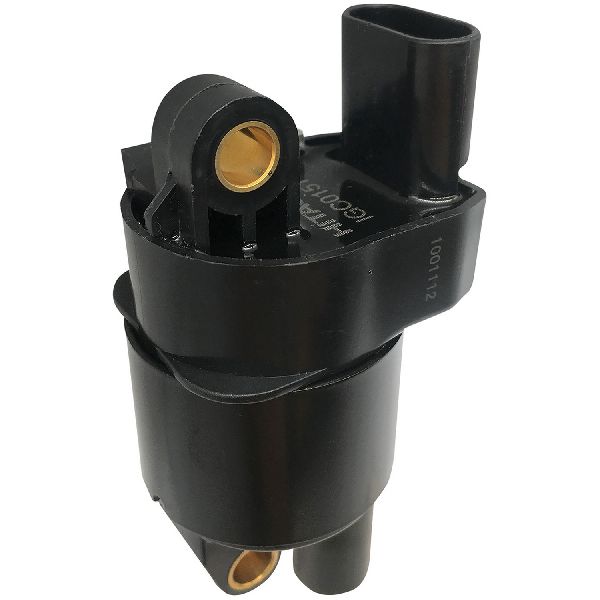
(OEM #12619161, 12699383)— This is the most common failure part for code P0355. Note: GM used different coil designs ('square' vs 'round/D-shape'). Visually confirm which style your truck has before ordering. Part number 12619161 is for the early 'square' shaped Delphi coil. Part number 12699383 (or 12674754) is for the later 'round' or 'D-shaped' Melco coil.
Trusted brands: ACDelco
OEM price range: $45-$90
Aftermarket price range: $30-$60 - Spark Plug
(OEM #41-114 (Iridium))— It is good practice to replace the spark plug when replacing a coil, as a worn plug can stress the new coil. A faulty plug can also be a contributing cause of the code.
Trusted brands: ACDelco, NGK
OEM price range: $10-$20
Aftermarket price range: $8-$15 - Spark Plug Wire Set — If the spark plug wire is found to be loose, damaged, or chafed against the steering shaft, it should be replaced. It's best to replace them as a set.
Trusted brands: ACDelco, Ultima
OEM price range: $50-$80
Aftermarket price range: $30-$60
Related Codes That Often Appear With This One
- P0305 — P0305 means 'Cylinder 5 Misfire Detected.' A fault in the ignition coil circuit (P0355) prevents the spark plug from firing, which directly causes a misfire on that cylinder. 🎬 Watch: A detailed explanation of the P0355 code and its causes.
Mechanic-Grade Diagnostic Values
- Ignition Coil Primary Winding Resistance — expected: 0.4 to 2.0 ohms. Failure: A reading of 0 ohms indicates a short, while a very high or infinite reading (OL) indicates an open circuit in the primary winding.
- Ignition Coil Secondary Winding Resistance — expected: 6,000 to 10,000 ohms (6k-10k Ω). Failure: A reading significantly outside this range indicates a faulty secondary winding.
- Ignition Coil Connector - Power Pin Voltage — expected: ~12V (Battery Voltage) with Key On, Engine Off. Failure: A reading of 0V points to a blown fuse, faulty relay, or a break in the power supply wire.
- Ignition Coil Connector - Signal Wire Continuity to PCM — expected: < 5 ohms. Failure: A reading higher than 5 ohms suggests high resistance from corrosion or a frayed wire. A reading over 10,000 ohms (10k Ω) indicates an open circuit.
- Ignition Coil Connector - Signal Wire Short-to-Ground — expected: > 10,000 ohms (10k Ω). Failure: A low resistance reading (e.g., < 100 ohms) indicates the signal wire is shorted to ground.
Scan Tool Commands That Help
- GDS2 / Professional Bidirectional Scanner: Ignition Coil Test / Actuator Test — After confirming the wiring has power and ground, this command allows a technician to manually command the PCM to fire the cylinder #5 coil. This helps isolate the fault by verifying if the PCM driver and the signal wire are functioning correctly. If the command is sent but no spark occurs (verified with a spark tester), the coil itself is highly suspect.
- GDS2 / Professional Scanner: Ignition System Live Data Monitoring — While the engine is running (or cranking), a technician can monitor the 'Ignition Coil Control Circuit Status' and 'Cylinder 5 Misfire Count'. Seeing a fault status other than 'OK' for the coil 5 circuit while the misfire counter for cylinder 5 increases in real-time confirms the direct link between the electrical fault and the performance issue.
Wiring & Ground Locations
- Ignition Coil Connector (X115) — On the driver's side valve cover, third coil from the front of the engine for V8 models.. This 4-pin connector is the final connection to the ignition coil. It contains pins for Ignition 1 Voltage (power), Ground, Ignition Control (signal from PCM), and a Low Reference signal. Corrosion, spread terminals, or wire damage right at the connector is a common cause of P0355.
- G103 / G104 — These are primary engine block grounds. On K2XX trucks, a key ground is on the rear of the driver's side cylinder head (often a braided strap to the firewall), and another is on the front of the passenger side cylinder head.. A loose or corroded main engine ground can create an unstable voltage reference for the entire engine management system. This can cause the PCM to misinterpret the feedback signal from the ignition coil driver, potentially setting a P0355 code even if the coil and its dedicated wiring are good.
Real Owner Repair Stories
- Ford Truck Enthusiasts Forums (2005 Ford E-250 5.4L (Note: Different vehicle, but identical code and failure mechanism)) — P0355 code, engine misfire, and repeated failure of new ignition coils on cylinder #5 within minutes of installation. The new coils would physically split open and leak potting compound.
❌ Tried (didn't work) Replacing the ignition coil (failed three times), Replacing the spark plug
✅ What actually fixed it The internal driver circuit in the Powertrain Control Module (PCM) was shorting to ground, causing the coil to overheat and fail catastrophically. Replacing the PCM with a rebuilt unit resolved the issue permanently.
OEM Part Supersession History
12619161→12723610— Standard part evolution and potential design improvement.
Heads up: Part number 12619161 is the 'square' body coil, typically used on 2014 models. Later models switched to a 'round' or 'D-shaped' coil (like 12699383). While they may physically mount, the internal electronics expect different dwell times from the PCM. Always replace with the same style that was removed to avoid misfire issues.
Model Year Variations Within This Range
- 2014: The 2014 model year was a 'first design' year and primarily used 'square' shaped ignition coils (Delphi type, P/N 12619161).
- 2015-2018: Sometime during or after 2014, production switched to a 'second design' using 'round' or 'D-shaped' ignition coils (Melco type, P/N 12699383 or similar). The PCM programming is different between the two coil types due to different required dwell times.
Diagnostic Flowchart
Other Known Issues on This Vehicle
Issues unrelated to this code that are worth knowing about as an owner of this generation:
- 8-Speed Transmission Torque Converter Shudder 🟠 Medium — Very common on vehicles with 8L90 and 8L45 transmissions. Feels like driving over rumble strips at low RPMs. (Ref: TSB 18-NA-355)
- AFM/DFM Lifter Failure 🔴 High — A well-documented and frequent point of failure on 5.3L and 6.2L V8s, often occurring between 50k-120k miles. Symptoms include a persistent ticking noise, misfires (e.g., P0300), and potential camshaft damage.
- A/C Condenser Leak 🟠 Medium — Common on 2014-2017 models, where the condenser can crack and leak refrigerant, causing the A/C to stop blowing cold air. (Ref: TSB PIP5504E (for related issues))
- Brake Vacuum Pump Failure 🔴 High — A recall was issued for some 2014-2018 models where the vacuum pump output can decrease, leading to a hard brake pedal and increased stopping distance. (Ref: Recall 18V586000 / GM Recall N182202780)
- Excessive Oil Consumption 🟠 Medium — Some V8 engines with AFM can consume excessive amounts of oil, often related to the piston rings or PCV system, which can lead to fouled spark plugs and other issues.
- Poor Headlight Performance 🟡 Low — A widespread complaint for 2014-2015 models specifically, regarding poor visibility from the factory projector headlights.
Used vs. New Parts: Buying Guide for This Vehicle
When a used part is the smart pick: A used ignition coil from a junkyard is a reasonable choice for a quick, low-cost diagnosis or repair, especially to confirm a diagnosis by swapping. Since they are easy to access and replace, the labor investment is minimal if the used part fails.
Donor-vehicle mileage cap: roughly under 80000 miles for the part to have meaningful remaining life.
What to inspect on the donor part:
- Visually inspect the coil housing for any cracks, melting, or signs of leaking potting compound.
- Check the electrical connector pins for corrosion or damage.
- Ensure the spark plug boot is flexible and not brittle or torn.
- If possible, ask for the mileage of the donor vehicle; lower is always better.
OEM-only on this vehicle (don't cheap out):
- Powertrain Control Module (PCM) - Due to VIN programming and security requirements, a used PCM must be professionally reprogrammed. It is often safer to buy a remanufactured unit pre-programmed to your vehicle's VIN.
Aftermarket brands forum-validated for this vehicle:
- ACDelco (OEM)
- Delphi
- NGK
Brands owners have reported issues with on this vehicle:
- Unbranded, no-name ignition coils from online marketplaces are frequently cited on forums as having high premature failure rates. While the initial cost is low, they often do not last.
Real Owner Stories
Aggregated from forums and TSBs cited above. Mileages and costs reflect what owners reported in those sources.
2015 GMC Sierra
Symptoms: Engine misfire, triggering a P0305 code.
What fixed it: The problem was resolved by re-securing a loose spark plug wire at the ignition coil.
Source hint: GM-Trucks.com - A thread discussing a P0305 misfire on a 2015 Sierra
2015 Chevrolet Silverado 4.3L V6
Symptoms: A P0305 misfire accompanied by a ticking noise from the engine.
What fixed it: After replacing the coil, spark plug, and wire did not solve the issue, the owner was advised to check for a collapsed lifter.
Source hint: Reddit r/Silverado
2017 GMC Sierra 6.2L — 44000 miles
Symptoms: Cylinder 4 misfire and a P050D trouble code.
What fixed it: The root cause was diagnosed as a significant lifter failure, a known issue on these engines.
Source hint: GM-Trucks.com - A user with a 2017 6.2L Sierra
Related OBD-II Codes
Frequently Asked Questions
Where is cylinder #5 located on my 2015 GMC Sierra V8?
Is it safe to diagnose a P0355 code by swapping ignition coils?
The spark plug wire for cylinder #5 seems to be rubbing against the steering shaft. Is this a known issue?
I have a P0355 code and a persistent ticking noise. Could this be related to the AFM lifter failures I've heard about?
If I replace the ignition coil for cylinder #5, should I also replace the spark plug?
My brakes feel hard and I have a P0355 code. Are these problems related?
Helpful Videos
Used OEM Parts in Stock


New Aftermarket Parts Available


The information in this article is provided for general reference and educational purposes only. Vehicle specifications, procedures, and part compatibility can vary by production date, trim level, and region. Always consult your vehicle's factory service manual and verify part numbers before purchasing or performing repairs. Safety-critical components such as airbags, seat belts, and braking systems should be installed by a qualified professional.
- GMC Sierra:
- 🎬 Helpful Videos
- 🛍️ Shop This Part
- What's Unique About the 2014-2018 GMC Sierra
- Symptoms You May Notice
- Most Likely Causes
- Rare But Worth Checking
- Technical Service Bulletins (TSBs) & Recalls
- Diagnosis Steps
- Parts You'll Likely Need
- Related Codes That Often Appear With This One
- Mechanic-Grade Diagnostic Values
- Scan Tool Commands That Help
- Wiring & Ground Locations
- Real Owner Repair Stories
- OEM Part Supersession History
- Model Year Variations Within This Range
- Diagnostic Flowchart
- Other Known Issues on This Vehicle
- Used vs. New Parts: Buying Guide for This Vehicle
- Real Owner Stories
- 2015 GMC Sierra
- 2015 Chevrolet Silverado 4.3L V6
- 2017 GMC Sierra 6.2L — 44000 miles
- Related OBD-II Codes
- Frequently Asked Questions
- 🎟️ Get 5% Off