

P0354 on 2007-2011 Toyota Camry 3.5L V6: Ignition Coil 'D' Circuit Causes and Fixes
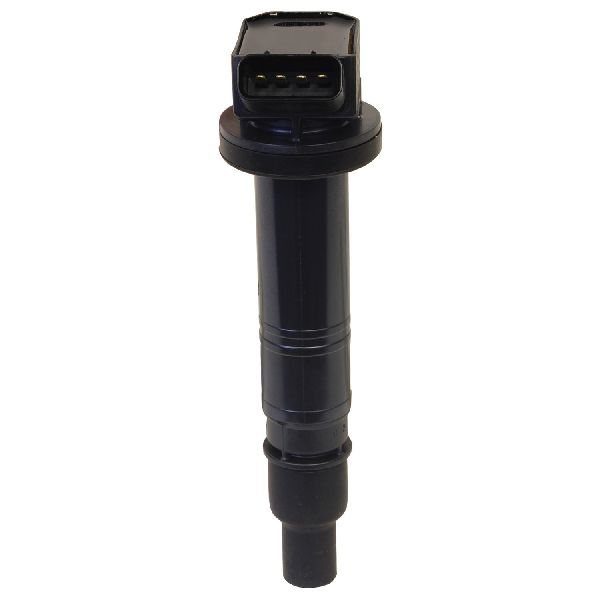
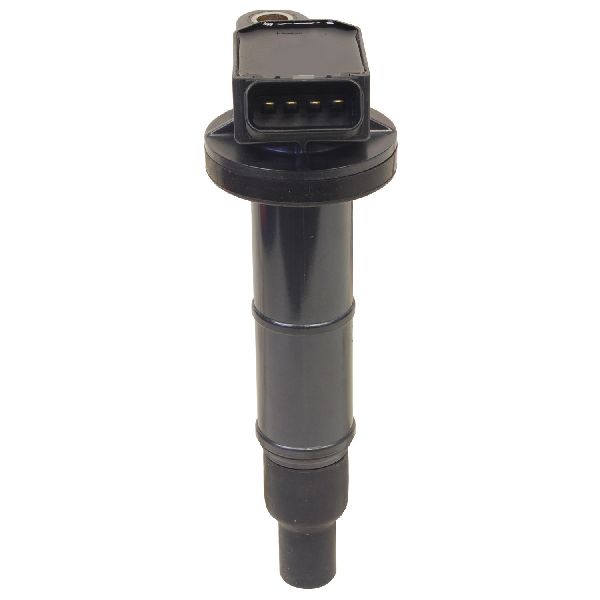
This code means the ignition coil on cylinder #4 has failed. On the Camry 3.5L V6, cylinder #4 is on the easy-to-access front bank, making this a simple 15-minute DIY fix. Expect to pay $60-$95 for a quality replacement coil. The connector clip is known to become brittle and break, so be careful during removal.
- P0354 on this Camry V6 points to the ignition coil for cylinder #4.
- Cylinder #4 is on the front bank near the radiator, making it extremely easy to access and replace.
- The most likely cause is a failed ignition coil, which can be confirmed with a simple 'coil swap' test to another cylinder.
- This is a great DIY repair that can be done in under 30 minutes with a single 10mm socket, saving hundreds in labor costs.
- Use a quality replacement coil, such as one from Denso or the latest OEM part (90919-A2013), to ensure longevity.
- Be very gentle with the coil's electrical connector, as the locking tab is known to become brittle and break easily.
What's Unique About the 2007-2011 Toyota Camry

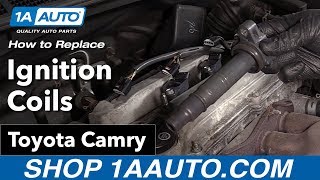
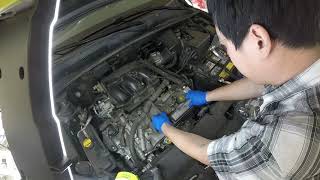
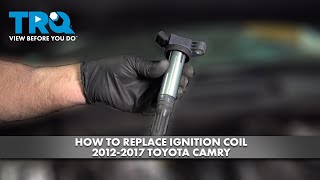
While ignition coils are a common failure item on many engines, the 2GR-FE V6 has a specific quirk: the repair difficulty varies dramatically by cylinder. The front bank (cylinders 2, 4, 6) is fully exposed, while the rear bank (cylinders 1, 3, 5) is buried under the intake manifold. Luckily, P0354 points to cylinder #4, which is on the front bank, making it one of the easiest and cheapest repairs on this engine. 🎬 Watch: Step-by-step guide to replacing your ignition coils. Toyota has also released several updated ignition coil part numbers to improve reliability.
Symptoms You May Notice
- Check Engine Light is on
- Flashing Check Engine Light (during misfire)
- Rough idle or engine vibration.
- Noticeable loss of power and acceleration.
- Hesitation when accelerating.
- Reduced fuel economy.
- Difficulty starting the engine.
- Replacing the rear (firewall side) ignition coils when the code is for a front (radiator side) coil. It is critical to correctly identify cylinder #4 as being on the front bank.
- Replacing the ignition coil when the actual fault is a broken wire or terminal at the connector pigtail.
Most Likely Causes

- Failed Ignition Coil 🔴 High Probability This is a known common failure item on the 2GR-FE engine, to the point that Toyota has released multiple redesigned parts to improve durability.
How to confirm: Swap the ignition coil from cylinder #4 with the coil from cylinder #2 (another front-bank cylinder). Clear the codes. If the code changes to P0352, the coil is faulty.
Typical fix: Replace the faulty ignition coil. Since it's a simple job, it's also a good time to replace the spark plug for that cylinder.
Est. part cost: $60-$130 - Damaged Wiring or Connector 🟡 Medium Probability The plastic locking tab on the ignition coil connector becomes brittle from engine heat and age, and can easily break when you try to unplug it. This is a very common complaint. In some cases, a dealer may suggest a full engine wire harness replacement if the P0354 code persists, as noted in NHTSA ODI #11052055.
How to confirm: Visually inspect the wiring harness and the plastic connector going to the cylinder #4 ignition coil. Look for brittle or broken wires, especially at the point where they enter the connector. Check for corrosion on the connector pins. Wiggle the connector with the engine running to see if it induces a misfire.
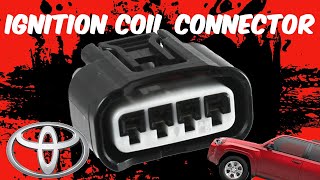
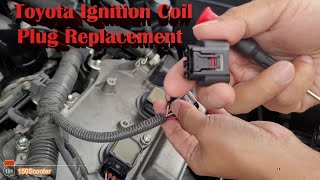
Typical fix: If the plastic locking tab is broken, the connector may just need to be secured with a zip tie as a temporary fix. If wires are broken or the connector housing is crumbled, the connector pigtail will need to be replaced. This involves cutting the old connector off and splicing the new one in. 🎬 Watch: How to replace a broken ignition coil connector pigtail.
Est. part cost: $15-$40 - Worn or Fouled Spark Plug ⚪ Low Probability
How to confirm: After removing the ignition coil, remove the spark plug with a spark plug socket. Inspect for wear, carbon buildup, or oil fouling. A worn plug with a very large gap can overwork and damage the ignition coil.
Typical fix: Replace the spark plug. If the plug is fouled with oil, the valve cover gasket and spark plug tube seal may need to be replaced to prevent future failures.
Est. part cost: $10-$20
Rare But Worth Checking
- Failed Engine Control Module (ECM): This is extremely rare. All other possibilities, including wiring faults, should be exhaustively checked before considering ECM replacement. However, a TSB (TSB-0047-10) was issued for P035x codes that could, in some cases, point to an ECM issue.
Diagnosis Steps

- Verify the code P0354 with an OBD-II scanner. Note any other codes, such as P0304.
- Identify cylinder #4. On the 2GR-FE V6, the cylinders on the front bank (near the radiator) are, from passenger to driver side: 2, 4, 6. The rear bank is 1, 3, 5. Cylinder #4 is the middle one in the front.
- Carefully inspect the electrical connector and wiring at the cylinder #4 coil. The locking tab is fragile. Look for broken wires, corrosion, or a loose fit.
- Perform a 'coil swap test'. Unplug the connector and remove the 10mm bolt holding the ignition coil in cylinder #4. Remove the coil.
- Swap this coil with the one from cylinder #2 (the easiest one to access next to it).
- Clear the fault codes with the scanner, start the engine, and let it run for a minute.
- Re-scan for codes. If the code is now P0352 ('Ignition Coil B'), the ignition coil you moved is bad and needs to be replaced.
- If the code remains P0354, the problem is not the coil. The issue is likely in the wiring to cylinder #4 or the spark plug.
- If the wiring appears good, remove and inspect the spark plug for wear or damage. Replace if necessary. A heavily worn spark plug can overwork and kill a new coil.
- If the coil and plug are good, use a multimeter to check for battery voltage and ground at the coil connector. Check for the trigger signal from the ECM using a noid light or oscilloscope. This will confirm if the wiring and ECM driver are functioning.
Parts You'll Likely Need

- Ignition Coil
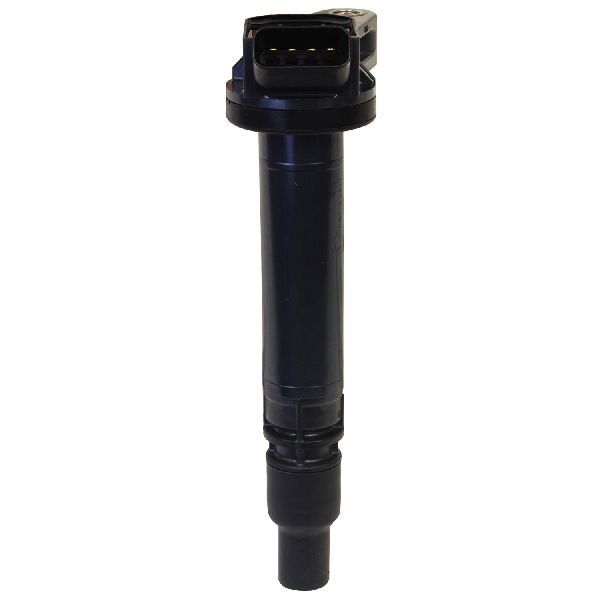
(OEM #90919-A2013)— This is the most common cause of P0354. Toyota has updated this part multiple times; 90919-A2013 is a recent revision, superseding 90919-A2007, 90919-A2004, 90919-A2002, and 90919-02251.
Trusted brands: Denso (OEM manufacturer), NGK, Aisin
OEM price range: $90-$130
Aftermarket price range: $60-$95 - Iridium Spark Plug
(OEM #90919-01247)— A worn spark plug can cause the ignition coil to fail. It is best practice to replace the plug when replacing the coil, as the labor is already done.
Trusted brands: Denso (FK20HR11), NGK (IFR6T11)
OEM price range: $15-$25
Aftermarket price range: $10-$18 - Ignition Coil Connector Pigtail
(OEM #90980-11885)— The original connector's locking tab often becomes brittle and breaks, leading to a poor connection. If the housing crumbles or wires break, a replacement pigtail is needed.
Trusted brands: Toyota, Dorman, Duralast (CONB11308)
OEM price range: $25-$40
Aftermarket price range: $15-$30
Related Codes That Often Appear With This One
- P0304 — P0304 means 'Cylinder 4 Misfire Detected'. P0354 is the specific electrical cause for the misfire that P0304 reports.
- P0300 — P0300 means 'Random/Multiple Cylinder Misfire'. This can occur with P0354 if the misfire is severe enough to be detected on other cylinders or if there are multiple failing coils.
Technical Service Bulletins (TSBs) & Recalls
- TSB-0047-10: A TSB was issued for some 2GR-FE equipped vehicles that may exhibit a MIL ON with codes P0351-P0356. The bulletin notes that this could be caused by either a faulty coil or, in some cases, the ECM.
Platform-Specific Known Issues
- Brittle Ignition Coil Connectors: The plastic connectors for the ignition coils on the 2GR-FE engine are known to become extremely brittle over time due to engine heat cycles. The small locking tab that holds the connector securely onto the coil is often the first part to break, even with careful handling. This can lead to a loose connection, causing intermittent misfires and codes like P0354. Many owners report breaking these clips during routine maintenance.
Mechanic-Grade Diagnostic Values
- Ignition Coil Connector Power Supply — expected: Battery voltage (~12.6V with key on, engine off). Failure: Voltage significantly below battery voltage or 0V indicates a wiring issue.
- Ignition Coil Connector Pinout (at connector) — expected: Pin 1: Brown (Power, ~12V KOEO); Pin 2: White/Blue (IGF Signal); Pin 3: Unique color per cylinder (IGT Signal from ECM); Pin 4: White/Black (Ground). Failure: Incorrect voltages or open/short on any pin.
- Spark Plug Insulation Resistance — expected: 10 MΩ or higher. Failure: A reading below 10 MΩ suggests the plug is fouled and may cause misfires.
- Spark Plug Gap — expected: New: 1.0 to 1.1 mm; Used Max: 1.4 mm. Failure: Gap exceeding 1.4mm on a used plug can overwork and damage the ignition coil.
- IGT and IGF Waveform (Oscilloscope) — expected: Check waveform between terminals IGT/IGF and E1 (ground) at the ECM. Equipment setting: 2 V/DIV, 20 msec./DIV. A proper square wave should be present for IGT and a confirmation pulse for IGF while engine is running.. Failure: Missing or distorted waveform on the IGT or IGF channel points to a wiring or ECM driver issue.
Hidden / Shadow Codes Worth Checking
- Mode $06 Misfire Counters: This is not a DTC, but a function within a professional scan tool that shows the raw count of misfire events per cylinder. It can confirm that cylinder #4 is the source of the misfire associated with P0354, even if a P0304 has not yet set. (see via Toyota Techstream software or other advanced scan tools. Navigate to: Powertrain / Engine / Data List and search for 'Misfire RPM' or misfire counts for each cylinder.)
Scan Tool Commands That Help
- Toyota Techstream: Active Test Menu — While no specific 'Ignition Coil' active test is consistently available, this menu allows activation of various relays and solenoids. A technician can use it to rule out other system faults. For example, activating fuel injectors can help differentiate between a fuel and spark issue.
- Toyota Techstream: Utility -> All Readiness — After performing a repair (like replacing the coil), clear the DTCs. Then, run the engine and use this utility to check the status of the P0354 monitor. If the result shows 'NORMAL', the fix is confirmed. If it shows 'INCOMPLETE', more driving is needed. If it shows 'ABNORMAL', the fault persists.
Wiring & Ground Locations
- Engine Harness Ground (Cylinder Head) — On the side of the front cylinder head, underneath the throttle body area. A bundle of ground wires from the engine harness attaches to a boss on the head.. A poor ground connection at this point can cause erratic behavior and fault codes for multiple sensors and actuators, including the ignition coils.
- Valve Cover Grounds — The 2GR-FE has ground wires that attach directly to metal brackets on the valve covers.. These grounds are critical for the components mounted on the cylinder heads. While the coil itself is grounded through the harness, ensuring all engine grounds are clean and tight is a key step in diagnosing persistent electrical faults.
- Ignition Coil Connector (C14 for Cyl 4) — The 4-pin connector directly on top of the ignition coil for cylinder #4 (middle coil on the front bank).. This is the primary point of failure for wiring issues. The pins are: 1 (+B Power), 2 (IGF to ECM), 3 (IGT from ECM), 4 (Ground). Checking for power, ground, and signal integrity at this connector is the main wiring diagnostic step.
Real Owner Repair Stories
- YouTube channel 'Lee-Jamo' (Toyota with 2GR engine, likely a Camry or similar.) — Check engine light with code P0354 and misfiring.
❌ Tried (didn't work) The mechanic immediately suspected the coil.
✅ What actually fixed it The mechanic performed a coil swap, moving the coil from cylinder 4 (D) to another cylinder. The fault code followed the coil. Replacing the bad ignition coil for cylinder #4 with a new one and clearing the codes resolved the issue completely. - Carly Community Forum (2003 Toyota Camry (Note: older model, but same diagnostic principle)) — Persistent P0354 code, loss of power, weird engine noise.
❌ Tried (didn't work) Replacing the ignition coil did not fix the problem; the code returned immediately.
✅ What actually fixed it The confirmed fix was not posted by the user, but the expert advice given was to meticulously inspect the wiring and connector leading to the coil for damage or corrosion, and if the wiring is perfect, the next step is to test the ignition control module or the ECM itself. This highlights the next steps when a simple coil swap fails. - NHTSA ODI #10969044 — An owner of a similar Toyota model reported that P0354 was thrown and they replaced the coil on cylinder 4, noting that this was not the first time ignition coils had failed on the vehicle.
OEM Part Supersession History
90919-02251, 90919-A2002, 90919-A2004, 90919-A2007→90919-A2013— Part redesign to improve reliability and durability.
Model Year Variations Within This Range
- 2007-2011: The 3.5L 2GR-FE V6 engine and its coil-on-plug ignition system were used consistently throughout this generation of Camry. No significant variations affecting the diagnosis or repair of P0354 are noted.
Diagnostic Flowchart
Other Known Issues on This Vehicle
Issues unrelated to this code that are worth knowing about as an owner of this generation:
- Rupturing VVT-i Oil Line (Rubber Section) 🔴 High — Common on early 2GR-FE engines (approx. 2005-2010). Failure can be sudden and lead to catastrophic engine failure from oil starvation. (Ref: Limited Service Campaign (LSC) issued by Toyota to replace the rubber/metal line with an all-metal version (Part: 15772-31030).)
- Melting / Sticky Dashboard 🟡 Low — Very common in hot climates. The dashboard material degrades, becoming shiny, sticky, and soft. (Ref: Warranty Enhancement Program (ZE6) was issued to cover replacement, but the program had deadlines.)
- Water Pump Failure 🟠 Medium — A known failure point, often starting as a slow coolant leak identifiable by pink/white crusty residue near the drive belt area. Labor-intensive repair on the V6.
- Transmission Shift Flare/Hesitation 🟠 Medium — Some owners report hesitation or a 'slip/flare' in the U660E 6-speed automatic transmission, particularly on the 3-4 shift when warm.
- VVT-i Cam Gear Rattle on Startup 🟡 Low — Some engines may develop a brief rattle on cold starts, attributed to the VVT-i cam gears. It is often considered an annoyance rather than a critical failure. (Ref: T-SB-0094-09 addresses certain VVT-i gear related codes and noises.)
Used vs. New Parts: Buying Guide for This Vehicle
When a used part is the smart pick: For this repair, a used part is generally not recommended for the ignition coil itself due to it being a common failure item with a finite lifespan. However, sourcing a used ignition coil *connector pigtail* from a junkyard is a very smart and cost-effective choice, especially if the donor car's harness is in good condition. The OEM plastic becomes brittle, and a used connector from a newer or lower-mileage vehicle can be a perfect fix.
Donor-vehicle mileage cap: roughly under 80000 miles for the part to have meaningful remaining life.
What to inspect on the donor part:
- For a connector pigtail: Check that the plastic is still flexible and not chalky or cracked.
- Press the locking tab; it should move freely without snapping.
- Ensure at least 4-6 inches of wire is attached for easier splicing.
- Look for clean, corrosion-free terminals inside the connector.
OEM-only on this vehicle (don't cheap out):
- Engine Control Module (ECM) - If required, a used ECM must be professionally reprogrammed or sourced with the exact same part number. For plug-and-play, a new or remanufactured VIN-matched unit is safest.
Aftermarket brands forum-validated for this vehicle:
- Denso (the original OEM supplier)
- NGK
- Aisin
- Bosch
Brands owners have reported issues with on this vehicle:
- Unbranded, no-name ignition coils sold in bulk packs on marketplaces. Forum users frequently report premature failure with these parts, sometimes within a few weeks or months.
Real Owner Stories
Aggregated from forums and TSBs cited above. Mileages and costs reflect what owners reported in those sources.
2007 Toyota Camry 3.5L V6
Symptoms: Check engine light on with error code P0354.
What fixed it: Identified cylinder #4 as the middle coil on the front bank; referenced TSB-0047-10 regarding potential ECM issues or faulty coils.
Source hint: Camry Forums (toyotanation.com) - A thread from 2011 discusses a user with a 2007 Camry and code P0354.
2007-2011 Toyota Camry 2GR-FE
Symptoms: The small locking tab that holds the connector securely onto the coil broke during handling.
What fixed it: The connector may be secured with a zip tie as a temporary fix, or the connector pigtail must be replaced by cutting and splicing a new one.
Source hint: vehicle_specific_issues - Brittle Ignition Coil Connectors
2007-2011 Toyota Camry 3.5L V6
Symptoms: Misfire symptoms and P035x codes.
What fixed it: Performed a coil swap test to confirm the failure moved to a different cylinder, then replaced the faulty coil with an updated Toyota part number.
Source hint: Reddit (r/MechanicAdvice)
Toyota Owner Report
Symptoms: Engine check light on with code P0354.
What fixed it: While a dealer suggested a new engine wire harness at a cost of $2,000, the owner performed their own repair after the P0354 code was identified (NHTSA ODI #11052055).
Related OBD-II Codes
Frequently Asked Questions
Where is cylinder #4 located on my 2007-2011 Camry V6?
Is there a TSB for the P0354 code on my Toyota Camry?
Why did the plastic clip on my ignition coil break when I tried to unplug it?
Can I swap coils to see if the part is actually bad?
Are there updated parts for the ignition coils on the 3.5L V6?
What should I do if my dashboard is also becoming sticky or shiny?
Helpful Videos
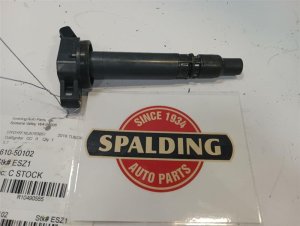
Used OEM Parts in Stock


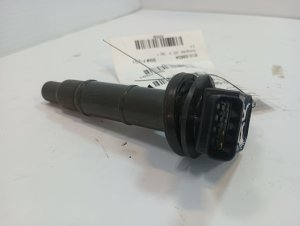
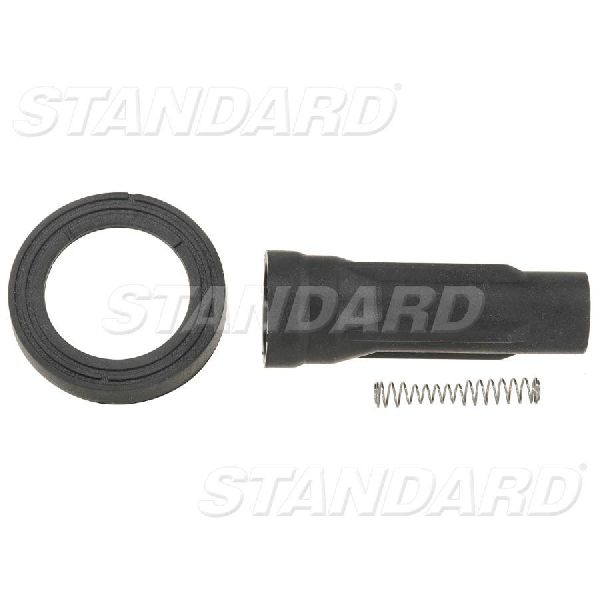
New Aftermarket Parts Available

The information in this article is provided for general reference and educational purposes only. Vehicle specifications, procedures, and part compatibility can vary by production date, trim level, and region. Always consult your vehicle's factory service manual and verify part numbers before purchasing or performing repairs. Safety-critical components such as airbags, seat belts, and braking systems should be installed by a qualified professional.
- Toyota Camry:
- 🎬 Helpful Videos
- 🛍️ Shop This Part
- What's Unique About the 2007-2011 Toyota Camry
- Symptoms You May Notice
- Most Likely Causes
- Rare But Worth Checking
- Diagnosis Steps
- Parts You'll Likely Need
- Related Codes That Often Appear With This One
- Technical Service Bulletins (TSBs) & Recalls
- Platform-Specific Known Issues
- Mechanic-Grade Diagnostic Values
- Hidden / Shadow Codes Worth Checking
- Scan Tool Commands That Help
- Wiring & Ground Locations
- Real Owner Repair Stories
- OEM Part Supersession History
- Model Year Variations Within This Range
- Diagnostic Flowchart
- Other Known Issues on This Vehicle
- Used vs. New Parts: Buying Guide for This Vehicle
- Real Owner Stories
- 2007 Toyota Camry 3.5L V6
- 2007-2011 Toyota Camry 2GR-FE
- 2007-2011 Toyota Camry 3.5L V6
- Toyota Owner Report
- Related OBD-II Codes
- Frequently Asked Questions
- 🎟️ Get 5% Off