

P0354 on 2008-2012 Honda Accord: Ignition Coil 'D' (Cylinder 4) Causes and Fixes
This code means the ignition coil on cylinder #4 has a problem. The most common fix is replacing the faulty ignition coil. On V6 models, this can also be related to a known issue of spark plugs fouling from oil consumption, which can stress and damage the coil.
- P0354 points to a problem with the ignition coil or circuit for cylinder #4.
- The most common fix is replacing the ignition coil for cylinder #4.
- A simple 'swap test' can confirm if the coil is the faulty component.
- On 3.5L V6 models, this code can be a symptom of a deeper issue with oil consumption fouling the spark plug, as detailed in Honda TSB 13-078.
- Always inspect the spark plug and wiring harness when addressing this code.
What's Unique About the 2008-2012 Honda Accord
While a bad coil is the most common cause on all engines, the 3.5L V6 in this Accord generation has a well-documented issue with piston rings that can lead to excessive oil consumption and spark plug fouling. A Service Bulletin (13-078) was issued for misfire codes (P0301-P0304) related to this. A severely oil-fouled spark plug requires much higher voltage to create a spark, which can overwork and eventually damage the ignition coil, leading to the P0354 circuit code. Therefore, if you have a V6 with code P0354, it is critical to inspect the spark plug for heavy, black, oily deposits, as this underlying condition could be the root cause.
Symptoms You May Notice
- Check Engine Light is on (may be flashing)
- Engine misfiring or running rough, especially at idle
- Noticeable loss of power and sluggish acceleration
- Reduced fuel economy
- Hesitation or stumbling when accelerating
- Smell of unburnt fuel from the exhaust
- Replacing the spark plug without checking if it's oil-fouled on a V6 model, which won't solve the root cause of piston ring blow-by.
- Replacing other ignition system components before performing the simple and definitive coil swap test.
- Assuming the ignition coil is bad when the underlying issue is a damaged wiring connector or harness.
Most Likely Causes
- Faulty Ignition Coil on Cylinder #4 🔴 High Probability Ignition coils are wear-and-tear components that fail over time due to high heat and vibration. It is the most common reason for a P035x code on this platform.
How to confirm: Perform a 'swap test'. Move the ignition coil from cylinder #4 to another cylinder (e.g., cylinder #3). Clear the codes and drive the vehicle. If the code returns as P0353, the ignition coil is confirmed to be faulty.
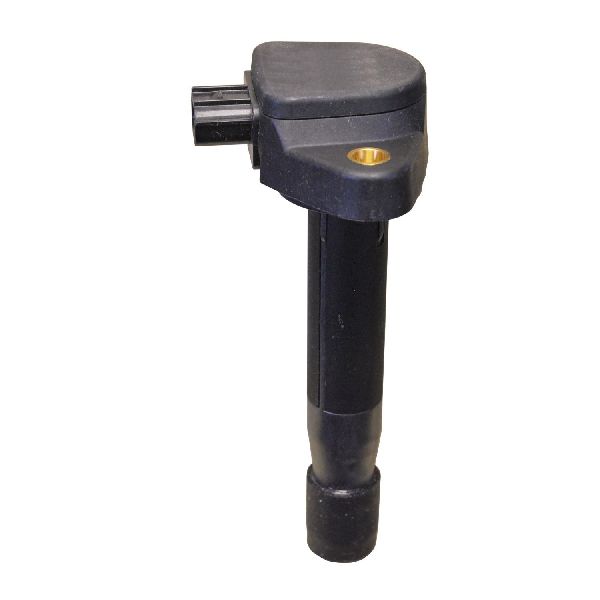
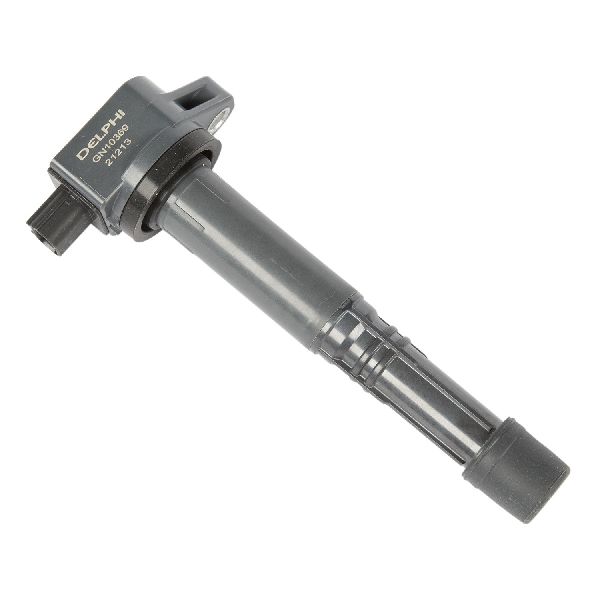
Typical fix: Replace the faulty ignition coil. It is often recommended to replace the corresponding spark plug at the same time. Many owners on forums recommend using OEM brands like Denso, Hitachi, or NGK for reliability, as cheap aftermarket coils can fail prematurely.
Est. part cost: $40-$90 - Worn or Fouled Spark Plug in Cylinder #4 🟡 Medium Probability On V6 models, a known piston ring issue can cause oil to foul the spark plugs, leading to misfires and potentially damaging the ignition coil (see TSB 13-078). On all engines, spark plugs are a regular maintenance item that can fail with age.
How to confirm: Remove the spark plug from cylinder #4. Inspect it for wear, damage, or fouling (especially black, oily deposits on V6 models). A healthy plug should have a light tan or grayish deposit.
Typical fix: Replace the spark plug. If oil fouling is present on a V6, the underlying oil consumption issue should be investigated, which may require a PCM software update or more extensive engine repair as outlined in TSB 13-078.
Est. part cost: $10-$25 - Damaged Wiring or Connector ⚪ Low Probability Rodents are known to build nests under the engine cover and chew on the ignition coil wiring harnesses, causing an open or short circuit. The connector's plastic locking tab can also become brittle and break, leading to a loose connection.
How to confirm: If the coil swap test does not move the code, visually inspect the wiring harness and connector for the cylinder #4 ignition coil. Look for any signs of breaks, corrosion, melting, loose pins, or chew marks. A 'wiggle test' on the harness with the engine running may cause the misfire to change, indicating a wiring issue.
Typical fix: Repair the damaged section of wire or replace the connector pigtail. In a documented case on a 2021 Accord, rodent-damaged wires were soldered to fix a P0354 code.
Est. part cost: $15-$40
Rare But Worth Checking
- Faulty Powertrain Control Module (PCM): This is the least likely cause. A faulty coil driver circuit within the PCM can trigger this code. All other possibilities, especially coil, plug, and wiring, should be exhausted before considering PCM replacement, which requires professional diagnosis and programming.
Diagnosis Steps
- Read the trouble codes with an OBD-II scanner to confirm P0354 and check for any other codes like P0304.
- Identify cylinder #4. For the 2.4L I4, it's the last one on the driver's side. For the 3.5L V6, it's the front-most cylinder in the bank near the radiator.
- Swap the ignition coil from cylinder #4 with the coil from another cylinder (e.g., cylinder #3).
- Clear the codes with the scanner and start the engine. Let it run and/or take a short drive.
- Re-scan for codes. If the code is now P0353, the ignition coil you moved is bad and needs to be replaced.
- If code P0354 returns, the coil is likely good. The problem is probably the spark plug or the wiring.
- Turn off the engine and remove the ignition coil from cylinder #4 again. Remove the spark plug.
- Inspect the spark plug for excessive wear, damage, or fouling (carbon or oil). If the plug is bad, replace it. On V6 models, oil fouling is a major red flag for the piston ring issue described in TSB 13-078.
- If the plug and coil are good, carefully inspect the wiring connector and harness for cylinder #4's coil. Check for loose connections, corrosion, or damaged wires (chew marks from rodents are a possibility). Ensure the connector clicks securely into place.
- When installing the new coil, apply a small amount of dielectric grease to the inside of the boot to protect against moisture and ensure a good seal on the spark plug.
- If all of the above check out, the issue may be with the PCM, which requires professional diagnosis.
Parts You'll Likely Need
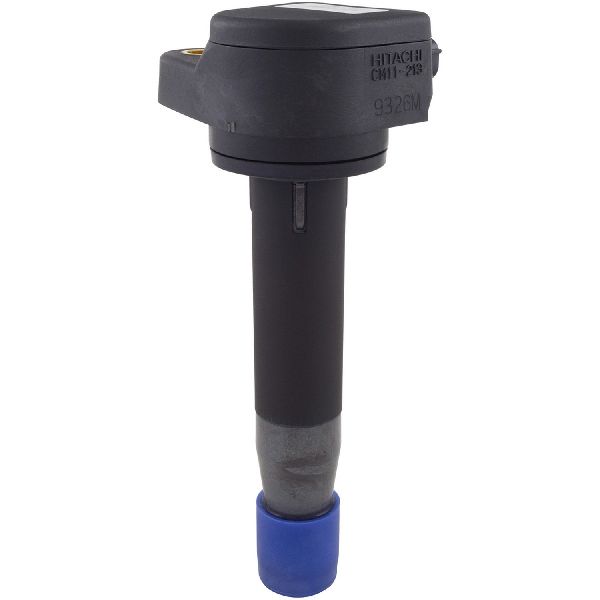
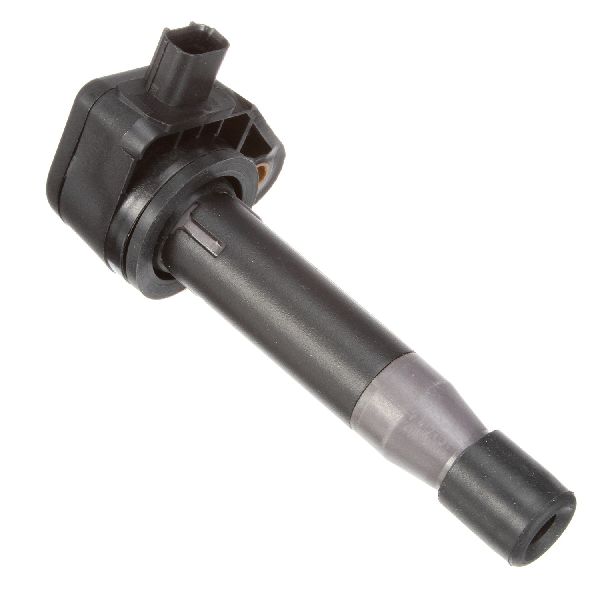
- Ignition Coil (for 2.4L 4-Cylinder)
(OEM #30520-R40-007)— This is the most common failure part for code P0354 on the 4-cylinder model.
Trusted brands: Hitachi (often OEM), Denso, NGK
OEM price range: $70-$105
Aftermarket price range: $40-$80 - Ignition Coil (for 3.5L V6)
(OEM #30520-R70-A01 (may be superseded by 30520-R70-S01))— This is the most common failure part for code P0354 on the V6 model.
Trusted brands: Hitachi (often OEM), Denso, NGK
OEM price range: $85-$125
Aftermarket price range: $45-$90 - Spark Plug (for 2.4L 4-Cylinder)
(OEM #Denso: SKJ20DR-M13 or NGK: ILZKR7B-11S)— Often replaced with the ignition coil as a set, or if it is found to be worn or fouled.
Trusted brands: NGK, Denso
OEM price range: $15-$25
Aftermarket price range: $8-$18 - Spark Plug (for 3.5L V6)
(OEM #Denso: SKJ20DR-M11 or NGK: IZFR6K-11)— Often replaced with the ignition coil. Crucial to inspect and replace if oil-fouled due to the known piston ring issue.
Trusted brands: NGK, Denso
OEM price range: $15-$25
Aftermarket price range: $8-$18
Related Codes That Often Appear With This One
- P0304 — P0304 means 'Cylinder 4 Misfire Detected'. Since the P0354 code indicates a problem with the component that creates the spark for cylinder 4, it is very common for the computer to also detect the resulting misfire.
- P0301, P0302, P0303 — On V6 models, if the oil consumption issue is severe, it's possible to see misfire codes on other cylinders covered by TSB 13-078 (cylinders 1-4) in addition to the P0354 circuit code.
Technical Service Bulletins (TSBs) & Recalls
- 13-078 - Warranty Extension: MIL Comes On with DTCs P0301 thru P0304
Platform-Specific Known Issues
- Honda Service Bulletin 13-078 addresses a warranty extension for 2008-2012 Accord V6 models due to a class-action lawsuit. The issue involves piston rings on cylinders 1-4 rotating and aligning, causing excessive oil consumption and spark plug fouling, which leads to misfire DTCs (P0301-P0304). A severely fouled plug can damage the ignition coil, triggering P0354. The fix involves a PCM software update for 2008-11 models, and if the problem persists or for 2012 models, cleaning pistons and replacing the piston rings.
Mechanic-Grade Diagnostic Values
- Ignition Coil Primary Winding Resistance — expected: 0.49 - 0.57 Ohms. Failure: A reading of OL (Open Loop/infinity) or significantly outside this range indicates a faulty coil.
- Ignition Coil Secondary Winding Resistance — expected: 9.5 - 11.1 kOhms (kilo-ohms). Failure: A reading of OL (Open Loop/infinity) or significantly outside this range indicates a faulty coil.
- Ignition Coil Connector - Power Wire Voltage — expected: Battery Voltage (approx. 12V) with Key On, Engine Off.. Failure: 0V or low voltage indicates a problem with the power supply from the main relay or a break in the wire.
- Ignition Coil Connector - Ground Wire Resistance — expected: Less than 1 Ohm to a known good chassis ground.. Failure: High resistance or OL indicates a bad ground connection, which is critical for coil operation.
- Ignition Coil Connector - Signal Wire Frequency (Advanced) — expected: 5 - 20 Hz on a multimeter's frequency (Hz) setting while the engine is idling.. Failure: A reading of 0 Hz or an erratic signal points to a problem with the trigger signal from the PCM or a break in the signal wire.
Scan Tool Commands That Help
- Honda HDS (or advanced aftermarket scanner): Coil Driver Test / Actuator Test — After confirming power and ground are good at the coil connector, this command forces the PCM to send a trigger signal to the coil. It can be used with a test light or scope on the signal wire to confirm the PCM driver and wiring integrity without the engine running.
- Honda HDS: ALL INJECTORS STOP — This is a related diagnostic function that can be used to isolate systems. While not directly for testing the coil circuit, it demonstrates the type of bidirectional control available in the dealer-level software to aid in complex diagnostics.
Wiring & Ground Locations
- G101 (Main Engine/PCM Ground) — On the driver's side of the engine bay, typically bolted to the intake manifold or thermostat housing. It is a collection of ground wires consolidated to a single bolt-down point.. This is the primary ground reference for the PCM and the entire engine sensor network. A loose or corroded G101 can cause erratic behavior across the ignition system, leading to intermittent misfires and codes like P0354 that are difficult to diagnose.
- Cylinder 4 Ignition Coil Connector — Plugged directly into the top of the ignition coil for cylinder #4.. This 3-pin connector provides the coil with power, ground, and the trigger signal from the PCM. The pins are typically: Pin 1 - Signal (IGT) from PCM; Pin 2 - Ground; Pin 3 - 12V+ Power (Key On). Wire colors must be verified, but are often Black/Yellow (Power), Black (Ground), and a third color for the signal. A fault in this connector or its wiring is a direct cause of P0354.
Real Owner Repair Stories
- Reddit user on r/autorepair (Mazda 3 (similar coil-on-plug system)) — Check Engine Light with code P0354. Car ran fine with maybe slightly weaker acceleration.
❌ Tried (didn't work) Replaced the ignition coil for cylinder 4., Replaced the spark plug for cylinder 4., Cleared the code, but it returned.
✅ What actually fixed it The final fix was not posted by the user, but the top-voted advice from technicians was to address a likely wiring or connector issue. The recommendation was to use a small tool to slightly twist the female pins inside the plastic connector to increase their tension on the male pins of the new ignition coil, as loose pin fitment is a common cause for the code to return after parts replacement.
OEM Part Supersession History
30520-R70-A01→30520-R70-S01— Standard part revision by the manufacturer, likely for improved reliability or a change in supplier.
Heads up: The new part number (30520-R70-S01) is a direct replacement for the old one and is fully compatible with all 3.5L V6 models in this generation.
Diagnostic Flowchart
Used vs. New Parts: Buying Guide for This Vehicle
When a used part is the smart pick: A used part is a reasonable choice for a wiring harness connector pigtail if the original is broken or corroded. You can splice a used connector from a junkyard harness to save money over buying a new harness section. A complete used engine wiring harness is also a viable option if multiple connectors or wires are damaged by rodents.
Donor-vehicle mileage cap: roughly under 80000 miles for the part to have meaningful remaining life.
What to inspect on the donor part:
- For a connector pigtail, ensure the plastic is not brittle and the locking tab is intact.
- Check that the wire insulation is flexible and not cracked.
- Look for any signs of corrosion (green or white powder) on the metal pins inside the connector.
- If buying a full harness, ensure it came from a vehicle with no signs of engine fire or flood damage.
OEM-only on this vehicle (don't cheap out):
- Ignition Coils
- Spark Plugs
Aftermarket brands forum-validated for this vehicle:
- Hitachi (often the Original Equipment Manufacturer)
- Denso
- NGK
- Delphi
Brands owners have reported issues with on this vehicle:
- Unbranded, no-name ignition coils sold on marketplaces like Amazon or eBay are frequently reported on forums to fail prematurely, sometimes within weeks or months, causing the code to return.
Real Owner Stories
Aggregated from forums and TSBs cited above. Mileages and costs reflect what owners reported in those sources.
2013 Accord EX-L 4cyl (2.4 i-VTEC) — 70000 miles
Symptoms: The service engine light came on and started flashing, the car went into limp mode, and codes P0304 and P0354 appeared. The owner also noticed oil on the new spark plug for cylinder 4.
What fixed it: The issue was not resolved by replacing the plug or swapping the coil. A compression test revealed low compression in cylinder 4, indicating a more serious internal engine problem was the root cause.
Source hint: Reddit r/MechanicAdvice
2011 Accord 3.5L V6
Symptoms: Experienced multiple ignition circuit and misfire codes, including P0354, P0356, and P0305.
What fixed it: The owner's initial troubleshooting step was to replace all spark plugs and ignition coils.
Source hint: Honda-Tech.com thread titled 'P0305, P0354, P0356 Codes on 2011 Accord V6'
2012 Accord V6
Symptoms: Vehicle was burning oil and had fouled spark plugs, which is a known issue related to the piston rings on this engine.
What fixed it: The underlying cause required addressing the issue described in TSB 13-078, which involves a labor-intensive dealer fix of cleaning pistons and replacing the piston rings.
Source hint: ScannerDanner.com Forum thread titled 'anyone performed Honda TSB 13-078?'
Related OBD-II Codes
Frequently Asked Questions
My 2010 Honda Accord V6 is burning oil and has a P0354 code. Does Honda TSB 13-078 apply to my car?
Where is cylinder #4 located on my 2011 Honda Accord so I can check the coil?
How can I confirm the ignition coil is bad on my Accord before buying a new one?
I'm replacing the ignition coil for P0354. Are cheap aftermarket coils okay for my Accord?
The coil and spark plug for cylinder #4 seem fine, but the P0354 code persists. What else should I check?
I'm installing a new ignition coil. Is there anything else I should do at the same time?
Helpful Videos
Used OEM Parts in Stock

New Aftermarket Parts Available

The information in this article is provided for general reference and educational purposes only. Vehicle specifications, procedures, and part compatibility can vary by production date, trim level, and region. Always consult your vehicle's factory service manual and verify part numbers before purchasing or performing repairs. Safety-critical components such as airbags, seat belts, and braking systems should be installed by a qualified professional.
- Honda Accord:
- 🎬 Helpful Videos
- 🛍️ Shop This Part
- What's Unique About the 2008-2012 Honda Accord
- Symptoms You May Notice
- Most Likely Causes
- Rare But Worth Checking
- Diagnosis Steps
- Parts You'll Likely Need
- Related Codes That Often Appear With This One
- Technical Service Bulletins (TSBs) & Recalls
- Platform-Specific Known Issues
- Mechanic-Grade Diagnostic Values
- Scan Tool Commands That Help
- Wiring & Ground Locations
- Real Owner Repair Stories
- OEM Part Supersession History
- Diagnostic Flowchart
- Used vs. New Parts: Buying Guide for This Vehicle
- Real Owner Stories
- 2013 Accord EX-L 4cyl (2.4 i-VTEC) — 70000 miles
- 2011 Accord 3.5L V6
- 2012 Accord V6
- Related OBD-II Codes
- Frequently Asked Questions
- 🎟️ Get 5% Off