

P0354 on 2011-2017 Chevrolet Cruze 1.4L: Ignition Coil 'D' Circuit Malfunction Causes and Fixes
On a 1.4L Turbo Cruze, code P0354 almost always means the integrated ignition coil pack has failed. This is a very common and easy DIY repair, typically costing $70-$150 for a new coil pack and taking less than 15 minutes to replace. Always replace the spark plugs at the same time.
- P0354 on a 1.4L Cruze is a very common code pointing to a failed ignition coil pack.
- The repair is extremely simple and DIY-friendly, requiring only a T30 Torx driver and about 15 minutes.
- Always replace all four spark plugs at the same time as the ignition coil pack.
- Before installing the new pack, check the spark plug wells for oil, which indicates a separate valve cover gasket leak that needs to be fixed.
- This guide applies to the first-generation Cruze (2011-2016) and the Cruze Limited (2016-2017).
What's Unique About the 2011-2017 Chevrolet Cruze
The 1.4L Turbo engine in the first-generation Cruze uses a single, integrated ignition coil pack (often called a cassette or rail) that contains the coils for all four cylinders in one assembly. This design means that when the circuit for a single cylinder fails (triggering P0354), the entire pack must be replaced. Fortunately, this part is inexpensive and located directly on top of the engine, making it one of the easiest repairs for a Cruze owner to perform. A more unusual, but documented, issue for this platform is the potential for coolant to leak from the thermostat housing heater and travel up the wiring harness into the Engine Control Module (ECM), causing shorts that can trigger P0351-P0354 codes.
Generation note: This guide covers the first-generation Chevrolet Cruze (2011-2016) and the first-generation 'Cruze Limited' model sold in 2016-2017, both equipped with the 1.4L LUV Turbo engine. The second-generation Cruze, which began in 2016, uses a different 1.4L (LE2) engine and ignition system.
Symptoms You May Notice
- Check Engine Light is on (may be flashing if the misfire is active).
- Rough or vibrating idle.
- Engine hesitation or stumbling during acceleration, sometimes described as 'bucking' when the turbo engages.
- Noticeable loss of engine power.
- Reduced fuel economy.
- In some cases, a severe misfire can trigger a 'Service StabiliTrak' warning message.
- Replacing only the spark plug for cylinder 4 without addressing the highly probable coil pack failure.
- Assuming a fuel injector issue when P0354 points specifically to an electrical fault in the ignition circuit.
- Replacing the coil pack without checking for and fixing an underlying valve cover gasket oil leak, which will cause the new pack to fail prematurely.
Most Likely Causes
- Failed Ignition Coil Pack 🔴 High Probability The integrated coil pack is a known common failure item on the 1.4L Cruze engine, often failing between 50,000 and 90,000 miles due to heat soak from the turbo.
How to confirm: After ruling out wiring issues, replacing the coil pack is the most direct diagnostic step. Given the high failure rate and low cost, it's often replaced preventatively. A severely failed pack may have visible cracks, burn marks (carbon tracking), or a white powdery residue on the boots once removed.
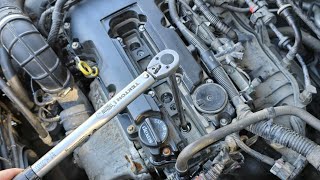
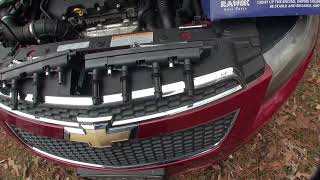
Typical fix: Replace the entire ignition coil pack assembly. 🎬 Watch: Step-by-step coil pack and spark plug replacement It is held on by two T30 Torx bolts and has a single 7-pin electrical connector.
Est. part cost: $70-$180 - Worn or Fouled Spark Plugs 🟡 Medium Probability Worn spark plugs increase the electrical resistance, forcing the ignition coil to work harder, which can lead to premature coil failure. It's also common for the valve cover gasket to leak oil into the spark plug tubes, fouling the plugs and damaging the coil boots.
How to confirm: Remove the ignition coil pack and inspect the spark plugs in their wells. Look for oil contamination, heavy carbon buildup, or a worn electrode.
Typical fix: Replace all four spark plugs with the correct Iridium-type plugs. This should always be done when replacing the ignition coil pack.
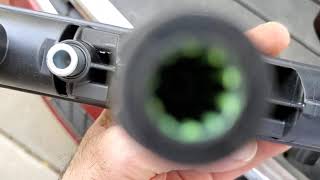
Est. part cost: $25-$50 - Corroded Ignition Coil Spring/Boot ⚪ Low Probability Moisture can get into the spark plug wells and cause the metal spring inside the coil boot (which connects to the spark plug) to corrode. This creates a poor connection and can trigger a coil circuit code.
How to confirm: Remove the coil pack. Gently twist and pull the rubber boot for cylinder #4 off the pack. Inspect the spring inside for green or white corrosion.
Typical fix: The boot and spring can be replaced individually using a repair kit (e.g., NGK CPB-GM013) without replacing the entire coil pack. However, if the coil pack is old or shows any other signs of wear, replacement of the full assembly is still recommended.
Est. part cost: $15-$25
Rare But Worth Checking
- Damaged Wiring Harness or Connector: The wiring harness connector to the coil pack can become brittle from heat cycles. Check for cracked plastic, backed-out pins, or rodent damage before replacing the coil pack. TSB 16-NA-015 discusses poor connections at this 7-pin connector causing hesitation and circuit codes.
- Coolant Wicking into ECM/PCM: Extremely rare but critical to check if a new coil pack doesn't solve the issue. A leaking thermostat housing heater can allow coolant to travel ('wick') up the wiring harness and into the main engine computer (ECM/PCM), causing shorts that trigger P0351-P0354 codes. TSB PIP5895A details this specific failure mode and advises inspecting the ECM connector for any signs of coolant or corrosion.
- Faulty Powertrain Control Module (PCM): This is extremely rare. The PCM's internal driver for the coil can fail. This should only be considered after all other possibilities, including a new coil pack, wiring check, and inspection for coolant wicking, have been exhausted.
Diagnosis Steps
- Read the trouble codes with an OBD-II scanner to confirm P0354 and check for any other codes like P0304.
- Pop the hood and remove the plastic engine cover (it pulls straight off).
- Inspect the 7-pin electrical connector and wiring harness going into the top of the ignition coil pack for any visible damage, corrosion, or looseness.
- Using a T30 Torx driver, remove the two bolts securing the coil pack to the valve cover.
- Disconnect the electrical connector (slide the locking tab back first) and lift the entire coil pack assembly straight up and out.
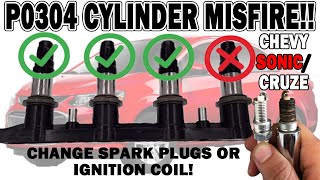
- Inspect the boots and springs on the bottom of the coil pack, especially the one for cylinder #4 (second from the left when facing the engine). Look for cracks, corrosion, oil, or a white powdery residue.
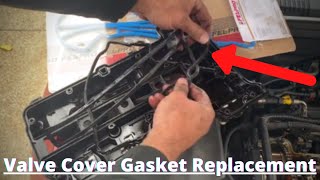
- Inspect the spark plug wells for oil, which indicates a leaking valve cover gasket that must also be fixed.
- If the cause is not obvious, and if a new coil pack does not resolve the code, inspect the main Engine Control Module (ECM) connectors for any signs of coolant contamination, as per TSB PIP5895A.
- Given the high failure rate, the most practical next step is to install a new ignition coil pack and new spark plugs.
- Apply a small amount of dielectric grease to the inside of the new coil boots before installation.
- Reinstall the new coil pack, reconnect the connector, clear the codes with the scanner, and start the engine to verify the fix.
Parts You'll Likely Need
- Ignition Coil Pack
(OEM #ACDelco 25186687 (or superseded GM number D517A))— This is the most common cause of P0354 on the 1.4L Cruze. The integrated design requires replacing the entire unit.
Trusted brands: ACDelco (OEM), NGK, Delphi, Duralast
OEM price range: $130-$180
Aftermarket price range: $70-$120 - Iridium Spark Plugs (Set of 4)
(OEM #ACDelco 41-121 or NGK equivalent)— Worn spark plugs are a common contributing factor and should always be replaced with the coil pack to ensure longevity and performance.
Trusted brands: ACDelco, NGK
OEM price range: $35-$50
Aftermarket price range: $25-$40
Related Codes That Often Appear With This One
- P0304 — P0304 means 'Cylinder 4 Misfire Detected'. Since P0354 indicates a fault with cylinder 4's ignition coil circuit, a misfire is the direct result. Seeing both codes together strongly points to a bad coil pack or spark plug.
- P0300 — P0300 means 'Random/Multiple Cylinder Misfire'. A failing coil pack can sometimes cause erratic sparks across multiple cylinders before one circuit fails completely, leading to a P0300 code initially.
Technical Service Bulletins (TSBs) & Recalls
- PIP5895A: Details a rare but critical failure where coolant from the thermostat heater wicks up the wiring harness into the ECM, causing codes P0351-P0354.
- 16-NA-015: Mentions that poor connections at the 7-pin ignition coil connector can cause hesitation and various circuit codes.
- PIP5038B: While for a different GM model, this TSB lists P0354 along with a full range of ignition coil and misfire codes (P0300-P0306, P0351-P0356), indicating that GM sometimes investigates issues that can affect the entire ignition system at once, such as wiring or module problems.
Platform-Specific Known Issues
- The use of a single, integrated coil pack assembly means a single cylinder fault requires replacing the whole part.
- The springs inside the coil boots are known to corrode, causing poor spark connection. These can sometimes be serviced individually.
- Valve cover gasket leaks are common and can cause oil to pool in the spark plug tubes, which will ruin the new coil pack if not fixed.
- A leaking thermostat housing heater can wick coolant up the wiring harness into the ECM, causing various electrical faults including ignition circuit codes like P0354.
Mechanic-Grade Diagnostic Values
- Ignition Coil Power Supply Voltage — expected: 12V+ (Battery Voltage) with key on, engine off. Failure: Low or no voltage indicates a problem with the power feed, fuse, or relay.
- Ignition Coil Ground Circuit — expected: Near 0V when testing voltage drop from the ground pin to battery negative.. Failure: Significant voltage reading indicates a poor ground connection, which is a common issue.
- Ignition Control (IC) Signal from ECM — expected: Using a multimeter on the AC Hertz scale, a signal between 5 and 20 Hz should be present while the engine is idling.. Failure: No signal suggests a wiring break between the ECM and coil, or a faulty ECM driver. A steady signal with a persistent misfire points to a bad coil pack.
- Secondary Ignition Coil Resistance — expected: Approximately 6,000 to 10,000 ohms (6k-10k Ω).. Failure: A reading significantly outside this range, or an open circuit (OL), indicates a failed internal coil winding.
Scan Tool Commands That Help
- GDS2 (GM Global Diagnostic System 2): Ignition System Output Control — A technician can use this to command the ECM to fire a specific coil while the engine is off. By connecting a spark tester, they can verify if the ECM driver and wiring are capable of firing the coil, isolating the fault to the coil itself if spark is weak or absent.
Wiring & Ground Locations
- Ignition Coil Connector (X83) — 7-pin connector on top of the ignition coil pack assembly.. This is the primary connection point for all power, ground, and control signals for the ignition system. The plastic locking tab is known to become brittle and break. Pinout: Pin 1: Ignition 1 Voltage (VT/DB wire) - Should have 12V+ with key on. Pin 2: Ground (BK wire). Pin 3: Ignition Control (IC) Signal, Cylinder 2. Pin 4: Ignition Control (IC) Signal, Cylinder 3. Pin 5: Ignition Control (IC) Signal, Cylinder 4 (This is the wire for P0354). Pin 6: Ignition Control (IC) Signal, Cylinder 1. Pin 7: Reference Low (Shared ground reference for IC signals).
- Fuse F9 (Underhood Fuse Block) — In the underhood fuse block, typically a 15A fuse.. This fuse supplies the 'Ignition 1 Voltage' to the coil pack via the powertrain relay. If this fuse is blown, the entire coil pack will have no power, leading to a no-start condition and multiple codes, not just P0354.
- Ground G103 / G107 — On the engine block or cylinder head, near the front of the engine.. This is the main engine-to-chassis ground point. A loose or corroded connection here can cause a variety of intermittent electrical issues, including weak spark or erratic coil behavior that could trigger a P0354 code.
Real Owner Repair Stories
- CruzeTalk.com forum user (2012 Chevrolet Cruze 1.4L Turbo) — P0354 and P0304 codes, rough idle, engine stumbling.
❌ Tried (didn't work) Replaced the entire ignition coil pack with a new aftermarket unit., Replaced all four spark plugs., Cleared codes, but P0354 and P0304 returned immediately.
✅ What actually fixed it The user tested the new aftermarket coil pack and found it was defective out of the box. Replacing it with a genuine ACDelco coil pack resolved the issue instantly. The experience highlights the high failure rate of cheap, unbranded aftermarket coil packs for this vehicle. - Jeep Liberty Forum (similar coil-on-plug issue) (Jeep Liberty with P0354) — Persistent P0354 and P0304 on cylinder 4, stumbling, flashing CEL.
❌ Tried (didn't work) Replaced coil for cylinder 4., Replaced spark plug for cylinder 4., Swapped coil and plug with another cylinder (fault did not move)., Cleaned engine grounds., Checked wiring continuity from coil connector to PCM.
✅ What actually fixed it The root cause was a small, unnoticed coolant leak from a nearby hose that was dripping onto the cylinder 4 ignition coil area. The coolant intrusion damaged the coil and connector. Even after replacing the coil, the persistent moisture and corrosion in the connector caused the new coil to fail or report errors. The final fix was repairing the coolant leak and replacing the coil and connector pigtail.
OEM Part Supersession History
GM 55561655, 96476983→GM 25186687 (also sold as ACDelco D517A)— Internal design improvements to increase durability and resistance to heat-related failure.
Heads up: All listed part numbers are interchangeable for the 2011-2017 1.4L LUV engine. However, using the latest revision (25186687) is recommended.
Model Year Variations Within This Range
- 2011-2012 vs 2013-2017: The ignition coil connector housing design changed. Early models (pre-2013) used a connector with an orange locking tab and a large metal shield. Later models (2013+) used a connector with a purple/magenta locking tab and no shield. The pinout and function remain the same, but the physical connector housing and service pigtails are different.
Diagnostic Flowchart
Other Known Issues on This Vehicle
Issues unrelated to this code that are worth knowing about as an owner of this generation:
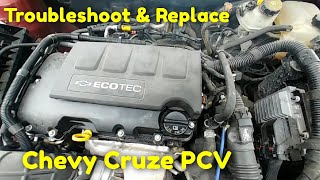
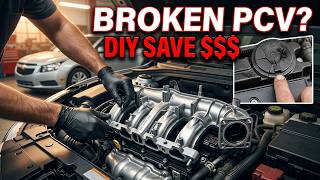
- PCV System / Valve Cover Failure 🔴 High — Extremely common. A ruptured diaphragm in the valve cover causes a vacuum leak, leading to a hissing noise, rough idle, and codes like P0171. The root cause is often a failed check valve in the intake manifold.
- Water Pump Leaks 🔴 High — Very common failure item, leading to coolant loss and potential overheating. GM issued a special coverage adjustment (14319) extending the warranty for this part. (Ref: Special Coverage 14319)
- Negative Battery Cable Insufficient Crimp 🔴 High — A poor crimp on the negative battery cable causes a wide range of bizarre electrical issues, including flickering displays, loss of power steering, and various warning lights. It was subject to a special coverage adjustment. (Ref: Special Coverage 14311B)
- Valve Cover Oil Leaks 🟠 Medium — The valve cover gasket frequently leaks oil, often into the spark plug wells, which can destroy the ignition coil pack.
- Thermostat Housing Leaks 🟠 Medium — The plastic thermostat housing is prone to cracking and leaking coolant. A failure of the integrated heater in the housing can also lead to the coolant wicking issue mentioned in TSB PIP5895A. (Ref: PIP5895A)
Used vs. New Parts: Buying Guide for This Vehicle
When a used part is the smart pick: Never. The ignition coil pack is a high-failure, wear-and-tear item on this engine. A used part from a junkyard has unknown mileage and heat cycles and is highly likely to fail soon, if it's not already faulty. The low cost of a new, quality aftermarket part makes buying used illogical.
What to inspect on the donor part:
- Not applicable, do not buy this part used.
OEM-only on this vehicle (don't cheap out):
- While not strictly 'OEM-only', using a known, reputable brand for the ignition coil pack is critical. Cheap, unbranded 'no-name' parts from online marketplaces have an extremely high failure rate and should be avoided.
Aftermarket brands forum-validated for this vehicle:
- ACDelco (Original Equipment)
- Delphi (Often the OEM manufacturer)
- NGK
- Bosch
Brands owners have reported issues with on this vehicle:
- Unbranded, low-cost coil packs from non-reputable online sellers. These are frequently reported on forums to be dead-on-arrival or fail within a few thousand miles.
Real Owner Stories
Aggregated from forums and TSBs cited above. Mileages and costs reflect what owners reported in those sources.
2011-2017 Chevrolet Cruze 1.4L Turbo — ~70000 miles
Symptoms: Engine hesitation or stumbling during acceleration, sometimes described as 'bucking' when the turbo engages.
What fixed it: Replace the entire ignition coil pack assembly and all four spark plugs.
Cost: $95-$230
Source hint: CruzeTalk.com threads discussing P035x and P030x codes
2013-2021 Buick Encore 1.4L Turbo — ~65000 miles
Symptoms: Ignition circuit codes like P0354 caused by coolant wicking up the wiring harness into the ECM.
What fixed it: Repairing the leaking thermostat housing heater and addressing the ECM connector contamination.
Source hint: TSB PIP5895A
Related OBD-II Codes
Frequently Asked Questions
My 2014 Cruze is showing P0354 and 'Service StabiliTrak'; are these related?
Does TSB PIP5895A apply to my P0354 code?
Can I just replace the boot for cylinder #4 instead of the whole coil pack?
Why did my new coil pack fail so quickly after installation?
Is there a specific spark plug I should use when fixing P0354?
Is the 7-pin connector on the coil pack a known issue?
Helpful Videos

Used OEM Parts in Stock

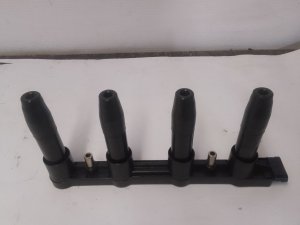
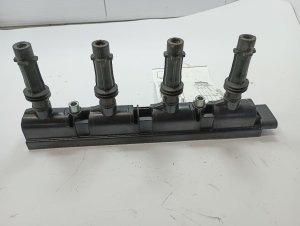
New Aftermarket Parts Available
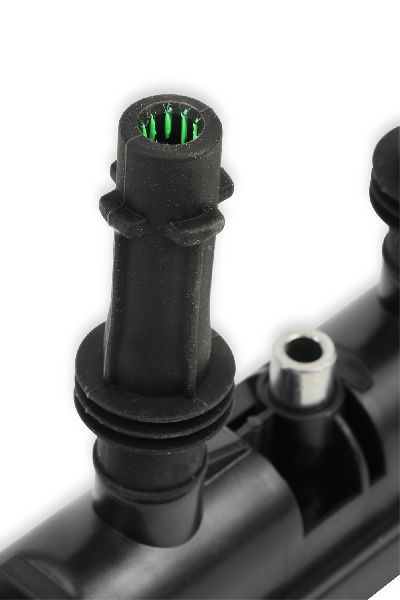

The information in this article is provided for general reference and educational purposes only. Vehicle specifications, procedures, and part compatibility can vary by production date, trim level, and region. Always consult your vehicle's factory service manual and verify part numbers before purchasing or performing repairs. Safety-critical components such as airbags, seat belts, and braking systems should be installed by a qualified professional.
- Chevrolet Cruze:
- 🎬 Helpful Videos
- 🛍️ Shop This Part
- What's Unique About the 2011-2017 Chevrolet Cruze
- Symptoms You May Notice
- Most Likely Causes
- Rare But Worth Checking
- Diagnosis Steps
- Parts You'll Likely Need
- Related Codes That Often Appear With This One
- Technical Service Bulletins (TSBs) & Recalls
- Platform-Specific Known Issues
- Mechanic-Grade Diagnostic Values
- Scan Tool Commands That Help
- Wiring & Ground Locations
- Real Owner Repair Stories
- OEM Part Supersession History
- Model Year Variations Within This Range
- Diagnostic Flowchart
- Other Known Issues on This Vehicle
- Used vs. New Parts: Buying Guide for This Vehicle
- Real Owner Stories
- 2011-2017 Chevrolet Cruze 1.4L Turbo — ~70000 miles
- 2013-2021 Buick Encore 1.4L Turbo — ~65000 miles
- Related OBD-II Codes
- Frequently Asked Questions
- 🎟️ Get 5% Off