

P0353 on 2003-2015 Honda CR-V: Ignition Coil 'C' Circuit Malfunction Causes and Fixes
P0353 on a Honda CR-V almost always means the ignition coil on cylinder 3 has failed. It's a common issue that's simple to fix. A new coil costs about $30-$75 for an aftermarket part or $75-$115 for an OEM part, and replacement is a 1/5 difficulty DIY job. Swapping the coil with another cylinder is the definitive test.
- P0353 means there is an electrical fault with the ignition coil on cylinder #3.
- The most likely cause is a failed ignition coil, which is a simple and inexpensive DIY replacement.
- The easiest way to diagnose a bad coil is to swap it with one from another cylinder and see if the trouble code follows it.
- While you are replacing the coil, it is a good idea to inspect and, if needed, replace the spark plug for that cylinder.
- Driving with a flashing check engine light can lead to catalytic converter damage, a much more expensive repair.
What's Unique About the 2003-2015 Honda CR-V
The Honda CR-V from 2003-2015 uses the highly reliable K24 engine, which features a coil-on-plug ignition system. This design is efficient but places the individual coils directly in the engine's heat, causing them to be a common wear item. While the coils are generally robust, failure after 60,000-100,000 miles is a frequent occurrence reported by owners. Another common issue on this platform is a leaking valve cover gasket, which allows engine oil to seep into the spark plug tubes, saturating and destroying the ignition coil boot and potentially causing the coil to fail.
Generation note: This guide covers the end of the second generation (2003-2006), the full third generation (2007-2011), and most of the fourth generation (2012-2015) Honda CR-V. All use a variant of the 2.4L K24 engine with a similar coil-on-plug ignition setup. The diagnostic and repair process is nearly identical across these years, though specific ignition coil part numbers may vary slightly.
Symptoms You May Notice
- Check Engine Light is on
- Rough or shaking idle
- Engine hesitation or stumbling during acceleration
- Noticeable loss of power
- Flashing Check Engine Light, especially under load (indicates a severe misfire)
- Reduced fuel economy
- Engine may stall intermittently
- Replacing only the spark plug without testing the ignition coil. A bad coil is the most common cause, and a new plug won't fix it.
- Assuming the fuel injector is bad. While a bad injector can cause a misfire (P0303), the P0353 code specifically points to an electrical fault in the ignition coil circuit.
Most Likely Causes
- Failed Ignition Coil on Cylinder 3 🔴 High Probability Ignition coils are a common wear-and-tear item due to constant exposure to high heat and voltage. The internal windings can break down over time. Failure after 60,000+ miles is typical.
How to confirm: The easiest way to confirm is to swap the ignition coil from cylinder 3 with another cylinder (e.g., cylinder 2). Clear the codes and drive the vehicle. If the code changes to P0352 (for cylinder 2), the coil is definitively bad.
Typical fix: Replace the faulty ignition coil. It is often recommended to replace all four coils at the same time, especially on higher mileage vehicles, as the others may fail soon. Also, consider replacing all four spark plugs at the same time.
Est. part cost: $30 - $115 - Worn or Fouled Spark Plug in Cylinder 3 🟡 Medium Probability A spark plug with an excessive gap or heavy deposits forces the ignition coil to work harder to create a spark. This strain can overload the coil's internal circuits, leading to premature failure and triggering the P0353 code.
How to confirm: Remove the spark plug from cylinder 3 and inspect it. Look for a wide gap, heavy carbon buildup, oil fouling, or a cracked insulator. Compare it to the other plugs. Oil on the plug points to a leaking spark plug tube seal.
Typical fix: Replace the spark plug. It is best practice to replace all four spark plugs as a set. Use high-quality NGK or Denso plugs, which are often the Original Equipment Manufacturer (OEM) for Honda.
Est. part cost: $10 - $25 per plug - Damaged Wiring or Connector ⚪ Low Probability Engine vibration and heat can make the plastic connector and wiring brittle over time. The locking tab on the connector can break, leading to a poor connection. Wires can also break internally near the connector, causing an intermittent fault that can be hard to diagnose.
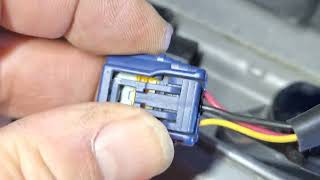
How to confirm: Visually inspect the wiring harness and the 3-pin connector going to the cylinder 3 ignition coil. Look for any signs of cracking, melting, corrosion on the pins, or broken wires. Wiggle the connector and harness with the engine running to see if it induces a misfire.
Typical fix: Repair the damaged section of wire or replace the connector pigtail if the connector itself is broken. These pigtails are available online.
Est. part cost: $10 - $30 for a new pigtail connector - Leaking Valve Cover Gasket ⚪ Low Probability The gasket that seals the spark plug tubes can become hard and brittle with age, allowing engine oil to leak into the tubes. This is a very common issue on K-series engines.
How to confirm: When you remove the ignition coil from cylinder 3, check for liquid engine oil on the coil boot or down in the spark plug tube. A smell of burning oil may also be present.
Typical fix: Replace the valve cover gasket and the spark plug tube seals (they usually come in a kit). Thoroughly clean all oil from the tube and the ignition coil boot before reassembly.
Est. part cost: $25 - $60 for a gasket set
Rare But Worth Checking
- Failed Powertrain Control Module (PCM): This is extremely rare. The PCM's internal driver for the ignition coil can fail, but this should only be considered after all other possibilities (coil, plug, wiring) have been exhaustively ruled out.
Diagnosis Steps
- Read the trouble codes with an OBD-II scanner. Confirm P0353 is present. Note any other codes, like P0303.
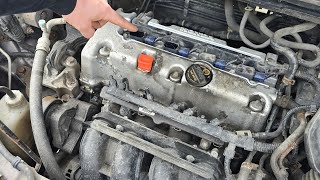
- Turn off the engine and locate the ignition coils on top of the engine cover. Cylinder 3 is the third coil from the timing chain side (passenger side of the engine).
- Swap the ignition coil from cylinder 3 with the coil from cylinder 2.
- Clear the trouble codes with the scanner.
- Start the engine and let it run for a minute, or take a short drive.
- Re-scan for codes. If the code has moved to P0352 (Ignition Coil 'B' Circuit), the ignition coil you moved is faulty and needs to be replaced.
- If code P0353 returns, the problem is not the coil. Proceed to inspect the wiring and spark plug.
- Remove the coil again and inspect the electrical connector for damage, corrosion, or a broken locking tab. Check the wiring for any visible breaks or chafing. Wiggle the harness while the engine is running to see if the misfire changes.
- Remove the spark plug from cylinder 3. Inspect its condition. If it is oily, fouled, or worn, replace it. It's best to replace all four plugs at once. 🎬 See: How to replace spark plugs and coils
- If the coil, plug, and wiring all appear to be in good condition, the issue may be a rare PCM failure, which typically requires professional diagnosis.
Parts You'll Likely Need
- Ignition Coil
(OEM #30520-RRA-007 (fits many 2002-2009 models), 30520-R40-S01 (fits many 2012-2014 models))— This is the most common point of failure for a P0353 code. Heat and vibration cause the internal windings to fail over time.
Trusted brands: Denso (e.g., 673-2301 for 2007-2011, 673-2313 for 2012-2014), NGK (e.g., 48893 for 2012-2015), Hitachi
OEM price range: $75 - $115
Aftermarket price range: $30 - $75 - Spark Plug
(OEM #NGK: ILZKR7B-11S, Denso: SKJ20DR-M11 (check specific year))— A worn spark plug can cause the ignition coil to fail. It's wise to replace them while you have the coil out, especially if they are due for service.
Trusted brands: NGK, Denso
OEM price range: $15 - $25
Aftermarket price range: $8 - $15
Related Codes That Often Appear With This One
- P0303 — P0303 means 'Cylinder 3 Misfire Detected'. Since P0353 indicates a fault with the ignition coil for cylinder 3, the cylinder will not fire correctly, directly causing a P0303 code to be stored as well.
Platform-Specific Known Issues
- Intermittent Wiring Fault: Some owners have chased P035x codes, replacing coils and plugs, only to find the issue was an intermittent break in the ground wire within the main harness near the coils. A video from 'Automotive Diagnostic Solutions' on YouTube documents a 2013 CR-V with a P0351 where the ground splice for the coils had failed inside the harness, requiring a splice repair. Wiggling the harness may temporarily fix or trigger the problem, and the PCM may not restore coil operation until the next ignition cycle 🎬 Watch: Diagnostic walkthrough for Honda CR-V P035x codes even if the connection is restored.
Mechanic-Grade Diagnostic Values
- Ignition Coil Connector Pin 2 (Ground) Voltage — expected: Near 0 Volts. Failure: Voltage significantly above 0V (e.g., a reading of 6V was found in one case) indicates a bad ground connection in the harness.
- Ignition Coil Connector Pin 3 (Power) Voltage — expected: Battery Voltage (approx. 12.6V with key on, engine off; ~14V with engine running).. Failure: Low or no voltage indicates a problem with the power supply from the PGM-FI main relay.
- Ignition Coil Connector Pin 1 (IGF/Feedback Signal) — expected: A pulsing voltage signal visible on an oscilloscope, confirming the coil has fired.. Failure: Absence of this signal when the coil is commanded to fire points to an internal coil failure or a break in the signal wire to the PCM.
- Ignition Coil Primary Resistance — expected: While not a definitive test for modern coils, a primary resistance check can sometimes identify a failed coil. A typical value for a good Denso coil is around 1.0-1.1 Ohms.. Failure: A reading of infinity (open circuit) or zero (short circuit) indicates a bad coil.
Scan Tool Commands That Help
- Honda Diagnostic System (HDS): Cylinder AF Test — This test can help assess the performance of individual cylinders. A failure on cylinder 3 could point towards an ignition issue, though it's a general performance test. The test is known to be sensitive to engine temperature.
- Honda Diagnostic System (HDS): SCS Mode — Used in conjunction with a timing light to check base ignition timing. While not a direct test for P0353, it's part of a comprehensive ignition system check-up.
Wiring & Ground Locations
- G101 (2003-2011 CR-V) — On the left side of the engine, typically on the thermostat housing or water pipe housing.. This is a critical ground point for the ECU and ignition system. A corroded or loose G101 ground is a known cause of intermittent electrical issues, including ignition coil circuit faults.
- G101 (2012-2015 CR-V) — Located on the left rear of the engine.. Serves as the main ground for the PCM and multiple engine components, including the ignition coils. A poor connection here can cause a voltage drop on the ground circuit for the coils, leading to a P035x code.
- Ignition Coil Connector (3-pin) — On top of each ignition coil.. This is where power, ground, and the trigger signal from the PCM connect to the coil. Pin 1 is the IGF signal, Pin 2 is Ground, and Pin 3 is 12V+ Power. Testing voltage at these pins is a primary diagnostic step.
Real Owner Repair Stories
- Automotive Diagnostic Solutions on YouTube (2013 Honda CR-V) — Intermittent misfire and P0351/P0301 codes (Cylinder 1, but same diagnostic principle applies to P0353).
❌ Tried (didn't work) Replacing the ignition coil on cylinder 1.
✅ What actually fixed it The ground wire for the ignition coils was broken inside the wiring harness loom near the coils. The technician found 6 volts on the ground pin at the coil connector. The fix was to open the harness, find the broken ground splice, and repair it. The PCM logic required an ignition cycle (turning the car off and on) to recognize the repaired circuit and restore coil operation. - NHTSA ODI #11078950 — An owner of a Honda vehicle with a similar engine architecture reported a Check Engine Light for P0303 (misfire) followed shortly by P0353 (ignition coil circuit). The report highlights that the P0353 code specifically identifies the cylinder 3 ignition coil circuit fault, which may appear independently of standard misfire codes.
OEM Part Supersession History
30520-PNA-007→30520-RRA-007— Standard part revision and update by Honda.
Heads up: These parts are generally cross-compatible for many early K24 engines in the 2003-2009 range, but it is always best to verify by VIN.30520-R40-007→30520-R40-S01— Standard part revision by Honda.
Model Year Variations Within This Range
- 2003-2006 (2nd Gen): Uses K24A1 engine. Ignition coil part number is typically 30520-PNA-007 or its successor 30520-RRA-007. Ground location G101 is on the thermostat housing.
- 2007-2011 (3rd Gen): Uses K24Z1 engine. Ignition coil part number is often 30520-RRA-007. Grounding points and harness routing are similar to the 2nd generation.
- 2012-2015 (4th Gen): Uses K24Z7 engine. Ignition coil part number is typically 30520-R40-007 or its successor 30520-R40-S01. The main engine ground G101 is located on the left rear of the engine block.
Diagnostic Flowchart
Other Known Issues on This Vehicle
Issues unrelated to this code that are worth knowing about as an owner of this generation:
- VTC Actuator Rattle on Cold Start 🟠 Medium — Very common on K24 engines, especially after 60,000 miles. Causes a loud, grinding rattle for ~2 seconds on cold startup. (Ref: Honda TSB 09-010, 16-088A)
- A/C Compressor Failure ('Black Death') 🔴 High — Extremely common on 2nd gen (2002-2006) models. The compressor fails internally, sending metal debris throughout the entire A/C system, requiring a costly replacement of all major components.
- Failing Door Lock Actuators 🟠 Medium — Notorious on 3rd gen (2007-2011) models. Actuators fail one after another, causing erratic locking/unlocking or complete failure. A class-action lawsuit was filed for this issue. (Ref: Expired Warranty Extension)
- Excessive Oil Consumption 🟠 Medium — More prevalent in later 4th gen models (2012-2015). Caused by low-tension piston rings sticking, leading to oil burning between changes. (Ref: Honda issued a warranty extension for pistons and rings on some affected vehicles.)
Used vs. New Parts: Buying Guide for This Vehicle
When a used part is the smart pick: A used OEM ignition coil from a low-mileage donor vehicle can be a cost-effective option, as OEM Honda coils are known for their longevity. This is only recommended if the part's history is known and it comes from a reputable salvage yard.
Donor-vehicle mileage cap: roughly under 60000 miles for the part to have meaningful remaining life.
What to inspect on the donor part:
- Check for cracks in the plastic housing.
- Ensure the coil boot is not swollen, torn, or coated in oil.
- Inspect the electrical connector pins for corrosion or damage.
- Ask for the donor vehicle's mileage if possible.
OEM-only on this vehicle (don't cheap out):
- Powertrain Control Module (PCM) - requires programming specific to the vehicle's VIN and options.
Aftermarket brands forum-validated for this vehicle:
- Denso
- NGK
- Hitachi
Brands owners have reported issues with on this vehicle:
- Unnamed, no-brand 'budget' or 'economy' coils from online marketplaces are frequently cited on forums as having a high failure rate. While some may work initially, their lifespan is often significantly shorter than OEM or premium aftermarket brands.
Real Owner Stories
Aggregated from forums and TSBs cited above. Mileages and costs reflect what owners reported in those sources.
2016 Honda CR-V K24W
Symptoms: Check engine light with code P0353.
What fixed it: Replacing the cylinder 3 ignition coil.
Source hint: crvownersclub.com
2013 Honda CR-V
Symptoms: P0351 code (similar to P0353); the PCM may not restore coil operation until the next ignition cycle even if the connection is restored.
What fixed it: Repairing a failed ground splice for the coils inside the main wiring harness.
Source hint: Automotive Diagnostic Solutions video cited in vehicle_specific_issues
Honda Owner Report
Symptoms: Check Engine Light (CEL) triggered with code P0303 for a misfire on cylinder 3, followed by P0353 indicating an ignition coil circuit fault.
What fixed it: Diagnostic investigation confirmed the P0353 code pointed specifically to the cylinder 3 ignition coil circuit, requiring electrical verification beyond just the misfire code.
Source hint: NHTSA ODI #11078950
Related OBD-II Codes
Frequently Asked Questions
Which spark plugs should I use for my Honda CR-V to prevent P0353?
I have a 2013 CR-V and replacing the coil didn't fix P0353. What else could it be?
Is it true that a leaking valve cover gasket can cause this ignition code on K-series engines?
Does Honda have a TSB for the grinding noise I hear on cold starts along with my check engine light?
Should I replace all my ignition coils at once if only cylinder 3 is failing?
Helpful Videos
We Have This Part in Stock



The information in this article is provided for general reference and educational purposes only. Vehicle specifications, procedures, and part compatibility can vary by production date, trim level, and region. Always consult your vehicle's factory service manual and verify part numbers before purchasing or performing repairs. Safety-critical components such as airbags, seat belts, and braking systems should be installed by a qualified professional.
- Honda CR-V:
- 🎬 Helpful Videos
- 🛍️ Shop This Part
- What's Unique About the 2003-2015 Honda CR-V
- Symptoms You May Notice
- Most Likely Causes
- Rare But Worth Checking
- Diagnosis Steps
- Parts You'll Likely Need
- Related Codes That Often Appear With This One
- Platform-Specific Known Issues
- Mechanic-Grade Diagnostic Values
- Scan Tool Commands That Help
- Wiring & Ground Locations
- Real Owner Repair Stories
- OEM Part Supersession History
- Model Year Variations Within This Range
- Diagnostic Flowchart
- Other Known Issues on This Vehicle
- Used vs. New Parts: Buying Guide for This Vehicle
- Real Owner Stories
- 2016 Honda CR-V K24W
- 2013 Honda CR-V
- Honda Owner Report
- Related OBD-II Codes
- Frequently Asked Questions
- 🎟️ Get 5% Off