

P0352 on 1997-2002 Ford Expedition 5.4L: Ignition Coil 'B' Circuit Causes and Fixes
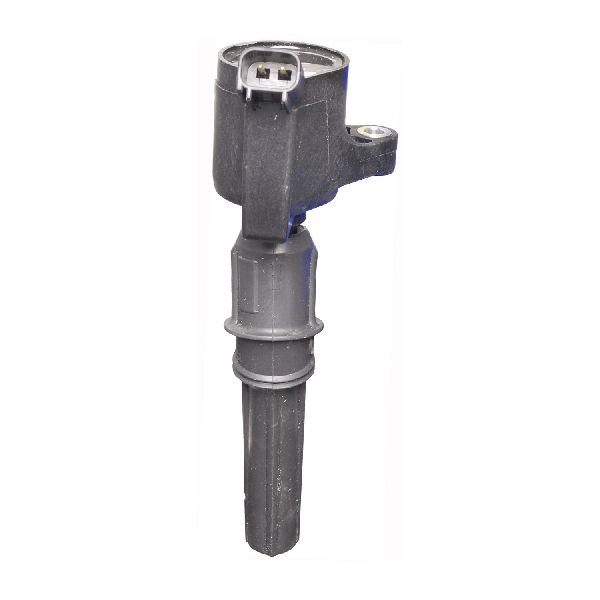
On a 1997-2002 Expedition, code P0352 almost always means the ignition coil on cylinder #2 has failed. This is a very common issue. A new Motorcraft coil (part DG508) costs about $40-$60, and it's a simple DIY fix that takes less than 30 minutes. If a new coil doesn't fix it, the wiring connector or PCM is the next suspect.
- P0352 on a 1997-2002 Expedition points directly to an electrical failure in the ignition coil circuit for cylinder #2.
- The most likely culprit by far is a bad ignition coil, a very common failure on the 5.4L V8.
- A simple diagnostic test is to swap the cylinder #2 coil with another cylinder's coil and see if the code follows the coil.
- If a new coil doesn't fix the issue, the problem lies in the wiring connector or, rarely, the PCM.
- Check for oil in the spark plug well, as a leaking valve cover gasket is a common root cause of repeated coil failures.
What's Unique About the 1997-2002 Ford Expedition
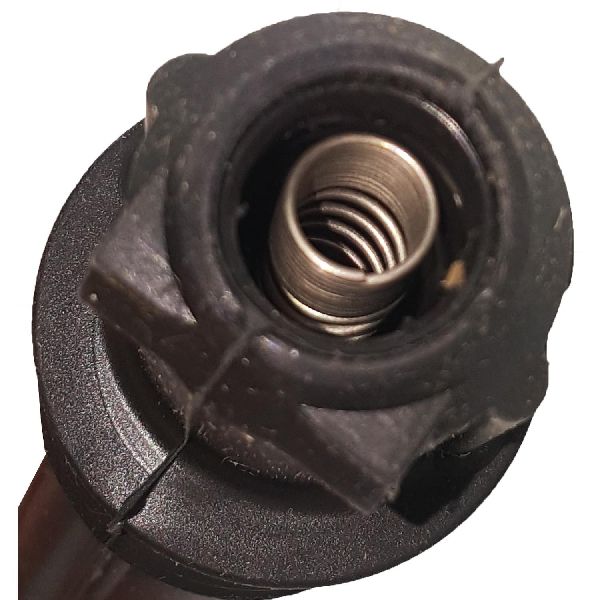
The first-generation Expedition's 5.4L 2V Triton V8 uses a Coil-On-Plug (COP) ignition system, where each spark plug has its own dedicated coil. These coils are a known weak point and a very frequent failure item. The design places them deep in the engine valley, where they are exposed to intense heat, and leaking valve cover gaskets can cause oil to pool in the spark plug wells, shorting out the coils and their boots. Furthermore, this specific engine is infamous for having few threads for the spark plugs in the aluminum heads, which can lead to plugs being ejected from the engine, a problem separate from but often confused with the later 3V engine's plug-breaking issue.
Symptoms You May Notice
- Rough idle or engine shaking
- Noticeable loss of engine power, especially during acceleration
- Engine hesitation or stumbling
- Flashing or solid Check Engine Light.
- Difficulty starting the engine.
- Engine noise described as 'popping' or like an 'old steam engine' if a spark plug has been ejected.
- Replacing only the spark plug without testing the coil.
- Assuming a fuel injector is bad without checking for ignition codes first.
- Replacing the PCM before exhaustively checking the wiring harness for breaks or shorts.
Most Likely Causes
- Failed Ignition Coil on Cylinder #2 🔴 High Probability The Coil-On-Plug (COP) units on the 5.4L Triton engine are a very common failure point due to heat exposure and age. The original coil design was known to be problematic.
How to confirm: The easiest way is to swap the ignition coil from cylinder #2 with the coil from cylinder #1. Clear the codes and drive. If the code changes to P0351 (for cylinder #1), the coil is bad.
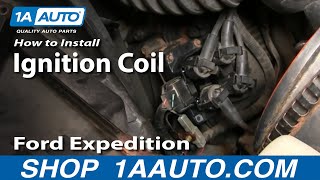
Typical fix: Replace the faulty ignition coil. 🎬 Watch: Step-by-step guide to replacing your Expedition's ignition coil It is also highly recommended to replace the spark plug at the same time. Use dielectric grease inside the new coil boot to seal it from moisture.
Est. part cost: $25-$60 for one coil - Worn or Fouled Spark Plug 🟡 Medium Probability A worn-out spark plug with a large gap can strain the ignition coil, causing it to overheat and trigger a circuit code. If a spark plug is damaged or heavily fouled, it can be misread by the PCM as a coil issue.
How to confirm: After removing the ignition coil, remove the spark plug and inspect it for wear, carbon fouling, or oil contamination. The electrode should be intact and the ceramic insulator should not be cracked.
Typical fix: Replace the spark plug. It's best practice to replace all 8 if their age is unknown. Use Motorcraft plugs for best results.
Est. part cost: $5-$15 per spark plug - Damaged Coil Connector or Wiring ⚪ Low Probability The plastic connector can become brittle from engine heat and break when being handled. Wires can also be damaged by rubbing or improper repairs. In some cases, the wire breaks inside the insulation right at the connector.
How to confirm: Visually inspect the electrical connector for cylinder #2's coil. Check for cracked plastic, corroded pins, or loose-fitting wires. If the coil swap test did not move the code, test for 12V power (usually a red wire) at the connector with the key on.
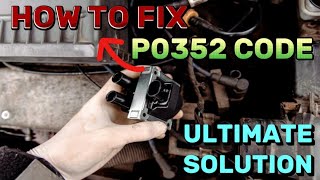
Typical fix: If the connector is broken, splice in a new connector pigtail. 🎬 Watch: How to properly replace damaged Ford ignition coil connectors If a wire is broken, it will need to be repaired, often by soldering and using heat-shrink tubing.
Est. part cost: $10-$20 for a pigtail
Rare But Worth Checking
- Leaking Valve Cover Gasket: While not a direct cause, a leaking valve cover gasket can allow oil to fill the spark plug well, which will damage the ignition coil boot and cause the coil to short out. If you find oil when you pull the coil, you must fix the leak to prevent repeat failure of the new coil. This is a very common contributing factor.
- Faulty Powertrain Control Module (PCM): This is very rare. The internal driver circuit in the PCM that controls the coil can fail. This should only be considered after all other possibilities (coil, plug, wiring) have been definitively ruled out. One user on a forum replaced the PCM for a P0352 code only to find the issue persisted, indicating the fault was still in the wiring harness. Multiple P035x codes appearing at once can sometimes point to a PCM issue or water intrusion into the PCM connector.
Diagnosis Steps
- Confirm the presence of code P0352 with an OBD-II scanner.
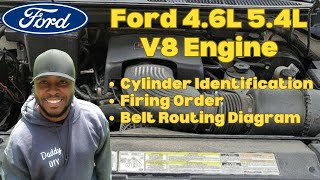
- Identify cylinder #2. 🎬 See this video to correctly locate cylinder #2 and Bank 1 On the 5.4L V8, it is the second cylinder from the front on the passenger side.
- Swap the ignition coil from cylinder #2 with the coil from an adjacent cylinder (like #1, the front-most on the passenger side).
- Clear the trouble codes using the scanner.
- Start the engine and drive until the Check Engine Light comes back on.
- Re-scan for codes. If the code is now P0351, the ignition coil you moved is faulty and must be replaced.
- If the code P0352 returns, the problem is not the coil. Proceed to inspect the wiring and connector for cylinder #2. Look for damage, corrosion, or loose pins.
- While the coil is out, remove the spark plug. Inspect it for damage or heavy wear and check the spark plug well for any oil or water contamination.
- If wiring appears okay, use a multimeter or a noid light to check the signal at the coil connector. With the key on, one wire should have 12V power. The other wire is the signal wire from the PCM, which provides a ground pulse when the engine is running. If the ground signal is missing, the issue is in the wiring harness or the PCM itself.
- If oil was found in the spark plug well, the valve cover gasket must be replaced to prevent repeat failure of the new coil.
Parts You'll Likely Need
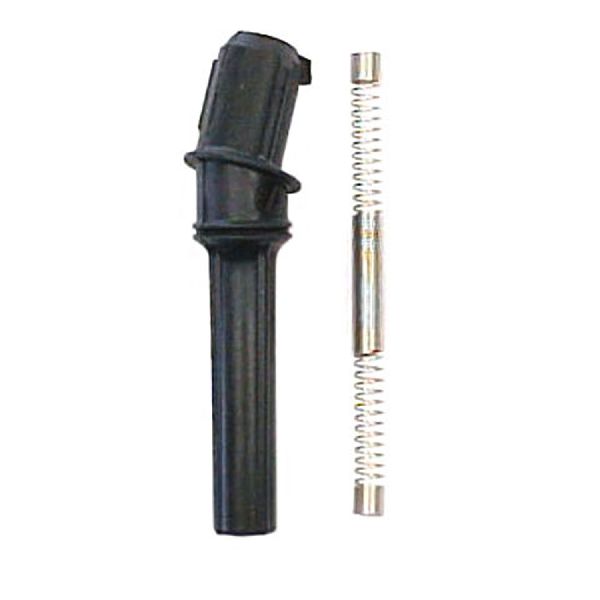
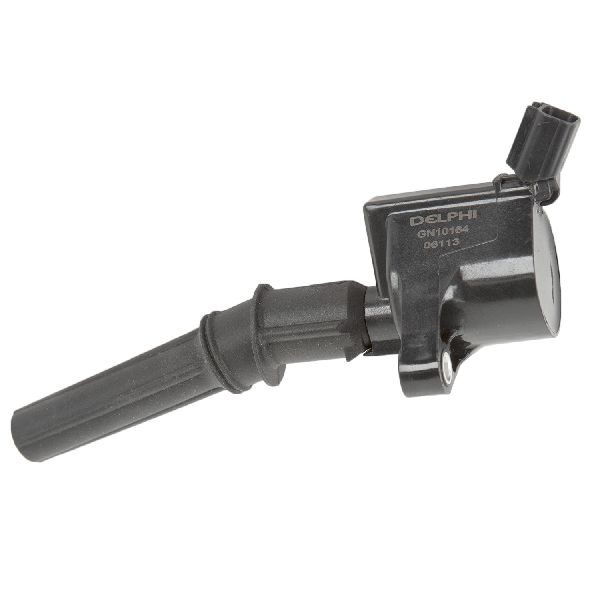
- Ignition Coil (Coil-On-Plug)
(OEM #Motorcraft DG508 (supersedes DG491))— This is the most common failure item for code P0352 on this engine. The original DG491 coils were known to be less reliable than the updated DG508 design.
Trusted brands: Motorcraft, Denso, NGK
OEM price range: $40-$70
Aftermarket price range: $25-$50 - Spark Plug
(OEM #Motorcraft SP-479 (or original spec AGSF22WM))— It's best practice to replace the spark plug when replacing a coil, as a worn plug can cause the new coil to fail prematurely. Using the correct Motorcraft plug is highly recommended.
Trusted brands: Motorcraft, Autolite, NGK
OEM price range: $8-$15
Aftermarket price range: $5-$10
Related Codes That Often Appear With This One
- P0302 — P0302 means 'Cylinder 2 Misfire Detected'. P0352 is the specific electrical cause for the misfire, so these two codes almost always appear together.
- P0171 — 'System Too Lean (Bank 1)'. While less common, a severe misfire can sometimes disrupt exhaust flow enough to confuse the oxygen sensors, leading to a lean code on the bank with the misfiring cylinder.
Platform-Specific Known Issues
- Spark Plug Ejection: The 5.4L 2V engines are known for having a low number of threads in the aluminum cylinder heads. Over time, spark plugs can loosen and be violently ejected from the head, stripping the threads. This requires a special thread insert kit (like the Cal-Van 38900) to repair without removing the cylinder head.
- Difficult Spark Plug Removal: While the later 3V engine is famous for plugs breaking in half, the 2V can also have issues. Plugs left in for too long can seize in the head. Technicians recommend changing them on a warm engine and soaking them with penetrating oil overnight to aid removal. There is debate in forums about using anti-seize on the new plugs; Motorcraft does not recommend it as the plugs are nickel-plated.
Mechanic-Grade Diagnostic Values
- Ignition Coil Primary Resistance — expected: 0.3 to 1.0 ohms. Failure: A reading outside this range indicates a faulty coil.
- Ignition Coil Secondary Resistance — expected: 6.1k to 11.5k ohms (6,100 to 11,500 ohms). Failure: A reading outside this range indicates a faulty coil.
- Coil Connector Power Supply Pin — expected: 12V+ with key on, engine off (KOEO). Failure: No voltage indicates a problem with the power supply wire or fuse.
- Coil Connector Signal Wire (Continuity to PCM) — expected: Less than 5.0 ohms of resistance between the signal wire pin at the coil connector and the corresponding pin at the PCM connector.. Failure: High resistance or an open circuit (OL) indicates a broken wire in the harness.
Scan Tool Commands That Help
- Ford IDS (or equivalent professional scanner): Power Balance Test — This test graphically displays the power contribution of each cylinder in real-time. For a P0352, the graph for cylinder #2 would show a significant drop compared to the others, confirming the misfire is isolated to that cylinder. It's used to verify the location of the misfire before swapping parts.
Wiring & Ground Locations
- Cylinder #2 Coil Connector — On the ignition coil for the second cylinder from the front of the engine on the passenger's side.. This is the primary connection point for the component in question. The power supply wire (often Red) and the PCM signal/trigger wire (color varies by year) must be tested here.
- PCM Connector — Typically located on the passenger-side firewall in the engine bay.. This is the source of the trigger signal. A continuity test from the coil connector to the specific pin for the cylinder #2 ignition driver on this connector is required to rule out a wiring break.
- G200 (Ground) — At the lower left kick panel, inside the cabin.. While not a direct ground for the coil itself (which is grounded by the PCM), a poor main ground can cause a host of electrical issues for the PCM and other modules, potentially leading to erratic behavior and false codes.
Real Owner Repair Stories
- Ford Truck Enthusiasts Forum user 'Jesse-1980' (1997 Ford Expedition) — Persistent P0352 code and misfire.
❌ Tried (didn't work) Replaced the Coil-On-Plug for cylinder #2 three separate times.
✅ What actually fixed it The user's issue was not resolved in the thread, but the repeated failure of new coils strongly indicates the actual fault was in the wiring harness or the PCM itself, a common next step when a coil swap doesn't fix the problem. - Reddit user on r/MechanicAdvice (2003 Ford F350 5.4L 2V (same engine family and issue)) — P0352 and P0354 (coil circuit codes)
❌ Tried (didn't work) Replacing the ignition coils., Using zip ties to secure the connector.
✅ What actually fixed it The problem was identified as melted/corroded coil boot connectors. The fix is to splice in new pigtail connectors (sold by Ford/Motorcraft) because the electrical pins inside the original connector were damaged from heat, preventing a good connection even with a new coil.
OEM Part Supersession History
DG491→DG508— The DG491 was the original equipment coil and was known for a higher failure rate. The DG508 is an updated, more durable design from Motorcraft.
Heads up: The parts are physically interchangeable, but using a DG491 is not recommended as it is an older, less reliable design.
Diagnostic Flowchart
Used vs. New Parts: Buying Guide for This Vehicle
When a used part is the smart pick: A used wiring connector pigtail from a junkyard is a perfectly acceptable repair part if the plastic isn't brittle and the pins are clean. A used ignition coil can be useful for diagnostic purposes (to swap and see if the code moves) but is not recommended for a permanent repair due to unknown remaining lifespan.
Donor-vehicle mileage cap: roughly under 80000 miles for the part to have meaningful remaining life.
What to inspect on the donor part:
- For a wiring pigtail: ensure the plastic locking tab is intact and not brittle, and check for clean, corrosion-free metal pins inside.
- For a coil: check the plastic housing for cracks and inspect the boot for tears or oil swelling. Avoid coils from engines with obvious signs of neglect or high mileage.
OEM-only on this vehicle (don't cheap out):
- Ignition Coils: While some aftermarket brands are acceptable, Motorcraft (or Visteon, the OEM manufacturer) coils are widely considered the most reliable and are strongly recommended to avoid repeat failures.
- Powertrain Control Module (PCM): A used PCM will require programming to the vehicle's VIN and PATS (Passive Anti-Theft System) key information, which often requires dealer-level tools. It is not a plug-and-play part.
Aftermarket brands forum-validated for this vehicle:
- Denso
- NGK
- Delphi
Brands owners have reported issues with on this vehicle:
- Unnamed, no-brand coil sets sold cheaply on sites like Amazon or eBay are frequently cited in forums as having extremely high failure rates, sometimes within weeks or months.
Real Owner Stories
Aggregated from forums and TSBs cited above. Mileages and costs reflect what owners reported in those sources.
2002 Ford Expedition 5.4l
Symptoms: Sudden significant loss in engine power, the truck would hardly move on acceleration, and the engine started vibrating really bad. The truck would start and idle roughly but was hardly drivable.
What fixed it: The issue was not resolved in the thread. After replacing all coils, plugs, fuses, and checking the wiring harness, the owner suspected a bad PCM was the cause.
Source hint: F150online Forums
2001 Ford Expedition 5.4L
Symptoms: Owner reported code P0352, likely causing a misfire or rough idle.
What fixed it: The issue was fixed by replacing the #2 Coil-On-Plug (COP).
Source hint: Ford Truck Enthusiasts Forums - Thread: 'Code P0352?' (2006)
Ford F-150 with 5.4L V8
Symptoms: Owner reported trouble code P0352.
What fixed it: The fault was traced to a wire that was broken inside the insulation right at the coil pack connector.
Source hint: F150online Forums - Thread: 'trouble code P0352 Ignition coil B primary/secondary circuit' (2003)
Related OBD-II Codes
Frequently Asked Questions
On my 5.4L V8 Expedition, where is cylinder #2 located?
What's the easiest way to confirm if the ignition coil on cylinder #2 is bad?
What kind of spark plugs should I use for my 5.4L Triton engine?
I've heard about spark plug issues on these 5.4L engines. What should I be aware of?
Should I use anti-seize on the new spark plugs for my Expedition?
If I'm replacing the ignition coil for cylinder #2, is there anything else I should do at the same time?
Helpful Videos
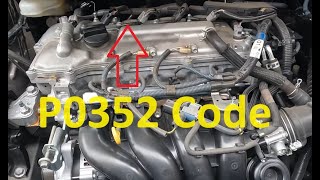
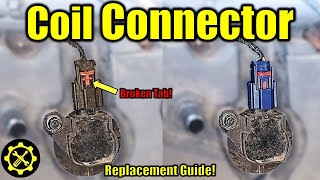
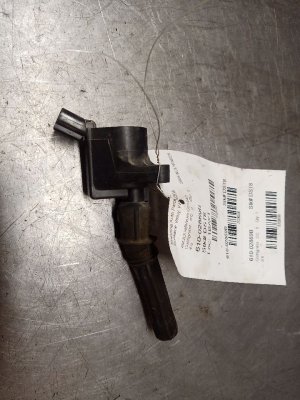
Used OEM Parts in Stock
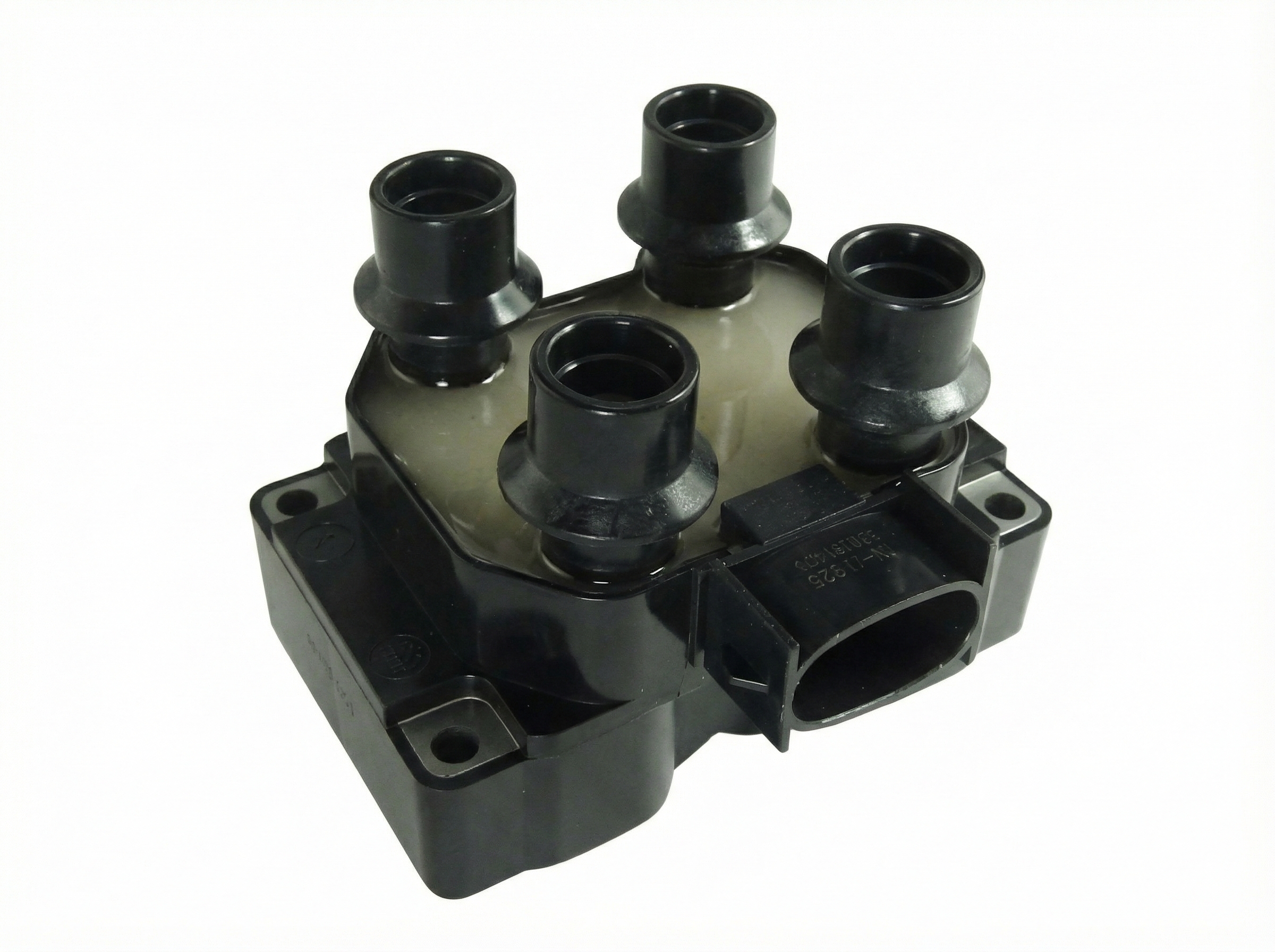

New Aftermarket Parts Available


The information in this article is provided for general reference and educational purposes only. Vehicle specifications, procedures, and part compatibility can vary by production date, trim level, and region. Always consult your vehicle's factory service manual and verify part numbers before purchasing or performing repairs. Safety-critical components such as airbags, seat belts, and braking systems should be installed by a qualified professional.
- Ford Expedition:
- 🎬 Helpful Videos
- 🛍️ Shop This Part
- What's Unique About the 1997-2002 Ford Expedition
- Symptoms You May Notice
- Most Likely Causes
- Rare But Worth Checking
- Diagnosis Steps
- Parts You'll Likely Need
- Related Codes That Often Appear With This One
- Platform-Specific Known Issues
- Mechanic-Grade Diagnostic Values
- Scan Tool Commands That Help
- Wiring & Ground Locations
- Real Owner Repair Stories
- OEM Part Supersession History
- Diagnostic Flowchart
- Used vs. New Parts: Buying Guide for This Vehicle
- Real Owner Stories
- 2002 Ford Expedition 5.4l
- 2001 Ford Expedition 5.4L
- Ford F-150 with 5.4L V8
- Related OBD-II Codes
- Frequently Asked Questions
- 🎟️ Get 5% Off