

P0341 on 2012-2020 Chevrolet Sonic 1.4L Turbo: Intake Cam Sensor Causes and Fixes
On a 2012-2020 Sonic 1.4L Turbo, code P0341 almost always means the intake camshaft position sensor is failing. It's a very common, inexpensive fix (around $25-$60 for an aftermarket part) and is an easy 15-minute DIY replacement held in by a single bolt. This is confirmed by GM's own service bulletin for this exact issue.
- For a P0341 code on a 1.4L Turbo Sonic, the intake camshaft position sensor is the most probable cause.
- The repair is very DIY-friendly, requiring basic tools and about 15-30 minutes.
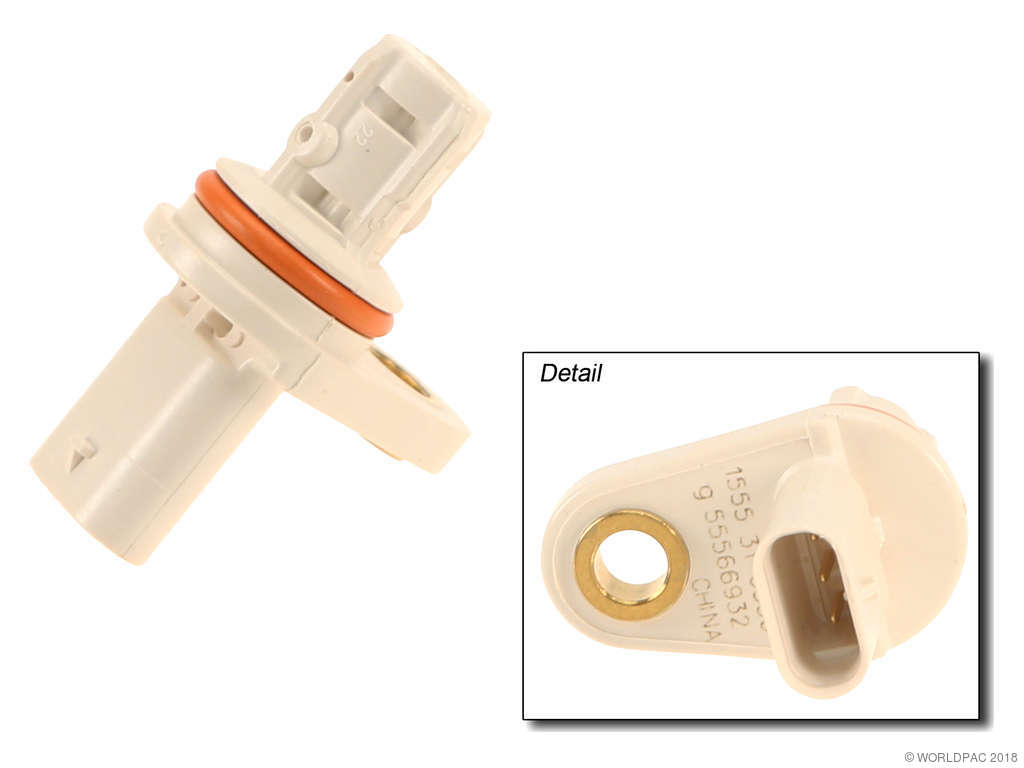
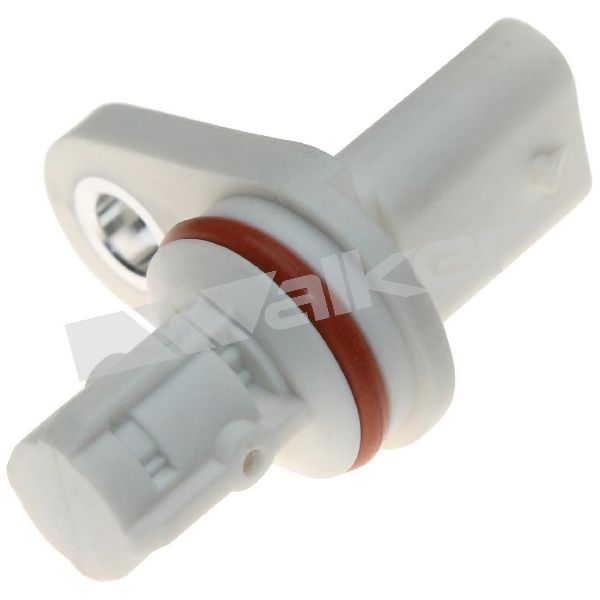
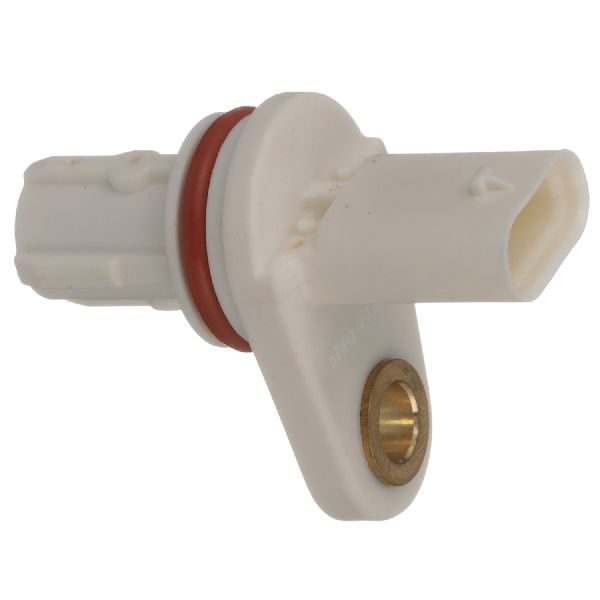
- The correct part is the intake sensor, located on the rear side of the valve cover (firewall side). The OEM part number is 55566932.
- Before replacing the part, perform a quick check of the sensor connector for oil and ensure the negative battery cable is tight and free of corrosion.
- If you have other codes, especially P0016, you may have a more serious mechanical timing issue that needs professional diagnosis.
What's Unique About the 2012-2020 Chevrolet Sonic
For the 1.4L Turbo engine used in the Sonic and its siblings (Cruze, Trax, Encore), this code is most frequently caused by a simple sensor failure. General Motors issued a Technical Service Bulletin (TSB PIP5329C) that advises technicians to replace the intake camshaft position sensor as the primary fix when P0341 appears alone. The TSB notes that scan tool data will show lower camshaft counts on the failing sensor. This makes diagnosis on this platform more straightforward than on many other vehicles, where P0341 could indicate more complex mechanical timing issues.
Generation note: The 2012-2020 range covers the entire first and only generation of the Chevrolet Sonic. The vehicle received a facelift for the 2017 model year, but the 1.4L LUJ/LUV engine and the common causes for this code remained the same.
Symptoms You May Notice
- Check Engine Light is on
- Engine is difficult to start or requires long cranking time
- Engine stalling, sometimes when coming to a stop or during low-speed turns
- Rough idle
- Hesitation or lack of power during acceleration
- Reduced fuel economy
- Engine RPMs may jump erratically before stalling
- Replacing the exhaust camshaft position sensor instead of the intake sensor. P0341 specifically points to the intake ('A') sensor.
- Replacing the VVT solenoids (camshaft actuators). While related to timing, the sensor itself is the far more common failure point for this specific code on this engine. 🎬 Watch: How to replace VVT solenoids if sensors aren't the fix.
- Assuming the timing chain has failed when P0341 is the only code present. The sensor should always be the first suspect per TSB PIP5329C.
Most Likely Causes
- Failing Intake Camshaft Position Sensor 🔴 High Probability This is a very common failure item on the 1.4L Turbo engine, as acknowledged by GM's own service bulletin (PIP5329C). The sensor is exposed to high heat in the engine bay, which can degrade its internal components over time.
How to confirm: If P0341 is the only code present, and a visual inspection of the wiring and grounds reveals no issues, the sensor itself is the most likely culprit. 🎬 See how bad sensors cause these specific engine symptoms. The most cost-effective diagnostic step is to replace the sensor, as advised by the TSB.
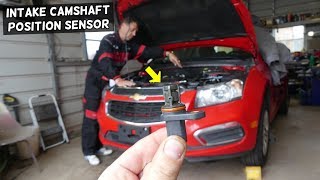
Typical fix: Replace the intake camshaft position sensor. It is located on the top of the valve cover toward the back (firewall side) of the engine and is held by one E10 external Torx bolt. Apply a small amount of clean engine oil to the new sensor's O-ring before installation.
Est. part cost: $25-$70 - Poor Electrical Connection or Ground 🟡 Medium Probability GM issued a Special Coverage bulletin (14311B) for an insufficient crimp on the negative battery cable on platform-sharing vehicles like the Cruze, which can cause a host of random electrical issues, including flickering lights and various warning messages. A poor ground can easily cause erratic sensor signals.
How to confirm: Inspect the intake cam sensor connector for corrosion, damage, or oil contamination from a leaky valve cover gasket. Check that the main engine ground strap is clean and tight. Inspect the negative battery cable terminal for looseness or corrosion as described in the service bulletin.
Typical fix: Clean the connector terminals. Tighten or replace the faulty ground strap. Replace the negative battery cable if it matches the condition described in TSB 14311B.
Est. part cost: $0-$50
Rare But Worth Checking
- Stretched Timing Chain: This is a more serious mechanical issue. It will typically set other codes along with P0341, most notably P0016 (Crankshaft/Camshaft Correlation). If you only have P0341, a stretched chain is unlikely to be the cause.
- Failing Engine Control Module (ECM): ECM failure is very rare. All other possibilities, especially the sensor and wiring, should be exhaustively ruled out before considering the ECM as the cause. One owner reported replacing the ECM without resolving the code, which returned until a wiring issue was found.
- Magnetized Cylinder Head Components: Extremely rare, but mentioned in TSB PIP5329C. If the vehicle was recently in a front-end collision and repaired with improper welding procedures, metal components in the cylinder head (including the reluctor wheel for the sensor) can become magnetized, causing erratic signals. This would require cylinder head replacement to fix.
Diagnosis Steps
- Read the codes with an OBD-II scanner to confirm P0341 is present. Note any other codes.
- If P0341 is the only code, the intake camshaft position sensor is the primary suspect, as per TSB PIP5329C.
- Visually inspect the intake camshaft position sensor and its electrical connector. The sensor is on the valve cover, toward the firewall. Look for loose connections, damaged wires, or oil contamination from a common valve cover leak.
- Inspect the negative battery cable terminal for looseness or corrosion, as noted in GM Special Coverage 14311B for the platform-sharing Cruze. Ensure the main engine ground straps are clean and tight.
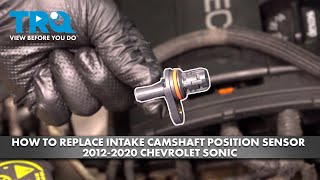
- If the visual inspection checks out, the most common and effective repair is to replace the intake camshaft position sensor. This is a simple DIY task requiring an E10 socket. 🎬 Watch: Step-by-step guide to replacing the intake camshaft sensor.
- After replacement, clear the code with the scanner and perform a test drive to ensure the issue is resolved. A relearn procedure is not required for just a sensor swap on this vehicle.
- If the code returns, a more advanced diagnosis is needed. This includes checking the sensor circuit for proper voltage and ground at the ECM, or inspecting the sensor's reluctor wheel for damage using a borescope, as mentioned in other GM bulletins.
Parts You'll Likely Need
- Intake Camshaft Position Sensor
(OEM #55566932)— This is the most common failure part for a standalone P0341 code on this engine, as confirmed by owner experiences and GM service information (TSB PIP5329C).
Trusted brands: ACDelco (GM Genuine Part #213-4689), Delphi, Bosch, NTK/NGK
OEM price range: $45-$70
Aftermarket price range: $25-$60
Related Codes That Often Appear With This One
- P0340 — P0340 indicates a complete failure of the sensor circuit, while P0341 indicates a performance issue. An intermittent fault (P0341) can degrade into a complete failure, triggering P0340.
- P0016 — This code indicates a mechanical misalignment between the crankshaft and intake camshaft. Seeing P0016 with P0341 strongly suggests a physical timing problem, like a stretched timing chain, rather than just a sensor issue.
- P0366 — This is the corresponding range/performance code for the exhaust ('B') camshaft position sensor. TSB PIP5329C also applies to this code. Some owners choose to replace both sensors at the same time as preventative maintenance.
Technical Service Bulletins (TSBs) & Recalls
- PIP5329C: This GM Technical Service Bulletin is the key to diagnosing P0341 on this engine. It advises that if P0341 (or P0366 for exhaust) is set without other codes, the direct fix is to replace the corresponding camshaft position sensor.
- 14311B: This Special Coverage bulletin for the Chevy Cruze addresses a faulty negative battery cable terminal clamp that can cause insufficient power and numerous electrical problems. It is highly relevant context for the Sonic due to the shared platform.
Platform-Specific Known Issues
- A faulty negative battery cable crimp was common enough on early models that GM issued Special Coverage 14311B for the Chevy Cruze. This can cause a wide range of electrical faults, including erratic sensor performance. Checking this cable is a wise step during diagnosis.
Mechanic-Grade Diagnostic Values
- Camshaft Position Sensor Power Supply Pin to Ground (KOEO) — expected: ~5V. Failure: 0V or significantly lower voltage points to a wiring or ECM power supply issue.
- Camshaft Position Sensor Signal Pin to Ground (KOEO, sensor disconnected) — expected: ~4.8-5V. Failure: 0V indicates a break in the signal wire to the ECM. This voltage is a bias voltage supplied by the ECM; its absence points to a circuit fault, not a sensor fault.
- Camshaft Position Sensor Ground Pin to Chassis Ground (KOEO) — expected: Near 0 Ohms resistance. Failure: High resistance (OL) indicates an open in the ground circuit between the sensor and the ECM.
Scan Tool Commands That Help
- GDS2 / Professional Bidirectional Scanner: Crankshaft Position Variation Learn (CASE Relearn) — This procedure may be required after replacing a camshaft or crankshaft sensor, or the ECM, to allow the module to learn the mechanical tolerances of the reluctor wheel. While not always necessary for a simple sensor swap, it can resolve persistent codes or rough running after the repair.
Wiring & Ground Locations
- Camshaft Position Sensor Connector — On top of the valve cover. The intake sensor ('A') is toward the firewall/driver's side, and the exhaust sensor ('B') is toward the front/passenger side.. This is the primary connection point. It is highly susceptible to oil contamination from a leaking valve cover gasket, which can disrupt the signal and cause P0341. The connector has three pins: Pin 1 is the 5V power supply, Pin 2 is the signal wire, and Pin 3 is the ECM-provided ground.
- G105 — On the left front of the engine compartment, often near or under the battery tray.. This is a critical ground point for the engine harness and the Engine Control Module (ECM). A loose or corroded connection here can cause a variety of erratic sensor readings, including P0341.
- G106 — On the left rear of the engine block.. This ground serves the engine block and its attached sensors. A poor connection can interfere with sensor signals that the ECM uses for reference.
- G104 — On the rear of the cylinder bank for the 1.4L engine.. This is another critical ground for the Engine Control Module (ECM). A fault here can directly impact sensor signal integrity.
Real Owner Repair Stories
- Diagnostic forum technician (2014 Chevrolet Cruze 1.4L Turbo) — Crank no start condition unless the exhaust cam sensor was unplugged. Multiple codes stored, including P0365 (Exhaust Cam Sensor Circuit).
❌ Tried (didn't work) Initially suspected a faulty PCM because both the 5V reference and signal wires showed 5V with the sensor unplugged., Unplugged multiple other sensors to check for a shorted 5V reference circuit., Disassembled the wiring harness looking for shorts between wires.
✅ What actually fixed it After consulting service information, the technician realized that having ~5V on the signal wire with the sensor unplugged is normal (it's a bias voltage from the ECM). The actual cause was a bad camshaft position sensor. Replacing the sensor resolved the issue.
OEM Part Supersession History
55566932→ACDelco 213-4689— Standard part number update from GM to its ACDelco distribution line.
Heads up: Some aftermarket sensors, even if listed as compatible, may have the connector's keying tab on the wrong side, preventing it from plugging in. Always visually compare the new sensor's connector to the old one before installation.
Model Year Variations Within This Range
- 2012-2020: The engine RPO codes LUJ and LUV are functionally identical for the purpose of this repair. The LUV was intended to be E85 compatible, but this change was never implemented, so parts like the camshaft position sensor are interchangeable between them.
Diagnostic Flowchart
Other Known Issues on This Vehicle
Issues unrelated to this code that are worth knowing about as an owner of this generation:
- PCV System Failure (Valve Cover & Intake Manifold) 🔴 High — Very common, often occurs between 60,000-120,000 miles. A torn diaphragm in the valve cover or a missing check valve in the intake manifold causes vacuum leaks. (Ref: N202299080, PIP5197M, 19-NA-114.)
- Water Pump Leaks 🟠 Medium — Common failure, typically before 100,000 miles. Leaks coolant from the weep hole or shaft seal. (Ref: 14371A (Special Coverage extended to 10 years/150,000 miles for early models).)
- Valve Cover Gasket Oil Leak 🟠 Medium — Extremely common. The gasket becomes brittle from heat and leaks oil, often onto the exhaust manifold (causing a burning smell) or into spark plug tubes (causing misfires).
- Turbocharger Oil Line Leaks 🟠 Medium — The turbo oil feed and/or return lines are known to leak oil. The feed line is a common source of leaks onto the front of the engine.
- Cracked/Brittle Plastic Cooling System Components 🔴 High — Many owners report that plastic coolant pipes, the thermostat housing, and the water outlet become brittle and crack, causing significant coolant leaks, especially after 80,000 miles. (Ref: P0597 is a common code for thermostat failure.)
Used vs. New Parts: Buying Guide for This Vehicle
When a used part is the smart pick: For the camshaft position sensor itself, a used part is not recommended. The part is inexpensive (around $25-$60 new for a quality aftermarket brand), is a known common failure item, and its remaining lifespan is impossible to determine. The cost savings are minimal compared to the risk of premature failure and repeating the labor.
What to inspect on the donor part:
- Not applicable for the sensor. Always buy new.
OEM-only on this vehicle (don't cheap out):
- Engine Control Module (ECM): While rarely the cause, if the ECM does fail, a new or professionally remanufactured unit from a reputable source is strongly advised due to the complexity of programming and potential for issues with used modules.
Aftermarket brands forum-validated for this vehicle:
- ACDelco (GM Original Equipment)
- Delphi
- Bosch
- NTK/NGK
Brands owners have reported issues with on this vehicle:
- Generic, unbranded, or 'white-box' sensors from online marketplaces should be avoided. Forum users and technicians frequently report issues with incorrect fitment (connector keying) or premature failure with these parts.
Real Owner Stories
Aggregated from forums and TSBs cited above. Mileages and costs reflect what owners reported in those sources.
2012 Chevrolet Sonic 1.4L Turbo
Symptoms: The engine would stall specifically during low-speed left turns. The dealer replaced the sensor, cam gear, and ECM, but the P0341 code kept returning.
What fixed it: The symptoms pointed to a wiring harness issue that was being stressed during turns, though the initial sensor and ECM replacements did not resolve the recurring code.
Source hint: Chevrolet Forum thread titled 'P0341 Camshaft Position Sensor - Chevrolet Forum'
2012 Chevrolet Cruze 1.4L Turbo — 105000 miles
Symptoms: Check engine light came on with P0341.
What fixed it: Replace the intake camshaft position sensor as per TSB PIP5329C.
Source hint: CruzeTalk forum report
2013 Chevrolet Sonic LT 1.4L Turbo — 96000 miles
Symptoms: Owner preparing for common high-mileage failures including cooling system leaks and PCV issues.
What fixed it: Preventative replacement of the water pump, thermostat housing, and valve cover.
Source hint: r/ChevySonic - 2013 Sonic LT 1.4T hitting 96,000 miles - what to expect/replace?
Related OBD-II Codes
Frequently Asked Questions
Does GM Technical Service Bulletin PIP5329C apply to my Chevrolet Sonic if I only have the P0341 code?
Is there a special warranty for the water pump on my 1.4L Turbo Sonic?
Could a bad battery cable cause my P0341 code?
Where is the intake camshaft position sensor located on the Sonic 1.4L?
Do I need to perform a 'relearn' procedure after replacing the cam sensor?
Can an oil leak cause this sensor to fail?
Helpful Videos

We Have This Part in Stock



The information in this article is provided for general reference and educational purposes only. Vehicle specifications, procedures, and part compatibility can vary by production date, trim level, and region. Always consult your vehicle's factory service manual and verify part numbers before purchasing or performing repairs. Safety-critical components such as airbags, seat belts, and braking systems should be installed by a qualified professional.
- Chevrolet Sonic:
- 🎬 Helpful Videos
- 🛍️ Shop This Part
- What's Unique About the 2012-2020 Chevrolet Sonic
- Symptoms You May Notice
- Most Likely Causes
- Rare But Worth Checking
- Diagnosis Steps
- Parts You'll Likely Need
- Related Codes That Often Appear With This One
- Technical Service Bulletins (TSBs) & Recalls
- Platform-Specific Known Issues
- Mechanic-Grade Diagnostic Values
- Scan Tool Commands That Help
- Wiring & Ground Locations
- Real Owner Repair Stories
- OEM Part Supersession History
- Model Year Variations Within This Range
- Diagnostic Flowchart
- Other Known Issues on This Vehicle
- Used vs. New Parts: Buying Guide for This Vehicle
- Real Owner Stories
- 2012 Chevrolet Sonic 1.4L Turbo
- 2012 Chevrolet Cruze 1.4L Turbo — 105000 miles
- 2013 Chevrolet Sonic LT 1.4L Turbo — 96000 miles
- Related OBD-II Codes
- Frequently Asked Questions
- 🎟️ Get 5% Off