

P0340 on 2000-2004 Subaru Outback: Camshaft Sensor Circuit Causes and Fixes
P0340 on a 2000-2004 Subaru Outback most often means the camshaft position sensor has failed. It can also be caused by a stretched or skipped timing belt, or damaged wiring. Replacing the sensor is a common, affordable DIY fix, but mechanical timing should always be verified if the code persists.
- P0340 on a 2000-2004 Outback means there's a fault in the camshaft position sensor circuit.
- The most likely cause is a failed sensor, but a problem with the timing belt is a strong second possibility specific to this engine.
- Symptoms typically include a no-start or hard-start condition, stalling, and rough idling.
- Diagnosis should start with the sensor and its wiring, but must include a visual inspection of the timing belt's alignment and condition.
- Do not drive the vehicle extensively, as it could stall in traffic or fail to restart.
What's Unique About the 2000-2004 Subaru Outback
On the Subaru EJ25 SOHC engine used in this generation of Outback, the timing belt is a critical maintenance item. Unlike many other vehicles where a P0340 is almost always just the sensor, on these Subarus, a stretched or skipped timing belt is a very real and common cause for this code. The EJ25 is an interference engine, so a timing belt failure can cause catastrophic damage. Owners should pay close attention to the timing belt's condition and service history when diagnosing P0340.
Symptoms You May Notice
- Check Engine Light is on
- Engine is hard to start or cranks but won't start.
- Engine stalls, especially at idle or low speeds.
- Rough or unstable idling.
- Noticeable loss of engine power.
- Engine sputtering or misfiring.
- Replacing the crankshaft position sensor instead of the camshaft position sensor. While they work together, P0340 specifically points to the cam sensor circuit.
- Replacing the camshaft sensor when the actual problem is a skipped timing belt. Always verify mechanical timing if a new sensor doesn't fix the issue, especially on an EJ25 engine.
- Assuming the new sensor is good. Aftermarket sensors can be defective out of the box. It's recommended to use an OEM or reputable brand like Denso or NGK/NTK.
Most Likely Causes
- Failed Camshaft Position Sensor 🔴 High Probability Sensors are electronic components that fail over time due to constant heat cycles and engine vibration. It is the most common point of failure for a P0340 code.
How to confirm: Test the sensor's resistance with a multimeter. A healthy sensor on this engine should read approximately 2.0-2.1k ohms. You can also test for a signal with the engine cranking. A video by 'Carsntoys' on YouTube demonstrates this test procedure.
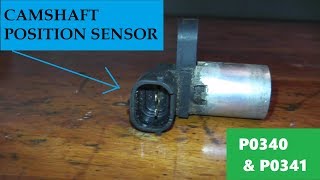
Typical fix: Replace the camshaft position sensor. It is located on the driver's side (left side) of the engine, near the front, mounted on a bracket behind the timing cover. It is held in by a single 10mm bolt.
Est. part cost: $40-$90 - Timing Belt Problem (Stretched, Skipped Tooth, or Damaged) 🟡 Medium Probability The EJ25 is an interference engine with a timing belt that requires replacement every 105,000 miles. A worn belt, failing tensioner, or damaged idler can allow the timing to jump one or more teeth. This de-synchronizes the cam and crank signals, which the ECU detects as a cam sensor circuit fault, triggering P0340.
How to confirm: Remove the outer timing covers (driver and passenger side) and visually inspect the belt for damage, slack, or misalignment of the timing marks on the cam and crank sprockets. Rotate the engine by hand using a 22mm socket on the crankshaft pulley bolt to check the entire belt and all timing marks.
Typical fix: Replace the timing belt, tensioner, and all idler pulleys as a complete kit. If the belt has broken or skipped significantly, internal engine damage (bent valves) is highly likely and will require cylinder head removal and repair.
Est. part cost: $100-$250 for a full kit - Damaged Wiring or Connector 🟡 Medium Probability The wiring harness in the engine bay becomes brittle from age and exposure to heat, leading to cracks, corrosion, or loose connections at the sensor connector or further down the harness toward the ECM.
How to confirm: Visually inspect the wiring and connector for any signs of damage, melting, or corrosion. Wiggle the connector while the engine is running to see if it causes stalling. Perform a continuity test from the sensor connector to the ECM to check for breaks in the wire.
Typical fix: Repair the damaged section of wire or replace the connector pigtail.
Est. part cost: $10-$30
Rare But Worth Checking
- Damaged Camshaft Sprocket Reluctor Ring: The teeth on the back of the camshaft sprocket, which the sensor reads, can be damaged, bent, or covered in debris during a timing belt service or other repairs. This will cause an erratic or missing signal.
- Failing Alternator: A failing alternator can produce excessive electrical noise (AC ripple voltage), which can interfere with the sensitive cam sensor's signal and trigger a P0340 code. This is a known, though uncommon, issue on some Subaru models and can be diagnosed with an oscilloscope.
- Failed Powertrain Control Module (ECM): This is very rare, but the ECM itself can fail. This should only be considered after all other possibilities (sensor, wiring, mechanical timing) have been exhaustively ruled out.
Diagnosis Steps
- Read all stored fault codes with an OBD-II scanner. Note any other codes present, such as misfire or crankshaft codes.
- Visually inspect the camshaft position sensor and its electrical connector for obvious damage, corrosion, or loose connections. The sensor is on the driver's side of the engine, near the oil fill tube.
- Test the sensor's internal resistance using a multimeter set to ohms. Disconnect the sensor and probe its two pins. It should be around 2.0-2.1k Ohms.
- If the sensor tests good, inspect the wiring harness for continuity between the sensor connector and the ECM. Check for shorts to ground or power.
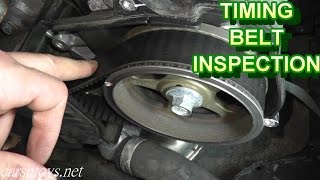
- If wiring is good, the next critical step is to inspect the engine's mechanical timing. Remove the plastic timing belt covers and verify that the timing marks on the camshaft 🎬 Watch: How to perform a quick DIY timing belt inspection. sprockets and crankshaft sprocket are all correctly aligned per the service manual.
- While inspecting the timing, check the condition of the timing belt for wear, fraying, glazing, or excessive slack. Check the tensioner for leaks.
- If the sensor, wiring, and timing are all confirmed to be good, consider rare causes. Test the alternator for excessive AC ripple voltage using a multimeter with that function or an oscilloscope.
- As a final step, if all else fails, the issue may be a faulty ECM, though this is highly unlikely.
Parts You'll Likely Need
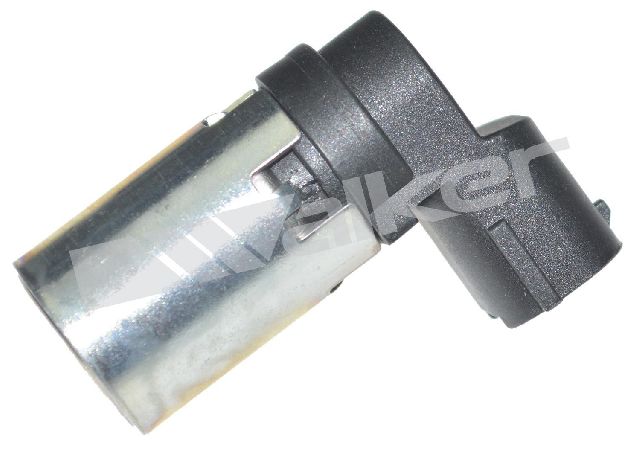
- Camshaft Position Sensor
(OEM #22056AA063)— This is the most frequent cause of a P0340 code. The sensor itself fails electronically over time. The OEM part 22056AA063 supersedes previous part numbers 22056AA060, 22056AA061, and 22056AA062.
Trusted brands: Subaru (Genuine), Denso, NGK/NTK, Hitachi
OEM price range: $70-$100
Aftermarket price range: $40-$70 - Timing Belt Kit
(OEM #13028AA231 (Belt Only, Kit numbers vary))— If the code is caused by a skipped or stretched timing belt, a full kit including the belt, tensioner, and idlers is the correct and necessary fix to prevent catastrophic engine failure.
Trusted brands: Aisin, Gates, Dayco
OEM price range: $200-$300
Aftermarket price range: $100-$180
Related Codes That Often Appear With This One
- P0335 — Crankshaft Position Sensor Circuit Malfunction. The ECU relies on both cam and crank signals to verify engine timing. A major timing belt issue can cause both codes to appear.
- P0301, P0302, P0303, P0304 — Cylinder Misfire codes. If the cam timing is incorrect, the engine will misfire. Subaru TSBs #11-130-13R and #11-122-12 directly link P0340 with these misfire codes on other models, indicating a common pattern.
Technical Service Bulletins (TSBs) & Recalls
- Bulletin #11-130-13R: While for a later model year, it provides detailed diagnostic procedures for P0340 and related codes, linking them to incorrect sensor clearance, which can be caused by issues with the camshaft or sensor mounting. It consolidates several older TSBs.
- Bulletin #11-122-12: Also links P0340 with difficulty starting, rough idle, and misfire codes, showing a persistent pattern across Subaru models. [This TSB was superseded by 11-130-13R]
Platform-Specific Known Issues
- Subaru has issued multiple Technical Service Bulletins (TSBs) for other models and years that group P0340 with symptoms like 'Difficulty Starting' and 'Rough Idle', indicating a known pattern of issues with the cam position sensing system. (Bulletins #11-130-13R, #11-124-12R, #11-100-11R, #11-122-12)
- An owner complaint filed with the NHTSA (ODI #11363231) for a similar model year highlights the diagnostic challenge, where replacing both the cam and crank sensors did not resolve the issue, pointing towards a more complex underlying problem like wiring or mechanical timing.
- A Reddit thread on r/subaru for a 2012 Outback with P0340 details a frustrating diagnostic case where a new OEM sensor didn't fix the stalling issue, and the mechanic suspected a complex electrical fault after verifying the timing belt was okay.
Mechanic-Grade Diagnostic Values
- Camshaft Position Sensor Resistance — expected: 1.0 to 4.0 kΩ (typically ~2.0 kΩ). Failure: A reading of 0 Ω (short) or infinite/OL (open circuit).
- Alternator AC Ripple Voltage — expected: Less than 0.5 Volts AC (500mV) with engine running.. Failure: Excessive AC voltage 'ripples' visible on an oscilloscope, indicating a failing diode in the alternator which creates electrical noise that can disrupt the cam sensor signal.
- Camshaft Sensor Connector Voltage (3-wire Hall Effect Type) — expected: With key on, engine off: ~5V on the power wire, ~5V on the signal wire, and continuity to ground on the ground wire.. Failure: Missing 5V reference, missing ground, or signal voltage that does not change when the engine is cranked.
Wiring & Ground Locations
- E15 (Camshaft Position Sensor Connector) — On the front of the driver's side (left) cylinder head, behind the timing belt cover, near the oil filler neck.. This is the primary connector to inspect for corrosion, damage, or loose pins. It has two wires for the inductive-type sensor used on this engine.
- Engine Ground Straps — Key grounds are typically located from the battery negative terminal to the chassis, and from the chassis to the engine block (often near the starter or alternator).. A poor engine ground can cause all sorts of floating voltages and electrical noise, which can disrupt the low-voltage signal from the camshaft position sensor, leading to a P0340 code even if the sensor and its direct wiring are good.
Real Owner Repair Stories
- SubaruOutback.org forum user (2001 Subaru Outback, EJ25) — P0340 code, engine would crank but not start.
❌ Tried (didn't work) Replaced the camshaft position sensor., Replaced the crankshaft position sensor.
✅ What actually fixed it The timing belt had jumped a tooth. The user discovered the hydraulic timing belt tensioner had failed, causing slack in the belt. After replacing the tensioner and resetting the timing belt correctly, the P0340 code was resolved and the car started normally. - NASIOC forum user (Subaru with EJ engine) — Persistent P0340 code, stalling at low RPMs.
❌ Tried (didn't work) Replacing the camshaft position sensor.
✅ What actually fixed it The root cause was a failing alternator producing excessive electrical noise (AC ripple). Replacing the alternator resolved the P0340 code and stalling symptoms.
When the Usual Fixes Don't Work
- While replacing the camshaft position sensor is the most common fix, numerous owner accounts emphasize that it is not a guaranteed solution. In an NHTSA complaint (ODI #11363231), the owner replaced both cam and crank sensors without resolving the issue. In a well-documented Reddit thread, a new OEM sensor also failed to fix the problem, pointing to a deeper electrical or mechanical fault. These cases highlight the critical importance of verifying mechanical timing and checking for less obvious causes like alternator interference before assuming the sensor is the final fix.
OEM Part Supersession History
22056AA060, 22056AA061, 22056AA062→22056AA063— Standard part evolution, likely for improved durability or manufacturing consistency.
Heads up: All listed part numbers are generally interchangeable for this application. However, using the latest superseded part number (22056AA063) is always recommended to get the most current revision.
Model Year Variations Within This Range
- 2000-2004: The engine could be an EJ251 or EJ252. The EJ252 was used in some manual transmission models and had different emissions hardware (like the front O2 sensor and IAC valve) and a corresponding ECU. However, for the purposes of diagnosing P0340, the camshaft position sensor, its location, and the mechanical timing procedure are identical between them.
Diagnostic Flowchart
Other Known Issues on This Vehicle
Issues unrelated to this code that are worth knowing about as an owner of this generation:
- Head Gasket Failure 🔴 High — Very common, typically between 80,000 and 150,000 miles. The SOHC EJ25 engines in this era are known for external oil leaks at the head gasket, particularly at the rear of the driver's side cylinder head, and/or external coolant leaks from the driver's side.
- Rear Oil Separator Plate Leak 🟠 Medium — Common on higher mileage vehicles. The original plastic separator plate on the back of the engine block becomes brittle and leaks oil, often mistaken for a rear main seal leak. The fix is to replace it with an updated metal plate.
- Rear Wheel Bearing Failure 🟠 Medium — Frequent failure item. Owners report a loud humming or grinding noise from the rear of the vehicle that increases with speed. The fix is to replace the entire hub and bearing assembly.
Used vs. New Parts: Buying Guide for This Vehicle
When a used part is the smart pick: For this repair, using a used part is generally not recommended for the electronic sensors (cam/crank) or the timing belt components. However, if a wiring connector pigtail is needed, a used one from a junkyard is a perfectly acceptable and cost-effective solution. Similarly, used timing belt covers or bolts are fine.
Donor-vehicle mileage cap: roughly under 100000 miles for the part to have meaningful remaining life.
What to inspect on the donor part:
- For a wiring pigtail, ensure the plastic is not brittle or cracked.
- Check that the locking tab on the connector is intact and functional.
- Inspect the wires for any signs of previous repair, corrosion, or rodent damage.
OEM-only on this vehicle (don't cheap out):
- Camshaft Position Sensor
- Crankshaft Position Sensor
- Timing Belt Tensioner
Aftermarket brands forum-validated for this vehicle:
- For sensors: Denso, NGK/NTK, Hitachi.
- For timing belt kits: Aisin is highly regarded as providing OEM-quality components (Koyo/NSK bearings, Mitsuboshi belt, NTN tensioner).
- For timing belts alone: Gates (who makes the OEM belt via their Unitta division) is a reliable choice.
Brands owners have reported issues with on this vehicle:
- Generic, no-name sensors from online marketplaces like Amazon or eBay are frequently reported as being dead-on-arrival or failing prematurely.
- Some users have reported issues with Echlin brand sensors from NAPA.
- Gates timing belt *kits* have reportedly declined in quality since ~2018, with non-OEM quality tensioners and idlers being included. While the Gates belt itself is good, the full Aisin kit is now often recommended over the Gates kit.
Real Owner Stories
Aggregated from forums and TSBs cited above. Mileages and costs reflect what owners reported in those sources.
2011 Subaru Outback
Symptoms: The car sometimes takes a long time (5-15 seconds) to start. When it does, the dashboard 'lights up like a Christmas tree,' disabling ABS, traction control, and cruise control.
What fixed it: The owner spent thousands of dollars at the dealership, but the issue persisted even after replacing sensors; the source indicates a complex electrical fault or timing issue was suspected.
Source hint: owner_reports / Reddit r/subaru
2012 Subaru Outback
Symptoms: Engine stalling issues and a P0340 code that persisted even after a new OEM sensor was installed.
What fixed it: The mechanic suspected a complex electrical fault after verifying the timing belt was okay.
Source hint: Reddit r/subaru - 'Mechanic can't figure it out, please advise. Engine code P0340'
2000-2004 Subaru Outback 2.5L
Symptoms: Difficulty starting, rough idle, and misfire codes appearing alongside the P0340.
What fixed it: Diagnostic procedures point to correcting sensor clearance or addressing camshaft/sensor mounting issues.
Source hint: Bulletin #11-122-12 / #11-130-13R
Related OBD-II Codes
Frequently Asked Questions
Where is the camshaft position sensor located on my 2.5L EJ251/EJ252 engine?
What should the resistance reading be for a healthy cam sensor on a 2000-2004 Outback?
Can a timing belt issue cause a P0340 code even if the sensor is good?
Does TSB #11-130-13R apply to my P0340 diagnosis?
I replaced the sensor but still have the code; what else should I check on this model?
Helpful Videos
We Have This Part in Stock


The information in this article is provided for general reference and educational purposes only. Vehicle specifications, procedures, and part compatibility can vary by production date, trim level, and region. Always consult your vehicle's factory service manual and verify part numbers before purchasing or performing repairs. Safety-critical components such as airbags, seat belts, and braking systems should be installed by a qualified professional.
- Subaru Outback:
- 🎬 Helpful Videos
- 🛍️ Shop This Part
- What's Unique About the 2000-2004 Subaru Outback
- Symptoms You May Notice
- Most Likely Causes
- Rare But Worth Checking
- Diagnosis Steps
- Parts You'll Likely Need
- Related Codes That Often Appear With This One
- Technical Service Bulletins (TSBs) & Recalls
- Platform-Specific Known Issues
- Mechanic-Grade Diagnostic Values
- Wiring & Ground Locations
- Real Owner Repair Stories
- When the Usual Fixes Don't Work
- OEM Part Supersession History
- Model Year Variations Within This Range
- Diagnostic Flowchart
- Other Known Issues on This Vehicle
- Used vs. New Parts: Buying Guide for This Vehicle
- Real Owner Stories
- 2011 Subaru Outback
- 2012 Subaru Outback
- 2000-2004 Subaru Outback 2.5L
- Related OBD-II Codes
- Frequently Asked Questions
- 🎟️ Get 5% Off