

P0340 on 2017-2018 Kia Forte: Camshaft Sensor 'A' Circuit Causes and Fixes
On a 2017-2018 Kia Forte, code P0340 almost always points to a failed intake camshaft position sensor. It's an affordable and easy DIY replacement, typically costing $25-$75 for the part and requiring only a 10mm socket.
- P0340 on a 2017-2018 Forte is most likely a bad intake camshaft position sensor, located at the front of the valve cover.
- This is a very easy and affordable DIY repair that requires minimal tools (a 10mm socket).
- Always inspect the wiring connector for damage or oil before replacing the sensor. Consider swapping the intake and exhaust sensors to confirm the failure before buying a new part.
- Use a genuine Kia sensor or a reputable aftermarket brand like Delphi or NGK for the best results. The OEM part number is 39350-2E200.
- Be aware that the Nu 2.0L GDI engine has a history of serious issues, including oil consumption and catastrophic failure, covered by a class-action settlement.
What's Unique About the 2017-2018 Kia Forte

For the 2017-2018 Forte with the Nu 2.0L GDI engine, this code is a very common and straightforward issue. The sensors are known to fail over time but are located directly on top of the valve cover, making them one of the easiest sensors to replace for a DIYer. While there are recalls for this engine family concerning oil pump issues (Recall SC210 on the MPI version), P0340 itself is most often an isolated sensor or wiring failure rather than a sign of the more severe mechanical problems this engine is known for.
Symptoms You May Notice
- Check Engine Light is on
- Engine is hard to start or cranks for a long time before starting
- Engine stalls, sometimes while driving at low speeds or when coming to a stop
- Rough or unstable idle
- Noticeable loss of power and poor acceleration
- Increased fuel consumption
- Replacing the crankshaft position sensor instead of the camshaft position sensor.
- Replacing the wrong camshaft sensor (e.g., the exhaust sensor 'B' towards the firewall, instead of the intake sensor 'A' at the front).
- Replacing the sensor when the actual fault is in the wiring connector or a shared fuse.
Most Likely Causes

- Failed Camshaft Position Sensor 'A' (Intake) 🔴 High Probability This is a common failure part due to heat cycles and age. Many owner and mechanic videos confirm this is the first part to check and replace.
How to confirm: After checking wiring, replacing the sensor is the most direct way to confirm. You can also swap the intake and exhaust sensors (they are identical) and see if the code changes to P0365 (Sensor 'B'). If it does, the sensor is bad.
Typical fix: Replace the intake camshaft position sensor. On the Nu 2.0L engine, Sensor 'A' (intake) is the one towards the front of the vehicle, and Sensor 'B' (exhaust) is towards the firewall.
Est. part cost: $40-$75 - Damaged Wiring or Connector 🟡 Medium Probability The wiring harness in the engine bay is exposed to heat and vibration, which can cause wires to become brittle or connectors to loosen over time. Oil from a leaky valve cover gasket can also contaminate the connector.
How to confirm: Visually inspect the wiring harness and the connector at the sensor for any signs of fraying, melting, corrosion, or pushed-out pins. Check for power (often 5V) and a good ground at the connector with a multimeter.
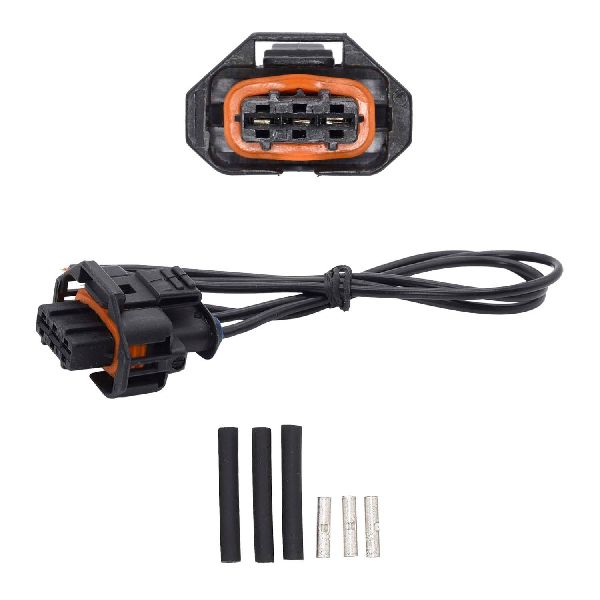
Typical fix: Repair the damaged section of wiring or replace the connector pigtail.
Est. part cost: $10-$30 - Blown Fuse ⚪ Low Probability
How to confirm: Check the fuse box in the engine compartment for a blown fuse, often labeled 'SNSR' or similar. If the fuse is blown, the sensor will have no power.
Typical fix: Replace the blown fuse. If it blows again immediately, there is a short circuit in the wiring that must be found.
Est. part cost: $1-$5
Rare But Worth Checking
- Stretched Timing Chain or Timing Issue: While less common for a standalone P0340, if the code appears with correlation codes like P0016 or P0017, it can indicate a more serious mechanical timing problem. These engines are not known for timing chain issues as frequently as other problems, but it is possible.
- Sheared CVVT Phaser Dowel Pin: A rare but documented failure on a Kia Forte involved a P0017 code where the dowel pin on the CVVT (cam phaser) sprocket had sheared off, causing the cam to be out of time with the sensor reading. This is a significant mechanical failure requiring timing component replacement.
- Failing Powertrain Control Module (PCM): This is extremely rare. The PCM should only be considered after all other possibilities (sensor, wiring, timing) have been exhaustively ruled out by a professional using an oscilloscope to verify signal patterns.
Diagnosis Steps

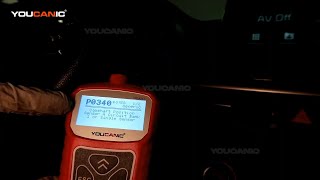
- Read the code with an OBD-II scanner to confirm P0340 is present.
- Pop the hood and remove the plastic engine cover. It pulls straight off, held by four grommets.
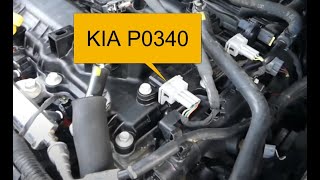
- Locate the two camshaft position sensors on the valve cover. Sensor 'A' (Intake) is the one closer to the front of the car (intake manifold side). Sensor 'B' (Exhaust) is closer to the firewall.
- Visually inspect the sensor's electrical connector and wiring for any obvious damage, corrosion, or oil contamination. Ensure the connector is seated firmly.
- Check the fuse box in the engine bay for any blown fuses related to engine sensors (often marked 'SNSR' or 'SNSR3').
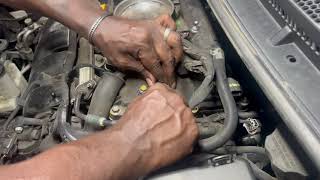
- If wiring and fuses are good, the sensor itself is the most likely culprit. Replacement is the common fix. It is held by a single 10mm bolt. 🎬 Watch: A quick walkthrough of the sensor replacement process.
- To be certain before buying a part, you can swap the intake and exhaust sensors. Clear the codes and run the engine. If the code changes to P0365 (Sensor 'B'), you have confirmed the original sensor is faulty.
- If the code returns after replacing the sensor, the issue may be more complex, such as a wiring harness fault or a timing chain problem, and may require professional diagnosis.
Parts You'll Likely Need
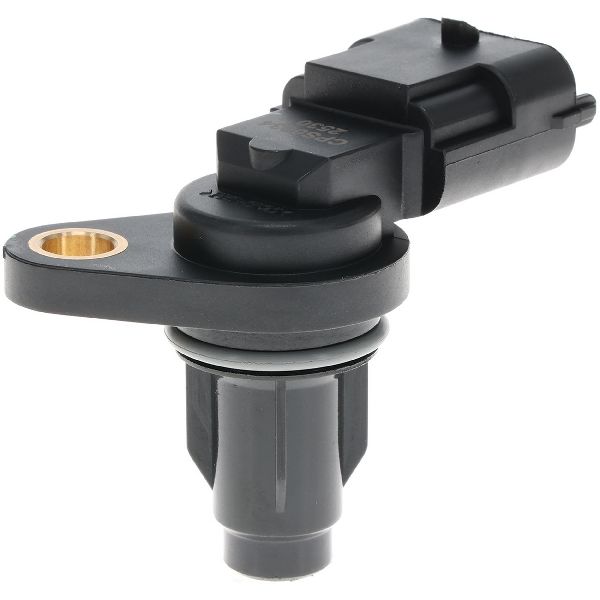
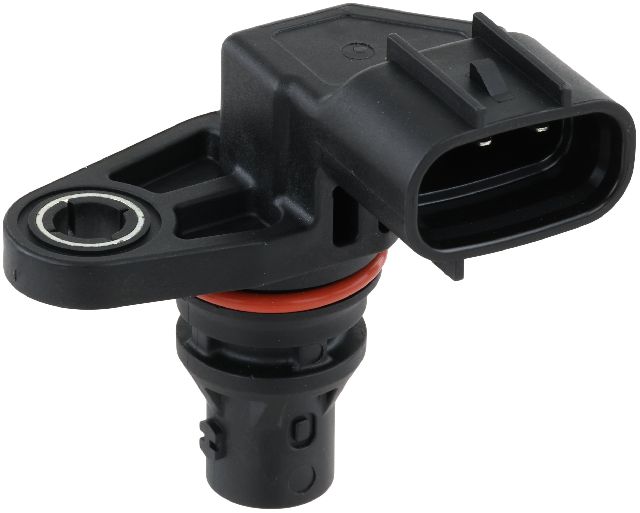
- Camshaft Position Sensor
(OEM #39350-2E200)— This sensor is the most common failure point for code P0340. The engine uses two of these; this part number fits both intake and exhaust positions 🎬 Watch: This video shows the sensor location on newer models. and is shared with many Hyundai/Kia 2.0L vehicles.
Trusted brands: Genuine Kia/Hyundai, Delphi, NTK/NGK, Standard Motor Products (SMP)
OEM price range: $50-$75
Aftermarket price range: $25-$50
Related Codes That Often Appear With This One
- P0365 — This is the code for the Camshaft Position Sensor 'B' (Exhaust). Seeing both codes together may suggest a common power or ground issue affecting both sensors, a blown fuse, or that both have failed around the same time.
- P0016 / P0017 — These are crankshaft/camshaft correlation codes. If you see these with P0340, it points strongly to a mechanical timing issue (like a stretched chain or failed phaser) rather than just a bad sensor. One owner with a P0017 code was quoted for an entire engine replacement by a dealer.
- P0335 — This code is for the Crankshaft Position Sensor. If both cam and crank sensor codes appear, it could indicate a major timing problem or a widespread wiring issue.
Platform-Specific Known Issues
- Recall SC210 (NHTSA 21V-260) was issued for some 2017-2018 Forte models, but specifically for those with the 2.0L Nu MPI engine, due to potential oil pump failure. The fix involves replacing the oil pan with a new one containing magnets. While not directly applicable to the GDI engine in this article, it highlights the sensitivity of the Nu engine family to oiling issues.
- Class Action Lawsuits: The Nu 2.0L GDI engine is included in major class-action lawsuits against Hyundai/Kia for defects leading to premature bearing wear, engine seizure, and fires. This has resulted in extended warranties (15-year/150,000-mile) and a Knock Sensor Detection System (KSDS) software update for affected vehicles.
Mechanic-Grade Diagnostic Values

- Camshaft Position Sensor Connector - Reference Voltage — expected: ~5V (Key On, Engine Off). Failure: Voltage is 0V or significantly lower than 5V, indicating a problem with the wiring or the PCM's 5V supply.
- Camshaft Position Sensor Connector - Signal Wire Voltage (Sensor Connected) — expected: ~4.6V - 4.8V (Key On, Engine Off). Failure: Voltage is 0V or does not change from a static value when the engine is cranked. Waving a piece of metal past the sensor tip should cause the voltage to drop toward 0V.
- Camshaft Position Sensor Connector - Signal Wire Voltage (Sensor Disconnected) — expected: Near 0V (Key On, Engine Off). Failure: Reading 5V or 12V indicates a short-to-power in the wiring harness.
- Camshaft Position Sensor Connector - Ground Wire — expected: Near 0 ohms of resistance to chassis ground.. Failure: High resistance (more than a few ohms) indicates a poor ground connection, which can cause erratic sensor signals.
- Camshaft Position Sensor Signal (Oscilloscope) — expected: A clean square wave pattern that switches between approximately 0V and 5V as the engine is cranked or running.. Failure: A flat line at 0V, 5V, or an erratic/noisy pattern indicates a failed sensor or wiring issue.
Wiring & Ground Locations
- Sensor Fuse — In the main fuse box in the engine compartment.. This fuse, often labeled 'SNSR' or 'SNSR3', provides power to the camshaft position sensors. If blown, the sensors will have no power and will trigger a circuit code.
- Sensor Connector Pinout (Typical) — At the camshaft position sensor on the valve cover.. For testing, the 3-pin connector typically has a 5V power wire, a signal wire, and a ground wire. Knowing the pinout is essential for accurate multimeter testing.
- Engine Ground Points — Key ground locations for the engine harness are typically on the cylinder head, engine block, and transmission housing.. A loose or corroded main engine ground can cause intermittent and difficult-to-diagnose sensor circuit faults, including P0340.
Real Owner Repair Stories
- YouTube user comment (2005 Kia Sportage 2.7L V6) — P0340 code returned after sensor replacement.
❌ Tried (didn't work) Replacing the camshaft position sensor.
✅ What actually fixed it The code was resolved by unplugging the new sensor and cleaning the electrical connector terminals with contact cleaner before reconnecting it. - YouTube video by Azaan Auto's (Kia/Hyundai vehicle (model not specified, but common platform)) — Hard to start, engine knocking on cold start, codes P0340 and P0365 present.
❌ Tried (didn't work) Replacing both camshaft position sensors, Replacing the crankshaft position sensor, Replacing the fuel pump, Replacing spark plugs, Replacing ignition coils
✅ What actually fixed it Found a melted section of the wiring harness coming from the main fuse box. The power wires for both camshaft sensors had been compromised. Repairing the melted wires restored voltage to the sensors and fixed the issue. - NHTSA ODI #11711571 (Kia Sorento) — While involving a different model, a report on a similar platform noted that the vehicle showed multiple codes including P0340, P0365, P0780, and P0010 simultaneously.
"I Checked Everything" — The Actual Cause
- In one documented case, a vehicle with P0340 and P0365 had all relevant sensors (cam and crank), the fuel pump, and ignition components replaced without fixing the hard-start issue. The root cause was discovered to be a melted wiring harness near the fuse box, which prevented power from reaching the camshaft position sensors. This highlights the need to perform voltage tests at the sensor connector, as simply replacing parts will not fix a wiring fault.
When the Usual Fixes Don't Work
- While replacing the camshaft position sensor is the most common fix, there are numerous cases where this does not resolve the P0340 code. In one instance, a new sensor did not fix the problem, but cleaning the existing connector's contacts with electrical cleaner did. In a more severe case, after replacing both cam sensors, the crank sensor, fuel pump, and spark plugs, the problem persisted. The ultimate cause was a melted wiring harness preventing power from reaching the sensors, a fix that required tracing wires from the fuse box. This proves that verifying power and ground at the sensor connector is a critical, non-skippable diagnostic step.
OEM Part Supersession History
39350-2E200→39350-2E200 (current)— No supersession found. This part number remains the correct OEM part for the specified vehicle.
Heads up: Be aware that other Kia/Hyundai engines use visually similar sensors with different part numbers (e.g., 39350-2G000 for 2.4L, 39350-2B030 for 1.6L). These are not interchangeable and will not function correctly. Always verify the part number for the 2.0L Nu engine.
Diagnostic Flowchart
Other Known Issues on This Vehicle
Issues unrelated to this code that are worth knowing about as an owner of this generation:
- Catastrophic Engine Failure (Rod Bearing) 🔴 High — Widespread enough to trigger multiple class-action lawsuits. Can occur at any mileage, but reports often surface between 40,000 and 100,000 miles. (Ref: Subject of class-action lawsuit settlements (In re: Hyundai and Kia Engine Litigation II) which extended warranties and provided a Knock Sensor Detection System (KSDS) software update.)
- Excessive Oil Consumption 🟠 Medium — Common complaint, with some owners reporting needing to add a quart of oil every 1,000-2,000 miles. Often becomes noticeable after 30,000-40,000 miles. (Ref: Related to the engine failure lawsuits, as oil consumption can be a precursor to bearing failure. No specific recall for consumption alone, but addressed under the extended warranty if it leads to failure.)
- Ignition Coil Failure 🟡 Low — A frequently reported cause of engine misfires and rough running, often occurring before 50,000 miles.
Used vs. New Parts: Buying Guide for This Vehicle
When a used part is the smart pick: For this specific repair, using a used part from a salvage yard is not recommended. The part is a low-cost electronic sensor that fails from age and heat cycles.
What to inspect on the donor part:
- N/A - Avoid used sensors.
OEM-only on this vehicle (don't cheap out):
- While not strictly OEM-only, using a Genuine Kia/Hyundai sensor is the safest option to guarantee compatibility and longevity.
Aftermarket brands forum-validated for this vehicle:
- NTK/NGK
- Delphi
- Standard Motor Products (SMP)
Brands owners have reported issues with on this vehicle:
- Ultra-low-cost, unbranded sensors from online marketplaces should be avoided, as they have a high rate of being dead-on-arrival or failing prematurely.
Real Owner Stories
Aggregated from forums and TSBs cited above. Mileages and costs reflect what owners reported in those sources.
2017 Kia Forte 2.0L MPI
Symptoms: Engine turns over but won't fire at all; no-start. Also described as 'idle ok, but falter and stall when you increase the RPMs'.
What fixed it: The owner replaced the intake CMPS and VVT solenoid, and performed a timing chain replacement because the tensioner failed and the chain jumped a tooth, though the no-start persisted in this specific complex case.
Source hint: Reddit r/MechanicAdvice
2017 Kia Forte 2.0L — ~30000 miles
Symptoms: Burning 5 quarts of oil every 2000 miles and needing a catalytic converter replacement due to oil contamination.
What fixed it:
Source hint: r/kia - 'Advice on 2017 Forte burning oil for over a year now'
2017 Kia Forte 2.0L MPI
Symptoms: P0017 correlation code; owner was quoted $8,000 for an engine replacement by the dealership.
What fixed it:
Source hint: r/kia - 'Got told by Kia dealership to replace entire engine over a camshaft sensor code. What?'
2017 Kia Forte 2.0L GDI
Symptoms: Hard starting condition.
What fixed it: Replacing the camshaft position sensor with an OEM part.
Source hint: Kia-Forums - 'Error P0340'
Related OBD-II Codes
Frequently Asked Questions
Does Recall SC210 apply to my 2017-2018 Kia Forte with the 2.0L Nu GDI engine?
Is there an extended warranty for engine issues on the 2017-2018 Kia Forte 2.0L GDI?
Can I test if the intake camshaft sensor is bad without buying a new part?
Where are the camshaft sensors located on my Forte's engine?
What is the 'KSDS' update I keep hearing about for my Kia?
Could a blown fuse cause a P0340 code on my Forte?
Helpful Videos
We Have This Part in Stock


The information in this article is provided for general reference and educational purposes only. Vehicle specifications, procedures, and part compatibility can vary by production date, trim level, and region. Always consult your vehicle's factory service manual and verify part numbers before purchasing or performing repairs. Safety-critical components such as airbags, seat belts, and braking systems should be installed by a qualified professional.
- Kia Forte:
- 🎬 Helpful Videos
- 🛍️ Shop This Part
- What's Unique About the 2017-2018 Kia Forte
- Symptoms You May Notice
- Most Likely Causes
- Rare But Worth Checking
- Diagnosis Steps
- Parts You'll Likely Need
- Related Codes That Often Appear With This One
- Platform-Specific Known Issues
- Mechanic-Grade Diagnostic Values
- Wiring & Ground Locations
- Real Owner Repair Stories
- "I Checked Everything" — The Actual Cause
- When the Usual Fixes Don't Work
- OEM Part Supersession History
- Diagnostic Flowchart
- Other Known Issues on This Vehicle
- Used vs. New Parts: Buying Guide for This Vehicle
- Real Owner Stories
- 2017 Kia Forte 2.0L MPI
- 2017 Kia Forte 2.0L — ~30000 miles
- 2017 Kia Forte 2.0L MPI
- 2017 Kia Forte 2.0L GDI
- Related OBD-II Codes
- Frequently Asked Questions
- 🎟️ Get 5% Off