

P0340 on 2011-2020 Dodge Grand Caravan 3.6L: Cam Sensor vs. Phaser Causes and Fixes
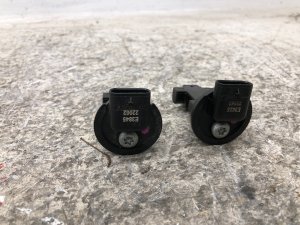
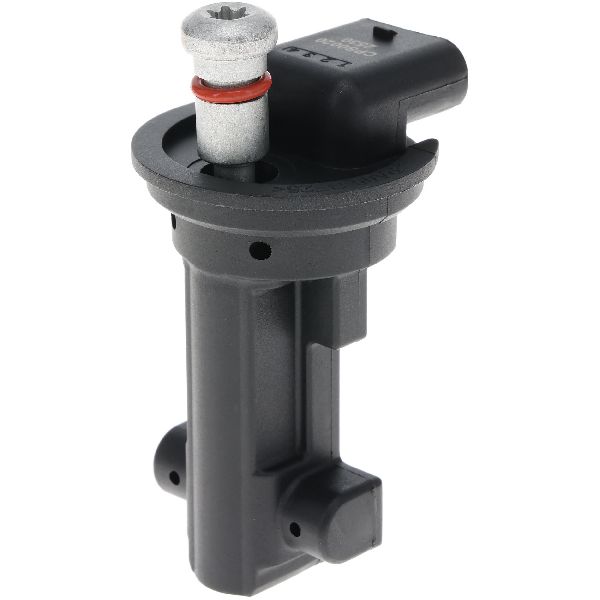
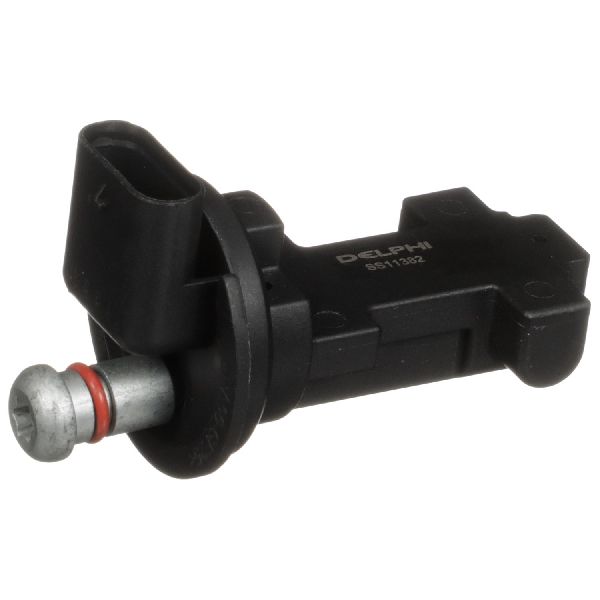
P0340 on a 3.6L Grand Caravan most often means the Bank 1 (rear) camshaft position sensor has failed. However, if you hear a rattling noise on startup, the code is likely a symptom of a more serious failing camshaft phaser. Always use an OEM Mopar sensor for the replacement (Part No. 5149141AF), which costs around $40-$70. Ignoring a startup rattle can lead to a much more expensive repair.
- P0340 refers to the Bank 1 camshaft position sensor, which is the difficult-to-access sensor on the rear cylinder head near the firewall.
- If you hear a rattling noise from the engine on startup, the problem is likely a failing cam phaser, not just the sensor. Do not replace the sensor without addressing the mechanical noise.
- If you replace the sensor, you MUST use an OEM Mopar part (5149141AF) to avoid premature failure.
- Replacing the rear sensor is a difficult DIY job (4/5) because the upper intake manifold must be removed. Remember to replace the intake gaskets as well.
- Always check your engine oil level and condition first, as low oil pressure can trigger this code.
What's Unique About the 2011-2020 Dodge Grand Caravan
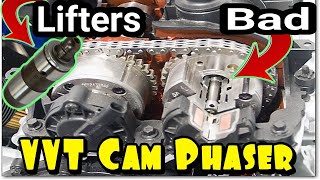
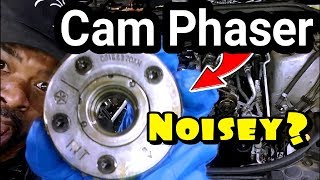
On the 3.6L Pentastar V6, code P0340 is not always a simple sensor failure. This engine is known for issues with camshaft phasers, which are components of the variable valve timing (VVT) system. A rattling or ticking noise upon startup, combined with a P0340 code, strongly suggests the root cause is a failing cam phaser, not the sensor itself. Many owners in forums have shared experiences of replacing the sensor multiple times only to find the problem was a more complex mechanical issue with the phasers or rocker arms. A technician can check for excessive rotational play in the phaser, which is a definitive sign of failure.
Symptoms You May Notice
- Check Engine Light is on
- Engine stalls, sometimes while driving
- Difficult starting, long crank times, or a no-start condition
- Rough or unstable idle
- Hesitation or lack of power during acceleration
- Traction control warning light may also illuminate
- Audible rattling or ticking noise from the engine on startup, lasting a few seconds 🎬 See this video to hear the specific rattling and ticking noise.
- Replacing the camshaft position sensor repeatedly when the actual fault is a mechanical issue like a bad cam phaser or worn rocker arms. If a rattling noise is present, the sensor is likely not the root cause.
Most Likely Causes
- Failed Bank 1 Camshaft Position Sensor 🔴 High Probability This is a common failure point on the 3.6L Pentastar. Aftermarket sensors are known to have a high failure rate, making OEM Mopar parts essential for a lasting repair.
How to confirm: Test the sensor's circuit with a multimeter for proper voltage and ground. A diagnostic scan tool can also monitor the sensor's live data. However, given the low cost of the part, replacement is a common first diagnostic step if no rattling is present and no other mechanical timing codes (like P0016) are stored.
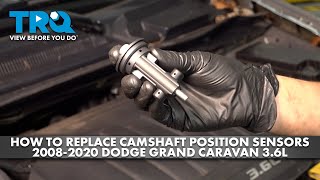
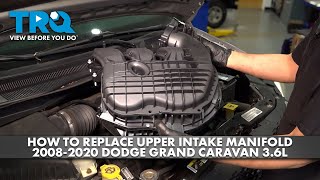
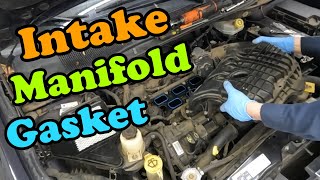
Typical fix: Replace the Bank 1 (rear) camshaft position sensor. 🎬 Watch: How to locate and replace the rear camshaft sensor. This is labor-intensive as the upper intake manifold must be removed for access. The intake gaskets must be replaced at the same time. 🎬 Watch: Step-by-step guide for replacing the intake manifold gaskets.
Est. part cost: $40-$70 for an OEM sensor (Mopar 5149141AF). - Failing Camshaft Phaser 🟡 Medium Probability The 3.6L Pentastar engine has a known weakness in the camshaft phasers, which are part of the VVT system. Wear in the internal locking pin mechanism can cause them to fail, affecting timing and triggering sensor codes.
How to confirm: The primary symptom is a distinct rattling or ticking noise from the top of the engine for a few seconds after a cold start. A mechanic can confirm this by checking for excessive rotational play in the phaser with the valve cover removed, or by observing that the camshaft moves independently of the phaser.
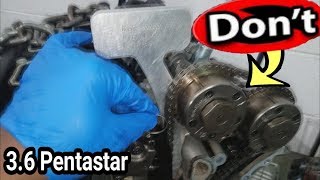
Typical fix: This is a complex mechanical repair that involves removing the valve cover and timing components to replace the faulty cam phaser(s). It requires special tools and is a significant labor cost.
Est. part cost: $100-$200 per phaser, plus gaskets and seals. - Damaged Wiring or Connector ⚪ Low Probability The engine harness is exposed to heat and vibration, which can cause wires to become brittle, frayed, or shorted over time. The connector pins can also corrode or back out of the connector housing.
How to confirm: Visually inspect the wiring harness and connector leading to the rear camshaft position sensor for any signs of damage, melting, or corrosion. Pay close attention to where the harness may rub against other components. Perform a 'wiggle test' on the harness while the engine is running to see if it affects idle.
Typical fix: Repair the damaged section of wire or replace the connector pigtail.
Est. part cost: $15-$30 for a new pigtail connector.
Rare But Worth Checking
- Low or Dirty Engine Oil: The VVT system uses oil pressure to adjust the cam phasers. If the oil level is low or the oil is sludgy from missed oil changes, it can cause the phasers to malfunction and trigger P0340. Always check the oil level and condition first as a basic step.
- Failing Rocker Arms (Pentastar Tick): The 3.6L engine is also known for failing rocker arm bearings, which creates a loud, persistent ticking noise that does not go away after startup. If a rocker arm fails, it can damage the camshaft lobe, leading to timing issues and codes like P0340. This is a major mechanical repair that involves replacing all rocker arms on the affected bank.
- PCM Software Glitch: On some early models, the PCM software was sometimes too sensitive and could set a P0340 falsely. TSB 18-031-15 for the 2014 model year addresses powertrain enhancements and is an example of software updates that can resolve intermittent issues. It's worth checking with a dealer for the latest software version (flash) if other causes are ruled out.
Diagnosis Steps
- Check Engine Oil: Verify the engine oil level is correct and the oil is clean. Low or dirty oil can cause VVT system issues that trigger this code.
- Listen for Noise: Start the engine from cold. Listen carefully for any rattling or ticking sounds from the top of the engine that last for a few seconds. A rattle strongly points towards a cam phaser issue. A persistent tick that doesn't go away points more towards a rocker arm failure.
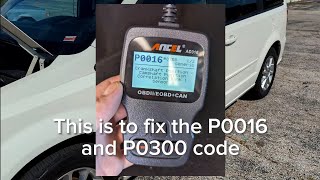
- Scan for Other Codes: Use an OBD-II scanner to check for any other pending or stored codes. Codes like P0016 or P06DD point towards a mechanical issue rather than a sensor failure.
- Inspect Wiring: Visually inspect the wiring harness and connector for the Bank 1 (rear) camshaft position sensor. Look for any obvious signs of damage, melting, or corrosion. Check for backed-out pins in the connector.
- Replace the Sensor (If No Rattle): If there are no rattling noises and no other codes pointing to a mechanical failure, the most likely cause is the sensor itself. Replace the Bank 1 camshaft position sensor (Mopar P/N 5149141AF). Note that this requires removing the upper intake manifold and replacing the gaskets.
- Professional Diagnosis: If the code returns after replacing the sensor, or if a rattling noise was present from the start, the vehicle should be taken to a professional. They can use an oscilloscope to analyze the sensor waveform and diagnose the VVT system (cam phasers) and valvetrain (rocker arms) for mechanical wear.
Parts You'll Likely Need
- Camshaft Position Sensor (Bank 1 - Rear)
(OEM #5149141AF)— This is the most common part to fail and cause a P0340 code when no mechanical noises are present. Using an OEM Mopar part is critical for reliability.
Trusted brands: Mopar
OEM price range: $40-$70
Aftermarket price range: $20-$50 - Upper and Lower Intake Manifold Gaskets — These must be replaced when removing the upper intake manifold to access the rear camshaft position sensor. Reusing old gaskets will cause a vacuum leak.
Trusted brands: Mopar, Fel-Pro (MS97204 is a common set), Mahle
OEM price range: $30-$50
Aftermarket price range: $15-$35
Related Codes That Often Appear With This One
- P0344 — This code means 'Camshaft Position Sensor 'A' Circuit Intermittent,' which points to the same sensor but indicates the signal is dropping out rather than being completely gone. They often appear together and point to a failing sensor, wiring issue, or an underlying mechanical problem causing an erratic signal.
- P0016 — This code indicates a 'Crankshaft/Camshaft Position Correlation' error. Seeing it with P0340 strongly suggests a mechanical timing problem, such as a failing cam phaser or a stretched timing chain, rather than just a sensor fault.
- P06DD — This code for 'Engine Oil Pressure Control Circuit Stuck Off' can be a root cause. Low oil pressure prevents the VVT phasers from working correctly, which in turn can trigger the P0340 code. This points to a problem with the oil pump or its control solenoid.
Technical Service Bulletins (TSBs) & Recalls
- While no single TSB is a 'silver bullet' for P0340 on the Grand Caravan, several bulletins for the 3.6L Pentastar platform are relevant. TSB 09-002-14 and the X56 warranty extension address the 2011-2013 cylinder head defect. Other TSBs like 18-024-17 and 18-049-20 for other models address PCM software updates to make the system less sensitive to timing variations, which could be applicable.
Platform-Specific Known Issues
- Early (2011-2013) 3.6L Pentastar engines had a higher incidence of left cylinder head failure, covered by an extended warranty (X56), indicating known valvetrain issues from the factory. While this typically causes misfire codes, it highlights the engine's early life valvetrain sensitivity.
- A PCM software update was available for some early models to address false codes, though not specifically and consistently for P0340 on the Grand Caravan. It's worth checking with a dealer for the latest software version if other causes are ruled out.
Mechanic-Grade Diagnostic Values
- Camshaft Position Sensor 5V Supply — expected: 4.5 to 5.02 Volts with ignition on, engine off, measured at the sensor connector.. Failure: Voltage below 4.5V indicates an issue with the PCM or the supply circuit (K856).
- Camshaft Position Sensor Signal Circuit Voltage (disconnected) — expected: 4.5 to 5.0 Volts with ignition on, engine off, measured on the signal circuit (K44) at the harness connector.. Failure: Low or no voltage suggests a problem in the wiring or PCM.
- Camshaft Position Sensor Ground Circuit Resistance — expected: Less than 3.0 to 5.0 Ohms between the ground pin (K900) at the sensor connector and a known good chassis ground.. Failure: Resistance higher than 5.0 Ohms indicates an open or high-resistance ground circuit.
- Camshaft Position Sensor Signal Waveform — expected: A clean square wave signal that switches between approximately 0V and 5V when viewed on an oscilloscope while the engine is cranking or running.. Failure: A missing, noisy, or inconsistent waveform points to a failed sensor, a wiring issue, or a problem with the camshaft's magnetic encoder ring.
Scan Tool Commands That Help
- wiTECH (or equivalent professional scan tool): Cam/Crank Relearn — This procedure may be required after replacing a camshaft position sensor, crankshaft position sensor, or timing components to re-synchronize the PCM's understanding of their positions.
- wiTECH: PCM Reprogramming/Flash — Used to install updated software from Chrysler (FCA/Stellantis) as specified in Technical Service Bulletins (e.g., 18-031-15) to correct software logic that may be causing false or intermittent codes.
Wiring & Ground Locations
- Bank 1 Camshaft Position Sensor Connector — On the rear cylinder head (near the firewall), on the end of the valve cover closest to the transmission.. This is the primary connection point for testing. The three wires are typically: Pin 1 - 5V Supply (K856), Pin 2 - Signal (K44), Pin 3 - Ground (K900).
- Engine Ground Strap — A braided strap that connects the engine block or an engine mount to the vehicle's chassis/frame, often near the passenger side engine mount.. A broken or corroded main ground strap can cause a host of intermittent electrical issues and sensor faults, including P0340, as the PCM and sensors lose their stable ground reference. A visual inspection is critical.
- PCM Connector C2 — One of the main harness connectors at the Powertrain Control Module (PCM).. This is the termination point for the sensor circuit. For example, the 5V supply for the sensor can be cross-checked at Pin #44 of this connector if readings at the sensor are low.
Real Owner Repair Stories
- DodgeForum.com user (2011 Dodge Grand Caravan SXT 3.6L, 120k miles) — Check engine light with P0340, unusual engine sounds, intermittent no-start condition, and poor fuel economy.
❌ Tried (didn't work) Replaced the Bank 1 (rear) camshaft position sensor with an aftermarket part from Lordco., Replaced the aftermarket sensor a second time after the code returned.
✅ What actually fixed it The user was advised by others that repeatedly replacing the sensor without addressing the startup rattle points to a mechanical issue, likely the cam phasers, and that using non-OEM sensors is a common cause of repeat failure. The final fix was not posted, but the story highlights the common misdiagnosis pattern. - YouTube channel 'Rapid Car Care LLC' (2004 Dodge Ram 2500 5.7L HEMI (Note: Different engine, but demonstrates a relevant electrical principle)) — Crank-no-start condition with code P0340.
❌ Tried (didn't work) The diagnostic premise was to avoid simply replacing the camshaft position sensor based on the code alone.
✅ What actually fixed it The actual cause was a faulty Crankshaft Position Sensor. It had failed and internally shorted the shared 5V sensor reference circuit, which caused the PCM to report a fault with the camshaft sensor. Replacing the crank sensor resolved the P0340 code and the no-start condition.
OEM Part Supersession History
Unknown, multiple prior revisions likely exist.→5149141AF— Standard part evolution for improved reliability and performance.
Heads up: While older part numbers may have existed, 5149141AF is the current recommended OEM replacement for the entire 2011-2020 range. Using aftermarket sensors is highly discouraged due to high failure rates.
Model Year Variations Within This Range
- 2011-mid-2013: These early Pentastar engines used 'Phase I' cam phasers with solid cast iron housings. Later models used different designs. This is critical when ordering timing job tools, as the locking tools have different geometry for different phaser generations.
- 2014: Chrysler issued TSB 18-031-15 (which supersedes 18-023-14) to reprogram the PCM with updated software for 'Powertrain System Improvements'. While not specifically for P0340, applying the latest dealer software can resolve various intermittent and logic-based DTCs on these models.
Diagnostic Flowchart
Real Owner Stories
Aggregated from forums and TSBs cited above. Mileages and costs reflect what owners reported in those sources.
2011 Dodge Grand Caravan 3.6L V6
Symptoms: Occasionally noticed a noisy/rattle sound when starting after the engine was at rest for a few hours, lasting a few seconds. The check engine light and traction control light would intermittently come on at start, accompanied by sluggish performance.
What fixed it: Community diagnosis pointed to failing cam phasers rather than the sensor, due to the classic startup rattle indicating mechanical wear in the VVT system.
Source hint: DodgeForum.com - Thread Title: '2011 Grand Caravan - P0340 troubles'
2014 Dodge Grand Caravan 3.6L V6
Symptoms: Experienced the P0340 code and noticed the traction control warning light illuminated simultaneously.
What fixed it: Identified as a common secondary symptom where the PCM disables traction control due to the camshaft timing fault.
Source hint: Reddit r/Dodge - Thread Title: '2014 Grand Caravan P0340'
Jeep Wrangler (JK) 3.6L V6
Symptoms: Received P0340 and P0344 codes. The code changed to intermittent after attempting repairs.
What fixed it: Replaced sensors with no luck, indicating a deeper mechanical issue (like cam phasers or rocker arms) was the actual root cause, a common frustration on the 3.6L Pentastar platform.
Source hint: Reddit r/MechanicAdvice - Thread Title: 'P0340 and now p0344 help, Jeep jk 3.6'
Related OBD-II Codes
Frequently Asked Questions
Why does my traction control light come on with the P0340 code on my Grand Caravan?
I hear a rattling noise on startup along with the P0340 code. Is it just a bad sensor?
Should I use an aftermarket camshaft position sensor to save money?
Does the X56 extended warranty cover the P0340 code on my 2011-2013 Grand Caravan?
Are there any PCM software updates for the Grand Caravan that fix P0340?
How hard is it to replace the Bank 1 camshaft position sensor on the 3.6L V6?
Helpful Videos

Used OEM Parts in Stock

New Aftermarket Parts Available


The information in this article is provided for general reference and educational purposes only. Vehicle specifications, procedures, and part compatibility can vary by production date, trim level, and region. Always consult your vehicle's factory service manual and verify part numbers before purchasing or performing repairs. Safety-critical components such as airbags, seat belts, and braking systems should be installed by a qualified professional.
- Dodge Grand Caravan:
- 🎬 Helpful Videos
- 🛍️ Shop This Part
- What's Unique About the 2011-2020 Dodge Grand Caravan
- Symptoms You May Notice
- Most Likely Causes
- Rare But Worth Checking
- Diagnosis Steps
- Parts You'll Likely Need
- Related Codes That Often Appear With This One
- Technical Service Bulletins (TSBs) & Recalls
- Platform-Specific Known Issues
- Mechanic-Grade Diagnostic Values
- Scan Tool Commands That Help
- Wiring & Ground Locations
- Real Owner Repair Stories
- OEM Part Supersession History
- Model Year Variations Within This Range
- Diagnostic Flowchart
- Real Owner Stories
- 2011 Dodge Grand Caravan 3.6L V6
- 2014 Dodge Grand Caravan 3.6L V6
- Jeep Wrangler (JK) 3.6L V6
- Related OBD-II Codes
- Frequently Asked Questions
- 🎟️ Get 5% Off