

P0339 on 2007-2014 Honda Fit: Crank Sensor Intermittent Failure Causes and Fixes
P0339 on a Honda Fit almost always means the crankshaft position (CKP) sensor is failing, often when the engine gets hot. Symptoms include stalling, hard starts, a rough idle, and an inability to rev past 3,000 RPM. Replacing the sensor is the most common fix. Expect to pay $130-$200 for an OEM sensor or $30-$80 for a quality aftermarket part. A CKP pattern relearn procedure is required after replacement.
- P0339 on a Fit points directly to an intermittent problem with the crankshaft position sensor or its circuit.
- The most common fix is replacing the sensor itself. Be sure to buy the correct part for your generation (2007-2008 vs. 2009-2014).
- Symptoms like stalling, hard starting, and rough idling are classic signs of this issue.
- Always check the battery and wiring connector before replacing parts, as these can also cause the code.
- A 'CKP Pattern Relearn' procedure is necessary after replacing the sensor to ensure the engine runs correctly.
What's Unique About the 2007-2014 Honda Fit

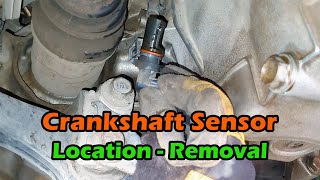
The 2007-2014 Honda Fit spans two distinct generations, and the location of the crankshaft position sensor is different for each, which is the most critical detail for this repair. For the first generation (2007-2008, GD), the sensor is on the timing chain cover near the main crankshaft pulley. On the second generation (2009-2014, GE), it's located at the back of the engine block near the firewall, making it more difficult to access. While Honda has issued technical service bulletins (TSBs) for P0339 on other models like the Accord due to connector corrosion (TSB 16-011) or software issues related to low battery voltage (TSB 09-050), no specific TSB for the Fit has been widely documented. However, these known Honda issues are valuable diagnostic clues for Fit owners, as the underlying causes are often shared across models.
Generation note: This guide covers two Honda Fit generations: - First Generation (GD): 2007-2008 - Second Generation (GE): 2009-2014 The primary differences for this repair are the location of the CKP sensor and the corresponding OEM part number.
Symptoms You May Notice

- Engine stalls unexpectedly, often when warm or at idle.
- Difficult starting (long crank times) or complete no-start.
- Check Engine Light is on.
- Rough or uneven idle, especially on a cold start.
- Engine hesitation or stumbling during acceleration.
- Inability to rev past 3,000 RPM as the car enters a protective 'limp mode'.
- Reduced fuel economy.
- Malfunctioning tachometer (RPM gauge drops to zero or behaves erratically).
- Engine RPM hunting or surging while at idle.
- Replacing spark plugs or ignition coils. While these can cause misfires, they typically won't cause the specific intermittent stalling and no-start symptoms associated with a P0339 code, which points directly to a loss of the crankshaft timing signal.
Most Likely Causes

- Failing Crankshaft Position (CKP) Sensor 🔴 High Probability Sensors can fail from heat cycles and internal electronic wear over time, which is common on any vehicle. The intermittent nature of the failure (often when hot) is a classic symptom of a sensor reaching the end of its life. Owners frequently report that the car stalls when warm and may restart after cooling down.
How to confirm: The most reliable method is to monitor the CKP sensor data on a live-data scan tool while the engine is running. A failing sensor will show the RPM signal dropping to zero intermittently, often coinciding with stumbles or stalling. Resistance tests with a multimeter can also be performed when the sensor is hot and cold to check for inconsistencies, with a functioning sensor typically reading between 200 to 900 ohms.
Typical fix: Replace the crankshaft position sensor and the O-ring. A CKP pattern relearn procedure must be performed 🎬 Watch: Using a scan tool for the Honda relearn process. after replacement.
Est. part cost: $30-$200 - Damaged Wiring or Poor Connection 🟡 Medium Probability The sensor's location exposes its wiring to engine heat and vibration, which can degrade the harness, connector, or pins over time, leading to an intermittent connection. Honda TSB 16-011 for Accords and CR-Vs identifies corrosion between the engine wire harness and the CKP sensor connector as a direct cause for P0339, suggesting this is a known failure point in Honda engine bays.
How to confirm: Visually inspect the entire wiring harness from the sensor to the PCM for any signs of melting, chafing, or corrosion at the connector. While the engine is running, carefully wiggle the connector and wiring to see if it induces a stall or triggers the code, which would confirm a connection issue.
Typical fix: Repair the damaged section of the wiring harness or clean/replace the electrical connector. In severe cases of corrosion, the engine wire harness may need replacement.
Est. part cost: $5-$50 for connector repair, significantly more for harness replacement. - Low Battery Voltage ⚪ Low Probability A weak or dying battery can cause a voltage drop during engine cranking. On some Hondas, the PCM can misinterpret this as a fault with the CKP sensor circuit and set a P0339 code. Honda TSB 09-050 for the 2008-2009 Accord confirms this exact scenario, where the fix is a PGM-FI software update. While not specific to the Fit, it establishes the principle for Honda vehicles.
How to confirm: Test the battery's state of health and charge with a professional battery tester. Ensure battery terminals are clean and tight. If the battery is old or fails the test, it should be replaced before further diagnosis.
Typical fix: Recharge or replace the vehicle's 12V battery. If the issue persists on a vehicle known to have a related TSB, a software update at a dealership may be required.
Est. part cost: $150-$250
Rare But Worth Checking
- Damaged Reluctor Wheel: The toothed ring the sensor reads can become damaged, bent, or covered in metallic debris, disrupting the signal. This is uncommon but worth considering if new sensors don't fix the issue. Inspection requires removing the sensor and looking into its mounting hole or further engine disassembly.
- Faulty Powertrain Control Module (PCM): In very rare cases, the fault can be internal to the PCM itself, causing it to misinterpret a good sensor signal. This should only be considered after all other possibilities (sensor, wiring, battery, software) have been definitively ruled out.
Diagnosis Steps
- Read the code with an OBD-II scanner and note any other codes present. Freeze frame data can help identify conditions (like engine temperature) when the fault occurred.
- Check the battery. Test its voltage and overall health. Ensure terminals are clean and tight. A weak battery can cause false P0339 codes on Hondas.
- Visually inspect the CKP sensor's wiring harness and connector. Look for obvious signs of damage, melting, or corrosion. Pay close attention to the connector pins for any green or white residue.
- Use a scan tool with live data to monitor the engine RPM signal from the CKP sensor. If the signal drops to zero intermittently while the engine is running (especially when wiggling the harness), the sensor or its circuit is faulty.
- If possible, perform a 'wiggle test' by gently manipulating the wiring harness and connector while watching the live data to see if you can force the signal to drop out.
- If the wiring appears good and the battery is healthy, the next step is to replace the CKP sensor. Using an OEM or high-quality Denso/Hitachi sensor is highly recommended to avoid repeat failures.
- After replacing the sensor, clear the codes and perform the CKP Pattern Relearn procedure. A DIY method involves warming the engine, holding 3,000 RPM until the fan kicks on, then decelerating fully from 2,500 RPM to 1,000 RPM 🎬 See these four quick methods for a CPS relearn. in a low gear several times.
- If the problem persists, a more in-depth diagnosis of the wiring continuity back to the PCM or an inspection of the reluctor wheel is necessary.
Parts You'll Likely Need

- Crankshaft Position Sensor (2007-2008)
(OEM #37500-RAA-A01)— This is the correct sensor for the first-generation Fit (GD). It is located on the timing chain cover.
Trusted brands: Honda (Genuine), Denso, Hitachi, Standard Motor Products (SMP)
OEM price range: $145-$210
Aftermarket price range: $20-$70 - Crankshaft Position Sensor (2009-2014)
(OEM #37500-RB0-006)— This is the correct sensor for the second-generation Fit (GE). It is located on the rear of the engine block. This part is also used on the CR-Z and various Civic models.
Trusted brands: Honda (Genuine), Bosch, Denso, Hitachi
OEM price range: $135-$200
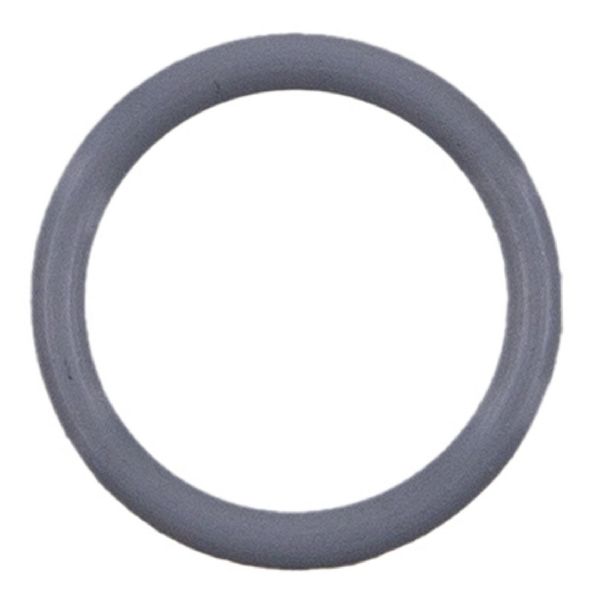
Aftermarket price range: $30-$80 - Crankshaft Position Sensor O-Ring
(OEM #91333-PNC-006)— This O-ring should always be replaced with the sensor to prevent oil leaks. It is the same part for both generations and is also cited in Honda TSBs for other models.
Trusted brands: Honda (Genuine)
OEM price range: $2-$5
Aftermarket price range: $1-$3
Technical Service Bulletins (TSBs) & Recalls

- Honda TSB 16-011: Not for the Fit, but for Accords and CR-Vs, this TSB is highly relevant. It identifies corrosion in the CKP sensor connector as a cause for P0335 and P0339, and the fix is to replace both the sensor and the entire engine wiring harness.
- Honda TSB 09-050: For 2008-2009 Accords, this TSB notes that P0339 can be incorrectly set when cranking with a low battery. The fix is a PGM-FI software update, establishing a precedent for this issue on Honda vehicles.
- Bulletin #A16-011: This manufacturer bulletin notes that corrosion between the engine wire harness and the CKP sensor connector may result in MIL illumination with DTC P0335 or P0339.
- Bulletin #SB16011: Confirms that the Malfunction Indicator Light (MIL) comes on with DTC P0335 and/or P0339 on related Honda engine platforms.
- Bulletin #DLR MSG - RFP -: Manufacturer records indicate Honda has sought to collect specific parts from vehicles reporting a MIL with P0335 (CKP sensor no signal) and/or P0339 (CKP sensor circuit intermittent interruption) to better understand the root cause.
- Bulletin #A23-048: A manufacturer service bulletin notes that P0339 can be set alongside symptoms like rough idle and engine RPM hunting.
- Bulletin #A23-049: This record describes a condition where P0339 (CKP Sensor Circuit Intermittent Interruption) may be set along with P0017 (Camshaft/Crankshaft Correlation).
Platform-Specific Known Issues
- Owner Experience: Stalling on a Steep Hill: A 2008 Fit owner on FitFreak.net reported that the P0339 code first appeared after stalling the manual transmission on a steep hill. The car was difficult to restart and subsequently developed a rough idle and hesitation, pointing to a sensor that was likely already failing and pushed over the edge by the event.
- DIY Relearn Procedure: A forum member on FitFreak.net shared a DIY CKP pattern relearn procedure that avoids a trip to the dealer: Warm the engine to operating temperature (fan comes on) while holding 3,000 RPM, then perform several decelerations in a low gear from 2,500 RPM to 1,000 RPM with the throttle fully closed.
- Aftermarket Sensor Woes: A user on Honda-Tech.com detailed a frustrating experience where an initial aftermarket CKP sensor replacement did not solve the P0339 and starting issues. A second replacement with a different aftermarket brand was also problematic, highlighting the importance of us
Mechanic-Grade Diagnostic Values

- CKP Sensor Internal Resistance — expected: 200 to 1,000 ohms. More specifically for Honda, a range of 200-600 ohms is often cited.. Failure: A reading of 0 ohms indicates a short circuit within the sensor. An infinite reading (OL) indicates an open circuit. Either confirms a bad sensor.
- CKP Sensor Signal Voltage (Oscilloscope) — expected: A consistent square wave signal alternating between approximately 0V and 5V as the engine cranks or runs.. Failure: Gaps, dropouts, or inconsistent patterns in the waveform, especially when symptoms occur (e.g., engine stumbling), indicate an intermittent sensor or wiring issue.
- CKP NOISE COUNT (Honda HDS Scan Tool) — expected: The count should be 0 while the engine is idling and during test drives.. Failure: A count greater than 0 indicates the PCM is detecting noise or interruptions in the CKP signal, which is the direct trigger for code P0339.
Scan Tool Commands That Help

- Honda Diagnostic System (HDS) or equivalent professional scan tool: CKP PATTERN CLEAR — This function must be used *before* performing the learn procedure. It erases the old, potentially corrupt crankshaft pattern data stored in the PCM after a sensor replacement or timing component service.
- Honda Diagnostic System (HDS) or equivalent professional scan tool: CKP PATTERN LEARNING / CRANK PATTERN RELEARN — This function is required after replacing the CKP sensor or timing components. It commands the PCM to learn the unique pattern of the new sensor and reluctor wheel, ensuring accurate timing calculations. Failure to perform this can result in continued rough running, hesitation, or the P0339 code returning.
Wiring & Ground Locations

- G101 — On the engine, typically bolted to the thermostat housing or the water pipe housing on the cylinder head.. G101 is a primary ground for the PCM (ECU). A loose or corroded G101 connection can cause a host of erratic issues, including false sensor codes like P0339, because it disrupts the stable voltage reference the PCM needs to interpret sensor signals correctly.
- CKP Sensor Connector — A 3-pin oval connector attached directly to the sensor. For GD models (2007-2008), it's low on the timing cover. For GE models (2009-2014), it's on the back of the engine block near the firewall.. This is the most common point of failure for wiring issues. The pins can corrode, or the wires can fray from heat and vibration, causing the intermittent signal drop that defines P0339. The three pins are typically for power, ground, and the signal output to the PCM.
- PCM Connector A & B — The PCM is located in the engine compartment, typically on the left side (driver's side in LHD models).. For advanced diagnostics, technicians may need to test for the CKP signal directly at the PCM pins to rule out a wiring harness break. A wiring diagram is required to identify the specific pin for the CKP signal input.
Real Owner Repair Stories
- Honda-Tech forum user (2011 Honda CR-V (shares similar engine architecture and issues)) — Car would turn over but not ignite, frequently throwing a P0339 code.
❌ Tried (didn't work) Multiple aftermarket CKP sensor replacements.
✅ What actually fixed it The root cause was a stretched timing chain. Replacing the timing chain resolved the starting issues and the P0339 code. The chain stretch caused a deviation in crank/cam timing that the PCM interpreted as an intermittent crank sensor signal fault. - Reddit user /u/TonyTheAsian (2008 Honda Fit (Manual)) — After stalling on a steep hill, the car was hard to restart and then developed a rough idle, stuttering in 1st/2nd gear, and hesitation. The P0339 code was present.
❌ Tried (didn't work) The user planned to replace spark plugs and coil packs, which is a common misdiagnosis.
✅ What actually fixed it The user cleared the code, and it did not immediately return. This story highlights how a single, unusual event (a severe stall) can be enough to trigger the intermittent fault logic for a sensor that may be on the verge of failing. The underlying cause was likely the sensor itself, and the stall was the final trigger.
Diagnostic Flowchart
Other Known Issues on This Vehicle
Issues unrelated to this code that are worth knowing about as an owner of this generation:
- Lost Motion Spring Failure (2009-2010) 🔴 High — Common enough to trigger a safety recall (11-010) for 2009-2010 models. Springs can break, causing engine noise, damage, or stalling. (Ref: Recall 11-010)
- Premature Ignition Coil Failure 🟠 Medium — A common failure item across many model years, causing rough running and misfire codes (P0301-P0304). A recall was issued for some 2015 models, but the issue is also known on the 2007-2014 generation. (Ref: Recall JT9 / NHTSA 15V559000 (for 2015 models, but relevant))
- Water Leaks into Cabin/Hatch 🟡 Low — Frequently reported, especially on first-generation (GD) models. Poor body seam seals, particularly in the rear hatch area and roof channels, allow water to collect in the spare tire well and rear footwells.
- Electric Power Steering (EPS) Failure 🔴 High — A significant number of complaints for the 2007-2008 models led to a warranty extension for the EPS control unit. Failure results in heavy steering and warning lights. (Ref: Warranty Extension (10 years/150,000 miles))
- Driver's Power Window Switch Failure 🟠 Medium — Water intrusion into the driver's side master window switch could cause failure and, in rare cases, a fire risk. This prompted a recall for 2007-2008 models. (Ref: Recall JA6 / NHTSA 13V-260)
Used vs. New Parts: Buying Guide for This Vehicle
When a used part is the smart pick: For this repair, using a used part is generally not recommended. The crankshaft position sensor is a critical electronic component with a finite lifespan. The cost of a new, high-quality aftermarket sensor is low, and the labor involved in replacement (especially on the GE Fit) makes it unwise to risk using a used part with an unknown history.
Donor-vehicle mileage cap: roughly under 50000 miles for the part to have meaningful remaining life.
What to inspect on the donor part:
- If you must use a used sensor, pull it from a vehicle with the lowest possible mileage.
- Inspect the connector for any signs of corrosion, cracking, or brittleness.
- Avoid sensors from engines that show signs of severe oil leaks or overheating.
OEM-only on this vehicle (don't cheap out):
- While the sensor itself can be sourced from quality aftermarket suppliers, the small O-ring (PN 91333-PNC-006) is a part where using a genuine Honda piece is a smart, low-cost investment to guarantee a perfect seal and prevent oil leaks.
Aftermarket brands forum-validated for this vehicle:
- Denso
- Hitachi
- Bosch
- NTK
Brands owners have reported issues with on this vehicle:
- Unnamed or 'white-box' generic brands from online marketplaces are frequently reported on forums to be dead-on-arrival or fail prematurely, causing the P0339 code to return.
Real Owner Stories
Aggregated from forums and TSBs cited above. Mileages and costs reflect what owners reported in those sources.
2008 Honda Fit (Manual Transmission)
Symptoms: P0339 code appeared after stalling on a steep hill. The car was difficult to restart and subsequently developed a rough idle and hesitation.
What fixed it: The discussion pointed to the crankshaft position (CKP) sensor as the primary culprit.
Source hint: fitfreak.net - 'P0339, whats broken ?'
2008 Manual Honda Fit
Symptoms: P0339 code appeared on Torque app.
What fixed it: Discussion pointed to the CKP sensor as the primary culprit over ignition components.
Source hint: reddit.com/r/autorepair - '2008 Manual Honda FIT, P0339 code on Torque app. What's wrong ?'
Related OBD-II Codes
Frequently Asked Questions
Is the CKP Pattern Relearn procedure really necessary after replacing the crankshaft sensor on my Fit?
Do the Honda TSBs for P0339 on Accords and CR-Vs apply to my 2007-2014 Fit?
I'm replacing the CKP sensor on my Honda Fit. Does it matter what brand I buy?
My Fit has a P0339 code and the battery is old. Should I replace the sensor or the battery first?
Why does my Honda Fit stall with a P0339 code only when the engine is warm?
What is the 'wiggle test' mentioned for diagnosing P0339 on my Fit?
Helpful Videos
We Have This Part in Stock



The information in this article is provided for general reference and educational purposes only. Vehicle specifications, procedures, and part compatibility can vary by production date, trim level, and region. Always consult your vehicle's factory service manual and verify part numbers before purchasing or performing repairs. Safety-critical components such as airbags, seat belts, and braking systems should be installed by a qualified professional.
- Honda Fit:
- 🎬 Helpful Videos
- 🛍️ Shop This Part
- What's Unique About the 2007-2014 Honda Fit
- Symptoms You May Notice
- Most Likely Causes
- Rare But Worth Checking
- Diagnosis Steps
- Parts You'll Likely Need
- Technical Service Bulletins (TSBs) & Recalls
- Platform-Specific Known Issues
- Mechanic-Grade Diagnostic Values
- Scan Tool Commands That Help
- Wiring & Ground Locations
- Real Owner Repair Stories
- Diagnostic Flowchart
- Other Known Issues on This Vehicle
- Used vs. New Parts: Buying Guide for This Vehicle
- Real Owner Stories
- 2008 Honda Fit (Manual Transmission)
- 2008 Manual Honda Fit
- Related OBD-II Codes
- Frequently Asked Questions
- 🎟️ Get 5% Off