

P0339 on 2008-2009 Honda Accord L4: Causes of Crankshaft Sensor Intermittent Signal and Fixes
On a 2008-2009 Honda Accord L4, code P0339 is most often caused by a software glitch in the engine's computer, especially if the engine was cranked with a low battery. The official fix is a software update from a Honda dealer, not a new sensor. If the code appears after a long crank time, a failing starter motor is another known cause. If the sensor itself is faulty, expect to pay $40-$80 for an OEM-quality part.
- First, check for Honda TSB 09-050. If your car's computer software has never been updated, this is the most likely fix and does not involve replacing parts.
- A weak or recently dead battery is a major clue that the P0339 code is software-related.
- If you must replace the sensor, use a high-quality OEM or OEM-supplier brand like Hitachi or Denso to avoid repeat failures.
- A 'CKP Pattern Learn' procedure with a professional scan tool is mandatory after updating the software or replacing the sensor.
What's Unique About the 2008-2009 Honda Accord
For this specific vehicle and engine, Honda issued Technical Service Bulletin (TSB) 09-050, which is a crucial piece of information. The TSB states that if the engine is cranked with a low or weak battery, the ECM can misinterpret the CKP sensor's signal and incorrectly set the P0339 code. In these cases, the problem is not a bad sensor but a software sensitivity issue. The official fix is to update the PGM-FI (engine computer) software and perform a CKP pattern relearn, which must be done by a dealer or a shop with a capable scan tool like the Honda Diagnostic System (HDS). Many owners have confirmed this fix on forums after replacing sensors unnecessarily.
Symptoms You May Notice
- Engine stalling, especially when coming to a stop or at idle.
- Difficulty starting the engine, long crank times, or a complete no-start.
- Engine misfires, which may feel like a stumble, hesitation, or jerking during acceleration.
- Check Engine Light is on and may be flashing in severe cases (indicating misfires).
- Rough or unstable idle.
- Vehicle may enter 'limp mode,' limiting engine RPM to around 3,000.
- Tachometer needle may drop to zero intermittently while the engine is still running.
- Replacing the CKP sensor without first checking for the software update specified in TSB 09-050. Many owners replace the sensor only to have the code return because the root cause was the ECM software.
- Replacing the CKP sensor when the actual fault lies with a weak or aftermarket starter motor causing an erratic signal during cranking.
Most Likely Causes
- PGM-FI (ECM) Software Requires Update 🔴 High Probability Per Honda TSB 09-050, the factory software is sensitive and can misinterpret the CKP signal, especially after cranking with a low battery. This is the most common and well-documented cause for this specific vehicle.
How to confirm: If the code appeared after a low battery event, jump-start, or slow cranking, this is the most likely cause. A Honda dealer can check your VIN to see if the update has been applied.
Typical fix: Update the PGM-FI software using a Honda Diagnostic System (HDS) tool, then perform the CKP pattern clear and learn procedure. The software update itself takes about 0.3 hours of labor according to the TSB.
Est. part cost: $0 - Failing Crankshaft Position (CKP) Sensor 🟡 Medium Probability The sensor operates in a high-heat environment near the crankshaft pulley and can fail over time, leading to an intermittent signal as its internal components break down. However, this should be suspected only after the software update is ruled out.
How to confirm: After confirming the TSB is not applicable or has been performed, the sensor is the next likely culprit. An oscilloscope is the best tool to confirm an erratic signal. Given the low cost of the part, many DIYers opt for replacement as a diagnostic step.
Typical fix: Replace the crankshaft position sensor and perform the CKP pattern relearn procedure. Using an OEM or Denso/Hitachi sensor is strongly recommended, as aftermarket sensors are a common source of repeat failures.
Est. part cost: $40-$120 - Failing or Aftermarket Starter Motor 🟡 Medium Probability A weak or failing starter can cause a slow, uneven cranking speed. The sensitive ECM software may misinterpret this as a CKP sensor fault, triggering P0339 specifically during startup. Aftermarket starters are also a known cause of electrical interference that can lead to this code.
How to confirm: If the code only appears during or immediately after starting the engine, and the cranking sounds slow or labored, the starter is a prime suspect. This should be investigated after checking battery health.
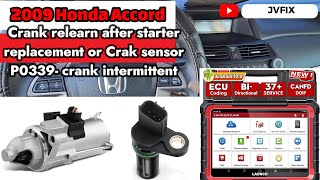
Typical fix: Replace the starter motor with a high-quality OEM (Mitsuba) or reputable rebuilt unit. 🎬 Watch: How a bad starter triggers the P0339 code
Est. part cost: $150-$300 - Damaged Wiring or Poor Connector Contact ⚪ Low Probability The sensor's location near the bottom of the engine exposes its wiring to heat, oil, and road debris, which can cause damage over time. Corrosion can build up in the connector, causing an intermittent connection.
How to confirm: Visually inspect the wiring harness and connector for any signs of melting, corrosion, frayed wires, or loose pins. Perform a continuity and voltage drop test on the wires between the sensor and the ECM.
Typical fix: Repair the damaged section of wiring or clean/replace the connector. Manufacturer service bulletin #A16-011 notes that corrosion between the engine wire harness and the CKP sensor connector can result in MIL illumination with DTC P0335 or P0339.
Est. part cost: $5-$50
Rare But Worth Checking
- Weak Battery or Charging System Issue: While the TSB addresses a software misinterpretation due to a low battery, a consistently weak battery or failing alternator can cause ongoing electrical issues that may repeatedly trigger this code by causing low voltage during cranking.
- Damaged CKP Reluctor Ring: The sensor reads teeth on a reluctor ring (or pulse plate) on the crankshaft. While very rare, damage to this ring from debris or internal engine issues can cause an erratic signal. This is a major mechanical repair that requires removing the oil pan for inspection.
Diagnosis Steps
- Check Battery and Connections: Start by load-testing the battery and cleaning the terminals. A weak battery or poor connection is the direct trigger for the software glitch described in TSB 09-050.
- Inquire about TSB 09-050: Contact a Honda dealer with your VIN. Ask if the PGM-FI software update for TSB 09-050 has been performed. If not, this is the highest-priority fix. The dealer cost for this software update is typically around one hour of labor, approximately $100-$200.
- Investigate the Starter: If the code appears primarily during long crank times, suspect the starter motor. A failing starter can cause voltage drops and signal interference that mimics a bad CKP sensor.
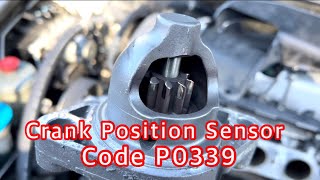
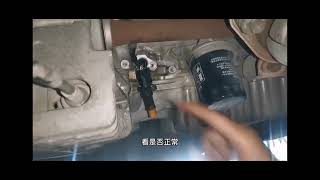
- Inspect Sensor Wiring: If the software is up to date, perform a close visual inspection of the CKP sensor connector and wiring. The sensor is located on the front of the engine block, near the crankshaft pulley and oil filter. Look for corrosion, damage, or loose connections. Manufacturer bulletin #SB16011 specifically links the MIL coming on with DTC P0335 and/or P0339 to potential engine and engine cooling issues.
- Replace the CKP Sensor: If all else fails, the sensor itself may be faulty. Replace it with a high-quality OEM (Honda) or OEM-supplier part (Denso, Hitachi). Avoid generic aftermarket sensors as they are known to fail or cause issues.
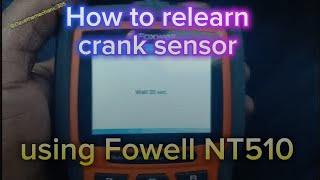
- Perform CKP Pattern Relearn: After replacing the sensor or updating the software, a 'CKP Pattern Learn' procedure is required. This procedure calibrates the ECM to the new sensor signal and must be done with a compatible professional scan tool (like the Honda HDS). Failure to perform the relearn can cause the code to return. 🎬 See how to perform the CKP relearn using a Foxwell scanner
Parts You'll Likely Need
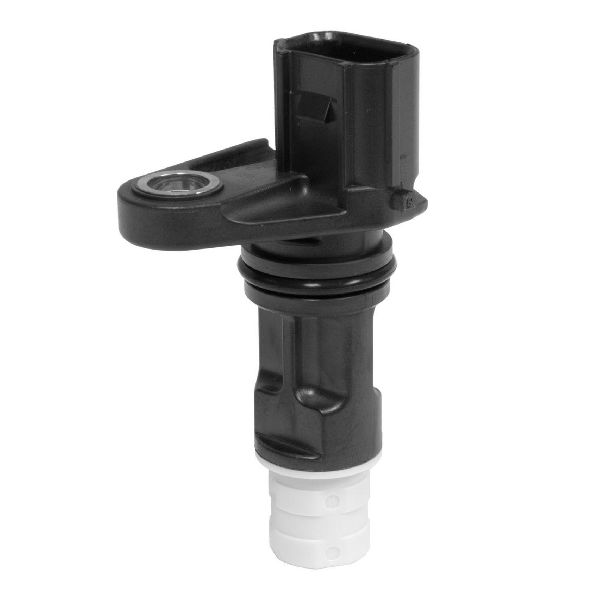
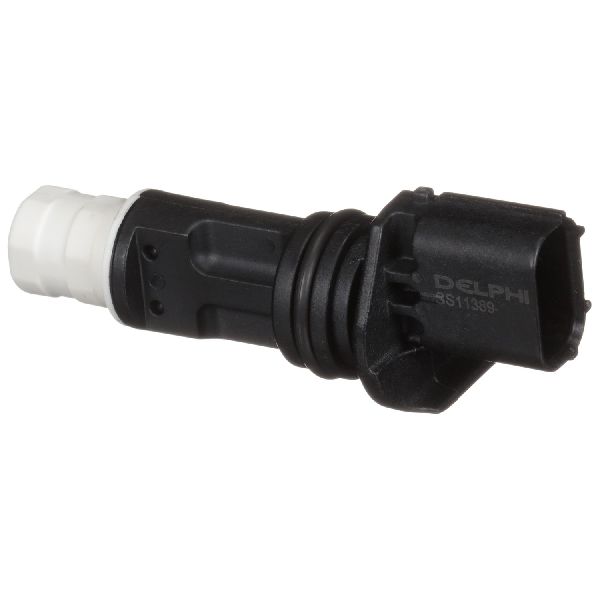
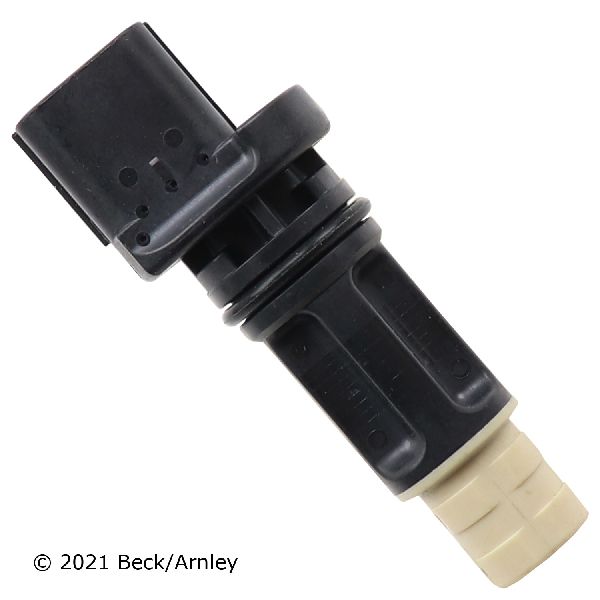
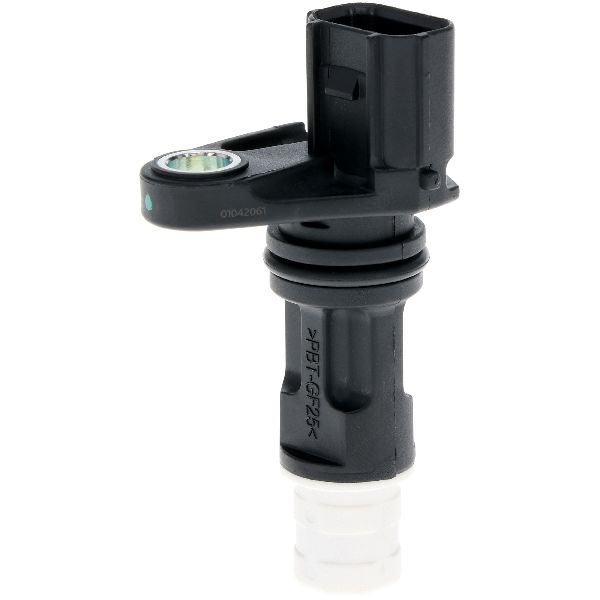
- Crankshaft Position Sensor
(OEM #37500-R40-A01)— This is the primary hardware component that fails, sending an intermittent signal. It is often replaced after ruling out the vehicle-specific software issue.
Trusted brands: Honda (Genuine), Denso, Hitachi
OEM price range: $80-$165
Aftermarket price range: $40-$75
Related Codes That Often Appear With This One
- P0300 — Random/Multiple Misfire Detected. An intermittent CKP signal prevents the ECM from properly timing spark, leading to misfires across multiple cylinders.
- P0301-P0304 — Cylinder-specific misfire codes (e.g., P0302, P0303) can be stored alongside P0339, as noted in TSB 09-050.
- P0335 — Crankshaft Position Sensor 'A' Circuit Malfunction. This is a 'hard fault' code, whereas P0339 is an 'intermittent' fault. They are closely related and can sometimes appear together if the signal is failing completely at times. Manufacturer bulletin #DLR MSG - RFP - (dated 2015-08-10) describes cases where customers reported a MIL on with both P0335 and P0339 stored.
Technical Service Bulletins (TSBs) & Recalls
- 09-050: MIL Comes On With DTC P0339 and Possible P0302 and P0303. States that a low battery during cranking can cause the ECM to misinterpret the CKP signal. The fix is a PGM-FI software update and a CKP pattern clear/learn procedure. It applies to all 2008 L4 Accords and specific 2009 L4 Accords by VIN range.
- Bulletin #A16-011: Identifies that corrosion between the engine wire harness and the CKP sensor connector may result in MIL illumination with DTC P0335 (CKP Sensor No Signal) and/or P0339 (CKP Sensor Circuit Intermittent Interruption).
- Bulletin #DLR MSG - RFP - (dated 2015-06-04): Notes that the manufacturer was actively collecting specific parts from vehicles reporting a Malfunction Indicator Light (MIL) with DTCs P0335 and/or P0339 stored to fully understand the cause of the condition.
Platform-Specific Known Issues
- Honda Technical Service Bulletin (TSB) 09-050 specifically addresses P0339 on the 2008-2009 Accord L4. It identifies that cranking the engine with a low battery can cause the ECM/PCM to incorrectly flag an intermittent CKP sensor signal. The fix is a PGM-FI software update, not a part replacement.
- A failing or aftermarket starter motor is a known secondary cause. The electrical noise or slow cranking speed can be misinterpreted by the PCM as a CKP sensor fault, setting P0339.
- Manufacturer bulletin #DLR MSG - RFP - (dated 2015-08-24) indicates ongoing manufacturer interest in collecting parts from vehicles exhibiting P0335 and P0339 to investigate the root cause of intermittent circuit interruptions.
Mechanic-Grade Diagnostic Values
- CKP Sensor Connector - Power Supply Voltage — expected: 5V reference. Failure: Voltage significantly lower or higher than 5V indicates a wiring or ECM issue.
- CKP Sensor Connector - Ground Circuit — expected: Near 0V (or battery voltage when testing between positive terminal and ground pin). Failure: Any significant voltage reading on the ground pin indicates a poor ground connection (high resistance).
- CKP Sensor Resistance (Note: for magnetic/VR sensors, not applicable to this Hall effect sensor) — expected: 500 - 2,000 Ohms (General range, not specific to this vehicle). Failure: A resistance test is not the primary method for this vehicle's Hall effect sensor, but on older magnetic types, readings outside the specified range indicate failure.
Scan Tool Commands That Help
- Honda HDS (or compatible professional scan tool): CKP Pattern Clear — This must be performed before the learning procedure to erase the old, potentially corrupted data from the ECM/PCM. It is a required step after a software update or sensor replacement.
- Honda HDS (or compatible professional scan tool): CKP Pattern Learning — This command initiates the process for the ECM/PCM to learn the unique signal pattern of the new or existing CKP sensor. It is mandatory after replacing the sensor or updating the PGM-FI software to prevent the P0339 code from returning.
- No Scan Tool (Manual Procedure): CKP Pattern Learning (Manual) — For DIYers without an HDS. After clearing codes, warm the engine to operating temperature (radiator fan cycles on). Then, in a safe location, decelerate with the throttle fully closed from 2,500 RPM to 1,000 RPM. Repeat several times.
Wiring & Ground Locations
- G101 — On the driver's side of the intake manifold, sometimes near the thermostat housing.. G101 is a primary ground point for the engine harness and the ECU's power and logic circuits. A loose or corroded G101 ground can cause a host of erratic sensor readings and ECU behavior, potentially mimicking a P0339 fault.
- CKP Sensor Connector — On the front of the engine block, near the crankshaft pulley and oil filter.. This 3-pin connector is the direct interface for the sensor. The pins are for 5V power, ground, and the signal wire. A poor connection, corrosion, or damaged pin here will directly cause an intermittent signal and trigger P0339.
- Battery Ground Cable — Connects from the negative battery terminal to the vehicle's chassis/body.. Corrosion or a poor connection at the main battery ground can cause low voltage during cranking, which is the specific trigger for the software glitch described in TSB 09-050.
Real Owner Repair Stories
- Reddit user /u/Early-Life-Crisis (2008 Honda Accord) — P0339 code appeared after cranking the engine with a low battery. The car took a bit long to crank but always started.
❌ Tried (didn't work) Visiting a local Honda dealer who was unaware of the software update.
✅ What actually fixed it Taking the car to a different Honda dealer who was aware of TSB 09-050. They performed the PGM-FI software update and the CKP relearn procedure for $110. The car was reliable afterward. - DriveAccord.net forum user (2010 Honda Accord 2.4L (similar issue)) — Long crank times on warm starts, eventually leading to a P0339 code, VSA light, and misfires (P0302).
❌ Tried (didn't work) Replacing the starter with a new aftermarket (TYC) unit., Replacing the aftermarket starter with a rebuilt OEM (Mitsuba) starter., Replacing the CKP sensor with a new Beck-Arnley (re-boxed Denso) part.
✅ What actually fixed it Performing the CKP pattern relearn procedure *without* a scan tool. The user followed the manual procedure of warming the engine and performing several decelerations, which cleared the code and restored engine power. - Reddit user on /r/Honda (2008 Honda Accord 2.4L with 160k miles) — P0339 code appeared after replacing a failed original starter with a slow-cranking aftermarket one. Eventually progressed to constant P0339, P0300, P0302, P0303 and the car being undriveable.
❌ Tried (didn't work) Replacing the CKP sensor with a Denso part., Having a non-Honda shop perform a CKP relearn., Replacing spark plugs.
✅ What actually fixed it The user replaced the slow aftermarket starter with a proper OEM Honda starter, which restored normal cranking speed. However, the codes persisted. The story is unresolved but strongly points to the need for a proper, dealer-level CKP relearn after the correct starter was installed.
OEM Part Supersession History
37500-R40-A01→N/A— This part number remains the current and correct OEM part for the specified vehicle range.
Heads up: While there are no official supersessions, forum and repair data strongly indicate that non-OEM brands (especially no-name or store brands) can cause repeat failures or be dead-on-arrival. Sticking to Genuine Honda, Denso, or Hitachi is critical.
Model Year Variations Within This Range
- 2009: TSB 09-050 applies to ALL 2008 Accord L4 models, but only specific 2009 models based on VIN. The affected 2009 VIN ranges are: 4-door from 1HGCP2...9A000001 thru 1HGCP2...9A114315 and JHMCP2...9C000001 thru JHMCP2...9C017331; 2-door from 1HGCS1...9A000001 thru 1HGCS1...9A015888.
Diagnostic Flowchart
Other Known Issues on This Vehicle
Issues unrelated to this code that are worth knowing about as an owner of this generation:
- Excessive Oil Consumption 🔴 High — Common on 2008-2010 4-cylinder models, often noticeable between oil changes (e.g., every 1,500-2,000 km). Can lead to engine damage if not monitored. (Ref: A class-action lawsuit was filed regarding this issue, though it primarily focused on V6 models for engine misfires. A separate lawsuit did address the 4-cylinder oil consumption.)
- Premature Rear Brake Wear 🟠 Medium — Very common on 2008-2009 models. Rear brake pads may wear out in as little as 30,000-40,000 km. (Ref: Subject of several class-action lawsuits due to the frequency and cost of repairs.)
- Cracked Front Compliance Bushings 🟠 Medium — A very common wear item on this platform. The large, voided rubber bushings in the front lower control arms are prone to cracking, which can cause noise over bumps and affect alignment.
- VTC Actuator Rattle on Cold Start 🟡 Low — A brief, grinding or rattling noise lasting a few seconds on a cold start is a well-known issue for many K-series engines, including the K24Z3. It is caused by a faulty pin in the Variable Timing Control (VTC) actuator. (Ref: Honda has issued TSBs for other models with K-series engines for this issue.)
- Failing Starter Motor 🟠 Medium — As the vehicles age past 100,000 miles, starter failure becomes more common, leading to slow-crank or no-start conditions. As noted, it can also be a direct cause of the P0339 code.
Used vs. New Parts: Buying Guide for This Vehicle
When a used part is the smart pick: A used OEM (Mitsuba) starter from a reputable salvage yard can be a smart choice if the original has failed, as it avoids the electrical interference issues known to be caused by some aftermarket starters. For other components, new is strongly recommended.
Donor-vehicle mileage cap: roughly under 80000 miles for the part to have meaningful remaining life.
What to inspect on the donor part:
- For a starter, check for minimal corrosion on the casing and terminals.
- Verify the donor vehicle's mileage if possible.
- Ensure the part comes from a vehicle that was not in a front-end collision.
OEM-only on this vehicle (don't cheap out):
- Crankshaft Position Sensor: Due to the ECM's sensitivity, using a Genuine Honda, Denso, or Hitachi sensor is critical to avoid repeat failures.
- Starter Motor: While a used OEM starter is viable, a new aftermarket starter is a significant gamble. Many forum posts directly link aftermarket starters to the P0339 code on this vehicle.
Aftermarket brands forum-validated for this vehicle:
- Denso (for CKP Sensor)
- Hitachi (for CKP Sensor)
Brands owners have reported issues with on this vehicle:
- Generic or store-brand crankshaft position sensors (e.g., from AutoZone, O'Reilly's) have been reported by owners to be faulty out of the box or fail shortly after installation.
- TYC (for Starter Motor) was specifically mentioned in one detailed forum post as causing long-crank issues that led to P0339.
Real Owner Stories
Aggregated from forums and TSBs cited above. Mileages and costs reflect what owners reported in those sources.
2008-2012 Honda Accord 2.4L
Symptoms: Long cranking times and a P0339 code. The owner had previously installed an aftermarket starter.
What fixed it: Replaced the aftermarket starter with a rebuilt OEM Mitsuba starter, installed a new Denso CKP sensor, and performed a CKP relearn procedure.
Source hint: DriveAccord.net thread titled '2008-2012 2.4 accord p0339 long cranking starters etc.'
Related OBD-II Codes
Frequently Asked Questions
Does TSB 09-050 apply to my 2008-2009 Honda Accord L4?
I replaced my CKP sensor but the P0339 code came back. What did I miss?
Can a bad starter really cause a P0339 crankshaft sensor code on this Accord?
How much does it cost to fix the software issue mentioned in TSB 09-050?
Should I use an aftermarket crankshaft sensor to save money?
Why does my tachometer drop to zero while I'm driving?
Helpful Videos
We Have This Part in Stock


The information in this article is provided for general reference and educational purposes only. Vehicle specifications, procedures, and part compatibility can vary by production date, trim level, and region. Always consult your vehicle's factory service manual and verify part numbers before purchasing or performing repairs. Safety-critical components such as airbags, seat belts, and braking systems should be installed by a qualified professional.
- Honda Accord:
- 🎬 Helpful Videos
- 🛍️ Shop This Part
- What's Unique About the 2008-2009 Honda Accord
- Symptoms You May Notice
- Most Likely Causes
- Rare But Worth Checking
- Diagnosis Steps
- Parts You'll Likely Need
- Related Codes That Often Appear With This One
- Technical Service Bulletins (TSBs) & Recalls
- Platform-Specific Known Issues
- Mechanic-Grade Diagnostic Values
- Scan Tool Commands That Help
- Wiring & Ground Locations
- Real Owner Repair Stories
- OEM Part Supersession History
- Model Year Variations Within This Range
- Diagnostic Flowchart
- Other Known Issues on This Vehicle
- Used vs. New Parts: Buying Guide for This Vehicle
- Real Owner Stories
- 2008-2012 Honda Accord 2.4L
- Related OBD-II Codes
- Frequently Asked Questions
- 🎟️ Get 5% Off