

P0335 on 2011-2019 Ford Explorer 3.5L: Crankshaft Sensor Causes & Fixes
P0335 on a 2011-2019 Ford Explorer almost always means the crankshaft position sensor has failed. This can cause the engine to stall or not start at all. The sensor is relatively inexpensive and can be replaced by a DIYer with basic tools from underneath the vehicle. Before replacing, a quick check of the wiring and connector for damage is essential.
- P0335 means your Explorer's engine computer has lost the signal from the crankshaft position sensor, which will likely cause stalling or a no-start condition.
- The most probable cause is a failed sensor. It's an affordable part and the replacement is a manageable DIY job for many owners.
- Before replacing the sensor, always perform a quick visual inspection of the wiring and connector for obvious damage, as this can save you the cost of a new part.
- Do not drive the vehicle. A sudden stall in traffic is a serious safety hazard.
- As a precaution, check the engine oil for a milky appearance, as in rare cases this code can be an early warning of a catastrophic internal water pump failure.
What's Unique About the 2011-2019 Ford Explorer
For the 3.5L Cyclone V6 in the fifth-generation Explorer, the P0335 code is a straightforward issue, typically pointing to the sensor itself. Unlike some other timing-related codes on this engine (like P0016 or P0019), P0335 is not usually a direct symptom of the infamous internal water pump failure. However, it's crucial to be aware that this engine's water pump can fail internally and contaminate the oil with coolant, leading to widespread timing system damage. A user on the glamisdunes.com forum experienced this exact failure mode on a 2012 Edge with the same engine; a P0335 code was the initial warning before discovering the engine was destroyed by coolant contamination. While you're diagnosing P0335, a quick check of the oil for a 'milky' consistency is a wise preventative step.
Symptoms You May Notice
- Engine will not start (cranks but does not fire up)
- Engine stalls unexpectedly while driving or idling
- Illuminated Check Engine Light
- Rough or uneven idle
- Reduced engine power or hesitation
- Hard starting (requires long cranking times)
- Tachometer not working or behaving erratically
- Engine misfires or backfires
- Replacing camshaft position sensors. While related to engine timing, the camshaft sensors have their own specific codes (e.g., P0340, P0345) and are not the cause of P0335.
- Replacing the battery or starter. If the engine cranks normally but won't start, the issue is typically spark or fuel, which P0335 directly affects. Don't assume a no-start is a battery issue without proper testing.
Most Likely Causes
- Failed Crankshaft Position (CKP) Sensor 🔴 High Probability The sensor is exposed to high heat and vibration at the bottom of the engine, leading to eventual electronic failure. This is the most common reason for a P0335 code.
How to confirm: After confirming the wiring is intact, replacing the sensor is the most common fix. A definitive test requires an oscilloscope to check for a proper square wave signal while cranking the engine. A multimeter can also be used to check for proper voltage and ground at the connector.
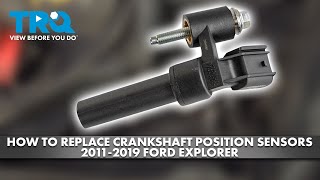
Typical fix: Replace the crankshaft position sensor. 🎬 Watch: This step-by-step guide shows you how to replace the sensor.
Est. part cost: $25-$70 - Damaged Wiring or Connector 🟡 Medium Probability The wiring harness runs near the bottom of the engine and can be susceptible to heat damage, corrosion, or impact from road debris. Heat and vibration are primary enemies of the electrical system.
How to confirm: Visually inspect the wiring harness leading to the CKP sensor for any signs of melting, chafing, or breaks. Check the connector for corrosion, moisture, or pushed-out pins. Wiggle the harness while the engine is running (if possible) to see if it causes a stall.
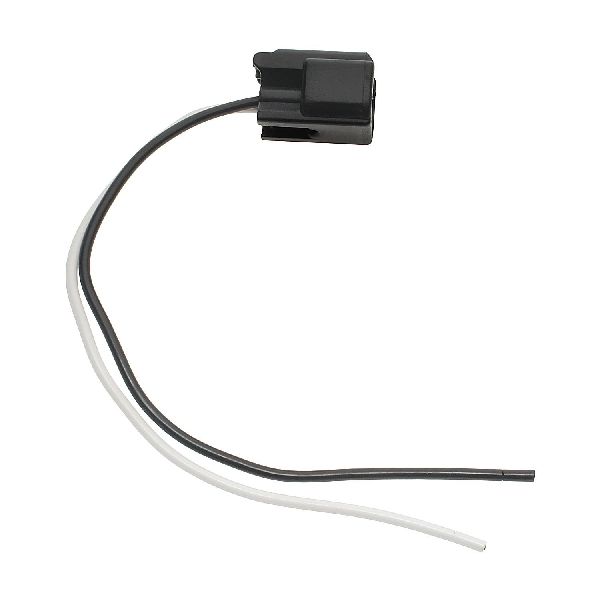
Typical fix: Repair the damaged section of the wiring harness or clean/replace the connector pigtail.
Est. part cost: $5-$50
Rare But Worth Checking
- Damaged Reluctor Ring: The CKP sensor reads teeth on a reluctor ring (or tone ring) mounted on the crankshaft. While rare, these teeth can be damaged during other engine work, or the ring can break or shear its keyway, causing a loss of signal. This is a major repair requiring significant engine disassembly.
- Failed Powertrain Control Module (PCM): It is extremely rare for the PCM itself to be the cause of the problem. This should only be considered after all other possibilities (sensor, wiring, reluctor ring) have been exhaustively ruled out. Sometimes a PCM software update may be required.
- Broken Timing Belt/Chain: Although the 3.5L Cyclone is a timing chain engine, a broken or jumped timing chain would cause the crankshaft and camshafts to be out of sync, which can trigger a P0335 code alongside other codes. This represents a catastrophic engine failure.
Diagnosis Steps
- Scan for Codes: Confirm P0335 is the only code present. If other codes exist, address them first. Note any related codes like P0336.
- Check Live Data: Use a scan tool to monitor engine RPM (PID) while cranking. If the reading is 0, erratic, or does not register, it strongly points to a problem in the CKP sensor circuit.
- Visual Inspection: Safely raise the vehicle and support it on jack stands. Locate the CKP sensor on the passenger side of the engine, near the crankshaft pulley/harmonic balancer. Inspect the sensor, its connector, and the wiring harness for any obvious damage, melting, corrosion, or oil contamination.
- Check the Circuit: If the visual inspection looks good, use a multimeter to check for 5-volt reference and a good ground at the sensor connector with the key on. An oscilloscope is the best tool to verify the signal wire is producing a square wave pattern during cranking.
- Inspect the Sensor: Remove the sensor (typically held by a single 7mm or 8mm bolt). Check the tip for any physical damage or metallic debris.
- Replace the Sensor: If the circuit tests good and the wiring is intact, the sensor itself is the most likely culprit.
- Inspect Reluctor Ring: If a new sensor and known-good wiring do not resolve the issue, the problem may be with the reluctor ring. This can sometimes be visually inspected (with difficulty) through the sensor mounting hole by slowly rotating the engine by hand.
- Consider Crankshaft Relearn Procedure: Some vehicles may require a crankshaft position variation relearn procedure after replacing the sensor to ensure accurate timing. This can sometimes be done with a capable scan tool or by following a specific drive cycle.
Parts You'll Likely Need
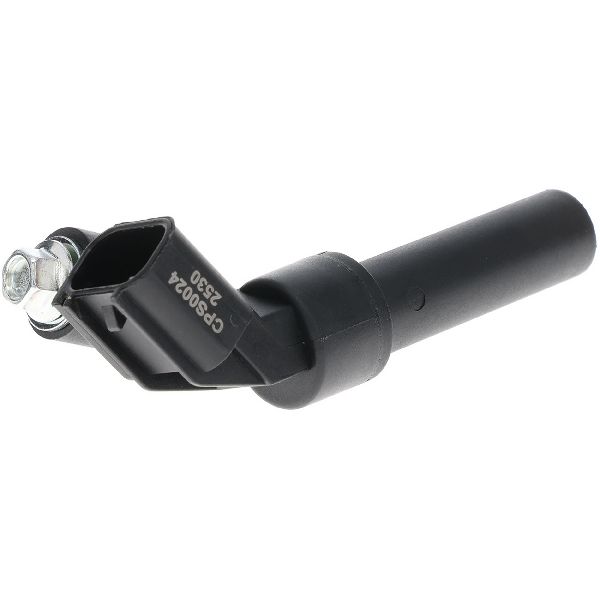
- Crankshaft Position Sensor
(OEM #AA5Z-6C315-A)— This sensor is the most common point of failure for the P0335 code due to its operating environment. The OEM part number AT4Z-6C315-A was superseded by AA5Z-6C315-A.
Trusted brands: Motorcraft, Hitachi, Delphi, Standard Motor Products, NTK/NGK
OEM price range: $50-$70
Aftermarket price range: $25-$50
Related Codes That Often Appear With This One
- P0336: Crankshaft Position Sensor 'A' Circuit Range/Performance (often indicates an intermittent wiring issue or a failing sensor, rather than a complete signal loss)
Platform-Specific Known Issues
- As of late 2023, there are no specific Technical Service Bulletins (TSBs) or recalls from Ford directly addressing code P0335 on the 2011-2019 Explorer.
- Owner Experience: A user on glamisdunes.com with a 2012 Ford Edge (same 3.5L engine) reported a P0335 code as the first sign of a catastrophic internal water pump failure that had leaked coolant into the engine oil, destroying the engine. This highlights the importance of checking oil condition when this code appears.
Mechanic-Grade Diagnostic Values
- 3-Wire Hall-Effect Sensor - Reference Voltage (KOEO) — expected: Approximately 5.0V DC. Failure: Voltage below 4.5V or no voltage suggests a problem with the PCM power supply or wiring.
- 3-Wire Hall-Effect Sensor - Ground Circuit — expected: Near 0V (low voltage drop) or very low resistance to a known good chassis ground.. Failure: Any significant voltage reading or high resistance (OL) indicates a bad ground connection.
- 3-Wire Hall-Effect Sensor - Signal Output (Engine Cranking) — expected: A digital square wave pattern fluctuating between approximately 0V and 5V.. Failure: A flat line (no signal), a noisy signal, or a distorted waveform indicates a failed sensor or wiring issue.
- CKP Sensor Mounting Bolt Torque — expected: 89 in-lbs (10 Nm). Failure: N/A
- CKP Sensor Heat Shield Fastener Torque — expected: 89 in-lbs (10 Nm). Failure: N/A
Hidden / Shadow Codes Worth Checking
- P0315: Crankshaft Position System Variation Not Learned. This code can set after replacing the CKP sensor if the mandatory relearn procedure is not performed. (see via Standard OBD-II scan tool.)
- U2196: Invalid Data for Engine RPM. This is a network communication code that may appear alongside P0335, indicating the instrument cluster is not receiving a valid RPM signal from the PCM. (see via A more advanced scan tool capable of reading 'U' (network) codes.)
Scan Tool Commands That Help
- Ford IDS, FORScan, or capable Autel/Launch scanner: Misfire Monitor Neutral Profile Correction (Crank Relearn) — This procedure is mandatory after replacing the crankshaft position sensor to teach the PCM the new sensor's specific signal profile and variations in the reluctor wheel. Failure to perform this can result in rough running, misfires, and a P0315 code.
Wiring & Ground Locations
- CKP Sensor Connector — On the passenger side of the engine, near the crankshaft pulley/harmonic balancer, accessible from underneath the vehicle.. This is the primary connection point for the sensor. It is susceptible to heat damage, oil contamination, and corrosion, which can interrupt the signal.
- G104 — A critical chassis and module ground point, typically located in the engine compartment near the battery or on the fender apron.. A corroded or loose G104 ground can cause a floating or incorrect reference voltage for the entire PCM and its sensors, including the CKP, leading to false codes.
- CKP Sensor Harness — Runs from the sensor location up the side of the engine block towards the main engine harness.. The harness is protected by a heat shield near the sensor, but can be damaged by heat, chafing against the engine block, or road debris, causing a short or open in the circuit.
Real Owner Repair Stories
- glamisdunes.com forum user (2012 Ford Edge with 3.5L Cyclone V6 (same engine family)) — Check Engine Light with code P0335.
❌ Tried (didn't work) Initial diagnosis focused on the CKP sensor itself.
✅ What actually fixed it The P0335 code was the first and only warning sign of a catastrophic internal water pump failure. The pump leaked coolant into the crankcase, contaminating the oil and destroying the engine's timing components and bearings. The ultimate fix was a complete engine replacement.
OEM Part Supersession History
AT4Z-6C315-A→AA5Z-6C315-A— Part revision by Ford.
Diagnostic Flowchart
Other Known Issues on This Vehicle
Issues unrelated to this code that are worth knowing about as an owner of this generation:
- Internal Water Pump Failure 🔴 High — Common after 80,000-120,000 miles. When it fails, it leaks coolant directly into the engine oil, leading to catastrophic engine damage if not caught immediately.
- Power Transfer Unit (PTU) Overheating/Failure (AWD Models) 🔴 High — The PTU fluid can overheat and break down, leading to gear and bearing failure. Ford considered the fluid 'lifetime' with no drain plug, making service difficult. Failure can cause grinding noises and loss of AWD.
- Electronic Power Assisted Steering (EPAS) Rack Failure 🔴 High — The electric steering rack can fail suddenly, causing a complete loss of power steering assist, making the vehicle very difficult to steer. This was subject to recall 14S06 for 2011-2013 models, but later models still experience failures. (Ref: Ford Recall 14S06)
- Electronic Throttle Body (ETB) Failure 🟠 Medium — A well-documented issue where internal electronics fail, causing the vehicle to enter a 'limp mode' with sudden, severe power loss. Often triggers codes P2111 and P2112. (Ref: Customer Satisfaction Program 13N03, TSB 16-0139)
- Rear Suspension Toe Link Fracture 🔴 High — The rear suspension toe links are prone to fracturing, which can cause a sudden loss of steering control. This is a significant safety issue. (Ref: Ford Recall 19S17)
Used vs. New Parts: Buying Guide for This Vehicle
When a used part is the smart pick: For this specific repair, a used part is NOT recommended. The crankshaft position sensor is a critical, relatively inexpensive electronic component. The labor involved in accessing it outweighs the small cost savings of a used part with an unknown history and remaining lifespan.
What to inspect on the donor part:
- Not applicable as a used sensor is not advised.
OEM-only on this vehicle (don't cheap out):
- Crankshaft Position Sensor
Aftermarket brands forum-validated for this vehicle:
- Motorcraft (OEM)
- Hitachi
- Delphi
- Standard Motor Products (SMP)
- NTK/NGK
Brands owners have reported issues with on this vehicle:
- Unbranded 'white-box' sensors from online marketplaces are a significant gamble and are known for high rates of out-of-box failure or short service life.
Real Owner Stories
Aggregated from forums and TSBs cited above. Mileages and costs reflect what owners reported in those sources.
2012 Ford Edge 3.5L Duratec
Symptoms: The owner observed a P0335 code as the very first sign of trouble, which was actually caused by coolant leaking into the engine oil.
What fixed it: The engine was destroyed due to internal water pump failure; the P0335 was a symptom of the catastrophic internal damage rather than a simple sensor failure.
Source hint: glamisdunes.com - 'Warning if you have a Ford 3.5 Duratec engines.'
2011-2019 Ford Explorer 3.5L
Symptoms: Vehicle experienced a crank-but-no-start situation.
What fixed it: Replacing the crankshaft position sensor.
Source hint: reddit.com/r/FordExplorer
Related OBD-II Codes
Frequently Asked Questions
Is there a Ford TSB or recall for the P0335 code on my 2011-2019 Explorer?
Where is the Crankshaft Position (CKP) sensor located on the 3.5L Cyclone V6?
Can I use a used CKP sensor to fix the P0335 code on my Explorer?
Why is my tachometer behaving erratically along with the Check Engine Light?
Could a P0335 code indicate a more serious engine problem than just a sensor?
What size bolt holds the CKP sensor in place on the 3.5L engine?
Helpful Videos
We Have This Part in Stock


The information in this article is provided for general reference and educational purposes only. Vehicle specifications, procedures, and part compatibility can vary by production date, trim level, and region. Always consult your vehicle's factory service manual and verify part numbers before purchasing or performing repairs. Safety-critical components such as airbags, seat belts, and braking systems should be installed by a qualified professional.
- Ford Explorer:
- 🎬 Helpful Videos
- 🛍️ Shop This Part
- What's Unique About the 2011-2019 Ford Explorer
- Symptoms You May Notice
- Most Likely Causes
- Rare But Worth Checking
- Diagnosis Steps
- Parts You'll Likely Need
- Related Codes That Often Appear With This One
- Platform-Specific Known Issues
- Mechanic-Grade Diagnostic Values
- Hidden / Shadow Codes Worth Checking
- Scan Tool Commands That Help
- Wiring & Ground Locations
- Real Owner Repair Stories
- OEM Part Supersession History
- Diagnostic Flowchart
- Other Known Issues on This Vehicle
- Used vs. New Parts: Buying Guide for This Vehicle
- Real Owner Stories
- 2012 Ford Edge 3.5L Duratec
- 2011-2019 Ford Explorer 3.5L
- Related OBD-II Codes
- Frequently Asked Questions
- 🎟️ Get 5% Off