

P0335 on 2011-2023 Dodge Charger / Challenger: Crankshaft Sensor Causes and Fixes
P0335 on a Dodge Charger or Challenger means the crankshaft position sensor (CKP) circuit has failed, often causing stalling or a no-start condition. The most likely fix is replacing the sensor ($25-$90), but check for TSBs first, as a PCM software update is a known fix, especially if code P2610 is also present. On the 5.7L Hemi, the starter motor must be removed for access, increasing labor.
- P0335 is a critical code; do not drive the vehicle as the engine can stall at any time.
- Before buying parts, check for TSBs. If code P2610 is also present, especially in hot weather, a PCM software update may be the required fix.
- Thoroughly inspect the wiring harness for melting or damage before replacing the sensor, as this is a common point of failure.
- The repair is much more difficult on the 5.7L Hemi V8 because the starter motor must be removed to access the sensor.
- Use a high-quality OEM (Mopar) sensor for the best reliability.
What's Unique About the 2011-2023 Dodge Charger / Challenger
On the Charger and Challenger, P0335 is frequently caused by one of three main issues: the sensor itself failing from heat, the wiring harness melting against the engine block, or a software glitch requiring a PCM update. Chrysler has issued several Technical Service Bulletins (TSBs) for these vehicles, indicating that in some cases—particularly when the car stalls in high heat and sets code P2610 alongside P0335—the correct fix is a PCM software update, not a new sensor. The repair difficulty also varies dramatically between the V6 and V8 engines due to sensor accessibility, with the 5.7L Hemi requiring starter motor removal.
Generation note: The 2011-2023 model years cover the second generation (LD) of the Dodge Charger and the third generation (LC) of the Dodge Challenger, both of which received a major facelift for the 2015 model year. While the core powertrains remained consistent, some TSBs for P0335 are specific to certain year ranges within this period, such as for the 'hot soak' issue on 2013-2014 models.
Symptoms You May Notice
- Engine cranks but will not start
- Engine stalls unexpectedly while driving, especially when hot
- Hard starting or long crank times
- Engine misfires or runs rough
- Check Engine Light is on
- Tachometer needle drops to zero while driving
- Replacing the crankshaft position sensor when a PCM software update is the actual required fix per a TSB, especially when P2610 is also present.
- Replacing other ignition or fuel components before thoroughly inspecting the crankshaft sensor wiring harness for heat damage, which is a common failure point.
Most Likely Causes
- Failed Crankshaft Position Sensor 🔴 High Probability The sensor is exposed to high engine temperatures, which can cause internal electronics to fail over time. A common symptom is stalling when the engine is hot, followed by a no-start until it cools down.
How to confirm: Test the sensor's resistance and signal output with a multimeter and oscilloscope. However, since failures are often heat-related and intermittent, the most practical confirmation for a DIYer is often replacing the part after verifying the wiring is intact.
Typical fix: Replace the crankshaft position sensor and its O-ring. It is highly recommended to use an OEM Mopar sensor, as aftermarket units are reported to fail prematurely.
Est. part cost: $25-$90 - Damaged Wiring Harness or Connector 🟡 Medium Probability The sensor's wiring harness can be routed close to hot engine or exhaust components. Over time, the protective loom can degrade, allowing wires to melt and short against the engine block or each other.
How to confirm: Visually inspect the entire length of the wiring from the sensor connector back to the main harness. Look for melted plastic, exposed copper wires, or signs of chafing. Pay close attention to the area near the engine block and exhaust manifolds.
Typical fix: Cut out the damaged section of wire and splice in a new piece using heat-shrink butt connectors. If the connector itself is damaged, replace it with a new pigtail connector. Ensure the repaired harness is secured away from heat sources.
Est. part cost: $10-$30 - PCM Software Update Required 🟡 Medium Probability Chrysler has issued multiple TSBs (e.g., 18-088-16 REV. A, 18-070-20) for software glitches that can incorrectly trigger P0335, often in high ambient temperatures and in conjunction with code P2610.
How to confirm: A Dodge dealership or a well-equipped independent shop must check your vehicle's VIN against the TSB database to see if a software update is available and required. This is especially likely if P0335 is accompanied by P2610.
Typical fix: Reprogramming (flashing) the Powertrain Control Module with the latest software version. This must be done by a professional with a wiTECH scan tool.
Est. part cost: $0 (if under warranty) - $200
Rare But Worth Checking
- Damaged Reluctor Ring: The reluctor ring (or tone wheel) that the sensor reads can be damaged, have broken teeth, or slip on the crankshaft. This is uncommon but can occur if other major engine work was performed. Diagnosis requires visual inspection, which is labor-intensive.
- Failing Powertrain Control Module (PCM): While rare, the PCM itself can fail. This should only be considered after all other possibilities (sensor, wiring, software) have been definitively ruled out.
Diagnosis Steps
- Scan for Codes: Use an OBD-II scanner to confirm P0335 and check for other related codes like P0339, P2610, or misfire codes.
- Check for TSBs: Before buying parts, have a dealer or equipped shop check your VIN for open Technical Service Bulletins. TSBs 18-088-16 REV. A and 18-070-20 are key for this issue, often requiring a PCM reflash.
- Visual Inspection: Inspect the crankshaft position sensor and its electrical connector for obvious damage, corrosion, or oil contamination. Oil on the connector often indicates a failed internal seal on the sensor.
- Inspect Wiring: Carefully trace the sensor's wiring harness as far as you can, looking for any signs of melting, chafing, or breaks, especially near the engine block or exhaust. This is a very common failure point.
- Test the Circuit: If you have a multimeter, disconnect the sensor and check for 5V reference voltage and a good ground at the connector with the key on.
- Test/Replace the Sensor: If the wiring and voltages are good, the sensor itself is the most likely culprit. On the 3.6L V6, the sensor is relatively accessible from underneath on the passenger side. On the 5.7L Hemi, the starter motor must be removed to gain access.
- Clear Codes and Test Drive: After the repair, clear the trouble codes and perform a test drive to ensure the issue is resolved. A manual 'crankshaft relearn' is generally not required as the system will self-learn.
Parts You'll Likely Need
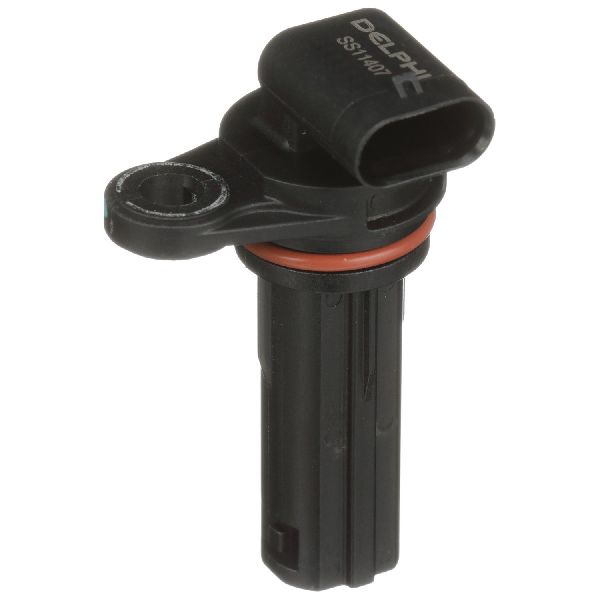
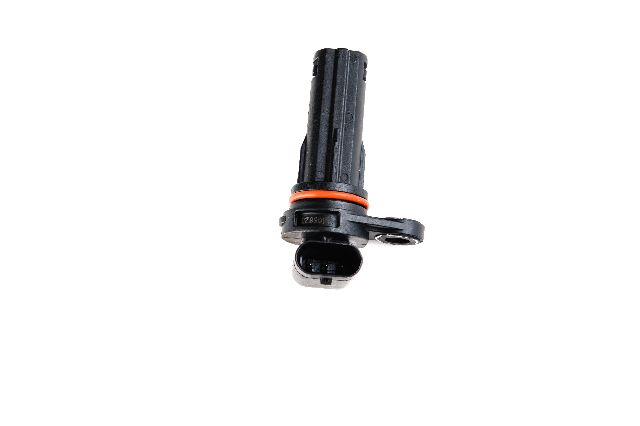
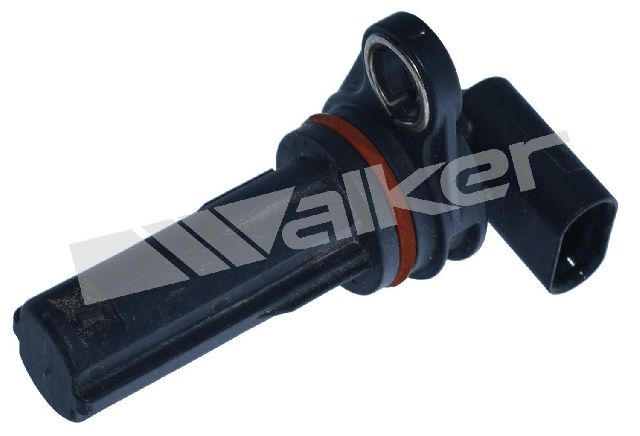
- Crankshaft Position Sensor
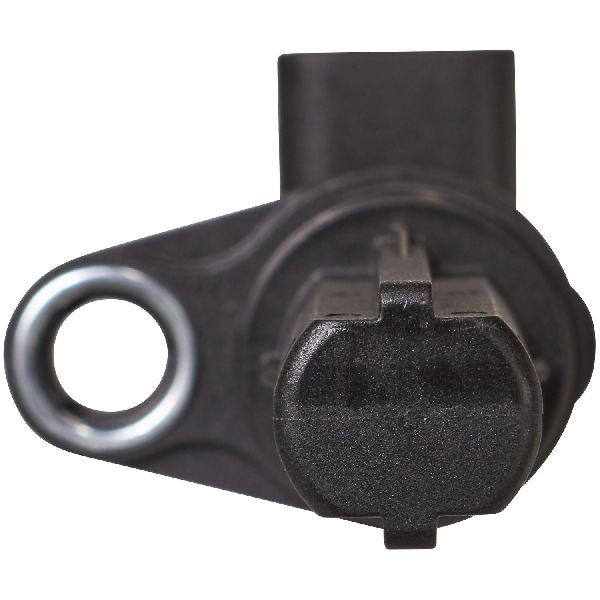
(OEM #5149167AF (supersedes 5149167AD, 5149167AE))— This sensor is the most common component to fail, causing the P0335 code. Heat cycles cause the internal electronics to break down. This part number is used across many Chrysler/Dodge/Jeep/Ram vehicles with the 3.6L engine.
Trusted brands: Mopar, Bosch, NTK
OEM price range: $80-$170
Aftermarket price range: $25-$90
Related Codes That Often Appear With This One
- P2610 — Stands for 'PCM Internal Engine Off Timer Performance.' TSBs 18-088-16 and 18-070-20 specifically link this code with P0335, indicating a software update is likely needed to fix a 'hot soak' issue where the car stalls or won't start after being parked in high heat.
- P0339 — This code for 'Crankshaft Position Sensor Intermittent' indicates the signal is dropping out rather than being completely gone. It often points to a failing sensor or a wiring issue and may appear before P0335 is set permanently.
- P0300-P0308 — These are cylinder misfire codes. An incorrect or missing crankshaft signal prevents the PCM from timing the spark correctly, which can lead to misfires being detected.
Technical Service Bulletins (TSBs) & Recalls
- 18-088-16 REV. A: Fixes P0335 and P2610 on 2013-2014 models with a PCM reflash for stalling in high heat.
- 18-070-20: Recommends a PCM software update for P0335, P2610, and P0456 on some 2016 5.7L models.
Platform-Specific Known Issues
- TSB 18-088-16 REV. A: Addresses P0335 and P2610 on 2013-2014 models (3.6L) due to a 'hot soak' condition where the vehicle may stall or not start in high ambient temperatures. The fix is a PCM reflash.
- TSB 18-070-20: For 2016 models with the 5.7L Hemi, this bulletin addresses a MIL with DTCs P0335, P2610, and P0456. The fix is a PCM software update.
- On 5.7L Hemi engines, the location of the sensor behind the starter motor makes replacement significantly more labor-intensive than on the 3.6L V6. The starter must be unbolted and moved out of the way to access the single 10mm bolt holding the sensor.
Mechanic-Grade Diagnostic Values
- Crankshaft Position Sensor 5V Supply Circuit Voltage (Key On, Engine Off) — expected: 4.9 to 5.1 Volts DC. Failure: Voltage below 4.9V or above 5.1V points to a problem with the PCM's 5V reference supply or a short in the wiring.
- Crankshaft Position Sensor Ground Circuit Resistance — expected: Near 0 Ohms to a known good chassis ground. Failure: High resistance indicates an open or corroded ground circuit.
- Live Data RPM while Cranking — expected: 100 to 500 RPM. Failure: A reading of 0 RPM on a scan tool while the engine is cranking strongly points to a failed CKP sensor or a complete circuit failure.
- Sensor Internal Resistance (Cold) — expected: 500 to 1000 ohms (varies by manufacturer). Failure: A reading of 0 ohms or infinite resistance (open circuit) indicates a failed sensor.
Scan Tool Commands That Help
- wiTECH or capable aftermarket scanner: Cam/Crank Relearn (or Crankshaft Position System Variation Learn) — This procedure may be required after replacing the crankshaft sensor, camshaft sensor, or PCM to synchronize the components and prevent rough running or other codes like P0315.
- wiTECH: Reprogram PCM (Flash) — This is the specific fix required by TSBs like 18-088-16 and 18-070-20 for vehicles experiencing stalling in high heat with codes P0335 and P2610.
Wiring & Ground Locations
- CKP Sensor Connector (3.6L Pentastar) — On the passenger side of the engine block, near the transmission bell housing.. This is the primary test point. Pin 1 (PK/YL wire) is the 5V supply, Pin 2 (DB/WT wire) is the signal, and Pin 3 (DB/DG wire) is the sensor ground.
- CKP Sensor Connector (5.7L Hemi) — On the passenger side of the engine block, behind the starter motor.. This is the primary test point. Pin 1 (RD/VT wire) is the 5V supply, Pin 2 (DG/WT wire) is the signal, and Pin 3 (BR/BK wire) is the ground.
- G101 / G102 — Right side of the engine compartment.. These are primary engine bay grounds. The crankshaft sensor circuit relies on a clean ground path back to the PCM. A corroded or loose connection at these points can cause erratic sensor readings and mimic a sensor failure.
- Engine Ground Strap — A braided metal strap connecting the engine block to the vehicle's chassis/frame.. A corroded, loose, or broken ground strap can introduce electrical noise and unstable sensor readings because the sensor's ground reference becomes unreliable.
Real Owner Repair Stories
- ChargerForums / Go-Parts (2012 Dodge Charger 5.7L Hemi) — Crank-no-start condition with code P0335.
❌ Tried (didn't work) Replacing the crankshaft position sensor (twice)
✅ What actually fixed it The owner discovered the wiring harness had melted against the engine block, shorting the wires together. The fix was to cut out the damaged section and splice the wiring harness.
OEM Part Supersession History
5149167AD, 5149167AE→5149167AF— Standard part revision and improvement by the manufacturer.
Heads up: The newer part number 5149167AF is backward compatible and is the correct service replacement for the older versions.
Model Year Variations Within This Range
- 2013-2014 (especially 3.6L): These model years are specifically called out in TSB 18-088-16 REV. A for a 'hot soak' issue causing P0335 and P2610, which requires a PCM software update to fix.
- 2016 (especially 5.7L): These models are covered by TSB 18-070-20, which addresses P0335, P2610, and P0456 with a single PCM software update.
Diagnostic Flowchart
Other Known Issues on This Vehicle
Issues unrelated to this code that are worth knowing about as an owner of this generation:
- 5.7L/6.4L HEMI MDS Lifter Failure ('Hemi Tick') 🔴 High — Common on engines over 75,000 miles, especially those with the Multi-Displacement System (MDS). Often starts as a light ticking noise when the engine is warm.
- 3.6L Pentastar Rocker Arm Failure ('Pentastar Tick') 🔴 High — A well-documented and widespread issue where the roller bearings on the rocker arms seize, causing a ticking noise and potential camshaft damage.
- Cracked/Leaking Plastic Oil Filter Housing (3.6L Pentastar) 🟠 Medium — The integrated oil filter housing and cooler assembly, made of plastic, is prone to cracking from heat cycles, leading to significant oil leaks.
- Broken Exhaust Manifold Bolts (5.7L Hemi) 🟠 Medium — The bolts securing the exhaust manifold to the cylinder head are known to break, causing an exhaust leak that creates a ticking noise, especially when the engine is cold.
- Early 3.6L Pentastar Left Cylinder Head Failure (2011-2013) 🔴 High — A manufacturing defect on early models caused premature valve seat/guide wear on the left cylinder head (Bank 2), leading to misfires and engine failure. (Ref: TSB 09-002-14 (and associated warranty extension))
Used vs. New Parts: Buying Guide for This Vehicle
When a used part is the smart pick: For this repair, buying a used crankshaft position sensor is not recommended. It is a relatively low-cost electronic component that fails due to heat and age. A used sensor from a junkyard carries an unknown history and may fail shortly after installation, wasting time and labor.
OEM-only on this vehicle (don't cheap out):
- Crankshaft Position Sensor
Aftermarket brands forum-validated for this vehicle:
- NTK / NGK: Widely cited on forums as being the original equipment manufacturer (OEM) for Mopar. This is the most recommended aftermarket brand and is considered equivalent to the dealer part.
- Bosch: Mentioned as a viable alternative.
Brands owners have reported issues with on this vehicle:
- Unknown/cheap brands from online marketplaces (e.g., Amazon, eBay): Forum users report a very high failure rate for inexpensive, unbranded sensors, with some being dead-on-arrival or failing within days.
- Standard Motor Products (SMP) / WVE / Duralast: While these brands can be reputable for other parts, forum discussions show mixed results for Chrysler crank sensors, with some users reporting immediate or premature failures.
Real Owner Stories
Aggregated from forums and TSBs cited above. Mileages and costs reflect what owners reported in those sources.
2007 Dodge Ram 5.7L Hemi
Symptoms: The truck would intermittently sputter and the tachometer would drop to zero, eventually leading to a condition where the engine would crank but not start.
What fixed it: Replacement of the crankshaft position sensor resolved the intermittent stalling and no-start condition.
Source hint: DodgeForum.com - Thread: '2007 Ram 5.7 intermittent sputter w/ P0335 code'
Dodge Charger (Year Unspecified)
Symptoms: Experienced a persistent P0335 no-start condition; replacing the sensor multiple times did not fix the problem.
What fixed it: Discovered that the three wires in the sensor harness had melted together near the engine block, causing a short. Splicing the damaged section of the harness resolved the issue.
Source hint: ChargerForums - Real Owner Story
Related OBD-II Codes
Frequently Asked Questions
Does TSB 18-088-16 REV. A apply to my 2014 Dodge Charger 3.6L?
I have a 2016 Challenger 5.7L Hemi with P0335 and P0456; is there a known software fix?
Why is the labor cost higher for a P0335 repair on my 5.7L Hemi compared to the 3.6L V6?
Should I use an aftermarket sensor to save money on my Charger?
My tachometer drops to zero while driving my Challenger; is this related to P0335?
Is a 'crankshaft relearn' procedure required after I replace the sensor on my 3.6L Pentastar?
Helpful Videos
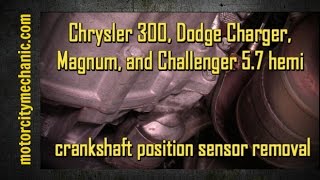
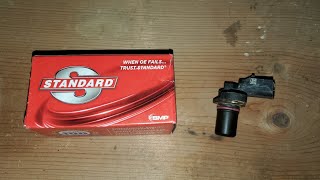
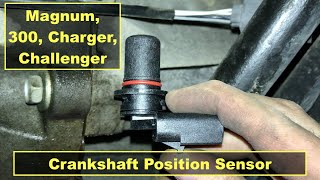
We Have This Part in Stock


The information in this article is provided for general reference and educational purposes only. Vehicle specifications, procedures, and part compatibility can vary by production date, trim level, and region. Always consult your vehicle's factory service manual and verify part numbers before purchasing or performing repairs. Safety-critical components such as airbags, seat belts, and braking systems should be installed by a qualified professional.
- Dodge Charger / Challenger:
- 🎬 Helpful Videos
- 🛍️ Shop This Part
- What's Unique About the 2011-2023 Dodge Charger / Challenger
- Symptoms You May Notice
- Most Likely Causes
- Rare But Worth Checking
- Diagnosis Steps
- Parts You'll Likely Need
- Related Codes That Often Appear With This One
- Technical Service Bulletins (TSBs) & Recalls
- Platform-Specific Known Issues
- Mechanic-Grade Diagnostic Values
- Scan Tool Commands That Help
- Wiring & Ground Locations
- Real Owner Repair Stories
- OEM Part Supersession History
- Model Year Variations Within This Range
- Diagnostic Flowchart
- Other Known Issues on This Vehicle
- Used vs. New Parts: Buying Guide for This Vehicle
- Real Owner Stories
- 2007 Dodge Ram 5.7L Hemi
- Dodge Charger (Year Unspecified)
- Related OBD-II Codes
- Frequently Asked Questions
- 🎟️ Get 5% Off