

P0335 on 2006-2013 BMW with N52/N53 Engine: Crank Sensor Causes and Fixes
On a BMW with the N52 or N53 engine, code P0335 almost always points to a failed crankshaft position sensor. This can cause long cranks, stalling, or a no-start condition. Expect to pay $60-$100 for an OEM-quality sensor from a brand like VDO, but the repair is labor-intensive due to its location under the intake manifold and starter.
- P0335 on your N52/N53 BMW means the crankshaft position sensor signal is lost, which will cause serious drivability problems like stalling, long cranking, or a no-start.
- The sensor itself is the most likely culprit, but always inspect the wiring and connector for damage, especially after other nearby repairs.
- The repair is known for being labor-intensive due to the sensor's location under the intake manifold and starter. A faster method from below is possible but requires skill and specific tools.
- Only use a high-quality OEM (Genuine BMW) or OE supplier (VDO/Continental) sensor. Cheaper aftermarket sensors are a common cause of repeat failures for this specific part.
What's Unique About the 2006-2013 BMW Multiple

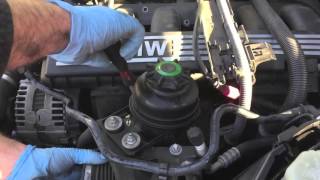
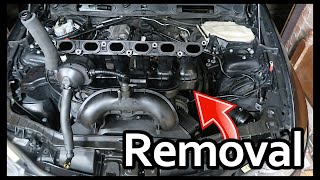
For the N52 and N53 engines, the story of P0335 is one of difficult access. The crankshaft position sensor is notoriously buried on the driver's side of the engine block, tucked underneath the starter motor and intake manifold. While the sensor itself is a common failure item on many cars, on this platform, the labor to reach it is the main challenge. The standard procedure requires the complete removal of the intake manifold, turning a simple part swap into a multi-hour job 🎬 See this walkthrough for removing the manifold and replacing the sensor. that can be daunting for a novice DIYer.
Symptoms You May Notice
- Engine takes a long time to crank before starting (extended crank).
- Engine cranks but does not start at all.
- Engine stalls unexpectedly while driving or at idle.
- Rough, unstable, or fluctuating idle.
- Noticeable loss of power and sluggish acceleration.
- Check Engine Light is illuminated.
- Transmission may enter 'limp mode,' getting stuck in one gear.
- Symptoms may be intermittent or only appear when the engine is warm.
- Replacing the sensor without checking the wiring. Many owners replace the sensor only to find the issue persists because the root cause was a loose, broken, or oil-saturated connector.
- Mistaking it for a camshaft position sensor fault. While symptoms can be similar (rough running, no-start), P0335 is specific to the crankshaft sensor.
- Using a cheap, poor-quality aftermarket sensor. These are known to be unreliable and can fail quickly or not work at all, leading to a repeat of the same symptoms and code. Sticking to OEM or VDO/Continental is highly recommended.
- Not seating the new sensor or connector properly. Due to the difficult access, it's easy to not fully seat the sensor in the block or fail to hear the 'click' of the electrical connector, leading to an immediate return of the code.
Most Likely Causes

- Failed Crankshaft Position Sensor 🔴 High Probability The sensor is located in a high-heat area of the engine bay, and years of heat cycles cause the internal electronics and magnetics to degrade and fail. Oil leaks from components above, such as the valve cover gasket or oil filter housing gasket, can also contaminate the sensor and its wiring, accelerating failure.
How to confirm: If the engine cranks but there is no RPM reading on a live data scanner, the sensor is the primary suspect. Testing the sensor's output with an oscilloscope is the most definitive test. Given the difficult access, many owners opt to replace the sensor as a primary diagnostic step if the code is present.
Typical fix: Replace the crankshaft position sensor and its O-ring. It is critical to use a high-quality OEM or OE-supplier part (like VDO/Continental) as cheap aftermarket sensors are known to fail prematurely or be dead on arrival.
Est. part cost: $60-$120 - Damaged Wiring or Loose Connector 🟡 Medium Probability The sensor's wiring is routed near hot and vibrating components, like the starter and exhaust. The plastic connector can become brittle and break, or the pins can get corroded. This is a common issue after a nearby repair, like a starter or clutch replacement, where the wiring may have been disturbed or not re-secured properly.
How to confirm: Visually inspect the wiring harness leading to the sensor for any signs of melting, chafing, or breaks. Check that the connector is securely plugged in and that the locking tab is intact. Inspect its pins for corrosion or damage.
Typical fix: Repair the damaged section of the wiring harness or replace the connector pigtail. Ensure the connector is clean and securely fastened with a click.
Est. part cost: $15-$50
Rare But Worth Checking
- Damaged Reluctor Wheel: The toothed wheel on the crankshaft that the sensor reads can be damaged, have missing teeth, or be excessively rusty, causing an erratic signal. This is very uncommon but can happen, especially if the engine has been previously disassembled.
- Faulty Engine Control Module (DME): In very rare cases, the fault may lie within the DME itself, where it is unable to process the signal from a known-good sensor. This should only be considered after all other possibilities, including wiring and the sensor itself, have been exhaustively ruled out.
- Blown Fuse: In some BMW models, the crankshaft position sensor circuit is protected by a dedicated fuse located in the main engine electronics box (E-box). A blown fuse will cause a complete loss of signal and a P0335 code.
Diagnosis Steps
- Connect an OBD-II scanner and confirm the P0335 code is present. Use a BMW-specific scanner for more detailed fault codes if possible.
- Monitor live data on the scanner while cranking the engine. Look for an RPM signal. If the RPM reads 0 while the engine is turning over, the DME is not receiving a signal from the sensor.
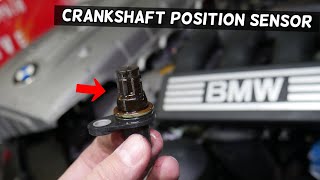
- Perform a visual inspection. Raise the vehicle safely. Locate the sensor on the driver's side of the engine block, below the starter motor. 🎬 Watch this video to see the exact sensor location on N52 engines. Check the sensor's connector for looseness, corrosion, or oil contamination. Inspect the wiring harness for any signs of damage, melting, or chafing against other components.
- If wiring looks good, the next step is to test the sensor. This can be done with a multimeter by checking for voltage and ground at the connector, but an oscilloscope is required to properly view the sensor's signal waveform.
- If the sensor and wiring test good, check the dedicated fuse for the crankshaft sensor in the E-box under the hood.
- Given the high failure rate of the sensor and the difficult access, if you have to remove the intake manifold to inspect the wiring, it is highly recommended to replace the sensor with an OEM/VDO part at the same time.
Parts You'll Likely Need

- Crankshaft Position Sensor
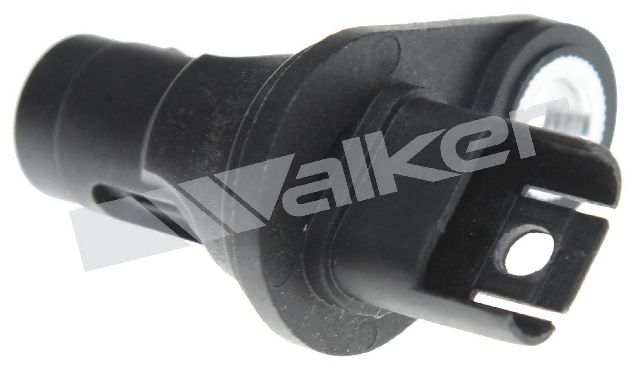
(OEM #13627525015)— This is the most common failure item for code P0335. The sensor's internal electronics fail from prolonged exposure to engine heat.
Trusted brands: VDO (OEM), Continental (OEM), Hella
OEM price range: $80-$120
Aftermarket price range: $45-$75 - Sensor O-Ring
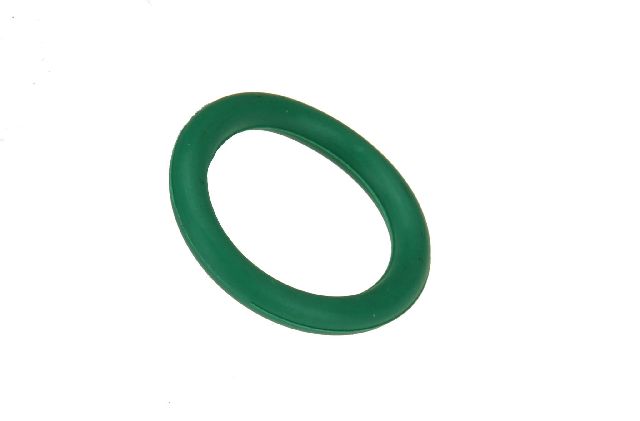
(OEM #12141748398)— A new O-ring is required to seal the sensor in the engine block. It is often sold separately from the sensor.
Trusted brands: Genuine BMW, Elring
OEM price range: $2-$5
Aftermarket price range: $1-$3 - Intake Manifold Gasket Set
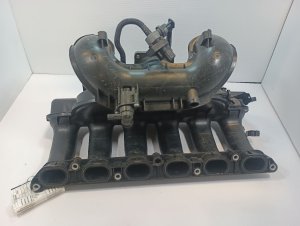
(OEM #11617547242)— If the intake manifold is removed to access the sensor (the most common method), these six individual gaskets must be replaced to prevent vacuum leaks.
Trusted brands: Victor Reinz, Elring, Genuine BMW
OEM price range: $30-$50
Aftermarket price range: $20-$40
Related Codes That Often Appear With This One
- P0336-P0339 — These are all related codes for the crankshaft position sensor circuit, indicating different types of faults (e.g., range/performance, intermittent).
- P1727 — This is a BMW-specific code indicating a CAN message from the DME/DDE is missing. It's often triggered by the lack of a valid crankshaft signal, which is critical data the transmission control module needs to operate correctly.
- 2E94 — This is a BMW-specific fault code that directly translates to a problem with the crankshaft sensor.
Platform-Specific Known Issues
- Difficult Sensor Location: The primary issue for the N52/N53 engine is the sensor's location. Most repair procedures require removing the entire intake manifold to gain sufficient access, significantly increasing labor time and complexity.
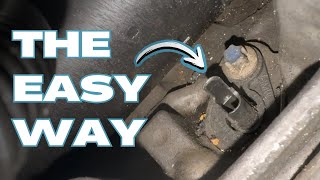
- Replacement from Below (Advanced DIY): Some experienced DIYers have managed to replace the sensor from underneath the car without removing the manifold. This method is faster but requires working in a very tight space with specific tools like a small ratchet, multiple extensions, a swivel socket, and an E8 or E10 external Torx socket (reports vary). This approach is challenging due to poor visibility and the risk of dropping the bolt or tools.
- Broken Bolt During Removal: In some cases, the small external Torx bolt holding the sensor can be seized and break during removal, which dramatically complicates the repair, potentially requiring removal of the starter motor for access to extract the broken bolt.
Mechanic-Grade Diagnostic Values
- Crankshaft Position Sensor Connector Voltage (Key On, Engine Off) — expected: Pin 1 (Orange wire): ~12V (Battery Voltage). Pin 2 (Black/White wire): Ground. Pin 3 (Yellow wire): ~5V (DME Reference Voltage).. Failure: No voltage on Pin 1 or Pin 3 indicates a wiring or DME power supply issue. No ground continuity on Pin 2 points to a bad ground.
- Crankshaft Position Sensor Signal Test (Hall Effect Sensor) — expected: Using a multimeter on the signal wire (Yellow), the voltage should switch between ~5V and ~0V when a metal object is passed in front of the sensor tip.. Failure: Voltage that does not switch, is stuck high or low, or switches intermittently indicates a faulty sensor. An oscilloscope is the preferred tool to see the square wave signal clearly.
Hidden / Shadow Codes Worth Checking
- 2A94: This is a common BMW-specific fault code for 'Crankshaft Sensor, Signal'. It is the direct equivalent of the generic P0335 code and will often appear alongside it or by itself when using BMW-specific diagnostic software like ISTA. (see via BMW-specific scan tools like ISTA, or advanced aftermarket scanners with BMW software (e.g., Foxwell, Autel, MHD).)
- 3100: This is a shadow code for 'Boost-pressure control, deactivation' that is often triggered as a consequence of the 2A94/P0335 fault. The DME deactivates boost control as a protective measure when it loses the critical crankshaft signal. (see via BMW-specific scan tools that can read shadow or secondary fault codes.)
Scan Tool Commands That Help
- ISTA: Delete engine adaptation values — After replacing the crankshaft position sensor or performing other major engine repairs, it is recommended to reset all engine adaptations. This forces the DME to relearn values for fuel trim, idle, and flywheel position with the new sensor data. The path is: Vehicle management > Service function > Power train > Engine Electronics > Adjustment functions > Delete engine adaptation values.
- ISTA: Flywheel Adaptation (Increment Wheel) — If running issues persist after clearing adaptations, a specific flywheel re-adaptation may be needed. This involves a specific drive cycle procedure where the car is accelerated and then allowed to coast down in gear for 7-10 seconds, repeated three times, to allow the DME to learn the exact pattern of the reluctor wheel.
Wiring & Ground Locations

- Engine Ground Strap — On the driver's side (US models), connecting the engine block/oil pan area to the chassis, located underneath the car near the driver's seat area.. A corroded or loose main engine ground strap can cause a voltage drop and introduce electrical noise into the system. This can affect sensitive sensors like the crankshaft position sensor, leading to intermittent signals, a no-start condition, and codes like P0335, even if the sensor and its direct wiring are good.
- Crankshaft Sensor Connector (X6214) — On the driver's side of the engine block, below the starter motor. The wiring consists of an Orange wire (12V Power), a Black/White wire (Ground), and a Yellow wire (Signal).. This is the primary point of failure for wiring issues. The connector can become brittle from heat, and oil leaks can saturate the connection, causing poor contact and signal loss.
- DME Connector X60005 — In the electronics box (E-box) in the engine bay, under the passenger-side cabin air filter housing.. This is where the crankshaft sensor wiring terminates at the DME. The signal wire (Yellow) connects to Pin 29, and the ground wire (Black/Blue) connects to Pin 30. Testing for signal continuity and voltage here can rule out the entire wiring harness between the sensor and the DME.
Real Owner Repair Stories
- Bimmerpost user 'tofu?' (BMW E93 328i) — Car would shudder on acceleration, have rough shifting, misfires at idle, loss of power, and multiple dash lights including limp mode. Threw code 2A94 (P0335).
❌ Tried (didn't work) Replacing the crankshaft position sensor with a new one.
✅ What actually fixed it The replacement sensor was defective from the factory. Replacing the 'new' sensor with another new genuine Continental sensor resolved all issues. The car ran perfectly for over a month after the second replacement. - Bimmerfest user (BMW 335i (N54 engine, similar issue)) — Sudden engine and transmission malfunction warnings, car stuck in 3rd gear (limp mode), long crank times, and stalling on cold starts. Codes 2A94 (Crankshaft Sensor) and 3100 (Boost loss).
❌ Tried (didn't work) Replacing both VANOS solenoids., Replacing the crankshaft position sensor with a new one from the dealer., Checking every fuse in the fuse box with a multimeter.
✅ What actually fixed it The user's post ends without a final resolution, highlighting a common scenario where standard fixes fail, pointing towards a more complex wiring or DME issue that often requires professional diagnosis.
OEM Part Supersession History
13627525015→None, this is the current part number.— N/A
Heads up: While the part number has remained stable, it is critical to use the OEM sensor from VDO/Continental or Genuine BMW. Aftermarket versions are widely reported to be dead-on-arrival or fail prematurely, causing the P0335 code to return.
Diagnostic Flowchart
Used vs. New Parts: Buying Guide for This Vehicle
When a used part is the smart pick: For this repair, sourcing used parts is generally not recommended for the sensor itself. However, if the wiring connector pigtail is broken, a used pigtail from a junkyard harness can be a cost-effective solution, provided the plastic is not brittle and the pins are clean.
Donor-vehicle mileage cap: roughly under 80000 miles for the part to have meaningful remaining life.
What to inspect on the donor part:
- For a wiring pigtail, check for any signs of cracking, brittleness, or melting on the plastic connector.
- Ensure the locking tab is intact and functional.
- Inspect the wire insulation for at least 6 inches back from the connector for any chafing, cuts, or heat damage.
- Look at the metal pins inside the connector for any green or white corrosion.
OEM-only on this vehicle (don't cheap out):
- Crankshaft Position Sensor
Aftermarket brands forum-validated for this vehicle:
- VDO (OEM)
- Continental (OEM)
- Hella
Brands owners have reported issues with on this vehicle:
- Unbranded or generic 'white-box' sensors from online marketplaces are frequently reported as faulty.
Real Owner Stories
Aggregated from forums and TSBs cited above. Mileages and costs reflect what owners reported in those sources.
2006 330i N52
Symptoms: Long crank, limp mode, crank no start, and a transmission fault light.
What fixed it: After two different aftermarket sensors failed to resolve the issue, a BMW dealer advised the owner that the sensor wire was likely not plugged in correctly or had defective pins, indicating a wiring or connection problem was the root cause.
Source hint: e90post.com
BMW E90/E92 with N52 engine
Symptoms: Hesitation and limp mode symptoms with a P0335 code.
What fixed it: The issue appeared immediately after a starter replacement, indicating the problem was disturbed or damaged wiring near the sensor, not a failed sensor itself. The fix was to address the wiring harness connection.
Source hint: Bimmerpost.com (E90/E92) - Thread 'Crankshaft Position Sensor Replacement'
BMW E90/E92
Symptoms: A P0335 code appeared after performing other maintenance.
What fixed it: The owner discovered they had broken the fragile plastic connector for the sensor. The fix was to repair or replace the connector pigtail to ensure a secure connection.
Source hint: Bimmerpost.com (E90/E92) - Thread 'Wire Harness connector to Crankshaft Position Sensor broke :('
Documented NHTSA Reports
NHTSA ODI #11445896
Symptoms: While traveling at approximately 35 mph, the vehicle shut off unexpectedly. A check engine light followed, and a code reader identified code P0335 for the crankshaft position sensor.
What fixed it: The owner reported that they were thankfully able to coast the car safely to the shoulder of the roadway after the sudden stall.
Related OBD-II Codes
Frequently Asked Questions
Where is the crankshaft position sensor located on my N52/N53 engine, and is it difficult to replace?
Can I replace the crankshaft sensor from underneath the car to avoid removing the intake manifold?
Do I need to buy an expensive OEM sensor, or will a cheaper aftermarket part work?
My engine cranks but won't start. How can I confirm it's the crankshaft sensor before buying parts?
I just had my starter replaced and now my car has a P0335 code and is in limp mode. Could the repair have caused this?
What happens if the small bolt holding the sensor breaks during removal?
Helpful Videos
Used OEM Parts in Stock



New Aftermarket Parts Available


The information in this article is provided for general reference and educational purposes only. Vehicle specifications, procedures, and part compatibility can vary by production date, trim level, and region. Always consult your vehicle's factory service manual and verify part numbers before purchasing or performing repairs. Safety-critical components such as airbags, seat belts, and braking systems should be installed by a qualified professional.
- BMW Multiple:
- 🎬 Helpful Videos
- 🛍️ Shop This Part
- What's Unique About the 2006-2013 BMW Multiple
- Symptoms You May Notice
- Most Likely Causes
- Rare But Worth Checking
- Diagnosis Steps
- Parts You'll Likely Need
- Related Codes That Often Appear With This One
- Platform-Specific Known Issues
- Mechanic-Grade Diagnostic Values
- Hidden / Shadow Codes Worth Checking
- Scan Tool Commands That Help
- Wiring & Ground Locations
- Real Owner Repair Stories
- OEM Part Supersession History
- Diagnostic Flowchart
- Used vs. New Parts: Buying Guide for This Vehicle
- Real Owner Stories
- 2006 330i N52
- BMW E90/E92 with N52 engine
- BMW E90/E92
- Documented NHTSA Reports
- NHTSA ODI #11445896
- Related OBD-II Codes
- Frequently Asked Questions
- 🎟️ Get 5% Off