

P0330 on 2017-2019 Ford Fusion: Knock Sensor Circuit Malfunction Causes and Fixes
On a 2017-2019 Ford Fusion Sport with the 2.7L V6 engine, code P0330 is frequently caused by a wiring harness issue, not the knock sensor itself. Ford Technical Service Bulletins (TSBs) indicate the problem is often a damaged or poorly connected wire shared with the Engine Coolant Temperature (ECT) sensor. Always inspect this wiring before replacing parts, as the TSBs explicitly state the fix is often to replace the ECT sensor and the entire knock sensor harness together.
- For a 2017-2019 Ford Fusion, code P0330 almost exclusively applies to the Sport model with the 2.7L V6 engine.
- Before buying any parts, inspect the wiring harness shared by the knock sensor and the Engine Coolant Temperature (ECT) sensor. This is the most likely cause according to Ford's own service bulletins.
- Check for other trouble codes. If you see codes related to the cooling system (like P0116, P0117, etc.) alongside P0330, it strongly points to the known wiring issue.
- Replacing the knock sensor is a labor-intensive job that requires removing the intake manifold, so be certain it's the cause before starting the repair.
What's Unique About the 2017-2019 Ford FUSION
For the 2017-2019 Ford Fusion Sport, this code has a well-documented, non-obvious cause. Ford issued multiple Technical Service Bulletins (TSBs) highlighting that P0330 often appears with coolant-related codes. The root cause is frequently a wiring harness problem shared between the knock sensor and the Engine Coolant Temperature (ECT) sensor. TSB SSM 48991 explicitly recommends replacing both the ECT sensor (Ford base part number 12A648) and the knock sensor harness (Ford base part number 12A699) to correct the condition, indicating an integrated failure. This means the knock sensor itself may be perfectly fine, and the real issue lies in the harness, saving owners from a potentially unnecessary and difficult sensor replacement.
Diagnostic Flowchart
Tap your situation to follow the diagnostic path that matches what you're seeing on this vehicle.
Symptoms You May Notice
- Check Engine Light or Malfunction Indicator Lamp (MIL) is on
- Wrench light may be illuminated
- Engine Coolant Over Temperature warning light may appear (per TSBs)
- Engine may ping or knock during acceleration
- Reduced engine power and performance, possibly 'limp mode'
- Rough idle
- Cooling fans running constantly or at high speed due to false temperature readings
- Immediately replacing the knock sensor without first thoroughly inspecting the wiring harness. Given the TSBs for this vehicle, a wiring fault is a very high probability and should be the first check.
- Replacing only the knock sensor when TSB SSM 48991 explicitly calls for replacing both the ECT sensor and the knock sensor harness as a unit to resolve the underlying issue.
Most Likely Causes
- Damaged Wiring or Poor Connector Seating 🔴 High Probability As documented in Ford TSBs #SSM 48991, #SSM 47791, and #SSM 46906, the wiring harness for the 2.7L engine is susceptible to damage or poor connections. Specifically, the harness shared between the knock sensor and the ECT sensor is the culprit. TSB 47791 points to issues with wiring between connectors C1016 and C1168 on the Fusion. The heat and vibration in the engine valley where these components are located cause the wiring and connectors to fail over time.
How to confirm: Visually inspect the wiring harness and connectors for both the ECT sensor and the knock sensors, which are located in the engine valley under the intake manifold. Check for any signs of chafing, melting, corrosion, or connectors that are not fully seated. Pay close attention to the harness sections identified in the TSBs.
Typical fix: Per TSB SSM 48991, the official fix is to replace both the ECT sensor and the entire knock sensor harness (Ford base part number 12A699). In some cases, repairing a damaged section of the wiring or replacing a single faulty connector pigtail may suffice, but the TSB suggests a more comprehensive replacement is needed.
Est. part cost: $20-$150 - Failed Knock Sensor 2 🟡 Medium Probability Sensors are exposed to extreme heat and vibration in the engine valley, which can lead to failure over time. However, on this platform, the wiring harness is a more frequent point of failure. The TSBs suggest replacing the sensor along with the harness, not necessarily because the sensor itself has failed, but because it is integral to the faulty harness assembly.
How to confirm: If the wiring and connectors are confirmed to be in good condition, test the sensor's resistance with a multimeter. Compare the reading to the manufacturer's specification. An out-of-spec reading indicates a failed sensor. This is difficult due to the sensor's location under the intake manifold.
Typical fix: Replace the Bank 2 knock sensor. It is strongly recommended to replace both sensors and the wiring harness at the same time since accessing them requires removing the intake manifold.
Est. part cost: $40-$100 - Powertrain Control Module (PCM) Fault ⚪ Low Probability
How to confirm: This is a last resort after the sensor and its entire circuit have been tested and confirmed to be working correctly. Requires advanced diagnostic tools to verify.
Typical fix: The PCM would need to be reprogrammed or replaced by a dealership or qualified shop.
Est. part cost: $500-$1500
Diagnosis Steps
- Read all diagnostic trouble codes (DTCs) with an OBD-II scanner. Pay close attention to any accompanying codes, especially those related to the Engine Coolant Temperature (ECT) sensor (P0116, P0117, P0118, etc.), as this is a strong indicator of the known TSB issue.
- Review TSBs SSM 48991, 47791, and 46906. The documented cause is most likely a fault in the shared wiring harness for the ECT and knock sensors.
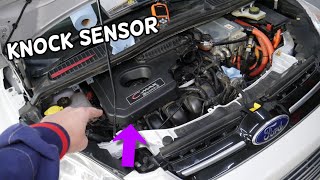
- The knock sensors and ECT sensor are located in the engine valley, underneath the intake manifold. Access requires significant disassembly.
- Once the intake manifold is removed, carefully inspect the entire knock sensor harness (Ford base part #12A699) and the ECT sensor connector for visible damage like melting, chafing, or corrosion. TSB 47791 specifically mentions checking wiring between connectors C1016 and C1168.
- If wiring appears intact, use a multimeter to test the knock sensor circuit for proper voltage and resistance, following the specifications in the factory service manual.
- Given the high probability of this specific issue, the recommended repair per TSB SSM 48991 is to replace both the ECT sensor and the knock sensor harness together. It is also best practice to replace both knock sensors while the intake is off.
- If the issue persists after replacing the harness and sensors, the problem may be with the Powertrain Control Module (PCM), which requires professional diagnosis.
Parts You'll Likely Need
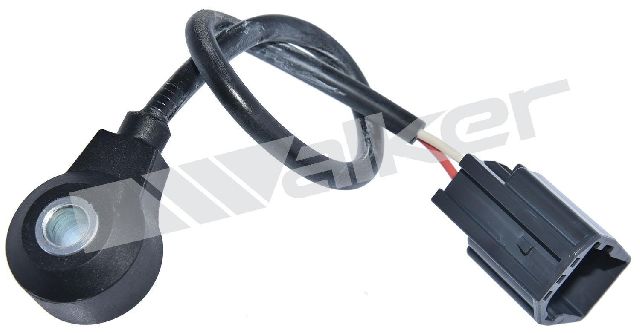
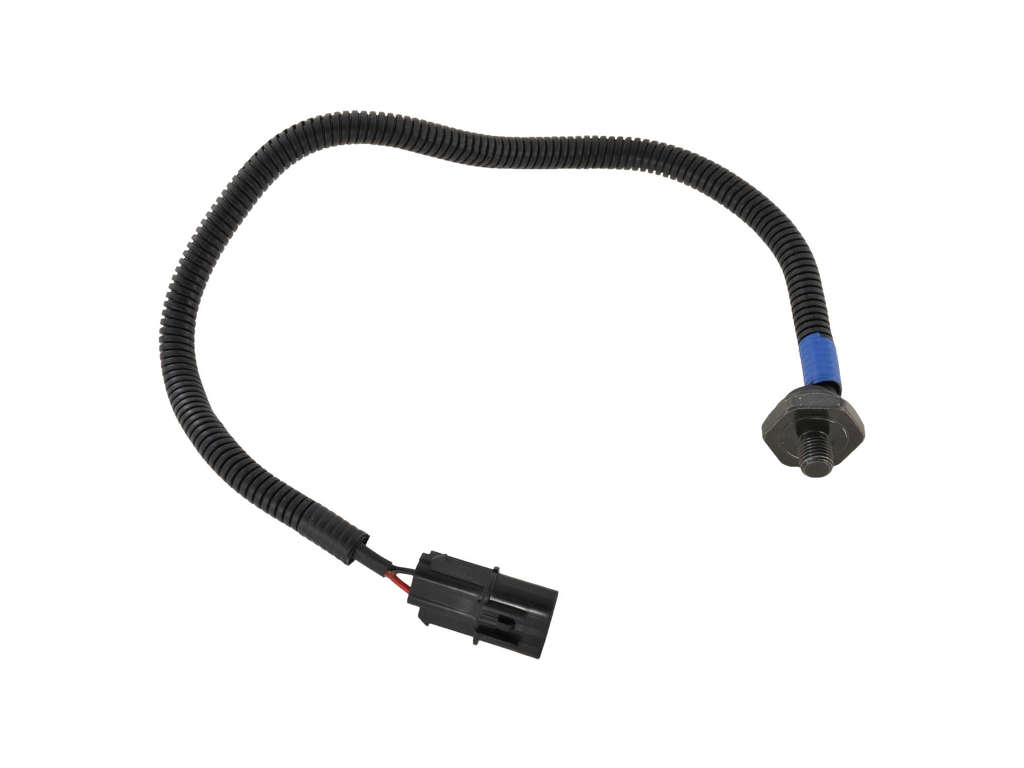
- Knock Sensor Harness
(OEM #F2GZ-12A699-A (or similar, based on Ford's 12A699 base part number))— This is the primary causal part identified in Ford's TSBs. The harness integrates wiring for the knock sensors and the ECT sensor and is prone to heat-related failure. TSB SSM 48991 explicitly calls for its replacement.
Trusted brands: Motorcraft
OEM price range: $50-$90
Aftermarket price range: $30-$60 - Knock Sensor
(OEM #JX6Z-12A699-A)— While the harness is the main culprit, it is best practice to replace the sensors themselves during this labor-intensive job. The TSB repair procedure also includes replacing the ECT sensor.
Trusted brands: Motorcraft, Bosch, NTK
OEM price range: $45-$75
Aftermarket price range: $30-$60 - Engine Coolant Temperature (ECT) Sensor
(OEM #Motorcraft DY1162 (or similar, based on Ford's 12A648 base part number))— TSB SSM 48991 explicitly directs technicians to replace the ECT sensor along with the knock sensor harness to fully resolve the issue.
Trusted brands: Motorcraft
OEM price range: $20-$40
Aftermarket price range: $15-$30
Related Codes That Often Appear With This One
- P0116 — Shares a wiring harness with the knock sensor that is prone to damage, as per Ford TSBs #SSM 48991, #SSM 47791, and #SSM 46906.
- P0117 — Shares a wiring harness with the knock sensor that is prone to damage, as per Ford TSBs #SSM 48991, #SSM 47791, and #SSM 46906.
- P0118 — Shares a wiring harness with the knock sensor that is prone to damage, as per Ford TSBs #SSM 48991, #SSM 47791, and #SSM 46906.
- P0119 — Shares a wiring harness with the knock sensor that is prone to damage, as per Ford TSBs #SSM 48991, #SSM 47791, and #SSM 46906.
- P0217 — Shares a wiring harness with the knock sensor that is prone to damage, as per Ford TSBs #SSM 48991, #SSM 47791, and #SSM 46906.
- P1026 — Shares a wiring harness with the knock sensor that is prone to damage, as per Ford TSBs #SSM 48991, #SSM 47791, and #SSM 46906.
- P130D — Shares a wiring harness with the knock sensor that is prone to damage, as per Ford TSBs #SSM 48991, #SSM 47791, and #SSM 46906.
Technical Service Bulletins (TSBs) & Recalls
- SSM 48991: Mentions P0330 with ECT codes, pointing to a potential ECT or knock sensor wiring harness issue. The official fix is to replace the ECT sensor (12A648) and the knock sensor harness (12A699).
- SSM 47791: Links P0330 and other DTCs on the 2.7L engine to an ECT sensor connector that is not fully seated or has damaged wiring between specific connectors (C1016 and C1168 for the Fusion).
- SSM 46906: Similar to SSM 47791, identifies potential ECT sensor connector or wiring issues as the cause for a group of DTCs including P0330.
Platform-Specific Known Issues
- Multiple Ford Technical Service Bulletins (SSM 48991, SSM 47791, SSM 46906) confirm that on the 2.7L EcoBoost engine, a P0330 code is frequently caused by a wiring issue shared with the Engine Coolant Temperature (ECT) sensor circuit. This can cause both knock sensor and coolant temperature codes to appear simultaneously.
Mechanic-Grade Diagnostic Values
- Engine Coolant Temperature (ECT) Sensor Resistance — expected: Approximately 37,000 Ohms at 50°F (10°C) and 2,000 Ohms at 212°F (100°C). Resistance is inversely proportional to temperature.. Failure: A reading that is significantly outside the expected range for a given temperature, or an open/infinite resistance reading.
- Knock Sensor AC Voltage (while tapping engine block) — expected: A small AC voltage should be generated, typically between 0.8V and 1.5V, when the engine block near the sensor is lightly tapped with the engine off.. Failure: No voltage produced when tapping indicates a dead sensor. This is a basic functional test.
Wiring & Ground Locations
- C1016 — The electrical connector for the Engine Coolant Temperature (ECT) sensor itself, located in the engine valley under the intake manifold on the 2.7L engine.. TSB SSM 46906 and SSM 47791 identify this connector as a primary failure point, either from not being fully seated or from damaged wiring near it. A poor connection here is a direct cause of the shared harness fault that triggers P0330.
- C1168 — A harness-to-harness inline connector located between the ECT/knock sensor harness and the main engine harness.. TSB SSM 46906 and SSM 47791 specifically call out the potential for damaged wiring between connector C1016 and C1168 as the root cause for the cluster of codes including P0330.
- PCM Grounds — Located on the firewall. There may be one or two ground points depending on the model year.. A poor PCM ground can cause a host of erratic sensor readings and false codes. While not the primary suspect for this specific TSB-related issue, ensuring this connection is clean and tight is a crucial step in any electrical diagnosis.
Model Year Variations Within This Range
- 2019: The 2019 Ford Fusion received a minor facelift with updated front and rear fascias and the inclusion of the Co-Pilot360 driver-assistance system as standard. However, the 2.7L EcoBoost V6 powertrain and the underlying wiring that causes the P0330 issue remained the same as the 2017-2018 models.
Helpful Videos
Used OEM Parts in Stock


New Aftermarket Parts Available


The information in this article is provided for general reference and educational purposes only. Vehicle specifications, procedures, and part compatibility can vary by production date, trim level, and region. Always consult your vehicle's factory service manual and verify part numbers before purchasing or performing repairs. Safety-critical components such as airbags, seat belts, and braking systems should be installed by a qualified professional.
- Ford FUSION:
- 🎬 Helpful Videos
- 🛍️ Shop This Part
- What's Unique About the 2017-2019 Ford FUSION
- Diagnostic Flowchart
- Symptoms You May Notice
- Most Likely Causes
- Diagnosis Steps
- Parts You'll Likely Need
- Related Codes That Often Appear With This One
- Technical Service Bulletins (TSBs) & Recalls
- Platform-Specific Known Issues
- Mechanic-Grade Diagnostic Values
- Wiring & Ground Locations
- Model Year Variations Within This Range
- 🎟️ Get 5% Off