

P0325 on 2012-2018 Jeep Wrangler 3.6L: Knock Sensor Circuit Malfunction Causes and Fixes
This code indicates a fault in the Bank 1 (passenger side) knock sensor circuit. The sensor is buried under the intake manifold, making replacement a 3-5 hour job. It's highly recommended to replace both knock sensors and the wiring harness at the same time, which costs around $100-$200 in parts. This code frequently appears after an oil cooler housing leak or replacement, as oil saturation or physical damage to the harness is extremely common.
- P0325 points to an electrical fault with the passenger-side knock sensor or its wiring, not necessarily a mechanical engine knock.
- The sensors are buried deep in the engine valley, making this a labor-intensive repair (DIY difficulty 5/5).
- Due to the high labor cost, always replace both knock sensors and the wiring harness at the same time.
- You will need to replace the upper and lower intake manifold gaskets as part of this job.
- If this code appears after an oil cooler replacement, suspect damage to the knock sensor harness occurred during the prior repair.
What's Unique About the 2012-2018 Jeep Wrangler

On the 3.6L Pentastar V6, the two knock sensors are located deep in the engine valley, underneath the upper and lower intake manifolds and the oil cooler/filter housing assembly. This location makes replacement a significant undertaking. 🎬 Watch this step-by-step guide for replacing Jeep JK knock sensors. Because of the high labor cost and the fact that a common failure point for the oil cooler housing requires the same disassembly, it is standard practice and highly recommended to replace both knock sensors and their wiring harness simultaneously, even if only one has failed. A leaking oil cooler is a primary cause of harness failure, as leaking oil saturates the wiring and connectors, leading to degradation.
Symptoms You May Notice
- Check Engine Light is on
- Reduced engine power and sluggish acceleration
- Decreased fuel economy
- Audible engine pinging or knocking sounds, especially under load
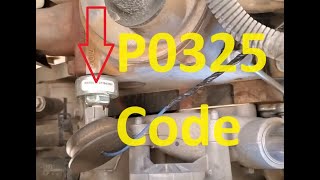
- Intermittent Check Engine Light that may turn off and on between drive cycles 🎬 See a breakdown of common P0325 causes and fixes.
- Replacing only one knock sensor. Due to the high labor cost to access the sensors, replacing only the failed one is a common mistake that can lead to doing the entire job again when the second sensor or the harness fails.
- Confusing a P0325 code with an actual engine knock. TSB 09-012-22 addresses an audible engine knock caused by carbon buildup from the PCV system, which is a separate mechanical issue and not an electrical circuit fault.
- Not replacing the harness after an oil cooler leak. Many owners replace the leaking oil cooler but fail to replace the oil-saturated knock sensor harness at the same time, leading to P0325 appearing shortly after the repair.
Most Likely Causes

- Faulty Bank 1 Knock Sensor 🔴 High Probability The sensor is located in a high-heat area of the engine valley, which can lead to failure over time. It can also be damaged by contamination from a leaking oil cooler.
How to confirm: After gaining access to the sensor, test its internal resistance with a multimeter. A common resistance range for these sensors is between 93kΩ and 100kΩ. An out-of-spec or open reading confirms failure. However, a sensor can pass this test when cold and still fail under heat and vibration.
Typical fix: Replace the knock sensor. It is highly recommended to replace both sensors and the harness at the same time.
Est. part cost: $30-$80 for one aftermarket sensor, $140+ for OEM. - Damaged Knock Sensor Wiring Harness 🔴 High Probability This is arguably the most common cause on the 3.6L Pentastar. The harness is routed in the hot engine valley and sits directly beneath the oil cooler housing, a part notorious for leaking. Spilled oil during filter changes or a cracked housing will saturate the harness, causing the wiring insulation to swell and degrade, leading to shorts or open circuits. The harness can also be easily pinched or damaged during oil cooler or intake manifold service.
How to confirm: Visually inspect the entire harness for signs of melting, chafing, corrosion, or rodent damage after removing the intake manifolds. Pay extremely close attention to the connectors and any section of the harness that was saturated with oil. Often the damage is internal from oil wicking into the wires.
Typical fix: Replace the knock sensor wiring harness. This is typically done along with the sensors themselves. In severe cases of oil saturation, the main engine harness may also need replacement.
Est. part cost: $30-$50 for the sub-harness. - Loose or Corroded Connector ⚪ Low Probability
How to confirm: Check the connector at the sensor and where the sub-harness connects to the main engine harness. Look for corrosion, debris, oil contamination, or a loose fit.
Typical fix: Clean the connector terminals with electrical contact cleaner and ensure it is securely fastened. Apply dielectric grease to prevent future corrosion.
Est. part cost: $5-$10
Rare But Worth Checking
- Powertrain Control Module (PCM) Fault: This is extremely rare. All other possibilities, especially sensor and wiring issues, should be exhaustively ruled out before considering the PCM as the cause.
Diagnosis Steps

- Confirm the code with an OBD-II scanner.
- Visually inspect the main engine harness for any obvious signs of damage where it might connect to the knock sensor sub-harness.
- Plan for major disassembly. To access the sensors, you must remove the upper and lower intake manifolds. It is often necessary to remove the oil filter/cooler housing as well.
- Once the intake is removed, carefully inspect the knock sensor wiring harness for any signs of melting, chafing, or breaks. Pay close attention to the area around the oil cooler housing. If there is evidence of a past or present oil leak, assume the harness is compromised.
- Disconnect the Bank 1 sensor (passenger side) and test its resistance with a multimeter. Compare the reading to the manufacturer's specification (typically 93k-100k Ohms). An open or out-of-range reading indicates a bad sensor.
- Even if only one sensor tests bad, the strong recommendation is to replace both sensors and the wiring harness to prevent future failures and avoid repeating this labor-intensive job.
- Before installing the new sensors, ensure the mounting surface on the engine block is clean. Torque the new sensor bolts to the manufacturer's specification, which is critical for proper function. The correct torque is approximately 15-16 ft-lbs. Do not overtighten, as this can make the sensor overly sensitive and trigger false codes.
- If the oil cooler was removed, install it with new gaskets, torquing the bolts to 106 in-lbs.
- Reassemble the lower and upper intake manifolds with new gaskets to prevent vacuum leaks.
- Clear the trouble codes with a scanner and perform a test drive to ensure the code does not return.
Parts You'll Likely Need
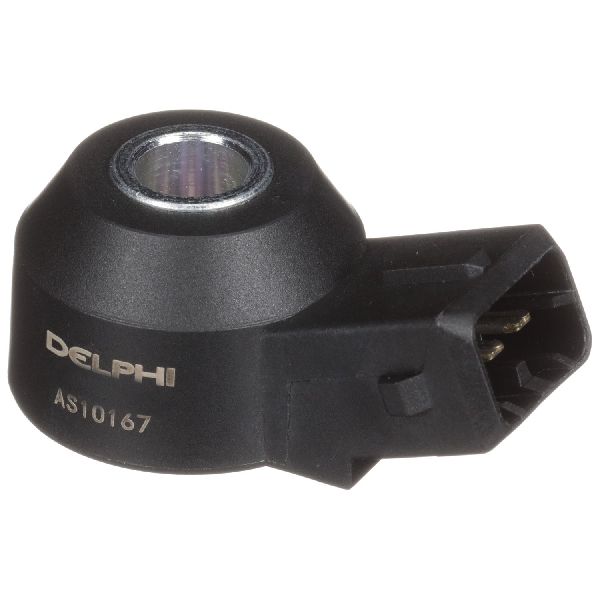
- Knock Sensor
(OEM #68166540AA (superseded by 68166540AB))— This is the most common part to fail, triggering the P0325 code.
Trusted brands: Mopar, Delphi, NGK/NTK, Standard Motor Products
OEM price range: $140-$200
Aftermarket price range: $30-$80 - Knock Sensor Wiring Harness
(OEM #5148105AH)— The harness is a frequent point of failure due to heat and oil saturation from the common oil cooler leak. It is always recommended to replace it with the sensors. This harness connects the two knock sensors, oil pressure sensor, and temperature sensor.
Trusted brands: Mopar, Dorman
OEM price range: $40-$60
Aftermarket price range: $25-$40 - Upper and Lower Intake Manifold Gasket Set — These gaskets are single-use and must be replaced anytime the intake manifolds are removed to access the knock sensors.
Trusted brands: Fel-Pro, Victor Reinz, Mopar
OEM price range: $50-$80
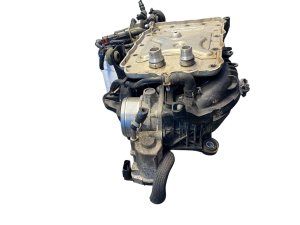
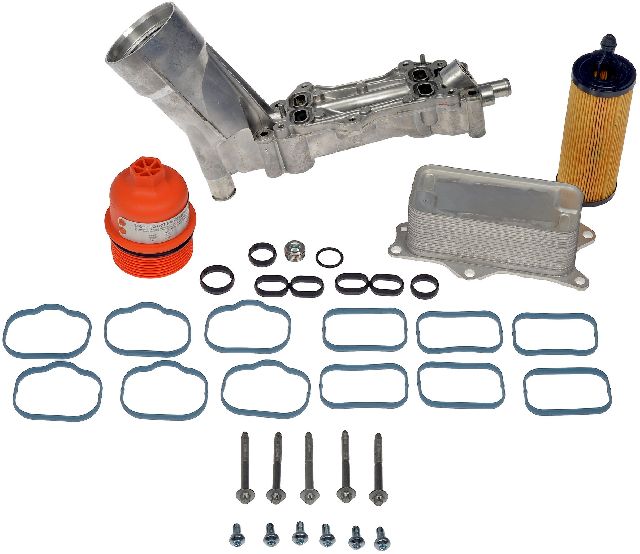
Aftermarket price range: $30-$60 - Oil Filter/Cooler Housing Assembly
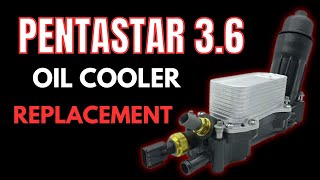
(OEM #68105583AF (or later revisions))— Often replaced preventatively or concurrently, as a leak from this housing is a primary cause of the knock sensor harness failure. An all-aluminum aftermarket version is a popular upgrade over the OEM plastic. 🎬 Watch these urgent tips before replacing your Pentastar oil cooler.
Trusted brands: Mopar, Dorman (including aluminum versions), Mishimoto
OEM price range: $150-$250
Aftermarket price range: $80-$180
Related Codes That Often Appear With This One
- P0330 — P0330 is the code for a Knock Sensor 2 Circuit Malfunction. If the wiring harness is damaged or both sensors fail due to age/oil contamination, both codes may appear together.
Platform-Specific Known Issues
- The location of the knock sensors underneath the oil cooler housing is a significant design characteristic. Failures of the plastic oil cooler housing are extremely common on the 3.6L Pentastar, causing oil and/or coolant to leak into the engine valley. This oil saturates the knock sensor harness, wicking into the connectors and wiring, causing insulation failure and triggering P0325/P0330. Many owners report the code appearing for the first time immediately after replacing the oil cooler, indicating the harness was either already damaged by oil or was pinched/broken during the repair.
Technical Service Bulletins (TSBs) & Recalls
- TSB Bulletin #S2008000033 specifically addresses the MIL Lamp being on with DTC P0325 - Knock Sensor 1 Circuit for this vehicle platform.
- TSB Bulletin #18-086-24 notes that a Malfunction Indicator Lamp (MIL) illumination may occur with P0325 (Knock/Combustion Vibration Sensor "A" Circuit) and P0330 (Knock/Combustion Vibration Sensor "B" Circuit), sometimes accompanied by P0300 Multiple Cylinder Misfire.
- TSB Bulletin #18-041-26 and TSB Bulletin #18-042-26 describe instances where P0325-00 (Knock/Combustion Vibration Sensor 1 Circuit) may be found in active or stored status, often alongside other performance codes like P0071-00 or P0330-00.
Mechanic-Grade Diagnostic Values
- Knock Sensor Resistance — expected: 93kΩ - 100kΩ. Failure: A reading outside this range, or an open circuit (infinite resistance), indicates a failed sensor.
- Knock Sensor Live Data Voltage (Scan Tool) — expected: Jumping between ~0.35V and ~0.45V AC at idle. Voltage should increase with acceleration.. Failure: A flat 0V or a static, unchanging voltage suggests a circuit or sensor fault. A code is set if voltage is above 4.0V or below 1.0V when RPM is over 2200.
- Knock Sensor Bolt Torque — expected: 15-16 ft-lbs (20-22 Nm). Failure: Over-torquing can make the sensor hyper-sensitive and trigger false codes. Under-torquing can prevent it from detecting real knock events.
Scan Tool Commands That Help
- JScan or wiTECH: Live Data Monitoring for Knock Sensor 1/2 Voltage — This is the most effective way to diagnose an intermittent issue without disassembly. By observing the voltage signal from both knock sensors simultaneously, a technician can determine if the Bank 1 sensor is providing an erratic or absent signal compared to the healthy Bank 2 sensor, confirming a circuit issue.
Wiring & Ground Locations

- Knock Sensor Sub-Harness Connector (to Main Harness) — In the engine valley, near the back of the engine. The sub-harness connects the two knock sensors and oil sensors to the main engine harness via a single connector (XY220A).. This connector is a common point for oil contamination from a leaking oil cooler. A poor connection here will cause a P0325 and/or P0330. If the code persists after replacing the valley harness, the fault is likely in the main harness between this connector and the PCM.
- G903A — Right front of the engine compartment.. This is a primary ground for the Powertrain Control Module (PCM). A loose or corroded ground at this location can introduce electrical noise into the system, potentially causing false or erratic sensor codes, including P0325.
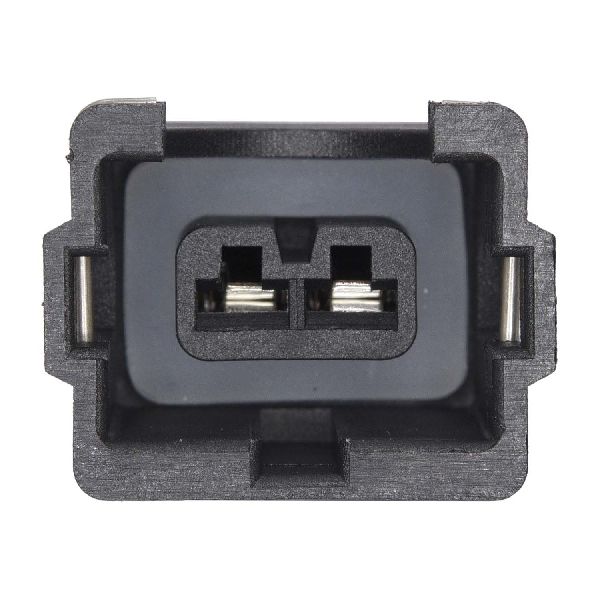
- Knock Sensor Connector (at Sensor) — On the engine block, under the lower intake manifold. Bank 1 is on the passenger side.. The connector itself can become brittle from heat cycles or saturated with oil, causing a poor connection directly at the sensor. The locking tab can easily break during service.
Real Owner Repair Stories
- Reddit user in r/Jeep (2012 Jeep Wrangler JK) — Immediate P0325 code after replacing the oil cooler housing. The Check Engine Light was intermittent, turning on and off over several drive cycles.
❌ Tried (didn't work) Clearing the code (it returned intermittently)., Disassembling again to check for pinched wires (none were found).
✅ What actually fixed it The user diagnosed the issue by monitoring live data, which showed both sensors were producing a plausible voltage signal, suggesting an intermittent connection. The root cause was the original harness being compromised by the oil leak, which was not replaced during the oil cooler job. The final fix is to replace the knock sensor harness.
OEM Part Supersession History
68166540AB→68166540AA— Part revision or manufacturer change. Functionally identical.5148105AD, 5148105AE, 5148105AF, 5148105AG→5148105AH— Multiple revisions of the knock sensor sub-harness have been released over the years.
Heads up: 5148105AH is the latest version and fits the specified 2012-2018 Wrangler JK range.
Model Year Variations Within This Range
- 2012-2013 vs 2014-2018: The oil filter housing/cooler assembly was redesigned for the 2014 model year. While both are plastic and prone to failure, they use different oil filters and have slightly different designs. This does not change the P0325 diagnosis, but it is critical for sourcing the correct replacement oil cooler housing if it is being replaced concurrently.
- 2012-2013: Early 3.6L Pentastar engines (primarily 2012 and some 2013 models) had a known issue with the left cylinder head that could cause misfires and other codes, though it is not directly linked to P0325. This is a separate, well-documented warranty issue.
Diagnostic Flowchart
Other Known Issues on This Vehicle
Issues unrelated to this code that are worth knowing about as an owner of this generation:
- Cracked Oil Filter / Cooler Housing 🔴 High — Extremely common, often occurs after 60,000 miles. The plastic housing becomes brittle from heat cycles and can crack, leading to major oil and/or coolant leaks in the engine valley.
- Left Cylinder Head Failure 🔴 High — Primarily affects early 2012-2013 models. Caused by excessive valve seat wear, leading to misfire codes (P0300, P0302, P0304, P0306) and requiring cylinder head replacement. (Ref: Chrysler Extended Warranty X56 (10 years/150,000 miles))
- TIPM (Totally Integrated Power Module) Failure 🟠 Medium — Common on 2012-2016 models. Internal relays fail, causing a wide array of bizarre electrical issues like the fuel pump not shutting off, horn blaring, wipers activating randomly, or a no-start condition.
- Death Wobble 🔴 High — Can occur at any mileage, especially on lifted vehicles, but also stock ones. Caused by worn or loose front suspension/steering components, most commonly the track bar bolt holes or bushings. Results in violent, uncontrollable shaking of the front wheels after hitting a bump.
- Rocker Arm / Lifter Tick 🟠 Medium — Common across the Pentastar engine line. Needle bearings in the rocker arms fail, causing a distinct ticking/tapping noise from the top of the engine, requiring replacement of the affected rocker arms and sometimes the camshaft.
Used vs. New Parts: Buying Guide for This Vehicle
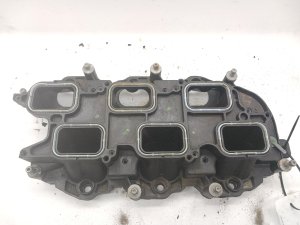
When a used part is the smart pick: For this specific repair, using used parts is strongly discouraged for the electronic components. The only part where a used component might be considered is the intake manifold itself, if the original was cracked or damaged during service. For all sensors and wiring, new is the only logical choice.
Donor-vehicle mileage cap: roughly under 80000 miles for the part to have meaningful remaining life.
What to inspect on the donor part:
- For an intake manifold: check for cracks, especially around bolt holes.
- Ensure all threaded inserts are intact and not stripped.
- Verify it is from the correct model year range, as minor changes can affect fitment.
OEM-only on this vehicle (don't cheap out):
- Knock Sensor: While some aftermarket sensors work, the high labor cost of a do-over makes using OEM Mopar sensors a wise investment to ensure compatibility and longevity.
- Knock Sensor Harness: The OEM Mopar harness is inexpensive and known to fit correctly. Given the criticality of this part, sticking with OEM is recommended.
Aftermarket brands forum-validated for this vehicle:
- Dorman (Aluminum Oil Cooler Housing): A highly popular and recommended upgrade to permanently fix the failure-prone OEM plastic housing.
- Mishimoto (Aluminum Oil Cooler Housing): Another well-regarded brand offering a lifetime warranty on their aluminum housing upgrade.
Brands owners have reported issues with on this vehicle:
- Unbranded/no-name electronic sensors: For critical sensors like the knock sensor, which require significant labor to access, using cheap, unverified parts is a major risk that can lead to repeat repairs.
Real Owner Stories
Aggregated from forums and TSBs cited above. Mileages and costs reflect what owners reported in those sources.
2012-2018 Jeep Wrangler 3.6L Pentastar V6
Symptoms: The engine valley was full of oil due to a failed oil cooler. After cleaning the valley and replacing a thermostat, the P0325 code appeared two days later.
What fixed it: Replacement of the knock sensor and harness.
Source hint: youtube_comment from T.L.C. DIY in owner_reports
Jeep Wrangler JK 3.6L
Symptoms: A P0325 code appeared immediately upon startup after the oil cooler was replaced. The code would clear but return intermittently.
What fixed it: The report suggests the harness was likely damaged or oil-soaked and required replacement to resolve the intermittent signal.
Source hint: Reddit r/Jeep: Replaced JK oil cooler and immediately upon startup had po325
Jeep Wrangler 3.6L (Jasper Engine)
Symptoms: P0325 Knock Sensor 1 Circuit code appeared immediately after a brand new engine was installed.
What fixed it: The issue was attributed to a wiring harness that was likely pinched or damaged during the engine reinstallation.
Source hint: JK-Forum.com: Brand New Jasper Engine, P0325 Knock Sensor 1 Circuit?
Related OBD-II Codes
Frequently Asked Questions
Why did my P0325 code appear immediately after I replaced the oil cooler housing on my 3.6L Pentastar?
Can I just replace the faulty Bank 1 sensor to save money on parts and labor?
What is the correct torque for the knock sensor bolts on the Jeep Wrangler 3.6L?
Is there an extended warranty for engine issues on my 2012-2013 Wrangler?
What resistance should I look for when testing the knock sensor with a multimeter?
Could a leaking oil filter housing cause my P0325 code?
Helpful Videos
![How to Fix P0325 Engine Code in 2 Minutes [1 DIY Method / Only $10.86]](https://img.youtube.com/vi/JYNnrWkGL9w/mqdefault.jpg)
Used OEM Parts in Stock



New Aftermarket Parts Available


The information in this article is provided for general reference and educational purposes only. Vehicle specifications, procedures, and part compatibility can vary by production date, trim level, and region. Always consult your vehicle's factory service manual and verify part numbers before purchasing or performing repairs. Safety-critical components such as airbags, seat belts, and braking systems should be installed by a qualified professional.
- Jeep Wrangler:
- 🎬 Helpful Videos
- 🛍️ Shop This Part
- What's Unique About the 2012-2018 Jeep Wrangler
- Symptoms You May Notice
- Most Likely Causes
- Rare But Worth Checking
- Diagnosis Steps
- Parts You'll Likely Need
- Related Codes That Often Appear With This One
- Platform-Specific Known Issues
- Technical Service Bulletins (TSBs) & Recalls
- Mechanic-Grade Diagnostic Values
- Scan Tool Commands That Help
- Wiring & Ground Locations
- Real Owner Repair Stories
- OEM Part Supersession History
- Model Year Variations Within This Range
- Diagnostic Flowchart
- Other Known Issues on This Vehicle
- Used vs. New Parts: Buying Guide for This Vehicle
- Real Owner Stories
- 2012-2018 Jeep Wrangler 3.6L Pentastar V6
- Jeep Wrangler JK 3.6L
- Jeep Wrangler 3.6L (Jasper Engine)
- Related OBD-II Codes
- Frequently Asked Questions
- 🎟️ Get 5% Off