

P0322 on 2011-2020 Kia Sorento 2.4L: Crank Sensor Failure, No-Start Causes, and Fixes
On the 2011-2020 Kia Sorento with the 2.4L engine, code P0322 almost always indicates a failed crankshaft position sensor. This will cause the engine to crank but not start, or stall unexpectedly. The fix is to replace the sensor, which costs about $40-$150 for the part and is a moderately difficult DIY repair. Using a genuine OEM sensor is strongly recommended as aftermarket versions are known to fail.
- P0322 on a 2.4L Sorento means the computer has lost the signal from the crankshaft position sensor.
- The most common symptom is the engine cranking but failing to start, or stalling unexpectedly, often when hot.
- The fix is almost always replacing the crankshaft position sensor, which is located on the back of the engine block. Use a genuine OEM part.
- This is a critical issue that makes the vehicle unsafe to drive; do not operate the vehicle until it is repaired.
- Be aware of the major underlying issues with the Theta II engine, such as bearing failure, and check for warranty extensions or recalls before paying for repairs.
What's Unique About the 2011-2020 Kia Sorento

The Kia Sorento from this era, particularly with the 2.4L Theta II GDI engine, is known for crankshaft position sensor failures that can mimic more severe engine problems. While the Theta II engine has a well-documented history of catastrophic internal issues like rod bearing failure, P0322 is most often a straightforward electronic sensor failure. Owners should be aware that this code is a common issue and replacing the sensor is a very frequent repair for this specific vehicle and its platform mates like the Hyundai Santa Fe and Kia Optima.
Generation note: The 2011-2020 range covers two Sorento generations: the second generation (XM, 2011-2015) and the third generation (UM, 2016-2020). While the P0322 code has the same meaning, the crankshaft position sensors are different. The XM generation typically uses part number 39180-25300, while the UM generation uses 39180-2G000. Always verify the part number for your specific model year and VIN before purchasing.
Symptoms You May Notice
- Engine cranks but will not start
- Engine stalls unexpectedly while driving, especially when warm
- Rough idling or misfiring before stalling
- Check Engine Light is on
- Tachometer may drop to zero while the engine is still turning.
- Replacing the camshaft position sensor(s). Cam sensor issues will typically set different codes (like P0340) and may not cause a complete no-start condition.
- Replacing the fuel pump. While a no-start can be a fuel delivery issue, the P0322 code specifically points to a lack of engine speed signal, which should be diagnosed first.
- Assuming a timing chain failure. While a timing issue can cause a no-start, it's much less common than a simple CKP sensor failure and should not be the first assumption for this code.
Most Likely Causes

- Failed Crankshaft Position Sensor (CKP) 🔴 High Probability The sensor is located in a high-heat area on the back of the engine block, and heat cycles can lead to internal electronic failure over time. This is a very common failure point on this specific engine and its platform mates. Forum users strongly recommend using genuine OEM parts, as aftermarket sensors have a high rate of premature failure.
How to confirm: With the engine cranking, use a scan tool to check for an RPM signal in the live data. If the scan tool shows 0 RPM while the engine is turning over, the CKP sensor is almost certainly bad. You can also test the sensor's internal resistance with a multimeter; a reading of approximately 900 Ω is expected, while an open circuit indicates failure.
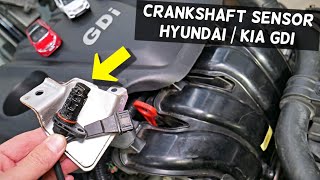
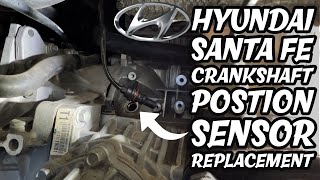
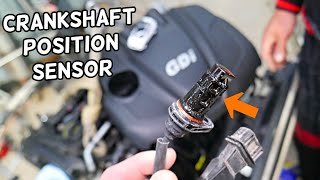
Typical fix: Replace the crankshaft position sensor. It is held in by a single 10mm bolt, often behind a small heat shield. 🎬 See how to locate and replace the sensor
Est. part cost: $40-$150 - Wiring Harness or Connector Issue 🟡 Medium Probability The sensor's wiring is routed near hot exhaust components and the transaxle, making it susceptible to heat damage, chafing, or contamination from oil leaks. The connector itself can also become loose or corroded.
How to confirm: Visually inspect the wiring harness from the sensor to the main engine harness for any signs of melting, fraying, or breaks. Check the electrical connector for corrosion, bent pins, or a loose connection. A multimeter can be used to check for continuity and proper voltage at the connector.
Typical fix: Repair the damaged section of wire or clean/replace the connector.
Est. part cost: $5-$50
Rare But Worth Checking
- Failed Powertrain Control Module (PCM): This is extremely rare. The PCM should only be considered after the sensor and wiring have been thoroughly tested and confirmed to be good.
- Damaged Reluctor Ring: The reluctor ring (or tone wheel) that the sensor reads can be damaged, but this is usually the result of major engine work or a catastrophic internal failure (like the known Theta II bearing failures), which would present with other severe symptoms.
Diagnosis Steps

- Confirm the presence of code P0322 with an OBD-II scanner. Check for any other codes, especially P0335 or P1326.
- Using the scanner's live data function, monitor Engine RPM while cranking the engine. If it reads 0, the CKP sensor or its circuit is the primary suspect.
- Visually inspect the crankshaft position sensor's wiring harness and connector. Look for obvious signs of damage, such as melted plastic, frayed wires, or oil contamination.
- Secure the vehicle on jack stands for safety. The sensor is located on the rear of the engine block, near the transaxle, often behind a small metal heat shield held by two 10mm bolts.
- If the wiring appears intact, the most common and cost-effective next step is to replace the crankshaft position sensor. It is highly recommended to use a genuine OEM part.
- If a new sensor does not resolve the issue, perform electrical tests. Use a multimeter to check for the correct reference voltage (usually 5V or 12V) and a good ground at the sensor's connector.
- If possible, use an oscilloscope to observe the sensor's output signal while cranking the engine. A flat line confirms no signal is being generated.
- If the sensor has power and ground but produces no signal, and a new sensor doesn't fix it, check for continuity on the signal wire between the sensor and the ECM. A break in this wire will cause the code.
- If all wiring and the sensor are confirmed good, the final, least likely possibility is a fault within the ECM.
Parts You'll Likely Need

- Crankshaft Position Sensor
(OEM #39180-25300 (for 2011-2015 Sorento XM) or 39180-2G000 (for 2016-2020 Sorento UM). Always verify by VIN.)— This sensor is the primary cause of code P0322 on this vehicle due to its high failure rate from heat exposure.
Trusted brands: Kia (Genuine OEM), Hyundai Mobis, Delphi, NTK/NGK
OEM price range: $70-$150
Aftermarket price range: $40-$90
Related Codes That Often Appear With This One
- P0335 — P0335 (Crankshaft Position Sensor 'A' Circuit Malfunction) is a closely related code. P0322 indicates 'No Signal' while P0335 can indicate an intermittent or faulty signal (e.g., wrong waveform). They often point to the same root cause: a failing CKP sensor.
- P1326 — This code is specific to Hyundai/Kia and indicates a problem detected by the Knock Sensor Detection System (KSDS), which was implemented to detect early signs of engine bearing failure. While not directly caused by the crank sensor, a stalling event from a bad CKP could potentially trigger knock events that the KSDS picks up. If you see P1326, investigate potential engine failure under the extended warranty immediately.
Technical Service Bulletins (TSBs) & Recalls
- TSB ENG222 Rev 2: While not directly for P0322, this TSB outlines procedures for diagnosing excessive oil consumption in Theta II engines, a related health issue for the platform.
- Kia Class Action Lawsuit / Lifetime Warranty: Not a TSB, but a critical service campaign. Owners of affected vehicles may be eligible for a lifetime warranty on the engine short block due to the rod bearing failure defect, which can cause stalling and other symptoms. It's crucial to check for eligibility before paying for major repairs.
Platform-Specific Known Issues
- Real-World Repair Story: 2012 Sorento Crank-No-Start: An owner on a Kia forum reported their 2012 Sorento 2.4L would crank but not start, throwing code P0322. After confirming the battery was good, they replaced the crankshaft position sensor located on the back of the engine. The repair solved the problem completely. This is a classic example of the most common failure pattern for this code.
- DIY Repair Video Confirms Location and Process: A YouTube video by 'Electrical Car Repair LIVE' demonstrates the replacement on a 2.4L GDI engine, showing the sensor's location on the rear of the block near the transmission. The video highlights the need to remove a heat shield (two 10mm bolts) to access the sensor itself (one 10mm bolt), confirming the tight access but feasibility for a DIYer.
- Stalling When Hot Symptom: Multiple owners across forums for the Sorento and its platform mates (Optima, Sonata) report that the stalling symptom often occurs or worsens after the engine has warmed up. This is consistent with an electronic component beginning to fail as its internal resistance changes with temperature.
Mechanic-Grade Diagnostic Values
- Crankshaft Position Sensor (CKP) Internal Resistance — expected: Approximately 900 Ω. Failure: An open circuit (infinite resistance) or a value significantly different from 900 Ω.
- CKP Sensor Connector Voltage (Key On, Engine Off) — expected: One pin should have a 5V or 12V reference voltage, and another should have a good ground (near 0V).. Failure: Missing reference voltage or a bad ground points to a wiring or PCM issue, not a sensor failure.
- Scan Tool Live Data 'Engine RPM' (while cranking) — expected: Should show engine speed (e.g., 150-300 RPM).. Failure: A steady reading of '0' RPM while the engine is physically cranking is a definitive sign of no signal from the CKP circuit.
Scan Tool Commands That Help
- Kia GDS (Global Diagnostic System): Waveform Analysis (CKPS and CMPS) — This is the definitive OEM method to visually inspect the sensor's output signal. A healthy sensor produces a clean square wave. A flat line, erratic, or dropping signal when hot confirms sensor failure.
- Kia GDS (Global Diagnostic System) or advanced aftermarket scanner: Resetting Adaptive Values / Cam/Crank Relearn — While not always mandatory for a simple CKP sensor replacement, this function can be beneficial if the engine runs poorly after the new part is installed. It forces the ECU to relearn the new sensor's signal characteristics.
Wiring & Ground Locations
- 'Sensor 2' Fuse — Located in the engine bay fuse box.. Some sources indicate a 10A fuse labeled 'Sensor 2' may supply power to the crankshaft position sensor circuit. A blown fuse here would cause a 'No Signal' code and should be checked before replacing parts.
- Starter Signal Wire — The small, single-wire connector on the starter solenoid.. While not a direct cause of P0322, a loose or corroded starter signal wire can cause a no-crank or intermittent crank condition that can be confused with the crank-no-start symptom of P0322. It's a common issue on these vehicles.
OEM Part Supersession History
39180-25200→39180-25300— Standard part revision and update by the manufacturer.
Heads up: 39180-25300 is the correct direct replacement for vehicles originally equipped with 39180-25200. This applies to the 2011-2015 (XM) generation Sorento.
Model Year Variations Within This Range
- 2011-2015 (XM Generation): Uses crankshaft position sensor part number 39180-25300 (which supersedes 39180-25200).
- 2016-2020 (UM Generation): Uses a different crankshaft position sensor, part number 39180-2G000.
Diagnostic Flowchart
Other Known Issues on This Vehicle
Issues unrelated to this code that are worth knowing about as an owner of this generation:
- Connecting Rod Bearing Failure 🔴 High — Widespread across 2011-2019 models. Manufacturing debris (metal shavings) can restrict oil flow to the rod bearings, leading to premature wear and catastrophic engine seizure. (Ref: Subject to multiple recalls (e.g., Kia recall for 2012-2014 Sorento) and a class-action lawsuit settlement providing a lifetime warranty for the engine short block for eligible vehicles that have had the Knock Sensor Detection System (KSDS) software update.)
- Excessive Oil Consumption 🔴 High — Commonly reported starting around 80,000 miles. Can be caused by piston ring issues or general wear, leading to low oil levels that accelerate engine damage. (Ref: Kia TSB ENG222 (Rev 2) and TSB ENG241 address oil consumption inspection procedures. The class-action settlement also covers oil consumption issues leading to bearing failure.)
- Intake Valve Carbon Buildup 🟠 Medium — Inherent to GDI (Gasoline Direct Injection) engines. Symptoms like rough idle, hesitation, and misfires typically appear between 60,000 and 100,000 miles as oil vapors bake onto the intake valves.
- Vehicle Theft Vulnerability 🔴 High — Affects 2011-2021 models not equipped with a push-button start and immobilizer. These vehicles are susceptible to theft using a simple USB cable. (Ref: Kia has offered a free anti-theft software update for affected vehicles. TSB CS2310 addresses related issues with genuine remote start modules after the anti-theft update.)
Used vs. New Parts: Buying Guide for This Vehicle
When a used part is the smart pick: For this specific repair, using a used crankshaft position sensor is NOT recommended. It is a relatively low-cost electronic part that fails due to heat and age. A used part from a junkyard has unknown history and is likely to have a very short remaining service life, leading to a repeat failure.
What to inspect on the donor part:
- Not applicable as used parts are not recommended for this component.
OEM-only on this vehicle (don't cheap out):
- Crankshaft Position Sensor: While not strictly 'OEM-only', using a genuine Kia/Hyundai (Mando is the OE supplier) part is very strongly advised. Forum and mechanic consensus indicates a high premature failure rate for many budget aftermarket brands for this specific sensor.
Aftermarket brands forum-validated for this vehicle:
- Mando (Original Equipment supplier for Hyundai/Kia).
- NGK / NTK.
- Delphi.
- Standard Motor Products (SMP).
Brands owners have reported issues with on this vehicle:
- Unbranded, 'white-box' parts from online marketplaces should be avoided due to inconsistent quality.
- While Dorman is a popular brand, sensor quality can be inconsistent and is considered a budget option for this critical part.
Real Owner Stories
Aggregated from forums and TSBs cited above. Mileages and costs reflect what owners reported in those sources.
2012 Kia Sorento 2.4L
Symptoms: The engine would crank but not start, and the vehicle threw code P0322.
What fixed it: Replaced the crankshaft position sensor located on the back of the engine.
Source hint: Real-World Repair Story: 2012 Sorento Crank-No-Start
2011-2020 Kia Sorento 2.4L GDI — ~100000 miles
Symptoms: The engine stalls unexpectedly while driving, especially when warm, and the tachometer may drop to zero while the engine is still turning.
What fixed it: Replacement of the crankshaft position sensor (CKP) using a genuine OEM part.
Source hint: Kia-Forums.com
2011-2020 Kia Sorento 2.4L GDI — 100000 miles
Symptoms: General engine failure and reliability issues common to the Theta II platform.
What fixed it: Not specified, but noted as a common failure point in the shop for this engine type.
Source hint: Reddit (r/kia)
Related OBD-II Codes
Frequently Asked Questions
Is there a warranty extension that covers engine stalling on my 2011-2020 Kia Sorento 2.4L?
Should I use an aftermarket crankshaft position sensor to fix code P0322?
Does TSB ENG222 apply to the P0322 code on my Sorento?
Where is the crankshaft position sensor located on the 2.4L Theta II engine?
Why does my Sorento only stall or throw P0322 after the engine is warm?
How can I confirm the CKP sensor is the cause of my crank-no-start without replacing it first?
Helpful Videos
We Have This Part in Stock

The information in this article is provided for general reference and educational purposes only. Vehicle specifications, procedures, and part compatibility can vary by production date, trim level, and region. Always consult your vehicle's factory service manual and verify part numbers before purchasing or performing repairs. Safety-critical components such as airbags, seat belts, and braking systems should be installed by a qualified professional.
- Kia Sorento:
- 🎬 Helpful Videos
- 🛍️ Shop This Part
- What's Unique About the 2011-2020 Kia Sorento
- Symptoms You May Notice
- Most Likely Causes
- Rare But Worth Checking
- Diagnosis Steps
- Parts You'll Likely Need
- Related Codes That Often Appear With This One
- Technical Service Bulletins (TSBs) & Recalls
- Platform-Specific Known Issues
- Mechanic-Grade Diagnostic Values
- Scan Tool Commands That Help
- Wiring & Ground Locations
- OEM Part Supersession History
- Model Year Variations Within This Range
- Diagnostic Flowchart
- Other Known Issues on This Vehicle
- Used vs. New Parts: Buying Guide for This Vehicle
- Real Owner Stories
- 2012 Kia Sorento 2.4L
- 2011-2020 Kia Sorento 2.4L GDI — ~100000 miles
- 2011-2020 Kia Sorento 2.4L GDI — 100000 miles
- Related OBD-II Codes
- Frequently Asked Questions
- 🎟️ Get 5% Off