

P0308 on 2010-2013 Land Rover LR4: Cylinder 8 Misfire Causes and Fixes
On a 2010-2013 Land Rover LR4, code P0308 is most often caused by a failed ignition coil or spark plug on cylinder 8. A faulty fuel injector is the next most likely culprit, and a known issue on this platform. Expect to pay $50-$150 for a DIY coil and plug swap, but be prepared for a more complex injector issue if the problem persists.
- P0308 on a 2010-2013 LR4 indicates a misfire in the rearmost cylinder on the driver's side.
- Start your diagnosis by swapping the ignition coil from cylinder 8 to cylinder 6. This is a quick, no-cost test that often identifies the problem.
- If the coil is not the issue, replace the spark plug. If the problem persists, the fuel injector is the next most likely cause.
- Do not drive for an extended period if the check engine light is flashing, as this can cause expensive damage to your catalytic converter.
- Be aware of platform-specific issues like faulty fuel injectors and carbon buildup, which are more common on this direct-injection engine.
What's Unique About the 2010-2013 Land Rover LR4
The 5.0L V8 engine (AJ133) in the 2010-2013 LR4 is a direct-injection powerplant known for being sensitive to ignition and fuel system health. While ignition coils and spark plugs are common culprits for P0308, this platform has documented issues with fuel injectors, as noted in TSBs and numerous owner forums. Land Rover issued TSB LTB00409NAS3 specifically linking misfire codes P0301-P0308 to clogged injectors from poor fuel quality. Furthermore, as a direct-injection engine, it is susceptible to carbon buildup on the intake valves, which can restrict airflow to a cylinder and cause a misfire.
Symptoms You May Notice
- Flashing or solid Check Engine Light
- Rough idle or engine shaking
- Hesitation or jerking during acceleration
- Noticeable loss of engine power
- Poor fuel economy
- Fuel smell from the exhaust
- Hard starting, especially after sitting for a few hours
- Replacing the catalytic converter. A misfire can destroy a catalytic converter, but the converter itself is not the cause of the misfire code.
- Assuming the cause is always a coil or plug. On the AJ133 engine, fuel injectors are a very real possibility and should be investigated before assuming a more serious mechanical failure.
Most Likely Causes
- Faulty Ignition Coil 🔴 High Probability Coil-on-plug systems are common failure points due to high heat and vibration in the engine bay. Oil leaks from the valve cover gaskets into the spark plug wells are a frequent cause of premature coil failure on this engine.
How to confirm: Swap the ignition coil from cylinder 8 with another cylinder (e.g., cylinder 6). Clear the codes and drive the vehicle. If the code changes to P0306, the coil is faulty. This requires an 8mm socket or a T30 Torx driver to release the coil.
Typical fix: Replace the faulty ignition coil. It is often recommended to replace the corresponding spark plug at the same time and apply a small amount of dielectric grease to the new coil boot. 🎬 Watch: Step-by-step guide for replacing spark plugs and coils.
Est. part cost: $50-$120 - Worn or Fouled Spark Plug 🔴 High Probability Spark plugs are a regular maintenance item with a service life of 60,000-90,000 miles. Extended service intervals or other engine issues like oil leaks or coolant intrusion can cause them to fail prematurely.
How to confirm: After confirming the coil is good, remove the spark plug from cylinder 8. Inspect it for wear, damage, or fouling from oil or carbon. A 'steam-cleaned' appearance suggests a coolant leak.
Typical fix: Replace the spark plug in cylinder 8. It is best practice to replace all 8 spark plugs if they are near the end of their service life. The recommended plug is often NGK ILKAR7C10.
Est. part cost: $15-$30 per plug - Clogged or Faulty Fuel Injector 🟡 Medium Probability The 5.0L direct-injection engine is known to have issues with fuel injectors. A Land Rover TSB (LTB00409NAS3) notes that poor fuel quality can lead to clogged injectors and misfires. In one documented case, a 2011 LR4 with P0308 and P0316 had the issue resolved under warranty by the dealer replacing all four injectors on Bank 2 due to a leaking injector. The injectors have also been through multiple part number revisions, suggesting design improvements over time.
How to confirm: This is more complex. A professional can perform a fuel injector balance test. A capable scan tool can monitor fuel trims; a high negative short-term fuel trim on Bank 2 can indicate a leaking injector. Swapping injectors is possible but labor-intensive and requires special tools for removal, as they often seize in the head.
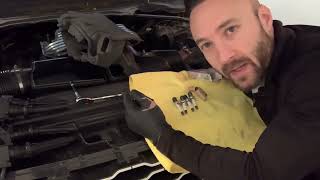
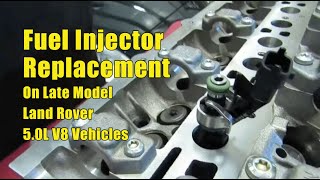
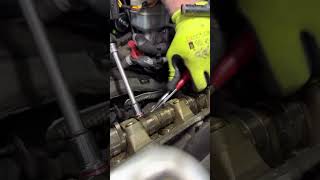
Typical fix: Replace the fuel injector for cylinder 8. This is an involved job that may require removing the intake manifold and using a special slide-hammer tool. 🎬 Watch: How to remove a stuck or broken fuel injector. It is often recommended to replace all injectors on the same bank at the same time.
Est. part cost: $100-$250
Rare But Worth Checking
- Carbon Buildup on Intake Valves: As a direct injection engine, fuel does not wash over the intake valves. Over time, carbon deposits can build up, restrict airflow to a specific cylinder, and cause a misfire. This typically requires professional cleaning (e.g., walnut blasting). Some owners report temporary improvement using aerosol cleaners like Seafoam or CRC through the throttle body.
- Low Cylinder Compression: A mechanical engine problem, such as a worn piston ring, a bad valve, or a failing head gasket, can cause a loss of compression in cylinder 8. A compression test is the first step, followed by a leak-down test. One forum user discovered a coolant leak into cylinder 8 via a pressure test after the spark plug appeared unusually clean.
- Timing Chain Issues: The 5.0L V8 is known for timing chain tensioner and guide failures, especially on earlier models. While this issue usually causes a rattling noise on startup and triggers multiple or random misfire codes (like P0300), a single cylinder misfire is not impossible if timing is unstable. TSB LTB00474NAS3 addresses this.
- Vacuum Leak: An unmetered air leak near cylinder 8's intake runner can lean out the mixture and cause a misfire. A common, simple cause is an air intake boot not being properly seated after service, like an air filter change or MAF sensor cleaning.
- Wiring or Ground Issues: A persistent misfire that doesn't follow components can be caused by wiring. One owner on a forum chased a Bank 2 misfire that was ultimately traced to a bad ground on the O2 sensor. Another user suggested checking the 8mm ground wire near the cam sensors on the front of the head.
Diagnosis Steps
- Read the code with an OBD-II scanner to confirm P0308 and check for any other codes, especially P0316 or P0300.
- Note if the Check Engine Light is flashing. If so, avoid driving the vehicle to prevent catalytic converter damage.
- Perform a coil swap. Move the ignition coil from cylinder 8 (driver's side, rearmost) to cylinder 6 (the next one forward). Clear the codes and run the engine. If the code changes to P0306, the ignition coil is bad.
- If the misfire remains on cylinder 8, inspect the spark plug well for oil, which indicates a leaking valve cover gasket that must also be fixed. Then, remove and inspect the spark plug. Replace if it is worn, fouled, or if it appears 'steam cleaned' (indicating a coolant leak).
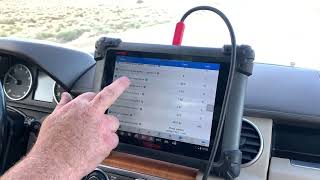
- If the coil and plug are good, the fuel injector is the next likely suspect. A YouTube video of an LR4 with Bank 2 misfires showed a successful diagnosis by observing fuel trims on a scan tool before replacing the injectors. 🎬 See how to diagnose fuel injectors using a scan tool.
- Listen for a steady clicking sound from the injector with a mechanic's stethoscope. The absence of a click indicates a dead injector.
- Check for simple mistakes. Ensure the air intake boot is properly seated on the throttle body and airbox, as a loose boot can cause a vacuum leak and misfires.
- If the above steps do not identify the issue, perform a cylinder compression test and a coolant system pressure test to check for mechanical engine problems or head gasket leaks.
- If all else fails, investigate the wiring harness for the coil and injector on cylinder 8 for damage or loose ground connections.
Parts You'll Likely Need
- Ignition Coil
(OEM #LR030607)— This is the most common failure part for a single-cylinder misfire on this engine.
Trusted brands: Bosch, Delphi, Denso
OEM price range: $90-$150
Aftermarket price range: $50-$100 - Spark Plug
(OEM #LR025605 (NGK ILKAR7C10))— A worn or fouled spark plug is the second most common cause and is a standard maintenance item.
Trusted brands: NGK, Bosch
OEM price range: $20-$35
Aftermarket price range: $15-$25 - Fuel Injector
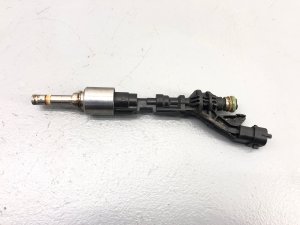
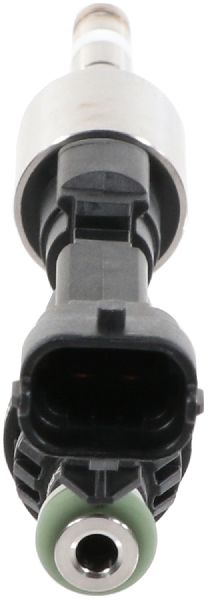
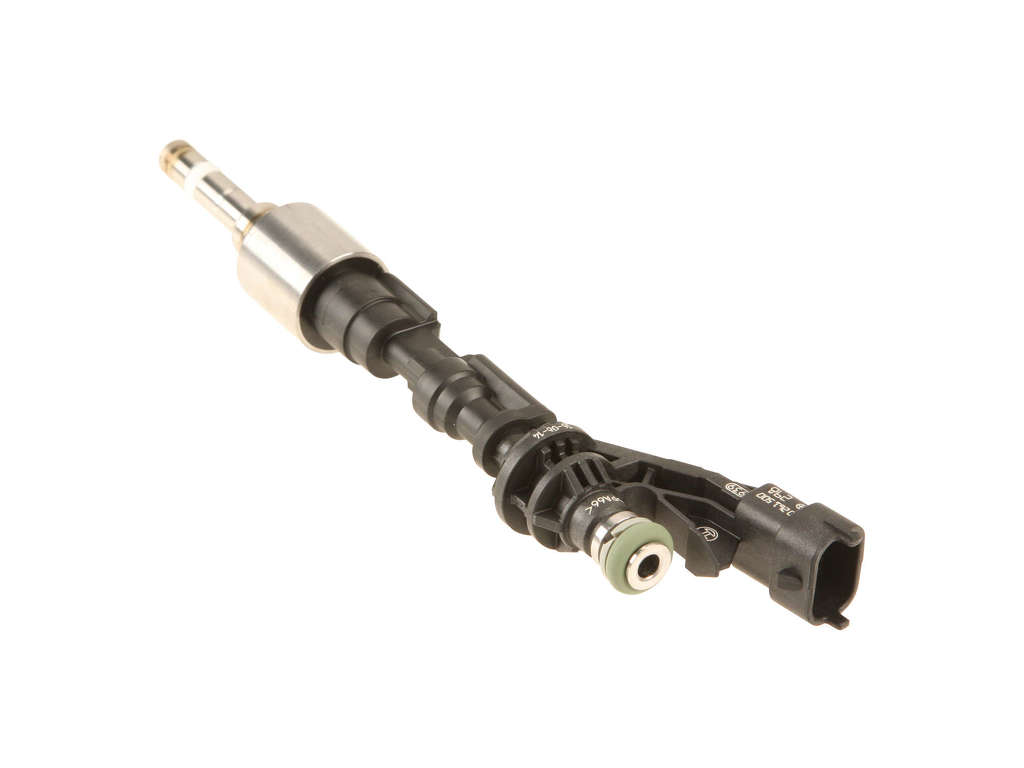
(OEM #LR079542 (superseded by LR105439))— Fuel injectors are a known failure point on the 5.0L direct-injection engine. The part number has been revised multiple times, indicating improvements. It is highly recommended to use the latest available part number (LR105439).
Trusted brands: Bosch
OEM price range: $180-$250
Aftermarket price range: $100-$180
Related Codes That Often Appear With This One
- P0300 — If the misfire is intermittent or affects multiple cylinders, a P0300 (Random Misfire Detected) code may appear alongside P0308.
- P0316 — This code indicates a misfire was detected within the first 1,000 engine revolutions on startup. It often accompanies a specific cylinder misfire code and, according to TSB LTB00409NAS3, is a key indicator (along with P0301-P0308) of a potential fuel injector issue.
Technical Service Bulletins (TSBs) & Recalls
- LTB00409NAS3: Misfire codes can be caused by poor fuel quality leading to clogged injectors.
- JTB00322NAS2: Diagnostic path for hot/cold misfires on the 5.0L engine.
- JTB-00241-NAS1: Recommends a fuel induction system cleaning before injector replacement.
- LTB00723NAS2 / J038: ECM software update to correct false misfire detection on cold starts.
Platform-Specific Known Issues
- TSB on Fuel Quality: Land Rover issued Technical Service Bulletin LTB00409NAS3, which states that a rough idle, hard starting, and misfire codes (P0301-P0308 accompanied by P0316) can be caused by poor fuel quality or contamination leading to clogged injectors. The fix is to replace the affected injectors after other causes are ruled out.
- TSB on Hot/Cold Misfires: Jaguar issued a related TSB (JTB00322NAS2) for the 5.0L engine that provides a detailed diagnostic path depending on whether the misfire occurs when the engine is hot or cold, often pointing towards injector replacement for 'hot' misfires.
- TSB on Cold Start Misfires (Software): Emissions Recall J038 and TSB LTB00723NAS2 were issued for some 2010-2012 models for an ECM software update to correct false misfire detection on cold starts.
Mechanic-Grade Diagnostic Values
- Low-Pressure Fuel Pump Output Pressure — expected: Approximately 0.5 bar (~7 PSI). Failure: Significantly lower pressure at the engine's Schrader valve indicates a failing low-pressure fuel pump or a blockage in the fuel line.
- High-Pressure Fuel System Pressure — expected: Exceeds 2,000 PSI under operation. Failure: This is a direct injection system; pressure is generated by two high-pressure fuel pumps (HPFP). Failure requires specialized diagnosis, but low pressure here will cause misfires and other codes.
- Ignition Coil Primary Winding Resistance — expected: 0.4 - 2.0 ohms (generic spec). Failure: A reading outside this range indicates a faulty coil. This is a generic value; vehicle-specific values are preferred but this provides a baseline.
- Ignition Coil Secondary Winding Resistance — expected: 6,000 - 10,000 ohms (generic spec). Failure: A reading outside this range indicates a faulty coil.
Scan Tool Commands That Help
- JLR SDD (Symptom Driven Diagnostics): Injector Balance Test — To measure the pressure drop across each injector to identify one that is flowing more or less than the others, which is useful after ruling out ignition components.
- JLR SDD (Symptom Driven Diagnostics): Read and Analyze Fault Codes / Monitor Live Data — The dealer tool provides more descriptive fault information than a standard OBD-II reader and allows for real-time monitoring of parameters like fuel trims and sensor data to pinpoint anomalies.
- JLR SDD (Symptom Driven Diagnostics): Clear Adaptations — After replacing a component like a fuel injector or sensor, clearing the learned engine adaptations forces the ECU to relearn values with the new part, which can be critical for resolving the issue.
- JLR SDD (Symptom Driven Diagnostics): Module Programming — If an ECU software update is required (as per a TSB) or if a module is replaced, this function is needed to load the correct software and configuration.
Wiring & Ground Locations
- Engine Ground Strap — A primary engine ground cable runs from the firewall to the back of the 5.0L V8 engine.. A corroded or loose main engine ground can cause a host of electrical issues, including weak spark or erratic sensor readings that could lead to a misfire code. Ensuring this connection is clean and tight is a crucial step in diagnosing persistent electrical-type faults.
- Transfer Case Ground Strap — A ground strap connects the transfer case to the vehicle chassis.. While less likely to cause a single cylinder misfire, a missing or corroded ground on a major drivetrain component can create unpredictable electrical paths and should be checked if other electrical issues are present.
- Main Body Grounds — On similar Range Rover platforms, key ground points are located under the spare tire in the trunk area and on the passenger side front wheel arch.. Poor body grounds can affect the entire vehicle's electrical system, including the ECU and its sensor inputs. These are important locations to check when chasing hard-to-find electrical gremlins.
Real Owner Repair Stories
- Land Rover Forums user (2011 Land Rover LR4, 50k miles) — Check engine light with codes P0308 and P0316. No noticeable driveability issues.
❌ Tried (didn't work) Initial diagnosis by owner.
✅ What actually fixed it The dealer diagnosed a leaking fuel injector. They replaced all four injectors on Bank 2 (the driver's side) to resolve the issue. - Land Rover Forums user (Land Rover Discovery II (similar ignition system)) — Persistent P0308 misfire code even after replacing spark plugs and wires. Flashing check engine light and noticeable engine miss.
❌ Tried (didn't work) Replacing spark plugs, Replacing spark plug wires
✅ What actually fixed it A coolant leak into cylinder 8 was the root cause. This was confirmed with a coolant system pressure test. A key clue was that the spark plug from cylinder 8 looked 'steam cleaned' and was noticeably cleaner than the others. - Land Rover Forums user (Land Rover Discovery II) — P0308 misfire, stumbling at idle.
❌ Tried (didn't work) Using fuel system cleaner (Seafoam)
✅ What actually fixed it The final fix was a burned connector on the #8 spark plug wire. The user also noted that earlier in their diagnosis, they found the main air intake boot was not properly sealed after cleaning the MAF sensor, which caused a significant vacuum leak.
"I Checked Everything" — The Actual Cause
- A common scenario where standard diagnostics fail is when the misfire is caused by an internal coolant leak from a failing head gasket. A smoke test for vacuum leaks would show no issues, and swapping ignition components would not fix the problem. The definitive test is a coolant system pressure test, which will show a loss of pressure, and inspecting the spark plug from the misfiring cylinder for a 'steam-cleaned' appearance.
When the Usual Fixes Don't Work
- While a coil or plug swap is the correct first step, a forum case involving a 2011 LR4 with P0308 and P0316 at only 50,000 miles was ultimately resolved by a dealer replacing all four injectors on Bank 2 due to a leaking injector. This highlights that on the 5.0L direct injection engine, the fuel injector is a more common culprit than on traditional port-injected engines and should be a primary suspect if ignition components check out.
OEM Part Supersession History
LR079542→LR105439— Multiple revisions suggest design improvements to address clogging and failure issues in the direct injection system.
Heads up: It is highly recommended to use the latest part number (LR105439). Other previous part numbers in the supersession chain include LR011964, LR019568, LR037088, and LR069897.
Model Year Variations Within This Range
- 2010-2013: The factory-level diagnostic software for this vehicle range is JLR SDD (Symptom Driven Diagnostics). Vehicles from 2017 onwards use the newer Pathfinder software. While the hardware on the LR4 is consistent, a technician's ability to perform certain software updates or deep diagnostics depends on having the correct SDD tool and subscription.
Diagnostic Flowchart
Real Owner Stories
Aggregated from forums and TSBs cited above. Mileages and costs reflect what owners reported in those sources.
Land Rover LR4 5.0L V8 — 50000 miles
Symptoms: Vehicle threw P0316 and P0308 misfire codes.
What fixed it: The dealer diagnosed a leaking fuel injector and replaced all four injectors on Bank 2 under warranty.
Source hint: landroverforums.com - 'LR4 with P0316 and P0308 codes'
2011 Land Rover LR4 5.0L V8
Symptoms: Misfires on all of Bank 2, triggering codes P0302, P0304, P0306, and P0308.
What fixed it: Analyzed fuel trims with a scan tool to confirm faulty injectors, then replaced all four Bank 2 fuel injectors.
Source hint: YouTube - 'Land Rover LR4 5.0 Misfires ( Fuel Injector?)'
Land Rover LR4 5.0L V8
Symptoms: Developed a new P0308 misfire on cylinder 8 after cleaning the MAF sensor. Initially chased the issue with fuel system cleaner.
What fixed it: Re-seated an unseated air intake hose that was causing a vacuum leak.
Source hint: landroverforums.com - 'New P0308 # 8 Misfire'
Related OBD-II Codes
Frequently Asked Questions
Does TSB LTB00409NAS3 apply to my LR4's P0308 code?
My 2011 LR4 has a P0308 code only on cold starts. Could this be a software issue?
What spark plugs should I use when fixing a P0308 on my 5.0L V8?
I found oil in the spark plug well of cylinder 8. What does this mean?
Should I try cleaning the fuel injectors before replacing them for a P0308 code?
Why am I getting P0308 along with P0302, P0304, and P0306?
Helpful Videos
Used OEM Parts in Stock

New Aftermarket Parts Available


The information in this article is provided for general reference and educational purposes only. Vehicle specifications, procedures, and part compatibility can vary by production date, trim level, and region. Always consult your vehicle's factory service manual and verify part numbers before purchasing or performing repairs. Safety-critical components such as airbags, seat belts, and braking systems should be installed by a qualified professional.
- Land Rover LR4:
- 🎬 Helpful Videos
- 🛍️ Shop This Part
- What's Unique About the 2010-2013 Land Rover LR4
- Symptoms You May Notice
- Most Likely Causes
- Rare But Worth Checking
- Diagnosis Steps
- Parts You'll Likely Need
- Related Codes That Often Appear With This One
- Technical Service Bulletins (TSBs) & Recalls
- Platform-Specific Known Issues
- Mechanic-Grade Diagnostic Values
- Scan Tool Commands That Help
- Wiring & Ground Locations
- Real Owner Repair Stories
- "I Checked Everything" — The Actual Cause
- When the Usual Fixes Don't Work
- OEM Part Supersession History
- Model Year Variations Within This Range
- Diagnostic Flowchart
- Real Owner Stories
- Land Rover LR4 5.0L V8 — 50000 miles
- 2011 Land Rover LR4 5.0L V8
- Land Rover LR4 5.0L V8
- Related OBD-II Codes
- Frequently Asked Questions
- 🎟️ Get 5% Off