

P0308 on 2008-2012 Audi S5 4.2L V8: Cylinder 8 Misfire Causes and Fixes
P0308 indicates a misfire in cylinder 8. On the Audi S5 4.2L V8, the most common fixes are replacing a faulty ignition coil or spark plug. If those don't solve it, the cause is very likely carbon buildup on the intake valves, a known issue with this direct-injection engine requiring professional cleaning. Less common causes include a faulty fuel injector or vacuum leaks.
- Always diagnose P0308 by first swapping the ignition coil, then the spark plug, from cylinder 8 to a neighboring cylinder to see if the fault follows the part.
- If ignition components are good, the cause is very likely carbon buildup on the intake valves, a known weakness of this engine that requires professional service.
- If the Check Engine Light is flashing, do not drive the car, as you risk expensive damage to the catalytic converter.
- When replacing spark plugs or ignition coils, it's best practice to replace them as a full set of eight to ensure even engine performance and prevent future misfires.
What's Unique About the 2008-2012 Audi S5

The 4.2L CAUA V8 engine in the B8 generation Audi S5 is a Fuel Stratified Injection (FSI) engine. This direct-injection design is highly susceptible to severe carbon buildup on the intake valves and fuel injector tips. Unlike older port-injected engines, fuel doesn't wash over the valves to keep them clean. Over time, this carbon accumulation disrupts airflow and fuel spray, becoming a primary cause of persistent misfires like P0308, often after more common ignition component failures are ruled out. This issue is well-documented across all vehicles using this FSI V8.
Symptoms You May Notice
- Rough or vibrating idle
- Flashing Check Engine Light (during active misfire)
- Solid Check Engine Light
- Noticeable loss of power and hesitation during acceleration.
- Increased fuel consumption
- Possible fuel smell from the exhaust
- Engine stumbling or shaking under load, especially at higher RPMs.
- Replacing oxygen (O2) sensors. While a faulty O2 sensor can affect fuel trim for an entire engine bank, it is unlikely to cause a consistent misfire on a single cylinder.
- Replacing the Mass Airflow (MAF) sensor. A bad MAF sensor would typically affect all cylinders, cause the engine to run lean or rich, and likely trigger other codes.
Most Likely Causes


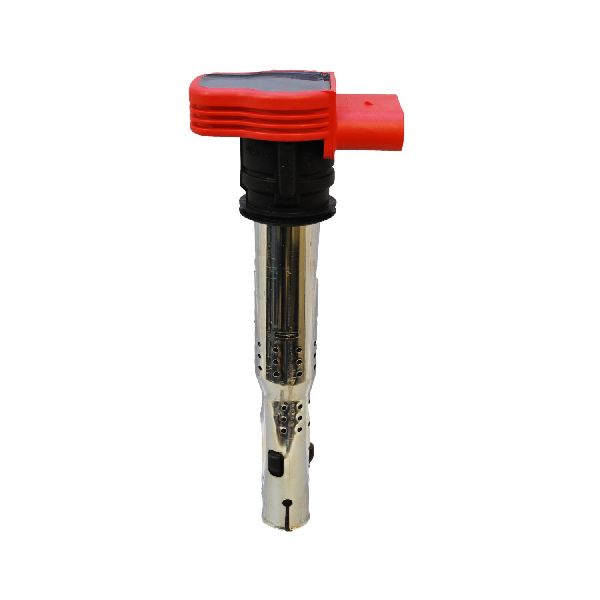
- Faulty Ignition Coil 🔴 High Probability Ignition coils are a common failure item on Volkswagen and Audi products from this era due to heat exposure. The original black-top coils are known to fail, and many owners upgrade to the newer red-top versions for better reliability.
How to confirm: Swap the ignition coil from cylinder 8 with another cylinder (e.g., cylinder 7). Clear the codes and drive the vehicle. If the code changes to P0307, the ignition coil is faulty. This is a common and effective diagnostic step mentioned frequently in owner forums.
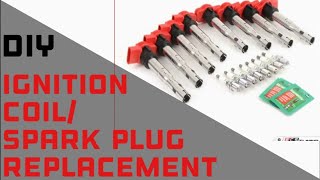
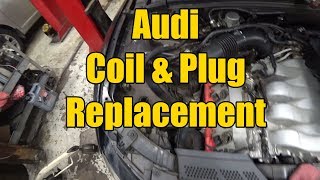
Typical fix: Replace the faulty ignition coil. Many owners choose to replace all 8 coils at once as a preventative measure, often upgrading to a more robust aftermarket version 🎬 Watch: Step-by-step guide to replacing ignition coils and spark plugs. like those from APR.
Est. part cost: $25-$50 per coil - Worn Spark Plug 🔴 High Probability Spark plugs are a standard maintenance item with a finite lifespan. An incorrect plug gap or heavy fouling can easily cause a misfire.
How to confirm: After ruling out the ignition coil, swap the spark plug from cylinder 8 with another cylinder. If the misfire code moves, the spark plug is the cause. Visually inspect the plug for wear, fouling, or damage. The correct gap should be between 0.024 and 0.071 inches.
Typical fix: Replace the spark plug. It is best practice to replace all 8 spark plugs at the same time to ensure consistent performance and avoid future misfires on other cylinders.
Est. part cost: $10-$20 per plug - Intake Valve Carbon Buildup 🟡 Medium Probability The FSI direct-injection design allows oil vapor and combustion byproducts to bake onto the intake valves, restricting airflow and causing misfires. This is a very well-documented issue on the 4.2L CAUA engine, typically requiring cleaning every 60,000-80,000 miles.
How to confirm: This is difficult to confirm without tools. A mechanic will use a borescope inserted into the intake port to visually inspect the valves for carbon deposits. Misfires that persist after replacing plugs and coils, especially if they occur on multiple cylinders, are often caused by this.
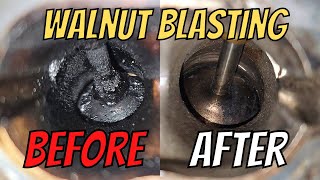
Typical fix: Professional cleaning of the intake valves, typically through walnut shell blasting. This involves removing the intake manifold and is a labor-intensive job, costing between $800-$1600 at a shop. Some owners perform this DIY. 🎬 See how to perform a DIY walnut blasting carbon cleaning.
Est. part cost: $0 (cleaning service) - Clogged or Faulty Fuel Injector ⚪ Low Probability Direct injectors operate under high pressure and temperature, and their tips can become clogged with carbon, disrupting the fuel spray pattern. While less common than ignition issues, it's a known failure point.
How to confirm: This is a more advanced diagnostic step. It involves checking fuel trim data with a scan tool or having the injector professionally tested. Swapping injectors is possible but requires removing the intake manifold and replacing one-time-use seals. 🎬 Watch this walkthrough for removing and replacing fuel injectors. Some owners have had success with concentrated fuel system cleaners like Chemtool B12.
Typical fix: Replace the faulty fuel injector and its Teflon seal. It is often recommended to replace all injectors on the same bank, or all 8, if the vehicle has high mileage.
Est. part cost: $130-$180 per injector
Rare But Worth Checking
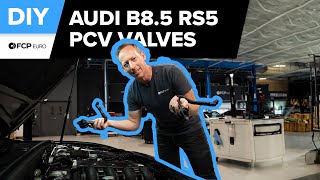
- Failed PCV Valve / Oil Separator: A torn diaphragm in the PCV system can create a large, unmetered vacuum leak, causing a rough idle and random misfires. If you hear a loud sucking noise from the engine or have extreme vacuum when trying to remove the oil cap while the engine is running, this is a likely cause.
- Low Cylinder Compression: This indicates a mechanical engine problem, such as worn piston rings, a damaged valve, or a failing head gasket. A compression test is needed to confirm. This is the least likely cause and should be investigated last. Normal compression is typically 120-150 PSI. A significant deviation or a large difference between cylinders indicates a problem.
- Intake Manifold Runner Flap Issue: The intake manifold has runner flaps that can stick or fail, sometimes triggering codes like P2004 or P2006. While this usually affects a whole bank, a malfunctioning flap could potentially contribute to issues on a single cylinder.
Diagnosis Steps

- Read the code with an OBD-II scanner and confirm P0308 is present. Note any other codes, such as P0300.
- Check freeze frame data to see the engine conditions (RPM, load, temperature) when the misfire occurred.
- Ignition Coil Swap: Move the ignition coil from cylinder 8 to cylinder 7. Clear the codes and drive the car until the Check Engine Light returns. If the code is now P0307, the coil is bad and needs replacement.
- Spark Plug Swap: If the misfire remains on cylinder 8, move the spark plug from cylinder 8 to cylinder 6. Clear codes and drive. If the code changes to P0306, the spark plug is faulty.
- Inspect for Carbon Buildup: If the misfire still persists on cylinder 8, the next most likely cause is carbon buildup. This step typically requires a mechanic's borescope to visually inspect the intake valves. This is a very common issue on the 4.2L FSI engine.
- Fuel System Check: If valves are clean, the focus shifts to the fuel injector. This is an advanced step that may require professional diagnosis, including checking fuel trims and potentially removing the intake manifold to access the injector.
- Compression Test: As a final step for a persistent misfire, perform a compression test on cylinder 8 to rule out mechanical engine damage. A reading below 120 PSI suggests an internal problem.
Parts You'll Likely Need
- Ignition Coil
(OEM #06E905115G)— This is the most common failure part for a single-cylinder misfire on this engine. The original part number 06E905115E has been superseded multiple times to F, and now G.
Trusted brands: Bosch, NGK, Eldor (OEM), APR (Upgrade)
OEM price range: $40-$60
Aftermarket price range: $25-$45 - Spark Plug
(OEM #101905621B)— A routine maintenance item that is the second most likely cause of a misfire.
Trusted brands: NGK (PFR7W-TG), Bosch
OEM price range: $15-$25
Aftermarket price range: $10-$18 - Fuel Injector
(OEM #079906036C)— Can become clogged with carbon, leading to a misfire that isn't resolved by ignition parts.
Trusted brands: Hitachi (OEM supplier), Bosch
OEM price range: $170-$220
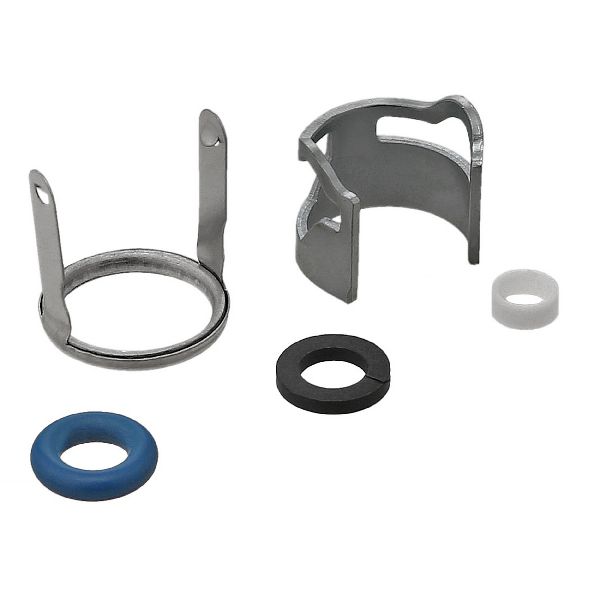
Aftermarket price range: $100-$150 - Fuel Injector Seal Kit
(OEM #06E998907G)— Required when replacing a fuel injector. The Teflon seals are one-time use and essential for preventing fuel leaks.
Trusted brands: Elring, Bosch, Victor Reinz
OEM price range: $20-$30
Aftermarket price range: $10-$20
Related Codes That Often Appear With This One
- P0300 — If the misfire is intermittent or affects other cylinders, a P0300 (Random/Multiple Cylinder Misfire) code may appear alongside P0308. This often points towards a systemic issue like carbon buildup or a vacuum leak.
- P0305, P0306, P0307 — Misfires on other cylinders in the same bank (Bank 2) could point to a systemic issue like a clogged catalytic converter, a vacuum leak affecting that bank, or a timing issue.
Technical Service Bulletins (TSBs) & Recalls
- { "title": "TSB 2024404/6: Misfire DTCs stored in ECM", "description": "This TSB addresses diagnostics for misfire codes. While not a direct fix, it guides technicians on proper procedure, which can be relevant for persistent P0308 issues." }
- { "title": "TSB 2017651: Intake Manifold Runner DTCs", "description": "Addresses issues with the intake manifold runner control system, which can sometimes be related to misfire conditions, although usually bank-specific rather than cylinder-specific." }
- { "title": "TSB Bulletin #A01166020322224: ECM Software Update", "description": "This service bulletin explains how to update the ECM software to correct an issue that causes DTCs P0300 through P0308." }
Platform-Specific Known Issues
- Carbon Buildup: The direct injection (FSI) system on the 4.2L V8 is known to cause significant carbon deposits on the intake valves. This restricts airflow and is a leading cause of misfires once the car exceeds 60,000-80,000 miles. A 'carbon clean' service is often considered regular maintenance on these engines.
Mechanic-Grade Diagnostic Values
- High-Pressure Fuel System Pressure — expected: Up to 136 bar (1973 PSI) under load.. Failure: Significantly lower pressure under load, which may not always trigger a specific fuel pressure code but can cause misfires.
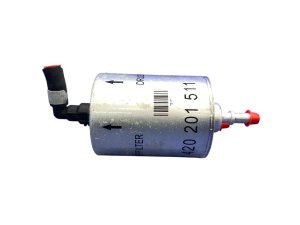
- Low-Pressure Fuel System Pressure — expected: 4 to 6 bar (58 to 87 PSI) supplied to the high-pressure fuel pumps.. Failure: Pressure below this range indicates a failing in-tank fuel pump or filter, which will starve the HPFPs.
- Ignition Coil Primary Winding Resistance — expected: Approximately 1.0 Ω (Ohm).. Failure: No reading (open circuit) or a significantly different resistance value indicates a faulty coil.
- Ignition Coil Secondary Winding Resistance — expected: Approximately 6.0 kΩ (kilo-ohms).. Failure: No reading (open circuit) or a significantly different resistance value indicates a faulty coil.
- Ignition Coil Connector Voltage — expected: Battery voltage at the power supply pin (Pin 1) with ignition on.. Failure: No voltage indicates a wiring issue, blown fuse, or problem with the power supply relay.
Hidden / Shadow Codes Worth Checking
- P0282: Cylinder 8 Injector Circuit Short to Ground. This is a more specific code indicating a wiring or injector electrical fault, not just a misfire. (see via A professional-level scanner like VCDS or an OEM tool is more likely to capture this specific fault than a basic OBD-II reader.)
- P0283: Cylinder 8 Injector Circuit Short to B+ (Battery Positive). This points to a specific electrical short in the injector circuit for cylinder 8. (see via Requires an advanced scan tool capable of reading manufacturer-specific diagnostic trouble codes.)
Scan Tool Commands That Help
- VCDS (VAG-COM): Measuring Value Blocks (MVB) - Groups 014, 015, 016 — Use these blocks to monitor live misfire counts for each individual cylinder. This is the primary way to confirm which cylinder is actively misfiring and under what conditions (idle, load, etc.). Group 014 shows total misfires, while 015 and 016 show counts for specific cylinder banks.
- VCDS (VAG-COM): Applications -> Controller Channel Map -> 01-Engine — This function creates a detailed log of all available measuring values from the engine control module. It is extremely useful for in-depth diagnosis when simple fixes fail, allowing a technician to analyze relationships between dozens of sensors and values at the time of the fault.
Wiring & Ground Locations
- Engine Ground Strap — A primary ground strap connects the engine block to the chassis frame rail on each side of the engine compartment.. A corroded or loose main engine ground can cause unstable voltage and intermittent electrical issues for the entire ignition and fuel system, leading to weak spark or erratic injector behavior that can be hard to trace.
- ECM Ground — The Engine Control Module (ECM) is located in the plenum chamber (under the windshield wipers). Its grounds are connected to dedicated studs on the chassis in that area.. The ignition coils and fuel injectors are directly controlled and grounded via the ECM. A poor ground connection at the ECM itself can cause misfire codes that are difficult to diagnose, as the components themselves may test as healthy.
- Cylinder 8 Ignition Coil Connector — On the rearmost cylinder on the driver's side (Bank 2).. Testing for battery voltage at Pin 1 and checking the continuity of the signal wire (Pin 2) back to the ECM connector (T60, Pin 35) can confirm if the wiring harness is intact.
Real Owner Repair Stories
- Reddit user on r/Audi (2010 Audi S5 V8, 130k miles) — Persistent misfire for almost a year, only occurring above 4,000 RPM under load.
❌ Tried (didn't work) Replaced spark plugs, Replaced ignition coils, Used Techron and Redline fuel injector cleaners
✅ What actually fixed it One tank of gas treated with Chemtool B12 fuel system cleaner completely resolved the high-RPM misfire, suggesting the issue was a stubborn deposit on a fuel injector that other cleaners couldn't remove. - AudiWorld Forum User (2008 Audi S5 4.2L V8, 62,000 miles) — Very rough idle, RPMs sputtering between 600 and 1200. Misfire codes on cylinders 3 & 6, plus random misfire.
❌ Tried (didn't work) Dealer replaced all spark plugs and one ignition coil., Dealer performed a chemical intake clean., Dealer performed a full walnut-blast carbon cleaning.
✅ What actually fixed it The problem persisted after multiple expensive repairs. The owner was told the next step was to replace all fuel injectors for $2800. The story highlights that even after a carbon cleaning, persistent misfires often point directly to faulty fuel injectors, which were the likely root cause from the beginning.
"I Checked Everything" — The Actual Cause
- A torn diaphragm in the PCV valve (oil separator) can cause random misfires and a rough idle. This may not show up on a traditional smoke test of the intake tract because it's an internal vacuum leak, drawing unmetered air from the crankcase. The definitive symptom is extremely high vacuum at the oil filler cap when the engine is running, making the cap difficult to remove.
OEM Part Supersession History
06E905115E→06E905115F, 06E905115G— Improved internal design and materials to increase longevity and resist failure from engine heat.
Heads up: While all revisions are physically interchangeable, it is highly recommended to use the latest revision (or a quality aftermarket equivalent) and replace all 8 coils at once to ensure consistent performance and prevent repeat failures of the older-style coils.
Model Year Variations Within This Range
- 2008-2012 (Coupe): The 4.2L V8 engine was standard on the S5 Coupe for these years.
- 2013+: For the 2013 model year (B8.5 refresh), the S5 Coupe's 4.2L V8 was replaced by a 3.0L supercharged V6 engine. Diagnostic procedures and common causes for misfires are different for this later engine.
- 2010-2012 (Cabriolet): The S5 Cabriolet models used the 3.0L supercharged V6 engine during this period, not the 4.2L V8.
Diagnostic Flowchart
Real Owner Stories
Aggregated from forums and TSBs cited above. Mileages and costs reflect what owners reported in those sources.
2009 Audi S5
Symptoms: Experienced a rough idle and misfire codes.
What fixed it: Had a carbon cleaning performed, which was covered under a CPO warranty.
Source hint: AudiWorld Forums thread titled 'Carbon Build-up fix covered under warranty'
2008 Audi S5
Symptoms: Chased frustrating misfires on cylinders 3 and 6.
What fixed it: Replaced spark plugs and ignition coils with no success. A carbon clean temporarily fixed the issue, but the misfires eventually returned.
Source hint: AudiWorld Forums thread titled '08 S5 Misfire Woes Please Help'
2008 Audi S5 4.2L
Symptoms: Persistent misfires that did not resolve after replacing spark plugs and ignition coils.
What fixed it: One user replaced the fuel injectors, which simply moved the misfire to a new cylinder. Another user in the same thread successfully fixed their persistent misfire by running Chemtool B12 fuel cleaner through the system.
Source hint: Reddit r/Audi thread titled 'Misfire Diagnosing on my S5'
Audi S5 V8
Symptoms: Carbon buildup requiring intake valve cleaning.
What fixed it: Owners discussed having shops perform the carbon cleaning, while one DIYer successfully performed the job at home after buying the necessary tools.
Cost: $600-$1000
Source hint: AudiWorld Forums thread titled 'Carbon cleaning cost?'
Related OBD-II Codes
Frequently Asked Questions
Is there a warranty extension that covers carbon buildup misfires on my 2008-2012 Audi S5?
How much does it cost to fix the carbon buildup causing my P0308 code?
Should I upgrade my ignition coils when fixing a cylinder 8 misfire?
What is the correct spark plug gap for the 4.2L CAUA V8?
Does TSB 2024404/6 provide a direct fix for my P0308 code?
I swapped the coil and spark plug on cylinder 8, but the misfire didn't move. What should I check next?
Helpful Videos

Used OEM Parts in Stock

New Aftermarket Parts Available


The information in this article is provided for general reference and educational purposes only. Vehicle specifications, procedures, and part compatibility can vary by production date, trim level, and region. Always consult your vehicle's factory service manual and verify part numbers before purchasing or performing repairs. Safety-critical components such as airbags, seat belts, and braking systems should be installed by a qualified professional.
- Audi S5:
- 🎬 Helpful Videos
- 🛍️ Shop This Part
- What's Unique About the 2008-2012 Audi S5
- Symptoms You May Notice
- Most Likely Causes
- Rare But Worth Checking
- Diagnosis Steps
- Parts You'll Likely Need
- Related Codes That Often Appear With This One
- Technical Service Bulletins (TSBs) & Recalls
- Platform-Specific Known Issues
- Mechanic-Grade Diagnostic Values
- Hidden / Shadow Codes Worth Checking
- Scan Tool Commands That Help
- Wiring & Ground Locations
- Real Owner Repair Stories
- "I Checked Everything" — The Actual Cause
- OEM Part Supersession History
- Model Year Variations Within This Range
- Diagnostic Flowchart
- Real Owner Stories
- 2009 Audi S5
- 2008 Audi S5
- 2008 Audi S5 4.2L
- Audi S5 V8
- Related OBD-II Codes
- Frequently Asked Questions
- 🎟️ Get 5% Off