

P0307 on 2000-2006 Lexus LS430: Cylinder 7 Misfire Causes and Fixes
On a 2000-2006 Lexus LS430, code P0307 is almost always caused by a failed ignition coil or a worn spark plug on cylinder 7. Cylinder 7 is the rearmost cylinder on the driver's side and can be slightly more difficult to access. A new Denso ignition coil costs about $50-$70, and an NGK or Denso Iridium spark plug is around $15.
- P0307 on your LS430 means cylinder 7 (rear-most on the driver's side) is misfiring.
- The most likely cause is a bad ignition coil. Use the 'swap test' with cylinder 5 to confirm before buying parts.
- If the coil is good, the second most likely cause is a worn spark plug.
- Do not ignore a flashing check engine light, as this can lead to costly damage to your catalytic converter.
- Always use high-quality replacement parts, such as Denso coils and NGK or Denso iridium plugs, to maintain the reliability of your Lexus.
What's Unique About the 2000-2006 Lexus LS430
The 3UZ-FE engine in the Lexus LS430 is renowned for its reliability and smooth operation. A P0307 code is not indicative of a common design flaw, but rather a standard maintenance issue that occurs as ignition components age. The engine uses a coil-on-plug ignition system, which makes diagnosis straightforward. Owners on forums like ClubLexus frequently resolve this code with a simple ignition coil or spark plug swap, confirming the issue is typically not a complex mechanical problem. Cylinder 7 is located at the rear of the engine on the driver's side, and some owners note it is the most difficult to access.
Symptoms You May Notice
- Rough or shaky idle
- Hesitation or stumbling during acceleration
- Flashing Check Engine Light, especially under load
- Solid Check Engine Light is on
- VSC (Vehicle Stability Control) light may also illuminate
- Noticeable loss of power
- Reduced fuel economy
- Smell of gasoline from the exhaust
- Replacing all 8 ignition coils when only one has failed. While not harmful, it is often unnecessary and expensive. The 'swap test' is the best way to isolate the single faulty coil. 🎬 Watch: Why you shouldn't replace parts before testing first.
- Replacing the fuel injector before thoroughly testing the ignition system, which is the more common point of failure.
- Assuming a bad fuel injector when the injector connector or its wiring is the actual point of failure. The connectors become very brittle with age.
Most Likely Causes
- Failed Ignition Coil 🔴 High Probability Ignition coils are a common wear item on any high-mileage vehicle. Heat cycles eventually cause the internal windings to fail. The plastic bodies can also develop cracks, allowing spark to escape.
How to confirm: Swap the ignition coil from cylinder 7 with another cylinder (e.g., cylinder 5, on the same bank). Clear the codes. If the code changes to P0305, the coil is faulty. If P0307 returns, the coil is likely good.
Typical fix: Replace the failed ignition coil. It is recommended to use an OEM-quality brand like Denso. While some shops recommend replacing all 8, it's often unnecessary if only one has failed.
Est. part cost: $50-$70 - Worn or Fouled Spark Plug 🔴 High Probability
How to confirm: After ruling out the ignition coil, remove the spark plug from cylinder 7. Inspect it for heavy carbon deposits, oil fouling, or a worn electrode. Compare it to a new plug. Oil in the spark plug tube indicates a leaking spark plug tube gasket, which will cause a misfire.
Typical fix: Replace the spark plug. It is best practice to replace all 8 spark plugs at the same time if they are near the end of their service life (typically 90,000-120,000 miles for iridium plugs). Use a small amount of dielectric grease on the ceramic portion.
Est. part cost: $12-$20 per plug - Faulty Ignition Coil Connector or Wiring 🟡 Medium Probability The plastic connectors and wiring can become extremely brittle over time due to engine heat, leading to cracks or internal wire breaks that are not visually obvious. The locking tab often breaks off when disconnecting them.
How to confirm: With the engine running, carefully wiggle the wiring and connector for the cylinder 7 ignition coil. If this causes a change in the engine's idle, the connector or wiring is likely faulty. A visual inspection for cracked plastic or loose pins is also recommended. A wire can be broken internally and still pass a simple continuity test until it is wiggled.
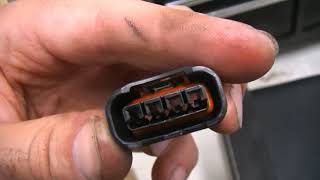
Typical fix: Replace the ignition coil connector pigtail. This requires cutting the old connector off and splicing the new one in. The new pigtail may have different colored wires, so matching position is key. 🎬 Watch: How to replace a brittle or broken ignition coil connector.
Est. part cost: $10-$25 - Clogged or Faulty Fuel Injector ⚪ Low Probability
How to confirm: Use a mechanic's stethoscope or a long screwdriver placed against the injector body to listen for a consistent clicking sound. Compare the sound of the cylinder 7 injector to a known good one. No clicking or an irregular pattern suggests a problem. You can also check the injector's resistance with a multimeter or swap it with another cylinder, though this is more labor-intensive.
Typical fix: Replace the faulty fuel injector. It's also recommended to replace the O-rings and seals.
Est. part cost: $70-$150
Rare But Worth Checking
- Low Cylinder Compression: While rare on the 3UZ-FE, a mechanical issue like a burnt valve or worn piston rings can cause a persistent misfire that isn't resolved by replacing ignition or fuel parts. This should be investigated if all other causes are ruled out.
- Vacuum Leak: A vacuum leak from a cracked hose or a failed intake manifold gasket near the cylinder 7 runner can lean out the air/fuel mixture enough to cause a misfire. This would typically be accompanied by other codes like P0171 or P0174 (System Too Lean).
- Leaking Spark Plug Tube Gasket: The gaskets that seal the spark plug tubes to the valve cover can become hard and brittle, allowing oil to leak into the spark plug well. This oil can short out the ignition coil and spark plug, causing a misfire. If you find oil when removing the coil, this is the cause.
Diagnosis Steps
- Confirm the code P0307 using an OBD-II scanner. Note any other codes present and check the freeze frame data.
- Locate Cylinder 7. On the 3UZ-FE V8, cylinders 1, 3, 5, and 7 are on the driver's side (Bank 1), from front to back. Cylinder 7 is the rearmost cylinder on the driver's side, near the brake master cylinder. 🎬 See this walkthrough of the P0307 causes and repair steps.
- Perform the 'Ignition Coil Swap Test'. Swap the ignition coil from cylinder 7 with the coil from cylinder 5 (the next one forward on the same bank). Clear the codes, drive the vehicle, and re-scan. If the code is now P0305, the ignition coil is bad and needs replacement.
- If the code remains P0307, inspect the spark plug. Remove the coil again and use a 5/8" spark plug socket with an extension to remove the plug from cylinder 7. Check for excessive wear, corrosion, or fouling. If you find oil in the tube, the valve cover tube seal is leaking.
- If the spark plug is worn, replace it. It's recommended to replace all 8 if their service history is unknown or they are due.
- Inspect the ignition coil connector and wiring for any visible damage, cracks, or loose pins. The plastic becomes very brittle. Wiggle the connector with the engine running to see if it affects the idle.
- If ignition components are good, check the fuel injector. Listen for a steady clicking sound from the injector using a long screwdriver or stethoscope. If it's silent or irregular, it may be faulty.
- If the misfire persists, perform a compression test on cylinder 7 to rule out mechanical engine problems. A healthy 3UZ-FE should have strong and consistent compression across all cylinders.
Parts You'll Likely Need
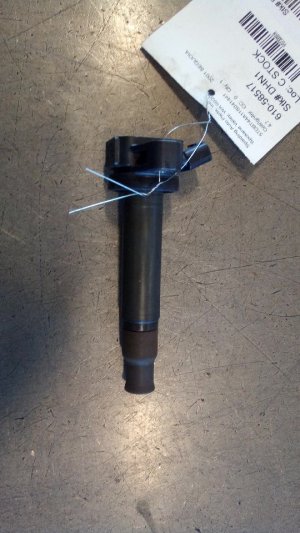
- Ignition Coil
(OEM #90919-02230)— This is the most common cause of a single-cylinder misfire on the LS430 due to age and heat degradation.
Trusted brands: Denso, NGK
OEM price range: $50-$70
Aftermarket price range: $30-$50 - Iridium Spark Plug
(OEM #SK20R11 (Denso), IFR6T11 (NGK))— Spark plugs are a primary wear item in the ignition system and a common cause of misfires. The original equipment plugs are long-life iridium. They should not be gapped upon installation.
Trusted brands: Denso, NGK
OEM price range: $15-$20
Aftermarket price range: $12-$18 - Ignition Coil Connector Pigtail
(OEM #90980-11246 (Connector Housing))— The locking tab on the original connector often becomes brittle and breaks, or the wiring itself can fail, causing an intermittent connection to the coil.
Trusted brands: Dorman, Standard Motor Products
OEM price range: $15-$25
Aftermarket price range: $10-$20
Related Codes That Often Appear With This One
- P0300 — If the misfire is frequent or becomes more widespread, a P0300 (Random/Multiple Cylinder Misfire) code may appear alongside P0307.
- P0301, P0303, P0305 — Misfire codes for other cylinders on the same bank (Bank 1, driver's side) can indicate a shared problem, such as a failing catalytic converter, a vacuum leak affecting that bank, or a problem with the VVT-i system on that side.
Technical Service Bulletins (TSBs) & Recalls
- TSB SU002-97 (July 25, 1997): While this TSB is for older Lexus models (pre-LS430), it details the diagnostic procedure for Misfire DTCs and confirms the logic used by the ECM to detect misfires by monitoring crankshaft speed variations.
Platform-Specific Known Issues
- Cylinder 7 Accessibility: Cylinder 7 is the rearmost cylinder on the driver's side. Some owners find it to be the most difficult to access due to its proximity to the firewall and brake master cylinder, though removal of the battery is not typically required.
- Brittle Connectors: The engine bay heat makes the plastic ignition coil and fuel injector connectors on the 3UZ-FE engine extremely brittle with age. It is very common for the locking tabs to snap off during removal. Owners often resort to zip ties to secure connectors that have broken tabs.
Mechanic-Grade Diagnostic Values
- Fuel Injector Resistance — expected: 13.4 to 14.2 Ω at 20°C (68°F). Failure: A reading outside this range indicates a faulty injector coil.
- Fuel Pressure — expected: 44 - 50 psi (304 - 343 kPa). Failure: Pressure below this range can indicate a weak fuel pump or faulty pressure regulator, potentially causing a lean misfire.
- Ignition Coil Primary Resistance (Cold) — expected: 0.49 - 0.57 ohms. Failure: Resistance outside this range, particularly an open circuit, indicates a failed coil.
- Ignition Coil Secondary Resistance (Cold) — expected: 9.5 - 11.1 kOhms. Failure: Resistance outside this range, particularly an open circuit, indicates a failed coil.
- VVT-i Solenoid Resistance — expected: Around 8 ohms. Failure: A significantly different reading or an open circuit suggests a failed solenoid.
Hidden / Shadow Codes Worth Checking
- Mode $06, Test ID $53 (or similar): This function displays the raw misfire count for each individual cylinder during the current and previous drive cycles. It allows a technician to see if cylinder 7 is accumulating misfire counts, even if the count is not yet high enough to trigger a P0307 trouble code. This is invaluable for diagnosing intermittent misfires. (see via A professional scan tool with Mode $06 capability, such as Toyota's Techstream software.)
Scan Tool Commands That Help
- Toyota Techstream: Active Test: Power Balance / Cylinder Cut Test — This function allows the technician to individually disable fuel injectors for each cylinder one by one. When the injector for a healthy cylinder is cut, the engine RPM will drop noticeably. If cutting the injector for cylinder 7 causes little or no change in RPM, it confirms that cylinder 7 was not contributing power, narrowing the problem down to that cylinder's fuel, spark, or compression.
- Toyota Techstream: Active Test: VVT System — Allows the technician to command the VVT-i solenoids to operate. Activating the Bank 1 solenoid should cause a noticeable change in engine idle. If it does not, it could point to a stuck or failed VVT solenoid, which can sometimes cause misfires on the cylinders of that bank.
Wiring & Ground Locations
- Cylinder 7 Ignition Coil Connector (I7) — Rearmost ignition coil on the driver's side of the engine.. This is the direct electrical connection for the failing cylinder's coil. The wires and connector are prone to heat damage and brittleness. Pinout for 2002-2004 models: Pin 1: Red (+12V Power), Pin 2: Light Green (IGT7 signal from ECM), Pin 3: Pink/Blue (IF7 Ignition Confirmation), Pin 4: White/Black (Ground).
- Engine Ground (EC, ED, EE, EF) — There are multiple critical grounds. Key grounds for the ignition system are typically located on the cylinder heads (EE, EF) and the cowl side (ED).. A poor ground connection for the ignition coils or the ECM can cause a weak spark and lead to intermittent misfires that are difficult to diagnose. The ground for the coil (Pin 4) is a common point of failure.
- ECM Connector (Pin B5-B8, etc.) — The Engine Control Module (ECM) is located in the engine bay. The ignition trigger (IGT) signals originate here.. In very rare cases, the driver circuit within the ECM for a specific cylinder can fail. Testing for the IGT signal at the ECM pin can rule this out. For cylinder 7, the signal is IGT7.
Real Owner Repair Stories
- ClubLexus user '911LE' (2005 Lexus LS430 with 130k miles) — Check engine light and traction control light on, code P0307.
❌ Tried (didn't work) Swapped spark plug and ignition coil between cylinder 5 and 7; the P0307 code returned., A simple continuity test on the coil connector wiring showed no initial faults.
✅ What actually fixed it The final cause was a broken wire inside the insulation of the ignition coil connector pigtail. The wire would only lose connection when wiggled. Replacing the pigtail resolved the misfire code. - Reddit user 'Scouser82Air' (2003 Lexus LS430) — Multiple misfire codes on Bank 2 (passenger side), after initially having a single cylinder misfire.
❌ Tried (didn't work) Replacing ignition coils and spark plugs., Using an aftermarket VVT solenoid from an auto parts store, which failed after one week.
✅ What actually fixed it The persistent multiple misfire issue was ultimately resolved by replacing the Bank 2 (passenger side) VVT solenoid with a genuine OEM part from Lexus.
When the Usual Fixes Don't Work
- In one documented case on ClubLexus, a user with a P0307 code on a 2005 LS430 performed the standard coil and plug swap with no change in the code's location. A continuity test of the wiring also passed. The ultimate fix was replacing the ignition coil connector pigtail, as a wire was broken internally and only lost connection intermittently, a fault that a static continuity test missed. This highlights the importance of physically wiggling the harness during testing.
OEM Part Supersession History
90919-02230→This part number is still widely listed as the primary fitment for the 2001-2006 LS430. Some sources list 90919-02249 as an interchangeable number.— Standard part evolution and supplier changes.
Heads up: Be cautious of counterfeit Denso coils sold on platforms like eBay and Amazon. They often lack the correct internal resistance and fail prematurely. Purchase from authorized Denso dealers or reputable auto parts stores.
Model Year Variations Within This Range
- 2004-2006: The 2004-2006 facelift models received a new 6-speed automatic transmission and minor ECU updates. While the fundamental causes of P0307 remain the same (coil, plug, wiring), the diagnostic logic in the ECM may be slightly more sensitive. The wiring colors for the ignition coil connector are consistent across the 2001-2004 model years.
Diagnostic Flowchart
Other Known Issues on This Vehicle
Issues unrelated to this code that are worth knowing about as an owner of this generation:
- Door Lock Actuator Failure 🟠 Medium — Very common across all model years. Typically occurs after 100,000 miles. The small internal motor fails.
- Melting/Sticky Dashboard 🟡 Low — Common issue, especially in warmer climates. Covered by a Lexus Customer Support Program (ZLD) which has since expired. (Ref: Lexus Warranty Enhancement ZLD)
- Lower Control Arm Bushing Failure 🟠 Medium — The large liquid-filled front lower control arm bushings (#2) are a known wear item, often failing between 80,000-120,000 miles, causing clunking noises and poor handling.
- Telescopic Steering Wheel Motor Failure 🟡 Low — The motors for the power tilt and telescopic steering column frequently fail, causing the wheel to be stuck in one position. Often a simple gear replacement can fix it.
- Mark Levinson Subwoofer Failure 🟡 Low — The foam surround on the factory Mark Levinson subwoofer disintegrates over time, causing a rattling or distorted bass sound. A simple re-foaming kit can repair it.
Used vs. New Parts: Buying Guide for This Vehicle
When a used part is the smart pick: For this repair, using a tested, low-mileage used ignition coil or fuel injector from a reputable salvage yard can be a cost-effective option. These components are generally reliable, and a used OEM part is often superior to a cheap, new aftermarket alternative.
Donor-vehicle mileage cap: roughly under 100000 miles for the part to have meaningful remaining life.
What to inspect on the donor part:
- For ignition coils, check the plastic housing for any cracks or signs of arcing (white or black marks).
- Ensure the connector locking tab on the part is intact, as they are very brittle.
- Ask for the donor vehicle's mileage and avoid parts from vehicles with very high mileage.
- Check for any signs of oil contamination in the spark plug boot of the coil, which could indicate the donor car had leaking tube seals.
OEM-only on this vehicle (don't cheap out):
- VVT Solenoids: Forum members report that aftermarket VVT solenoids for the 3UZ-FE have a high failure rate, sometimes within days or weeks. It is strongly recommended to use only genuine OEM Lexus/Toyota parts for this component.
Aftermarket brands forum-validated for this vehicle:
- Denso (OEM supplier)
- NGK
Brands owners have reported issues with on this vehicle:
- Unbranded or 'white box' ignition coils and sensors from online marketplaces like eBay or Amazon are frequently reported as counterfeit or poor quality, leading to repeat failures.
Real Owner Stories
Aggregated from forums and TSBs cited above. Mileages and costs reflect what owners reported in those sources.
2005 Lexus LS430 3UZ-FE
Symptoms: P0307 and Traction control light on. Swapping the coil and plug did not solve the issue.
What fixed it: The diagnostic pointed towards a likely wiring or connector problem after ignition components were ruled out.
Source hint: ClubLexus - 'P0307 and Traction control light on my 2005' (https://www.clublexus.com/forums/ls-3rd-gen-2001-2006/993989-p0307-and-traction-control-light-on-my-2005-a.html)
2002 Lexus LS430 3UZ-FE
Symptoms: Running rough, Check Engine Light flashing, and VSC OFF light illuminated.
What fixed it: Standard diagnostic flow from plug to coil; confirmed cylinder 7 location at the rear of the driver's side.
Source hint: ClubLexus - '2002 LS430 running rough DTC P0307' (https://www.clublexus.com/forums/ls-3rd-gen-2001-2006/880997-2002-ls430-running-rough-dtc-p0307-clylinder-7-misfire-check-engine-flashing-vsc-off.html)
2000-2006 Lexus LS430 3UZ-FE — ~110000 miles
Symptoms: Multiple misfire codes including P0307.
What fixed it: The owner was advised to check the fuel injectors after already replacing the ignition components (coils/plugs).
Source hint: Reddit.com r/LS430
Related OBD-II Codes
Frequently Asked Questions
Where is cylinder 7 located on the 3UZ-FE engine in my LS430?
Does TSB SU002-97 apply to my 2000-2006 LS430 misfire diagnosis?
Why did my VSC (Vehicle Stability Control) light come on at the same time as the P0307 code?
Should I replace all 8 ignition coils if only cylinder 7 is failing?
What spark plugs should I use for my 4.3L V8, and how long do they last?
My ignition coil connector tab broke while I was checking cylinder 7; is this common?
Helpful Videos
We Have This Part in Stock

The information in this article is provided for general reference and educational purposes only. Vehicle specifications, procedures, and part compatibility can vary by production date, trim level, and region. Always consult your vehicle's factory service manual and verify part numbers before purchasing or performing repairs. Safety-critical components such as airbags, seat belts, and braking systems should be installed by a qualified professional.
- Lexus LS430:
- 🎬 Helpful Videos
- 🛍️ Shop This Part
- What's Unique About the 2000-2006 Lexus LS430
- Symptoms You May Notice
- Most Likely Causes
- Rare But Worth Checking
- Diagnosis Steps
- Parts You'll Likely Need
- Related Codes That Often Appear With This One
- Technical Service Bulletins (TSBs) & Recalls
- Platform-Specific Known Issues
- Mechanic-Grade Diagnostic Values
- Hidden / Shadow Codes Worth Checking
- Scan Tool Commands That Help
- Wiring & Ground Locations
- Real Owner Repair Stories
- When the Usual Fixes Don't Work
- OEM Part Supersession History
- Model Year Variations Within This Range
- Diagnostic Flowchart
- Other Known Issues on This Vehicle
- Used vs. New Parts: Buying Guide for This Vehicle
- Real Owner Stories
- 2005 Lexus LS430 3UZ-FE
- 2002 Lexus LS430 3UZ-FE
- 2000-2006 Lexus LS430 3UZ-FE — ~110000 miles
- Related OBD-II Codes
- Frequently Asked Questions
- 🎟️ Get 5% Off