

P0307 on 2011-2017 Ford Mustang GT 5.0L: Cylinder 7 Misfire Causes and Fixes
P0307 indicates a misfire in cylinder 7. On the 5.0L Coyote V8, this is most often caused by a bad ignition coil or a worn spark plug. A simple coil swap is the first diagnostic step. For 2015-2017 models, a broken IMRC linkage is a common cause. For 2011-2014 models, a phantom code may be fixed per TSB 13-6-15. Expect to pay $40-$80 for a new Motorcraft coil and $10-$20 for a spark plug.
- P0307 means cylinder 7 (driver's side, 3rd from front) is misfiring.
- The most likely cause is a bad ignition coil or spark plug. Use the 'swap test' to diagnose before buying parts.
- If the Check Engine Light is flashing, pull over. Driving with a flashing CEL can quickly destroy your catalytic converter, a very expensive repair.
- Be aware of your model year: 2015-2017 models have a unique potential cause in the intake manifold (IMRC) that earlier models do not.
- For 2011-2014 models, if no physical fault is found, a PCM software update mentioned in TSB 13-6-15 might be the solution.
What's Unique About the 2011-2017 Ford Mustang GT
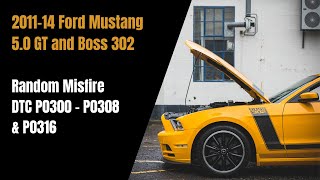
While ignition components are the usual suspects, the 2011-2017 year range covers two generations of the Coyote engine with key differences. On 2015-2017 models (Gen 2), a failed Intake Manifold Runner Control (IMRC) valve can cause a single-cylinder misfire like P0307; this is a widely documented issue where an internal actuator rod breaks. For the earlier 2011-2014 models (Gen 1), Ford issued TSB 13-6-15 for misfire codes 🎬 Watch: How to resolve Gen 1 misfire codes easily. appearing without any drivability issues. This is often caused by an improperly seated crankshaft position sensor, and the fix is to install a supporting O-ring (Ford P/N FOPZ-9229-A) on the sensor and perform a PCM relearn.
Generation note: This range covers two Mustang generations: the S197 (2011-2014) with the Gen 1 Coyote V8, and the S550 (2015-2017) with the Gen 2 Coyote V8. A notable cause specific to the 2015-2017 models is a failure of the Intake Manifold Runner Control (IMRC) system, which the earlier generation does not have.
Symptoms You May Notice
- Rough or vibrating idle
- Hesitation or stumbling during acceleration.
- Noticeable loss of engine power
- Flashing or solid Check Engine Light.
- Increased fuel consumption
- Slight engine vibration felt in the steering wheel or cabin.
- Replacing all eight spark plugs and coils when only one is faulty. The coil/plug swap diagnostic method saves significant money by isolating the single failed component.
- Replacing fuel injectors before properly diagnosing the ignition system, which is a more common and easier-to-fix failure point.
- On 2015-2017 models, overlooking the IMRC system as a potential cause after ignition and fuel components check out.
Most Likely Causes
- Faulty Ignition Coil 🔴 High Probability Coil-on-plug ignition systems are common failure points due to high heat and vibration in the engine bay. This is the most common cause of a single-cylinder misfire.
How to confirm: Swap the ignition coil from cylinder 7 with another cylinder (e.g., cylinder 8, the rearmost one on the same side). Clear the codes and drive. If the code changes to P0308, the coil is bad.
Typical fix: Replace the faulty ignition coil. It's often recommended to replace the spark plug at the same time.
Est. part cost: $40-$80 - Worn or Fouled Spark Plug 🔴 High Probability
How to confirm: After confirming the coil is good, swap the spark plug from cylinder 7 with another cylinder. If the misfire code moves, the spark plug is the issue. Visually inspect the plug for wear, carbon buildup, or damage.
Typical fix: Replace the spark plug. Ford specifies a gap of .049-.053 inches for some 5.0L engines, though new Motorcraft plugs often come pre-gapped correctly at around .051 inches.
Est. part cost: $10-$20 - Clogged or Faulty Fuel Injector 🟡 Medium Probability
How to confirm: If the misfire remains on cylinder 7 after swapping the coil and plug, the injector is a likely cause. A professional can perform a power balance test with a scan tool, or you can listen to the injector with a mechanic's stethoscope to check for a consistent clicking sound.
Typical fix: Replace the faulty fuel injector. 🎬 See this walkthrough for replacing Coyote engine fuel injectors. It's good practice to replace the O-rings and seals as well. One owner of a supercharged 2014 GT confirmed a bad injector was the cause of their P0307 after plugs and coils didn't fix it.
Est. part cost: $50-$100 - Intake Manifold Runner Control (IMRC) Failure 🟡 Medium Probability This applies specifically to 2015-2017 models. The plastic linkage or metal shaft for the IMRC can break, causing the runner for a specific cylinder bank (cylinders 5-8 are on the driver's side) to be stuck closed or open, disrupting airflow and causing a misfire.
How to confirm: This can be difficult to diagnose without a scan tool that can actuate the IMRC. A visual inspection may reveal a broken linkage on the back of the intake manifold. Forum users report this as a fix after other common causes are ruled out. A video posted by an owner shows the broken internal shaft after removing the manifold.
Typical fix: The official fix is to replace the entire intake manifold assembly. Some owners have fabricated their own repairs, and aftermarket IMRC delete kits are available, though they may require a custom tune.
Est. part cost: $400-$800
Rare But Worth Checking
- Low Engine Compression (Burnt Valve): This indicates a serious internal engine problem. A compression test on cylinder 7 is needed to confirm. A reading more than 15-20% lower than other cylinders indicates a problem. On the 5.0L Coyote, this can be caused by a burnt intake valve, a known though uncommon failure.
- PCM Calibration Issue (2011-2014): TSB 13-6-15 addresses misfire codes (like P0307) that are logged without any drivability symptoms. The fix involves installing a small O-ring (P/N FOPZ-9229-A) on the crankshaft position sensor to prevent it from vibrating incorrectly, then performing a PCM relearn. Furthermore, manufacturer TSB #22-2464 notes that an illuminated MIL with P0307 may be due to various strategies within the PCM software.
- Damaged Wiring or Connector: Inspect the wiring harness and connector for the ignition coil and fuel injector on cylinder 7. Look for any signs of chafing, melting, or corrosion. One owner on a forum traced a persistent misfire to a faulty engine harness after all other components were replaced.
- Faulty PCM Injector Driver: In very rare cases, the electronic driver for the fuel injector within the PCM can fail. One owner diagnosed a P0307 that only occurred on cold starts; they found cylinder 7's injector wasn't receiving a pulse from the PCM until the engine warmed up. Replacing the PCM resolved the issue.
Diagnosis Steps
- Confirm the P0307 code is present using an OBD-II scanner and check for any other codes.
- Identify Cylinder 7: On the 5.0L V8, this is the third cylinder from the front on the driver's side (Bank 2).
- Swap the ignition coil from cylinder 7 with the coil from cylinder 8 (rear-most on the driver's side).
- Clear the codes with the scanner, start the engine, and let it run for a few minutes. Re-scan for codes.
- If the code is now P0308, the ignition coil is faulty and must be replaced.
- If the code remains P0307, swap the spark plug from cylinder 7 to cylinder 8 and repeat the process. If the code moves to P0308, the spark plug is faulty.
- If the code still remains P0307, the issue is likely fuel, mechanical, or a platform-specific issue. Inspect the wiring and connector to the fuel injector and ignition coil for cylinder 7.
- Listen to the fuel injector with a mechanic's stethoscope for a steady clicking noise. Compare it to the sound of the injector on cylinder 8.
- For 2015-2017 models, investigate the IMRC system. This is a known failure point and may require manifold removal to confirm a broken internal shaft if external linkages appear fine.
- For 2011-2014 models, if no drivability issue is present, investigate TSB 13-6-15 regarding the crankshaft position sensor O-ring.
- If all else fails, perform a compression test and a cylinder leak-down test on cylinder 7 to check for internal engine problems like a burnt valve or bad piston rings.
Parts You'll Likely Need
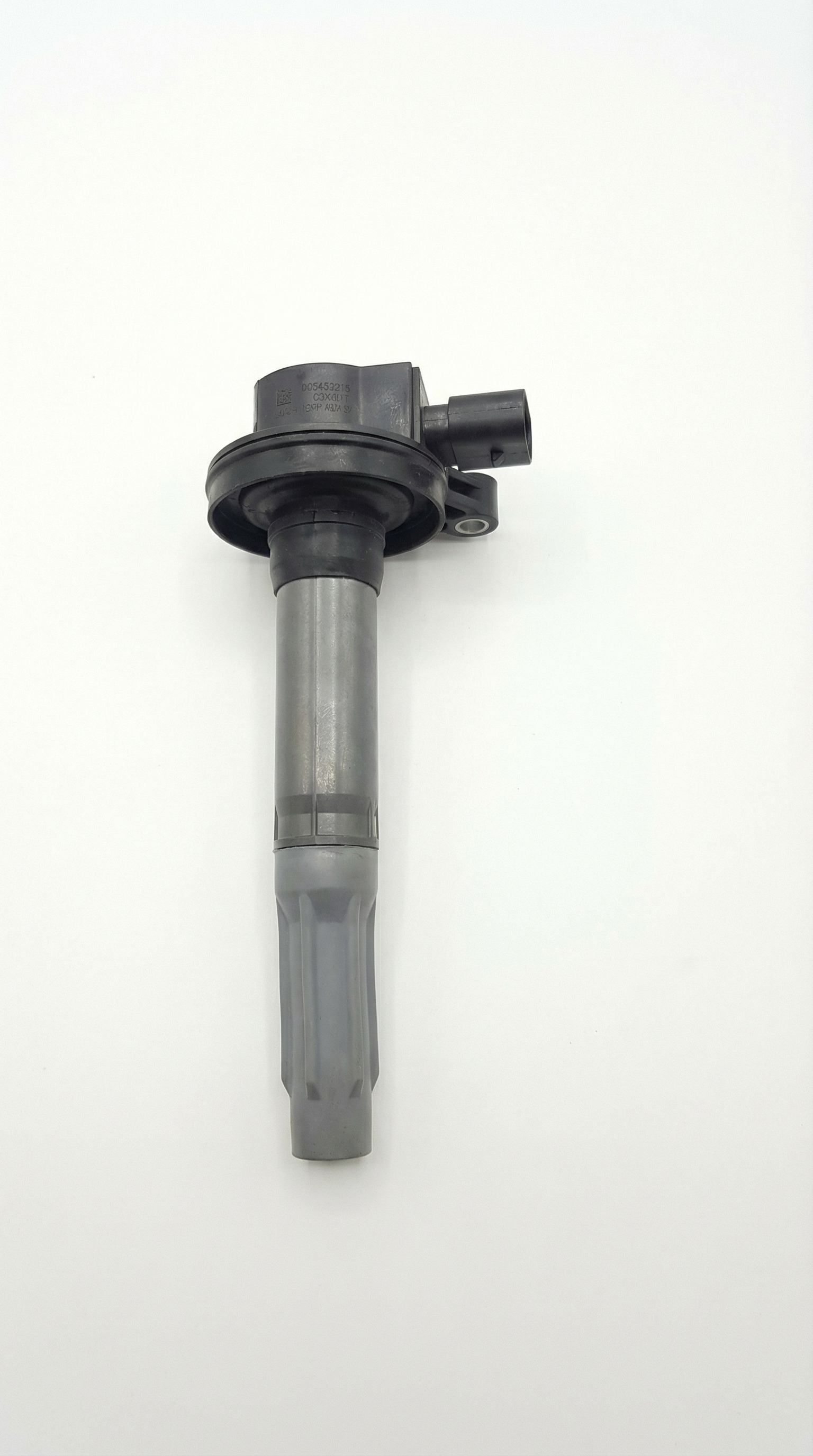
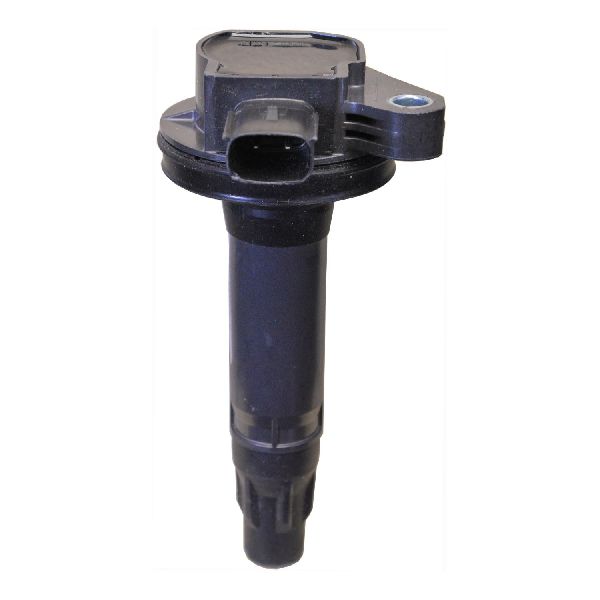
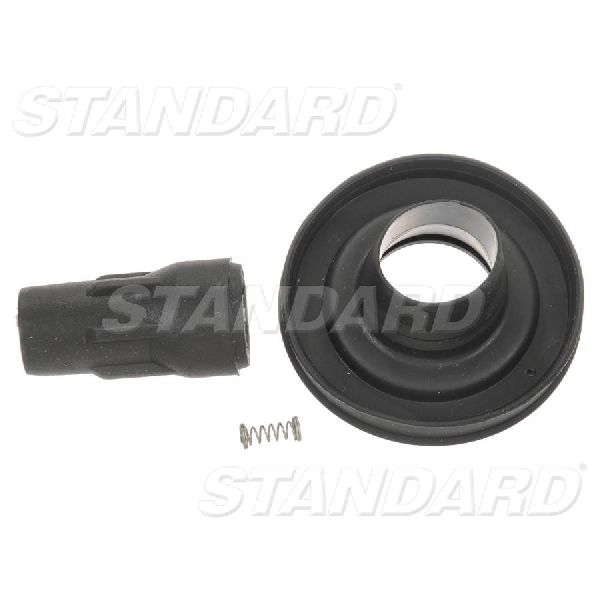
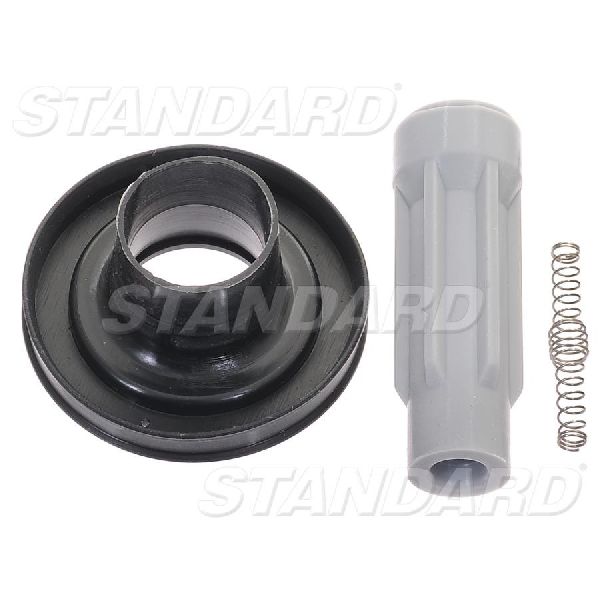
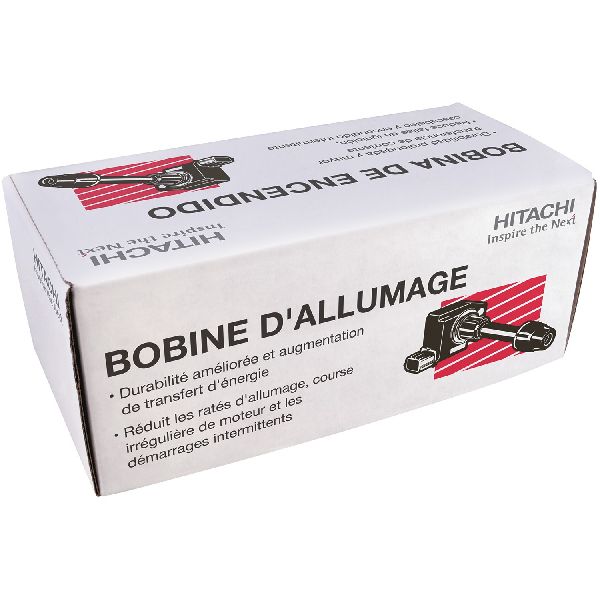
- Ignition Coil
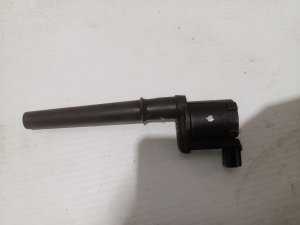
(OEM #BR3Z-12029-A (Motorcraft DG542 for 2011-2016))— This is the most common failure part for a single-cylinder misfire on this engine.
Trusted brands: Motorcraft, NGK, Denso
OEM price range: $40-$80
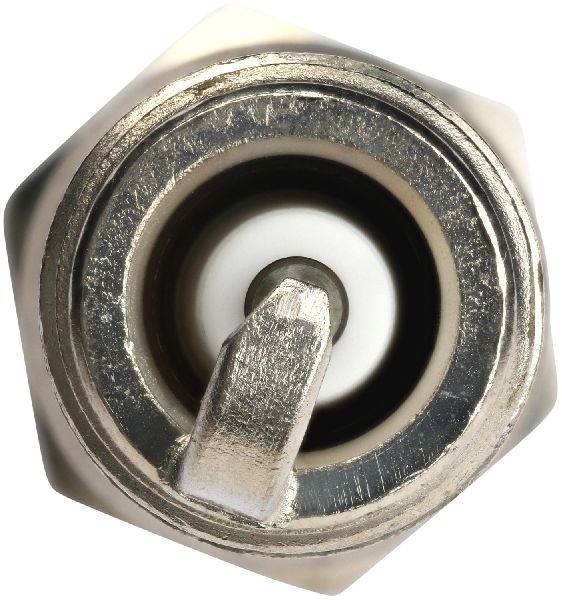
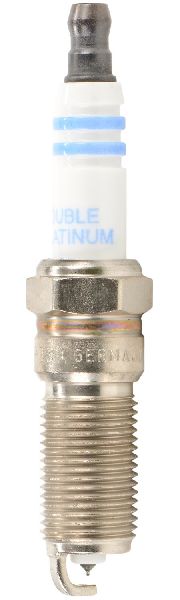
Aftermarket price range: $25-$60 - Spark Plug
(OEM #CYFS-12Y-2 (Motorcraft SP-548 for 2015-2017))— Spark plugs are a regular maintenance item and can become worn or fouled, causing a misfire.
Trusted brands: Motorcraft, NGK, Bosch
OEM price range: $10-$20
Aftermarket price range: $5-$15 - Intake Manifold Assembly
(OEM #FR3Z-9424-J (2015-2017 GT))— Required if the IMRC linkage is broken and cannot be repaired separately. This is a known issue on 2015-2017 models that can cause misfires on the driver's side bank (cylinders 5-8).
Trusted brands: Ford (Motorcraft)
OEM price range: $400-$800
Aftermarket price range: $300-$600
Related Codes That Often Appear With This One
- P0300 — If the misfire is intermittent or begins to affect other cylinders, a P0300 (Random/Multiple Cylinder Misfire) code may appear alongside P0307. This is common with IMRC failures that affect an entire bank.
- P0316 — This code means 'Misfire Detected on Startup (First 1000 Revolutions)'. It often accompanies a specific cylinder misfire code like P0307, indicating the misfire is present immediately when the engine starts. Manufacturer TSB #18-2058 notes that P0316 and P0307 can appear together in the PCM memory even with no drivability concerns.
Technical Service Bulletins (TSBs) & Recalls
- TSB 13-6-15: For 2011-2014 Mustangs with the 5.0L engine, this bulletin addresses the presence of misfire DTCs (P0300-P0308) without any noticeable drivability problems. The service procedure involves installing an O-ring (P/N FOPZ-9229-A) onto the crankshaft position sensor and performing a Misfire Monitor Neutral Profile Correction.
- TSB #21-2158: A manufacturer service bulletin notes that a vibration and/or lack of power condition with P0307 may be due to various software parameters within the PCM.
- TSB #16-0039: This bulletin describes instances where a 5.0L engine may exhibit an illuminated MIL with P0307 present in the PCM memory with no other drivability symptom.
Platform-Specific Known Issues
- On 2015-2017 models, the intake manifold runner control (IMRC) linkage can break, causing a misfire on one or more cylinders. This was the confirmed cause for a P0307 on a 2017 GT, as documented by an owner on the Mustang6G.com forums. The failure is
Mechanic-Grade Diagnostic Values
- Fuel Injector Resistance — expected: Approx. 12.0 Ohms (High Impedance). Failure: A significantly higher or lower reading, or an open circuit (infinite resistance).
- Ignition Coil Primary Resistance — expected: 0.4 - 2.0 Ohms. Failure: A reading outside of this range indicates a potential internal fault in the coil's primary winding.
- Ignition Coil Secondary Resistance — expected: 5,400 - 15,000 Ohms (5.4kΩ - 15kΩ). Failure: A reading outside this range suggests a problem with the secondary winding.
- Engine Compression — expected: 100-200 PSI (varies with engine health). Failure: A reading on cylinder 7 that is more than 20% lower than the other cylinders indicates a mechanical problem.
Hidden / Shadow Codes Worth Checking
- Mode 6, Test ID $A2-$AF: Mode 6 data provides access to the results of the PCM's self-tests. Test IDs $A2 through $AF are typically related to the misfire monitor for each cylinder. A technician can view the raw misfire counts for cylinder 7, even if they haven't reached the threshold to set the P0307 code. This is useful for detecting intermittent misfires. (see via A professional-grade scan tool with Mode 6 viewing capabilities.)
Scan Tool Commands That Help
- Ford IDS (or equivalent professional scanner): Power Balance Test — This is a critical diagnostic step after ruling out plugs and coils. The test selectively disables the fuel injector for each cylinder one by one and graphs the resulting drop in RPM. If disabling cylinder 7 causes little or no change in RPM compared to other cylinders, it confirms cylinder 7 is not contributing power, pointing towards a fuel, compression, or severe spark issue.
- Ford IDS (or equivalent professional scanner): VCT Solenoid Cycle — If other timing-related codes (e.g., P0011, P0012, P0021, P0022) are present with the P0307, or if the misfire is erratic. This function rapidly cycles the VCT solenoid 10 times to attempt to dislodge small debris that may be causing it to stick, which can sometimes resolve intermittent misfires or stalling.
- iCarsoft CR Ultra (or equivalent): Ignition Coil Bi-Directional Test — To test the ignition coil's functionality without swapping it. The tool commands the coil to fire, allowing a technician to verify its operation with a spark tester.
Wiring & Ground Locations
- G201 — On the passenger side kick panel, near the PCM.. This is a primary ground for the Powertrain Control Module (PCM). A poor connection here can cause erratic behavior, including false sensor readings and misfire codes.
- Engine-to-Chassis Ground Strap — Typically a braided strap from the back of the engine block (often near the intake manifold on the driver's side) to the firewall.. This is the main ground path for the engine block and its attached sensors. If this strap is loose, corroded, or broken, it can cause a host of electrical issues, including weak spark and incorrect sensor readings that could lead to a misfire code.
- G104 — In the engine bay, near the battery.. This ground point serves the Data Link Connector (DLC). While not a direct cause of the misfire, a bad ground here can interfere with the ability to properly scan the vehicle for codes.
Real Owner Repair Stories
- Reddit user digitalquesarito (2019 Ford F-150 5.0L (Gen 3 Coyote, similar VCT system)) — Rough idle, stalling at lights, loss of power, and eventually misfire codes P0301 and timing codes P0012, P052B.
❌ Tried (didn't work) Replacing all four VCT solenoids initially seemed to work, but the problem returned., Topping off low oil level., Getting an oil change., Replacing spark plugs.
✅ What actually fixed it A deeper analysis by a mechanic found that one of the new intake VCT solenoids was faulty from the factory or failed prematurely.
OEM Part Supersession History
BR3Z-12029-A (Motorcraft DG542)→DG558 (for 2016+ models)— Part design change for later model years.
Heads up: The ignition coil BR3Z-12029-A / DG542 is specified for 2011-2016 Ford 5.0L engines. While it may physically fit other years, using the correct part number for the vehicle's specific year is critical for proper performance and durability.
Model Year Variations Within This Range
- 2011-2014 (Gen 1 Coyote): This engine generation uses port fuel injection only and does not have the Intake Manifold Runner Control (IMRC) system. Therefore, IMRC failure is not a possible cause for P0307 on these models.
- 2015-2017 (Gen 2 Coyote): Introduced larger intake/exhaust valves, different camshafts, and the IMRC (also called Charge Motion Control Valves or CMCV). The failure of the IMRC linkage is a known cause of misfires on this specific generation, particularly on the driver's side bank (cylinders 5-8).
Diagnostic Flowchart
Real Owner Stories
Aggregated from forums and TSBs cited above. Mileages and costs reflect what owners reported in those sources.
2017 Mustang GT California Special 5.0L — 30000 miles
Symptoms: Flashing check engine light and a P0307 code.
What fixed it: Swapped the ignition coil between cylinder 8 and 7 with no change. The dealer diagnosed a failed Intake Manifold Runner Control (IMRC) and replaced the entire intake manifold under warranty.
Source hint: Mustang6G.com forum post '2017 Mustang GT/CS error code P0307'
2014 Ford Mustang GT 5.0L
Symptoms: Random misfires without noticeable drivability problems.
What fixed it: Performed the fix from TSB 13-6-15 themselves. Pulled the crankshaft position sensor, found the O-ring out of place, and added a fuel injector O-ring to support it.
Source hint: Reddit r/Mustang thread 'Plzz help Missfire'
Ford Mustang GT 5.0L
Symptoms: P0307 code that only occurred during cold starts.
What fixed it: Traced the issue to a lack of fuel injector pulse on cylinder 7. Fixed by replacing the Powertrain Control Module (PCM) due to a failed injector driver.
Source hint: S197Forum.com thread 'P0307'
2015 Ford Mustang GT 5.0L
Symptoms: P0308 and P0300 misfire codes.
What fixed it: Diagnosed a broken Intake Manifold Runner Control (IMRC) internal shaft on the driver's side bank (cylinders 5-8).
Source hint: TrackMustangsOnline.com thread 'broken IMRC shaft causing P030X codes'
Ford F-150 5.0L V8
Symptoms: Persistent P0307 code that would not go away with basic ignition fixes.
What fixed it: Performed a compression test and found cylinder 7 was at 70 psi. Diagnosed as a burnt intake valve, requiring major engine repair.
Source hint: Ford F150 Forum thread 'Dreaded P0307 - Cylinder 7 misfire problem'
Documented NHTSA Reports
Ford F-350 (Cross-Manufacturer Reference)
Symptoms: Engine clattering, missing, stalling, and backfiring with code P0307.
What fixed it: NHTSA ODI #11267686 reports that a broken #7 intake valve spring caused the valve to drop and hit the piston, requiring a full engine replacement.
Related OBD-II Codes
Frequently Asked Questions
Does TSB 13-6-15 apply to my 2016 Mustang GT for code P0307?
Where exactly is cylinder 7 located on the 5.0L Coyote V8?
I have a 2015 Mustang GT with P0307, and swapping the coil and plug didn't work. What else is a common failure for this specific year?
What is the correct spark plug gap for the 2011-2017 5.0L Coyote engine?
Can a bad fuel injector cause a P0307 on my Mustang?
What if I have P0307 and a compression test shows low pressure on cylinder 7?
Helpful Videos

Used OEM Parts in Stock

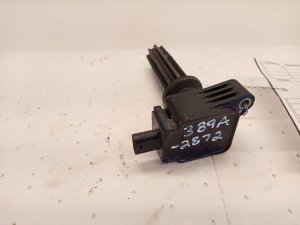

New Aftermarket Parts Available

The information in this article is provided for general reference and educational purposes only. Vehicle specifications, procedures, and part compatibility can vary by production date, trim level, and region. Always consult your vehicle's factory service manual and verify part numbers before purchasing or performing repairs. Safety-critical components such as airbags, seat belts, and braking systems should be installed by a qualified professional.
- Ford Mustang GT:
- 🎬 Helpful Videos
- 🛍️ Shop This Part
- What's Unique About the 2011-2017 Ford Mustang GT
- Symptoms You May Notice
- Most Likely Causes
- Rare But Worth Checking
- Diagnosis Steps
- Parts You'll Likely Need
- Related Codes That Often Appear With This One
- Technical Service Bulletins (TSBs) & Recalls
- Platform-Specific Known Issues
- Mechanic-Grade Diagnostic Values
- Hidden / Shadow Codes Worth Checking
- Scan Tool Commands That Help
- Wiring & Ground Locations
- Real Owner Repair Stories
- OEM Part Supersession History
- Model Year Variations Within This Range
- Diagnostic Flowchart
- Real Owner Stories
- 2017 Mustang GT California Special 5.0L — 30000 miles
- 2014 Ford Mustang GT 5.0L
- Ford Mustang GT 5.0L
- 2015 Ford Mustang GT 5.0L
- Ford F-150 5.0L V8
- Documented NHTSA Reports
- Ford F-350 (Cross-Manufacturer Reference)
- Related OBD-II Codes
- Frequently Asked Questions
- 🎟️ Get 5% Off