

P0306 on 2011-2019 Ford Explorer 3.5L V6: Cylinder 6 Misfire Causes and Fixes
Code P0306 on a 2011-2019 Ford Explorer with the 3.5L V6 indicates a misfire in cylinder 6. The most common cause is a failed ignition coil or a worn-out spark plug. Cylinder 6 is on the front bank (radiator side), making it one of the easier cylinders to access. Replacing a single ignition coil and spark plug is a straightforward DIY fix, typically costing between $40 and $100.
- P0306 means cylinder 6 is misfiring, which is on the harder-to-reach rear bank of the engine.
- Start your diagnosis by swapping the ignition coil from cylinder 6 with another cylinder. This is a free, effective way to identify a bad coil.
- If the coil is good, inspect and likely replace the spark plug. Given the mileage, replacing all six is a good idea for preventative maintenance.
- Do not drive if the check engine light is flashing, as you risk destroying your catalytic converter.
- Be aware of the known internal water pump issue on the 3.5L V6. If you see milky oil, stop immediately and seek professional help.
What's Unique About the 2011-2019 Ford Explorer

For the Ford Explorer with the 3.5L V6 engine, the cylinder numbering is 1-2-3 on the rear bank (firewall side) and 4-5-6 on the front bank (radiator side), from passenger to driver side. This means cylinder 6 is on the front bank, making it relatively easy to access for diagnosis and repair, unlike the rear bank cylinders which require removing the upper intake manifold. While the causes are typical for most vehicles (coils, plugs), the specific location of cylinder 6 on this platform simplifies the most common repairs.
Symptoms You May Notice
- Rough or shaky engine idle
- Noticeable loss of engine power and sluggish acceleration
- Engine hesitation or stumbling during acceleration
- Flashing or solid Check Engine Light
- Reduced fuel economy
- Smell of gasoline from the exhaust, indicating unburned fuel
- Replacing only the spark plug when the ignition coil is the actual cause.
- Replacing fuel system components before properly diagnosing the ignition system, which is a more common failure point.
- Assuming the misfire is on the difficult-to-access rear bank, when P0306 correctly identifies the front-bank cylinder 6.
Most Likely Causes

- Faulty Ignition Coil 🔴 High Probability Ignition coils are common wear items that fail from heat and vibration over time. The coil-on-plug design is efficient but failures are frequent across many Ford models, with many owners recommending using only Motorcraft or OEM-equivalent brands for reliability.
How to confirm: The easiest way to confirm a bad coil is to swap the ignition coil from cylinder 6 with another cylinder on the front bank (e.g., cylinder 5). Clear the codes and drive the vehicle. If the code changes to P0305 (Cylinder 5 Misfire), the ignition coil is faulty. Sometimes, the internal spring in the coil boot loses contact; stretching it can be a temporary fix, but replacement is recommended.
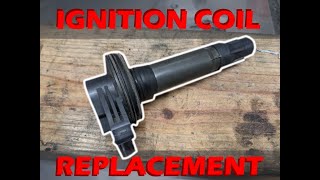
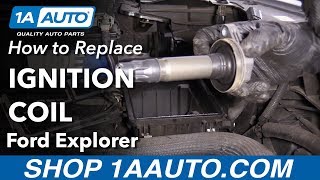
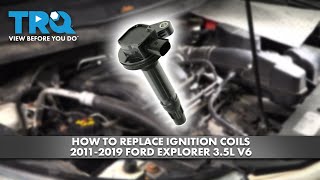
Typical fix: Replace the faulty ignition coil. 🎬 See this walkthrough for replacing the front bank ignition coils. It is often recommended to replace the corresponding spark plug at the same time. Applying a small amount of dielectric grease to the inside of the new coil boot is good practice.
Est. part cost: $30-$80 - Worn or Fouled Spark Plug 🔴 High Probability
How to confirm: After confirming the coil is good, inspect the spark plug from cylinder 6. Look for wear on the electrode, carbon fouling, oil, or coolant contamination. An incorrect spark plug gap can also cause misfires. The OEM plugs are typically rated for 100,000 miles, but can fail sooner.
Typical fix: Replace the spark plug. It is best practice to replace all six spark plugs at the same time to ensure even performance, especially if they are near the end of their service life. Applying anti-seize lubricant to the threads of the new plug is recommended, especially on aluminum heads.
Est. part cost: $10-$25 per plug - Faulty Fuel Injector 🟡 Medium Probability
How to confirm: If the ignition system is confirmed to be working, the fuel injector is the next likely cause. A strong smell of gas from the tailpipe can sometimes point to a stuck-open injector. A mechanic can perform a fuel injector balance test. A DIY method is to listen to the injector with a mechanic's stethoscope; it should have a consistent clicking sound. Swapping the injector with another cylinder is also possible but requires removing the fuel rail.
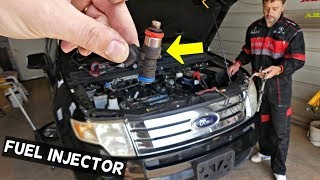
Typical fix: Replace the faulty fuel injector. 🎬 Watch: How to replace a fuel injector on this engine. Since cylinder 6 is on the front bank, this is less labor-intensive than replacing a rear bank injector, but still involves depressurizing and opening the fuel system.
Est. part cost: $50-$150 - Vacuum Leak ⚪ Low Probability The upper intake manifold plenum is made of plastic and its gaskets can degrade over time, causing unmetered air to enter the engine and disrupt the air-fuel ratio. A leak specific to the runner for cylinder 6 could cause a targeted misfire.
How to confirm: With the engine running, spray short bursts of brake cleaner or a propane torch (unlit) around the intake manifold gaskets near cylinder 6. If the engine idle changes, a leak is present. A professional smoke test is a more definitive way to find leaks.
Typical fix: Replace the intake manifold gaskets.
Est. part cost: $20-$50
Rare But Worth Checking
- Low Engine Compression: This indicates a more serious internal engine problem, such as a worn piston ring, a bad valve, or a leaking head gasket. A compression test is needed to diagnose this. This can sometimes be a symptom of a failing internal water pump, a known issue on this engine that leaks coolant into the oil, causing catastrophic damage.
- Faulty Powertrain Control Module (PCM): This is extremely rare. All other possibilities should be exhausted before considering a faulty PCM. It requires advanced diagnostics by a professional. TSB 13-4-17 (for other models) noted that a faulty PCM could cause repeated ignition coil failures.
- Carbon Buildup on Intake Valves: On direct injection (GDI) versions of this engine, carbon can build up on the back of the intake valves over time, restricting airflow to a specific cylinder and causing a misfire. This typically requires professional cleaning, such as walnut blasting.
- Exhaust System Issues: Manufacturer service bulletin TSB 19-2286 notes that a misfire condition with DTC P0300 through P0306 may be due to internal components of the muffler being assembled improperly.
Diagnosis Steps

- Read the trouble codes with an OBD-II scanner to confirm P0306 and check for 🎬 Watch: A step-by-step guide to fixing the P0306 code. any other codes like P0316 or P0300.
- Swap the ignition coil from cylinder 6 with an adjacent cylinder on the front bank (like cylinder 5). Clear the codes and run the engine to see if the misfire code moves to P0305. If it does, the ignition coil is bad.
- If the misfire remains on cylinder 6, swap the spark plug from cylinder 6 with the one from cylinder 5. Clear codes and re-test. If the code moves to P0305, the spark plug was the issue.
- If the misfire still remains on cylinder 6, inspect the wiring and connector for the ignition coil and fuel injector for any damage, corrosion, or loose connections. Manufacturer bulletin TSB 25-2569 indicates that DTCs P0301-P0306 and P0201-P0206 can be caused by the engine harness contacting a hose crimp end or spring clip.
- Listen to the fuel injector on cylinder 6 with a mechanic's stethoscope or long screwdriver. It should make a steady clicking noise. Compare its sound to an adjacent injector.
- Check for vacuum leaks around the intake manifold near cylinder 6 using brake cleaner or a smoke machine.
- If all else fails, perform a compression test on cylinder 6 to check for internal engine mechanical problems. While performing diagnostics, check the oil for a milky appearance, which would indicate coolant contamination from a failing internal water pump, a critical issue for this engine.
Parts You'll Likely Need

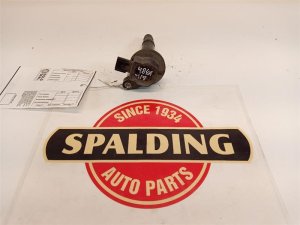
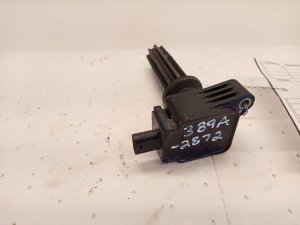
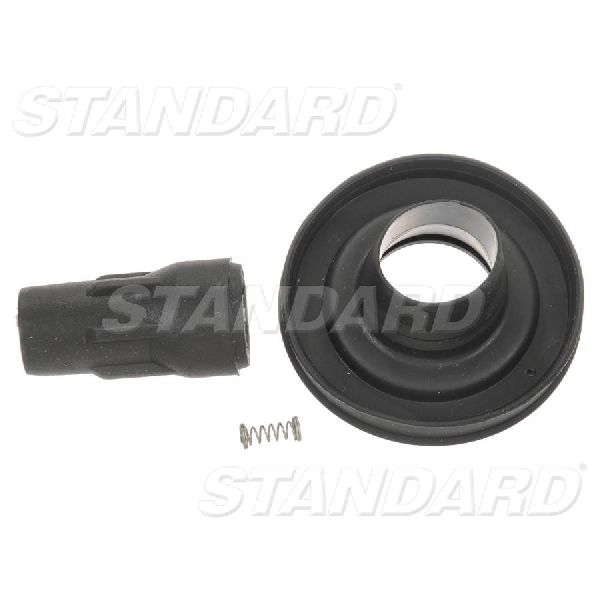
- Ignition Coil
(OEM #DG549)— This is the most common cause of a single-cylinder misfire on the 3.5L V6 engine.
Trusted brands: Motorcraft, NGK, Denso
OEM price range: $50-$88
Aftermarket price range: $30-$60 - Spark Plug
(OEM #SP534 (often superseded by SP580))— Spark plugs are a routine maintenance item and can cause misfires when worn, fouled, or improperly gapped. The original SP534 has been updated by Ford to SP580 (CYFS12YT4X).
Trusted brands: Motorcraft, Autolite, NGK
OEM price range: $15-$25
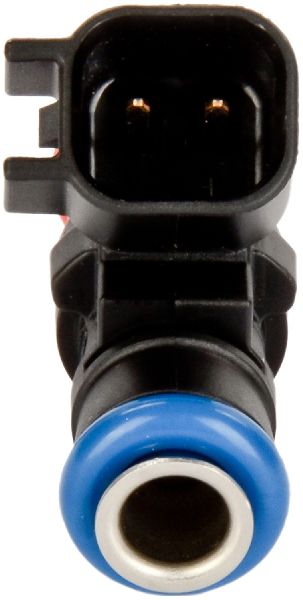
Aftermarket price range: $8-$15 - Fuel Injector
(OEM #BB5Z-9F593-B)— A clogged or failed fuel injector will prevent the correct amount of fuel from reaching the cylinder, causing a misfire.
Trusted brands: Motorcraft, Bosch
OEM price range: $80-$150
Aftermarket price range: $50-$100
Related Codes That Often Appear With This One
- P0300 — If multiple cylinders are misfiring randomly, you may see P0300 (Random/Multiple Cylinder Misfire Detected) along with P0306. This could point to a systemic issue like a vacuum leak, a failing fuel pump, or a stuck EVAP purge valve.
- P0316 — This code indicates a misfire was detected within the first 1,000 engine revolutions upon startup. It often appears with a specific cylinder misfire code like P0306 and reinforces that a misfire condition is present from a cold start.
- P0206 — This code for 'Injector Circuit/Open - Cylinder 6' points directly to an electrical problem with the fuel injector or its wiring, and will almost always accompany P0306 if the injector is the cause.
- P0456 — A small EVAP leak code can appear alongside misfire codes. A faulty or stuck-open EVAP purge valve can create a vacuum leak, leading to a lean condition and random misfires. One owner reported P0301, P0304, and P0306 along with P0456, which was fixed by replacing the purge valve.
Technical Service Bulletins (TSBs) & Recalls
- TSB 11-8-19: For 2010-2011 3.5L GTDI (EcoBoost) engines in Taurus/Flex/MKS/MKT, addresses rough running and misfire codes (P0300-P0306). Not directly for the Explorer's naturally aspirated engine, but shows a history of misfire issues in the engine family.
- TSB 13-3-3: For 2011-2012 F-150 3.5L EcoBoost, addresses intermittent misfire (P0304, P0305, P0306) on acceleration in humid conditions. Again, not directly applicable to the NA Explorer but relevant to the engine family's behavior.
- SSM 49821: Mentions a wide range of timing-related DTCs (P0011-P0025) for many 2015-2021 Ford/Lincoln vehicles, which can be caused by oil contamination, potentially from a failing water pump.
- TSB 19-2286: Notes that vehicles with a 3.5L EcoBoost high output engine may exhibit a misfire condition with DTCs P0300 through P0306 due to improperly assembled internal muffler components.
- TSB 25-2569: Describes how an illuminated malfunction indicator lamp with DTCs P0301-P0306 and P0201-P0206 may be caused by the engine harness contacting a hose crimp end or spring clip.
Platform-Specific Known Issues
- Internal Water Pump Failure: The 3.5L Cyclone V6 features an internally chain-driven water pump. When the pump's seal fails, it leaks coolant directly into the engine oil. This contaminates the oil, leading to widespread engine damage, including timing chain failure and bearing destruction, which can manifest as a misfire. Checking the oil for a milky consistency is a critical diagnostic step for any drivability issue on this engine.
- Coolant Intrusion: In related Ford engine designs, NHTSA ODI #11621299 describes a diagnosis of DTCs P0302 and P0306 where it was determined that coolant was leaking into the engine block.
Mechanic-Grade Diagnostic Values
- Fuel Injector Resistance — expected: 11 - 18 Ohms (High Impedance). Failure: A reading of infinite resistance (open circuit) or near-zero resistance (short circuit). Test when cold and at operating temperature, as resistance can change.
- Ignition Coil Secondary Resistance — expected: ~5.95k Ohms. Failure: A significantly different value may indicate a faulty coil winding.
- Ignition Coil Primary Resistance — expected: ~0.5 Ohms. Failure: A significantly different value may indicate a faulty coil winding.
- Mode $06 Misfire Count (TID $53) — expected: A low count of misfires per driving cycle.. Failure: A high or rapidly increasing count for cylinder 6 (Component ID will correspond to the cylinder) confirms the PCM is actively detecting misfire events, even before the CEL illuminates.
Scan Tool Commands That Help
- Ford IDS (Integrated Diagnostic System): Power Balance Test — This is a critical diagnostic step for a Ford technician. The test allows the user to disable one cylinder at a time and observe the corresponding drop in engine RPM. If disabling cylinder 6 results in little or no RPM drop compared to other cylinders, it confirms that cylinder 6 is not contributing power, pinpointing the misfire without swapping parts.
Wiring & Ground Locations
- G100 — Top rear of the engine.. A poor engine-to-chassis ground can cause a host of electrical issues, including weak spark or erratic sensor readings that could lead to a misfire code.
- G101 / G103 — Left side of the engine compartment.. These are primary grounds for components in the engine bay. Corrosion or a loose connection here can affect the PCM or ignition system components.
- G104 — Right side of the engine compartment.. This ground point serves various components on the right side of the engine bay. Ensuring it is clean and tight is part of a thorough electrical diagnosis for persistent misfires.
- Cylinder 6 Ignition Coil Connector — On the ignition coil for cylinder 6 (front bank, driver's side).. The wiring and connector pins for the coil are a direct point of failure. Check for corrosion, pushed-out pins, or damage to the wiring harness leading to this connector. The red locking tabs are known to become brittle and break.
Real Owner Repair Stories
- Ford Expedition Forum user (Ford Expedition with 3.5L engine (similar architecture)) — Check engine light with code P0306, especially under load.
❌ Tried (didn't work) Initial spark plug replacement by a shop., Owner replaced the ignition coil (COP) on cylinder 6., Owner replaced the fuel injector on cylinder 6.
✅ What actually fixed it The owner discovered the new spark plug on cylinder 6, which had been installed by a shop, was loose by approximately 1/4 turn. After removing the fouled plug, installing a new one, and tightening it correctly, the misfire was resolved. - YouTube video by 'Ford Explorer 3.7 and 3.5L' (Ford Explorer with 3.5L engine) — Multiple misfire codes including P0301, P0304, P0306, and a P0456 (EVAP System Leak Detected).
❌ Tried (didn't work) Initial diagnosis pointed towards standard ignition or fuel issues.
✅ What actually fixed it The root cause was a faulty EVAP purge valve that was stuck open, creating a constant vacuum leak. Replacing the purge valve resolved all misfire codes and the EVAP code. The technician confirmed the old valve was bad by blowing through it while it was disconnected (air should not pass). - NHTSA ODI #11042915 — An owner reported that while driving, the vehicle began to decelerate and the engine light began to flash. The dealership retrieved code P0306 and authorized a long block engine change, citing TSB 17-0007 and 17-2077.
- NHTSA ODI #10658587 — A driver reported an engine code showing P0306 for a cylinder 6 misfire after driving in heavy rain for several hours.
OEM Part Supersession History
Motorcraft SP534 (CYFS12YT3)→Motorcraft SP580 (CYFS12YT4X)— Ford issued a revised part number. While the exact changes are not officially documented, they are considered interchangeable replacements.
Heads up: The factory gap for the new SP580 plugs may be around .035", while the vehicle owner's manual may specify a range of .030"-.033". It is critical to verify and adjust the spark plug gap to the vehicle's specific requirements before installation, as running an incorrect gap can cause misfires.
Model Year Variations Within This Range
- 2016-2019: The Ford Explorer received a significant facelift for the 2016 model year, including revised exterior styling and new features. However, the base 3.5L naturally aspirated (Cyclone) V6 engine remained fundamentally the same as the 2011-2015 models, producing 290 hp. Therefore, the causes and diagnostic procedures for a P0306 code are consistent across the entire 2011-2019 generation for this specific engine.
Diagnostic Flowchart
Real Owner Stories
Aggregated from forums and TSBs cited above. Mileages and costs reflect what owners reported in those sources.
2013 Ford Explorer Limited V6
Symptoms: Experienced a sudden rough idle accompanied by a P0306 cylinder misfire code and a strong smell of gas coming from the tailpipe.
What fixed it: Suspected a stuck open fuel injector causing the unburned fuel smell and misfire.
Source hint: Ford Truck Enthusiasts Forum - '2013 Explorer Limited V6 Rough Running, Then Check Engine and P0306...'
2016 Ford Explorer 3.5L — 130000 miles
Symptoms: Triggered a P0306 error code.
What fixed it: Community advised replacing the ignition coils and spark plugs as the primary suspects.
Source hint: Reddit r/MechanicAdvice - 'P0306 Error code 2016 Explorer 3.5L'
2016 Ford Explorer — 42000 miles
Symptoms: Misfire on cylinder 6 (front, driver's side). The owner noted the old spark plug was already fouled despite the low mileage.
What fixed it: Replaced the spark plug and ignition coil on cylinder 6.
Source hint: YouTube - 'Misfire cylinder #6 repair, 2016 Ford Explorer' by EV Darryl
2012 Lincoln MKZ 3.5L
Symptoms: Struggled with a recurring P0306 misfire code even after replacing the spark plugs and ignition coil.
What fixed it: Identified potential issues with broken connector locking tabs on the wiring harness causing a loose connection.
Source hint: Lincoln MKZ Forum - 'P0306 Issue...thoughts?'
Related OBD-II Codes
Frequently Asked Questions
Is cylinder 6 hard to reach on the 3.5L Cyclone V6 Explorer?
I have a P0306 code and my engine oil looks milky. What does this mean?
Do TSB 11-8-19 or TSB 13-3-3 apply to my naturally aspirated 2011-2019 Explorer?
Why does my Explorer smell strongly of gas from the exhaust with code P0306?
What brand of ignition coils should I use for my Explorer?
I replaced the coil and spark plug on cylinder 6, but the misfire came back. What else could it be?
Helpful Videos
Used OEM Parts in Stock



New Aftermarket Parts Available



The information in this article is provided for general reference and educational purposes only. Vehicle specifications, procedures, and part compatibility can vary by production date, trim level, and region. Always consult your vehicle's factory service manual and verify part numbers before purchasing or performing repairs. Safety-critical components such as airbags, seat belts, and braking systems should be installed by a qualified professional.
- Ford Explorer:
- 🎬 Helpful Videos
- 🛍️ Shop This Part
- What's Unique About the 2011-2019 Ford Explorer
- Symptoms You May Notice
- Most Likely Causes
- Rare But Worth Checking
- Diagnosis Steps
- Parts You'll Likely Need
- Related Codes That Often Appear With This One
- Technical Service Bulletins (TSBs) & Recalls
- Platform-Specific Known Issues
- Mechanic-Grade Diagnostic Values
- Scan Tool Commands That Help
- Wiring & Ground Locations
- Real Owner Repair Stories
- OEM Part Supersession History
- Model Year Variations Within This Range
- Diagnostic Flowchart
- Real Owner Stories
- 2013 Ford Explorer Limited V6
- 2016 Ford Explorer 3.5L — 130000 miles
- 2016 Ford Explorer — 42000 miles
- 2012 Lincoln MKZ 3.5L
- Related OBD-II Codes
- Frequently Asked Questions
- 🎟️ Get 5% Off