

P0306 on 2007-2014 Ford Edge 3.5L: Cylinder 6 Misfire Causes and Fixes
P0306 on a 2007-2014 Ford Edge with the 3.5L V6 is most often caused by a bad ignition coil or a worn-out spark plug on cylinder 6. Since cylinder 6 is on the front bank (near the radiator), this is a relatively easy DIY fix, typically costing between $40 and $100 for parts. If not fixed promptly, a bad coil can damage the PCM, leading to a much more expensive repair.
- P0306 indicates a misfire on cylinder 6.
- On the 2007-2014 Edge 3.5L, cylinder 6 is on the front, radiator-side bank, making it easy to access.
- The most likely cause is a bad ignition coil, followed by a worn spark plug.
- A simple diagnostic is to swap the cylinder 6 coil with the cylinder 5 coil and see if the code changes to P0305.
- Do not drive if the check engine light is flashing to avoid expensive catalytic converter damage.
What's Unique About the 2007-2014 Ford Edge

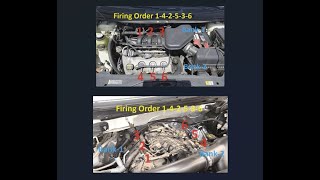
On the transversely mounted 3.5L V6 in the Ford Edge, the cylinders are numbered 1-2-3 on the rear bank (firewall side) and 4-5-6 on the front bank (radiator side). This means cylinder 6 is conveniently located at the front of the engine bay on the driver's side, making its ignition coil and spark plug much easier to access than the rear cylinders, which require removing the upper intake manifold. This simplifies diagnosis and repair for a P0306 code compared to misfires on cylinders 1, 2, or 3.
Generation note: The 2007-2014 range covers the first generation Ford Edge. The 2007-2010 models were the initial release, and the 2011-2014 models received a significant facelift which included an update to the 3.5L engine with Ti-VCT, boosting power. However, the fundamental causes and fixes for a P0306 misfire code, including the ignition system design and cylinder layout, remain consistent across this entire year range.
Symptoms You May Notice
- Rough or shaky engine idle
- Hesitation or stumbling during acceleration
- Noticeable loss of engine power
- Solid Check Engine Light is on
- Flashing Check Engine Light (in severe cases)
- Smell of raw fuel from the exhaust
- Engine jerks during acceleration
- Replacing only the spark plug when the ignition coil is the actual cause.
- Replacing the fuel injector before properly diagnosing the ignition system, which is the most common point of failure.
- Assuming cylinder 6 is on the hard-to-access rear bank, leading to unnecessary labor or diagnostic hesitation.
Most Likely Causes

- Faulty Ignition Coil (Coil-on-Plug) 🔴 High Probability Ignition coils are common wear items that fail from heat cycles and vibration. On Ford's 3.5L V6, old spark plugs can increase the electrical resistance, overworking and eventually burning out the coil. A failing coil can also send a voltage spike and damage the PCM if not addressed promptly.
How to confirm: The easiest way to confirm a bad coil is to swap the ignition coil from cylinder 6 with an adjacent one (e.g., cylinder 5). Clear the codes and drive. If the code changes to P0305 (Cylinder 5 Misfire), the ignition coil is faulty. This is the standard diagnostic procedure recommended by Ford.
Typical fix: Replace the faulty ignition coil. 🎬 See this walkthrough on how to replace the ignition coils. It is highly recommended to replace the corresponding spark plug at the same time.
Est. part cost: $30-$80 - Worn or Fouled Spark Plug 🟡 Medium Probability Spark plugs have a finite lifespan, typically 60,000 to 100,000 miles. As the electrodes wear, the gap widens, requiring more voltage to create a spark. This can lead to a weak or inconsistent spark, causing a misfire. Oil leaks from the valve cover gasket can also foul the spark plug.
How to confirm: After confirming the coil is good, remove the spark plug from cylinder 6. Inspect it for wear (worn electrode), carbon fouling (black, sooty), oil fouling (wet, black), or damage (cracked insulator). A visual inspection is usually sufficient.
Typical fix: Replace the spark plug. It is best practice to replace all six spark plugs if they are near the end of their service interval. Ensure the new plugs are gapped correctly to the vehicle's specification before installation.
Est. part cost: $8-$20 per plug - Clogged or Faulty Fuel Injector ⚪ Low Probability Fuel injectors can become clogged with deposits over time, or fail electrically, preventing them from delivering the proper amount of fuel.
How to confirm: First, try a simple check: with the engine off, unplug and firmly reseat the electrical connector for the cylinder 6 injector to rule out a poor connection. If the problem persists, listen to the injector with a mechanic's stethoscope; you should hear a consistent clicking sound. If swapping the coil and plug doesn't resolve the misfire, you can swap the cylinder 6 injector with another. If the code moves, the injector is bad. This is more labor-intensive.
Typical fix: Replace the faulty fuel injector. It's often recommended to replace all injectors at the same time for balanced performance and to avoid future failures.
Est. part cost: $50-$120
Rare But Worth Checking
- Intake Manifold Gasket Leak: A vacuum leak near the cylinder 6 runner can lean out the air/fuel mixture, causing a misfire. This might be accompanied by a hissing sound or other lean condition codes (P0171/P0174).
- Powertrain Control Module (PCM) Failure: In some cases, a shorted ignition coil can damage the driver circuit within the PCM, preventing it from firing the new coil. This usually results in a persistent P0356 code along with the P0306, even after replacing the coil. A real-world owner on CarComplaints.com reported this exact scenario, requiring a PCM replacement after new coils and plugs did not fix the misfire. 🎬 Watch: How a bad PCM causes persistent misfire codes.
- Low Compression: Internal engine issues like a burnt valve, worn piston rings, or a bad head gasket can cause a loss of compression, leading to a misfire. This is the least likely cause and should only be investigated after ruling out ignition and fuel issues with a compression test.
Diagnosis Steps

- Read the trouble codes with an OBD-II scanner to confirm P0306 and check for any other related codes like P0356 or P0206.
- Identify cylinder 6. On the 3.5L Edge, it is the cylinder on the front bank (closest to the radiator), on the driver's side.
- Swap the ignition coil from cylinder 6 with the coil from cylinder 5 (the middle cylinder on the front bank).
- Clear the codes and start the engine. Let it run until the Check Engine Light reappears.
- Re-scan for codes. If the code is now P0305, the ignition coil is bad and needs to be replaced.
- If the code remains P0306, the coil is likely good. Move on to the spark plug. Remove the plug from cylinder 6 and inspect it for wear, damage, or fouling.
- If the spark plug is visibly worn or fouled, replace it. It's best practice to replace all six if they are due.
- If the coil and plug are good, inspect the fuel injector wiring and try reseating the connector. If the misfire persists, the next likely cause is the fuel injector itself. This is a more involved diagnosis.
- If a new coil and plug do not fix the misfire and a P0356 code is present, suspect a damaged PCM driver circuit.
- If all else fails, perform a compression test to check for mechanical engine issues.
Parts You'll Likely Need

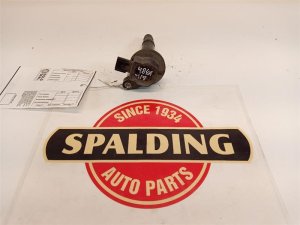
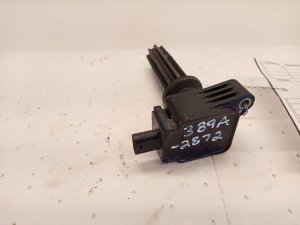
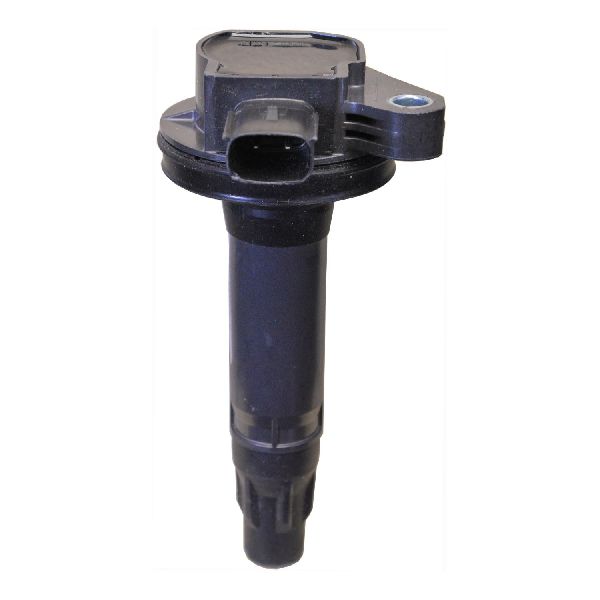
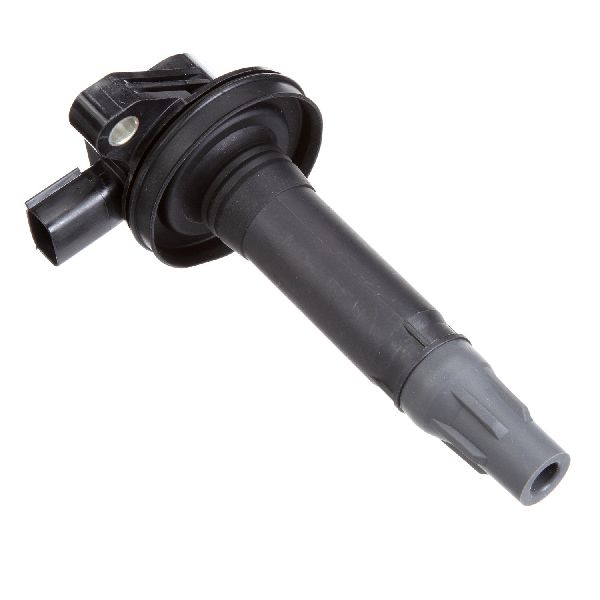
- Ignition Coil
(OEM #7T4Z-12029-E (also known as DG520))— This is the most common cause of a single-cylinder misfire on the Ford 3.5L engine. This part number supersedes the older 7T4Z-12029-DA.
Trusted brands: Motorcraft, NGK, Denso, Delphi
OEM price range: $60-$90
Aftermarket price range: $30-$60 - Spark Plug
(OEM #SP-589 (also known as CYFS12YT6))— Worn or fouled spark plugs are the second most common cause. This part number supersedes the older SP-520 and SP-520X plugs.
Trusted brands: Motorcraft, NGK, Autolite, Bosch
OEM price range: $10-$15
Aftermarket price range: $8-$12
Related Codes That Often Appear With This One
- P0356 — This code means 'Ignition Coil 'F' (Cylinder 6) Primary/Secondary Circuit Malfunction.' It specifically points to an electrical fault in the coil circuit. Seeing P0356 and P0306 together strongly indicates a bad coil, wiring, or a failed PCM driver for that cylinder.
- P0300 — This code means 'Random/Multiple Cylinder Misfire Detected.' If the condition causing the P0306 is severe or intermittent, or if other cylinders are also beginning to misfire (e.g., due to a vacuum leak or fuel delivery issue), the PCM may log P0300 as well.
- P0206 — This code means 'Cylinder 6 Injector Circuit/Open'. It points to an electrical fault with the fuel injector, not just a clog. Seeing it with P0306 makes the fuel injector or its wiring the primary suspect.
Technical Service Bulletins (TSBs) & Recalls
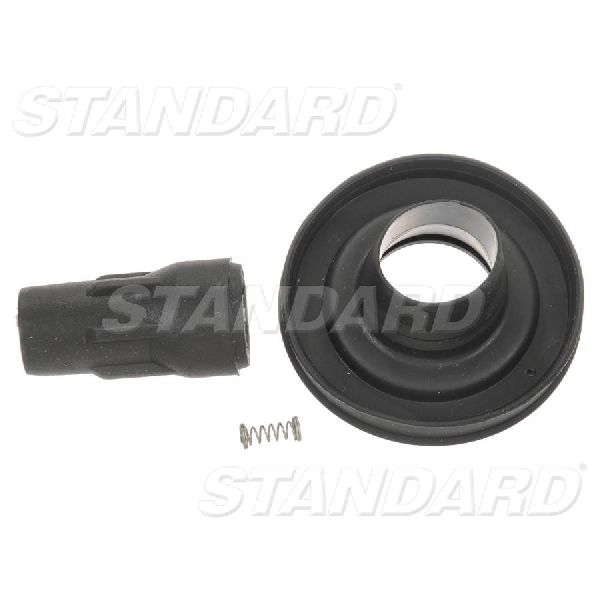
- TSB 14-0180: While not for P0306 specifically, this TSB for the 3.5L engine addresses random misfires caused by carbon tracking on spark plugs and recommends replacing plugs and coil boots with updated parts.
- TSB 13-3-3: Applies to 3.5L EcoBoost F-150s but is relevant to the engine family. It addresses intermittent misfires on cylinders 4, 5, and 6 (P0304, P0305, P0306) during acceleration in humid conditions, pointing to a known sensitivity in the ignition system.
Platform-Specific Known Issues
- Delayed spark plug changes on the 3.5L V6 are known to cause ignition coils to fail prematurely, which can then send a voltage spike and damage the Powertrain Control Module (PCM), turning a simple repair into a very expensive one.
Mechanic-Grade Diagnostic Values
- Ignition Coil Primary Resistance — expected: ~0.5 Ohms. Failure: A significantly different value may indicate a faulty coil winding.
- Ignition Coil Secondary Resistance — expected: ~5.95k Ohms. Failure: A significantly different value may indicate a faulty coil winding.
- Fuel Injector Resistance — expected: 11 - 14 Ohms. Failure: A reading of infinity (open circuit) or near zero (short circuit) confirms a failed injector.
- Injector Connector Voltage (Key On, Engine Off) — expected: > 10 Volts DC. Failure: No voltage or low voltage indicates a wiring or PCM power supply issue.
- Injector Pulse Width (at idle) — expected: 0.8 ms to 2.5 ms. Failure: A pulse width on cylinder 6 that is zero or significantly different from other cylinders points to a control or injector issue.
Hidden / Shadow Codes Worth Checking
- Mode $06, TID $53, CID $0A: This isn't a shadow code but is manufacturer-specific data accessible with advanced scan tools. It provides raw misfire counts for each cylinder per driving cycle. For the 3.5L V6, Component ID (CID) $0A typically corresponds to Cylinder 6. A high or rapidly increasing count confirms the PCM is detecting misfire events, often before the CEL is triggered. (see via An OBD-II scanner that supports Mode $06 data.)
Scan Tool Commands That Help
- Ford IDS (Integrated Diagnostic System): Power Balance Test — This is a key bidirectional test used by Ford technicians. The tool commands the PCM to sequentially shut off fuel to each cylinder and graphically displays the resulting drop in RPM. A cylinder that shows little or no RPM drop when disabled is the one that is not contributing (misfiring). This is an extremely effective way to confirm which cylinder is at fault without any mechanical disassembly.
Wiring & Ground Locations
- PCM Connector C175b — The PCM is located on the right (passenger) side of the engine compartment, near the firewall. C175b is one of the main connectors to the PCM.. The control wire (signal wire) for the cylinder 6 ignition coil (Coil-On-Plug 6) runs to a specific pin on this connector. A damaged pin, corrosion from water intrusion, or a broken wire near the connector can interrupt the signal from the PCM, causing a persistent P0306 and/or P0356 even with a good coil.
- G107 — A primary engine ground located on the right front of the engine compartment.. The ignition coils and other critical engine sensors share common ground points. A loose or corroded G107 ground can cause erratic behavior, including weak spark and misfires that can be difficult to trace. While it would likely cause multiple issues, it's a critical point to check for any electrical diagnosis.
- Cylinder 6 Coil Connector — Directly on top of the ignition coil for cylinder 6 (front bank, driver's side).. The wires leading to the connector can become brittle from heat and vibration, causing an intermittent connection. The positive voltage wire is shared among multiple coils, while the signal wire is the ground switched by the PCM. A forum user noted that the five shared positive voltage wires are connected at a junction point in the harness, and corrosion there can cause issues.
Real Owner Repair Stories
- CarComplaints.com (2007 Ford Edge 3.5L V6) — Loss of power, blinking then solid check engine light, codes P0300, P0305, P0306, P0356.
❌ Tried (didn't work) Replacing spark plugs, Replacing ignition coils for cylinders 5 and 6, Replacing intake manifold gasket set
✅ What actually fixed it The root cause was a bad driver in the Powertrain Control Module (PCM), which was damaged by a shorted ignition coil. The final repair required replacing the PCM. - YouTube channel 'm auto garage' (2012 Ford Edge) — Multiple misfire and coil circuit codes including P0305, P0306, P0353, P0355, P0356 that returned immediately after clearing.
❌ Tried (didn't work) Replacing ignition coils, Checking coil pack wiring
✅ What actually fixed it The problem was a bad PCM. The technician diagnosed that if the codes return instantly after replacing ignition components, the computer is the likely culprit. The final fix was replacing the PCM with a used unit from a junkyard and having it reprogrammed.
When the Usual Fixes Don't Work
- While the vast majority of P0306 codes are fixed with a coil or spark plug, numerous forum and video reports document cases where the misfire persisted. The most common 'what finally fixed it' story in these instances is the replacement of the PCM. A shorted ignition coil is known to damage the internal driver circuit for that cylinder in the PCM, creating a permanent fault that cannot be fixed by replacing the coil again. Technicians and owners report that if a P0356 code is present alongside P0306, and the misfire returns instantly after a new coil is installed, the PCM should be the primary suspect.
OEM Part Supersession History
7T4Z-12029-DA→7T4Z-12029-E (Motorcraft DG520)— Standard part revision and update by the manufacturer.Motorcraft SP-520 / SP-520X→Motorcraft SP-589 (CYFS12YT6)— Updated design for improved performance and longevity.Motorcraft CM-5165 (Fuel Injector)→Motorcraft CM-5188 (Fuel Injector)— Design change corresponding with the 2011 model year engine update (Ti-VCT).
Heads up: The CM-5165 is for 2007-2010 models, while the CM-5188 is for 2011-2014 models. While they may appear physically similar, using the wrong injector can cause incorrect fuel flow rates and lead to fuel trim problems.
Model Year Variations Within This Range
- 2011-2014: The 2011 model year introduced the Ti-VCT (Twin Independent Variable Camshaft Timing) version of the 3.5L Cyclone V6. This engine uses different fuel injectors (Motorcraft CM-5188) compared to the 2007-2010 models (Motorcraft CM-5165). While the P0306 diagnosis is fundamentally the same, using the incorrect injector during a repair will cause performance issues.
Diagnostic Flowchart

Other Known Issues on This Vehicle
Issues unrelated to this code that are worth knowing about as an owner of this generation:
- Internal Water Pump Failure 🔴 High — Can occur after 80,000-100,000 miles. Failure allows coolant to leak directly into the engine oil, leading to catastrophic engine damage if not caught early. (Ref: No recall, but a widely documented issue. Early signs include unexplained coolant loss and milky, contaminated engine oil. Can also trigger timing codes like P0016.)
- Power Transfer Unit (PTU) Failure (AWD Models) 🔴 High — Commonly occurs due to fluid leaks from axle seals, causing the unit to overheat and fail. Often manifests after 60,000 miles. (Ref: No recall, but a well-known problem. Repair often involves full PTU replacement at a cost of $1,600-$3,000.)
- Electronic Throttle Body Failure 🟠 Medium — Can become dirty or fail electronically, causing the vehicle to enter 'limp mode,' stall, or run rough. Often seen around 100,000 miles. (Ref: No recall, but a common repair. Cleaning the throttle body is a temporary fix; replacement is often the permanent solution.)
- Faulty Brake Booster 🟠 Medium — The internal diaphragm can tear, causing a hissing sound when the brake pedal is pressed and a hard pedal feel. (Ref: Ford issued a Customer Satisfaction Program (13N02) and extended the warranty for this part because it was so common.)
- Timing Chain Stretch/Guide Wear 🔴 High — Less common than water pump failure, but can occur, leading to rattling noises on startup, rough running, and misfires. (Ref: TSB 14-0180 was issued for some 3.5L engines regarding carbon tracking that can mimic timing issues, but primary chain failure is a separate mechanical issue.)
Used vs. New Parts: Buying Guide for This Vehicle
When a used part is the smart pick: For major electronic components like the Powertrain Control Module (PCM), a used part from a reputable salvage yard can be a cost-effective solution, provided it is the exact matching part number and is reprogrammed for the vehicle. For simple mechanical parts like brackets or connectors, used is perfectly acceptable.
Donor-vehicle mileage cap: roughly under 100000 miles for the part to have meaningful remaining life.
What to inspect on the donor part:
- For a PCM: Ensure the donor vehicle was not in a flood or had fire damage. Check for any signs of corrosion on the casing or pins.
- For any part: Look for a donor vehicle with lower mileage and no signs of major front-end collision damage, which could have stressed engine components.
OEM-only on this vehicle (don't cheap out):
- Ignition Coils
- Powertrain Control Module (PCM)
- Fuel Injectors
Aftermarket brands forum-validated for this vehicle:
- NGK (for Ignition Coils and Spark Plugs)
- Denso (for Ignition Coils and Spark Plugs)
- Bosch (for Fuel Injectors)
Brands owners have reported issues with on this vehicle:
- Unnamed or 'no-brand' ignition coil packs sold in bulk on sites like Amazon or eBay are frequently cited in forums as being unreliable, failing quickly, and sometimes causing further damage.
Real Owner Stories
Aggregated from forums and TSBs cited above. Mileages and costs reflect what owners reported in those sources.
2007 Ford Edge 3.5L V6
Symptoms: Owner reported multiple codes including P0300, P0305, P0306, and P0356.
What fixed it: The owner replaced coils and plugs, but the misfire remained, suggesting potential PCM driver circuit damage as noted in the vehicle-specific issues.
Source hint: CarComplaints.com - '2007 Ford Edge Engine Misfires'
Related OBD-II Codes
Frequently Asked Questions
Where is cylinder 6 located on my 2007-2014 Ford Edge 3.5L V6?
Can I just replace the spark plug to fix a P0306 code?
Does TSB 14-0180 apply to my P0306 misfire issue?
Is there a risk to my engine's computer if I ignore the P0306 code?
Could my P0306 code be related to the internal water pump issue?
I have an EcoBoost F-150 with this engine family; is my P0306 related to humidity?
Helpful Videos
Used OEM Parts in Stock
New Aftermarket Parts Available


The information in this article is provided for general reference and educational purposes only. Vehicle specifications, procedures, and part compatibility can vary by production date, trim level, and region. Always consult your vehicle's factory service manual and verify part numbers before purchasing or performing repairs. Safety-critical components such as airbags, seat belts, and braking systems should be installed by a qualified professional.
- Ford Edge:
- 🎬 Helpful Videos
- 🛍️ Shop This Part
- What's Unique About the 2007-2014 Ford Edge
- Symptoms You May Notice
- Most Likely Causes
- Rare But Worth Checking
- Diagnosis Steps
- Parts You'll Likely Need
- Related Codes That Often Appear With This One
- Technical Service Bulletins (TSBs) & Recalls
- Platform-Specific Known Issues
- Mechanic-Grade Diagnostic Values
- Hidden / Shadow Codes Worth Checking
- Scan Tool Commands That Help
- Wiring & Ground Locations
- Real Owner Repair Stories
- When the Usual Fixes Don't Work
- OEM Part Supersession History
- Model Year Variations Within This Range
- Diagnostic Flowchart
- Other Known Issues on This Vehicle
- Used vs. New Parts: Buying Guide for This Vehicle
- Real Owner Stories
- 2007 Ford Edge 3.5L V6
- Related OBD-II Codes
- Frequently Asked Questions
- 🎟️ Get 5% Off