

P0306 on 2013-2020 Audi A6: Cylinder 6 Misfire Causes and Fixes
P0306 on an Audi A6 most often means a faulty ignition coil or a worn spark plug in cylinder 6. This is a common issue, and replacing the coil and plug is a straightforward DIY fix, typically costing between $75 and $150 for parts. Carbon buildup on intake valves is another significant possibility specific to these direct-injection engines.
- P0306 on an Audi A6 is a serious issue that should be addressed promptly to avoid catalytic converter damage.
- The most likely culprits are a bad ignition coil or a worn spark plug in cylinder 6.
- A simple diagnostic step is to swap the ignition coil from cylinder 6 with another cylinder to see if the misfire code follows the coil.
- Due to the direct-injection design of TFSI engines, carbon buildup on the intake valves is a significant and common cause of misfires that should not be overlooked.
- If you see code P130A along with P0306, it means the engine is protectively shutting down the cylinder; this reinforces the need for immediate diagnosis.
What's Unique About the 2013-2020 Audi A6

The 2013-2020 Audi A6 uses TFSI (Turbocharged Fuel Stratified Injection) engines, which are a form of gasoline direct injection (GDI). While efficient, these engines are known to be susceptible to carbon buildup on the intake valves because fuel is injected directly into the cylinder, bypassing the valves and preventing them from being cleaned by fuel detergents. This carbon buildup can restrict airflow and is a common cause of misfires on these vehicles, alongside the more universal failures of ignition coils and spark plugs.
Diagnostic Flowchart

Tap your situation to follow the diagnostic path that matches what you're seeing on this vehicle.
Generation note: This range covers two Audi A6 generations: the C7 (2012-2018) and the C8 (2019-present). The C7 primarily used a 2.0T I4 or a 3.0T supercharged V6 (EA837). The C8 switched the 3.0T to a turbocharged V6 (EA839). While the causes of a P0306 are similar, part numbers for ignition components will differ between these engines, and the C8 is generally less prone to severe carbon buildup than the C7.
Symptoms You May Notice
- Rough or vibrating idle
- Hesitation or stumbling during acceleration
- Reduced engine power
- Flashing Check Engine Light (CEL)
- Solid (non-flashing) Check Engine Light
- Worse fuel economy
- Engine may sound and feel shaky
- Replacing only the spark plug when the ignition coil was the actual problem.
- Replacing oxygen sensors, as misfires can sometimes affect their readings but are not the root cause.
- Assuming a fuel injector is bad when heavy carbon buildup is the true cause of the misfire.
- Mistaking the vibration from a failed engine mount for a misfire at idle.
Most Likely Causes

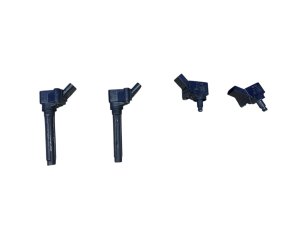
- Faulty Ignition Coil 🔴 High Probability Ignition coils are a very common wear item on modern German engines, and premature failure has been noted on Audis. They are subjected to high heat and voltage cycles, causing them to degrade over time.
How to confirm: Swap the ignition coil from cylinder 6 with another cylinder (e.g., cylinder 5). Clear the codes and drive the car. If the misfire code changes to P0305, the ignition coil is the faulty part.
Typical fix: Replace the faulty ignition coil. It is often recommended to replace all coils at the same time, as they tend to fail around the same mileage. Use OEM or reputable brands like Bosch, NGK, or Eldor.
Est. part cost: $40-$80 per coil - Worn Spark Plug 🔴 High Probability Audi's high-performance turbocharged and supercharged engines have specific service intervals for spark plugs, typically every 30,000 to 40,000 miles. Extending this interval can lead to worn electrodes, an incorrect gap, and misfires. Oil leaking from a failed valve cover gasket can also foul the plug, causing a misfire.
How to confirm: After confirming the coil is good, remove and inspect the spark plug from cylinder 6. Look for a worn or fouled electrode, oil contamination, or cracks in the ceramic insulator. Compare it to a new plug.
Typical fix: Replace the spark plug in cylinder 6. It is best practice to replace all spark plugs as a set 🎬 Watch this walkthrough on changing your spark plugs and coils. to ensure even performance. Ensure they are gapped correctly (if applicable) and torqued to specification, which is typically 22 ft-lbs (30 Nm).
Est. part cost: $15-$30 per plug - Carbon Buildup on Intake Valves 🟡 Medium Probability This is a well-documented issue on Audi TFSI direct-injection engines, especially the C7 3.0T. Since fuel is not sprayed over the intake valves, carbon deposits from oil vapors in the PCV system accumulate, restricting airflow and causing misfires, especially under load or on a cold start. This issue typically becomes noticeable between 60,000 and 80,000 miles.
How to confirm: This requires a visual inspection of the intake ports and valves, which usually involves removing the intake manifold or supercharger. A borescope can be used for this.
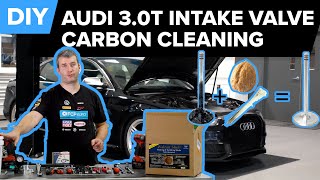
Typical fix: The intake valves need to be physically cleaned. The most effective method is walnut shell blasting, which uses crushed walnut shells to scrub the valves clean without damaging the engine. 🎬 See how to perform a professional walnut blast carbon cleaning. Chemical cleaning methods are less effective for heavy buildup. This service can cost between $700 and $1,500 at an independent shop.
Est. part cost: $50-$100 for materials (if DIY), but this is typically a professional service. - Faulty Fuel Injector ⚪ Low Probability While less common than ignition issues, direct fuel injectors operate under high pressure and can become clogged or fail electronically, preventing the correct amount of fuel from being delivered to cylinder 6.
How to confirm: This is more difficult to diagnose. It involves swapping injectors between cylinders (a labor-intensive task) or using an advanced scan tool like VCDS to monitor injector performance and fuel trims.
Typical fix: Replace the faulty fuel injector. It's also recommended to replace the injector seals at the same time. This is often a job for a professional due to the high-pressure fuel system.
Est. part cost: $100-$250 per injector
Rare But Worth Checking
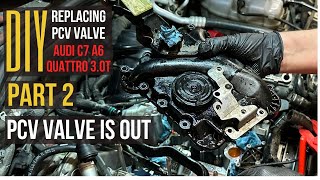
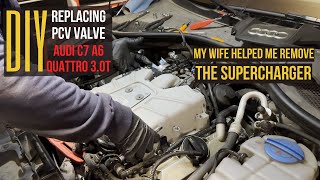
- Failed PCV Valve (Oil Separator): The PCV system on the 3.0T engine is known to fail. A torn diaphragm in the PCV valve creates a significant vacuum leak, which can cause a high-pitched whistling noise, rough idle, lean codes (P0171/P0174), and misfires. A simple test is to try removing the oil cap with the engine running; if there is strong vacuum holding it down, the PCV has likely failed. On the 3.0T, this part is located under the supercharger, making replacement labor-intensive. 🎬 Watch this guide on removing the supercharger to access the PCV.
- Low Engine Compression: This indicates a more serious mechanical engine problem, such as a bad piston ring, a burnt valve, or a damaged cylinder wall. A compression test is needed to diagnose this.
- Vacuum Leak: A leak in a vacuum hose or intake manifold gasket can introduce unmetered air, leaning out the air-fuel mixture and causing misfires. This would typically affect multiple cylinders and throw other codes.
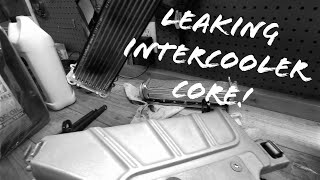
- Leaking Supercharger Intercooler: On the 3.0T supercharged engine, the intercoolers are located within the supercharger housing. They can develop leaks, allowing coolant to enter the intake path for a specific cylinder bank. This is a known, though less common, cause for misfires, particularly on cylinders 3 and 6.
Diagnosis Steps

- Read the trouble codes with an OBD-II scanner (like VCDS for VW/Audi) to confirm P0306 and check for any other codes like P0300 or P130A.
- Determine the location of cylinder 6. On Audi V6 engines (both 3.0T Supercharged and Turbocharged), it is the rearmost cylinder on the driver's side (left bank, in the US).
- Swap the ignition coil from cylinder 6 with the coil from cylinder 5. Clear the codes, start the engine, and see if the misfire code moves to P0305. If it does, the ignition coil is bad.
- If the code remains P0306, move the spark plug from cylinder 6 to cylinder 5. Clear the codes and re-test. If the code changes to P0305, the spark plug is bad.
- If the misfire is still on cylinder 6, inspect the wiring and connector for the cylinder 6 ignition coil and fuel injector for any damage or oil contamination.
- Test for a failed PCV valve by checking for a strong vacuum at the oil filler cap while the engine is idling.
- If carbon buildup is suspected (especially on engines over 60k miles), remove the intake manifold for inspection. A borescope can help visualize the condition of the intake valves.
- If all else fails, perform a compression test on cylinder 6 to check for mechanical engine health.
Parts You'll Likely Need
- Ignition Coil
(OEM #3.0T Supercharged (C7): 06E905115F (or G). 2.0T TFSI (C7): 06L905110K. 3.0T Turbo (C8): 06L905110K.)— This is the most frequent cause of a single-cylinder misfire on Audi A6 models. They are a common wear-and-tear component.
Trusted brands: Bosch, NGK, Eldor (OEM), APR (Upgrade)
OEM price range: $60-$90
Aftermarket price range: $40-$70 - Spark Plug
(OEM #3.0T Supercharged (C7): NGK PFR8S8EG. 2.0T TFSI (C7): NGK IZKR7B.)— Worn spark plugs are the second most common cause. They are a routine maintenance item that is often neglected, leading to misfires.
Trusted brands: NGK, Bosch
OEM price range: $20-$35
Aftermarket price range: $15-$25
Related Codes That Often Appear With This One
- P0300 — This code means 'Random/Multiple Cylinder Misfire Detected.' It often appears with specific cylinder codes like P0306 if the misfire is intermittent or affecting other cylinders as well, which could point towards a vacuum leak or carbon buildup affecting an entire cylinder bank.
- P130A — This Audi-specific code means 'Hide Cylinder' or 'Cylinder Deactivation'. If the ECM detects a severe and persistent misfire (like P0306) that could damage the catalytic converter, it will trigger P130A and shut off the fuel injector to that cylinder as a protective measure. TSB #01138920337681 specifically links these codes, noting the root cause of the misfire must be fixed to clear P130A.
Technical Service Bulletins (TSBs) & Recalls
- A0124212069038_5: Mentions MIL illumination for cylinder misfires including P0306.
- A0123802069038_4: Notes MIL illumination for cylinder misfires including P0306.
- 01138920337681: Specifically links a cylinder misfire fault (P0301-P0306) with DTC P130A being stored in the ECM.
- A0123912069038_5: Mentions MIL illumination for DTCs including P0306.
- A0123612069038_3: Notes MIL on with DTCs including P0306 may be stored.
Platform-Specific Known Issues
- Carbon Buildup: As mentioned, direct injection TFSI engines are prone to carbon deposits on intake valves, which is a known cause of misfires. This often requires professional cleaning via walnut blasting. Owners on forums report this becoming an issue around 60k-80k miles, with repair costs ranging from $700-$1500.
- P130A 'Hide Cylinder' Fault: Audi has a specific engine management strategy where a severe misfire will cause the ECU to cut fuel to the offending cylinder to protect the catalytic converter. This triggers code P130A alongside the P0306 code. This is not a separate failure, but a protective action. The root cause of the P0306 must be fixed to resolve the P130A.
- PCV Valve Failure: The PCV valve (oil separator) on the 3.0T engine is a known failure point. It is located under the supercharger, making replacement a 4-6 hour job. A failed PCV causes a large vacuum leak, often resulting in multiple misfire codes and a distinct whistling sound.
Mechanic-Grade Diagnostic Values
- High-Pressure Fuel Rail Pressure (3.0T Supercharged) — expected: Should exceed 1500 PSI, with some systems designed for over 2000 PSI.. Failure: A reading significantly below spec, often accompanied by fault code P0087 (Fuel Rail Pressure Too Low), indicates a failing High-Pressure Fuel Pump (HPFP).
- Ignition Coil Primary Resistance — expected: 0.4 to 2.0 ohms.. Failure: A reading outside of this range suggests a faulty primary winding in the coil.
- Ignition Coil Secondary Resistance — expected: 6,000 to 10,000 ohms (on typical coils). However, Audi documentation notes that on some coils, a high-tension isolation diode in the secondary circuit makes this measurement impossible with a standard multimeter.. Failure: An out-of-spec reading on testable coils, or the inability to get a reading, points to a bad coil. The definitive test is swapping the coil to another cylinder.
- Spark Plug Gap (Tuned 3.0T Supercharged Engines) — expected: Stage 1 Tune: 0.028 inches. Stage 2 Tune: 0.026 inches.. Failure: Using the stock gap on a tuned engine can lead to spark blow-out under high boost, causing misfires.
Hidden / Shadow Codes Worth Checking
- VCDS Measuring Blocks 015 & 016: These are not fault codes but live data screens that show a real-time counter of misfires for each individual cylinder. This allows a technician to see not just that a misfire occurred (triggering P0306), but how frequently it is occurring and under what conditions (e.g., at idle, under load). (see via Requires a VAG-specific scan tool like VCDS (VAG-COM) by Ross-Tech. Navigate to Engine (01) -> Measuring Blocks (08) -> and enter groups 015 and 016.)
Scan Tool Commands That Help
- VCDS (VAG-COM): Output Tests (Sequential) — This function allows the technician to command the ECU to activate specific components one by one, including each fuel injector. You can listen for the audible 'click' of the injector for cylinder 6 to confirm it is being electronically activated, helping to rule out a wiring or ECU driver issue without removing the part.
Wiring & Ground Locations
- Engine Block Ground Strap — On the C7 platform, a primary engine ground point is located on the right (passenger side in US) of the engine compartment, near the alternator.. A corroded or loose engine ground can cause a variety of electrical issues, including weak spark or erratic behavior from ignition coils, leading to misfires that can be difficult to diagnose.
- Ignition Coil Connector Ground — Each ignition coil has a small ground wire integrated into its harness connector.. This wire can become brittle from heat cycles and break during spark plug or coil replacement. A broken ground at the coil connector will prevent that coil from firing, causing a persistent misfire on that cylinder.
Real Owner Repair Stories
- Reddit user on r/Audi (Audi S4 with 3.0T Supercharged engine (same as A6 C7)) — Misfire on cylinder 3 (adjacent bank to cylinder 6, prone to same issues).
❌ Tried (didn't work) Initial diagnosis pointed towards common coil/plug issues.
✅ What actually fixed it The final cause was a leaking supercharger intercooler core. On the 3.0T, these are known to leak coolant internally, which then drips directly into the intake ports for cylinders 3 and 6, causing misfires. The fix required removing the supercharger and replacing the internal intercooler cores. - AudiWorld Forums user (2014 Audi A6 3.0T) — Persistent misfire on a single cylinder, Check Engine Light.
❌ Tried (didn't work) Swapping ignition components did not resolve the issue. Replaced 3 fuel injectors on separate occasions.
✅ What actually fixed it A compression test revealed a leak. Upon disassembly of the engine, a burnt exhaust valve stem was found. The ultimate repair was to replace the entire cylinder head for that bank. - AudiWorld Forums user (2005 Audi A6 (C6, similar principle)) — Initial P0306, which progressed to multiple misfires (P0300, P0305, P0306), rough idling, engine shaking, and white smoke from the exhaust.
❌ Tried (didn't work) Replacing the ignition coil for cylinder 6 initially did not fix the problem.
✅ What actually fixed it The spark plug tube seal (part of the valve cover gasket assembly) had failed, allowing the spark plug well for cylinder 6 to fill with engine oil. This oil fouled the spark plug and shorted out the ignition coil. The fix was to replace the valve cover gaskets/tube seals, thoroughly clean all oil from the spark plug tube, and replace the damaged spark plug and coil.
"I Checked Everything" — The Actual Cause

- A classic scenario for the C7 3.0T supercharged engine is a misfire (often on cylinder 3 or 6) with mysterious coolant loss but no external leaks. A smoke test, which checks for air leaks in the intake, will come back clean. The actual cause is often an internal leak in the supercharger's intercooler cores, which are located under the supercharger. Coolant seeps directly into the engine's intake ports, fouling the spark plug and causing a misfire that a smoke test cannot detect. Diagnosis requires removing the supercharger and looking for the tell-tale pink crust of dried coolant.
OEM Part Supersession History
06E905115A/B/C/D/E→06E905115F, 06E905115G— Revisions to improve reliability and prevent premature failure, which was common on earlier versions.
Heads up: While many revisions are physically interchangeable, it is best practice to use the latest available revision (F or G) and to replace all coils as a set to ensure consistent performance.
Model Year Variations Within This Range
- 2013-2018 (C7 Generation, EA837 Supercharged): This generation's 3.0T engine is prone to misfires from two unique sources: a failed PCV valve located under the supercharger and internal leaks from the water-to-air intercooler cores also housed within the supercharger assembly. Failure of the intercooler typically causes coolant to leak into cylinders 3 and 6.
- 2019-2020 (C8 Generation, EA839 Turbocharged): This generation's 3.0T engine is a different design (EA839) with a 'hot-V' single-turbo setup. It uses a traditional air-to-air intercooler at the front of the car. Therefore, it is not susceptible to the internal coolant leak that causes misfires on the C7. A failure of the C8's intercooler system would result in a boost leak (audible hiss, P0299 underboost code), not a coolant-induced misfire.
Helpful Videos


We Have This Part in Stock





The information in this article is provided for general reference and educational purposes only. Vehicle specifications, procedures, and part compatibility can vary by production date, trim level, and region. Always consult your vehicle's factory service manual and verify part numbers before purchasing or performing repairs. Safety-critical components such as airbags, seat belts, and braking systems should be installed by a qualified professional.
- Audi A6:
- 🎬 Helpful Videos
- 🛍️ Shop This Part
- What's Unique About the 2013-2020 Audi A6
- Diagnostic Flowchart
- Symptoms You May Notice
- Most Likely Causes
- Rare But Worth Checking
- Diagnosis Steps
- Parts You'll Likely Need
- Related Codes That Often Appear With This One
- Technical Service Bulletins (TSBs) & Recalls
- Platform-Specific Known Issues
- Mechanic-Grade Diagnostic Values
- Hidden / Shadow Codes Worth Checking
- Scan Tool Commands That Help
- Wiring & Ground Locations
- Real Owner Repair Stories
- "I Checked Everything" — The Actual Cause
- OEM Part Supersession History
- Model Year Variations Within This Range
- 🎟️ Get 5% Off