

P0306 on 2005-2011 Audi A6 3.2L V6: Cylinder 6 Misfire Causes and Fixes
P0306 on a 2005-2011 Audi A6 3.2L FSI indicates a misfire in cylinder 6. The most common causes are a faulty ignition coil or a worn spark plug. However, significant carbon buildup on the intake valves is a very frequent issue on this specific engine and is the next likely culprit if ignition parts are good. Oil leaking into the spark plug well from a failed valve cover gasket is another common cause.
- P0306 means cylinder 6 is misfiring. On this engine, it's the cylinder closest to the driver.
- Always perform the 'coil swap test' first. It's a simple, no-cost diagnostic step that often finds the culprit (a bad ignition coil).
- If the check engine light is flashing, stop driving immediately to prevent destroying your catalytic converter.
- Do not overlook carbon buildup. If new spark plugs and ignition coils don't fix the misfire, heavy carbon deposits on the intake valves are the next most likely cause on this specific FSI engine.
What's Unique About the 2005-2011 Audi A6

The 2005-2011 Audi A6 (C6 generation) with the 3.2L FSI V6 engine has a direct injection fuel system. This design is highly susceptible to carbon buildup on the intake valves because fuel is injected directly into the cylinder, meaning gasoline and its detergents never wash over the valves. Oil vapor from the PCV system bakes onto the hot valves, forming hard carbon deposits that restrict airflow, leading to misfires that are often mistaken for ignition or fuel injector problems. While ignition coils and spark plugs are still primary suspects, this inherent engine characteristic makes carbon buildup a very common cause for P0306 on this specific vehicle, often requiring cleaning every 40,000-60,000 miles.
Symptoms You May Notice
- Rough or vibrating idle
- Hesitation or stumbling during acceleration
- Noticeable loss of engine power
- Flashing Check Engine Light
- Reduced fuel economy
- Smell of raw fuel from the exhaust
- Engine shaking, especially at idle or under load.
- Popping or backfiring sounds from the exhaust.
- Replacing the fuel injector before inspecting for carbon buildup. On the 3.2L FSI engine, airflow restriction from carbon is a more probable cause of a persistent misfire than a faulty injector.
- Assuming the catalytic converter is bad due to a fuel smell. A persistent misfire will send unburnt fuel into the exhaust, creating a rich smell and eventually damaging the converter, but the converter itself is not the root cause of the P0306 code.
- Replacing only the ignition coil when the spark plug well is full of oil. The oil will quickly damage the new coil, leading to a repeat failure. The root cause is the leaking valve cover gasket/tube seals.
Most Likely Causes


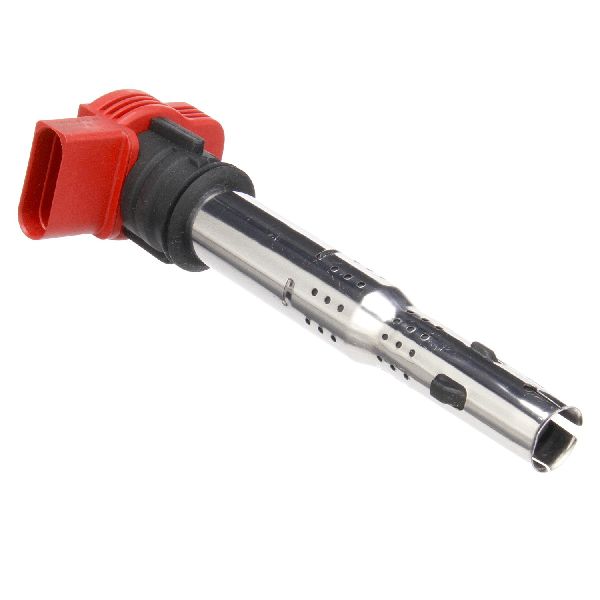
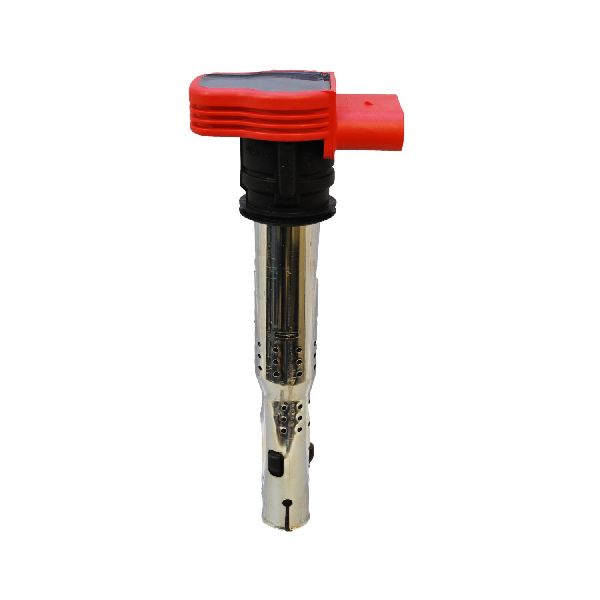
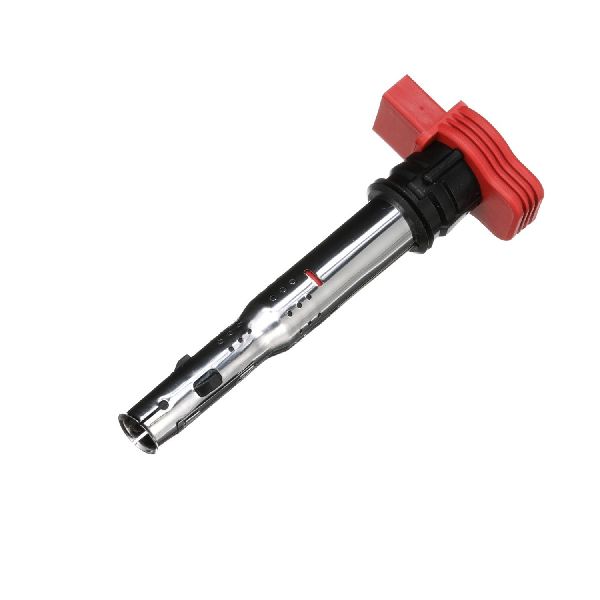
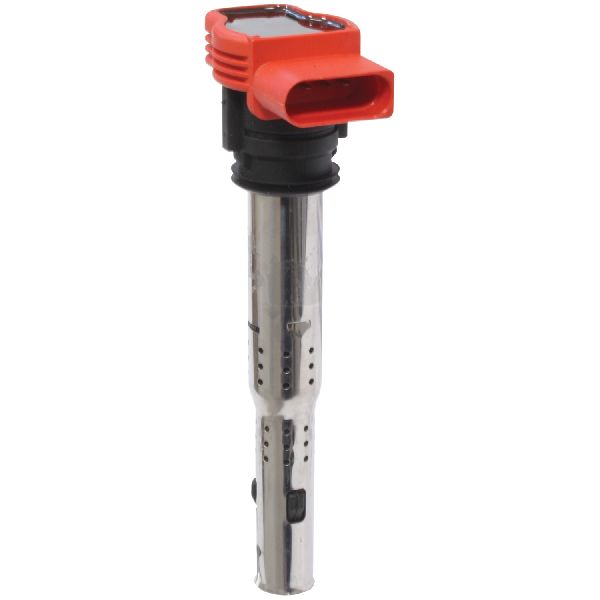
- Faulty Ignition Coil 🔴 High Probability Ignition coils are a very common failure item on Volkswagen and Audi products of this era due to heat cycles and age causing internal components to fail. The original 06E905115E coils have been superseded multiple times, indicating revisions to improve reliability.
How to confirm: Swap the ignition coil from cylinder 6 with another cylinder (e.g., cylinder 5). Clear the codes and drive the car. If the code changes to P0305, the ignition coil is faulty. This is the standard first diagnostic step.
Typical fix: Replace the faulty ignition coil. It is often recommended to replace all six coils at the same time for preventative maintenance, especially if they are the original parts.
Est. part cost: $40-$90 per coil - Worn or Fouled Spark Plug 🔴 High Probability
How to confirm: After confirming the ignition coil is good, remove the spark plug from cylinder 6. Inspect it for wear, carbon fouling, or oil contamination. If it's worn or dirty, it needs replacement. An oil-soaked plug points to a leaking valve cover gasket.
Typical fix: Replace the spark plug. It is best practice to replace all six spark plugs at the same time to ensure consistent performance. Always apply dielectric grease to the new coil boot.
Est. part cost: $15-$40 per plug - Carbon Buildup on Intake Valves 🟡 Medium Probability The 3.2L FSI is a direct-injection engine. Fuel is sprayed directly into the cylinder, so it never cleans the intake valves. Oil vapor from the PCV system bakes onto the hot valves, forming hard carbon deposits that restrict airflow and cause misfires, especially on cold starts. This is considered an inevitable maintenance item on this engine.
How to confirm: This requires a visual inspection using a borescope inserted into the intake ports after removing the intake manifold. This is the most definitive way to confirm significant buildup.
Typical fix: The intake valves need to be cleaned. The most effective method is walnut shell blasting, which is a professional service. Chemical cleaning methods are also available but are generally less effective for heavy deposits. This service can cost between $700 and $1,700 at an independent shop or dealer.
Est. part cost: $20-$50 for gaskets, but the labor for cleaning is significant. - Leaking Spark Plug Tube Seals / Valve Cover Gasket ⚪ Low Probability The gaskets that seal the spark plug tubes can become brittle and leak oil over time. This oil can pool in the spark plug well, shorting out the ignition coil and spark plug, causing a misfire. This is a very common source of misfires that can be mistaken for a simple coil failure.
How to confirm: When removing the ignition coil for cylinder 6, check for liquid oil in the spark plug well or on the coil boot and spark plug. If oil is present, the seals have failed.
Typical fix: Replace the valve cover gaskets and spark plug tube seals. It is critical to thoroughly clean all oil from the spark plug well before installing new parts. Replace the oil-fouled ignition coil and spark plug as they are often damaged by the oil.
Est. part cost: $50-$150 for a gasket set
Rare But Worth Checking
- Clogged or Faulty Fuel Injector: While less common than ignition issues or carbon buildup, a fuel injector can fail or become clogged, disrupting the fuel spray pattern and causing a misfire. Diagnosis is more involved and typically follows ruling out the more common causes. Swapping the injector with another cylinder is a valid diagnostic step, similar to swapping a coil.
- Low Compression / Mechanical Engine Issue: A mechanical problem like a worn piston ring, a burnt valve, or issues with the timing chain system can cause a persistent misfire. A startup rattle is a key symptom of timing chain guide/tensioner failure on the 3.2L FSI. This is the least likely cause for a single cylinder misfire and should be investigated with a compression test after all other possibilities are exhausted.
Diagnosis Steps

- Read the fault codes with an OBD-II scanner (VCDS is recommended for Audi) to confirm P0306 and note any other codes like P0300 or P130A.
- Identify cylinder 6, which is the rearmost cylinder on the driver's side (left bank, US models).
- Remove the ignition coil from cylinder 6. Inspect the spark plug well for any standing oil. If oil is present, the valve cover gasket and tube seals are the primary problem and must be replaced.
- If no oil is present, swap the ignition coil from cylinder 6 with the coil from cylinder 5 (the middle cylinder on the same bank). Clear the codes, run the engine, and re-scan. If the code changes to P0305, the ignition coil is bad.
- If the code remains P0306, swap the spark plug from cylinder 6 to cylinder 5. Clear codes and re-test. If the code moves to P0305, the spark plug is bad.
- If the misfire is still on cylinder 6, inspect the ignition coil connector and wiring for damage or corrosion.
- If ignition components are good, the next most likely cause is carbon buildup. This requires removing the intake manifold and using a borescope for visual inspection of the intake valves.
- If no significant carbon is found, more advanced diagnostics are needed. This includes testing the fuel injector (swapping it is a good method) and performing a compression test to rule out mechanical engine problems.
- Listen for a 1-3 second rattle from the rear of the engine on cold starts. This indicates a timing chain tensioner issue, which can cause misfires, though usually on multiple cylinders.
Parts You'll Likely Need

- Ignition Coil
(OEM #06E905115G)— This is the most frequent cause of a single-cylinder misfire on this engine. They are a common wear-and-tear item. The original part 06E905115E has been superseded by 06E905115F and then 06E905115G.
Trusted brands: Bosch, NGK, Eldor, Genuine Audi
OEM price range: $60-$90
Aftermarket price range: $40-$70 - Spark Plug
(OEM #101905622)— As a routine maintenance item, a worn or fouled spark plug is a very common cause for a misfire. Often replaced with coils as a set.
Trusted brands: NGK (PFR6Q), Bosch
OEM price range: $25-$40
Aftermarket price range: $15-$25
Related Codes That Often Appear With This One
- P0300 — If you see a P0300 (Random/Multiple Cylinder Misfire) code, it suggests the issue is not isolated to cylinder 6 and may be caused by a systemic problem like a vacuum leak, low fuel pressure, or significant carbon buildup affecting multiple cylinders.
- P0301, P0302, P0303, P0304, P0305 — The presence of other specific cylinder misfire codes indicates the problem is affecting more than one cylinder, pointing towards a common cause like carbon buildup, a bad batch of fuel, or a failing fuel pump.
- P130A — This is an Audi-specific code for 'Cylinder Disabling' or 'Hide Cylinder'. The ECM will intentionally shut off fuel to a misfiring cylinder (like cylinder 6) to protect the catalytic converter. Seeing this code reinforces the severity of the misfire and is a direct consequence of the P030x code.
Technical Service Bulletins (TSBs) & Recalls
- TT 24-13-03 / 2034001/4: Explains that DTC P130A 'Hide Cylinder' is a protective measure taken by the ECM in response to excessive misfiring and that the root cause of the misfire must be fixed to clear it.
- TSB 2020645/3: A software update for the ECM mentioned by owners to address cold start misfires, though cleaning the valves is often still required.
- TSB 2033768/1: Mentioned in relation to 3.0T engines but relevant contextually, as it links carbon buildup directly to misfire codes (P0301-P0306) and the P130A cylinder deactivation code, with an associated extended warranty for that specific engine.
- Bulletin #A0123362058038_4: Requests that technicians open a Product Support Solution (PSS) record when the MIL is illuminated and DTCs P0300 - P0306 are stored.
- Bulletin #A0124212069038_5: Provides diagnostic information for instances where the MIL is illuminated specifically due to cylinder misfires P0300 through P0306.
- Bulletin #A0123612069038_3: Provides manufacturer guidance for when the MIL is on and DTCs P0300, P0301, P0302, P0303, P0304, P0305, or P0306 are stored in the system.
- Bulletin #01138920337681: Notes that a cylinder misfire fault (DTC P0301 - P0306) with DTC P130A is stored in the engine control module (ECM), J623.
- Bulletin #A0123352069038_2: Provides instructions for technicians when the MIL is illuminated and one or more DTCs including P0300 and P0301 through P0306 are stored.
Platform-Specific Known Issues
- Carbon Buildup on Intake Valves: Due to the FSI direct injection design, carbon deposits on intake valves are not a rare occurrence but a common maintenance issue that directly causes misfires. Service is recommended as early as every 40,000-60,000 miles.
- Timing Chain Tensioner Wear: While less likely to cause a single cylinder misfire initially, the 3.2L FSI is known for issues with its rear-mounted timing chains and tensioners. This can cause camshaft timing correlation codes (like P0346) and eventually, misfires.
Mechanic-Grade Diagnostic Values
- Misfire Counter per Cylinder (VCDS) — expected: 0 at idle on a healthy engine.. Failure: Any count incrementing on cylinder 6 in Measuring Block Group 015, Field 3, indicates a misfire event.
- High-Pressure Fuel Rail Pressure (VCDS) — expected: Approximately 30-40 bar at idle, increasing under load.. Failure: Significantly lower pressure than specified, or pressure that bleeds down rapidly after engine shutoff, indicates a leak (potentially a leaking injector).
- High-Pressure Fuel Injector Leak Test (VCDS) — expected: After shutting off a warm engine, the fuel rail pressure should remain stable or slightly increase due to heat soak.. Failure: A steady drop in fuel rail pressure after engine shutoff points to one or more injectors leaking fuel into the cylinders.
- Low-Pressure Fuel System — expected: 4.0 Bar (approx. 58 PSI).. Failure: Pressure below specification can cause fuel starvation for the high-pressure fuel pump (HPFP), leading to misfires under load.
- Camshaft Adjustment (VCDS) — expected: Values in Measuring Block 093 should be within a specified range (typically close to 0° at idle).. Failure: Significant deviation or 'Block Not Available' can indicate a problem with a camshaft position sensor or the timing system itself, which can cause misfires.
Scan Tool Commands That Help
- VCDS (VAG-COM): Engine -> Output Tests -> Fuel Injector N-XX — This bidirectional test allows a technician to manually cycle each fuel injector individually. By listening for the injector's 'click' with a mechanic's stethoscope, you can confirm if the injector is mechanically responding to the ECU's command. This helps differentiate between a dead injector and a wiring/ECU driver problem.
- VCDS (VAG-COM): Engine -> Measuring Blocks -> Groups 014, 015, 016 — Use these blocks to view live misfire counters for each cylinder. Group 015, field 3 corresponds to cylinder 6. This is essential for confirming an active misfire and verifying if a repair has been successful without waiting for the P0306 code to reappear.
Wiring & Ground Locations
- Engine Harness Ground (Oil Filter Housing) — A small gauge, single brown wire coming from the main engine wiring harness that attaches to a stud on the oil filter housing. There may be two ground wires stacked on the same stud.. This ground point is critical for various engine sensors. It is often forgotten or improperly attached during major service like an engine replacement, leading to baffling electrical issues, including intermittent misfires. A poor ground can cause a weak spark or erratic sensor readings for cylinder 6 components.
- Earth Point 18 — On the cylinder block.. This is a primary engine ground. Corrosion or looseness can cause widespread electrical problems, including misfires across multiple cylinders. While less likely to cause an isolated P0306, it should be checked if other electrical symptoms are present.
Real Owner Repair Stories
- AudiWorld Forums user (2006 Audi A6 3.2L FSI) — Misfires on cylinders 4, 5, and 6 that worsened as the engine warmed up, accompanied by a P0346 camshaft position sensor code.
❌ Tried (didn't work) Swapping the camshaft position sensor did not resolve the issue.
✅ What actually fixed it The suggested fix in the thread was to perform a full timing system inspection, as the combination of a bank-specific misfire and a cam sensor code after timing work pointed towards a mechanical timing error (e.g., being off by one tooth) rather than a simple sensor failure. - AudiWorld Forums user (Audi A6 3.2L) — Misfires, EVAP leak codes, and codes for intake manifold flaps stuck closed.
❌ Tried (didn't work) Initial diagnosis focused on the misfire as a primary ignition or fuel problem.
✅ What actually fixed it The ultimate failure was catastrophic (zero compression and a burnt exhaust valve), but the root cause was traced back to the intake manifold runner flaps being stuck closed. This created a persistent rich condition, which led to detonation, destroying the spark plug electrodes and eventually burning the valve. The fix was a new engine, but the lesson was that intake runner flap faults must be addressed promptly. - Reddit user Fumboli (C6 Audi A6) — Sudden onset of 'gnarly misfires' on cylinder 1 (P0301) and a code for the left engine mount solenoid (P1573).
❌ Tried (didn't work) Initial diagnosis would typically focus on cylinder 1's coil and plug.
✅ What actually fixed it The root cause was the failure of the electronic engine mount. The user reported that the electrical fault in the mount's solenoid caused the ECU to 'freak out' and trigger a misfire on a cylinder in the same bank. This highlights how an unrelated electrical component can cause misfire codes. The fix is to replace the faulty engine mount.
"I Checked Everything" — The Actual Cause
- A torn diaphragm in the PCV valve (oil separator) can create a significant unmetered air leak, causing lean misfires (P0300, P030x) and lean codes (P0171, P2187). This may not be found with a smoke test. The key symptom is often a loud whistling noise from the engine or extremely high vacuum at the oil filler cap when the engine is running (it will be difficult to remove the cap, and the engine may stumble or stall when it's removed).
- An electrical failure in an active engine mount can trigger a fault (e.g., P1573) that causes the ECU to log a misfire code for a cylinder on that bank. No amount of smoke testing or traditional misfire diagnosis on the cylinder itself would find this cause.
OEM Part Supersession History
06E905115E→06E905115F, then 06E905115G— Revisions to improve reliability and combat premature failure common in this VAG engine generation.
Model Year Variations Within This Range
- 2005-2008: Early (e.g., 2005-2006) vs. later (e.g., 2007-2008) versions of the 3.2L engine may have minor component differences despite sharing the AUK/BKH family. A known variation is the material of the oil separator (PCV), with early models using aluminum and later ones using plastic. Electrical connectors for components like camshaft position sensors and the oil pressure switch may also differ, requiring parts from the original engine to be swapped over during an engine replacement.
- 2005-2011: The engine codes AUK and BKH are functionally very similar, to the point that VCDS may use the same label file for both. For diagnostic purposes, they can be treated almost identically, but when ordering physical parts like sensors, it is critical to use the vehicle's VIN to ensure the correct part and connector style.
Diagnostic Flowchart
Other Known Issues on This Vehicle
Issues unrelated to this code that are worth knowing about as an owner of this generation:
- Timing Chain Tensioner & Guide Failure 🔴 High — Common on engines over 80,000 miles. A distinct 1-3 second rattle from the rear of the engine on cold starts is the primary warning sign.
- Intake Valve Carbon Buildup 🔴 High — Inevitable on all 3.2L FSI engines. Performance degradation is often noticeable by 60,000-80,000 miles, sometimes earlier. (Ref: TSB 2020645/3 (ECM update) was issued to help with cold start misfires, but does not solve the physical buildup.)
- Thermostat Failure 🟠 Medium — Common on vehicles over 60,000-80,000 miles.
- Excessive Oil Consumption 🟠 Medium — Tends to develop as the engine ages, often past 100,000 miles.
Used vs. New Parts: Buying Guide for This Vehicle
When a used part is the smart pick: Used parts can be a cost-effective option for large, non-wear mechanical components. This includes the intake manifold (must be inspected for carbon and functional runner flaps), valve covers, or a complete wiring harness if a section is damaged. A complete used engine from a reputable salvage yard can also be viable, but its history is critical.
Donor-vehicle mileage cap: roughly under 80000 miles for the part to have meaningful remaining life.
What to inspect on the donor part:
- For engines, request a video of it running or at least a compression test.
- Remove the oil cap and look for heavy, thick black sludge, which indicates poor maintenance.
- Inspect all plastic connectors on harnesses and sensors; if they are brittle and crumble when touched, the part has seen excessive heat and is a poor choice.
- Check for a service history if buying from a dismantler specializing in European cars.
OEM-only on this vehicle (don't cheap out):
- High-Pressure Fuel Pump (HPFP)
- Fuel Injectors
- Camshaft and Crankshaft Position Sensors
- PCV / Oil Separator Assembly
Aftermarket brands forum-validated for this vehicle:
- Ignition Coils: Bosch, NGK, Eldor
- Spark Plugs: NGK, Bosch
- Gaskets: Victor Reinz, Elring
Brands owners have reported issues with on this vehicle:
- Unnamed, 'white-box' electronic sensors and ignition coils from online marketplaces. These frequently have high failure rates and can cause diagnostic headaches.
Real Owner Stories
Aggregated from forums and TSBs cited above. Mileages and costs reflect what owners reported in those sources.
Audi A6 (C6) 3.2 FSI
Symptoms: Misfires on P0300 through P0306, engine shaking, and white smoke coming out of the tailpipe.
What fixed it: The root cause was a leaking spark plug tube seal that allowed oil to flood the spark plug well, shorting out the ignition coil and plug.
Source hint: AudiWorld thread titled 'audi a6 c6 3.2 fsi misfires P0300-p0306 shanking and white out the tail pipe'
Audi A6 (C6/4F) 3.2L FSI
Symptoms: Misfires occurring across an entire bank (P0304, P0305, and P0306) and the engine running rich.
What fixed it: Diagnostic process involved swapping coils and plugs to isolate the issue, while also investigating potential timing issues related to the bank-wide failure.
Source hint: Ross-Tech Forums thread titled 'Audi A6 [C6/4F] Misfires in One Bank & Burning Rich'
2005-2011 Audi A6 3.2L FSI — ~50000 miles
Symptoms: Misfires under heavy load and during cold starts due to restricted airflow.
What fixed it: Carbon cleaning of the intake valves (walnut shell blasting) to remove deposits formed by oil vapor from the PCV system.
Cost: $700-$1,700
Source hint: AudiWorld Forums thread 'Cost of carbon service?' and TSB 2033768/1
Related OBD-II Codes
Frequently Asked Questions
My Audi A6 is showing P0306 and a P130A code. What does P130A mean?
Is there a software update for cold start misfires on the 3.2L FSI engine?
How much should I expect to pay for a carbon cleaning service on my A6 3.2L?
Which cylinder is cylinder 6 on the Audi 3.2L V6 engine?
Can I just replace the ignition coil if I see oil on the spark plug boot?
Does the 3.2L FSI engine have a specific maintenance interval for carbon buildup?
Helpful Videos

![How to Fix P0306 Engine Code in 3 Minutes [2 DIY Methods / Only $4.76]](https://img.youtube.com/vi/5HTrtkSEHH4/mqdefault.jpg)
Used OEM Parts in Stock

New Aftermarket Parts Available


The information in this article is provided for general reference and educational purposes only. Vehicle specifications, procedures, and part compatibility can vary by production date, trim level, and region. Always consult your vehicle's factory service manual and verify part numbers before purchasing or performing repairs. Safety-critical components such as airbags, seat belts, and braking systems should be installed by a qualified professional.
- Audi A6:
- 🎬 Helpful Videos
- 🛍️ Shop This Part
- What's Unique About the 2005-2011 Audi A6
- Symptoms You May Notice
- Most Likely Causes
- Rare But Worth Checking
- Diagnosis Steps
- Parts You'll Likely Need
- Related Codes That Often Appear With This One
- Technical Service Bulletins (TSBs) & Recalls
- Platform-Specific Known Issues
- Mechanic-Grade Diagnostic Values
- Scan Tool Commands That Help
- Wiring & Ground Locations
- Real Owner Repair Stories
- "I Checked Everything" — The Actual Cause
- OEM Part Supersession History
- Model Year Variations Within This Range
- Diagnostic Flowchart
- Other Known Issues on This Vehicle
- Used vs. New Parts: Buying Guide for This Vehicle
- Real Owner Stories
- Audi A6 (C6) 3.2 FSI
- Audi A6 (C6/4F) 3.2L FSI
- 2005-2011 Audi A6 3.2L FSI — ~50000 miles
- Related OBD-II Codes
- Frequently Asked Questions
- 🎟️ Get 5% Off