

P0305 on 2010-2019 Lincoln MKT 3.5L EcoBoost: Cylinder 5 Misfire Causes and Fixes
P0305 indicates a misfire in cylinder 5. On the 3.5L EcoBoost, this is most often caused by a worn-out spark plug or a failed ignition coil. Cracked spark plug porcelain is a known issue on these engines. A DIY fix for these common ignition parts is typically under $100 and is the best place to start diagnostics.
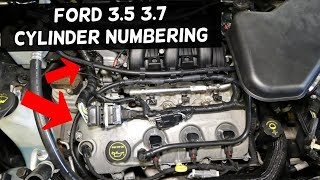
- P0305 means cylinder 5 is misfiring. On your MKT, this is the middle cylinder on the front (radiator side) bank.
- The most likely cause is a bad spark plug or ignition coil. These are relatively inexpensive and easy to replace.
- Start your diagnosis by swapping the ignition coil from cylinder 5 to a neighboring cylinder. If the code follows the coil, you've found the problem.
- Do not drive if the check engine light is flashing, as this can quickly cause expensive damage to your catalytic converter.
- If you have a 2010-2016 model, be aware that carbon buildup on the intake valves is a known issue that can cause misfires.
What's Unique About the 2010-2019 Lincoln MKT
The 3.5L EcoBoost engine is a high-performance, direct-injected, turbocharged engine that places significant stress on its ignition components. As a result, spark plugs can wear out faster than on naturally aspirated engines, and owners report frequent replacements are needed to prevent misfires. Incorrect spark plug gaps are a frequent cause of misfires under boost. Additionally, first-generation engines (2010-2016) are direct-injection only and are highly susceptible to carbon buildup on intake valves, which can disrupt airflow and lead to misfires over time. While a simple ignition component is the most likely culprit, these engine-specific traits are important to consider during diagnosis.
Generation note: This range covers two generations of the 3.5L EcoBoost. The 2010-2016 models use the first-generation engine, which is direct-injection only and more prone to carbon buildup on intake valves. The 2017-2019 models use the second-generation engine, which added port injection to the existing direct injection, largely to mitigate this carbon buildup issue.
Symptoms You May Notice
- Check engine light is on solid or flashing
- Rough or vibrating idle
- Engine hesitation, stumbling, or jerking during acceleration
- Noticeable loss of engine power
- Reduced fuel economy
- A smell of raw fuel from the exhaust
- Audible popping or backfiring from the exhaust
- Replacing oxygen sensors. O2 sensors report on combustion efficiency but do not cause a single-cylinder misfire.
- Replacing the catalytic converter. A misfire will destroy a catalytic converter, but a bad converter will not cause a P0305 code. Misfire codes must always be fixed first.
Most Likely Causes
- Worn or Fouled Spark Plug 🔴 High Probability The high cylinder pressures and heat in EcoBoost engines cause spark plugs to wear quickly, with some owners replacing them as often as every 30,000 miles to prevent issues. Cracked porcelain insulators are also a very common failure point on these engines, leading to intermittent misfires that can be hard to diagnose.
How to confirm: Remove the spark plug from cylinder 5. Inspect for a worn electrode, heavy carbon or oil fouling, or a thin black line on the white porcelain, which indicates a crack (carbon tracking). A magnifying glass may be needed to see the crack. The gap should be checked; for Gen 1 engines, a gap of .028" is often recommended by enthusiasts to prevent misfire under load, though factory spec is wider.
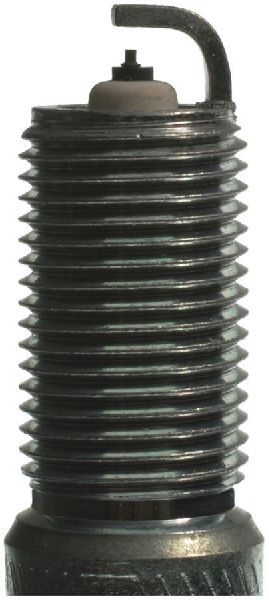
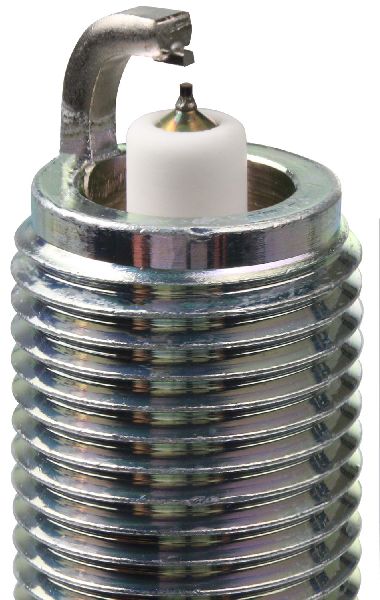
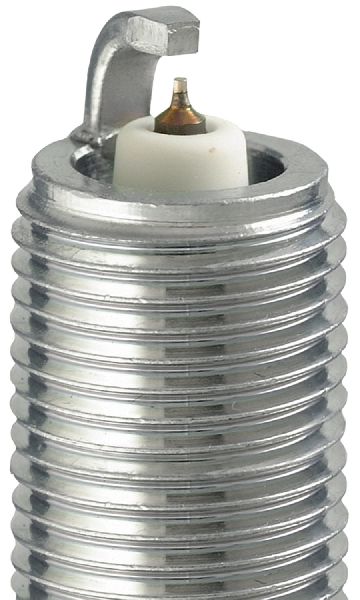
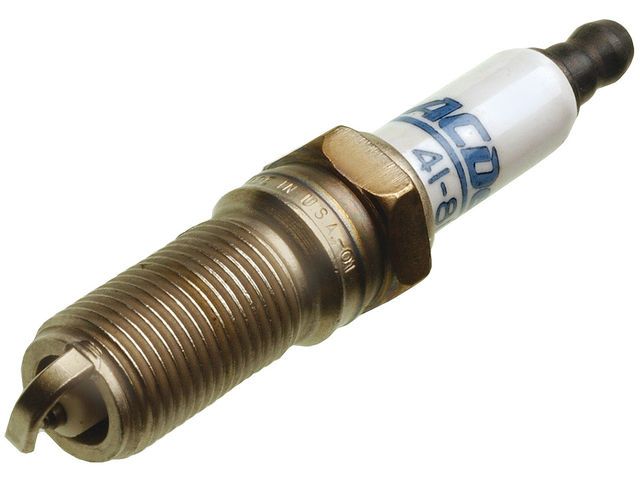
Typical fix: Replace the spark plug. It is best practice to replace all six spark plugs at the same time with the correct OEM-spec, pre-gapped plugs to ensure consistent performance. The recommended Motorcraft plug for many Gen 1 models is the SP-534, which was later superseded by SP-580. Do not adjust the gap on new iridium plugs 🎬 See this step-by-step guide for replacing your spark plugs. as it can damage them.
Est. part cost: $60-$120 for a set of six Motorcraft plugs - Faulty Ignition Coil 🔴 High Probability Heat and vibration lead to the eventual failure of coil-on-plug units. A failing coil cannot produce enough voltage to jump the spark plug gap under load, a common scenario in a turbocharged engine.
How to confirm: Swap the ignition coil from cylinder 5 with an adjacent cylinder (like cylinder 4 or 6). Clear the codes and drive the vehicle. If the misfire code changes to P0304 or P0306, the coil is faulty. The OEM Motorcraft part number is often DG549 for this application.
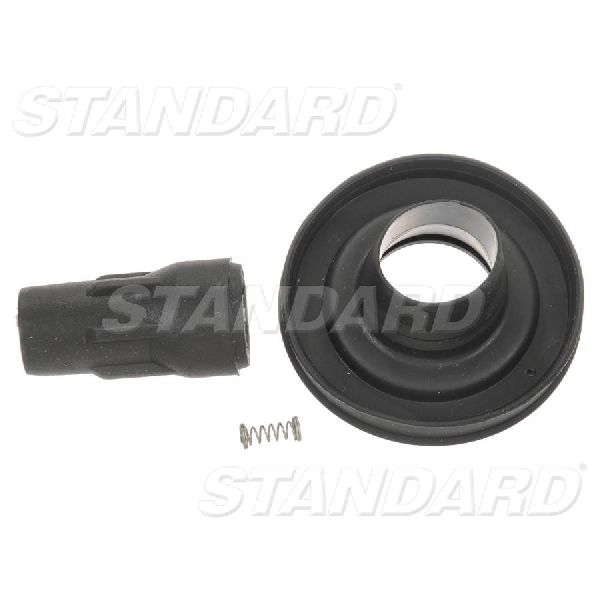
Typical fix: Replace the failed ignition coil and the rubber boot. Many technicians recommend replacing the spark plug at the same time. It is wise to use dielectric grease on the coil boot and electrical connector.
Est. part cost: $40-$80 for one Motorcraft coil - Carbon Buildup on Intake Valves 🟡 Medium Probability This is primarily an issue on the 2010-2016 Gen 1 engines, which lack the port injectors that help wash carbon deposits off the valves in the Gen 2 engines. Oil vapors from the PCV system bake onto the hot intake valves, restricting airflow and causing misfires.
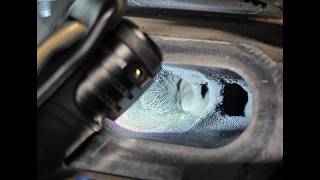
How to confirm: This is difficult to confirm without professional tools. A technician would use a borescope inserted into the intake port to visually inspect the valves for heavy carbon deposits. This is usually suspected after ignition components have been ruled out on a higher-mileage Gen 1 engine.
Typical fix: The intake manifold must be removed and the valves cleaned manually, often through a process called walnut blasting. 🎬 Watch: How a professional walnut blasting service cleans intake valves. This is a labor-intensive job. Some owners install an oil catch can to reduce the amount of oil vapor entering the intake, potentially slowing future buildup.
Est. part cost: $0 in parts, but significant labor cost ($500-$1000+) - Leaking Fuel Injector ⚪ Low Probability
How to confirm: A professional can perform a fuel injector balance test to see if the injector for cylinder 5 is flowing at a different rate than the others. A fuel smell on the spark plug can also be an indicator. Checking fuel trim data on a scan tool can also provide clues.
Typical fix: Replace the faulty fuel injector. It's often recommended to replace the full set.
Est. part cost: $70-$150 per injector
Rare But Worth Checking
- Vacuum Leak: A leak in the intake manifold gasket near the runner for cylinder 5 could lean out the air/fuel mixture and cause a misfire. This can be diagnosed with a smoke test.
- Low Compression: A mechanical engine problem, such as a burnt valve, worn piston rings, or a failing head gasket can cause a loss of compression in the cylinder. A compression test is needed to diagnose this, and it typically indicates a major engine repair is necessary. Manufacturer TSB Bulletin #SSM 46364 notes that for vehicles exhibiting P0305 along with excessive oil consumption, the cylinder heads should be suspected as the cause.
Diagnosis Steps
- Use an OBD-II scanner to confirm the P0305 code and check for any other codes. Note the freeze frame data, which shows engine conditions when the code was set.
- Locate cylinder 5. It is the middle cylinder on the bank closest to the radiator (front bank). 🎬 Watch: How to identify the correct cylinder order on this engine.
- Swap the ignition coil from cylinder 5 with the coil from cylinder 4 (the one closest to the drive belts on the same bank).
- Clear the codes with the scanner and test drive the vehicle, trying to replicate the conditions that caused the misfire (e.g., hard acceleration).
- Re-scan the vehicle. If the code has moved to P0304, the ignition coil is the problem and needs to be replaced. The Motorcraft part is often DG549.
- If the code remains P0305, move the original coil back to cylinder 5. Now, remove the spark plug from cylinder 5.
- Inspect the spark plug for excessive wear, oil/fuel fouling, or a cracked porcelain insulator. A hairline crack is a very common failure on these engines and can be hard to see.
- If the spark plug is worn or damaged, replace it. It is highly recommended to replace all six plugs and their boots at the same time using OEM Motorcraft SP-534 or its successor, SP-580.
- If the ignition coil and spark plug are confirmed to be good, the issue is less common. At this point, you may need professional help to check for a bad fuel injector, carbon buildup (especially on 2010-2016 models), a vacuum leak, or low compression. Manufacturer TSB Bulletin #TSB 16-0113 suggests that some misfires at normal operating temperature or after a hot restart may be resolved by reprogramming the PCM to the latest calibration.
Parts You'll Likely Need
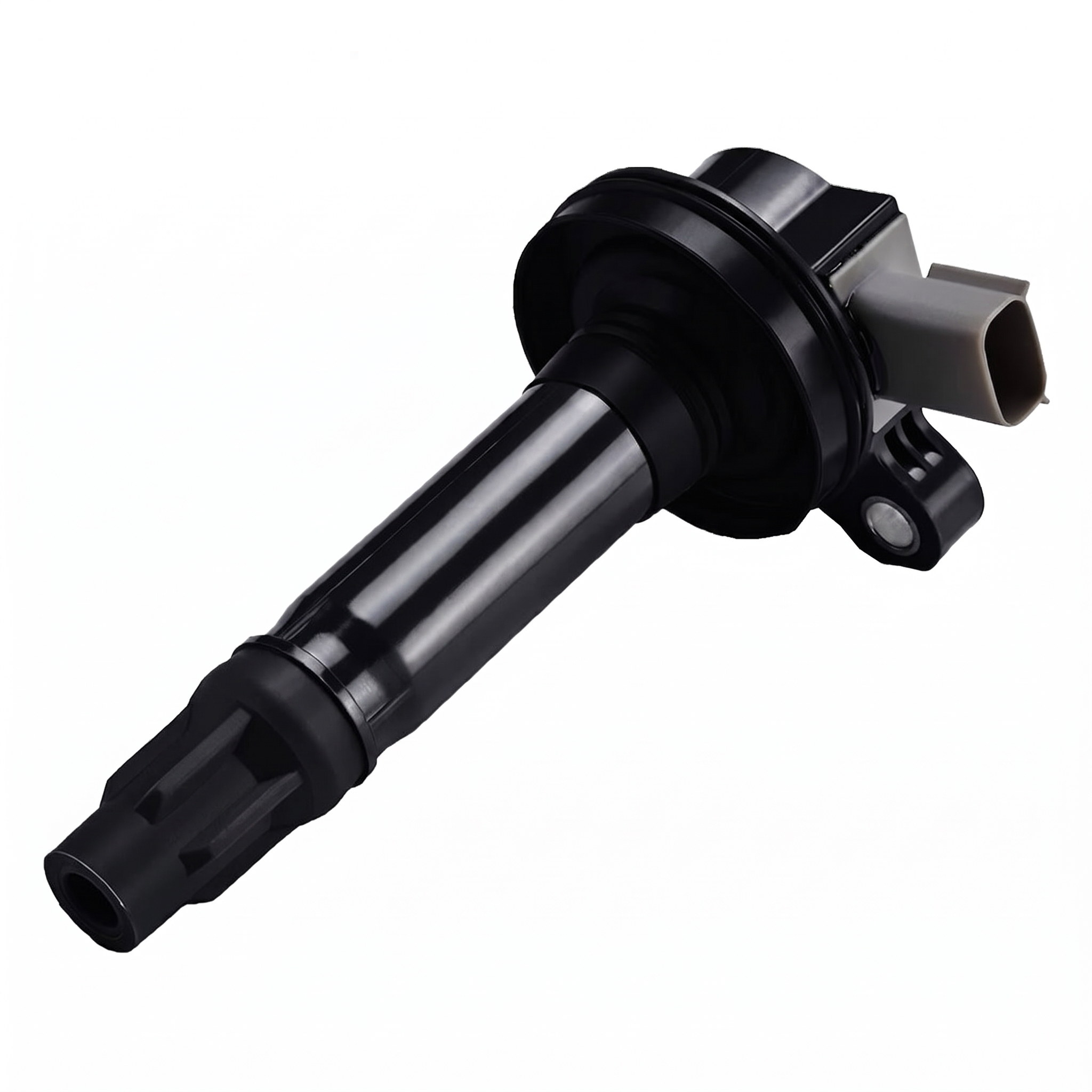
- Ignition Coil
(OEM #DG549 / BL3Z-12029-C)— This is one of the two most common failure items for a P0305 code. The coil provides the high voltage needed to create a spark under high boost pressures.
Trusted brands: Motorcraft, NGK, Denso
OEM price range: $60-$90
Aftermarket price range: $35-$65 - Spark Plugs
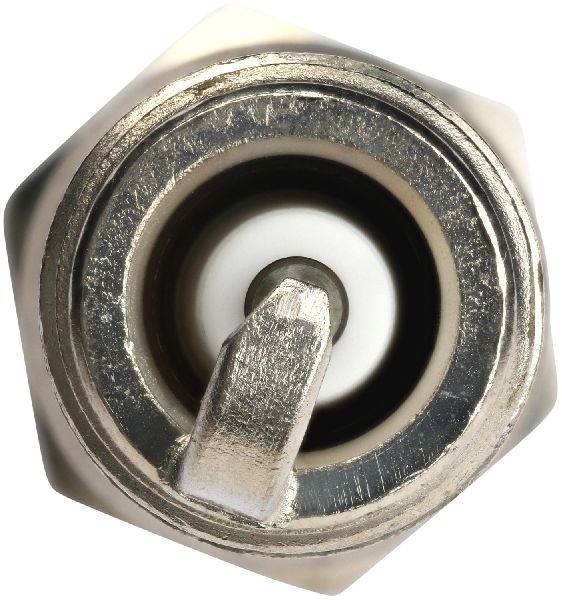
(OEM #SP-534 / CYFS-12Y-2)— EcoBoost engines are hard on spark plugs, and a worn, fouled, or cracked plug is a very common cause of misfires. They are a routine maintenance item with a shorter-than-expected life.
Trusted brands: Motorcraft, NGK, Autolite
OEM price range: $15-$25 per plug
Aftermarket price range: $8-$15 per plug
Related Codes That Often Appear With This One
- P0300 — If the cause of the misfire (like a vacuum leak or fuel pressure issue) is not isolated to one cylinder, it may cause random misfires across multiple cylinders.
- P0301, P0302, P0303, P0304, P0306 — If other cylinders on the engine are also experiencing misfires due to worn plugs or coils, their respective codes will appear alongside P0305.
- P0420 or P0430 — These codes indicate catalyst inefficiency. They often appear after a misfire has been happening for a while, as the unburned fuel from the misfiring cylinder has damaged the catalytic converter.
- P0524 or P06DD — According to TSB Bulletin #SSM 54504, these oil pressure codes may appear with P0305 if the vehicle is experiencing excessive oil consumption (1 quart in less than 3,000 miles).
Technical Service Bulletins (TSBs) & Recalls
- TSB 19-2212: For some 2018-2019 MKT vehicles with the 3.5L EcoBoost, this TSB addresses an illuminated malfunction indicator lamp (MIL) and various warning messages, which could be related to misfire events.
- Bulletin #SSM 54504: Notes that vehicles may exhibit P0305 and other misfire codes alongside excessive oil consumption and an illuminated MIL.
- Bulletin #SSM 46364: States that for misfire codes including P0305, if accompanied by excessive oil consumption, the cylinder heads should be suspected.
- Bulletin #TSB 16-0113: Addresses misfires occurring in neutral or park at normal operating temperature or after a hot restart, recommending a PCM reprogram.
Platform-Specific Known Issues
- Customer Satisfaction Program 19M01/20M01 was issued for premature catalytic converter failure on some MKT models. While this doesn't cause the P0305 code, an unresolved misfire is a primary cause of converter failure.
- First-generation (2010-2016) 3.5L EcoBoost engines are known to develop significant carbon deposits on the intake valves, which can cause misfires after 60,000-80,000 miles.
- A Reddit user on r/Justrolledintotheshop shared an image of two Motorcraft plugs from a 3.5L EcoBoost with cracked porcelain, a common failure.
- Technical Service Bulletin (TSB) 13-8-1 was issued for 2011-2012 F-150s with the 3.5L GTDI engine for an intermittent misfire during hard acceleration in humid conditions, potentially logging P0304, P0305, or P0306. The fix involved a new Charge Air Cooler (CAC) and a PCM reflash.
- A faulty PCV valve or system can cause misfires, rough idle, and oil consumption on these engines.
Mechanic-Grade Diagnostic Values
- Ignition Coil Primary Resistance — expected: ~0.5 Ohms. Failure: A reading significantly higher or lower than 0.5 Ohms indicates a faulty coil.
- Ignition Coil Secondary Resistance — expected: 6.0 - 6.2K Ohms. Failure: A reading outside of this range suggests an internal failure of the coil's secondary windings.
- High-Pressure Fuel System (Direct Injection) — expected: 1,500 to 2,175 PSI (150 bar) at wide-open throttle.. Failure: Pressure that fails to reach this level under load can cause lean misfires.
- Low-Pressure Fuel System (In-tank pump) — expected: ~50 PSI. Failure: Low pressure from the in-tank pump will starve the high-pressure pump, leading to misfires under load.
- Mode $06 Misfire Counts — expected: Zero or very low counts per cylinder during a drive cycle.. Failure: A high count for Test ID corresponding to cylinder 5 (e.g., TID $A5) confirms intermittent misfires even if a hard code is not set.
Hidden / Shadow Codes Worth Checking
- Misfire Freeze Frame Data (MFF_LOAD, MFF_RPM): This is not a code but a set of data PIDs that can be accessed with a professional scan tool. It captures the engine load and RPM at the exact moment a misfire was registered, even if it wasn't enough to set a DTC. This is crucial for diagnosing intermittent misfires under specific conditions (e.g., high load, high RPM). (see via Ford Integrated Diagnostic System (IDS) or equivalent advanced scan tool.)
Scan Tool Commands That Help
- Ford IDS (or high-end Snap-on/Autel): Power Balance Test — This is the definitive test to confirm a live misfire. It graphically displays the power contribution of each cylinder. A technician can then use the tool to disable the injector for cylinder 5 and watch for a corresponding drop on the graph, confirming it was the source of the misfire.
- Ford IDS (or FORScan): Misfire Monitor Neutral Profile Correction Reset —
Wiring & Ground Locations
- Cylinder 5 Ignition Coil Connector — On the front valve cover (closest to the radiator), middle position. The connector attaches directly to the top of the ignition coil for cylinder 5.. This connector and its wiring are subject to engine heat and vibration. A damaged wire or loose pin can cause an intermittent connection, leading directly to a P0305. It is the primary electrical connection to check for this specific code.
- Engine Block to Chassis Ground — There are multiple grounds. One common location is on the passenger side of the engine block, with a strap connecting to the frame rail near the front of the vehicle. Another is often found under the passenger front door area, connecting the body to the chassis.. A poor engine ground can cause a weak or inconsistent spark across all cylinders. While not specific to cylinder 5, it can cause random misfires or make the ignition system more sensitive to other marginal components, potentially manifesting as a single cylinder misfire code initially.
- GD200 (Ground Eyelet) — On a ground stud, typically routed behind the main engine harness near the back of the engine.. This is a specific ground point for the engine control harness. A loose or corroded connection here can cause erratic behavior in sensors and actuators, including ignition coils and fuel injectors.
Real Owner Repair Stories
- Ford F150 Forum (2011 F-150 3.5L EcoBoost) — Persistent misfire under high-speed acceleration, even after replacing one coil and plug.
❌ Tried (didn't work) Replacing only the coil for the misfiring cylinder., Installing new spark plugs gapped to the factory setting of .033"-.034".
✅ What actually fixed it Replacing all six spark plugs and gapping them to a tighter .028". This completely resolved the high-load misfire and improved throttle response. - ScannerDanner Forum (2011 F-150 3.5L EcoBoost with P0302 and P0305) — Misfire under heavy acceleration (168% engine load reported in freeze frame).
❌ Tried (didn't work) All six ignition coils and spark plugs had already been replaced., Visual inspection of new plugs and coils showed no obvious defects.
✅ What actually fixed it A forum expert suggested that the misfire monitor on the 3.5L EcoBoost can easily flag the wrong cylinder. The recommended fix was to first perform a 'Misfire Monitor Neutral Profile Correction Reset' with a scan tool, then clear codes and re-test to see if the correct cylinder is identified. This relearn process is often necessary to ensure diagnostic accuracy. - NHTSA ODI #10450152 — An owner reported that the vehicle loses power and begins to buck or hesitate, causing a loss of speed, with the check engine light indicating codes P0305, P0306, and P0300.
"I Checked Everything" — The Actual Cause
- On some 2019 high-output 3.5L EcoBoost engines, a misfire code (P0300-P0306) can be caused by an improperly assembled muffler that restricts exhaust flow. A smoke test for vacuum leaks would be clean. The diagnosis requires measuring the inside of the muffler inlet pipe, as outlined in TSB 19-2286.
OEM Part Supersession History
Motorcraft SP-534 (CYFS-12Y-2)→Motorcraft SP-580 (CYFS-12YT4)— Standard part number update/revision from the manufacturer.
Heads up: SP-580 is the direct, compatible replacement for SP-534. They are the same heat range and can be used interchangeably, though it's best not to mix them in the same engine.Motorcraft DG549 (BL3Z-12029-A/B)→Motorcraft DG549 (BL3Z-12029-C)— Revision of the part. The DG549 part number remained, but the suffix changed.
Heads up: BL3Z-12029-C is the latest revision and is backward compatible.
Model Year Variations Within This Range
- 2010-2016: These Gen 1 engines use direct injection only and are highly susceptible to carbon buildup on intake valves, making it a more probable cause for misfires on higher mileage examples.
- 2017-2019: These Gen 2 engines feature both port and direct injection. The port injectors spray fuel on the back of the intake valves, which significantly reduces carbon buildup, making it a much less likely cause of misfires compared to Gen 1.
- 2011-2014: These early models were most affected by the intercooler condensation issue, leading to several TSBs. Later models received redesigned intercoolers (Charge Air Coolers) to mitigate the problem.
Diagnostic Flowchart
Other Known Issues on This Vehicle
Issues unrelated to this code that are worth knowing about as an owner of this generation:
- Internal Water Pump Failure 🔴 High — Common on higher-mileage (80k-150k miles) transversely mounted 3.5L engines. When the pump fails, it can leak coolant directly into the engine oil, leading to catastrophic engine failure.
- Timing Chain Stretch & Cam Phaser Rattle 🔴 High — Primarily affects first-generation (2010-2015) engines. Symptoms include a loud rattling noise on cold starts, rough idle, and timing-related codes (like P0016). Failure to address can lead to jumped timing and engine damage. (Ref: TSB 14-0194)
- Power Transfer Unit (PTU) Failure 🟠 Medium — The PTU (transfer case) on AWD models is prone to overheating and fluid breakdown due to a lack of a drain plug and small fluid capacity. This can lead to failure, often between 80k-120k miles, resulting in loss of AWD.
- Turbocharger Coolant/Oil Line Leaks or Turbo Failure 🟠 Medium — The fittings on the turbocharger coolant and oil lines can leak over time. While less common, turbocharger failure itself can occur, often noted by a Ford technician on Reddit as a bank 1 (rear) turbo failure on FWD-based EcoBoost models.
- Fuel Pump Fuse (F27) Overheating 🟠 Medium — While the TSB is for the F-150, the underlying issue of an undersized fuse terminal causing the fuel pump fuse to melt can affect other Ford platforms. This can cause a no-start or stalling condition. (Ref: TSB 15-0137 (on related platforms))
Used vs. New Parts: Buying Guide for This Vehicle
When a used part is the smart pick: Used parts are generally not recommended for fixing a P0305 misfire on this engine. The primary causes are wear-and-tear items like spark plugs and ignition coils, which have a finite lifespan. Buying used ignition components is risky as you don't know their age or condition.
Donor-vehicle mileage cap: roughly under 20000 miles for the part to have meaningful remaining life.
What to inspect on the donor part:
- For an ignition coil, check for any cracks in the plastic housing or epoxy.
- Ensure the rubber boot is supple and not dry-rotted or swollen.
- Look for any signs of carbon tracking (thin black lines) on the coil body or inside the boot, which indicates the coil is faulty.
OEM-only on this vehicle (don't cheap out):
- Ignition Coils: While some aftermarket brands are acceptable, many owners report issues with cheaper, no-name coils failing prematurely. Motorcraft coils are the safest bet for reliability.
- Spark Plugs: Always use the specified Motorcraft or a top-tier equivalent (NGK, Denso) Iridium plug. Using incorrect heat ranges or plug types can cause persistent issues.
Aftermarket brands forum-validated for this vehicle:
- NGK (Ignition Coils and Spark Plugs)
- Denso (Ignition Coils and Spark Plugs)
- MSD (Performance-oriented ignition coils)
Brands owners have reported issues with on this vehicle:
- Unbranded or 'white box' ignition coils from online marketplaces have a high failure rate. One owner reported an Accel coil pack failing within 10 months.
Real Owner Stories
Aggregated from forums and TSBs cited above. Mileages and costs reflect what owners reported in those sources.
2010-2019 Lincoln MKT 3.5L EcoBoost — ~30000 miles
Symptoms: Intermittent misfires that were hard to diagnose; found thin black lines (carbon tracking) on the white porcelain of the spark plugs.
What fixed it: Replacement of spark plugs due to cracked porcelain insulators.
Source hint: Reddit r/Justrolledintotheshop
2010-2016 Lincoln MKS/MKT 3.5L EcoBoost — ~70000 miles
Symptoms: Misfires occurring after 60,000-80,000 miles due to oil vapors from the PCV system baking onto the hot intake valves, restricting airflow.
What fixed it: Manual cleaning of the intake valves, often through walnut blasting, after removing the intake manifold.
Source hint: vehicle_specific_issues section regarding Gen 1 carbon deposits
Related OBD-II Codes
Frequently Asked Questions
Which spark plugs should I use for my 3.5L EcoBoost MKT to prevent P0305?
Is there a TSB for misfires on the 2018-2019 Lincoln MKT?
Where is cylinder 5 located on the Lincoln MKT 3.5L EcoBoost?
My 2012 MKT misfires during hard acceleration in the rain; is this a known issue?
Could my P0305 code be related to the catalytic converter program?
Why does my Gen 1 (2010-2016) MKT have a misfire that spark plugs didn't fix?
Helpful Videos
Used OEM Parts in Stock



New Aftermarket Parts Available

The information in this article is provided for general reference and educational purposes only. Vehicle specifications, procedures, and part compatibility can vary by production date, trim level, and region. Always consult your vehicle's factory service manual and verify part numbers before purchasing or performing repairs. Safety-critical components such as airbags, seat belts, and braking systems should be installed by a qualified professional.
- Lincoln MKT:
- 🎬 Helpful Videos
- 🛍️ Shop This Part
- What's Unique About the 2010-2019 Lincoln MKT
- Symptoms You May Notice
- Most Likely Causes
- Rare But Worth Checking
- Diagnosis Steps
- Parts You'll Likely Need
- Related Codes That Often Appear With This One
- Technical Service Bulletins (TSBs) & Recalls
- Platform-Specific Known Issues
- Mechanic-Grade Diagnostic Values
- Hidden / Shadow Codes Worth Checking
- Scan Tool Commands That Help
- Wiring & Ground Locations
- Real Owner Repair Stories
- "I Checked Everything" — The Actual Cause
- OEM Part Supersession History
- Model Year Variations Within This Range
- Diagnostic Flowchart
- Other Known Issues on This Vehicle
- Used vs. New Parts: Buying Guide for This Vehicle
- Real Owner Stories
- 2010-2019 Lincoln MKT 3.5L EcoBoost — ~30000 miles
- 2010-2016 Lincoln MKS/MKT 3.5L EcoBoost — ~70000 miles
- Related OBD-II Codes
- Frequently Asked Questions
- 🎟️ Get 5% Off