

P0305 on 2000-2002 Honda Accord 3.0L V6: Cylinder 5 Misfire Causes and Fixes
P0305 on a 2000-2002 Honda Accord V6 is a misfire on cylinder 5. The most common fix is replacing the ignition coil and/or spark plug for that cylinder. A single coil costs about $40-$75. If that doesn't work, suspect a clogged EGR port or a dirty fuel injector, both known issues on this engine.
- P0305 is a misfire on cylinder #5, the middle cylinder closest to the radiator.
- Always start diagnosis by swapping the ignition coil, then the spark plug, with a neighboring cylinder to see if the misfire code moves.
- If ignition parts don't fix it, the most likely Honda-specific cause is a clogged EGR port in the intake manifold.
- Do not drive if the Check Engine Light is flashing to avoid expensive catalytic converter damage.
- On high-mileage engines, a valve adjustment may be required to resolve persistent misfires.
What's Unique About the 2000-2002 Honda Accord
While the primary causes for a P0305 misfire on the J30A1 V6 are standard ignition parts, this engine has two well-documented characteristics that can also lead to this code. The Exhaust Gas Recirculation (EGR) system's passages in the intake manifold are known to clog with carbon, which can disrupt airflow to individual cylinders and cause misfires. Additionally, these engines require periodic valve clearance adjustments; if the valve lash becomes too tight, it can cause a loss of compression when the engine is warm, leading to a persistent misfire that won't be solved by new plugs or coils.
Symptoms You May Notice
- Rough or shaky idle
- Hesitation or stumbling during acceleration
- Noticeable loss of engine power
- Flashing or solid Check Engine Light
- Smell of unburned gasoline from the exhaust
- Engine stalling, especially under load
- Difficulty starting the engine
- Replacing all fuel injectors when only one is bad.
- Replacing the catalytic converter when it has been damaged by a misfire, without fixing the root cause of the misfire first.
Most Likely Causes
- Faulty Ignition Coil 🔴 High Probability Ignition coils are a common wear item. Heat and vibration cause the internal windings to fail over time, resulting in a weak or non-existent spark. These coils are known to fail intermittently before failing completely.
How to confirm: Swap the ignition coil from cylinder #5 with an adjacent one (e.g., cylinder #4 or #6). Clear the codes and drive. If the code changes to P0304 or P0306, the ignition coil is the culprit. Cylinder #5 is the middle cylinder on the front bank, closest to the radiator.
Typical fix: Replace the faulty ignition coil. It is held in by a single 10mm bolt.
Est. part cost: $40-$75 - Worn or Fouled Spark Plug 🔴 High Probability Spark plugs have a finite lifespan. As the electrodes wear, the gap increases, requiring more voltage to create a spark. Oil or carbon fouling can also insulate the plug, preventing a spark.
How to confirm: After ruling out the coil, remove the spark plug from cylinder #5. Inspect it for wear, carbon buildup, or oil fouling. Compare it to a new plug. The correct gap should be between 0.024 and 0.071 inches. You can also swap it with another cylinder's plug to see if the misfire code follows.
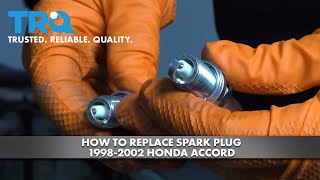
Typical fix: Replace the spark plug. It's recommended to replace all six spark plugs at the same time 🎬 Watch: How to properly replace spark plugs on this engine. for even performance.
Est. part cost: $5-$20 per plug - Clogged EGR Port 🟡 Medium Probability The design of the J30A1 intake manifold allows carbon from the EGR system to build up and clog the small passages leading to each cylinder runner. When a port becomes blocked, it disrupts the air/fuel mixture for that cylinder, causing a misfire. This is a very common issue on this platform.
How to confirm: This requires removing the upper intake manifold to visually inspect the EGR port for cylinder #5. It will be visibly clogged with black carbon deposits.
Typical fix: Clean all EGR passages in the intake manifold using carburetor cleaner, picks, and wire brushes. 🎬 Watch: Step-by-step guide to cleaning clogged EGR passages. A special tool kit was available from Honda for this repair. New gaskets for the intake manifold will be required.
Est. part cost: $20-$40 for gaskets - Clogged or Faulty Fuel Injector 🟡 Medium Probability Fuel injectors can become clogged with deposits over time, preventing them from delivering the correct amount of fuel. The internal electronics can also fail.
How to confirm: Listen to the injector with a mechanic's stethoscope; it should have a consistent clicking sound. A more definitive test is to swap the cylinder #5 injector with another cylinder's injector to see if the misfire code moves. This is more labor-intensive than swapping a coil.
Typical fix: Replace the faulty fuel injector. It's recommended to replace the O-rings and seals at the same time.
Est. part cost: $70-$150
Rare But Worth Checking
- Incorrect Valve Clearance: Honda J-series engines require periodic valve adjustments, typically every 105,000 miles or when noisy. If the exhaust valves become too tight, they may not close completely when the engine is hot, causing a compression leak and a misfire. This should be checked on high-mileage engines or if all other causes have been ruled out.
- Low Engine Compression: A mechanical issue like a burnt exhaust valve or worn piston rings can cause a permanent loss of compression in cylinder #5. This is uncommon but possible on very high-mileage engines. A compression test is required to confirm.
Diagnosis Steps
- Read the code with an OBD-II scanner. Note if the Check Engine Light is flashing, which indicates a severe, catalyst-damaging misfire.
- Identify Cylinder #5. On the J30A1 V6, the cylinders are numbered 1-2-3 against the firewall (rear bank, from passenger to driver side) and 4-5-6 in the front by the radiator (front bank, from passenger to driver side). Cylinder #5 is the middle cylinder in the front.
- Test the Ignition Coil. Swap the ignition coil from cylinder #5 with the coil from cylinder #4 (front, driver's side). Clear the codes, start the engine, and see if the code changes to P0304. If it does, the ignition coil is bad and needs replacement.
- Test the Spark Plug. If the coil swap did not move the misfire, move the spark plug from cylinder #5 to cylinder #4. If the code changes to P0304, the spark plug is the issue. Replace all six plugs for best results.
- Inspect the Fuel Injector. If the misfire remains on cylinder #5, the problem is likely fuel or mechanical. Listen to the injector with a stethoscope for a steady clicking. For a definitive test, swap the fuel injector with another cylinder, though this is more involved and requires removing the intake manifold.
- Check for Honda-Specific Issues. If ignition and fuel parts seem okay, inspect the EGR system. Remove the intake manifold and check the EGR port for cylinder #5 for carbon blockage. Clean all ports thoroughly. This is a very common failure point.
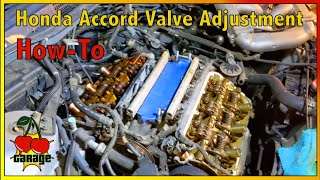
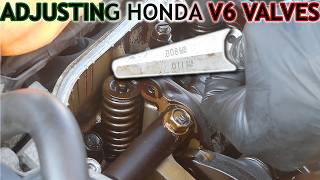
- Check Mechanical Condition. If the misfire persists, perform a compression test on cylinder #5 to check for mechanical issues like bad valves or piston rings. Also, consider having the valve clearance checked and adjusted, especially on engines over 100,000 miles. 🎬 See this in-depth walkthrough for performing a valve adjustment.
Parts You'll Likely Need
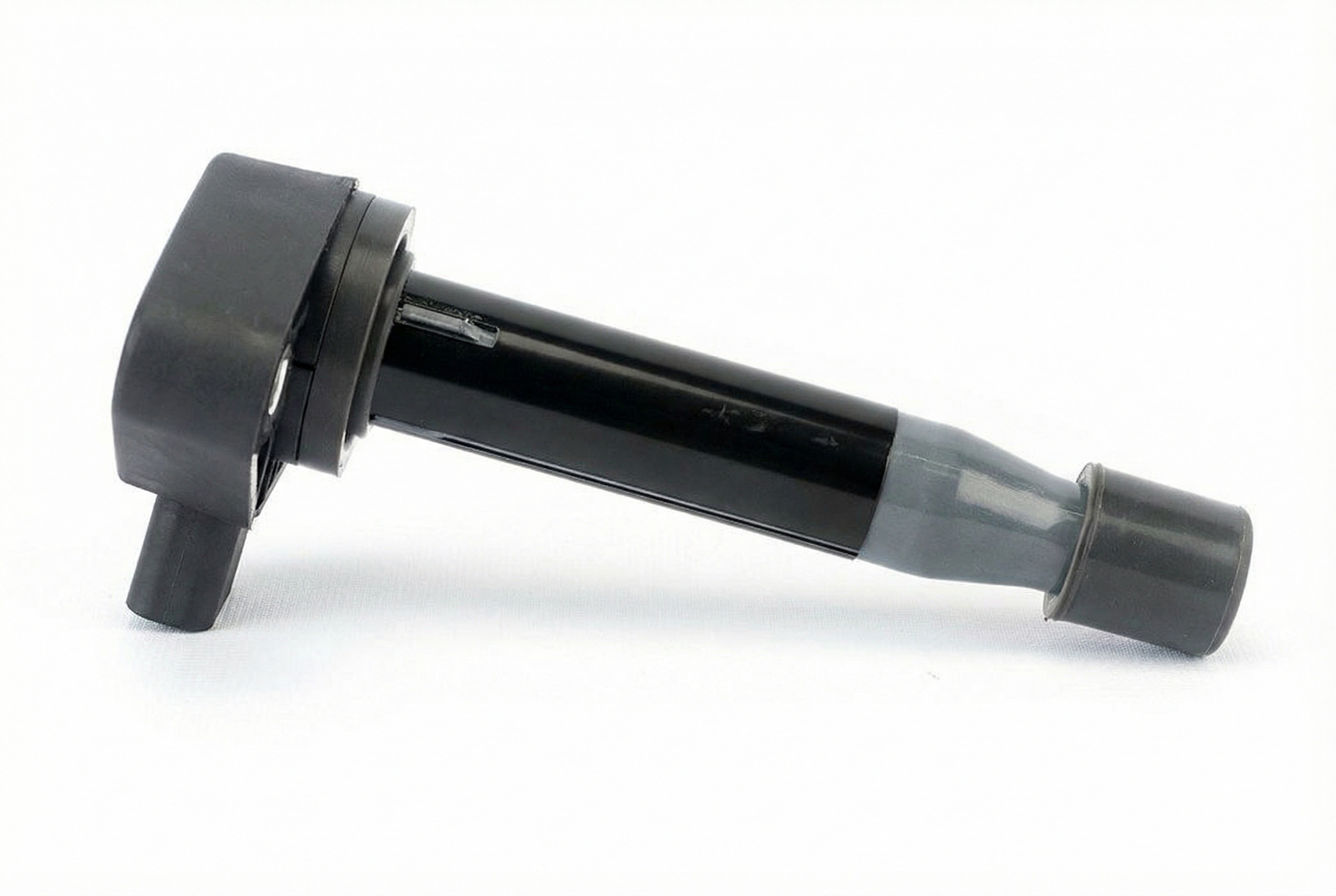
- Ignition Coil
(OEM #30520-P8E-A01)— This is the most frequent cause of a single-cylinder misfire. The coil provides the high voltage needed to create a spark.
Trusted brands: NGK, Denso, Hitachi (IGC0015), Standard Motor Products (UF242)
OEM price range: $70-$100
Aftermarket price range: $40-$75 - Spark Plug
(OEM #98079-5514N)— A worn or fouled spark plug is the second most common cause and is a routine maintenance item.
Trusted brands: NGK (PZFR5F-11), Denso (PKJ16CR-L11)
OEM price range: $15-$25
Aftermarket price range: $5-$15 - Intake Manifold Gasket Set
(OEM #17105-P8A-A01 (Upper), 17115-P8A-A01 (Lower))— Required if removing the intake manifold to clean the common issue of clogged EGR ports or to replace fuel injectors.
Trusted brands: Fel-Pro (MS 95802), Mahle
OEM price range: $30-$50
Aftermarket price range: $20-$40
Related Codes That Often Appear With This One
- P0300 — If the misfire is intermittent or affects other cylinders, a P0300 (Random Misfire) code may appear alongside P0305.
- P0301, P0302, P0303, P0304, P0306 — If other cylinder-specific misfire codes are present, it points towards a problem affecting the entire engine, such as a clogged EGR system, low fuel pressure, or a major vacuum leak, rather than a single component like one coil.
- P0401 — This code for 'EGR Flow Insufficient' often accompanies misfire codes on this engine, strongly suggesting the EGR passages in the intake manifold are clogged. Honda issued TSB 05-026 which superseded a previous bulletin (00-009) for this issue on related models.
Platform-Specific Known Issues
- Clogged EGR passages in the intake manifold are a very common cause of misfires on the J30A1 engine. The fix requires removing the manifold for a thorough cleaning.
Mechanic-Grade Diagnostic Values
- Fuel Pressure (vacuum hose disconnected and clamped) — expected: 48 - 54 psi (320 - 370 kPa). Failure: Pressure below this range indicates a weak fuel pump or clogged filter. Pressure above this range can indicate a faulty regulator or clogged return line.
- Fuel Pressure (engine idling, vacuum hose connected) — expected: 38 - 46 psi (260 - 310 kPa). Failure: Pressure should drop when the vacuum hose is reconnected. If it doesn't, the fuel pressure regulator may be faulty.
- Ignition Coil Primary Resistance — expected: 0.4 - 0.6 Ω. Failure: A reading of 0 indicates a short, while a significantly higher reading or 'OL' (Over Limit) indicates an open circuit. However, a coil can test good and still fail under load.
- Ignition Coil Secondary Resistance — expected: 11 kΩ - 14 kΩ. Failure: A reading outside this range suggests the coil is faulty. Corrosion on the terminals can cause an incorrect 'OL' reading.
- Fuel Injector Resistance — expected: 1.5 - 2.5 Ω (at 20°C / 68°F). Failure: A reading outside this range indicates a faulty injector. Readings can be slightly higher when the engine is warm.
- Valve Clearance (Intake) — expected: 0.20 - 0.24 mm (0.008 - 0.009 in). Failure: Clearance that is too tight can cause a loss of compression and misfires, especially when the engine is warm.
- Valve Clearance (Exhaust) — expected: 0.28 - 0.32 mm (0.011 - 0.013 in). Failure: Clearance that is too tight is a common cause of misfires on high-mileage J-series engines that have not had a recent valve adjustment.
Scan Tool Commands That Help
- Honda HDS (or advanced generic scanner): Misfire Counter Live Data (Mode $06) — To confirm that misfires are isolated to cylinder 5. After swapping a component like an ignition coil to another cylinder (e.g., cylinder 4), this data will show if the misfire count moves to the new cylinder, confirming the swapped part is faulty before a new trouble code is set.
Wiring & Ground Locations
- G101 — On the driver's side of the intake manifold. This is the main ground for the ECU and engine electronics.. A loose or corroded G101 ground can cause a wide range of erratic electrical issues, including weak or inconsistent spark, leading to misfires that are difficult to diagnose. Cleaning this ground point is a crucial step if ignition problems persist after replacing parts.
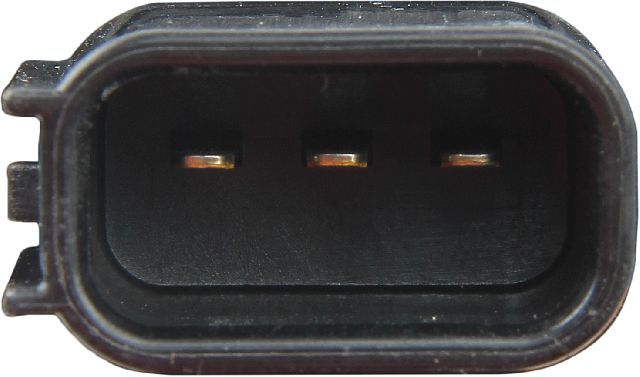
- Cylinder 5 Ignition Coil Connector — The electrical connector on top of the ignition coil for the middle cylinder on the front bank (by the radiator).. The terminals inside this connector can become corroded or loose, causing a poor connection to the coil. The wiring harness leading to this connector can also become brittle from heat and chafe against engine components, causing an intermittent open or short in the coil's power or signal wire.
Real Owner Repair Stories
- YouTube video by 'The Daninator' (1997 Chevrolet Camaro 3800 V6 (Demonstrates a universal diagnostic principle)) — Severe misfire (flashing CEL) under load below 2000 RPM, code P0305.
❌ Tried (didn't work) Initial multimeter test of the ignition coil showed it was within resistance specifications.
✅ What actually fixed it Swapping the coil with another cylinder caused the misfire to move (P0303). A close visual inspection of the 'bad' coil then revealed a hairline crack in the housing that was causing it to arc to ground under load, a fault not detectable with a simple resistance test. Replacing the cracked coil resolved the issue. - Reddit user on r/MechanicAdvice (2001 Honda Accord V6 3.0L (J30A1)) — Random misfire codes after replacing plugs, coils, injectors, and fuel filter. Misfires returned after two days.
❌ Tried (didn't work) New ignition coils, New spark plugs, New fuel injectors, New fuel filter
✅ What actually fixed it The final diagnosis pointed towards either a needed valve adjustment (a common requirement on J-series engines) or clogged EGR passages, both of which are known issues that won't be fixed by replacing standard ignition or fuel components. - NHTSA ODI #11353959 — An owner reported receiving codes P0300, P0304, and P0305. After turning the vehicle off and restarting, the vehicle started with no check engine light or vibrations, suggesting an intermittent nature to the misfire.
- NHTSA ODI #10228061 — A report describes a dealer finding P0780 shift malfunction and P0303, P0305, and P0306 EGR valve codes, noting these are problems the manufacturer is aware of.
OEM Part Supersession History
30520-P8E-A01→30520-P8E-S01, 30520-P8F-A01— Standard part evolution and consolidation across multiple Honda/Acura models with J-series engines.
Heads up: The listed part numbers are generally interchangeable for this application. However, always verify fitment with the vehicle's VIN.
Diagnostic Flowchart
Other Known Issues on This Vehicle
Issues unrelated to this code that are worth knowing about as an owner of this generation:
- Automatic Transmission Failure 🔴 High — Extremely common, often failing before 100,000 miles. Affects V6 models most severely. (Ref: Honda issued recalls and warranty extensions (e.g., TSB 02-062) but many vehicles are now outside the coverage period.)
- Clogged EGR Ports 🟠 Medium — Very common on J30A1 engines, often leading to misfire codes (like P0305) and rough running. (Ref: TSB 05-026 addressed this for related models, indicating a known design issue.)
- Faulty Ignition Switch 🔴 High — A recall was issued for a faulty ignition switch that could cause the car to stall while driving. (Ref: NHTSA Campaign ID Number: 02V120000)
- Failing Main Relay (PGM-FI) 🟡 Low — Common issue causing intermittent no-start conditions, especially when the engine is hot.
- Leaking Hydraulic Motor Mounts 🟠 Medium — The hydraulic-filled engine mounts are prone to leaking and collapsing, causing engine vibration and clunking noises.
Used vs. New Parts: Buying Guide for This Vehicle
When a used part is the smart pick: Used parts are generally not recommended for ignition components like coils and spark plugs due to their nature as wear items with a finite lifespan. However, a used fuel injector from a low-mileage donor car can be a cost-effective option if it has been tested or comes from a running vehicle.
Donor-vehicle mileage cap: roughly under 80000 miles for the part to have meaningful remaining life.
What to inspect on the donor part:
- For fuel injectors, check for physical damage to the connector and tip.
- Ensure O-rings are present and not cracked (though they should always be replaced).
- Ask for the mileage of the donor vehicle if possible.
- Avoid parts from vehicles that show signs of sitting for a long time (heavy corrosion, water damage).
OEM-only on this vehicle (don't cheap out):
- While not strictly 'OEM-only', using OEM or OEM-supplier (Denso, NGK) ignition coils and spark plugs is highly recommended for reliability and to avoid chasing intermittent misfires caused by low-quality aftermarket parts.
Aftermarket brands forum-validated for this vehicle:
- Ignition Coils: Denso, NGK, Hitachi, Delphi
- Spark Plugs: NGK (PZFR5F-11), Denso (PKJ16CR-L11)
- Gaskets: Fel-Pro, Mahle
Brands owners have reported issues with on this vehicle:
- Unbranded, no-name ignition coils and injectors from online marketplaces are frequently cited in forums as being unreliable, failing prematurely, or being dead-on-arrival.
Real Owner Stories
Aggregated from forums and TSBs cited above. Mileages and costs reflect what owners reported in those sources.
2002 Honda Accord V6
Symptoms: Rough idle on startup that eventually clears up.
What fixed it: The symptoms described are characteristic of the P0305 code on this platform, often requiring ignition component replacement or EGR cleaning.
Source hint: r/MechanicAdvice on Reddit
2000 Acura TL (J-series platform mate)
Symptoms: P0305 code present; engine required intake manifold removal to access fuel system.
What fixed it: Replacement of the fuel injectors.
Source hint: YouTube video 'replacement of fuel injectors on a 2000 Acura TL'
Acura TL (J-series engine)
Symptoms: Multiple misfire codes including P0304, P0305, and P0306.
What fixed it: The misfires were traced to a faulty ignition coil.
Source hint: Acurazine.com thread 'p0304-p0305-p0306-p000-855013'
1998-2002 Honda Accord V6 — ~100000 miles
Symptoms: Misfire codes and rough running due to carbon blockage in the intake manifold.
What fixed it: Cleaning all EGR passages in the intake manifold using carburetor cleaner and brushes, and replacing intake manifold gaskets.
Source hint: 6thgenaccord.com forum thread 'DIY EGR clean help'
Related OBD-II Codes
Frequently Asked Questions
Where is cylinder #5 located on my 2000-2002 Honda Accord V6?
Is there a TSB for the clogged EGR ports causing misfires on my J30A1 engine?
Can I test if my ignition coil is bad without buying a new one?
What is the correct spark plug gap for my 3.0L V6 Accord?
Does my car have a recall for stalling issues that might be related to this misfire?
Why does my Accord V6 have a rough idle that clears up after starting?
Helpful Videos
Used OEM Parts in Stock


New Aftermarket Parts Available



The information in this article is provided for general reference and educational purposes only. Vehicle specifications, procedures, and part compatibility can vary by production date, trim level, and region. Always consult your vehicle's factory service manual and verify part numbers before purchasing or performing repairs. Safety-critical components such as airbags, seat belts, and braking systems should be installed by a qualified professional.
- Honda Accord:
- 🎬 Helpful Videos
- 🛍️ Shop This Part
- What's Unique About the 2000-2002 Honda Accord
- Symptoms You May Notice
- Most Likely Causes
- Rare But Worth Checking
- Diagnosis Steps
- Parts You'll Likely Need
- Related Codes That Often Appear With This One
- Platform-Specific Known Issues
- Mechanic-Grade Diagnostic Values
- Scan Tool Commands That Help
- Wiring & Ground Locations
- Real Owner Repair Stories
- OEM Part Supersession History
- Diagnostic Flowchart
- Other Known Issues on This Vehicle
- Used vs. New Parts: Buying Guide for This Vehicle
- Real Owner Stories
- 2002 Honda Accord V6
- 2000 Acura TL (J-series platform mate)
- Acura TL (J-series engine)
- 1998-2002 Honda Accord V6 — ~100000 miles
- Related OBD-II Codes
- Frequently Asked Questions
- 🎟️ Get 5% Off