

P0305 on 2021-2026 Genesis GV80 3.5T: Cylinder 5 Misfire Causes and Fixes
The P0305 code on your GV80 3.5T means cylinder #5 is misfiring. This is most often caused by a faulty ignition coil or a worn-out spark plug. A new ignition coil costs around $70-$120, while a spark plug is about $20-$35. Both are DIY-friendly fixes. As these vehicles are new, always check for warranty coverage or open recalls before attempting repairs.
- P0305 means cylinder #5 (rear passenger side) is misfiring.
- The most likely cause is a bad ignition coil or spark plug.
- The easiest way to diagnose this is to swap the coil from cylinder #5 with another cylinder and see if the misfire code follows the coil.
- Avoid driving with a flashing Check Engine Light to prevent expensive catalytic converter damage.
- There are no known common pattern failures for this code on the GV80 3.5T, so standard diagnostic procedures are the most reliable.
- Always check for active recalls, like the low-pressure fuel pump recall (NHTSA 23V-630), as related symptoms can overlap.
What's Unique About the 2021-2026 Genesis GV80
The Genesis GV80 with the 3.5L Twin-Turbo V6 (Smartstream G3.5T) is a modern, complex engine. As a relatively new vehicle, there are no widespread, documented patterns of failure specifically for a P0305 misfire. This means that unlike some older vehicles with known issues, diagnosis should follow a fundamental approach. Because these vehicles are often still under the 10-year/100,000-mile powertrain warranty, many issues are resolved by dealers, limiting public DIY data. However, early reports and experiences from platform-mate vehicles using the similar 3.3T engine suggest that ignition coils and fuel injectors are the most common culprits for isolated misfires.
Symptoms You May Notice
- Rough or shaky idle
- Hesitation or stumbling during acceleration
- Noticeable loss of engine power
- Flashing Check Engine Light (during active misfire)
- Solid Check Engine Light
- Reduced fuel economy
- A possible smell of raw fuel from the exhaust
- Replacing all spark plugs and coils without first confirming which cylinder is at fault.
- Assuming a fuel pump is bad for a single-cylinder misfire; a fuel pump issue would typically cause random misfires on multiple cylinders (P0300) or a loss of power under load.
Most Likely Causes
- Faulty Ignition Coil 🔴 High Probability Coil-on-plug systems are a common failure point on most modern engines. Heat and vibration eventually cause the internal windings to fail. This is a frequent diagnosis on the related Lambda II 3.3T engine found in the Kia Stinger and Genesis G70.
How to confirm: Swap the ignition coil from cylinder #5 with another cylinder (e.g., cylinder #1, the front passenger side). Clear the codes and drive. If the code changes to P0301, the ignition coil is bad. This is the standard diagnostic procedure recommended across owner forums.
Typical fix: Replace the faulty ignition coil. It's recommended to replace the corresponding spark plug at the same time.
Est. part cost: $70 - $120 - Worn or Fouled Spark Plug 🔴 High Probability
How to confirm: After confirming the coil is good, remove the spark plug from cylinder #5. Inspect it for wear, carbon fouling, oil, or damage to the electrode or ceramic. Compare it to a new plug. The correct gap is critical for performance in turbo GDI engines.
Typical fix: Replace the spark plug. Most mechanics recommend replacing all six spark plugs at once for even performance, especially if they are near their service interval (typically around 42,000-60,000 miles).
Est. part cost: $20 - $35 per plug - Faulty Fuel Injector 🟡 Medium Probability This engine uses Gasoline Direct Injection (GDI), where injectors are exposed to high pressure and in-cylinder combustion. While the 3.5T engine is new, a Reddit thread with a user identified as a Hyundai/Genesis tech noted that fuel injector failures are one of the more common issues they see, especially on the related 2.5T engine. Some owners of early-build GV70s and GV80s have reported injector failures requiring replacement under warranty.
How to confirm: This is more complex. A professional can perform a fuel injector balance test. A DIY method is to listen to the injector with a mechanic's stethoscope to ensure it's clicking like the others. Swapping injectors is possible but more involved than coils or plugs. A persistent P0305 after swapping the coil and plug points towards the injector.
Typical fix: Replace the faulty fuel injector. This is a more labor-intensive job on a GDI engine and may be best left to a professional or dealer, especially if under warranty.
Est. part cost: $100 - $200
Rare But Worth Checking
- Carbon Buildup on Intake Valves: Direct injection engines can suffer from carbon buildup on the back of the intake valves, which can disrupt airflow into the cylinder and cause misfires, especially on cold starts. This typically requires professional cleaning (e.g., walnut blasting). This is a known long-term issue on many GDI engines.
- Low Compression: A mechanical engine issue, such as a bad valve, worn piston rings, or a head gasket leak, can cause a loss of compression in the cylinder. This is the least likely cause and is confirmed with a compression test.
- Internal Coolant Leak (Intercooler): A technician on YouTube documented a case on a GV80 3.5T where a misfire was caused by coolant leaking internally from the water-cooled intercooler into the cylinder. This was diagnosed by finding coolant on the spark plug and inside the cylinder with a borescope. This is a rare but severe issue requiring professional diagnosis.
Diagnosis Steps
- Read the code with an OBD-II scanner to confirm P0305 is the primary code.
- Locate cylinder #5. On the Genesis 3.5L V6, the engine is mounted longitudinally (front to back). The passenger side of the engine is Bank 1, containing cylinders 1, 3, and 5, from front to back. Cylinder #5 is the rearmost cylinder on the passenger side, closest to the firewall.
- Swap the ignition coil. Unplug and remove the ignition coil from cylinder #5. Swap it with the coil from cylinder #1 (front passenger side). This is the easiest cylinder to access for a swap.
- Clear the codes using the scanner, then start the engine and drive until the Check Engine Light returns.
- Re-scan for codes. If the code is now P0301, the ignition coil you moved is faulty and needs to be replaced.
- If the code remains P0305, the coil is not the issue. Move the coils back to their original positions. Repeat the swap process with the spark plugs between cylinders #5 and #1.
- If the code changes to P0301 after swapping plugs, the spark plug is the culprit. It's best practice to replace all six.
- If the code is still P0305, the problem is likely a fuel injector, wiring, or a mechanical issue. A user on a G70 forum with a similar engine experienced this, where the code remained after coil and plug swaps, pointing towards the injector.
- A professional would then test the fuel injector signal and flow, and perform a compression test on cylinder #5 to check for mechanical engine health. In rare cases, they may check for internal coolant leaks.
Parts You'll Likely Need
- Spark Plug
(OEM #18877-09085)— Spark plugs are a routine maintenance item and a primary cause of misfires as they wear out.
Trusted brands: Hyundai/Genesis (OEM), NGK
OEM price range: $25-$40
Aftermarket price range: $20-$30 - Ignition Coil
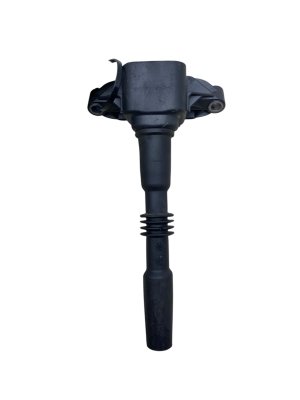
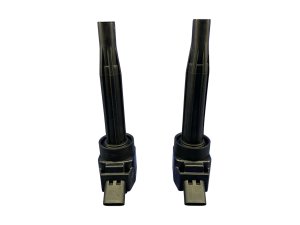
(OEM #27300-3L200)— Ignition coils are subjected to intense heat and vibration, making them a common failure point for ignition systems.
Trusted brands: Hyundai/Genesis (OEM), Delphi, Denso
OEM price range: $90-$150
Aftermarket price range: $60-$100
Related Codes That Often Appear With This One
- P0300 — If the misfire is intermittent or begins to affect other cylinders, a P0300 (Random/Multiple Cylinder Misfire) code may appear alongside P0305.
- P0301, P0303 — Misfires on other cylinders in the same bank (Bank 1, passenger side) could indicate a shared problem like a vacuum leak near that side of the intake manifold, or a timing issue related to Bank 1.
Technical Service Bulletins (TSBs) & Recalls
- source — Affects some 2021-2023 GV80 models. A faulty low-pressure fuel pump impeller can deform, causing a loss of fuel pressure, which could lead to stalling, hesitation, and potentially random misfire codes (P0300), though not typically an isolated P0305. It is a known fuel system issue for the platform.
- source — While this TSB is for the 2.5T engine, it shows that Genesis has addressed misfire detection logic (P0300-P0304) via software updates. It's possible similar logic updates could apply to the 3.5T in the future if a pattern emerges.
Platform-Specific Known Issues
- source — A user on the r/GenesisG70 subreddit with the similar 3.3T engine reported a P0305 code. They successfully ruled out the spark plug and ignition coil by swapping them with another cylinder, but the P0305 code remained, leading them to suspect a faulty fuel injector. This provides a real-world example of the diagnostic process.
- source — A YouTube video by a technician working on a GV80 3.5T with a persistent misfire discovered coolant inside the cylinder, which was traced back to a leak in the water-to-air intercooler system. This is a rare but documented cause for misfires on this specific engine.
Mechanic-Grade Diagnostic Values
- Secondary Ignition Waveform Analysis — expected: A clean spark line with a short duration and minimal turbulence.. Failure: A 'U' shaped waveform can be an indication of a lean mixture in the cylinder, meaning there is not enough fuel. This points the diagnosis towards a fuel delivery problem (like a clogged injector) rather than a spark problem.
- Live Misfire Counters — expected: Zero or near-zero counts on all cylinders on a healthy, warm engine.. Failure: A rapidly increasing count on a specific cylinder (e.g., cylinder 5) confirms a live misfire. This data, available on dealer-level tools like the GDS, is more precise than waiting for a P030x code to set and can help diagnose intermittent issues.
Hidden / Shadow Codes Worth Checking
- History ('H') or Pending ('P') Codes: The Genesis GDS scan tool can differentiate the state of a trouble code. A 'History' code indicates a fault that occurred previously but is not currently active, while a 'Pending' code indicates a fault detected during the current or last driving cycle that hasn't met the full criteria to illuminate the CEL. This is critical for diagnosing intermittent misfires that a basic scanner might miss. (see via Genesis GDS (Global Diagnostic System) or GDS SMART dealer scan tool.)
Scan Tool Commands That Help
- Genesis GDS / High-End Bidirectional Scanner: Individual Fuel Injector Activation — After ruling out spark plugs and ignition coils, a technician can command the cylinder 5 injector to pulse. This helps verify the wiring and command signal from the ECM and allows the tech to listen for a physical 'click' from the injector, confirming it's not mechanically seized.
- Genesis GDS / High-End Bidirectional Scanner: Fuel Pump Activation — While less likely for a single-cylinder misfire, this command allows a technician to run the low-pressure fuel pump without the engine running to test for fuel pressure and flow, helping to rule out fuel supply issues.
- Genesis GDS: Reset Adaptive Values — After a major repair like replacing a fuel injector or addressing a mechanical issue, resetting the engine's long-term and short-term fuel trim adaptive values is recommended. This forces the ECM to relearn fuel delivery strategies with the new components.
- Genesis GDS: Flight Record / Data Logging — For a very intermittent misfire that doesn't happen in the shop, the GDS can be put into a 'Flight Record' mode. The driver can then press a trigger button when the symptom occurs, and the tool saves a loop of sensor data from before and after the event for later analysis.
Real Owner Repair Stories
- YouTube - Technician's Diagnosis (2021 Genesis GV80 3.5T) — Intermittent misfire, check engine light. Initially had a code for an open circuit on the GDI injector for cylinder 1. After repair, car returned with a P0302 (Cylinder 2 Misfire).
❌ Tried (didn't work) The misfire was too intermittent to diagnose initially.
✅ What actually fixed it The technician swapped the ignition coil from the misfiring cylinder #2 to cylinder #4. The customer drove the car for a week, and the code returned as P0304 (Cylinder 4 Misfire). The misfire followed the coil. Replacing the faulty ignition coil resolved the issue. - Reddit - r/GenesisMotors (2024 Genesis GV80 3.5T Prestige, approx. 4,000 miles) — Check engine light and engine misfire.
❌ Tried (didn't work) Dealer initially just reset the code, but it came back the next day., Dealer kept the car for a week for a 'full diagnostic' but found nothing wrong., Dealer replaced a fuel injector, but the check engine light returned.
✅ What actually fixed it The issue was not resolved. After the injector was replaced, the check engine light came back on, this time related to a 'knock sensor.' The owner was frustrated after two months of failed repair attempts and was initiating a vehicle repurchase process with Genesis corporate. This story highlights that even after replacing a common culprit (injector), the issue can persist and may be more complex.
OEM Part Supersession History
18877-09085→Unknown— N/A
Heads up: One OEM parts supplier lists this spark plug part number as 'discontinued'. While it is still widely sold by others, this could indicate a supersession to a new part number has occurred. Double-check the part number with a Genesis dealer using your VIN before purchasing to ensure you receive the latest revision.
Model Year Variations Within This Range
- 2025-2026: For the 2025 model year, the GV80 received a refresh with updated styling and a new 27-inch dashboard screen. A GV80 Coupe model was also introduced, which offers a higher-output version of the 3.5T engine with a 48V electric supercharger. However, for the standard 3.5L Twin-Turbo V6 in the base SUV, these changes are not known to affect the diagnosis of a P0305 code.
Diagnostic Flowchart
Other Known Issues on This Vehicle
Issues unrelated to this code that are worth knowing about as an owner of this generation:
- Low-Pressure Fuel Pump Failure 🔴 High — Common enough to trigger multiple recalls (e.g., NHTSA 23V-630) on 2021-2023 models. The impeller can deform, causing fuel starvation, stalling, and loss of power. (Ref: Recall 016G, 022G / NHTSA 23V-630)
- Fuel Injector Failure 🟠 Medium — Anecdotal but recurring reports from owners and technicians of injector failures on both 2.5T and 3.5T Smartstream engines, sometimes at low mileage.
- Rear Differential Noise/Vibration 🟠 Medium — Some owners of earlier model years (2021-2022) have reported noises or vibrations from the rear differential, sometimes leading to replacement under warranty.
- Premature Battery Discharge 🟡 Low — Reports suggest the battery can drain if the vehicle is not driven regularly. A technician on Reddit noted this as a frequent issue.
- Infotainment System Glitches 🟡 Low — Owners have reported issues like screen freezing, slow response, or reboots, though many have been addressed via software updates. (Ref: Software updates available through dealer.)
Used vs. New Parts: Buying Guide for This Vehicle
When a used part is the smart pick: For a vehicle this new, used parts will come from salvage. A low-mileage ignition coil from a wrecked vehicle can be a cost-effective part for diagnosis (swapping to confirm the fault) or as a temporary repair. Cosmetic items or brackets are also fine to source used.
Donor-vehicle mileage cap: roughly under 30000 miles for the part to have meaningful remaining life.
What to inspect on the donor part:
- Verify the donor vehicle's low mileage via CARFAX or odometer reading if possible.
- Inspect the part for physical damage, cracks, or melted plastic.
- Ensure all electrical connector pins are straight and free of corrosion.
- For coils, check that the boot is not torn or brittle.
OEM-only on this vehicle (don't cheap out):
- Fuel Injectors: GDI injectors are sensitive to contamination and spray pattern degradation. The risk of getting a clogged or faulty used injector is high. Always buy new OEM injectors.
- Spark Plugs: These are wear items and should always be purchased new.
Aftermarket brands forum-validated for this vehicle:
- For ignition coils, brands like Delphi and Denso are often the original equipment manufacturers and are considered reliable alternatives to dealer parts.
Brands owners have reported issues with on this vehicle:
- No specific brands have been consistently reported as problematic for this platform, but it is generally advised to avoid no-name or unusually cheap ignition coils and sensors, as their failure rates are often high.
Real Owner Stories
Aggregated from forums and TSBs cited above. Mileages and costs reflect what owners reported in those sources.
2019 Genesis G70 3.3T
Symptoms: The owner experienced a P0305 code and attempted to rule out the spark plug and ignition coil by swapping them with another cylinder.
What fixed it: The code remained P0305 after swapping coils and plugs, pointing to a faulty fuel injector as the cause.
Source hint: Reddit r/GenesisG70 thread titled '2019 g70 3.3t code p0305'
2021-2026 Genesis GV80 3.5T
Symptoms: Persistent misfire that was not resolved by standard ignition component checks.
What fixed it: The misfire was traced back to coolant inside the cylinder caused by a leak in the water-to-air intercooler system.
Source hint: YouTube video by a technician: 'Coolant-Induced Misfire'
Related OBD-II Codes
Frequently Asked Questions
Where is cylinder #5 located on my 2021-2026 Genesis GV80 3.5T?
Is there a recall for fuel issues that could cause a misfire on my GV80?
How often should I replace the spark plugs on the 3.5L Twin-Turbo engine to prevent P0305?
Can I swap parts to diagnose P0305 myself on this vehicle?
I've heard about coolant leaks causing misfires on the 3.5T; is this common?
Are fuel injector failures common on the Genesis Smartstream engines?
Helpful Videos

We Have This Part in Stock


The information in this article is provided for general reference and educational purposes only. Vehicle specifications, procedures, and part compatibility can vary by production date, trim level, and region. Always consult your vehicle's factory service manual and verify part numbers before purchasing or performing repairs. Safety-critical components such as airbags, seat belts, and braking systems should be installed by a qualified professional.
- Genesis GV80:
- 🎬 Helpful Videos
- 🛍️ Shop This Part
- What's Unique About the 2021-2026 Genesis GV80
- Symptoms You May Notice
- Most Likely Causes
- Rare But Worth Checking
- Diagnosis Steps
- Parts You'll Likely Need
- Related Codes That Often Appear With This One
- Technical Service Bulletins (TSBs) & Recalls
- Platform-Specific Known Issues
- Mechanic-Grade Diagnostic Values
- Hidden / Shadow Codes Worth Checking
- Scan Tool Commands That Help
- Real Owner Repair Stories
- OEM Part Supersession History
- Model Year Variations Within This Range
- Diagnostic Flowchart
- Other Known Issues on This Vehicle
- Used vs. New Parts: Buying Guide for This Vehicle
- Real Owner Stories
- 2019 Genesis G70 3.3T
- 2021-2026 Genesis GV80 3.5T
- Related OBD-II Codes
- Frequently Asked Questions
- 🎟️ Get 5% Off