

P0305 on 2011-2019 Ford Explorer 3.5L EcoBoost: Cylinder 5 Misfire Causes and Fixes
P0305 indicates a misfire in cylinder #5. On the 3.5L EcoBoost Explorer, this is most often caused by a faulty ignition coil or a worn-out spark plug. This is a common DIY repair, with parts costing between $40 and $120.
- P0305 specifically points to a misfire on cylinder #5.
- The most likely cause is a bad ignition coil or a worn spark plug, which are inexpensive and relatively easy to replace.
- Use the 'coil swap' method as your first diagnostic step; it's free and highly effective.
- On the 3.5L EcoBoost, cylinder #5 is the middle cylinder on the bank closest to the radiator, making it accessible for diagnosis.
- If the check engine light is flashing, avoid driving to prevent costly damage to the catalytic converter.
What's Unique About the 2011-2019 Ford Explorer
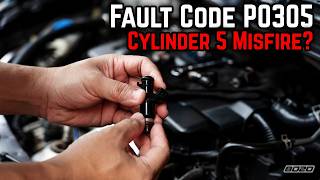
The 3.5L EcoBoost V6 in the Ford Explorer is a direct-injection, twin-turbocharged engine. While the most common causes for a P0305 misfire are simple ignition components, this engine's design can sometimes lead to other issues. Carbon buildup on intake valves, a known characteristic of gasoline direct injection (GDI) engines, can disrupt airflow and cause misfires, especially at higher mileage. Additionally, the complexity of the turbocharging system means vacuum leaks from cracked hoses or a faulty PCV valve can sometimes be a factor. Cylinder #5 is the middle cylinder on the front bank 🎬 Watch this to understand why cylinder 5 specifically fails (radiator side), making it relatively accessible for diagnosis.
Symptoms You May Notice
- Flashing or solid Check Engine Light
- Rough or shaky idle
- Engine hesitation or stumbling during acceleration, especially under boost
- Noticeable loss of power
- Reduced fuel economy
- Smell of raw gasoline from the exhaust
- A bucking or jerking sensation when climbing a hill or under moderate load
- Replacing oxygen (O2) sensors before diagnosing the misfire. A misfire will cause abnormal O2 sensor readings, but the sensor itself is rarely the cause of the misfire.
- Assuming a catalytic converter is bad. A misfire can destroy a catalytic converter, but replacing the converter without fixing the misfire will only result in the new one failing as well.
Most Likely Causes
- Faulty Ignition Coil 🔴 High Probability Coil-on-plug systems are a common failure point on most modern vehicles as they age. The high heat environment of the EcoBoost engine bay can accelerate the degradation of the coil's internal windings and external housing.
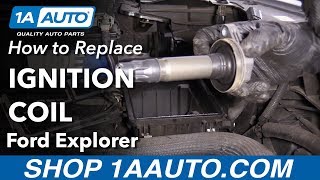
How to confirm: Swap the ignition coil from cylinder #5 with an adjacent cylinder (e.g., cylinder #4 or #6). Clear the codes and drive the vehicle. If the code changes to P0304 or P0306, the ignition coil is faulty.
Typical fix: Replace the faulty ignition coil. It is often recommended to replace the corresponding spark plug at the same time. Many owners choose to replace all six coils if they are original and high-mileage.
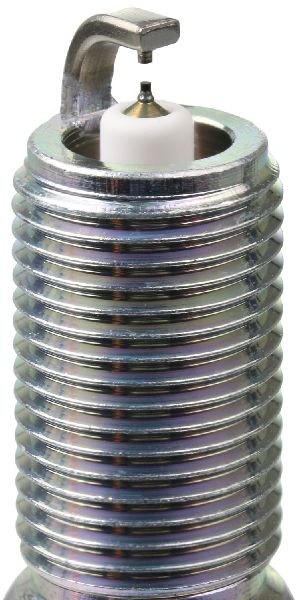
Est. part cost: $40-$90 - Worn or Fouled Spark Plug 🔴 High Probability Ford recommends spark plug replacement at specific intervals (often around 60,000 miles for EcoBoost engines). Exceeding this interval can lead to a worn electrode or carbon fouling, causing a weak spark. A cracked porcelain insulator, sometimes found during diagnosis, is a definitive cause of a misfire. Owners report that the factory-recommended gap is around .030-.033 inches, but many find a slightly smaller gap of .028 inches provides better performance, especially on tuned engines.
How to confirm: After ruling out the ignition coil, remove the spark plug from cylinder #5. Inspect it for wear, damage, oil, or carbon fouling. A cracked insulator is a definitive sign of failure. Compare the plug's condition to a plug from a healthy cylinder.
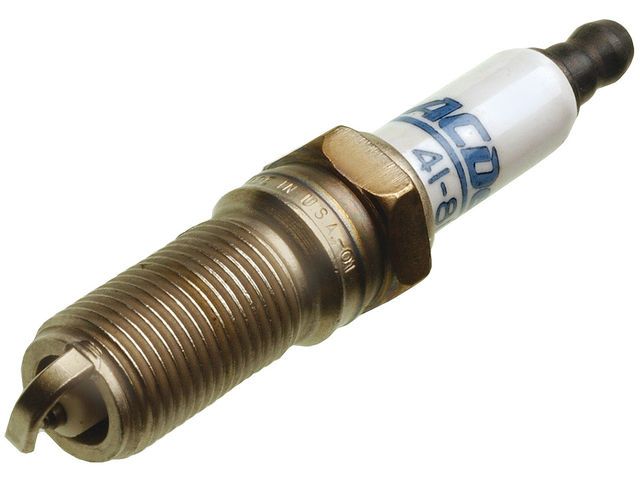
Typical fix: Replace the spark plug. It is best practice to replace all six spark plugs as a set using pre-gapped iridium plugs and torquing them to specification to ensure even performance.
Est. part cost: $10-$25 per plug - Faulty Fuel Injector 🟡 Medium Probability
How to confirm: If an ignition coil and spark plug swap do not resolve the issue, the fuel injector is the next likely culprit. This can be tested using a 'noid' light to check for an electrical signal or by swapping the injector with another cylinder, though this is a more involved repair requiring removal of the fuel rail.
Typical fix: Replace the faulty fuel injector. This requires removing the fuel rail and should be done with care to avoid fuel spills and ensure proper sealing upon reinstallation.
Est. part cost: $50-$150
Rare But Worth Checking
- Low Cylinder Compression: This is a serious mechanical engine problem. An owner of a Ford with a similar engine reported a P0305 code due to 'low compression on cylinder #5 110 PSI, #4 121psi all others at 145-150 psi' (NHTSA ODI #11652376). This requires a compression test to diagnose and could point to worn piston rings, a bad valve, or a damaged cylinder head.
- Cylinder Head Issue: Ford issued Technical Service Bulletin #SSM 46363 for some 2016 models (specifically Edge/MKX with the 2.7L, but indicative of issues in the EcoBoost family), indicating that DTCs including P0305 could be caused by a cylinder head issue, especially if accompanied by excessive oil consumption. TSB 18-2237 (superseded by 19-2384) also links misfire codes to cylinder head valve guide issues on some 2.7L EcoBoost engines.
- Under-torqued Crankshaft Pulley Bolt: For a very specific range of engines built between September 2016 and February 2017, Ford TSB #SSM 46391 notes that multiple misfire codes (including P0305) could be caused by an under-torqued crankshaft pulley bolt, which would affect the crankshaft position sensor's reading.
- Coolant Intrusion into Spark Plug Well: A coolant leak from a failing water pump or thermostat housing can drip onto the engine. In some cases, this coolant can seep past the ignition coil boot and saturate the spark plug well, shorting the spark and causing a misfire. A YouTube video for an older Explorer with P0305 showed the ignition coil boot saturated with coolant, which was the root cause.
Diagnosis Steps
- Read the trouble codes with an OBD-II scanner and confirm P0305 is present. Note any other codes, such as P0300 or P0316.
- Identify cylinder #5. On the transversely mounted 3.5L V6 in the Explorer, the cylinder bank closer to the radiator is 4-5-6 (passenger to driver side). Cylinder #5 is the middle cylinder on the front/radiator side bank.
- Remove the ignition coil from cylinder #5. Inspect the coil boot and the spark plug well for any signs of oil, fuel, or coolant contamination. A saturated boot is a clear sign of a problem.
- Swap the ignition coil from cylinder #5 with the coil from cylinder #6 (the driver's side coil on the same bank).
- Clear the codes, start the engine, and go for a short drive, trying to replicate the conditions that caused the misfire (e.g., acceleration). Re-scan for codes.
- If the code has moved to P0306 (Cylinder 6 Misfire), the ignition coil is the problem. Replace it.
- If the code remains P0305, the coil is likely good. Move the spark plug from cylinder #5 to cylinder #6.
- Clear codes and test again. If the code moves to P0306, the spark plug is faulty. Replace all six spark plugs as a set.
- If the code remains P0305, the issue is likely not the coil or plug. Investigate the fuel injector (check wiring, listen for clicking with a stethoscope, or perform a swap if you have the expertise).
- If the injector is confirmed to be working, perform an engine compression test to check for mechanical issues like bad valves or piston rings. A significant difference (more than 15-20%) between cylinders indicates a serious problem.
Parts You'll Likely Need
- Ignition Coil
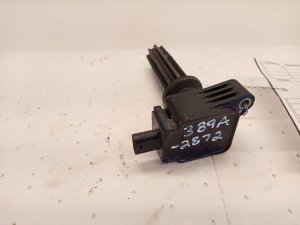
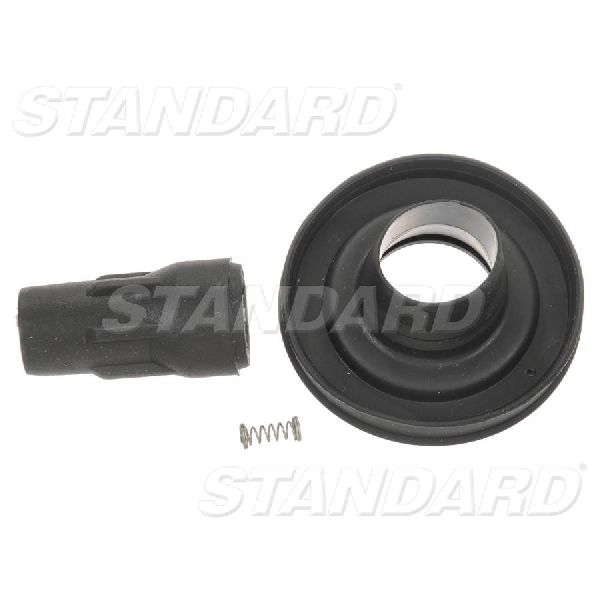
(OEM #DG-549)— This is the most common failure part for a single-cylinder misfire on this engine. Motorcraft is the OEM brand.
Trusted brands: Motorcraft, NGK, Denso, Standard Motor Products
OEM price range: $80-$110
Aftermarket price range: $40-$75 - Iridium Spark Plug
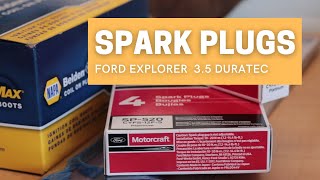
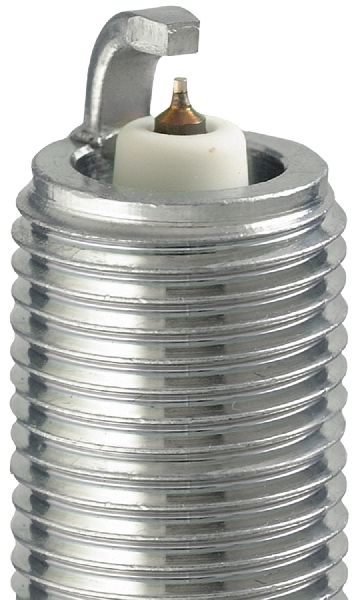
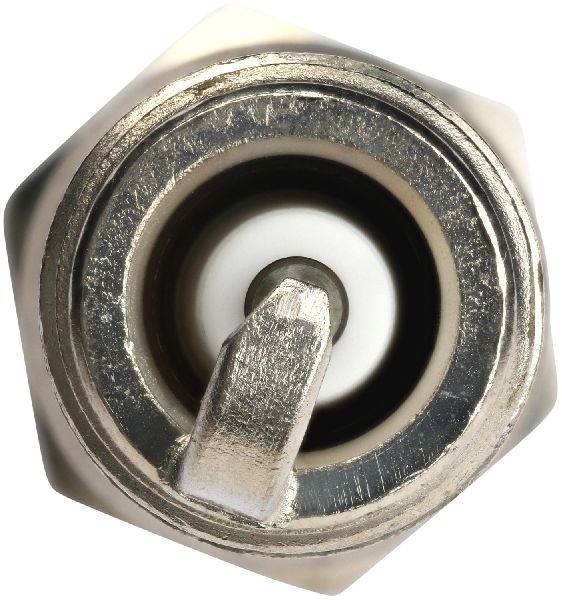
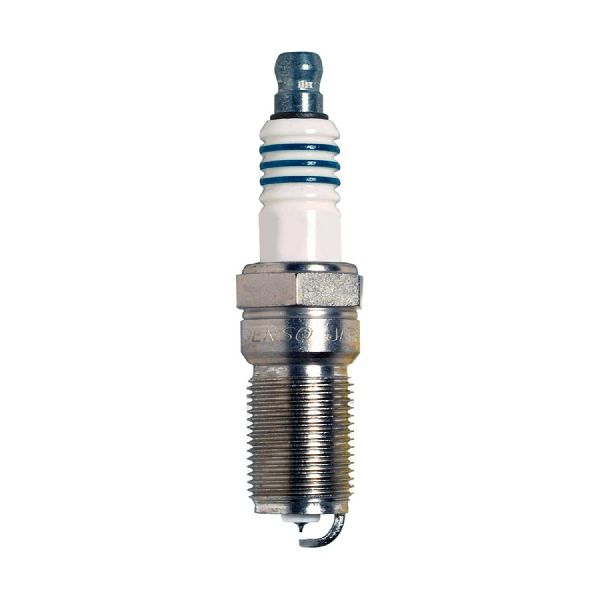
(OEM #SP-534 (May be superseded by SP-580))— Worn spark plugs are the second most common cause and should be replaced at regular intervals, especially on EcoBoost engines. It is critical not to gap these fine-wire iridium plugs, as they are preset and easily damaged.
Trusted brands: Motorcraft, NGK (Ruthenium or Iridium IX), Bosch
OEM price range: $15-$25
Aftermarket price range: $10-$18
Related Codes That Often Appear With This One
- P0300 — This code for 'Random Misfire Detected' may appear if the misfire is intermittent or beginning to affect multiple cylinders.
- P0316 — This code means 'Misfire Detected on Startup (First 1000 Revolutions)' and is often logged alongside a specific cylinder misfire code like P0305, as noted in TSB #SSM 46363.
Technical Service Bulletins (TSBs) & Recalls
- SSM 46363: Mentions that misfire codes including P0305 on some 2016 Edge/MKX models could point to a cylinder head issue, especially with oil consumption.
Platform-Specific Known Issues
- An owner complaint filed with the NHTSA (ODI #11407153) on a similar Ford model noted that after getting a P0305 code, they 'REPLACED THE COILS AND SPARK PLUGS AND THE ENGINE CONTINUED TO MISFIRE,' highlighting that diagnosis is key before replacing parts.
- Coolant leaks from the internally-driven water pump are a major known issue on this platform. A symptom can be a slow leak from a weep hole near the AC compressor. If this coolant finds its way onto ignition components, it can cause misfires. A video for a slightly older Explorer with a P0305 code showed the ignition coil boot saturated with coolant, causing the misfire.
Mechanic-Grade Diagnostic Values
- High-Pressure Fuel Rail Pressure (Direct Injection) — expected: 500 PSI when cranking, up to 2,150 PSI under load. Some sources state up to 2,900 PSI is possible.. Failure: Actual pressure lagging more than 200 PSI behind requested pressure can indicate a failing high-pressure fuel pump.
- Low-Pressure Fuel System Pressure — expected: 40-60 PSI at idle.. Failure: Pressure below this range indicates a problem with the in-tank fuel pump or fuel filter.
- Mode 6 Misfire Count — expected: Zero or very few counts on a healthy cylinder.. Failure: A scan tool capable of reading Mode 6 data will show a raw count of misfire events per cylinder. A high count on cylinder 5 confirms the misfire location, even if the misfire is too slight to be felt by the driver.
Scan Tool Commands That Help
- FORScan or Ford IDS: Power Balance Test / Cylinder Cutout — This function allows a technician to disable one cylinder at a time while the engine is running. When a healthy cylinder is disabled, the engine RPM will drop noticeably. If disabling cylinder #5 causes little or no change in RPM, it confirms that cylinder is not contributing power, pinpointing the location of the misfire.
- FORScan or similar advanced OBD-II scanner: Live Data Monitoring (Misfire Counters) — After swapping a component like an ignition coil from cylinder 5 to cylinder 6, monitoring the live misfire counts for each cylinder during a test drive is the fastest way to confirm if the fault has moved. This is more precise than waiting for a new trouble code to set.
Wiring & Ground Locations
- Ignition Coil Ground Path — The ignition coils do not have a traditional chassis ground wire. They are grounded through the Powertrain Control Module (PCM).. If multiple cylinders are misfiring (e.g., P0351-P0356 codes appear with P0305), the issue could be a damaged PCM, a bad PCM ground, or a damaged wiring harness between the coils and the PCM, rather than individual coil failures.
- PCM Connector C1551 — Large black connector that connects the main engine harness to the PCM.. A loose or corroded pin in this main connector could cause an intermittent signal to the cylinder 5 ignition coil or fuel injector. A visual inspection of the connector is warranted if swapping parts doesn't solve the issue.
Real Owner Repair Stories
- YouTube channel 'ZX9 Green' (2016 Ford Explorer 3.5L EcoBoost with 136,000 miles) — Vehicle would enter a limp-like mode with low power when accelerating past halfway, throwing code P0305.
❌ Tried (didn't work) The owner swapped the ignition coils between cylinder 5 and 6, but the misfire code did not move.
✅ What actually fixed it Replacing all six spark plugs. Upon inspection, the spark plug from cylinder #5 was found to have a cracked porcelain insulator, which was the definitive cause of the misfire. - YouTube channel 'Hoopties Garage' (2016 Ford Explorer) — Check engine light with code P0305. The misfire was very mild and could not be felt by the driver while idling or accelerating.
❌ Tried (didn't work) Initial visual inspection revealed no obvious issues.
✅ What actually fixed it Swapping the ignition coil from cylinder #5 to cylinder #6. A scan tool monitoring live misfire data showed the misfire counts moved to cylinder #6, confirming the ignition coil was faulty. A new coil resolved the issue.
OEM Part Supersession History
Motorcraft SP-534→Motorcraft SP-580— Standard part number update/revision from the manufacturer. The SP-580 is the direct replacement for the original SP-534 plug.
Heads up: The SP-580 is a direct, compatible replacement. However, some owners of tuned engines prefer to use a one-step-colder plug (like the SP-542, which is now also discontinued) for better performance under high boost.BL3Z12029C→Motorcraft DG-549— This is the service part number for the ignition coil assembly.
Heads up: DG-549 is the correct OEM coil for the 2013-2019 Explorer 3.5L.
Model Year Variations Within This Range
- 2017-2019: The second generation of the 3.5L EcoBoost engine, which began appearing in 2017 F-150s, featured significant updates including a dual-injection system (port and direct) and a revised timing chain setup. However, the transverse version of the engine used in the Explorer through 2019 did not receive all of these updates, notably retaining the direct-injection-only fuel system.
- 2011-2012 vs 2013-2019: The 3.5L EcoBoost V6 was introduced to the Explorer lineup on the Sport trim starting in the 2013 model year. Earlier 2011-2012 models offered the naturally aspirated 3.5L V6 or the 2.0L 4-cylinder EcoBoost, which would have different causes and parts for a misfire code.
Diagnostic Flowchart
Other Known Issues on This Vehicle
Issues unrelated to this code that are worth knowing about as an owner of this generation:
- Internal Water Pump Failure 🔴 High — Commonly occurs between 80,000 and 140,000 miles. Failure can cause coolant to mix with engine oil, leading to catastrophic engine damage.
- Power Transfer Unit (PTU) Failure 🔴 High — The PTU (transfer case for AWD models) is prone to overheating and failure, often before 100,000 miles, due to a small fluid capacity and lack of a drain plug, making service difficult.
- Cracked Exhaust Manifold 🟠 Medium — Can develop cracks, causing a ticking or puffing noise, especially when the engine is cold.
- Electronic Throttle Body Malfunction 🟠 Medium — Failures are common, causing the vehicle to suddenly lose power and enter 'limp mode', often with codes P2111 and P2112. (Ref: Ford issued an extended warranty for this part (Customer Satisfaction Program 16B32).)
- Carbon Monoxide Cabin Leak 🔴 High — A well-documented issue, particularly in Police Interceptor Utility models, where exhaust fumes could enter the cabin through unsealed seams in the rear of the vehicle. (Ref: Ford Service Action 17S33 was issued to inspect and seal the rear of the vehicle and reprogram the climate control.)
- Timing Chain Rattle / VCT Phaser Issues 🟠 Medium — The 3.5L EcoBoost can develop a rattling noise on cold starts due to worn VCT (Variable Camshaft Timing) phasers, a repair that is labor-intensive. (Ref: TSB 23-2143 addresses this for some F-150/Expedition models, but the issue is known across the engine family.)
Used vs. New Parts: Buying Guide for This Vehicle
When a used part is the smart pick: For this repair, using used parts is generally not recommended. Ignition coils and spark plugs are wear-and-tear items with a finite lifespan. The cost savings of a used coil from a junkyard are minimal compared to the risk of it failing soon after installation, requiring you to do the labor all over again.
Donor-vehicle mileage cap: roughly under 30000 miles for the part to have meaningful remaining life.
What to inspect on the donor part:
- If considering a used ignition coil, look for one from a low-mileage, late-model year vehicle.
- Inspect the coil housing for any cracks, melting, or signs of heat damage.
- Check the boot for pliability; a dry, brittle, or swollen boot indicates it is near the end of its life.
- Avoid any coil that has signs of oil or coolant contamination in or around the boot.
OEM-only on this vehicle (don't cheap out):
- While not strictly 'OEM-only', using Motorcraft ignition coils and spark plugs is highly recommended for the 3.5L EcoBoost. These engines are sensitive to spark energy and timing, and OEM parts are designed and tested to meet these specific requirements.
Aftermarket brands forum-validated for this vehicle:
- NGK and Denso are reputable OEM suppliers and their ignition coils and spark plugs are generally considered reliable alternatives to Motorcraft.
- MSD and Accel are performance-oriented brands that some owners use, particularly on tuned vehicles, but may not be necessary for a stock engine.
Brands owners have reported issues with on this vehicle:
- Unnamed, no-brand ignition coil sets sold cheaply on marketplaces should be avoided. They often have a high failure rate, sometimes within a few thousand miles, and can cause persistent misfire issues that are difficult to diagnose.
Real Owner Stories
Aggregated from forums and TSBs cited above. Mileages and costs reflect what owners reported in those sources.
2019 Ford Explorer Sport 3.5L EcoBoost
Symptoms: The vehicle reported P0305, P0303, and P0300 codes simultaneously.
What fixed it: Replacing the spark plugs and ignition coils on the affected bank.
Source hint: reddit.com/r/FordExplorer
2011-2019 Ford Explorer 3.5L EcoBoost
Symptoms: The engine continued to misfire even after the owner replaced the coils and spark plugs.
What fixed it: Further diagnosis was required as the standard plug/coil swap did not resolve the P0305 code.
Source hint: NHTSA (ODI #11407153)
2011-2019 Ford Explorer 3.5L EcoBoost
Symptoms: P0305 code triggered by a saturated ignition coil boot.
What fixed it: Addressing a coolant leak that was contaminating the ignition components.
Source hint: video for a slightly older Explorer with a P0305 code
2011-2019 Ford Explorer 3.5L EcoBoost
Symptoms: Misfire caused by a weak spark.
What fixed it: Replacing a spark plug that was found to have a cracked porcelain insulator.
Source hint: explorerforum.com
Related OBD-II Codes
Frequently Asked Questions
Where is cylinder #5 located on my 2011-2019 Ford Explorer 3.5L EcoBoost?
Could my P0305 code be related to the internal water pump issue on the Explorer?
Does SSM 46363 apply to my Explorer's misfire issue?
What spark plug gap is recommended for the 3.5L EcoBoost to prevent misfires?
Should I replace all my coils if only cylinder #5 is misfiring?
Can a P0305 code be caused by the Electronic Throttle Body?
Helpful Videos
Used OEM Parts in Stock



New Aftermarket Parts Available

The information in this article is provided for general reference and educational purposes only. Vehicle specifications, procedures, and part compatibility can vary by production date, trim level, and region. Always consult your vehicle's factory service manual and verify part numbers before purchasing or performing repairs. Safety-critical components such as airbags, seat belts, and braking systems should be installed by a qualified professional.
- Ford Explorer:
- 🎬 Helpful Videos
- 🛍️ Shop This Part
- What's Unique About the 2011-2019 Ford Explorer
- Symptoms You May Notice
- Most Likely Causes
- Rare But Worth Checking
- Diagnosis Steps
- Parts You'll Likely Need
- Related Codes That Often Appear With This One
- Technical Service Bulletins (TSBs) & Recalls
- Platform-Specific Known Issues
- Mechanic-Grade Diagnostic Values
- Scan Tool Commands That Help
- Wiring & Ground Locations
- Real Owner Repair Stories
- OEM Part Supersession History
- Model Year Variations Within This Range
- Diagnostic Flowchart
- Other Known Issues on This Vehicle
- Used vs. New Parts: Buying Guide for This Vehicle
- Real Owner Stories
- 2019 Ford Explorer Sport 3.5L EcoBoost
- 2011-2019 Ford Explorer 3.5L EcoBoost
- 2011-2019 Ford Explorer 3.5L EcoBoost
- 2011-2019 Ford Explorer 3.5L EcoBoost
- Related OBD-II Codes
- Frequently Asked Questions
- 🎟️ Get 5% Off