

P0305 on 2007-2014 Ford Edge 3.5L: Cylinder 5 Misfire Causes and Fixes
P0305 on a 2007-2014 Ford Edge most often means a bad ignition coil or a worn spark plug on cylinder 5. Since cylinder 5 is the middle cylinder on the easily accessible front bank of the engine (near the radiator), this is often a simple DIY fix costing between $40 and $100 for parts. The most common diagnostic step is to swap the cylinder 5 ignition coil with an adjacent one (like cylinder 4 or 6) to see if the misfire code follows the coil.
- P0305 on a 2007-2014 Edge is a misfire on cylinder 5, which is conveniently located on the front, radiator-side of the engine, making it easy to access.
- The most likely cause is a bad ignition coil or a worn spark plug. Use the 'swap test' to diagnose a bad coil before buying parts.
- If the Check Engine Light is flashing, stop driving immediately to prevent destroying the catalytic converter.
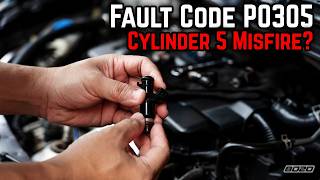
- If replacing the coil and plug doesn't fix the issue, investigate the fuel injector.
- Be aware of more serious, documented issues like oil consumption pointing to cylinder head problems (per TSBs) or a failed PCM on 2007-2008 models. [1, TSB #SSM 54504, TSB #SSM 46363]
What's Unique About the 2007-2014 Ford Edge
On the Ford Edge's transversely mounted 3.5L V6 engine, the cylinders are arranged with 1-2-3 against the firewall (rear bank) and 4-5-6 near the radiator (front bank). This is a significant advantage for a P0305 code, as cylinder 5 is the middle cylinder on the easily accessible front bank. This makes diagnosis and replacement of the most common parts, like the ignition coil and spark plug, much simpler than for misfires on the rear bank, which would require removing the upper intake manifold.
Generation note: This guide covers the first generation Ford Edge (2007-2010) and its facelift (2011-2014). The 3.5L Cyclone V6 was the primary engine throughout this period. For 2011, the engine received Ti-VCT which increased power from 265 hp to 285 hp, but the fundamental design and misfire diagnosis remain the same. A known issue with failing ignition coils damaging the PCM is more pronounced on 2007-2008 models built before 03/01/2008, as noted in TSB 13-4-17.
Symptoms You May Notice
- Rough or vibrating idle
- Hesitation or stumbling during acceleration
- Reduced engine power
- Flashing or solid Check Engine Light
- Poor fuel economy
- Fuel smell from the exhaust
- Audible popping from the exhaust
- Replacing only the spark plug when the ignition coil is also weak.
- Replacing ignition components when the actual cause is a clogged or faulty fuel injector.
- Continuously replacing coils and plugs when the underlying issue is a faulty PCM driver, as noted in TSB 13-4-17 and multiple owner forums.
- Mistaking a P0305 misfire for a throttle body issue, which is another common problem on this platform but typically presents with different codes (e.g., P2138, P0122).
Most Likely Causes
- Faulty Ignition Coil 🔴 High Probability Ignition coils are a common wear item. On some earlier models (2007-2008), a failing coil could short and damage the PCM, a well-documented issue addressed in TSB 13-4-17. This can cause the new coil to overheat, swell, or burst.
How to confirm: Perform the 'swap test': Move the ignition coil from cylinder 5 to a neighboring cylinder (e.g., cylinder 4 or 6). This requires an 8mm socket. Clear the codes and drive. If the code changes to P0304 or P0306, the coil is faulty.
Typical fix: Replace the faulty ignition coil. It is often recommended to replace the spark plug at the same time. If multiple coils are original, replacing all six is good preventative maintenance.
Est. part cost: $30-$80 - Worn or Fouled Spark Plug 🔴 High Probability Spark plugs are a routine maintenance item with a service life of around 60,000 to 100,000 miles. An old plug, a plug with an incorrect gap, or one fouled by oil or carbon can fail to produce a strong enough spark, causing a misfire.
How to confirm: After confirming the coil is good, remove the spark plug from cylinder 5 using a 5/8" socket. Inspect it for wear, carbon fouling, oil, or coolant contamination. Compare it to a new plug. A plug fouled with oil could indicate a more serious internal engine issue.
Typical fix: Replace the spark plug. The original specification is often a Motorcraft SP-537, which has been superseded by SP-550. It's best practice to replace all six plugs if they are near the end of their service life.
Est. part cost: $8-$20 per plug - Faulty Fuel Injector 🟡 Medium Probability
How to confirm: Listen to the injector with a mechanic's stethoscope or a long screwdriver; it should make a consistent clicking sound. You can also test the injector's resistance with a multimeter (around 11-14 ohms is typical) or swap it with another cylinder's injector to see if the misfire follows. Check the wiring and connector for damage.
Typical fix: Replace the faulty fuel injector. This may also trigger code P0205 (Injector Circuit/Open - Cylinder 5).
Est. part cost: $50-$120 - Vacuum Leak ⚪ Low Probability The upper intake manifold plenum gaskets can degrade over time, causing unmetered air to enter the engine, which can lean out the air/fuel mixture and lead to a misfire.
How to confirm: With the engine running, spray short bursts of brake cleaner or a propane torch (unlit) around the intake manifold gaskets. If the engine RPM changes, a leak is present. A professional smoke test is a more effective and safer method.
Typical fix: Replace the intake manifold gaskets.
Est. part cost: $20-$50
Rare But Worth Checking
- Failed Powertrain Control Module (PCM): On 2007-2008 models specifically, a failing ignition coil can short out and damage the driver circuit within the PCM (TSB 13-4-17). If you replace a coil and the misfire immediately returns on the same cylinder, often with code P0355 ('Ignition Coil E Primary/Secondary Circuit Malfunction'), the PCM is the likely root cause. A technician in one documented case diagnosed a bad PCM driver after a coil swap did not resolve the P0305 code. The fix requires replacing the PCM and all six coils and plugs to prevent repeat failure.
- Internal Water Pump Failure: The 3.5L Cyclone V6 has an internal, timing-chain-driven water pump. If the pump's shaft seal fails, coolant leaks directly into the engine oil. This contaminates the oil, causing widespread damage to timing components and bearings, which can manifest as a misfire. Check the oil for a milky, chocolate-milk-like appearance and monitor the coolant level for unexplained loss.
- Internal Engine Damage (Cylinder Head/Oil Consumption): Ford issued TSBs #SSM 46363 and #SSM 54504 which note that P030x misfire codes can be linked to excessive oil consumption (1 quart in less than 3,000 miles). This may indicate a serious internal problem with the cylinder heads requiring a compression and leak-down test to check engine health.
Diagnosis Steps
- Read the trouble codes with an OBD-II scanner to confirm P0305 and check for any other related codes, especially P0355.
- Verify the location of cylinder 5. On the 3.5L Edge, it is the middle cylinder on the front bank, closest to the radiator.
- Perform an ignition coil 'swap test'. Switch the coil from cylinder 5 with the coil from cylinder 4 or 6 using an 8mm socket. Clear the codes, run the engine, and re-scan. If the code changes to P0304 or P0306, the ignition coil is the faulty part.
- If the code remains P0305, remove and inspect the spark plug with a 5/8" socket. Look for excessive wear, fouling, or damage. Replace if necessary. If the plug is wet with oil, investigate potential internal engine issues.
- If the coil and plug are good, check the fuel injector. Listen for a steady clicking with a stethoscope. Check the wiring connector for a secure fit and any signs of damage.
- Inspect for vacuum leaks around the intake manifold using a smoke machine or by carefully spraying brake cleaner and listening for RPM changes.
- If the misfire persists after a new coil and plug, and especially if code P0355 is present, suspect a faulty PCM driver. This is a known issue on 2007-2008 models per TSB 13-4-17.
- If you are experiencing high oil consumption along with the misfire, perform a compression test and a leak-down test on cylinder 5 to rule out mechanical engine problems like bad valves or piston rings.
Parts You'll Likely Need
- Ignition Coil
(OEM #DG520 (Motorcraft), 7T4Z-12029-E)— This is the most frequent cause of a single-cylinder misfire on the 3.5L V6.
Trusted brands: Motorcraft, NGK, Delphi, Denso
OEM price range: $40-$60
Aftermarket price range: $25-$50 - Spark Plug
(OEM #SP-537 (Motorcraft, superseded by SP-550))— A worn or fouled spark plug is the second most common cause and is a standard maintenance item.
Trusted brands: Motorcraft, NGK, Autolite, Champion
OEM price range: $8-$15 per plug
Aftermarket price range: $5
Related Codes That Often Appear With This One
- P0355 — This code means 'Ignition Coil E Primary/Secondary Circuit Malfunction'. It points directly to an electrical fault in the cylinder 5 coil circuit and strongly suggests a bad coil, a wiring issue, or a failed PCM driver. TSB 13-4-17 specifically addresses this series of codes.
- P0300 — This is a 'Random Misfire' code. It often appears with a specific cylinder code like P0305 if the misfire is intermittent or beginning to affect multiple cylinders.
- P0316 — Indicates 'Misfire Detected on Startup (First 1000 Revolutions)'. It frequently accompanies P0305, especially if the problem is more pronounced during a cold start. Both TSBs #SSM 54504 and #SSM 46363 mention this code in conjunction with single cylinder misfires.
- P0205 — This code for 'Injector Circuit/Open - Cylinder 5' will appear with P0305 if the misfire is caused by a faulty fuel injector or a problem in its wiring circuit.
Technical Service Bulletins (TSBs) & Recalls
- TSB 13-4-17
- SSM 46363
- SSM 54504
Platform-Specific Known Issues
- PCM Failure: On 2007-2008 models, a shorted ignition coil can damage the PCM, requiring replacement of the PCM, all six coils, and all six plugs to prevent a recurrence, as detailed in TSB 13-4-17.
- Excessive Oil Consumption: TSBs #SSM 54504 and #SSM 46363 link P030x misfire codes to excessive oil consumption (over 1 quart per 3,000 miles), which may be caused by cylinder head issues requiring professional diagnosis. [TSB #SSM 54504, TSB #SSM 46363]
- Internal Water Pump: The timing-chain-driven water pump can fail and leak coolant into the engine oil, leading to catastrophic engine failure. A milky substance on the oil cap or dipstick is a key warning sign.
Mechanic-Grade Diagnostic Values
- Fuel Injector Resistance — expected: 11 - 14 Ohms. Failure: A reading of infinity (Open Loop) or near-zero ohms indicates a failed injector. Readings should be consistent across all injectors.
- Ignition Coil Primary Resistance — expected: 0.55 - 0.78 Ohms. Failure: A reading outside this range suggests a fault in the primary windings.
- Ignition Coil Secondary Resistance — expected: 5,500 - 8,500 Ohms (5.5kΩ - 8.5kΩ). Failure: A reading significantly outside this range points to a failure in the secondary windings.
- Fuel Pressure (Low Pressure Pump) — expected: ~65 PSI (Key On, Engine Off for FWD models). Failure: Significantly lower pressure indicates a weak in-tank fuel pump or a clogged filter, which would typically cause random misfires (P0300) rather than a single cylinder misfire.
- Injector Pulse Width (Scan Tool, at idle) — expected: 0.8 ms - 2.5 ms. Failure: A value of zero or one that is drastically different from the other cylinders points to an injector or PCM driver issue.
Hidden / Shadow Codes Worth Checking
- Mode 6, TID $A2-$A7, CID $0C: This is not a 'code' but a specific monitor within the OBD-II system's Mode 6 data. Test IDs $A2 through $A7 correspond to misfire counts for cylinders 1 through 6. A high count for Test ID $A6 (Cylinder 5) can confirm the misfire even before the check engine light is solid. (see via A professional scan tool capable of displaying Mode 6 test results.)
Scan Tool Commands That Help
- Ford IDS (Integrated Diagnostic System) or equivalent professional scanner: Power Balance Test — This is the most effective tool for diagnosing a persistent misfire. The test allows the technician to disable one cylinder at a time and graphically displays the RPM drop for each. If disabling cylinder 5 causes little or no change in RPM, it confirms that cylinder is not contributing power. This test is superior to a generic scan tool for pinpointing the source of the misfire.
Wiring & Ground Locations
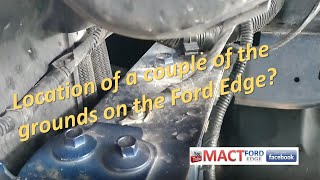
- Main Engine/Transmission Ground Strap — On similar Ford platforms with the 3.5L V6, the main ground strap is located on the transmission case, below the brake booster.. A poor engine ground can cause a host of phantom electrical issues, including weak spark or erratic injector signals that can lead to misfires. This should be checked for corrosion and tightness if multiple electrical issues are present.
- Chassis/Body Grounds — Common locations include a ground point on the chassis near the battery on the passenger side and a body-to-chassis ground under the passenger front door area.. Ensures the PCM and its related sensors have a stable ground reference. A faulty ground can cause incorrect sensor readings and intermittent misfires.
Real Owner Repair Stories
- NAXJA Forums user 'JohnX' (2008 Ford Edge, 3.5L V6, 76k miles) — Check Engine Light with codes P0303 and P0203 (Cylinder 3 Misfire and Injector Circuit Fault).
❌ Tried (didn't work) Replaced all spark plugs., Swapped the ignition coil from the misfiring cylinder (#3) to another cylinder (#6).
✅ What actually fixed it The misfire code did not follow the coil. The code P0203 (Injector Circuit Fault) returned for the original cylinder, indicating the problem was not the coil but rather the fuel injector or its wiring/connector. The user confirmed the wiring looked good, pointing to a failed fuel injector as the root cause.
When the Usual Fixes Don't Work
- In one documented case for a similar engine, a user experienced a persistent misfire on one cylinder (P0303) accompanied by an injector circuit code (P0203). The owner performed the standard 'coil swap' diagnostic, but the misfire code did not move with the coil. The fault was ultimately with the fuel injector or its circuit, demonstrating that while the ignition coil is the most common cause, it is not the only cause, and associated codes like P020x should be given strong consideration.
OEM Part Supersession History
SP-537 (Motorcraft)→SP-550 (Motorcraft)— Standard part number update by the manufacturer. The SP-550 is an iridium-tipped plug that is the correct OEM replacement.
Heads up: Some parts stores may incorrectly list the SP-550 as a platinum plug, but it is the correct iridium replacement.
Model Year Variations Within This Range
- 2011-2014: The 3.5L V6 engine was updated with Twin Independent Variable Camshaft Timing (Ti-VCT), which increased horsepower from 265 to 285. While this adds complexity to the valvetrain, the diagnostic procedure for a P0305 misfire (coil, plug, injector) remains identical to the earlier 2007-2010 models.
Diagnostic Flowchart
Other Known Issues on This Vehicle
Issues unrelated to this code that are worth knowing about as an owner of this generation:
- Internal Water Pump Failure 🔴 High — Common failure point, typically between 80,000 and 150,000 miles. Failure can cause catastrophic engine damage if coolant contaminates the oil.
- Electronic Throttle Body (ETB) Failure 🔴 High — Very common issue causing sudden 'limp mode' and loss of power. Widespread enough that Ford issued Customer Satisfaction Program 13N03, extending the warranty. (Ref: Customer Satisfaction Program 13N03)
- Power Transfer Unit (PTU) Failure 🔴 High — Common on All-Wheel Drive (AWD) models. The sealed unit's fluid overheats and breaks down, leading to leaks and expensive gear failure.
- Brake Booster Failure 🟠 Medium — The internal diaphragm can tear, resulting in a hissing noise when the brake pedal is pressed and a hard pedal feel with reduced braking assistance.
- Door Ajar Sensor Failure 🟡 Low — A faulty switch inside the door latch assembly causes a persistent 'Door Ajar' warning light and prevents interior lights from turning off, draining the battery. Very common on 2011-2013 models.
Used vs. New Parts: Buying Guide for This Vehicle
When a used part is the smart pick: For this repair, using a used part is generally not recommended for wear items like ignition coils, spark plugs, or fuel injectors. However, if a very rare failure like a damaged wiring harness connector is diagnosed, a used 'pigtail' connector from a junkyard is a viable and cost-effective repair.
Donor-vehicle mileage cap: roughly under 75000 miles for the part to have meaningful remaining life.
What to inspect on the donor part:
- For a wiring pigtail, ensure the plastic is not brittle or cracked.
- Check for any signs of corrosion on the metal pins inside the connector.
- Ensure there is at least 4-6 inches of wire attached to allow for proper splicing.
OEM-only on this vehicle (don't cheap out):
- Powertrain Control Module (PCM): While a used PCM can be purchased, it will require professional programming by a dealer or a specialized mobile technician with a Ford IDS tool to match it to your vehicle's keys and options. It is not a plug-and-play part.
Aftermarket brands forum-validated for this vehicle:
- Ignition Coils: Motorcraft (OEM), NGK, Denso, and Delphi are consistently regarded as high-quality alternatives.
- Spark Plugs: Motorcraft (OEM), NGK, and Autolite are reliable choices.
Brands owners have reported issues with on this vehicle:
- Unnamed or 'white box' ignition coils from online marketplaces are frequently reported to have a short service life, sometimes failing within months. It is better to spend slightly more on a reputable brand to avoid repeat repairs.
Real Owner Stories
Aggregated from forums and TSBs cited above. Mileages and costs reflect what owners reported in those sources.
2007-2008 Ford Edge 3.5L V6
Symptoms: Rough running, P0305 code, and an ignition coil that appeared swelled, burst, or overheated.
What fixed it: Replacement of the PCM, all six ignition coils, and all six spark plugs as per TSB 13-4-17.
Source hint: fordedgeforum.com thread titled 'Rough running, P0305 and swelled/burst/overheating coil over plug'
2007-2014 Ford Edge 3.5L V6 — ~80000 miles
Symptoms: Sudden 'limp mode' and loss of engine power.
What fixed it: Replacement of the Electronic Throttle Body (ETB) under Customer Satisfaction Program 13N03.
Source hint: Customer Satisfaction Program 13N03
Related OBD-II Codes
Frequently Asked Questions
Where is cylinder 5 located on my 2007-2014 Ford Edge 3.5L?
My 2008 Edge has a P0305 and the new coil I installed just swelled and burst. What is happening?
Which spark plugs should I use for my 3.5L Cyclone V6?
Can a water pump failure cause engine codes on this vehicle?
Is there a specific tool needed to swap the coils for testing?
I have a P0305 and I'm losing a lot of oil. Are these related?
Helpful Videos


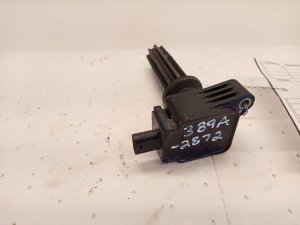
Used OEM Parts in Stock

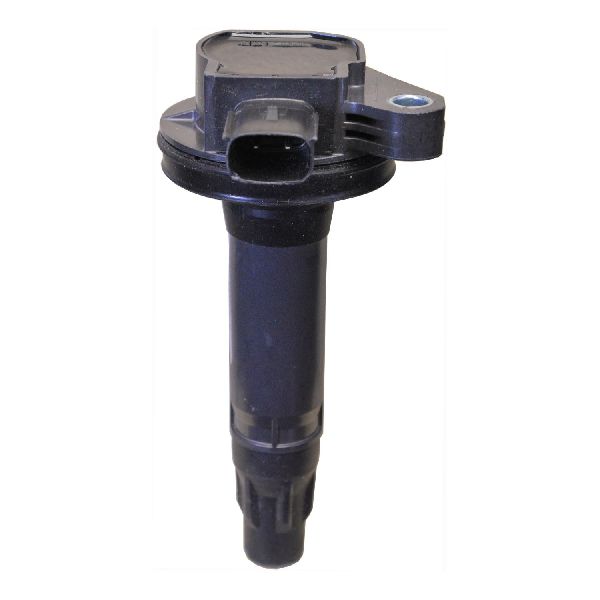
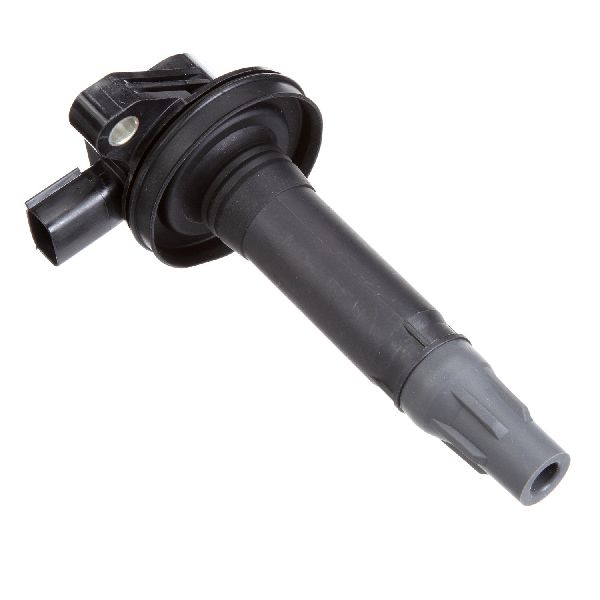
New Aftermarket Parts Available


The information in this article is provided for general reference and educational purposes only. Vehicle specifications, procedures, and part compatibility can vary by production date, trim level, and region. Always consult your vehicle's factory service manual and verify part numbers before purchasing or performing repairs. Safety-critical components such as airbags, seat belts, and braking systems should be installed by a qualified professional.
- Ford Edge:
- 🎬 Helpful Videos
- 🛍️ Shop This Part
- What's Unique About the 2007-2014 Ford Edge
- Symptoms You May Notice
- Most Likely Causes
- Rare But Worth Checking
- Diagnosis Steps
- Parts You'll Likely Need
- Related Codes That Often Appear With This One
- Technical Service Bulletins (TSBs) & Recalls
- Platform-Specific Known Issues
- Mechanic-Grade Diagnostic Values
- Hidden / Shadow Codes Worth Checking
- Scan Tool Commands That Help
- Wiring & Ground Locations
- Real Owner Repair Stories
- When the Usual Fixes Don't Work
- OEM Part Supersession History
- Model Year Variations Within This Range
- Diagnostic Flowchart
- Other Known Issues on This Vehicle
- Used vs. New Parts: Buying Guide for This Vehicle
- Real Owner Stories
- 2007-2008 Ford Edge 3.5L V6
- 2007-2014 Ford Edge 3.5L V6 — ~80000 miles
- Related OBD-II Codes
- Frequently Asked Questions
- 🎟️ Get 5% Off