

P0305 on 2004-2008 Acura TL: Cylinder 5 Misfire Causes and Fixes
For a 2004-2008 Acura TL, code P0305 is almost always a failed ignition coil or a worn/loose spark plug in cylinder 5. This is a very common and easy DIY fix. Expect to pay $60-$90 for a quality ignition coil and around $15 for an OEM-spec spark plug. The issue of the cylinder 5 spark plug loosening on its own is a well-documented quirk of this engine.
- Start your diagnosis by swapping the cylinder 5 ignition coil with an adjacent one; it's the easiest and most common fix.
- If the coil isn't the issue, check if the cylinder 5 spark plug has come loose before replacing it. This is a known quirk of this engine.
- Use high-quality OEM-spec parts for the repair. For ignition components, this means brands like Denso and NGK.
- If your TL has over 100,000 miles and still misfires after replacing the coil and plug, a valve adjustment is very likely needed.
What's Unique About the 2004-2008 Acura TL

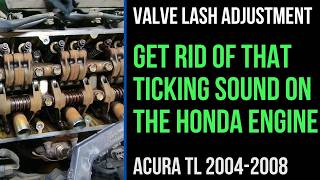
The Honda J-series V6 engines in the third-generation TL are known for their reliability, but have two specific quirks related to this code. First, unlike engines with hydraulic lifters, they use mechanical valve adjusters that require periodic service; tight exhaust valves are a common cause of misfires if neglected. Second, owner forums extensively report that the spark plug in cylinder #5, specifically, has a tendency to work itself loose over time. 🎬 Watch this video to see a P0305 diagnosis and repair. This can cause a ticking noise, a misfire, and if left unchecked, can damage the ignition coil and even the threads in the cylinder head.
Symptoms You May Notice
- Flashing or solid Check Engine Light
- Rough or shaking idle
- Engine hesitation or stumbling during acceleration
- Noticeable loss of power
- Possible fuel smell from the exhaust
- A ticking or 'puffing' sound from the engine bay, especially if the spark plug is loose.
- Replacing the fuel injector before confirming the ignition coil and spark plug are good. The coil/plug are far more common failures and much easier to diagnose and replace.
- Assuming a rough idle is always an ignition problem when a valve adjustment is a very common requirement on J-series engines over 100,000 miles.
Most Likely Causes

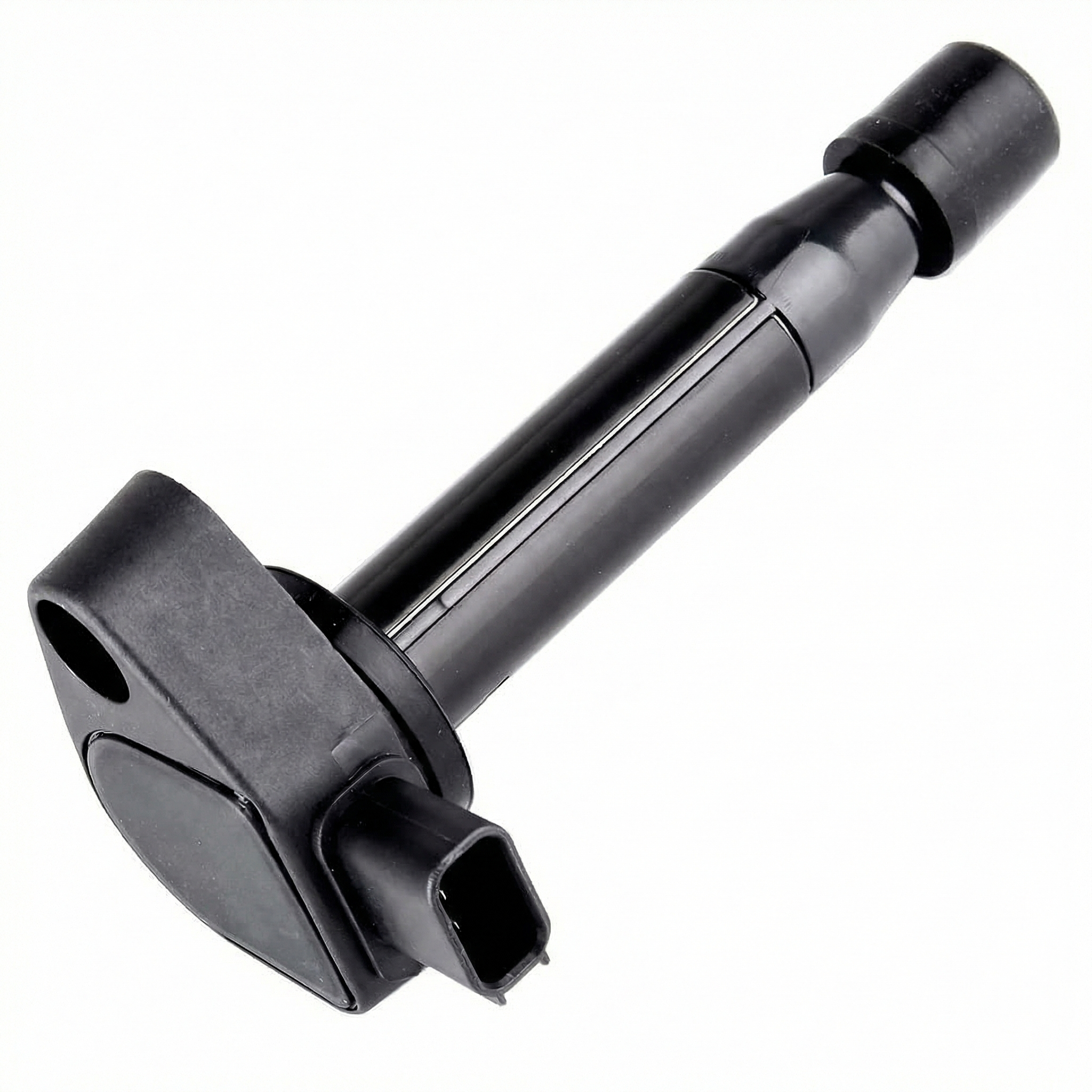
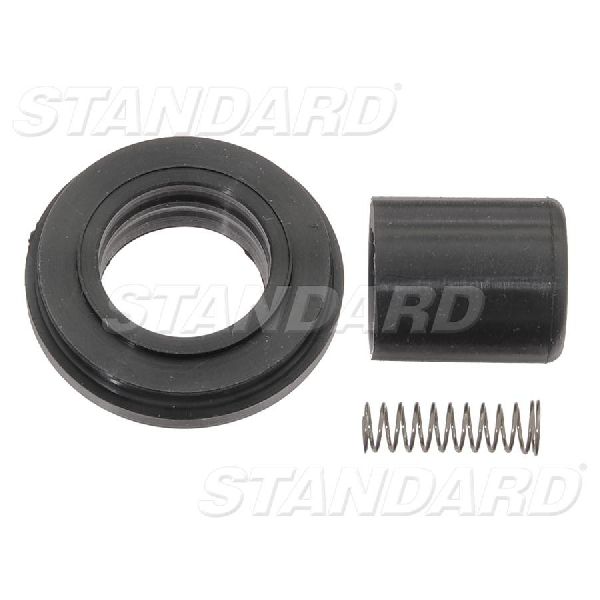
- Faulty Ignition Coil 🔴 High Probability Ignition coils are a common wear item on Honda/Acura J-series engines due to heat and age. A loose spark plug can also overheat and damage the coil boot, causing the coil to fail. Failure of a single coil is the most frequent reason for a single-cylinder misfire code.
How to confirm: Swap the ignition coil from cylinder 5 with an adjacent cylinder (e.g., cylinder 4 or 6). Clear the codes and drive. If the code changes to P0304 or P0306, the ignition coil is faulty. This is the most definitive diagnostic test.
Typical fix: Replace the failed ignition coil. While you only need to replace the bad one, many owners replace all three on the front bank or all six if they are high-mileage originals.
Est. part cost: $60-$90 - Worn or Loose Spark Plug 🔴 High Probability Spark plugs are a standard maintenance item. On this specific platform, the cylinder 5 spark plug has been known to become loose, leading to a misfire. This is a widely discussed topic on forums like Acurazine.
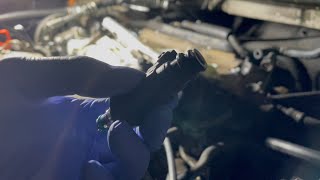
How to confirm: After ruling out the coil, remove the spark plug from cylinder 5. Check if it was loose; you may be able to turn it by hand with the socket extension. Inspect it for a worn electrode, heavy carbon deposits, oil fouling, or a cracked porcelain insulator. You can swap the plug with another cylinder to see if the misfire follows.
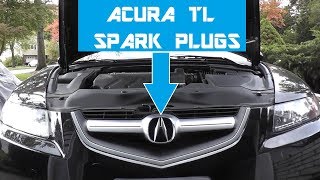
Typical fix: Replace the spark plug. It is best practice to replace all six spark plugs at the same time with the recommended NGK or Denso Iridium plugs to maintain consistent performance. The recommended torque spec for the NGK (IZFR6K11) plugs in the aluminum heads is 18-21.6 lb-ft without anti-seize, or around 13 lb-ft if anti-seize is used. 🎬 See this walkthrough for replacing your Acura V6 spark plugs. Many owners and mechanics recommend torquing to the higher end of the spec to prevent the plug from loosening again.
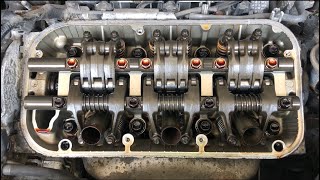
Est. part cost: $12-$20 per plug - Incorrect Valve Lash (Needs Valve Adjustment) 🟡 Medium Probability The J-series engine uses mechanical valve adjusters that can tighten over time, particularly the exhaust valves. This prevents the valve from seating correctly, causing a loss of compression and misfires, often noticeable as a rough idle when the engine is warm. This service is often neglected.
How to confirm: This is typically diagnosed after ignition components are confirmed to be good. A professional can check the clearances with a feeler gauge. The service is recommended every 105,000 miles. Specs are typically Intake: 0.20-0.24 mm (0.008-0.009 in) and Exhaust: 0.28-0.32 mm (0.011-0.013 in).
Typical fix: Perform a valve lash adjustment. This involves removing the intake manifold and valve covers to manually set the clearance for each valve's rocker arm.
Est. part cost: $20-$40 for gaskets - Clogged or Faulty Fuel Injector ⚪ Low Probability
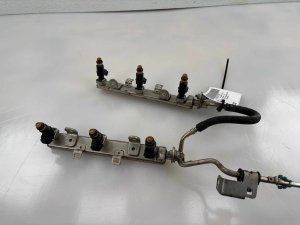
How to confirm: If spark and coil are good, the injector is the next suspect. You can listen for a 'clicking' sound from the injector with a mechanic's stethoscope. Swapping injectors between cylinders is the most definitive test, but it is a more labor-intensive job as it requires removing the fuel rail.
Typical fix: Replace the faulty fuel injector. It's often recommended to replace the injectors on the same bank (4, 5, 6) at the same time due to the labor involved in accessing them.
Est. part cost: $80-$150
Rare But Worth Checking
- Low Engine Compression: If all of the above checks out, a compression test can reveal a more serious internal engine problem like a burnt valve or worn piston rings. This is uncommon but possible on very high-mileage engines. A loose spark plug that has damaged the cylinder head threads can also cause a loss of compression.
- Failing PGM-FI Main Relay: A failing main fuel relay can cause intermittent low voltage to the ignition coils and fuel injectors, leading to random or multiple misfires.
- PCM Software Issue: Acura released TSB 03-033 for some early models where the PCM could incorrectly interpret sensor data and set false misfire codes, particularly at wide-open throttle. The fix is a software update performed by a dealer.
Diagnosis Steps

- Read the code with an OBD-II scanner to confirm P0305 is present.
- Locate cylinder 5 (middle cylinder, front bank, near the radiator).
- Swap the ignition coil from cylinder 5 with the coil from cylinder 4 (to its left) or cylinder 6 (to its right).
- Clear the codes using the scanner and test drive the vehicle.
- If the code returns as P0304 or P0306, the ignition coil is the problem. Replace it.
- If the code returns as P0305, the coil is likely good. Proceed to inspect the spark plug.
- Remove the spark plug from cylinder 5. Note if it was loose. A loose plug is a very common issue on this cylinder. Inspect for wear, damage, or fouling. Replace if necessary.
- Ensure the new spark plug is torqued correctly, to approximately 18-21 lb-ft, to prevent it from loosening again.
- If the plug and coil are good but the misfire persists on cylinder 5, the next most likely causes are a faulty fuel injector or tight valves.
- If the vehicle has over 100,000 miles or a history of rough idle, a valve adjustment is a strong consideration.
- If a valve adjustment does not solve the issue, further diagnosis of the fuel injector (by swapping it) and a compression test are warranted.
Parts You'll Likely Need

- Ignition Coil
(OEM #30520-RCA-A02)— This is the most common failure part for a single-cylinder misfire on this engine. Supersedes 30520-RCA-A01 and 30520-P8E-A01.
Trusted brands: Denso, NGK, Hitachi, Acura (Genuine)
OEM price range: $100-$140
Aftermarket price range: $60-$90 - Iridium Spark Plug
(OEM #IZFR6K11)— Spark plugs are a routine maintenance item and can cause misfires when worn. The cylinder 5 plug is known to loosen on this engine.
Trusted brands: NGK (6994), Denso (SKJ20DR-M11)
OEM price range: $15-$25
Aftermarket price range: $12-$18 - Fuel Injector
(OEM #16450-RCA-A01)— A less common but possible cause of a persistent misfire after ignition components have been ruled out.
Trusted brands: Acura (OEM), GB Remanufacturing, Standard Motor Products (FJ490)
OEM price range: $180-$220
Aftermarket price range: $80-$150
Related Codes That Often Appear With This One
- P0300 — If the cause is more systemic (e.g., failing fuel pump, bad PGM-FI relay, or severely neglected valve adjustment), you may also see a P0300 (Random/Multiple Misfire) code.
- P0304, P0306 — These codes for adjacent cylinders on the same bank may appear if the issue is related to something affecting the entire front bank, like a vacuum leak at the intake manifold or clogged EGR passages in the intake manifold.
Technical Service Bulletins (TSBs) & Recalls
- TSB 03-033: Addresses an issue on some early models where the PCM may set false misfire DTCs (P0300-P0306) at high RPM or wide-open throttle. The fix is a PCM software update.
- Bulletin #BPAS04242017901: While issued for the MDX, this bulletin notes that Acura has investigated conditions where misfire codes P0301 through P0306 are stored to fully understand the cause of these conditions.
Platform-Specific Known Issues
- Loose Cylinder #5 Spark Plug: A widely reported issue on enthusiast forums is the tendency for the spark plug in cylinder 5 to become loose, causing a misfire. It is recommended to check for a loose plug as a first step after checking the coil. Some owners report needing to re-torque it annually.
- Required Valve Lash Adjustment: The J-series engine requires a valve lash adjustment at regular intervals (approx. 105,000 miles). Neglecting this service can lead to tight exhaust valves, loss of compression, and misfires that are often most noticeable as a rough idle when warm.
- Clogged EGR Passages: Over time, the EGR passages in the intake manifold can become clogged with carbon. While this typically causes a P0401 code and random misfires (P0300), a severe clog affecting the runner for cylinder 5 could potentially contribute to a persistent P0305.
Mechanic-Grade Diagnostic Values

- Fuel Pressure at Idle — expected: 57-64 psi. Failure: Pressure significantly below 57 psi could indicate a weak fuel pump or failing regulator.
- Ignition Coil Primary Resistance — expected: Approx. 0.49 - 0.57 Ohms. Failure: A reading outside this range (e.g., open circuit or significantly higher/lower resistance) indicates a faulty coil.
- Ignition Coil Secondary Resistance — expected: Approx. 9.5 - 11.1 k-Ohms. Failure: A reading outside this range indicates a breakdown in the secondary windings.
- Fuel Injector Resistance — expected: Approx. 10-13 Ohms. Failure: Resistance significantly outside this range suggests a bad injector coil.
Hidden / Shadow Codes Worth Checking
- Mode 6, Test ID $A2-$A7: Mode 6 on a capable OBD-II scanner can display misfire counts for each cylinder (Cylinder 1 = $A2, Cylinder 2 = $A3, etc.). For P0305, you would check the counter for Cylinder 5 ($A6). This allows you to see if other cylinders are experiencing low-level misfires that haven't yet triggered a code. (see via A professional OBD-II scan tool with Mode 6 capability. The data is presented in hexadecimal and may require the scanner to convert it to be human-readable.)
Scan Tool Commands That Help
- Honda Diagnostic System (HDS): CKP (Crankshaft Position) Pattern Relearn — This procedure should be performed after any significant engine work, including resolving a persistent misfire. The PCM learns the minor variations of the crankshaft position sensor's signal. If this learned pattern is incorrect or not cleared after a repair, it can lead to false misfire detection.
- Honda Diagnostic System (HDS): Injector Test — The HDS can individually disable fuel injectors while the engine is running. If you disable the injector for cylinder 5 and there is no change in engine RPM or smoothness, it confirms that cylinder was not contributing, pointing towards a bad injector (assuming spark is good).
Wiring & Ground Locations
- G101 — On the left side of the engine, near the transmission housing, under the air intake assembly.. This is a primary engine and transmission ground. Corrosion or a loose connection here can cause a host of intermittent electrical problems, including weak spark or erratic sensor readings that could be misinterpreted as a misfire.
- Engine to Chassis Ground Strap — Typically a braided strap located at the side motor mount.. Ensures the engine block has a solid ground path to the chassis and battery negative. A weak or broken strap can cause the ignition system to seek ground through other, less reliable paths, leading to weak spark and misfires.
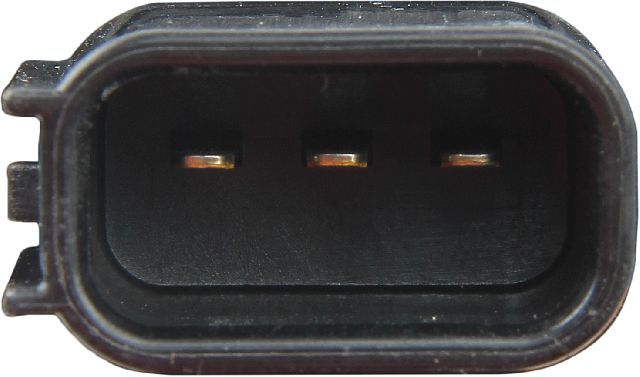
- Cylinder 5 Ignition Coil Connector — Front bank of the engine, middle connector. Pin 1 (Black/White wire) is 12V+ power, Pin 2 (color varies, e.g., Yellow/Green) is the trigger signal from the PCM, Pin 3 (Black) is ground.. When diagnosing, you can use a multimeter here to verify power and ground to the coil, and an oscilloscope or logic probe to check for the trigger signal from the PCM, ruling out a wiring or PCM driver issue.
Real Owner Repair Stories
- Acurazine user 'Wally05' (2006 Acura TL, 180,000 miles) — Sudden onset of rough running ('like a motor boat'), P0305.
❌ Tried (didn't work) Swapped ignition coils (misfire stayed on cylinder 5)., Swapped spark plugs (misfire stayed on cylinder 5).
✅ What actually fixed it The user concluded the next logical step was the fuel injector and decided to replace the injectors on the front bank (4, 5, and 6) due to the high mileage and labor involved. This implies the injector was the root cause. - Reddit user 'Routine-Wind-4134' (2007 Acura TL-S) — P0305 misfire code.
❌ Tried (didn't work) Initial diagnosis pointed to the common causes.
✅ What actually fixed it The user, a shop employee, noted that the root cause was consistently a loose spark plug in cylinder 5, which would then damage the ignition coil. The ultimate fix was replacing the plug and coil, and they noted some owners resort to checking the plug torque annually to prevent recurrence. - NHTSA ODI #10062535 — An owner reported a recurring check engine light where a P0305 code was found; the technician attempted a repair by swapping the #5 injector with the #4 injector.
OEM Part Supersession History
30520-P8E-A01, 30520-P8F-A01, 30520-RCA-A01→30520-RCA-A02— Revisions to improve reliability and heat resistance.
Heads up: All listed part numbers are interchangeable for this application. The latest revision (30520-RCA-A02) is recommended.
Model Year Variations Within This Range
- 2007-2008: The Acura TL Type-S model was introduced, featuring a 3.5L J35A8 engine, while the base model retained the 3.2L J32A3. While the fundamental causes of P0305 are identical (plugs, coils, valves), some parts like fuel injectors may have different flow rates or part numbers. The cylinder numbering and location of cylinder 5 remain the same.
Diagnostic Flowchart
Other Known Issues on This Vehicle
Issues unrelated to this code that are worth knowing about as an owner of this generation:
- Automatic Transmission Failure 🔴 High — Very common on 2004-2006 models. The 3rd gear clutch pack is a known weak point. Failure can occur anywhere from 80,000 to 150,000 miles. (Ref: While no specific recall, replacing the 3rd and 4th gear pressure switches is a widely recommended preventative measure.)
- Cracked Dashboard 🟡 Low — Extremely common across all years, especially in warmer climates. Cracks typically appear around the passenger airbag and center speaker. (Ref: Acura extended the warranty for this issue under TSB 08-017 for some vehicles, but that program has long since expired.)
- HandsFreeLink (HFL) Bluetooth Module Failure 🟠 Medium — Very common. The module fails to shut down, causing a parasitic battery drain that kills the battery overnight. (Ref: TSB 05-020 was issued for this. The common fix is to simply unplug the module, which is located in the overhead console.)
- Lower Control Arm Bushing Failure 🟠 Medium — Common after 100,000 miles. The compliance bushings tear, causing clunking noises over bumps and uneven tire wear.
- Power Steering Pump Whine / Leaks 🟡 Low — A common issue is whining from the power steering pump, especially on cold starts. This is often caused by a failing O-ring on the inlet hose, which allows air into the system.
Used vs. New Parts: Buying Guide for This Vehicle
When a used part is the smart pick: A used ignition coil from a low-mileage wrecked vehicle can be a cost-effective option, as they are easy to replace if the used part fails. Other electronic sensors or the fuel injector assembly could also be considered if from a verified low-mileage donor.
Donor-vehicle mileage cap: roughly under 75000 miles for the part to have meaningful remaining life.
What to inspect on the donor part:
- For ignition coils, check the plastic housing for cracks and the rubber boot for tears, swelling, or signs of melting.
- Verify the part number on the component matches the OEM number or a known superseded number.
- Ask for the VIN of the donor car to verify its mileage and year.
- Avoid parts from vehicles that show signs of flood damage or major engine fires.
OEM-only on this vehicle (don't cheap out):
- PGM-FI Main Relay: Aftermarket relays for this function have a poor reputation for reliability.
- PCM/ECU: Must be OEM and may require dealer programming.
Aftermarket brands forum-validated for this vehicle:
- Ignition Coils: Denso, NGK, Hitachi (often the original OEM suppliers).
- Spark Plugs: NGK, Denso.
- Fuel Injectors: GB Remanufacturing, Standard Motor Products (SMP).
Brands owners have reported issues with on this vehicle:
- Unbranded, no-name ignition coils and sensors from online marketplaces. These frequently have high failure rates and can cause more diagnostic headaches.
Real Owner Stories
Aggregated from forums and TSBs cited above. Mileages and costs reflect what owners reported in those sources.
2004-2008 Acura TL 3.2L/3.5L V6
Symptoms: A loose spark plug was ejected from the engine, stripping the cylinder head threads.
What fixed it: The owner faced a cylinder head repair after the plug failed.
Cost: $3,000-$3,000
Source hint: AcuraZine Thread '#5 spark plug failed causing damage to the cylinder head'
2004-2008 Acura TL 3.2L/3.5L V6
Symptoms: Loose spark plugs found on cylinders 3, 4, and 5; the plug on cylinder 3 specifically caused a melted ignition coil boot.
What fixed it: Checking and tightening loose spark plugs.
Source hint: AcuraZine Thread 'Loose Spark Plug! PLEASE CHECK YOURS!'
2004-2008 Acura TL 3.2L/3.5L V6
Symptoms: Cylinder 5 misfire code P0305.
What fixed it: Tightening a loose cylinder five spark plug or replacing a failed coil.
Source hint: Reddit - r/Acura thread 'Cylinder 5 misfire, how severe is error code p0305'
Related OBD-II Codes
Frequently Asked Questions
Is there a TSB for false misfire codes on the early 2004-2008 Acura TL?
Why is cylinder 5 specifically mentioned so often for the P0305 code on the TL?
What are the specific valve lash clearance specs for the J-series engine?
How often should I perform a valve adjustment to prevent misfires on my Acura TL?
What spark plugs should I use for my 2004-2008 Acura TL to avoid P0305?
Can a clogged EGR system cause a P0305 code on this vehicle?
Helpful Videos
![2004-2008 Acura TL Misfire Diagnose & Fix [ P0300 CODE ]](https://img.youtube.com/vi/Pgl61FCVHP0/mqdefault.jpg)
Used OEM Parts in Stock
New Aftermarket Parts Available


The information in this article is provided for general reference and educational purposes only. Vehicle specifications, procedures, and part compatibility can vary by production date, trim level, and region. Always consult your vehicle's factory service manual and verify part numbers before purchasing or performing repairs. Safety-critical components such as airbags, seat belts, and braking systems should be installed by a qualified professional.
- Acura TL:
- 🎬 Helpful Videos
- 🛍️ Shop This Part
- What's Unique About the 2004-2008 Acura TL
- Symptoms You May Notice
- Most Likely Causes
- Rare But Worth Checking
- Diagnosis Steps
- Parts You'll Likely Need
- Related Codes That Often Appear With This One
- Technical Service Bulletins (TSBs) & Recalls
- Platform-Specific Known Issues
- Mechanic-Grade Diagnostic Values
- Hidden / Shadow Codes Worth Checking
- Scan Tool Commands That Help
- Wiring & Ground Locations
- Real Owner Repair Stories
- OEM Part Supersession History
- Model Year Variations Within This Range
- Diagnostic Flowchart
- Other Known Issues on This Vehicle
- Used vs. New Parts: Buying Guide for This Vehicle
- Real Owner Stories
- 2004-2008 Acura TL 3.2L/3.5L V6
- 2004-2008 Acura TL 3.2L/3.5L V6
- 2004-2008 Acura TL 3.2L/3.5L V6
- Related OBD-II Codes
- Frequently Asked Questions
- 🎟️ Get 5% Off