

P0304 on 2011-2018 Volvo S60: Cylinder 4 Misfire Causes and Fixes
This code indicates a misfire in cylinder 4. The most common cause is a faulty ignition coil or a worn spark plug. Expect to pay $50-$100 for a single coil and plug, with DIY difficulty rated at 2/5.
- P0304 on a 2011-2018 S60 almost always points to a bad ignition coil or spark plug in cylinder 4.
- The easiest and most effective diagnostic method is to swap the ignition coil from cylinder 4 with another cylinder and see if the misfire code follows it.
- Do not ignore this code. Driving with a misfire can lead to very expensive catalytic converter damage.
- When replacing spark plugs, use high-quality Iridium parts from reputable brands like Bosch or NGK and replace them as a full set.
- This repair is very DIY-friendly and requires only basic hand tools, saving significant labor costs.
What's Unique About the 2011-2018 Volvo S60
On the Volvo S60 with the T5 inline-five and T6 inline-six engines, the ignition system uses a coil-on-plug design, which is very common. While generally reliable, individual coil failures are a frequent cause of single-cylinder misfires. Owners report that once one coil fails, others may follow. A notable issue for these P3 platform Volvos is the potential for a clogged PCV (Positive Crankcase Ventilation) system. A failing PCV system can create excessive crankcase pressure, forcing oil past seals. This can lead to oil pooling in the spark plug wells, which in turn can damage the ignition coil boot and cause a misfire.
Symptoms You May Notice
- Flashing or solid Check Engine Light
- Rough or vibrating idle.
- Hesitation or stumbling during acceleration.
- Noticeable loss of engine power.
- Reduced fuel economy.
- Engine may stall in some cases.
- Smell of unburned fuel from the exhaust.
- Replacing the catalytic converter when a P0420 code appears alongside P0304. The P0420 is often a symptom of the misfire (unburned fuel damaging the converter), not the cause. Fix the misfire first.
Most Likely Causes
- Faulty Ignition Coil 🔴 High Probability Coil-on-plug units are a known failure point on modern Volvo engines due to age and heat cycles. It's a very common cause for a single-cylinder misfire.
How to confirm: Swap the ignition coil from cylinder 4 with an adjacent cylinder (e.g., cylinder 3). Clear the codes and drive the car. If the code changes to P0303, the ignition coil is faulty.
Typical fix: Replace the faulty ignition coil. Many owners and mechanics recommend replacing all coils at the same time as a preventative measure, as they tend to fail around the same time.
Est. part cost: $40-$90 per coil - Worn or Fouled Spark Plug 🔴 High Probability Spark plugs are a regular maintenance item. The turbocharged T5 and T6 engines place high demand on spark plugs, which can shorten their lifespan if not replaced at specified intervals.
How to confirm: After confirming the coil is good, remove the spark plug from cylinder 4. Inspect it for wear (worn electrode), fouling (black soot, oil, or white deposits), or an incorrect gap. A plug saturated with fuel points towards an ignition or injection issue. Compare it to a plug from a healthy cylinder.
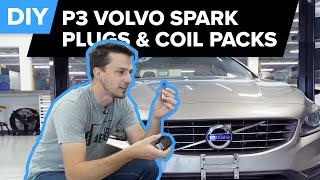
Typical fix: Replace the spark plug. It is best practice to replace all spark plugs as a set 🎬 Watch: Step-by-step spark plug and coil pack replacement guide. to ensure even performance. Use high-quality Iridium or Platinum plugs from brands like Bosch, NGK, or Denso.
Est. part cost: $10-$25 per plug - Faulty Fuel Injector 🟡 Medium Probability Injectors can become clogged with deposits over time or fail electronically, leading to a stuck-open or stuck-closed state. While less common than ignition faults, it is a documented cause for P0304.
How to confirm: This is a more advanced diagnostic step. After ruling out ignition components, you can swap the fuel injector from cylinder 4 with another cylinder. If the misfire code moves, the injector is the problem. This requires depressurizing the fuel rail and is more involved. A 'noid light' can also be used to check if the injector is receiving an electrical pulse from the ECU.
Typical fix: Replace the faulty fuel injector. It's often recommended to replace the seals for the other injectors on the fuel rail at the same time.
Est. part cost: $70-$150 per injector
Rare But Worth Checking
- Vacuum Leak: A vacuum leak from a cracked hose, faulty intake manifold gasket, or other unmetered air source can lean out the air/fuel mixture and cause a misfire. A smoke test is the most effective way to find a hard-to-see leak.
- Low Cylinder Compression: This is a serious mechanical issue, potentially caused by a burnt exhaust valve, worn piston rings, or a leaking head gasket. A compression test is necessary to confirm this after all other causes have been ruled out. A reading of 120-150 PSI is typical, but the key is consistency across all cylinders.
- Clogged PCV System: A clogged Positive Crankcase Ventilation (PCV) system can cause a variety of issues, including oil leaks that foul spark plugs and coils. Symptoms include a whistling noise from the engine, high oil consumption, or smoke from the dipstick tube. While it usually causes multiple/random misfires, it can contribute to a single cylinder misfire.
Diagnosis Steps
- Read the code using an OBD-II scanner to confirm P0304 and check for any other codes.
- To diagnose the ignition coil, swap the coil from cylinder 4 with the coil from cylinder 3. Clear the codes and run the engine. If the scanner now reads P0303, the ignition coil is the culprit and needs replacement.
- If the code remains P0304, move the spark plug from cylinder 4 to cylinder 2. Clear codes and run the engine. If the code changes to P0302, the spark plug is faulty.
- If the misfire is still on cylinder 4, inspect the ignition coil's electrical connector and wiring for any damage or corrosion. Look for cracked plastic on the connector housing.
- Check for oil in the spark plug tube. If present, the valve cover gasket and/or spark plug tube seals need to be replaced. This is often a symptom of a clogged PCV system.
- If ignition components are confirmed good, the next likely cause is the fuel injector. This can be tested by swapping injectors between cylinders or using a noid light. This is a more complex job and may require professional help.
- Perform a compression test on all cylinders to check for mechanical engine problems. Readings should be consistent across all cylinders.
- If all else fails, check for vacuum leaks using a smoke machine.
Parts You'll Likely Need
- Ignition Coil
(OEM #30713417)— This is the most frequent failure point for a single-cylinder misfire on these engines.
Trusted brands: Bosch (OEM) - 0221604010, Denso, Genuine Volvo
OEM price range: $70-$110
Aftermarket price range: $40-$90 - Spark Plug
(OEM #31293000 (for 3.0L T6))— A worn or fouled spark plug is the second most common cause and is a routine maintenance item.
Trusted brands: NGK, Bosch, Denso (FK20HQR10 for 3.0L T6)
OEM price range: $20-$30
Aftermarket price range: $10-$25
Related Codes That Often Appear With This One
- P0300 — If the misfire becomes more widespread or is intermittent across cylinders, a P0300 (Random/Multiple Cylinder Misfire) code may appear, indicating issues with more than one cylinder.
- P0420 — This code for 'Catalyst System Efficiency Below Threshold' can be triggered when a persistent misfire allows unburned fuel to enter and damage the catalytic converter.
- P0301, P0302, P0303, P0305, P0306 — These codes indicate misfires in other specific cylinders. They can appear if a swapped component (like a bad coil) is moved to that cylinder during diagnosis, or if multiple components are failing.
Technical Service Bulletins (TSBs) & Recalls
- Volvo Technical Journal TJ-25732: Addresses excessive oil consumption on some early 2.0L Drive-E engines, but highlights Volvo's awareness of engine-related issues. While not directly for P0304 on T5/T6, it shows a precedent for engine revisions.
Platform-Specific Known Issues
- Some owners have reported issues with the PCV (Positive Crankcase Ventilation) system failing, which can lead to increased crankcase pressure and oil leaks, including into the spark plug wells. While not a direct cause of P0304, it can create conditions that lead to ignition coil failure. A whistling noise at idle that disappears when the oil cap is removed 🎬 See how to replace the PCV oil trap yourself. is a key symptom.
- On the 2.5L T5 engine, the auxiliary belt tensioner can fail, causing the belt to shred and potentially get ingested by the timing belt, leading to catastrophic engine failure. While unrelated to a P0304 cause, it's a critical maintenance point for owners.
Mechanic-Grade Diagnostic Values
- Ignition Coil Connector Voltage (Key On, Engine Off) — expected: ~12V on the power supply wire (Green/White on some models).. Failure: No voltage or significantly low voltage indicates a wiring or fuse issue upstream of the coil.
- Fuel Injector Resistance — expected: Typically 11-14 Ohms, but should be consistent across all injectors.. Failure: An injector with resistance significantly higher or lower than the others is likely faulty.
Scan Tool Commands That Help
- Volvo VIDA: Misfire Counter Monitoring — Use this function to view live misfire counts for each cylinder. This is invaluable for confirming if the misfire is exclusively on cylinder 4 or if other cylinders are misfiring intermittently without yet setting a code. This helps differentiate a single component failure from a more systemic issue.
- Volvo VIDA: Injector Cut-Off Test — This bidirectional test allows the technician to disable one injector at a time. When the injector for a healthy cylinder is disabled, the engine RPM will drop. If disabling the injector for cylinder 4 causes no change in engine idle, it confirms that the cylinder was not contributing, pointing strongly to a fuel or spark issue in that specific cylinder.
Wiring & Ground Locations
- Engine Ground Strap — There are multiple critical grounds. One runs from the engine block to the chassis. Another key ground point is on the passenger side strut tower, which connects to the main engine harness.. A corroded or loose engine ground can cause erratic electrical behavior, including weak spark or inconsistent injector pulses, which can lead to misfires. The ignition coils are particularly sensitive to poor grounding.
- Ignition Coil Connector — Directly on top of each ignition coil, secured by a plastic clip.. The plastic connectors and wiring can become brittle from heat and age, leading to cracks, corrosion, or loose pins. A poor connection at the coil for cylinder 4 will directly cause a P0304. Harness repair kits are available.
- Ground Point 31/4 — On the engine block itself.. This is a primary ground point for the engine management system. Verifying it is clean and tight is a crucial step when diagnosing electrical-related misfires.
Real Owner Repair Stories
- volvoforums.com user 'miguelito22' (2002 Volvo S60 AWD, 98,000 miles) — Rough idle, low power, check engine light on.
❌ Tried (didn't work) Replacing all spark plugs., Replacing only the ignition coils for cylinder #4 and #1.
✅ What actually fixed it Replacing all five ignition coil packs resolved the misfire issue.
OEM Part Supersession History
8683701→9492266— Updated design for the engine ground strap.
Model Year Variations Within This Range
- 2011-2013 vs 2014-2018: The S60 received a significant facelift for the 2014 model year, which included revised exterior styling and interior updates. While the core T5 and T6 powertrains remained similar, some wiring and module locations may differ slightly.
- 2012-2015: The T6 R-Design models came standard with a Polestar engine tune from the factory, increasing horsepower over the standard T6. This places slightly higher demand on ignition and fuel components.
Diagnostic Flowchart
Other Known Issues on This Vehicle
Issues unrelated to this code that are worth knowing about as an owner of this generation:
- PCV System Clogging/Failure 🟠 Medium — Common issue, especially on vehicles over 80,000 miles. Can cause oil leaks and drivability problems.
- Auxiliary Belt Tensioner Failure (2.5L T5) 🔴 High — A known failure point on the 5-cylinder engine where the tensioner fails, causing the belt to shred and potentially enter the timing cover, leading to catastrophic engine damage.
- Rear Trailing Arm Bushing Wear 🟡 Low — The large rear trailing arm bushings are known to wear out, causing clunking noises from the rear suspension over bumps.
- Broken Rear Coil Springs 🟠 Medium — Rear coil springs have been reported to break, sometimes without obvious symptoms other than a slight change in ride height.
- Front Fender Rust 🟡 Low — Leaves and debris can get trapped behind the front fender liners, retaining moisture and causing rust to form from the inside out.
Used vs. New Parts: Buying Guide for This Vehicle
When a used part is the smart pick: Used parts are generally not recommended for fixing a P0304 code, as the common causes are wear-and-tear items. A used ignition coil or spark plug has an unknown lifespan and may fail soon after installation. The only exception might be a larger component like a complete engine wiring harness if a specific connector is damaged and a pigtail repair is not feasible.
Donor-vehicle mileage cap: roughly under 60000 miles for the part to have meaningful remaining life.
What to inspect on the donor part:
- For any used electronic part, check for corrosion on pins.
- Inspect wiring harnesses for brittleness, cracks, or previous repairs.
- Avoid parts from vehicles with signs of flood or fire damage.
OEM-only on this vehicle (don't cheap out):
- PCV Oil Trap/Breather Box: Aftermarket versions are known to have high failure rates, leading to recurring issues. It is strongly recommended to use Genuine Volvo or OEM-supplier parts.
- Ignition Coils: While some aftermarket brands are reliable, many cheaper options fail prematurely. Sticking with OEM (Bosch) or known quality brands is a safer investment.
Aftermarket brands forum-validated for this vehicle:
- Ignition Coils: Bosch (often the OEM supplier), NGK, Denso.
- Spark Plugs: NGK (Iridium IX), Bosch (Double Iridium), Denso.
- Injectors: Bosch (OEM supplier).
Brands owners have reported issues with on this vehicle:
- Unbranded, 'white-box' ignition coils and sensors from online marketplaces. These often have a high failure rate and may not perform to OEM specifications, causing persistent or new issues.
Real Owner Stories
Aggregated from forums and TSBs cited above. Mileages and costs reflect what owners reported in those sources.
2017 Volvo S60 T5 Inscription — 14000 miles
Symptoms: Check engine light went on.
What fixed it: Brought to dealer for warranty repair (ongoing diagnosis in report).
Source hint: reddit r/MechanicAdvice
2002 Volvo S60 — ~100000 miles
Symptoms: Trouble code P0304.
What fixed it: Replacing all ignition coils after initially replacing only one failed to fix the problem long-term.
Source hint: volvoforums.com - Thread 'Help got trouble code P0304'
Volvo S60 (P3 Platform)
Symptoms: Persistent P0304 misfire followed by a P0420 code.
What fixed it: Fixing the cylinder 4 misfire first to address the catalytic converter code.
Source hint: reddit.com/r/Volvo - Thread 'Engine codes P0304 and P0420'
Volvo S60
Symptoms: Cylinder number 4 misfiring.
What fixed it: Diagnostic process involving swapping coils and plugs, and checking for ECU issues or compression loss.
Source hint: volvoforums.com - Thread 'cylinder number 4 misfiring'
Related OBD-II Codes
Frequently Asked Questions
Does Volvo Technical Journal TJ-25732 apply to my P0304 misfire on a T5 or T6 engine?
I have a whistling noise at idle along with my P0304 code; are these related?
Should I replace just the coil for cylinder 4 or all of them?
What spark plugs should I use for my turbocharged S60 to prevent future misfires?
Can a misfire on cylinder 4 damage other parts of my Volvo?
Is there a specific maintenance item on the 2.5L T5 I should check while diagnosing engine codes?
Helpful Videos


We Have This Part in Stock



The information in this article is provided for general reference and educational purposes only. Vehicle specifications, procedures, and part compatibility can vary by production date, trim level, and region. Always consult your vehicle's factory service manual and verify part numbers before purchasing or performing repairs. Safety-critical components such as airbags, seat belts, and braking systems should be installed by a qualified professional.
- Volvo S60:
- 🎬 Helpful Videos
- 🛍️ Shop This Part
- What's Unique About the 2011-2018 Volvo S60
- Symptoms You May Notice
- Most Likely Causes
- Rare But Worth Checking
- Diagnosis Steps
- Parts You'll Likely Need
- Related Codes That Often Appear With This One
- Technical Service Bulletins (TSBs) & Recalls
- Platform-Specific Known Issues
- Mechanic-Grade Diagnostic Values
- Scan Tool Commands That Help
- Wiring & Ground Locations
- Real Owner Repair Stories
- OEM Part Supersession History
- Model Year Variations Within This Range
- Diagnostic Flowchart
- Other Known Issues on This Vehicle
- Used vs. New Parts: Buying Guide for This Vehicle
- Real Owner Stories
- 2017 Volvo S60 T5 Inscription — 14000 miles
- 2002 Volvo S60 — ~100000 miles
- Volvo S60 (P3 Platform)
- Volvo S60
- Related OBD-II Codes
- Frequently Asked Questions
- 🎟️ Get 5% Off