

P0304 on 2010-2017 Volkswagen Golf: Cylinder 4 Misfire Causes and Fixes
P0304 on a VW Golf indicates a misfire in cylinder 4, most often caused by a failed ignition coil or a worn spark plug. For TSI engines, carbon buildup on intake valves is another very common cause. A new coil and plug is a ~$50-$100 DIY fix.
- P0304 is a misfire on cylinder 4. Do not ignore a flashing check engine light, as it signals a risk of expensive catalytic converter damage.
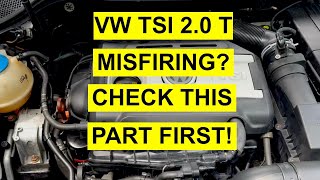
- The most likely and easiest-to-fix causes are a bad ignition coil or spark plug. Start your diagnosis by swapping the coil from cylinder 4 to another cylinder.
- If your Golf has a TSI engine (1.8T or 2.0T), and new plugs/coils don't fix the issue, the cause is very likely carbon buildup on the intake valves, which requires professional cleaning.
- The 2.5L 5-cylinder engine is not prone to the same carbon buildup issue as the TSI engines.
What's Unique About the 2010-2017 Volkswagen GOLF

The 2010-2017 Golf spans two generations, the Mk6 and Mk7, which use different primary engines. While standard ignition issues affect all models, the direct-injection TSI engines (2.0T, 1.8T) used in many GTI and standard models are highly susceptible to carbon buildup on the intake valves, which disrupts airflow and is a very common cause of misfires that won't be fixed by replacing plugs and coils. The older Mk6 2.5L 5-cylinder engine is port-injected and does not suffer from this specific issue, but can have its own unique causes like vacuum pump related oil leaks.
Diagnostic Flowchart

Tap your situation to follow the diagnostic path that matches what you're seeing on this vehicle.
Generation note: This range covers the VW Golf Mk6 (2010-2014) and Mk7 (2015-2017). The Mk6 commonly used a 2.5L 5-cylinder or a 2.0T TSI engine (GTI). The Mk7 primarily used 1.8T TSI or 2.0T TSI engines (GTI/R). The most significant difference regarding P0304 is that the TSI engines in both generations are prone to carbon buildup on intake valves, while the 2.5L is not. The 2.5L engine, however, can be prone to vacuum pump oil leaks that can, in some cases, lead to misfires.
Symptoms You May Notice
- Flashing or solid Check Engine Light
- Rough idle or engine vibration
- Hesitation or loss of power during acceleration
- Reduced fuel economy
- Engine stalling, especially at stops
- Fuel smell from the exhaust
- Engine shaking or stuttering under load
- Replacing only spark plugs when the actual cause is a bad ignition coil.
- Replacing ignition components repeatedly on a TSI engine when the root cause is heavy carbon buildup on the intake valves.
- Assuming a misfire is always an ignition problem, without considering fuel delivery or mechanical issues like low compression.
Most Likely Causes

- Faulty Ignition Coil 🔴 High Probability Ignition coils are a very common failure item on VW engines as they age, leading to a lack of spark.
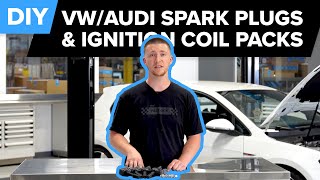
How to confirm: Swap the ignition coil from cylinder 4 with another cylinder (e.g., cylinder 2). Clear the codes with a scanner. If the code changes to P0302, the ignition coil is faulty. This is the most common and effective initial diagnostic step.
Typical fix: Replace the faulty ignition coil. It is often recommended to replace all coils at the same time as a preventative measure, especially if they are original.
Est. part cost: $30-$60 per coil - Worn or Fouled Spark Plug 🔴 High Probability Spark plugs are a regular maintenance item with a finite lifespan, typically 40,000-60,000 miles on these engines. Using incorrect plugs (wrong heat range) or gaps, especially on tuned cars, can cause misfires.
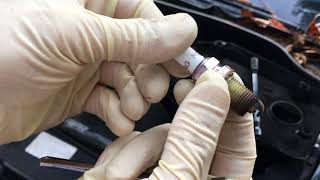
How to confirm: After confirming the coil is good, remove the spark plug from cylinder 4. Inspect it for wear (rounded electrode), carbon fouling (black and sooty), oil fouling (wet and black), or damage. A plug wet with fuel can indicate a lack of spark or a stuck injector.
Typical fix: Replace the spark plug. It is best practice to replace all spark plugs as a set with OEM-spec parts (e.g., NGK or Bosch).
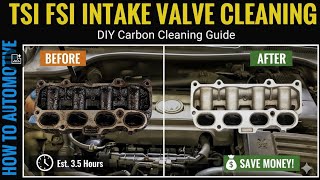
Est. part cost: $10-$25 per plug - Carbon Buildup on Intake Valves (TSI Engines Only) 🟡 Medium Probability TSI engines use direct injection, which sprays fuel directly into the cylinder. This means no fuel washes over the intake valves, allowing oil vapors from the PCV system to bake onto the valves, restricting airflow and causing misfires, especially on cold starts or under load. This issue is widely documented in owner forums and can occur as early as 60,000-80,000 miles.
How to confirm: This requires a visual inspection using a borescope inserted into the intake port after removing the intake manifold. A dealership or specialist shop can confirm this.
Typical fix: The intake manifold must be removed and the valves must be manually cleaned, typically through media blasting 🎬 See this walkthrough on cleaning carbon from intake valves (e.g., walnut shells). This is a labor-intensive job.
Est. part cost: $20-$40 for gaskets - Failed Fuel Injector ⚪ Low Probability While less common than ignition issues, fuel injectors can become clogged with carbon deposits or fail electronically. A stuck-open injector can flood the cylinder with fuel, washing oil from the cylinder walls and causing a wet, fuel-fouled spark plug.
How to confirm: A professional can perform a fuel injector balance test. A DIY method is to swap the cylinder 4 injector with another cylinder's injector, but this is a much more involved job than swapping a coil. A spark plug that is wet with fuel is a strong indicator.
Typical fix: Replace the faulty fuel injector. It's often recommended to replace the full set, especially on higher mileage vehicles. Injector seal kits should also be replaced.
Est. part cost: $50-$150 per injector
Rare But Worth Checking
- Vacuum Leak: A leak in a vacuum line, intake manifold gasket, or a failed PCV valve can introduce unmetered air and cause a lean misfire. This usually triggers other codes as well, such as P0171 (System Too Lean).
- Low Compression: Internal engine damage such as a worn piston ring, a burnt valve, or damage to the cylinder wall can cause a loss of compression, leading to a persistent misfire. This is a serious mechanical issue requiring a compression test to diagnose. Oil on the spark plug can be a sign of this.
- PCV Valve Failure: A failed Positive Crankcase Ventilation (PCV) valve is common on TSI engines and can cause a range of issues, including a vacuum leak (whistling/honking noise), high oil consumption, and lean/misfire codes. A failed diaphragm inside the valve is a frequent culprit.
- Damaged Ignition Coil Wiring/Connector: The wiring harness or the plastic connector for the ignition coil can become brittle and break, causing a poor connection and intermittent misfires. One owner on a forum found an exposed wire in the harness was the root cause after replacing plugs and coils. Another found the internal locking tab of the connector was broken.
Diagnosis Steps
- Read the code with an OBD-II scanner. Note if the Check Engine Light is steady or flashing and check for any other stored codes.
- Check freeze frame data to see the engine conditions (RPM, load, temperature) when the misfire occurred. Misfires under load can point to fuel delivery, while cold start misfires on a TSI engine often suggest carbon buildup.
- Swap the ignition coil from cylinder 4 to a different cylinder (e.g., cylinder 2). Clear the codes and drive the vehicle to see if the fault moves.
- If the misfire code moves to the new cylinder (e.g., P0302), the ignition coil is bad and needs replacement.
- If the code remains P0304, remove the spark plug from cylinder 4. Inspect its condition (wear, deposits, fuel/oil fouling). Swap it with another cylinder's plug to definitively rule it out.
- If the code still remains P0304, inspect the ignition coil connector and wiring for any visible damage, cracks, or exposed wires.
- For TSI engines, if plugs and coils are good, the next most probable cause is carbon buildup on the intake valves, which requires a borescope for inspection.
- Check for vacuum leaks by listening for hissing sounds or by performing a smoke test. Pay close attention to the PCV valve and its associated hoses.
- If the spark plug was wet with fuel, the fuel injector may be stuck open. This is a more advanced diagnosis and may require professional help.
- If all else fails, perform a compression test on cylinder 4 to check for mechanical engine problems like bad rings or valves. A reading that is significantly lower than the other cylinders indicates a serious internal issue.
Parts You'll Likely Need
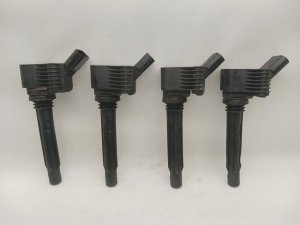
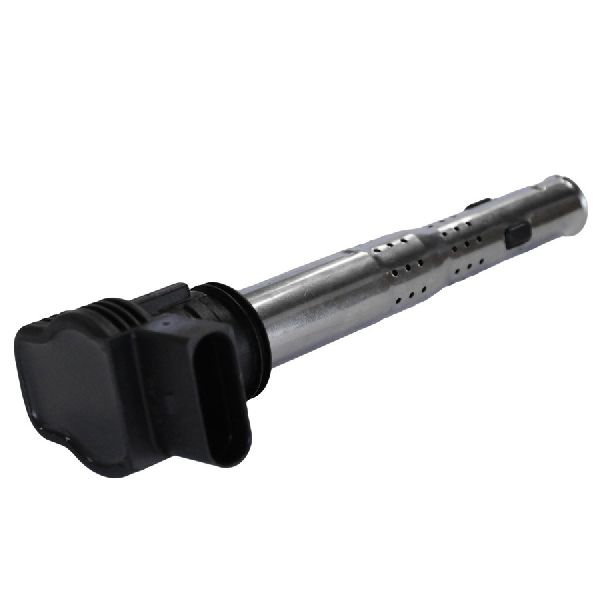
- Ignition Coil
(OEM #07K-905-715-G (or superseding versions, common for 2.0T/2.5L))— This is the most frequent cause of a single-cylinder misfire on VW engines.
Trusted brands: Bosch, NGK, Eldor
OEM price range: $45-$70
Aftermarket price range: $30-$60 - Spark Plug
(OEM #101-000-063-AA (example for 1.8T, verify by VIN))— A worn or fouled spark plug is the second most common cause and is a routine maintenance item.
Trusted brands: NGK, Bosch, Denso
OEM price range: $15-$30
Aftermarket price range: $10-$25
Related Codes That Often Appear With This One
- P0300 — Indicates random/multiple cylinder misfires. If seen with P0304, it suggests the problem might be starting to affect other cylinders or is caused by a system-wide issue like a vacuum leak, PCV failure, or fuel pressure problem.
- P0301, P0302, P0303 — These are misfire codes for cylinders 1, 2, and 3, respectively. Seeing them together points to a more widespread problem like severe carbon buildup, bad fuel, or a failing fuel pump.
- P0171 — Indicates the engine is running too lean. This often points towards a vacuum leak from a cracked hose, bad intake manifold gasket, or a failed PCV valve as the root cause of the misfire.
Technical Service Bulletins (TSBs) & Recalls
- VIN4APIN20220118: A manufacturer TSB that lists P0304 among a combination of possible misfire codes (P0300-P0304) that can cause the MIL to illuminate, confirming it's a known issue. The TSB is broad and covers multiple potential electrical issues and noises.
Platform-Specific Known Issues

- Direct-injection TSI engines (2.0T, 1.8T) are known for significant carbon accumulation on the intake valves, which can cause cold start misfires and set a P0304 code. This often requires a manual 'walnut blasting' cleaning service every 60,000-80,000 miles.
- A Reddit user with a 2018 GTI at 100k miles experiencing P0301 and P0304 was advised that carbon cleaning is a primary suspect at that mileage if plugs have been changed.
- Failure of the PCV valve diaphragm is a classic issue on TSI engines, leading to a large vacuum leak, lean codes, and misfires. Symptoms include a whistling noise from the engine bay and a rough idle that may smooth out if the PCV inlet is temporarily blocked.
Mechanic-Grade Diagnostic Values
- Ignition Coil Primary Resistance — expected: 0.5 - 1.5 Ohms. Failure: A reading outside this range suggests a faulty coil.
- Engine Compression Test — expected: 120 - 150 PSI (per cylinder, with minimal variation between cylinders). Failure: A cylinder with significantly lower pressure (e.g., >15-20% lower than others) indicates a mechanical engine problem.
- Low-Pressure Fuel System (Port Injected 2.5L & 1.8T) — expected: 3.0 bar (43.5 PSI) or 4.0 bar (58 PSI) depending on specific engine code.. Failure: Low fuel pressure can cause lean misfires under load. It is critical to use the correct pressure regulator for the specific engine.
- Short-Term and Long-Term Fuel Trims — expected: Between -5% and +5% at idle.. Failure: Consistently high positive values (>10%) suggest a vacuum leak or under-fueling, while high negative values suggest an over-fueling condition (like a leaking injector).
Hidden / Shadow Codes Worth Checking
- Misfire Counter (Measuring Blocks 015 & 016): These are not fault codes but live data blocks that show a running count of misfire events per cylinder. Block 015 typically shows misfire counts at the current moment, while 016 shows totals. This allows a technician to see small, intermittent misfires that may not be severe enough to set a persistent DTC. (see via VCDS (VAG-COM) or other advanced VW-specific scan tools.)
Scan Tool Commands That Help
- Advanced OBD-II Scanner (e.g., Autel, iCARZONE): Cylinder Balance / Power Contribution Test — This active test helps confirm a misfire by measuring the power contribution of each cylinder. If cylinder 4 shows a significantly lower contribution (e.g., 30% less), it confirms a consistent problem with that cylinder, justifying further diagnosis of its specific components.
Real Owner Repair Stories
- Reddit user in r/GolfGTI (2013 GTI (Mk6) with APR Stage 1 tune) — Car stumbled and wouldn't accelerate under load, CEL came on with P0304.
❌ Tried (didn't work) Replacing the ignition coil in cylinder 4 with a new 'R8' red top coil did not fix the problem.
✅ What actually fixed it The user then moved the brand new, supposedly good coil from cylinder 4 to cylinder 2. The misfire code followed the new part, changing to P0302. This proved the new coil was defective out of the box. The final fix was getting a full set of working coils. - Reddit user in r/Volkswagen (2016 Golf (Mk7) with 140,000 miles) — Consistent P0304 code. EPC light comes on and car enters limp mode if accelerated too quickly.
❌ Tried (didn't work) Replacing all spark plugs., Replacing all ignition coils., Performing a carbon cleaning service.
✅ What actually fixed it The story highlights a common diagnostic dead-end. After plugs, coils, and carbon cleaning all failed to resolve the issue, the trusted mechanic's next step was to replace the fuel injectors, starting with cylinder 4. This demonstrates that for high-mileage cars, after exhausting ignition and carbon issues, the fuel injector is the next logical culprit. - Reddit user in r/GolfGTI (2011 GTI (Mk6)) — After hard driving, EPC light and CEL came on with engine hiccuping. Code was P0304.
❌ Tried (didn't work) Using a fuel system cleaner provided only a temporary fix.
✅ What actually fixed it A shop's initial diagnosis found very low fuel injector pressure. While the owner was still in the process of diagnosing, the story strongly points towards a failing fuel injector or a fuel pressure delivery problem as the root cause, rather than a more common ignition issue.
When the Usual Fixes Don't Work
- In several documented cases, owners have replaced the common culprits—spark plugs, ignition coils, and even performed a full carbon cleaning—without resolving a persistent P0304. One owner of a tuned 2017 Golf R swapped plugs, coils, and injectors, and confirmed good compression, yet still experienced a misfire specifically at high RPM (above 6,000). This indicates that while plugs and coils are the most likely cause, a P0304 that resists these fixes may point to a more complex problem like a failing fuel injector, a mechanical issue only apparent under high stress, or even a problem with the engine's tune itself.
OEM Part Supersession History
06H-905-115-B (and earlier revisions)→07K-905-715-G (and others)— VW has updated ignition coils multiple times to improve reliability and prevent premature failure. Later versions offer more robust construction.
Heads up: While many coils are physically interchangeable, performance coils (like APR's red or grey tops) claim higher energy output and are often recommended for tuned engines. It is generally advised to replace all coils as a set to ensure consistent performance and prevent chasing misfires from one old coil to the next.
Model Year Variations Within This Range
- 2010-2014 (Mk6): Mk6 models used either a port-injected 2.5L 5-cylinder or the EA888 Gen 1/2 2.0T engine. The 2.5L does not suffer from carbon buildup on intake valves but has its own unique issues. The 2.0T engines from this era are known for potential timing chain tensioner and PCV valve issues that can contribute to misfires.
- 2015-2017 (Mk7): Mk7 models use the updated EA888 Gen 3 engine (1.8T and 2.0T). While still susceptible to carbon buildup, they feature a more advanced dual-injection system (on some 2.0T versions) designed to mitigate it. Ignition coil and injector part numbers are different from the Mk6 generation.
Helpful Videos
Used OEM Parts in Stock



New Aftermarket Parts Available

The information in this article is provided for general reference and educational purposes only. Vehicle specifications, procedures, and part compatibility can vary by production date, trim level, and region. Always consult your vehicle's factory service manual and verify part numbers before purchasing or performing repairs. Safety-critical components such as airbags, seat belts, and braking systems should be installed by a qualified professional.
- Volkswagen GOLF:
- 🎬 Helpful Videos
- 🛍️ Shop This Part
- What's Unique About the 2010-2017 Volkswagen GOLF
- Diagnostic Flowchart
- Symptoms You May Notice
- Most Likely Causes
- Rare But Worth Checking
- Diagnosis Steps
- Parts You'll Likely Need
- Related Codes That Often Appear With This One
- Technical Service Bulletins (TSBs) & Recalls
- Platform-Specific Known Issues
- Mechanic-Grade Diagnostic Values
- Hidden / Shadow Codes Worth Checking
- Scan Tool Commands That Help
- Real Owner Repair Stories
- When the Usual Fixes Don't Work
- OEM Part Supersession History
- Model Year Variations Within This Range
- 🎟️ Get 5% Off