

P0304 on 2019-2025 Ford Ranger: Cylinder 4 Misfire Causes and Fixes
On a 2019-2025 Ford Ranger, P0304 is most often caused by water leaking into the cylinder #4 spark plug well, damaging the ignition coil and spark plug. This is a known issue covered by Ford TSB 23-2011. The fix involves replacing the coil and plug, applying dielectric grease, and potentially installing a factory engine cover to shield the coils. DIY parts cost around $75-$150.
- P0304 on a 2019-2025 Ranger is almost always an ignition issue in the cylinder closest to the firewall.
- The most probable cause is water leaking into the spark plug well, a known issue covered by Ford TSBs.
- Before buying parts, inspect cylinder #4's spark plug well for water or corrosion. This is the key diagnostic step.
- The fix is DIY-friendly and typically involves replacing the ignition coil and spark plug for cylinder #4.
- Applying dielectric grease to the new coil boot is a crucial step to prevent future moisture intrusion.
What's Unique About the 2019-2025 Ford Ranger

The 2019-2025 Ranger with the 2.3L EcoBoost engine is highly susceptible to a specific design flaw. A seam in the cowl panel (at the base of the windshield) can allow water to drip directly onto the engine and pool in the spark plug wells, particularly when the truck is parked facing downhill. This water intrusion corrodes the ignition coils and spark plugs, leading directly to misfire codes like P0304. This issue is so common that Ford has issued multiple Technical Service Bulletins (TSBs), with TSB 23-2011 being the most prominent, to address it.
Diagnostic Flowchart
Tap your situation to follow the diagnostic path that matches what you're seeing on this vehicle.
Generation note: This guide covers the North American Ford Ranger from 2019-2025. This includes the end of the T6 platform (2019-2023) and the start of the new T6.2 platform (2024+). Both generations use the 2.3L EcoBoost I4 engine. The water intrusion issue and related TSBs are primarily documented for the 2019-2022 model years, though the underlying engine design is consistent. A separate TSB (SSM 53971) also notes potential spark plug and coil issues on 2025 Ranger models, indicating the components remain a key watch-out area.
Symptoms You May Notice
- Flashing or solid Check Engine Light
- Rough or shaking idle
- Engine hesitation, stumbling, or a buck/jerk sensation during acceleration
- Noticeable loss of power
- Reduced fuel economy
- Difficulty starting the engine
- Slight smell of raw fuel from the exhaust
- Replacing only the spark plug without checking for water damage on the ignition coil.
- Replacing fuel system components before thoroughly diagnosing the ignition system, which is the most common point of failure on this truck.
- Assuming the misfire is from a tune or bad fuel, when it is actually the underlying water intrusion issue.
Most Likely Causes

- Water Intrusion in Spark Plug Well 🔴 High Probability A design flaw in the cowl panel seam allows water to drip onto the engine, collecting in the spark plug wells and causing corrosion. This is confirmed by multiple Ford TSBs (e.g., TSB 23-2011). The issue is especially prevalent after heavy rain or a car wash. 🎬 Watch: See how water enters the spark plug wells
How to confirm: Remove the ignition coil from cylinder #4 (closest to the firewall). Visually inspect the well for any signs of moisture, rust, or white/green corrosion on the coil boot and spark plug. The coil itself may have a rusty appearance on its lower metal body.
Typical fix: Thoroughly dry the spark plug well. Replace the ignition coil and spark plug for cylinder #4. Apply dielectric grease to the new coil boot to help seal out future moisture. TSB 23-2011 recommends installing the factory engine appearance cover (Part No. JL3Z-6A949-A) if not equipped, which helps shield the coils. A popular DIY preventative measure is to place a piece of foam pipe insulation across the cowl seam to divert water.
Est. part cost: $75-$150 - Failed Ignition Coil 🔴 High Probability Often fails as a direct result of the water intrusion issue. Ford TSB SSM 53971 also points to ignition coils as a primary cause of misfires on the 2.3L EcoBoost, even without water present.
How to confirm: Swap the ignition coil from cylinder #4 with another cylinder (e.g., cylinder #3). Clear the codes and drive the vehicle. If the code changes to P0303, the ignition coil is faulty.
Typical fix: Replace the failed ignition coil. It is held in by a single 8mm bolt. Access to the cylinder #4 coil is tight due to the high-pressure fuel pump located nearby.
Est. part cost: $50-$100 - Worn or Fouled Spark Plug 🟡 Medium Probability Spark plugs are a normal wear item, but their failure is often accelerated by corrosion from the water leak issue. If left unaddressed, severe corrosion can cause the plug to seize or break during removal, a much more serious repair. Ford's recommended 100,000-mile change interval may be too long for trucks exposed to this water leak.
How to confirm: After removing the ignition coil, remove the spark plug from cylinder #4. Inspect it for a worn electrode, heavy carbon buildup, oil fouling, or corrosion. A plug damaged by coolant may appear 'steam cleaned' compared to others.
Typical fix: Replace the spark plug. If one is worn, it's best practice to replace all four. The OEM Iridium plugs are not meant to be gapped with traditional tools; check them with a wire gauge but do not adjust unless you have the proper tool to avoid damaging the fine electrode. Torque to specification (12 Nm or 106 lb-in).
Est. part cost: $15-$25 per plug
Rare But Worth Checking
- Clogged or Leaking Fuel Injector: If ignition components are confirmed to be good, the problem could be with fuel delivery. A clogged or faulty injector will prevent the proper amount of fuel from entering the cylinder, causing a lean misfire. A leaking injector can also cause misfires and a smell of raw fuel.
- Vacuum Leak: A leak in the intake manifold gasket near cylinder #4 could lean out the air/fuel mixture and cause a misfire, though this is less common for a single-cylinder misfire.
- Low Engine Compression: This is the least likely and most serious cause. On some 2.3L EcoBoost engines, a leaking head gasket between cylinders can cause coolant to enter the combustion chamber, leading to misfires. Other causes include a worn piston ring or a burnt valve. A compression test is needed to diagnose this.
- Faulty Powertrain Control Module (PCM): In very rare cases, the PCM itself can be the cause. One owner on the Ranger5G.com forums reported that after extensive troubleshooting, the dealer identified and replaced a faulty PCM to resolve a persistent misfire on cylinders 2 and 3.
Diagnosis Steps

- Read the trouble codes with an OBD-II scanner to confirm P0304 and any other related codes like P0300 or P0316.
- Gain access to the engine by removing the plastic engine cover (if equipped). It pulls straight up.
- Locate cylinder #4, which is the cylinder closest to the firewall/dashboard.
- Disconnect the electrical connector and remove the 8mm bolt holding the ignition coil in place.
- Pull the ignition coil out and carefully inspect the spark plug well for any signs of water, rust, or corrosion. Use a flashlight.
- If water/corrosion is present, the coil and spark plug are the culprits. Use a vacuum or compressed air to completely dry the well before installing new parts.
- If the well is dry, perform a coil swap test. Move the coil from cylinder #4 to cylinder #3, and move the coil from #3 to #4. Clear the codes and run the engine to see if the misfire code moves to P0303. If it does, the coil is bad.
- If the code remains P0304 after the coil swap, remove the spark plug using a 5/8" spark plug socket and inspect it for wear or damage. Replace the spark plug.
- If the misfire persists after replacing the coil and plug, further diagnosis of the fuel injector, wiring, and engine compression is needed.
Parts You'll Likely Need

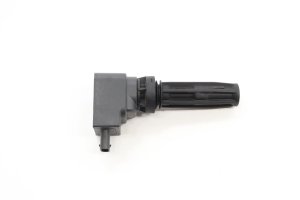
- Ignition Coil
(OEM #DG-576 (Supersedes JX6Z-12029-A, JX6Z12029B))— This is the most common failure point for a P0304 code on this truck, often damaged by water intrusion.
Trusted brands: Motorcraft, NGK, Delphi, Standard Motor Products
OEM price range: $80-$100
Aftermarket price range: $40-$70 - Spark Plug
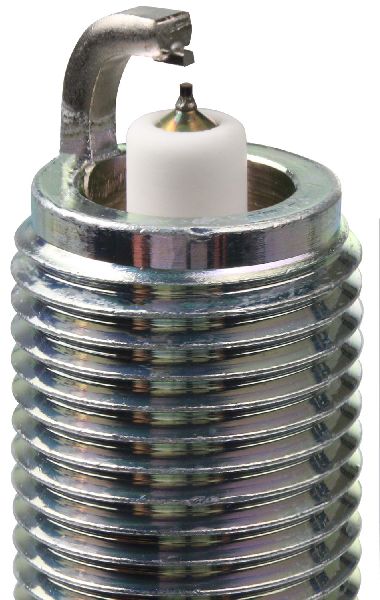
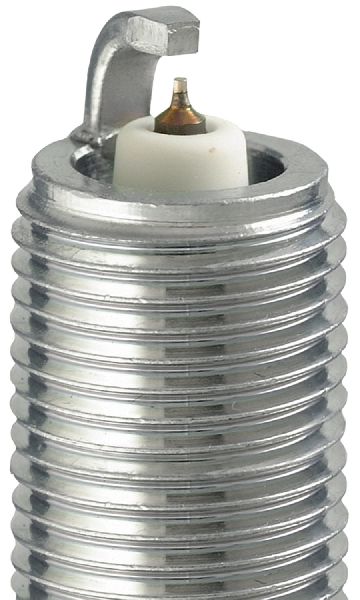
(OEM #SP-594 (Replaces SP-578, CYFS-12Y-PT))— Often fails along with the ignition coil due to corrosion from water, or from normal wear. It's highly recommended to replace the plug when replacing the coil, especially if water was present.
Trusted brands: Motorcraft, NGK, Bosch
OEM price range: $15-$25
Aftermarket price range: $8-$15 - Engine Appearance Cover Kit
(OEM #JL3Z-6A949-A (Cover), W716329-S437 (Studs), W520413-S437 (Nuts))— Ford's official TSB fix includes installing this cover on trucks that didn't come with one to help shield the ignition coils from water dripping from the cowl.
Trusted brands: Ford
OEM price range: $50-$80
Aftermarket price range: N/A
Related Codes That Often Appear With This One
- P0300 — Stands for 'Random Misfire Detected.' If the water issue is severe or multiple ignition components are failing, misfires may occur on other cylinders as well.
- P0316 — Stands for 'Misfire Detected on Startup (First 1000 Revolutions).' This code frequently accompanies specific cylinder misfire codes, as noted in several Ford TSBs for this exact issue.
- P0301, P0302, P0303 — These codes indicate misfires in cylinders 1, 2, and 3, respectively. Water can enter any of the spark plug wells, causing multiple misfire codes simultaneously.
Technical Service Bulletins (TSBs) & Recalls

- TSB 23-2011: The most comprehensive bulletin for 2019-2022 Rangers. It addresses misfire codes (P0300-P0304, P0316) caused by water buildup in the spark plug wells and instructs technicians to replace damaged components and install an engine appearance cover.
- SSM 53971 / TSB 25-2074: A broader bulletin covering 2025 Rangers (and other models) that notes misfire codes P0301-P0304 may be due to spark plugs and/or ignition coils, without specifically mentioning the water leak.
- SSM 51239 / SSM 51051 / TSB 21-2147: Earlier bulletins that also documented the water buildup issue in spark plug wells causing misfires on 2019-2021 models.
Platform-Specific Known Issues
- Water Intrusion into Spark Plug Wells: Multiple TSBs (TSB 23-2011, SSM 51239, SSM 51051, TSB 21-2147) describe an issue where water can drip from a cowl seam directly onto the engine, pooling in the spark plug wells. This corrodes the ignition coils and spark plugs, causing misfires. Cylinder #4 is particularly vulnerable due to its location at the rear of the engine. The official fix involves replacing damaged components and installing an engine appearance cover (JL3Z-6A949-A) to act as a shield.
Mechanic-Grade Diagnostic Values
- Injector Pulse Width (at warm idle) — expected: Typically 2.0 - 4.0 milliseconds (ms).. Failure: A significantly higher pulse width on one bank compared to the other can indicate the PCM is compensating for a vacuum leak or a partially clogged injector. A value of 0 ms on cylinder 4 would indicate the injector is not being commanded to fire at all.
- Ignition Coil Primary/Secondary Resistance — expected: Not applicable for modern coil-on-plug systems.. Failure: Testing with a multimeter is not a reliable method for diagnosing modern ignition coils. They contain electronic components that cannot be accurately checked with a simple resistance test.
- Engine Compression — expected: Approximately 150-170 PSI, with less than 10-15% variation between cylinders.. Failure: A reading on cylinder 4 that is significantly lower (e.g., more than 15% lower) than the average of the other cylinders indicates a mechanical engine problem like worn piston rings, a burnt valve, or a leaking head gasket.
Hidden / Shadow Codes Worth Checking
- Mode $06 Data: This is not a 'code' but a diagnostic mode. Using a capable scan tool, a technician can access Mode $06 to view the raw misfire counter for each individual cylinder. This allows viewing of misfire events that are occurring but have not yet reached the threshold to set a P030x trouble code. For P0304, you would check the counter for cylinder 4 (Test ID $A5, Component ID $04 on many Fords). (see via Advanced OBD-II scan tool or software like FORScan that can access Mode $06 test results.)
Scan Tool Commands That Help
- Ford IDS, FORScan: Power Balance Test — This is a critical diagnostic step when a misfire is felt but the cause is not obvious. The tool deactivates each cylinder one by one and displays the corresponding drop in engine RPM. If disabling cylinder 4 causes little or no change in RPM compared to other cylinders, it confirms cylinder 4 is not contributing power, pointing to a problem with spark, fuel, or compression on that specific cylinder.
- Ford IDS, FORScan: Change Fuel Injector Correction Factors — This function is required after replacing a fuel injector. Each injector has a unique calibration code printed on it that must be programmed into the PCM. Failure to do so can result in improper fueling for that cylinder, leading to performance issues or a persistent misfire code even with a new part.
Wiring & Ground Locations
- Cylinder 4 Fuel Injector Connector — On the fuel injector for cylinder #4, at the rear of the engine near the firewall.. A damaged wire or loose connection at the injector will prevent it from firing, causing a P0304. Based on diagrams for similar Ford engines, the two pins are typically a control signal wire from the PCM and a shared power wire. For a petrol 2011 Ranger, pin 1 was YE-OG (Yellow/Orange) and pin 2 was GN-OG (Green/Orange). These colors may be similar on the 2019+ models and can be used for continuity or voltage checks.
- Main Engine Ground — There are multiple ground points. Key locations include a primary ground strap from the engine block to the chassis/firewall and specific PCM grounds. A common PCM ground point on many Ford trucks is located in the passenger or driver side kick panel area.. A poor engine or PCM ground can cause a wide range of bizarre electrical issues, including weak spark or erratic sensor readings that can lead to misfires. While this would typically cause multiple codes (P0300), a localized grounding issue in the harness could theoretically affect a single component.
Real Owner Repair Stories
- Ranger-Forums user BLIVIT3@GMAIL.COM (2005 Ford Ranger 3.0L V6) — Check engine light with codes P0304 and P0316 (misfire on startup).
❌ Tried (didn't work) Changed plugs and wires., Changed coil pack., Changed fuel injector on cylinder 4., Checked for vacuum leaks.
✅ What actually fixed it The final diagnosis pointed towards a mechanical issue. Another user suggested a compression test, suspecting recessed valve seats, a known issue on that specific engine, which would cause low compression and a misfire that ignition or fuel parts could not fix. The owner was advised to perform a compression/leak-down test for confirmation.
OEM Part Supersession History
JX6Z-12029-A, JX6Z12029B→DG-576— Unknown, but part revisions often involve improvements to materials, internal electronics, or the design of the boot and seal to better resist moisture and heat.SP-578 (CYFS-12Y-PT)→SP-594— Unspecified. Revisions can involve changes to electrode materials or heat range for improved longevity and performance.
Model Year Variations Within This Range
- 2024-2025: The 2024 model year introduced the redesigned T6.2 platform. While the base 2.3L EcoBoost engine is largely a carryover, the body, chassis, and interior are new. It is not yet confirmed whether the cowl design was altered to eliminate the water intrusion issue that plagued the 2019-2023 models. Owners of 2024+ models should still be aware of this potential issue, especially since TSB SSM 53971 still lists misfires as a potential issue for 2025 models.
Helpful Videos
Used OEM Parts in Stock


New Aftermarket Parts Available

The information in this article is provided for general reference and educational purposes only. Vehicle specifications, procedures, and part compatibility can vary by production date, trim level, and region. Always consult your vehicle's factory service manual and verify part numbers before purchasing or performing repairs. Safety-critical components such as airbags, seat belts, and braking systems should be installed by a qualified professional.
- Ford RANGER:
- 🎬 Helpful Videos
- 🛍️ Shop This Part
- What's Unique About the 2019-2025 Ford Ranger
- Diagnostic Flowchart
- Symptoms You May Notice
- Most Likely Causes
- Rare But Worth Checking
- Diagnosis Steps
- Parts You'll Likely Need
- Related Codes That Often Appear With This One
- Technical Service Bulletins (TSBs) & Recalls
- Platform-Specific Known Issues
- Mechanic-Grade Diagnostic Values
- Hidden / Shadow Codes Worth Checking
- Scan Tool Commands That Help
- Wiring & Ground Locations
- Real Owner Repair Stories
- OEM Part Supersession History
- Model Year Variations Within This Range
- 🎟️ Get 5% Off