

P0304 on 2015-2022 Ford Escape: Cylinder 4 Misfire Causes and Critical Fixes
P0304 on a Ford Escape is a cylinder 4 misfire. While it can be a simple fix like a spark plug or ignition coil (~$50-$150), it is often a symptom of a major engine design flaw causing coolant to leak into the cylinder. This requires immediate attention to avoid catastrophic engine failure, which can cost over $8,000 to repair.
- P0304 on a 2015-2022 Ford Escape is a cylinder 4 misfire that requires immediate attention.
- While the cause could be a simple ignition coil or spark plug, you MUST check for signs of coolant loss (low level, white smoke), as this model has a known engine defect.
- Ford issued TSBs (19-2346, 20-2100) and a warranty extension (21N12) for this coolant intrusion problem, which requires engine replacement to fix permanently.
- Do not ignore this code. Driving with a misfire can damage other expensive components, and if coolant is leaking into the cylinder, it can lead to sudden and complete engine failure.
What's Unique About the 2015-2022 Ford ESCAPE

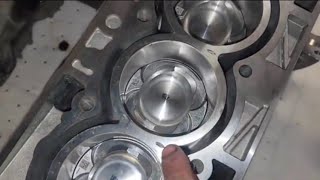
For 2015-2019 Escapes with the 1.5L and 2.0L EcoBoost engines, a P0304 code is a significant warning sign. These engines are known for a specific design flaw where coolant can intrude into the cylinders due to cracks forming in the engine block between the cylinder walls. This open-deck engine design has a thin wall that is prone to failure, allowing coolant to leak directly into the combustion chamber. This issue is so prevalent that Ford has issued multiple Technical Service Bulletins (TSBs) and a customer satisfaction program (21N12) 🎬 Watch: How to diagnose misfires and coolant loss on the 1.5L. for the 1.5L engine. Therefore, unlike in many other vehicles where a P0304 is usually a simple ignition or fuel issue, on this platform it must be investigated as a potential precursor to complete engine failure.
Diagnostic Flowchart

Tap your situation to follow the diagnostic path that matches what you're seeing on this vehicle.
Generation note: The 2015-2022 range covers the end of the 3rd generation (2013-2019) and the start of the 4th generation (2020-2022). The critical coolant intrusion issue is primarily documented for the 1.5L and 2.0L EcoBoost engines in the 2017-2019 models. Ford's TSBs specify build dates, for example, through April 6, 2019 for the 1.5L Escape and May 16, 2019 for the 2.0L Escape. The 4th generation (2020+) uses a different 1.5L 3-cylinder engine, but the 2.0L EcoBoost remains an option and may still be affected if built before the engine design was updated.
Symptoms You May Notice

- Check Engine Light is on or flashing
- Rough or shaky idle, especially on cold startup
- Noticeable loss of engine power and acceleration
- Engine hesitation or stumbling
- Unusual smell of unburnt fuel from the exhaust
- Low coolant level without visible external leaks
- White exhaust smoke, especially on startup
- Engine overheating or temperature gauge running high
- Replacing only the spark plugs and ignition coils without checking for coolant loss. Many owners on forums report replacing these parts, only to have the P0304 code return because the underlying issue is coolant intrusion fouling the new parts.
- Attributing symptoms to a bad transmission. A rough-running engine due to a misfire can be mistaken for a transmission issue.
Most Likely Causes

- Engine Coolant Intrusion 🔴 High Probability A known design defect in the 1.5L and 2.0L EcoBoost engine blocks can cause cracks to form between cylinders, allowing coolant to leak directly into the combustion chamber. This fouls the spark plug and disrupts combustion. Ford has acknowledged this with TSBs like 19-2346, which was later superseded by 22-2133. NHTSA complaints for P0304 frequently mention low coolant and white smoke, leading to engine replacement.
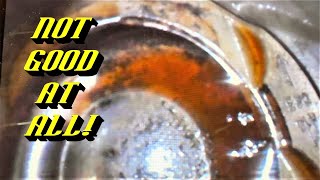
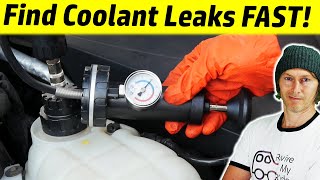
How to confirm: Check for a steadily dropping coolant level in the reservoir with no visible leaks. A mechanic can perform a cooling system pressure test to see if it holds pressure (a drop of more than 4 psi in 5 hours is a bad sign per TSB 19-2346), and use a borescope to look for coolant (appearing as a clean, steam-cleaned piston top or visible liquid) inside the cylinders.
Typical fix: The only permanent fix is to replace the engine short block (1.5L) or long block (2.0L) with a redesigned part from Ford that has revised cooling passages.
Est. part cost: $4000-$7000 - Faulty Ignition Coil 🟡 Medium Probability
How to confirm: Swap the ignition coil from cylinder 4 with another cylinder (e.g., cylinder 3). Clear the codes and drive the vehicle. If the code changes to P0303 (Cylinder 3 Misfire), the ignition coil is bad. This was a diagnostic step noted in NHTSA complaint #11611510. This is a common first step for owners on forums before suspecting a larger issue.
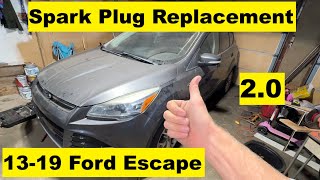
Typical fix: Replace the faulty ignition coil. 🎬 Watch: Step-by-step guide to replacing your spark plugs and coils. It's often recommended to replace the spark plug at the same time.
Est. part cost: $40-$80 - Worn or Fouled Spark Plug 🟡 Medium Probability If coolant intrusion is the root cause, the spark plug in cylinder 4 will become repeatedly fouled. Even without coolant intrusion, spark plugs are a regular wear item.
How to confirm: After confirming the coil is good, remove the spark plug from cylinder 4. Inspect it for wear, carbon buildup, or contamination. A coolant-fouled plug will appear unusually clean (steam-cleaned) or have a whitish/greenish crystalline deposit. An oil-fouled plug will be black and wet. The correct spark plug gap for the 2.0L EcoBoost is 0.027 - 0.031 inches.
Typical fix: Replace the spark plug. It is recommended to replace all spark plugs at the same time. One owner fixed a P0304 by replacing all four plugs. However, if the code returns, it points to a deeper issue like coolant intrusion.
Est. part cost: $10-$25 per plug - Clogged or Faulty Fuel Injector ⚪ Low Probability
How to confirm: If ignition components are good, the fuel injector is the next suspect. A mechanic can perform a fuel injector balance test to check its flow rate. Swapping injectors between cylinders is also possible but is more labor-intensive than swapping coils. You can also test the injector's resistance with a multimeter and compare it to a known good one. A user on Reddit with a P0304 and P0204 (injector circuit code) ultimately traced the issue to a wiring short, not the injector itself.
Typical fix: Replace the faulty fuel injector and its seals.
Est. part cost: $70-$150
Rare But Worth Checking
- Loss of Engine Compression: While rare on its own, this is the ultimate result of the coolant intrusion issue, which can lead to a melted piston as described in NHTSA complaint #11642051. A compression test is definitive in diagnosing a mechanically failed cylinder.
- Damaged Wiring Harness: In a Reddit thread for a P0304 and P0204 on a 2010 Escape, the owner replaced the fuel injector, but the problem persisted. The final solution was repairing an exposed section of wire causing a short to the injector.
- Faulty Purge Valve: A stuck-open canister purge valve can create a vacuum leak, leaning out the air-fuel mixture and causing misfires. While this typically sets an EVAP code, it can sometimes manifest only as a misfire code.
Diagnosis Steps
- Read the trouble codes with an OBD-II scanner. Note any other codes present, such as P0316 or other cylinder misfires, which are strong indicators of the known coolant issue.
- CRITICAL: Check the engine coolant level in the expansion tank. If it is low, and there are no visible puddles under the car, suspect internal coolant intrusion. Mark the current level with a sharpie to track loss over time.
- Swap the ignition coil from cylinder 4 to cylinder 3. Clear the codes and run the engine. If the code changes to P0303, the coil is faulty and needs replacement. This is a standard DIY diagnostic step.
- If the misfire remains on cylinder 4, inspect the spark plug. Remove it and check for signs of wear, damage, or fouling. A steam-cleaned (unusually white) appearance points directly to coolant contamination.
- If the plug is fouled with coolant, this strongly indicates engine coolant intrusion. At this point, professional diagnosis is recommended to confirm.
- If the ignition system seems fine, the next step is to check the fuel injector and its wiring. This may require a multimeter to check resistance or professional diagnosis to test flow rate.
- To definitively confirm coolant intrusion, a mechanic should perform a cooling system pressure test. Ford's TSB 19-2346 specifies looking for a pressure drop of more than 4 psi over 5 hours. Following the pressure test, a borescope should be used to visually inspect inside the cylinder for coolant pooling on the piston.
- A final confirmation can be a compression test. A significant loss of compression in cylinder 4 compared to others indicates a severe mechanical failure, often the end result of coolant intrusion.
Parts You'll Likely Need
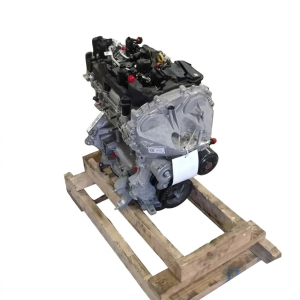
- Engine Short Block Assembly (1.5L)
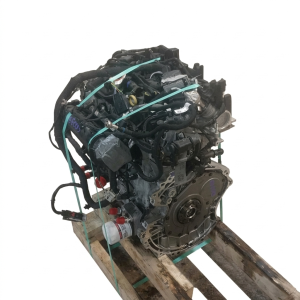
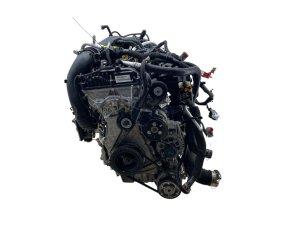
(OEM #DS7Z-6009-G)— This is the official Ford-mandated repair for the coolant intrusion issue on the 1.5L EcoBoost engine, as per TSB 19-2139 and Customer Satisfaction Program 21N12. It is a redesigned block to prevent the issue from recurring. Note: Some parts sites indicate this part number - Engine Long Block Assembly (2.0L) — The official fix for coolant intrusion on the 2.0L EcoBoost per TSB 19-2346 and its successors is a complete long block replacement. The specific part number is VIN-dependent and must be looked up in the Ford parts catalog.
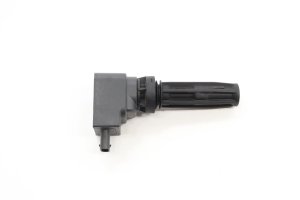
- Ignition Coil — A common failure point for misfires. If swapping the coil causes the misfire code to move to another cylinder, the coil is bad.
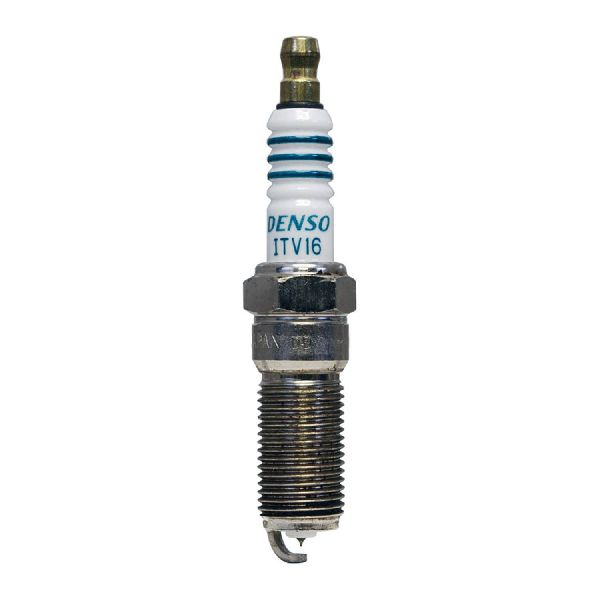
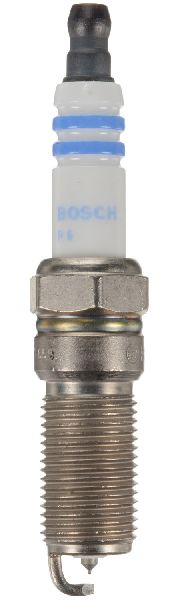
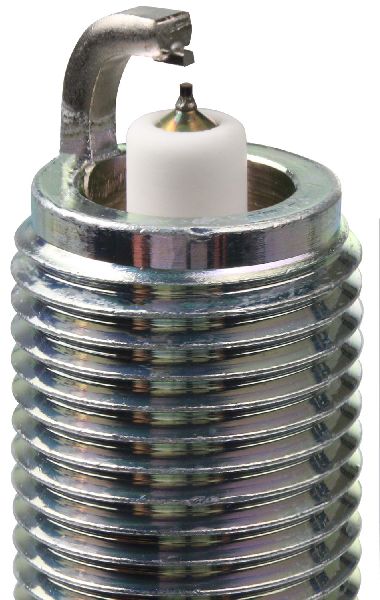
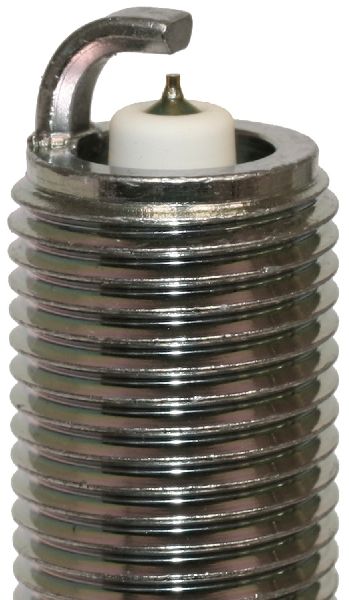
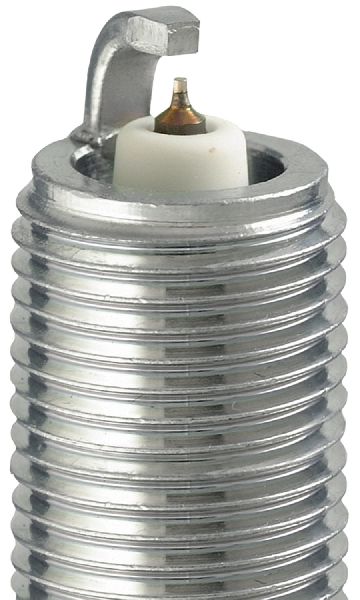
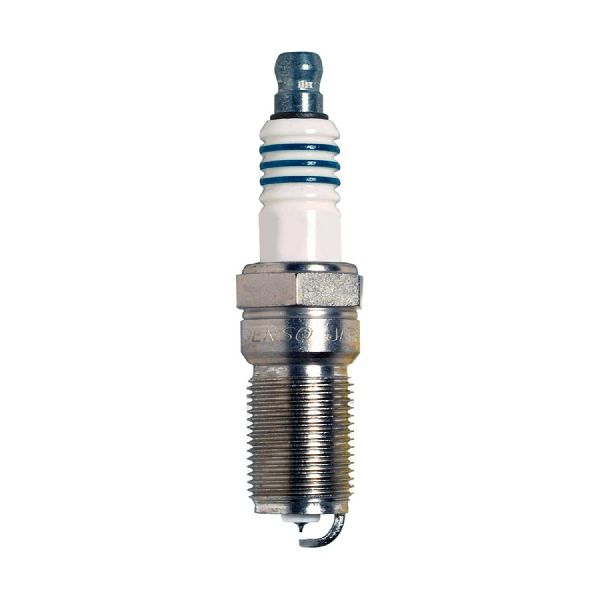
- Spark Plugs — A routine maintenance item and the first part to become fouled by coolant or oil. Often replaced alongside ignition coils.
Related Codes That Often Appear With This One
- P0316 — Misfire Detected on Startup (First 1000 Revolutions). This code is often logged alongside a specific cylinder misfire code and is explicitly mentioned in Ford's TSBs for coolant intrusion.
- P0300 — Random/Multiple Cylinder Misfire. If the coolant intrusion issue becomes severe or affects multiple cylinders, this code will appear with P0304.
- P0301, P0302, P0303 — Misfire codes for other cylinders. Coolant can leak into multiple cylinders, causing misfires across the engine. NHTSA complaints and TSBs confirm these codes often appear in groups.
- P0217, P1285, P1299 — Engine Overheat Condition codes. These are frequently cited in the coolant intrusion TSBs alongside the misfire codes, as the loss of coolant can lead to overheating.
Technical Service Bulletins (TSBs) & Recalls
- TSB 22-2229: Supersedes previous TSBs for the 2.0L EcoBoost. Confirms that DTCs P0301-P0304 with low coolant or white smoke may be due to coolant intrusion and requires long block replacement. Affects 2017-2019 Escape.
- TSB 19-2346: An earlier version of the 2.0L EcoBoost bulletin with the same diagnosis and repair procedure (long block replacement) for P0301-P0304 and other codes.
- TSB 20-2100 / 19-2139: Pertains to the 1.5L EcoBoost engine in 2017-2019 Escapes. Specifies that P0301-P0304 with coolant loss is due to intrusion and requires a short block replacement.
- Customer Satisfaction Program 21N12: A Ford program extending the warranty for the 1.5L engine coolant intrusion issue to 7 years or 84,000 miles. It covers the one-time, no-cost replacement of the short block if diagnosed with the defect.
Platform-Specific Known Issues
- Coolant Intrusion into Cylinders: The most significant issue for 2017-2019 Escapes with 1.5L and 2.0L EcoBoost engines is a design flaw in the engine block that allows coolant to leak into the cylinders. This causes misfires (P0301-P0304), rough running, white smoke, and eventual engine failure. Ford has issued multiple TSBs (e.g., 19-2346 for 2.0L, 20-2100 for 1.5L) and Customer Satisfaction Program 21N12, which extended warranty coverage for this specific issue to 7 years or 84,000 miles. Many owners outside this warranty have faced repair bills of $8,000-$14,000.
Mechanic-Grade Diagnostic Values
- Spark Plug Gap (2.0L EcoBoost) — expected: 0.027 - 0.031 in. Failure: An incorrect gap can lead to a weak or inconsistent spark.
- Fuel System Pressure (Low Side) — expected: Varies, but a common cause for codes like P0087 (often seen with misfires) is a failed low-pressure sensor giving false readings.. Failure: A diagnostic code of P0087 (Fuel Rail/System Pressure - Too Low) often points to a failed sensor rather than an actual pressure drop.
- Engine Compression Ratio (2.0L EcoBoost) — expected: 10.0:1 (later models) or 9.3:1 (earlier models). Failure: A compression test showing significantly lower readings in cylinder 4 compared to others indicates a mechanical failure (e.g., bad piston rings, leaking valve, or failed head gasket).
- Short/Long Term Fuel Trims — expected: Within +/- 5%. Failure: Consistently high positive fuel trims on the bank with cylinder 4 could indicate a vacuum leak affecting that cylinder.
Hidden / Shadow Codes Worth Checking
- Mode $06 Misfire Counts: This is not a 'code' but a data stream accessible with advanced scan tools. It provides raw misfire counts for each cylinder, even for events not frequent enough to set a P030x code. This can help identify an intermittent misfire on cylinder 4 before the Check Engine Light is consistently on. (see via An advanced OBD-II scanner or professional tool like Ford IDS that can access Mode $06 test results.)
Scan Tool Commands That Help
- Ford IDS (or high-end aftermarket): Power Balance Test — This is the definitive Ford diagnostic test for misfires. It graphically displays the power contribution of each cylinder in real-time by selectively disabling fuel injectors. A sharp drop in the graph for cylinder 4 confirms it is not contributing power, helping to isolate the issue quickly.
- Ford IDS (or high-end aftermarket): Injector Cutout / Disable — As part of the Power Balance Test, a technician can manually disable the injector for cylinder 4. If there is no change in engine RPM or smoothness, it confirms that cylinder was not contributing in the first place.
Wiring & Ground Locations
- C175B — This is a primary connector for the Powertrain Control Module (PCM), which is located on the left side of the engine compartment.. This connector contains the wiring for the ignition coils and fuel injectors. A poor connection, corrosion, or damaged pin at this connector for the cylinder 4 circuits could cause a P0304. Pinouts are available in wiring diagrams to test continuity for the specific coil and injector circuits.
- Firing Order (2.0L EcoBoost) — 1-3-4-2. Knowing the firing order is crucial for advanced diagnostics, such as when using an oscilloscope to compare ignition or injector patterns. Cylinder 4 is the third cylinder in the firing sequence.
Real Owner Repair Stories
- Reddit user in r/MechanicAdvice (2010 Ford Escape V6 (Note: older model, but demonstrates a relevant wiring failure mode)) — Intermittent blinking CEL with codes P0304 (Cylinder 4 Misfire) and P0204 (Injector Circuit Open).
❌ Tried (didn't work) Replacing the fuel injector for cylinder 4.
✅ What actually fixed it The problem was ultimately found to be an exposed section of wire in the harness leading to the fuel injector, which was causing an intermittent short circuit. Repairing the damaged wire resolved both codes. - Reddit user in r/fordescape (2018 Ford Escape 1.5L EcoBoost) — Recurring P0304 code with a rough idle, especially when putting the car in gear.
❌ Tried (didn't work) Replacing all 4 spark plugs., Replacing all 4 ignition coils.
✅ What actually fixed it The owner took the vehicle to a shop where it was diagnosed with a worn head gasket, which was causing the misfire. This is a common outcome when the root cause is coolant intrusion.
OEM Part Supersession History
TSB 19-2208→TSB 19-2346— Updated the parts list for the 2.0L EcoBoost long block replacement procedure.TSB 19-2346→TSB 22-2133— Further updates to the parts list for the 2.0L EcoBoost long block replacement.
Model Year Variations Within This Range
- 2015-2019: These models used a 1.5L or 2.0L four-cylinder EcoBoost engine. These are the primary engines affected by the coolant intrusion design flaw that commonly causes P0304.
- 2020-2022: The standard engine was changed to an all-new 1.5L EcoBoost *three-cylinder* engine. While this engine has its own potential issues, it does not have the same documented coolant intrusion problem as the previous four-cylinder. The 2.0L four-cylinder remained an option, and models built in early 2019 for the 2020 model year could still have the older engine design prior to the manufacturing fix.
Helpful Videos

Used OEM Parts in Stock


New Aftermarket Parts Available

The information in this article is provided for general reference and educational purposes only. Vehicle specifications, procedures, and part compatibility can vary by production date, trim level, and region. Always consult your vehicle's factory service manual and verify part numbers before purchasing or performing repairs. Safety-critical components such as airbags, seat belts, and braking systems should be installed by a qualified professional.
- Ford ESCAPE:
- 🎬 Helpful Videos
- 🛍️ Shop This Part
- What's Unique About the 2015-2022 Ford ESCAPE
- Diagnostic Flowchart
- Symptoms You May Notice
- Most Likely Causes
- Rare But Worth Checking
- Diagnosis Steps
- Parts You'll Likely Need
- Related Codes That Often Appear With This One
- Technical Service Bulletins (TSBs) & Recalls
- Platform-Specific Known Issues
- Mechanic-Grade Diagnostic Values
- Hidden / Shadow Codes Worth Checking
- Scan Tool Commands That Help
- Wiring & Ground Locations
- Real Owner Repair Stories
- OEM Part Supersession History
- Model Year Variations Within This Range
- 🎟️ Get 5% Off