

P0304 on 2011-2016 Chevrolet Cruze 1.4L: Cylinder 4 Misfire Causes and Fixes
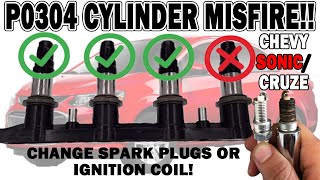
P0304 on a 1.4L Cruze is a cylinder 4 misfire, most often caused by a bad ignition coil or spark plug. However, a very common underlying cause is a failed PCV system, which requires replacing the valve cover and addressing a check valve in the intake manifold. A simple coil and plug job costs ~$100-$200, while a full PCV system repair can cost $300-$700.
- P0304 on a 1.4L Cruze is a cylinder 4 misfire, but don't assume it's just a spark plug.
- Always inspect the PCV system. Check for a whistling sound or strong vacuum at the oil cap, which indicates a failed valve cover.
- Before replacing a failed valve cover, you MUST verify the orange check valve is still present in the intake manifold. If it's missing, the intake must be replaced or an external kit installed.
- The most common DIY fixes, in order, are spark plugs, the ignition coil pack, and then the full PCV system (valve cover and intake solution).
- If the check engine light is flashing, stop driving to avoid damaging your catalytic converter.
What's Unique About the 2011-2016 Chevrolet Cruze

While any car can have a misfire from a bad spark plug, the 1.4L Turbo engine in the first-generation Cruze has a uniquely problematic Positive Crankcase Ventilation (PCV) system. A small, orange check valve inside the intake manifold frequently fails, becomes dislodged, and gets sucked into the engine. This allows turbo boost pressure to enter the crankcase, which then ruptures a rubber diaphragm in the valve cover, creating a massive vacuum leak that directly causes misfires and lean conditions. This chain reaction is a very common cause for P0304 and other related codes on this specific engine.
Generation note: The 2011-2016 year range covers the first generation of the Chevrolet Cruze. The second generation was also introduced in 2016. This guide specifically applies to the first-generation models, which includes the 2016 'Cruze Limited.' The second-generation Cruze (2016.5+) uses a different 1.4L engine (RPO: LE2) which has its own distinct issues, such as cracked pistons.
Symptoms You May Notice
- Rough or shaking idle.
- Hesitation or stumbling during acceleration.
- Flashing or solid Check Engine Light.
- Noticeable loss of engine power, especially under load.
- Service StabiliTrak or Service Traction Control messages may appear on the dash.
- A whistling or hissing sound from the engine bay at idle (indicates PCV failure).
- Electrical issues like flickering radio display if the negative battery cable is also failing.
- Replacing only the valve cover. If the intake manifold check valve has failed, a new valve cover will quickly fail again due to crankcase over-pressurization. Both parts of the PCV system must be inspected.
- Replacing only the spark plugs when the ignition coil pack is corroded or faulty. The corrosion on the coil boot can prevent a good connection even with a new plug.
Most Likely Causes

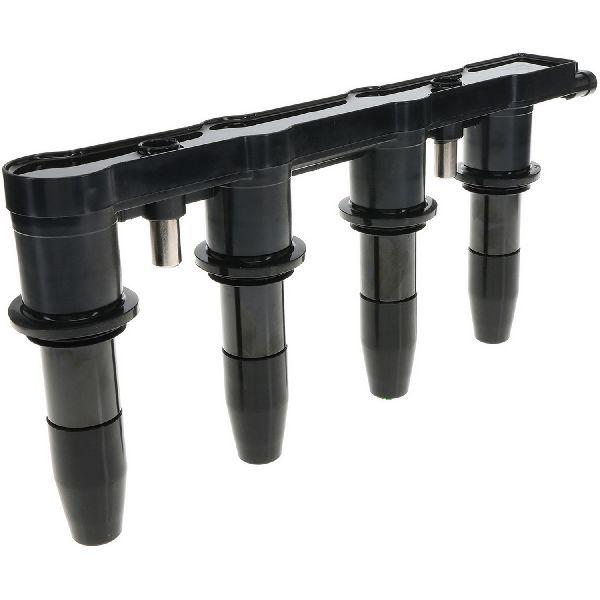
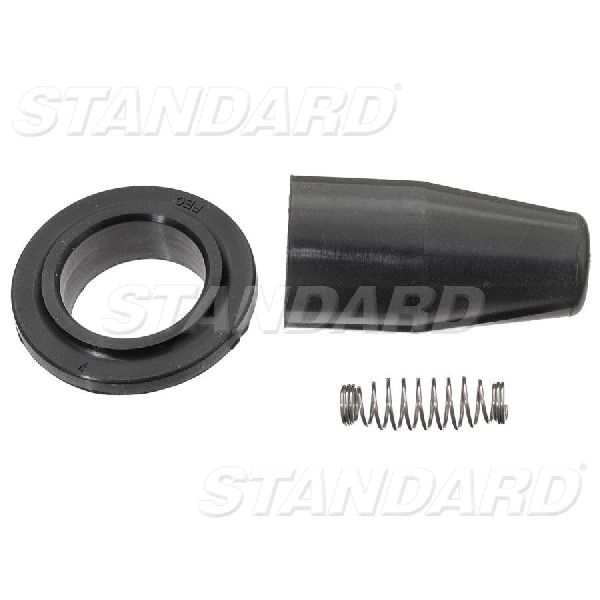
- Faulty Ignition Coil Pack 🔴 High Probability The single ignition coil cassette design is a common failure point on the 1.4L engine, often failing between 50,000 and 90,000 miles. Corrosion on the contact spring and boot for cylinder 4 is a very common finding.
How to confirm: Swap the entire coil pack with a known good one. Since it's a single unit, you cannot swap individual coils. A visual inspection may reveal cracks, oil contamination from a leaky valve cover gasket, or significant green/white corrosion on the spring for cylinder 4.
Typical fix: Replace the entire ignition coil pack assembly. This is a single part that covers all four spark plugs.
Est. part cost: $80-$160 - Worn or Fouled Spark Plug 🔴 High Probability Turbocharged engines are harder on spark plugs. Plugs can become worn, or fouled with oil or carbon, especially if other issues like PCV failure or a leaking valve cover gasket are present.
How to confirm: Remove the spark plug from cylinder 4 and inspect it. Look for heavy carbon buildup, oil fouling, a worn/damaged electrode, or corrosion matching the coil boot. Compare it to the other plugs. A healthy plug should be light tan.
Typical fix: Replace the spark plug in cylinder 4. It is highly recommended to replace all four spark plugs at the same time with the correct Iridium type and ensure they are gapped correctly.
Est. part cost: $30-$60 for a set of four Iridium plugs - Failed PCV System (Valve Cover and/or Intake Manifold Check Valve) 🟡 Medium Probability This is a well-documented design flaw. A check valve in the intake manifold fails, pressurizing the crankcase and rupturing the PCV diaphragm in the valve cover, causing a large vacuum leak.
How to confirm: With the engine running, listen for a distinct whistling sound. Try to remove the oil fill cap; if there is strong suction holding it down, the diaphragm is ruptured. Visually inspect the PCV port in the intake manifold by removing the attached hose to see if the small orange check valve is missing.
Typical fix: If the valve cover diaphragm is ruptured, the entire valve cover assembly must be replaced. Crucially, the missing intake manifold check valve must also be addressed by either replacing the entire intake manifold or installing an aftermarket external check valve kit (e.g., from CruzeKits or ZZPerformance). Simply replacing the valve cover will lead to a repeat failure.
Est. part cost: $50-$100 for a valve cover, plus $150-$400 for an intake manifold or ~$50-$120 for an external valve kit. - Faulty Fuel Injector ⚪ Low Probability
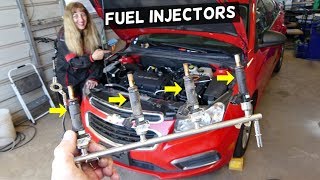
How to confirm: After ruling out spark and PCV issues, a mechanic can perform a fuel injector balance test. You can also try swapping the cylinder 4 injector with another cylinder's injector to see if the misfire code moves to the other cylinder.
Typical fix: Replace the fuel injector for cylinder 4.
Est. part cost: $40-$90
Rare But Worth Checking
- Low Engine Compression: If spark, fuel, and PCV issues have all been ruled out, a mechanical problem like a burnt valve, damaged piston, or failed lifter/rocker arm could be the cause. This is rare but possible, and requires a compression test and possibly a leak-down test to diagnose. TSB 19-NA-090 discusses misfires related to broken piston ring lands on the newer LE2 engine, but similar failures can occur on the LUJ/LUV.
Diagnosis Steps

- Read the codes with an OBD-II scanner to confirm P0304 and check for any other codes like P0171, P0300, or P0299, which strongly point towards a PCV issue.
- Perform a PCV System Check: With the engine running at idle, listen for a high-pitched whistling or sucking noise from the top of the engine. Carefully try to remove the oil fill cap. If strong vacuum holds it down, the valve cover diaphragm has failed and the cover needs replacement.
- Inspect the Intake Manifold Check Valve: Remove the engine cover. Disconnect the PCV hose leading to the top of the intake manifold. Look down into the port; a small orange or black check valve should be visible. If the hole is empty, the valve has been ingested by the engine. This necessitates replacing the intake manifold or installing an external PCV kit.
- If the PCV system seems okay, move to the ignition system. Remove the single ignition coil pack assembly by undoing the two T30 Torx bolts.
- Inspect the coil boot for cylinder #4 (far right). Look for oil from a leaking valve cover gasket, moisture, and white or green corrosion on the internal spring. Heavy corrosion is a clear sign of failure.
- Remove and inspect the spark plug from cylinder #4 using a 5/8" spark plug socket. If it is worn, oil-fouled, or heavily corroded, replace all four plugs.
- If new plugs do not solve the issue but corrosion was found on the coil, the ignition coil pack is the next most likely culprit and should be replaced.
- If the misfire persists, the problem may be with the fuel injector. Consider swapping the injector from cylinder 4 with another cylinder to see if the misfire code follows.
- If all else fails, perform an engine compression test. A reading significantly lower than the other cylinders indicates a mechanical engine problem (e.g., piston, rings, valves) requiring professional diagnosis.
Parts You'll Likely Need

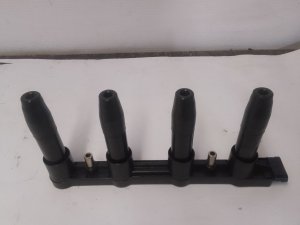
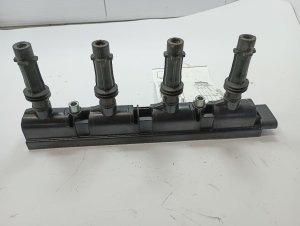
- Ignition Coil Pack
(OEM #55579072 (Superseded by 55577898))— This is a primary failure point for misfires on the 1.4L Cruze engine, often due to internal failure or corrosion.
Trusted brands: ACDelco, Delphi
OEM price range: $120-$180
Aftermarket price range: $70-$120 - Iridium Spark Plugs (Set of 4)
(OEM #ACDelco 41-121 (GM 12681656))— Worn or fouled spark plugs are a fundamental cause of misfires and should be replaced as part of a tune-up.
Trusted brands: ACDelco, NGK
OEM price range: $40-$60
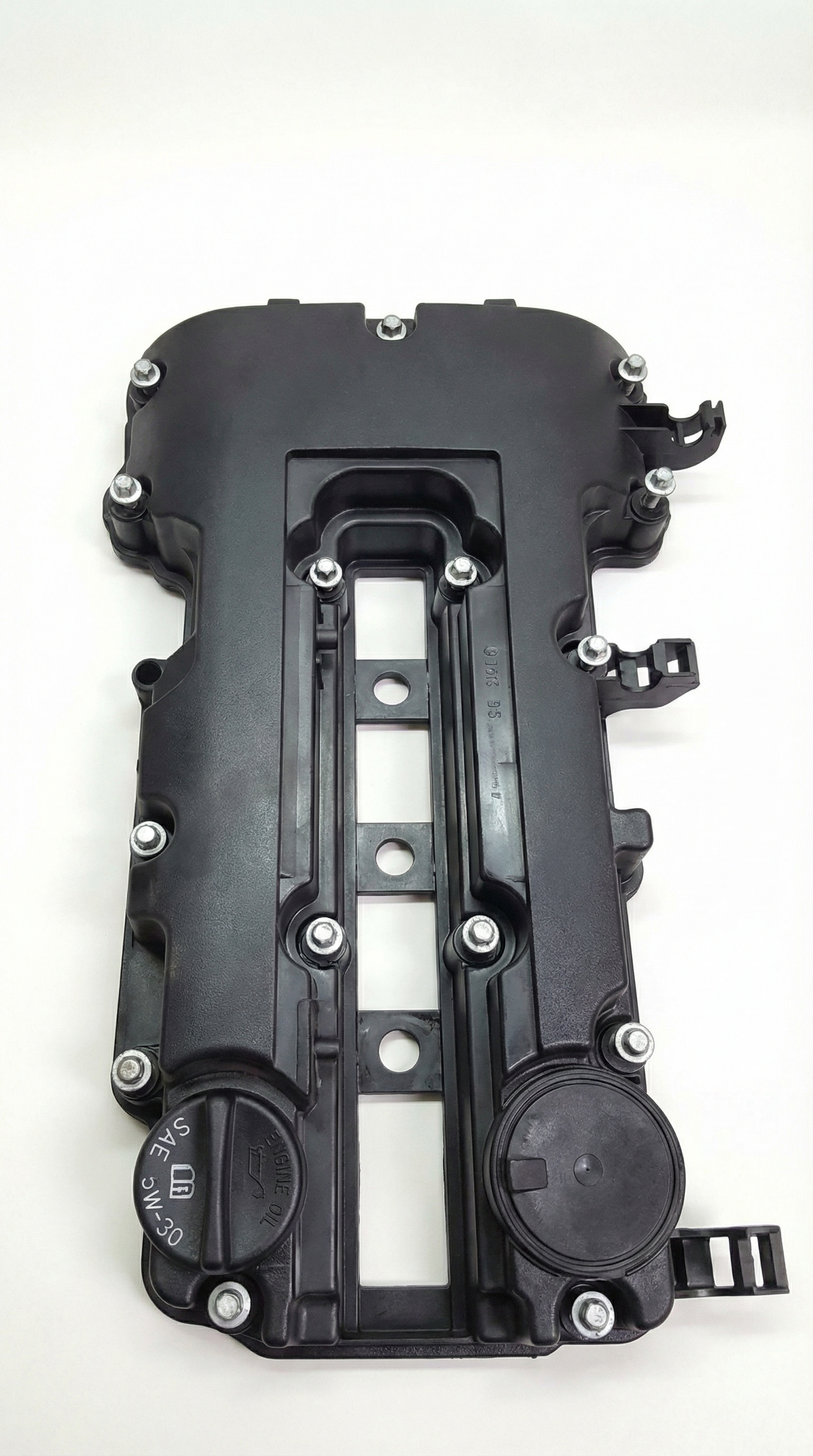
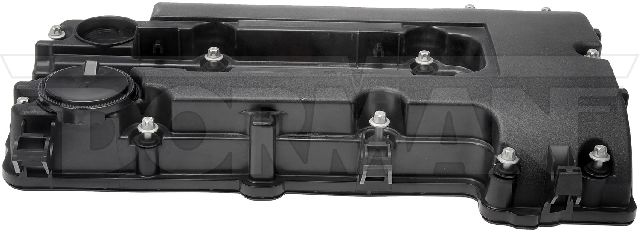
Aftermarket price range: $30-$50 - Valve Cover Assembly
(OEM #25198874 (Superseded by 55573746))— The integrated PCV diaphragm is prone to rupturing, especially after the intake manifold check valve fails, causing a vacuum leak and misfires.
Trusted brands: ACDelco, Dorman
OEM price range: $80-$120
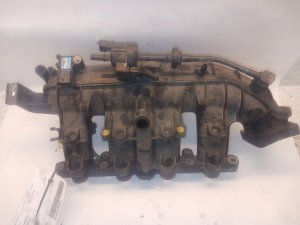
Aftermarket price range: $40-$80 - Intake Manifold
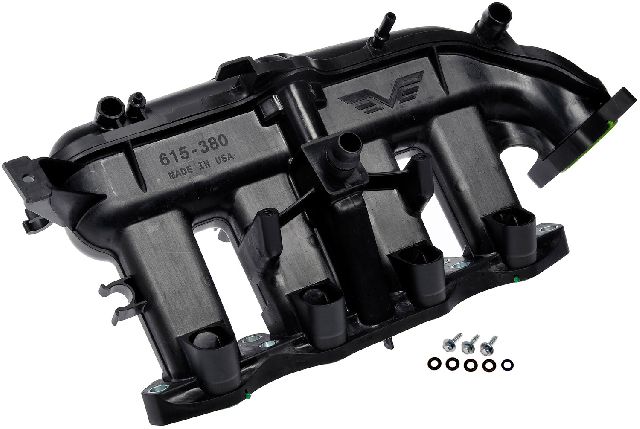
(OEM #25200449 (Dorman 615-380 is a common aftermarket replacement))— The internal PCV check valve fails and is ingested by the engine, requiring manifold replacement or an external kit.
Trusted brands: GM Genuine, Dorman
OEM price range: $200-$400
Aftermarket price range: $150-$250
Related Codes That Often Appear With This One
- P0300 — If the underlying cause, like a major vacuum leak from the PCV system, is severe enough, it can cause random misfires on multiple cylinders.
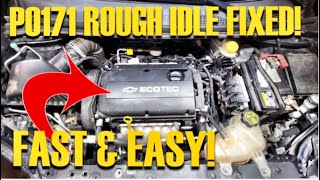
- P0171 — This 'System Too Lean' code is very common when the PCV valve cover diaphragm ruptures, as it creates a significant unmetered vacuum leak.
- P0299 — This 'Turbocharger Underboost' code can be triggered by the same PCV system failures that cause misfires, as boost pressure is lost into the crankcase.
- P0324 — A 'Knock Control System Error' can sometimes accompany a persistent misfire, as seen in some owner reports.
Technical Service Bulletins (TSBs) & Recalls
- PIP3333C: Addresses intermittent misfires on cylinders including P0304, directing technicians to follow standard diagnostics.
- 19-NA-090: Links DTC P0300 (and by extension, single cylinder misfires) to possible low compression from a broken piston ring land.
- 14371B: Special coverage for failing water pumps on the 1.4L engine.
- 14311B: Special coverage for faulty negative battery cables causing widespread electrical issues.
- PI0578: An early bulletin advising technicians to check for underlying conditions before replacing parts for a P0300 misfire code.
Platform-Specific Known Issues

- A known issue involves the failure of the PCV check valve inside the intake manifold, which gets ingested by the engine and subsequently causes the valve cover diaphragm to rupture from unregulated crankcase pressure.
- Corrosion forming on the ignition coil spring for cylinder #4 is a frequent cause of P0304, even if the coil itself has not failed electronically.
- The faulty negative battery cable (Special Coverage 14311B) can cause a host of seemingly unrelated electrical gremlins, including StabiliTrak warnings that often appear alongside misfire codes.
Mechanic-Grade Diagnostic Values
- Low-Side Fuel Pressure (Engine Off, Pump Commanded On) — expected: 50 - 94 psi. Failure: Pressure below 50 psi suggests a weak fuel pump or restricted line. Some sources report normal idle pressure around 40-45 psi.
- Ignition Coil Primary Resistance — expected: 0.4 - 2.0 ohms. Failure: A reading outside this range (e.g., an open or shorted circuit) indicates a failed coil winding.
- Ignition Coil Secondary Resistance — expected: 6,000 - 10,000 ohms (6k-10k Ω). Failure: A reading significantly outside this range points to a failure in the secondary coil winding.
- Fuel Injector Coil Resistance — expected: ~12 ohms. Failure: An open circuit (infinite resistance) or a reading significantly different from the other injectors indicates a failed injector coil.
- Mode $06 Misfire Count (per cylinder) — expected: 0 or a very low number. Failure: A high count for cylinder 4, even without a P0304 code, indicates intermittent misfires that haven't yet met the threshold to trigger the check engine light.
Hidden / Shadow Codes Worth Checking
- Mode $06, Test ID $A4: Provides the raw misfire count for cylinder #4 for the current and last driving cycles. This allows a technician to see intermittent misfires that are occurring but are not yet frequent enough to set a permanent P0304 trouble code. (see via A professional-grade scan tool or an advanced OBD-II app that can access Mode $06 diagnostic data. The specific Test ID may vary, but it will be labeled as misfire data for cylinder 4.)
Scan Tool Commands That Help
- GDS2 / Tech2 / Professional Scan Tool: Misfire Graphic / Misfire History — To view live and historical misfire counts for each cylinder, confirming that cylinder 4 is the primary offender.
- GDS2 / Tech2 / Professional Scan Tool: Cylinder Power Balance — To electronically disable each cylinder one-by-one to measure the RPM drop. A smaller RPM drop on cylinder 4 indicates it is not contributing as much power, confirming the misfire.
- GDS2 / Tech2 / Professional Scan Tool: Fuel Pump Relay / Fuel Pump On — To activate the fuel pump with the engine off, allowing for an accurate fuel pressure test at the rail without the engine running.
Wiring & Ground Locations
- Negative Battery Cable (Ground Cable) — Connects from the negative battery terminal, through a sensor, to a grounding point on the transmission case and another on the chassis frame rail near the battery.. A known issue (TSB #14311A for 2011-2015 models) involves an insufficient crimp on this cable, causing high resistance. This leads to unstable voltage and grounding for the entire electrical system, including the ECM and ignition system, which can cause phantom misfire codes, StabiliTrak errors, and other bizarre electrical behavior.
- Ignition Coil Connector Pigtail — The 7-pin electrical connector that plugs into the top of the ignition coil pack.. The plastic locking tabs can become brittle and break, or the terminals within the connector can become loose or corroded, causing a poor connection to the coil pack. This can cause a misfire even if the coil pack itself is new.
Real Owner Repair Stories
- Reddit user on r/cruze (2012 Chevy Cruze LT 1.4L with 300,000 km) — Flashing check engine light, shaking engine, P0301 code.
❌ Tried (didn't work) Replaced all spark plugs, Replaced ignition coil pack
✅ What actually fixed it Diagnosis revealed 0 PSI compression in cylinder 1. The root cause was determined to be a major mechanical failure (burnt valve, hole in piston, or cracked head) requiring engine disassembly. - YouTube video by 'Gears and Gaskets' (2018 Chevy Cruze 1.4L (LE2 Engine) with 56k miles) — Bad misfire on cylinder 1, P0301 code.
❌ Tried (didn't work) Swapping ignition coils, Swapping spark plugs, Swapping fuel injectors
✅ What actually fixed it A compression test showed low compression (100 psi vs 210 psi in others). The engine was disassembled and a cracked piston was found in cylinder 1. Replacing the pistons resolved the misfire. - Reddit user on r/cruze (2014 Chevy Cruze 1.4T) — Misfire and StabiliTrak light.
❌ Tried (didn't work) Initial suggestions focused on spark plugs and coil pack.
✅ What actually fixed it The user pointed out that the coil pack CONNECTOR pigtail can be the culprit, and also that the negative battery cable is a recognized TSB issue that causes misfires and electrical faults.
"I Checked Everything" — The Actual Cause
- A common scenario is for a technician to perform a smoke test to find a vacuum leak and find nothing. The P0304 and P0171 codes persist, however. The actual cause is often the faulty negative battery cable (TSB #14311A). The bad ground causes the ECM and sensors to behave erratically, mimicking symptoms of a vacuum leak or ignition failure, but no leak exists.
When the Usual Fixes Don't Work
- While the vast majority of P0304 codes on the 1.4L Cruze are caused by the ignition system or the well-known PCV design flaw, a significant minority of cases are not resolved by these common fixes. In these instances, owners and technicians have found the root cause to be a major mechanical failure like a cracked piston or burnt valve, identifiable only through a compression test. Another frustrating path leads to the discovery of a faulty negative battery cable, which creates electrical chaos that mimics ignition problems but won't be fixed by replacing coils or plugs.
OEM Part Supersession History
25198874→55573746— GM updated the valve cover assembly design over time.
Heads up: While aftermarket versions like Dorman 911-082 exist, some mechanics strongly recommend using only the OEM ACDelco part, citing potential for premature failure or leaks with aftermarket options on this specific engine.55579072→55577898— GM revised the ignition coil pack. Multiple other numbers like 55573735 and 55575499 were also used and superseded.
Model Year Variations Within This Range
- 2011-2015: These model years are specifically covered under Special Coverage Adjustment #14311A for the faulty negative battery cable. While the issue can still occur on 2016 Limited models, the TSB is explicit to the earlier range.
- 2016: The year 2016 is a split year. The 'Cruze Limited' is the first-generation body style and uses the LUJ/LUV engine this article applies to. The all-new 'Cruze' (non-Limited) was introduced with the second-generation chassis and a new LE2 1.4L engine, which has different common issues (e.g., a higher prevalence of cracked pistons).
Diagnostic Flowchart
Other Known Issues on This Vehicle
Issues unrelated to this code that are worth knowing about as an owner of this generation:
- Water Pump Failure 🔴 High — Very common, often between 60,000 and 100,000 miles. Can cause engine overheating if not addressed. (Ref: Special Coverage 14371B extends warranty to 10 years/150,000 miles.)
- Coolant Leaks (Thermostat Housing & Hoses) 🟠 Medium — Widespread issue. Plastic thermostat housings and various hoses are prone to cracking and leaking with age.
- Faulty Negative Battery Cable 🟠 Medium — Common problem causing a wide range of electrical issues, including flickering displays, loss of power steering, and no-start conditions. (Ref: Special Coverage 14311B extends warranty to 10 years/120,000 miles.)
- Transmission Control Module (TCM) Failure 🟠 Medium — Can cause harsh shifting, slipping, or getting stuck in gear. Often requires reprogramming or replacement.
- High Oil Consumption 🟠 Medium — Often linked to the failing PCV system, but can also be caused by piston ring issues in some cases. (Ref: TSB 19-NA-090 addresses potential broken piston ring lands.)
Used vs. New Parts: Buying Guide for This Vehicle
When a used part is the smart pick: For expensive, non-wear items like an Intake Manifold or an Engine Control Module (ECM), a used part from a reputable salvage yard can be a cost-effective option. These parts have no regular maintenance schedule and their failure is often due to a specific defect (like the PCV check valve) rather than age alone.
Donor-vehicle mileage cap: roughly under 80000 miles for the part to have meaningful remaining life.
What to inspect on the donor part:
- For an Intake Manifold: Inspect the PCV inlet port to ensure the orange check valve nipple is physically present and not broken off.
- Check all plastic hose connections for cracks or brittleness.
- Ensure there are no visible cracks on the manifold body, especially around bolt holes.
- Ask for the VIN of the donor car to verify it's from a low-mileage, non-wrecked vehicle if possible.
OEM-only on this vehicle (don't cheap out):
- Valve Cover Assembly: Owner communities and specialists strongly recommend using an OEM ACDelco valve cover. Aftermarket versions, particularly cheaper ones, are frequently reported to have diaphragms that fail quickly, leading to a repeat of the original problem within months.
- Sensors (MAF, MAP, O2): While some aftermarket brands are reliable, critical engine management sensors are best sourced from OEM (ACDelco) to avoid issues with incorrect readings or premature failure.
Aftermarket brands forum-validated for this vehicle:
- CruzeKits: Widely praised for their robust, well-designed external PCV fix kits that provide a permanent solution to the intake manifold check valve failure.
- ZZPerformance: A popular source for upgraded, higher-voltage ignition coils that are considered more durable than the stock unit by the performance community.
- NGK / ACDelco: The go-to brands for Iridium spark plugs that meet OEM specifications.
Brands owners have reported issues with on this vehicle:
- Unbranded/No-Name Ignition Coils: Cheap, unbranded coil packs from online marketplaces are a frequent source of complaints, often failing within a year or even causing driveability issues right out of the box.
- Dorman (for Valve Cover): While Dorman makes many quality parts, their valve cover for this specific application has been cited in at least one detailed repair video as being part of a failed repair, suggesting the OEM part is a safer bet.
Real Owner Stories
Aggregated from forums and TSBs cited above. Mileages and costs reflect what owners reported in those sources.
2011-2016 Chevrolet Cruze 1.4L Turbo — ~70000 miles
Symptoms: The ignition coil boot for cylinder 4 was physically crumbled and arcing.
What fixed it: Replacement of the ignition coil pack assembly.
Source hint: bobistheoilguy.com thread titled 'cruze 1.4t misfire with carnage pictures'
Chevrolet Cruze 1.4L Turbo
Symptoms: Cylinder 4 misfire (P0304) persisted even after replacing spark plugs, the coil pack, and fuel injectors.
What fixed it: The owner discovered other pending codes and a complex diagnostic struggle involving the PCV system and potential vacuum leaks.
Source hint: reddit r/cruze thread 'cylinder 4 misfire'
Related OBD-II Codes
Frequently Asked Questions
My 2014 Cruze is showing a P0304 and 'Service StabiliTrak' message; are these related?
Can I just replace the cylinder 4 coil to fix my P0304 code?
Is there a TSB for P0304 related to engine mechanical failure?
I hear a whistling sound at idle along with my P0304 code; what does that mean?
Why does cylinder 4 specifically seem to fail so often on the Cruze?
Does the 1.4L engine have a special coverage for the water pump if I'm seeing cooling issues with my misfire?
Helpful Videos
Used OEM Parts in Stock

New Aftermarket Parts Available


The information in this article is provided for general reference and educational purposes only. Vehicle specifications, procedures, and part compatibility can vary by production date, trim level, and region. Always consult your vehicle's factory service manual and verify part numbers before purchasing or performing repairs. Safety-critical components such as airbags, seat belts, and braking systems should be installed by a qualified professional.
- Chevrolet Cruze:
- 🎬 Helpful Videos
- 🛍️ Shop This Part
- What's Unique About the 2011-2016 Chevrolet Cruze
- Symptoms You May Notice
- Most Likely Causes
- Rare But Worth Checking
- Diagnosis Steps
- Parts You'll Likely Need
- Related Codes That Often Appear With This One
- Technical Service Bulletins (TSBs) & Recalls
- Platform-Specific Known Issues
- Mechanic-Grade Diagnostic Values
- Hidden / Shadow Codes Worth Checking
- Scan Tool Commands That Help
- Wiring & Ground Locations
- Real Owner Repair Stories
- "I Checked Everything" — The Actual Cause
- When the Usual Fixes Don't Work
- OEM Part Supersession History
- Model Year Variations Within This Range
- Diagnostic Flowchart
- Other Known Issues on This Vehicle
- Used vs. New Parts: Buying Guide for This Vehicle
- Real Owner Stories
- 2011-2016 Chevrolet Cruze 1.4L Turbo — ~70000 miles
- Chevrolet Cruze 1.4L Turbo
- Related OBD-II Codes
- Frequently Asked Questions
- 🎟️ Get 5% Off