

P0303 on 2012-2014 Volkswagen Beetle: Cylinder 3 Misfire Causes and Fixes
On a 2012-2014 VW Beetle, a P0303 code is most often caused by a failed ignition coil on cylinder 3. This is a common and simple DIY fix, with a replacement coil costing between $25 and $75. Swapping the coil from cylinder 3 to another cylinder is the definitive first diagnostic step.
- P0303 indicates a misfire specifically in cylinder 3.
- The most likely cause on a 2012-2014 Beetle is a bad ignition coil, which is an easy DIY fix.
- A simple diagnostic test is to swap the coil from cylinder 3 with another cylinder and see if the misfire code follows.
- If you have a TSI engine (1.8T or 2.0T), persistent misfires after replacing coils and plugs could be due to carbon buildup on the intake valves, which requires professional cleaning.
- Do not ignore a flashing check engine light, as it signals a severe misfire that can quickly damage your catalytic converter.
What's Unique About the 2012-2014 Volkswagen BEETLE
For this generation of Volkswagen Beetle (A5 Platform), ignition coil failure is a very common issue across all available gasoline engines (2.5L, 2.0TSI, 1.8TSI). Additionally, the direct-injected 2.0TSI and 1.8TSI engines are known to develop significant carbon buildup on the intake valves, which can restrict airflow and cause misfires, particularly on cold starts. While less common for a single-cylinder misfire, manufacturer TSBs for this vehicle also link misfire codes with low fuel pressure faults (P0087), suggesting a potential fuel delivery issue, sometimes caused by a single stuck-open injector. [10, VIN4APIN20220118, VIN4APIN20211026]
Diagnostic Flowchart
Tap your situation to follow the diagnostic path that matches what you're seeing on this vehicle.
Symptoms You May Notice
- Rough or shaky idle
- Hesitation or stumbling during acceleration
- Noticeable loss of engine power
- Flashing Check Engine Light (indicates a severe misfire that could damage the catalytic converter) 🎬 See how to diagnose a flashing engine light without a scanner.
- Reduced fuel economy
- Smell of gasoline from the exhaust
- Engine stalling or being difficult to start
- Replacing the oxygen sensor. A bad O2 sensor is a possible but unlikely cause of a single-cylinder misfire. More often, the O2 sensor is correctly reporting the results of the misfire, not causing it.
Most Likely Causes
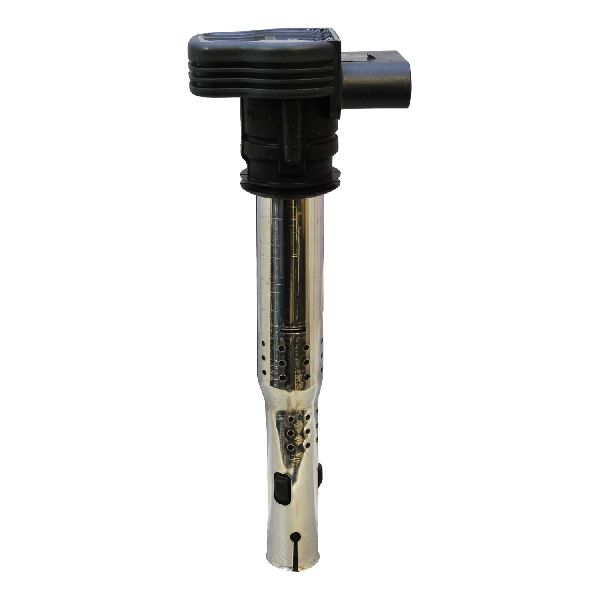
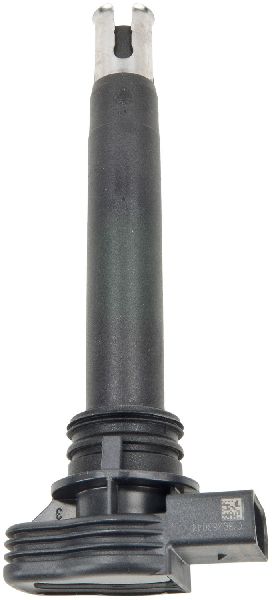
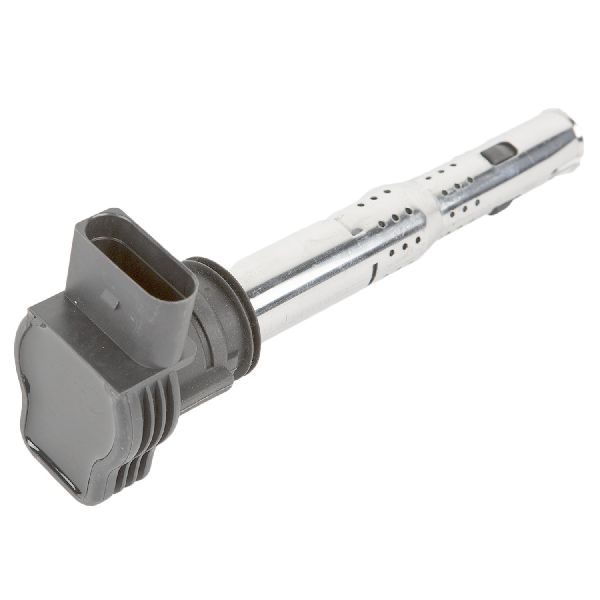
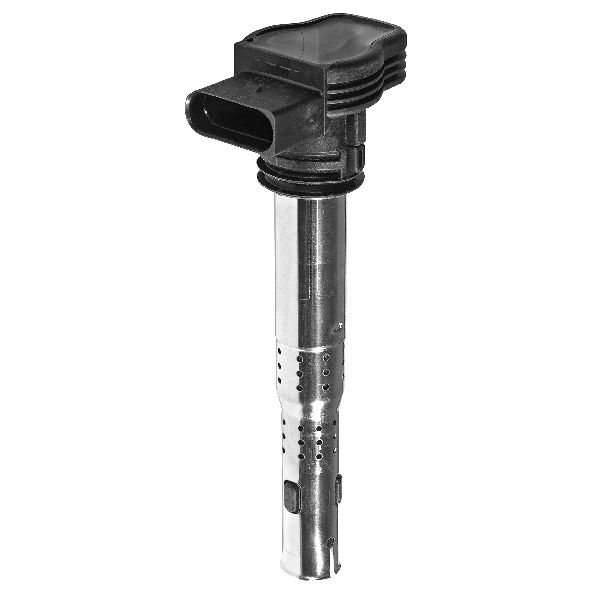
- Failed Ignition Coil 🔴 High Probability Ignition coils are a well-documented, frequent failure item on this era of Volkswagen engines. There have been multiple part revisions from manufacturers like Bosch and Eldor to improve reliability.
How to confirm: Swap the ignition coil from cylinder 3 with another cylinder (e.g., cylinder 2). Clear the codes and drive. If the code changes to P0302, the ignition coil is faulty. This is the most common and effective initial diagnostic step.
Typical fix: Replace the failed ignition coil. Many owners and shops recommend replacing all coils at the same time as a preventative measure, as they tend to fail around the same time.
Est. part cost: $25 - $75 - Worn or Fouled Spark Plug 🔴 High Probability
How to confirm: After confirming the coil is good, remove the spark plug from cylinder 3. Inspect it for wear (worn electrode), carbon fouling (black, sooty), or oil deposits. A wet, fuel-smelling plug can indicate a non-firing cylinder. Compare it to a plug from another cylinder.
Typical fix: Replace the spark plug. It is best practice to replace all spark plugs as a set at the manufacturer's recommended service interval (typically every 40k-60k miles).
Est. part cost: $10 - $25 per plug - Carbon Buildup on Intake Valves (TSI Engines) 🟡 Medium Probability The 2.0L TSI and 1.8L TSI are direct-injection engines, meaning fuel is sprayed directly into the cylinder. This design prevents fuel from washing over and cleaning the intake valves, leading to carbon accumulation over time that restricts airflow.
How to confirm: This typically requires a borescope inspection with the intake manifold removed. Symptoms are often worse on cold starts or before the engine is fully warm, and may present as an intermittent misfire. This issue is common on engines with over 60,000 miles.
Typical fix: The intake valves must be manually cleaned. This is often done by media blasting with walnut shells. This is a labor-intensive job that can cost several hundred dollars in labor. 🎬 Watch: Step-by-step walkthrough of the TSI intake valve cleaning process.
Est. part cost: $20 - $50 for gaskets, but labor is significant - Faulty Fuel Injector ⚪ Low Probability
How to confirm: Listen to the injector with a mechanic's stethoscope to ensure it's clicking. A more involved test is to swap the injector with another cylinder to see if the misfire follows. A stuck-open injector on a TSI engine may also be accompanied by a P0087 (Fuel Rail Pressure Too Low) code as the system cannot build adequate pressure. [10, VIN4APIN20220118]
Typical fix: Replace the faulty fuel injector. On TSI engines, this is a more involved job requiring removal of the intake manifold.
Est. part cost: $50 - $150
Rare But Worth Checking
- Low Fuel Pressure: While usually causing multiple or random misfires (P0300), a fuel pressure issue could potentially manifest as a single cylinder misfire. The provided TSBs link misfire codes with low fuel pressure code P0087. [VIN4APIN20220118, VIN4APIN20211026]
- Vacuum Leak: A leak in a vacuum hose or a failed intake manifold gasket near cylinder 3 could lean out the air/fuel mixture enough to cause a misfire. A common source on these engines is a failed PCV (Positive Crankcase Ventilation) valve/oil separator, which is a known failure item that can cause various lean codes and misfires.
- Low Engine Compression: Internal engine problems like a burnt valve, worn piston rings, or a leaking head gasket can cause a loss of compression and a misfire. A compression test would be needed to diagnose this and is usually performed after ignition and fuel system checks are complete.
Diagnosis Steps
- Read the code with an OBD-II scanner to confirm P0303 is the primary code. Note any other codes, like P0300 or P0087.
- Determine your engine type (2.5L, 2.0TSI, or 1.8TSI). Cylinder 3 is the third cylinder from the timing belt/chain side of the engine.
- Swap the ignition coil from cylinder 3 with an adjacent cylinder (e.g., cylinder 2). This is the easiest and most conclusive first step.
- Clear the codes and start the engine. Let it run or drive it until the Check Engine Light reappears.
- Scan the codes again. If the code is now P0302, the ignition coil is the problem. Replace it.
- If the code remains P0303, the coil is likely good. Move the spark plug from cylinder 3 to cylinder 2.
- Clear codes and repeat the test. If the code moves to P0302, the spark plug is faulty. Replace all spark plugs as a set.
- If the code remains P0303, the issue is not the coil or plug. The next steps are to check the fuel injector (listen for clicking, check wiring), look for vacuum leaks (especially the PCV valve), and check for carbon buildup (especially on TSI engines with over 60k miles).
- If these steps do not resolve the issue, a mechanical compression test should be performed to rule out internal engine damage.
Parts You'll Likely Need
- Ignition Coil
(OEM #07K905715G (for 2.5L), 06H905110T or 06E905115G (for 1.8T/2.0T))— This is the most frequent cause of a P0303 misfire on this vehicle. Part numbers have been revised multiple times.
Trusted brands: Bosch, NGK, Beru, Eldor
OEM price range: $50 - $75
Aftermarket price range: $25 - $50 - Spark Plug — Spark plugs are a routine maintenance item and can become worn or fouled, leading to a misfire.
Trusted brands: NGK, Bosch, Denso
OEM price range: $20 - $30
Aftermarket price range: $10 - $20
Related Codes That Often Appear With This One
- P0300 — If the condition causing the misfire is not isolated to one cylinder (e.g., low fuel pressure, large vacuum leak, widespread carbon buildup), a P0300 (Random/Multiple Misfire) code may appear alongside P0303.
- P0301, P0302, P0304 — Misfire codes for other cylinders may appear if the root cause affects multiple cylinders, such as widespread carbon buildup or a failing fuel pump.
- P0087 — As noted in VW Technical Service Bulletins, this code for 'Fuel Rail/System Pressure - Too Low' can accompany misfire codes. On TSI engines, this can be a strong indicator of a stuck-open fuel injector that is bleeding off rail pressure. [10, VIN4APIN20220118]
Technical Service Bulletins (TSBs) & Recalls
- VIN4APIN20220118: Notes that P0303 can appear with other misfire codes and fuel pressure codes like P0087 on 2014 models.
- VIN4APIN20211026: Similar to the above, links P0303 and other misfire codes to potential fuel system issues on 2014 models.
- NHTSA 01-16-13 (2033805): A general VW diagnostic aid for misfires, advising technicians to check for other codes first and gather detailed information from the customer before replacing parts.
Platform-Specific Known Issues
- The direct-injection 1.8TSI and 2.0TSI engines are highly susceptible to carbon buildup on intake valves, which is a known cause of misfires that may not be resolved by replacing ignition components. This is often diagnosed with cold-start misfires around 60,000 miles or more.
- The 2.5L I5 engine is generally robust, but is well-known for ignition coils failing. It is not subject to the same carbon buildup issues as the TSI engines due to its port-injection design.
- On the 1.8TSI Gen 3 engine, a failed fuel injector can get stuck open, causing a severe misfire, a fuel-soaked spark plug, and a P0087 low fuel pressure code simultaneously.
Mechanic-Grade Diagnostic Values
- Ignition Coil Primary Winding Resistance — expected: 0.4 to 2.0 Ohms. Failure: A reading significantly outside this range indicates a faulty coil. Note that some modern coils with internal electronics may not be testable this way.
- Ignition Coil Secondary Winding Resistance — expected: 6,000 to 10,000 Ohms (6kΩ - 10kΩ). Failure: A reading outside this range suggests the coil's secondary winding is compromised.
- VCDS Long-Term Fuel Trim (Idle) - Block 032 — expected: Ideally within +/- 10%.. Failure: Consistently high positive values (>10%) suggest a vacuum leak or under-fueling. High negative values suggest an over-fueling condition (like a leaking injector).
- VCDS Misfire Counter - Blocks 015 & 016 — expected: 0 counts at idle and under load.. Failure: Any count incrementing in the field corresponding to cylinder 3 confirms an active misfire, even if the CEL is not on. This is useful for diagnosing intermittent issues.
- TSI High-Pressure Fuel Rail Pressure (Actual vs. Specified) — expected: Actual pressure should closely track specified pressure under all load conditions. At idle, this is often around 40-50 bar (approx. 580-725 PSI).. Failure: If actual pressure is significantly below specified, especially if accompanied by a P0087 code, it can indicate a leaking injector or failing high-pressure fuel pump (HPFP).
Hidden / Shadow Codes Worth Checking
- Mode $06 Misfire Data: The ECU tracks misfire counts per cylinder over specific drive cycles (e.g., last 10 cycles). Even if not enough misfires occur to set a P0303 code and turn on the light, this data can show a pattern of intermittent misfires on cylinder 3. (see via Advanced OBD-II scanners (including VCDS/VAG-COM) can access Mode $06 test results.)
Scan Tool Commands That Help
- VCDS (VAG-COM): Measuring Value Blocks (MVB) 015, 016 — To monitor live misfire counts for each cylinder. This is extremely useful for confirming if a misfire is currently happening and if it moves to another cylinder after swapping a coil or spark plug.
- VCDS (VAG-COM): Measuring Value Block (MVB) 032 — To check long-term fuel trims at idle and partial load. A high positive trim can point towards a vacuum leak affecting cylinder 3, while a high negative trim could suggest a leaky injector.
- VCDS (VAG-COM): Output Tests (e.g., N83 - Cylinder 3 Fuel Injector) — To manually activate the fuel injector and listen for a clicking sound with a stethoscope. This can help determine if the injector is electronically functioning, though it does not rule out a clog or leak.
Wiring & Ground Locations
- Engine to Body Ground Strap — Typically a braided strap from the top of the transmission housing to the chassis frame rail, often below the battery tray.. A corroded or loose main ground strap can cause erratic behavior in all engine electronics, including weak spark from the ignition coils, leading to intermittent misfires that are difficult to diagnose.
- Ignition Coil Ground — On many VW engines, the ignition coils are grounded through the cylinder head itself. A specific ground point (G15 on 1.8L) may be located on top of the cylinder head near the coils.. Poor grounding at the cylinder head or a specific ground stud can cause a weak spark on one or more cylinders. Ensure the mounting bolts for the coils and any ground wires on the valve cover/head are clean and tight.
- Ignition Coil Connector — The 4-pin connector plugging into the top of the ignition coil for cylinder 3. Part number for the connector housing is often 4B0973724.. The plastic locking tabs on these connectors become brittle with heat and age and can break, leading to a poor connection. Wiggling this connector while the engine is running may induce or stop a misfire, indicating a connection issue.
Real Owner Repair Stories
- YouTube Channel 'MotorCarNut' (VW with Gen 3 1.8 TSI (applies to 2014+ Beetle)) — Severe misfire on cylinder 1 (P0301) and cylinder 4 (P0304), along with a low fuel rail pressure code (P0087).
❌ Tried (didn't work) Initial diagnosis might point to a fuel pump issue due to the P0087 code.
✅ What actually fixed it The fuel injector on cylinder 1 was stuck open, dumping fuel into the cylinder. This caused the misfire on cylinder 1 and also bled off all rail pressure, which starved cylinder 4 of fuel, causing it to misfire as well. Replacing the single stuck injector resolved all codes.
"I Checked Everything" — The Actual Cause
- A common scenario on TSI engines is a torn diaphragm in the PCV (Positive Crankcase Ventilation) valve. This creates a significant unmetered air leak (vacuum leak). While a smoke test might find this, a simple and effective check is to try removing the oil filler cap while the engine is idling. If the cap is under extreme suction and difficult to remove, or if the engine idle changes dramatically or stalls when the cap is removed, the PCV diaphragm is very likely torn. This can cause lean codes and random or single-cylinder misfires.
OEM Part Supersession History
07K905715 (and revisions A, B, C, D, E, F)→07K905715G— Improved reliability and durability. This part number is used across a wide range of VW/Audi engines, including the 2.5L I5 and some 2.0T engines.
Heads up: While many revisions are interchangeable, it is always best practice to use the latest revision (G) and replace all coils as a set to ensure consistent performance.06H905115B (and earlier revisions)→06E905115G (or 06H905110T, depending on supplier and specific application)— Revisions to address high failure rates on TSI engines.
Heads up: It is critical to match the coil to the specific engine code (e.g., CCTA, CPKA). Using the wrong coil, even if it physically fits, can result in poor performance or immediate failure. Always verify by VIN.
Model Year Variations Within This Range
- 2014: In 2014, VW began phasing out the 2.5L 5-cylinder engine and replacing it with the new 1.8L TSI EA888 Gen 3 engine. A 2014 Beetle could have either engine. The diagnostic approach for secondary causes like carbon buildup and specific fuel system issues differs significantly between the port-injected 2.5L and the direct-injected 1.8TSI.
- 2012-2013 (2.0TSI): Early 2.0TSI engines in this generation (engine code CCTA) had known issues with timing chain tensioner failure. While not a direct cause of a single-cylinder misfire, a stretched chain can affect overall engine timing and contribute to running problems.
Helpful Videos
Used OEM Parts in Stock


New Aftermarket Parts Available


The information in this article is provided for general reference and educational purposes only. Vehicle specifications, procedures, and part compatibility can vary by production date, trim level, and region. Always consult your vehicle's factory service manual and verify part numbers before purchasing or performing repairs. Safety-critical components such as airbags, seat belts, and braking systems should be installed by a qualified professional.
- Volkswagen BEETLE:
- 🎬 Helpful Videos
- 🛍️ Shop This Part
- What's Unique About the 2012-2014 Volkswagen BEETLE
- Diagnostic Flowchart
- Symptoms You May Notice
- Most Likely Causes
- Rare But Worth Checking
- Diagnosis Steps
- Parts You'll Likely Need
- Related Codes That Often Appear With This One
- Technical Service Bulletins (TSBs) & Recalls
- Platform-Specific Known Issues
- Mechanic-Grade Diagnostic Values
- Hidden / Shadow Codes Worth Checking
- Scan Tool Commands That Help
- Wiring & Ground Locations
- Real Owner Repair Stories
- "I Checked Everything" — The Actual Cause
- OEM Part Supersession History
- Model Year Variations Within This Range
- 🎟️ Get 5% Off