

P0303 on 2009-2013 Toyota Corolla: Cylinder 3 Misfire Causes and Fixes
P0303 on a 2009-2013 Toyota Corolla almost always means a bad ignition coil or a worn-out spark plug on cylinder 3. Swapping the coil with another cylinder is the fastest way to diagnose the problem. A new coil costs about $40-$90, and the repair is very DIY-friendly. In some cases, owners have found the spark plugs were simply loose from the factory or previous service.
- P0303 on this Corolla is an extremely common and usually simple fix.
- The most likely culprit is a bad ignition coil on cylinder 3. Diagnose this for free by swapping it with another cylinder's coil.
- If it's not the coil, it's probably the spark plug. Before replacing, check if it's simply loose.
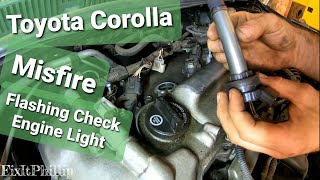
- Do not ignore a flashing check engine light. Pull over and shut off the engine to prevent expensive catalytic converter damage.
- This is a great DIY repair for beginners, requiring only basic hand tools and about 30 minutes of time.
What's Unique About the 2009-2013 Toyota Corolla

The 2ZR-FE engine in the tenth-generation Corolla is generally very reliable, and a P0303 code is one of the most common and straightforward issues owners encounter. The cause is overwhelmingly related to the simple coil-on-plug ignition system. Unlike some V6 or boxer engines where accessing certain cylinders is difficult, all four cylinders on this 1.8L I4 engine are easily accessible at the top of the engine under a plastic cover, making diagnosis and repair a simple job for most DIYers.
Symptoms You May Notice
- Rough or shaky idle.
- Hesitation or stumbling during acceleration.
- Noticeable loss of engine power.
- Flashing check engine light (especially under load).
- Smell of unburnt fuel from the exhaust.
- Decreased fuel economy.
- Engine sounds different, like a Subaru or a lawnmower.
- Replacing only the spark plugs without testing the ignition coil first. The coil is a more frequent failure point for a single-cylinder misfire on this engine.
- Assuming a bad catalytic converter because of a fuel smell, when the misfire itself is the cause of unburnt fuel entering the exhaust.
- Replacing the fuel injector before thoroughly testing the ignition coil and spark plug, which are far more common and easier to diagnose.
Most Likely Causes

- Faulty Ignition Coil 🔴 High Probability Coil-on-plug ignition coils are a common wear item on most modern engines, including the 2ZR-FE. Heat cycles and vibration eventually lead to internal failure of the coil's windings or the spring contact. They are a very frequent cause for a check engine light on this platform.
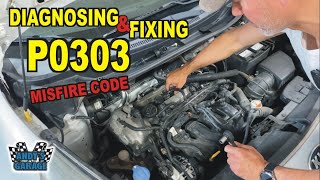
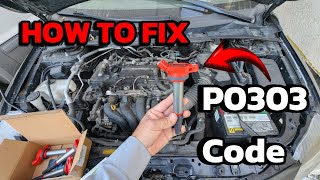
How to confirm: Swap the ignition coil from cylinder 3 with another cylinder (e.g., cylinder 2). Clear the codes and drive. If the code changes to P0302, the coil is bad. This is the definitive DIY diagnostic step. 🎬 Watch this DIY guide to diagnosing a cylinder 3 misfire.
Typical fix: Replace the faulty ignition coil. It is held in by a single 10mm bolt and is easily accessible after removing the plastic engine cover.
Est. part cost: $40-$90 - Worn or Fouled Spark Plug 🟡 Medium Probability
How to confirm: After ruling out the ignition coil, remove the spark plug from cylinder 3. Inspect it for wear (worn/rounded electrode), carbon fouling, or oil. A very wide electrode gap can also cause a weak spark. In several documented cases, owners have found the spark plugs were simply loose and not torqued correctly, which caused the misfire.
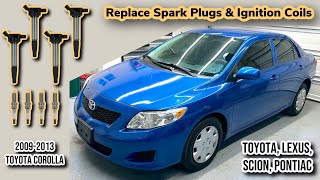
Typical fix: Replace the spark plug. The recommended spark plugs are Iridium type (e.g., Denso SK20R11) which should not be re-gapped. It is best practice to replace all four spark plugs 🎬 See a full walkthrough on replacing your plugs and coils. at the same time to ensure even performance. Torque to specification.
Est. part cost: $20-$60 for a set of four - Clogged Fuel Injector ⚪ Low Probability
How to confirm: If the coil and plug are good, the injector is the next suspect. You can swap the fuel injector from cylinder 3 with another cylinder, though this is a more involved job than swapping a coil. A professional can also perform a fuel injector balance test to measure flow.
Typical fix: Replace the faulty fuel injector. It's also wise to replace the seals.
Est. part cost: $50-$150
Rare But Worth Checking
- Intake Manifold Gasket Leak: A vacuum leak near the cylinder 3 intake runner can lean out the air/fuel mixture and cause a misfire. This can be diagnosed with a smoke test or by carefully spraying brake cleaner near the gasket with the engine running and listening for a change in idle speed.
- Low Engine Compression: A mechanical issue like a burnt valve, damaged piston, or worn piston rings can cause a loss of compression, leading to a misfire. This is uncommon on a well-maintained 2ZR-FE but can be confirmed with a compression test. A healthy cylinder should read around 175-180 PSI, with minimal variation between cylinders.
- Leaking Spark Plug Tube Seal: The valve cover gasket includes integrated seals for the spark plug tubes. If a seal fails, oil can leak into the spark plug well, submerging the bottom of the ignition coil and spark plug. This oil can short out the ignition coil's connection to the spark plug, causing a misfire. When you remove the coil, check for liquid oil on the coil boot or around the spark plug.
Diagnosis Steps

- Read the code with an OBD-II scanner to confirm P0303.
- Note if the check engine light is steady or flashing. A flashing light indicates a severe misfire requiring immediate attention.
- Locate cylinder 3. On the 2ZR-FE, cylinders are numbered 1-2-3-4 from the passenger side (timing chain/belt side) to the driver side.
- Swap the ignition coil from cylinder 3 with an adjacent cylinder (e.g., cylinder 2 or 4). This requires a 10mm socket to remove the coil bolt.
- Clear the trouble codes using the scanner.
- Start the engine and let it idle or drive it for a few minutes until the check engine light comes back on.
- Re-scan for codes. If the code has moved to the cylinder you swapped the coil to (e.g., P0302 or P0304), the ignition coil is the problem.
- If the code remains P0303, the coil is likely good. The next step is to check the spark plug.
- Move the ignition coil back to its original cylinder. Now, swap the spark plug from cylinder 3 with the one from the cylinder you used before.
- Before removing the plug, inspect the spark plug well for any oil. Oil in the well indicates a leaking valve cover gasket/tube seal.
- Check if the spark plug is loose. Some owners report finding loose plugs as the cause of the misfire.
- Clear the codes and repeat the test drive. If the code moves, the spark plug is faulty.
- If the code still remains P0303, the issue is less common and may be a fuel injector, vacuum leak, or a mechanical compression problem requiring further diagnosis like a compression test or smoke test. 🎬 Watch a mechanic-grade diagnosis of the P0303 misfire code.
Parts You'll Likely Need

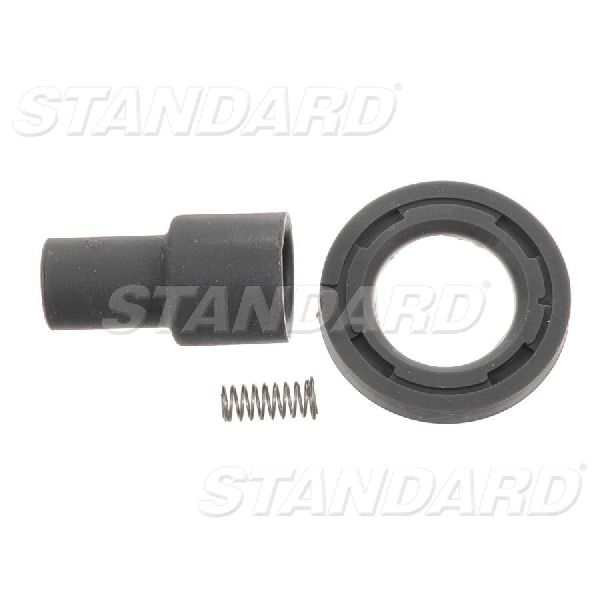
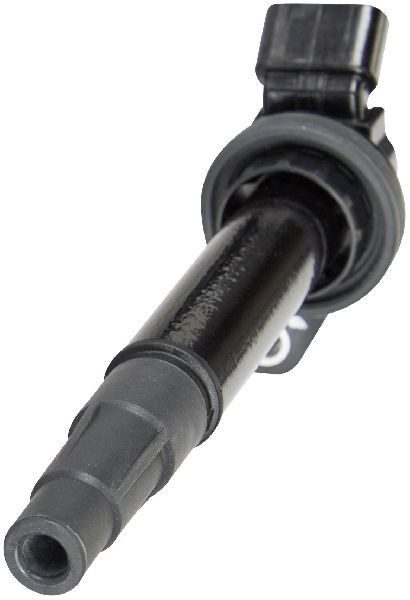
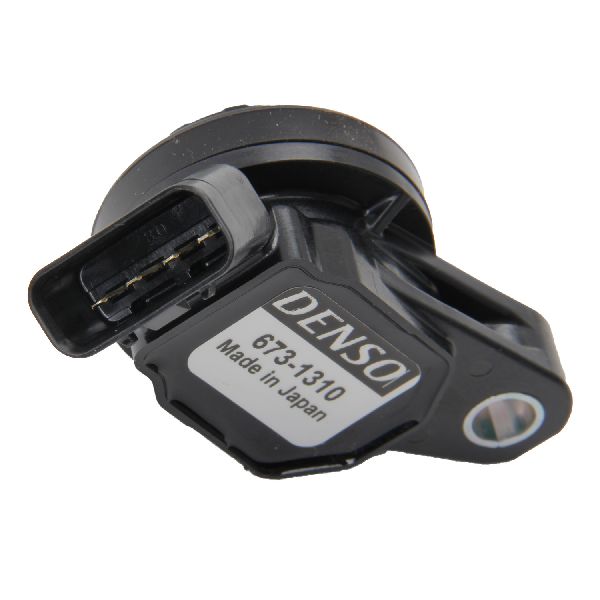
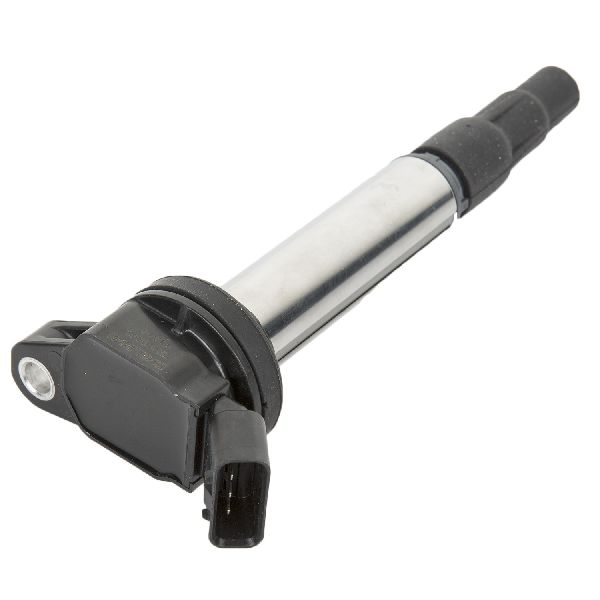
- Ignition Coil (Coil-on-Plug)
(OEM #90919-02258 or superseded 90919-A2001)— This is the most common cause of a single-cylinder misfire on the 2009-2013 Corolla.
Trusted brands: Denso (OEM), NGK, Delphi
OEM price range: $80-$110
Aftermarket price range: $40-$70 - Iridium Spark Plug
(OEM #90919-01275 (Denso SK20R11))— A worn, fouled, or simply loose spark plug is the second most likely cause. It's a routine maintenance item that can cause misfires when its service life is exceeded or it's improperly installed.
Trusted brands: Denso (SK20R11), NGK (IFR6T11)
OEM price range: $12-$20 per plug
Aftermarket price range: $8-$15 per plug
Related Codes That Often Appear With This One
- P0300 — If the misfire becomes more widespread and affects multiple cylinders randomly, a P0300 (Random/Multiple Cylinder Misfire) code may appear alongside P0303. This might point to a systemic issue like a vacuum leak or low fuel pressure.
- P0301, P0302, P0304 — If you swap a suspected bad coil or plug from cylinder 3 to another cylinder, the code will 'move' to that cylinder (e.g., P0302 if swapped to cylinder 2), confirming the faulty component.
Platform-Specific Known Issues
- Loose Spark Plugs: A notable number of owners have reported that the P0303 misfire was caused by nothing more than a loose spark plug in cylinder 3. In one YouTube repair, the mechanic found all four spark plugs were loose enough to be removed by hand. Before buying parts, it's worth checking the torque on the spark plug.
- Owner Experience: Coil Swap Diagnosis: A user on Toyota Corolla Forum with a P0303 code had a dealership perform the standard diagnostic: they swapped the coils between cylinders, cleared the code, and test drove the vehicle. When the misfire did not immediately return, they sent the owner home to see if it would reappear, demonstrating this is a common, low-urgency issue if the light isn't flashing.
Mechanic-Grade Diagnostic Values
- Fuel Injector Resistance — expected: 11.6 to 12.4 Ω at 20°C (68°F). Failure: A reading outside this range indicates a faulty injector winding.
- Ignition Coil Primary Resistance — expected: 0.49 to 0.57 Ω at 20°C (68°F). Failure: A reading outside this range suggests a failure in the primary winding of the coil.
- Ignition Coil Secondary Resistance — expected: 9.5 to 11.1 kΩ. Failure: An open circuit (infinite resistance) or a reading far outside this range indicates a failed secondary winding.
- Fuel Pressure (at fuel rail) — expected: 45 - 50 psi. Failure: Significantly lower pressure can cause lean misfires, while higher pressure is less common but could indicate a regulator issue.
- Mode $06 Misfire Count — expected: Test ID (TID) $A4, Component ID (CID) $0B should show a low count.. Failure: A high value for TID $A4 (Cylinder 3) confirms misfire events, even if they are not severe enough to trigger a constant CEL.
Hidden / Shadow Codes Worth Checking
- Mode $06, TID $A4: This is not a 'code' but a specific data parameter within the OBD-II system's diagnostic monitoring. TID $A4 is the specific test ID Toyota uses to log the raw count of misfire events for cylinder 3. (see via An advanced OBD-II scanner capable of displaying Mode $06 data. This allows a technician to see if the cylinder is misfiring intermittently before the count is high enough to set a P0303 code.)
Scan Tool Commands That Help
- Toyota Techstream: Misfire Monitor Utility — This is the preferred professional method for diagnosing intermittent or hard-to-duplicate misfires. It provides a more detailed and accurate view than the standard data list. It shows a live 'misfire rate' and a historical 'EWMA' (Exponentially Weighted Moving Average) count over the last 10 trips, helping to distinguish between a current problem and a past issue.
- Toyota Techstream: Active Test: Compression — After ruling out ignition and fuel, this function can provide a quick relative compression check. The tool disables fuel and spark, then cranks the engine and measures the RPM fluctuation for each cylinder to identify a potential mechanical issue without needing a manual compression gauge initially.
Wiring & Ground Locations
- AA, AB, AC, AD — These are primary engine compartment ground points for the LHD 2ZR-FE engine. They are typically located on the chassis rails and inner fenders in the engine bay.. A corroded or loose engine ground can cause a weak spark or erratic sensor readings, leading to misfires. Specifically, the grounds for the ECM and ignition coil harness are critical. Checking the integrity of these main ground points is a crucial step if electrical issues are suspected.
- Ignition Coil Connector — On top of the valve cover, connecting to the cylinder 3 ignition coil.. The connector has 4 pins. A damaged connector or spread terminals can cause a poor connection, leading to a P0303. The pins are typically: Pin 1 (IGF - Ignition Feedback), Pin 2 (+B - 12V Power), Pin 3 (IGT3 - Ignition Trigger from ECM), Pin 4 (Ground). Verifying 12V power and a clean ground at the connector is a key diagnostic step.
Real Owner Repair Stories
- Reddit r/Cartalk user 'Mekdatmuny' (2010 Toyota Corolla, 1.8L 2ZR-FE, 5-speed manual) — Active misfire on cylinders 1 and 4 (P0301, P0304), rough idle, occasional clacking noise.
❌ Tried (didn't work) Spark plugs and ignition coils had been replaced within the last 3 months.
✅ What actually fixed it The user replaced all four fuel injectors, which resolved the misfire codes. The car had been sitting for some time, suggesting the injectors may have become clogged or failed from disuse. The user confirmed the new injectors had the correct resistance (11.6-12.4 ohms) before installation.
OEM Part Supersession History
90919-02252→90919-02258, and later 90919-A2001— Standard part revision and improvement by the manufacturer.
Heads up: The parts are interchangeable. When ordering, using the latest part number (90919-02258 or 90919-A2001) ensures you receive the most current revision.
Diagnostic Flowchart
Other Known Issues on This Vehicle
Issues unrelated to this code that are worth knowing about as an owner of this generation:
- Excessive Engine Oil Consumption 🟠 Medium — Common on 2ZR-FE engines, particularly at higher mileage (over 100k miles). Some owners report consuming 1-2 quarts between oil changes. (Ref: Toyota addressed this for the 2AZ-FE engine, but many owners of the 2ZR-FE report similar issues without a formal campaign.)
- Water Pump Failure 🔴 High — A well-documented weak point. Failure can occur relatively early, sometimes between 60,000 and 100,000 miles. Symptoms include a whining/grinding noise from the passenger side of the engine and pink coolant residue.
- Starter Motor Failure 🟡 Low — Reported by some owners, but less common than water pump or oil consumption issues. Symptoms are a click or no-start condition.
- Alternator Failure 🟡 Low — Can fail at higher mileage, leading to a battery light on the dash and the battery not charging.
- Timing Chain Cover Oil Leak 🟡 Low — Some owners report oil leaks from the timing chain cover gasket or the tensioner gasket on the passenger side of the engine.
Used vs. New Parts: Buying Guide for This Vehicle
When a used part is the smart pick: For ignition coils, a used OEM (Denso) part from a low-mileage junkyard vehicle can be a very smart choice. OEM coils are generally durable and often outlast aftermarket alternatives. Given the high cost of new OEM coils, a used one for $10-$20 can be a reliable, budget-friendly repair.
Donor-vehicle mileage cap: roughly under 100000 miles for the part to have meaningful remaining life.
What to inspect on the donor part:
- Check the donor vehicle's mileage if possible; lower is always better.
- Inspect the plastic housing of the coil for cracks or signs of heat stress.
- Look at the rubber boot for tears, swelling, or a white, chalky residue which can indicate arcing.
- Ensure the electrical connector is not damaged and the locking tab is intact.
OEM-only on this vehicle (don't cheap out):
- While not strictly 'OEM-only', it is strongly recommended to use OEM Denso or top-tier aftermarket brands like NGK for ignition coils. Cheap, no-name aftermarket coil sets are a frequent source of immediate or premature failure.
Aftermarket brands forum-validated for this vehicle:
- Denso (OEM)
- NGK
Brands owners have reported issues with on this vehicle:
- Unbranded, low-cost coil sets sold on marketplaces, which are known for high failure rates across many vehicle platforms.
Real Owner Stories
Aggregated from forums and TSBs cited above. Mileages and costs reflect what owners reported in those sources.
2017 Toyota Corolla 2ZR-FE
Symptoms: The owner experienced a P0303 code and took it to a dealership for diagnosis.
What fixed it: The dealership swapped the ignition coils between cylinders and cleared the code to see if the misfire would return to a different cylinder.
Source hint: Toyota Corolla Forum - 'p0303' thread
2009-2013 Toyota Corolla 1.8L
Symptoms: A misfire was diagnosed where the mechanic found all four spark plugs were loose enough to be removed by hand.
What fixed it: Tightening/properly torquing the spark plugs.
Source hint: vehicle_specific_issues: Loose Spark Plugs
2009-2013 Toyota Corolla 1.8L
Symptoms: Owner reported a P0303 code. Swapping coils did not resolve the issue.
What fixed it: Swapped spark plugs between cylinders 3 and 4; after cleaning and re-installing, the code did not return.
Source hint: Reddit r/AskMechanics - 'P0303 - Corolla Misfire'
2009-2013 Toyota Corolla 1.8L
Symptoms: Rough idle developed at a stop light.
What fixed it: Not specified in snippet.
Source hint: r/COROLLA
Related OBD-II Codes
Frequently Asked Questions
Where is cylinder 3 located on my 2009-2013 Corolla 1.8L?
Which specific spark plugs should I use for my 2ZR-FE engine to fix a P0303?
Is there a TSB for the oil consumption I'm noticing along with my misfire?
Can I just swap parts to see if the P0303 code moves?
I heard loose spark plugs are a thing on these Corollas; is that true?
What tools do I need to replace the ignition coil on my 2010 Corolla?
Helpful Videos
Used OEM Parts in Stock


New Aftermarket Parts Available


The information in this article is provided for general reference and educational purposes only. Vehicle specifications, procedures, and part compatibility can vary by production date, trim level, and region. Always consult your vehicle's factory service manual and verify part numbers before purchasing or performing repairs. Safety-critical components such as airbags, seat belts, and braking systems should be installed by a qualified professional.
- Toyota Corolla:
- 🎬 Helpful Videos
- 🛍️ Shop This Part
- What's Unique About the 2009-2013 Toyota Corolla
- Symptoms You May Notice
- Most Likely Causes
- Rare But Worth Checking
- Diagnosis Steps
- Parts You'll Likely Need
- Related Codes That Often Appear With This One
- Platform-Specific Known Issues
- Mechanic-Grade Diagnostic Values
- Hidden / Shadow Codes Worth Checking
- Scan Tool Commands That Help
- Wiring & Ground Locations
- Real Owner Repair Stories
- OEM Part Supersession History
- Diagnostic Flowchart
- Other Known Issues on This Vehicle
- Used vs. New Parts: Buying Guide for This Vehicle
- Real Owner Stories
- 2017 Toyota Corolla 2ZR-FE
- 2009-2013 Toyota Corolla 1.8L
- 2009-2013 Toyota Corolla 1.8L
- 2009-2013 Toyota Corolla 1.8L
- Related OBD-II Codes
- Frequently Asked Questions
- 🎟️ Get 5% Off