

P0303 on 2007-2013 Mini Cooper: Cylinder 3 Misfire Causes and Fixes
P0303 indicates a misfire in cylinder 3. On a 2007-2013 Mini Cooper, this is most often caused by a failed ignition coil or a worn spark plug. Swapping the cylinder 3 coil with another is the fastest way to diagnose. A new coil costs approximately $25-$70. For turbocharged N14 engines, heavy carbon buildup on intake valves is another primary suspect if ignition components are good.
- P0303 on a 2007-2013 Mini means cylinder 3 is misfiring.
- The most likely cause is a bad ignition coil or spark plug. Start diagnosis by swapping the coil from cylinder 3 to another cylinder.
- If you have a Cooper S (N14 engine), severe carbon buildup on the intake valves is a very common cause of misfires that ignition parts won't fix.
- A flashing check engine light is serious. It means potential catalytic converter damage is occurring, and you should stop driving immediately.
- When replacing ignition parts, it is highly recommended to replace all four coils and spark plugs at the same time for best results.
What's Unique About the 2007-2013 Mini Cooper

The 2007-2013 Mini Cooper uses two different 'Prince' engines, a joint development between BMW and PSA Peugeot Citroën. The cause of a P0303 misfire can vary significantly between them. The base model has the naturally aspirated, port-injected N12 engine. The Cooper S has the turbocharged, direct-injection N14 engine, which is highly susceptible to severe carbon buildup on the intake valves. This buildup prevents the valves from sealing properly, leading to misfires that can't be fixed with new plugs or coils. The N14 is also notorious for high-pressure fuel pump (HPFP) failures and timing chain issues, both of which can cause misfires.
Generation note: This range covers the second-generation (R55, R56, R57) Mini Cooper. The primary difference is the engine. The base Cooper uses the port-injected N12, while the Cooper S uses the turbocharged, direct-injected N14 (through 2010 for Cooper S, 2012 for JCW). The N14 is significantly more prone to carbon buildup on intake valves and high-pressure fuel pump (HPFP) failures, both of which are common causes for misfires.
Symptoms You May Notice
- Rough or shaky idle
- Hesitation or stumbling during acceleration
- Noticeable loss of engine power
- Flashing or solid Check Engine Light
- Engine bucking at steady RPMs
- Fuel smell from the exhaust
- Replacing only the spark plug when the ignition coil was the actual cause.
- Replacing fuel system components on an N14 engine when the root cause is heavy carbon buildup on the intake valves. One owner on a forum had their car at two shops for new plugs, coils, and injector cleaning before carbon buildup was identified as the culprit.
- Assuming a misfire code points to an ignition issue when a failing HPFP is the true cause, which may also present with a P2880 code.
Most Likely Causes

- Failed Ignition Coil 🔴 High Probability Ignition coils on these engines are a common failure item, sometimes failing as early as 60,000 miles due to heat and normal wear. They can develop cracks in the housing, allowing spark to ground out.
How to confirm: Swap the ignition coil from cylinder 3 with another cylinder (e.g., cylinder 2). Clear the codes and drive the car. If the code changes to P0302, the ignition coil is faulty. This is the standard first diagnostic step recommended by owners and technicians.
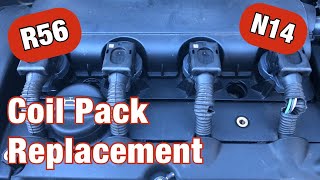
Typical fix: Replace the faulty ignition coil. 🎬 Watch: Step-by-step guide to replacing your ignition coils. It is often recommended to replace all four coils and spark plugs at the same time, as the others are likely of the same age and condition.
Est. part cost: $25 - $70 per coil - Worn Spark Plug 🔴 High Probability
How to confirm: After ruling out the coil, inspect the spark plug from cylinder 3. Look for a wet appearance, heavy black soot, or a worn/damaged electrode. Compare it to a plug from a different cylinder. The correct spark plug for the N14 engine is often an NGK ILZKBR7B8G.
Typical fix: Replace the spark plugs. It's best practice to replace all four at once. Use the correct OEM-spec plugs (NGK is a common choice). Ensure they are gapped correctly, though many come pre-gapped.
Est. part cost: $40 - $80 for a set of four - Intake Valve Carbon Buildup (N14 Engine) 🟡 Medium Probability The N14 is a direct-injection engine, meaning fuel is sprayed directly into the cylinder, not over the intake valves. Oil vapor from the PCV system bakes onto the hot valves, causing significant carbon deposits that restrict airflow and prevent the valves from closing properly. This is a well-documented issue, often requiring cleaning every 30-40,000 miles.
How to confirm: This requires a visual inspection using a borescope inserted into the intake port after removing the intake manifold. A compression test may also show lower-than-normal readings in the affected cylinder. Shops often diagnose this after ruling out ignition and fuel delivery components.
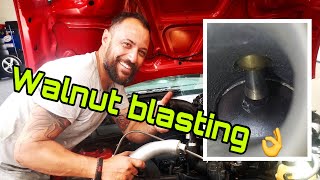
Typical fix: The intake valves must be mechanically cleaned, most commonly through a process called walnut shell blasting. 🎬 See how a professional walnut blast cleans intake valves. This service is labor-intensive.
Est. part cost: $0 (service cost is labor-intensive, typically $400-$800) - Failed Fuel Injector ⚪ Low Probability
How to confirm: If the spark and coil are good and the misfire remains on cylinder 3, the injector is a likely suspect. An owner on North American Motoring reported an intermittent injector causing a misfire. A professional can perform a flow test, but a DIY method is to listen for a consistent clicking sound from the injector with a mechanic's stethoscope. An intermittent or absent click suggests a problem.
Typical fix: Replace the faulty fuel injector. On the N14, this is more involved than on the port-injected N12.
Est. part cost: $50 - $150 for N12, $150-$250+ for N14
Rare But Worth Checking
- High-Pressure Fuel Pump (HPFP) Failure (N14 Engine): While an HPFP failure often causes random misfires (P0300) or high-pressure system codes (P2880), it can sometimes manifest as a single-cylinder misfire, especially during cold starts or under load. MINI extended the warranty on this part to 10 years/120,000 miles for many N14-equipped vehicles due to high failure rates.
- Low Compression / Mechanical Engine Damage: In rare cases, a misfire can be caused by internal engine damage like a burnt exhaust valve or damaged piston, leading to low compression. A stretched timing chain, a known issue on N14s (the 'death rattle'), can also cause timing to jump, leading to misfires. A compression test and a cylinder leak-down test are required to diagnose this.
- Faulty Engine Control Module (ECM): Though very rare, an internal failure of the ECM can cause a false misfire code for a specific cylinder. This should only be considered after all other possibilities have been exhaustively ruled out.
Diagnosis Steps

- Read the code with an OBD-II scanner to confirm P0303 and check for any other codes, especially P0300 or P2880.
- Note if the Check Engine Light is steady or flashing. A flashing light indicates a severe misfire.
- Swap the ignition coil from cylinder 3 to cylinder 2. The cylinders are numbered 1-2-3-4 from left to right (passenger to driver side in the US). Clear the codes and run the engine. If the code moves to P0302, the coil is bad.
- If the misfire stays on cylinder 3, swap the spark plug from cylinder 3 to cylinder 1. If the code moves to P0301, the spark plug is bad.
- If the misfire remains on cylinder 3, inspect the wiring and connector for the ignition coil and fuel injector for any visible damage.
- For N14 engines, the next logical step is to inspect for carbon buildup on the intake valves using a borescope. This is a very common cause after ignition components are ruled out.
- If no carbon is found (or for N12 engines), suspect a faulty fuel injector. Listen for its operation with a stethoscope.
- If all else fails, perform a compression test and a cylinder leak-down test to check for mechanical engine problems like worn piston rings or a burnt valve.
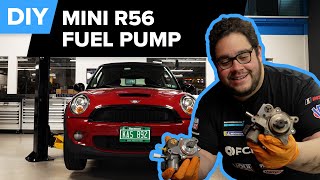
- For N14 engines, check fuel rail pressure with a scan tool during a cold start to diagnose a potential HPFP issue. 🎬 Watch: How to replace the high-pressure fuel pump yourself. Desired vs. actual pressure should match.
Parts You'll Likely Need

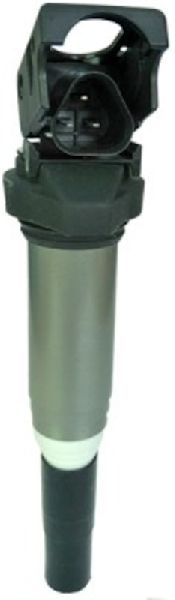
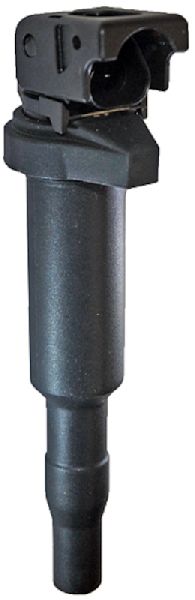
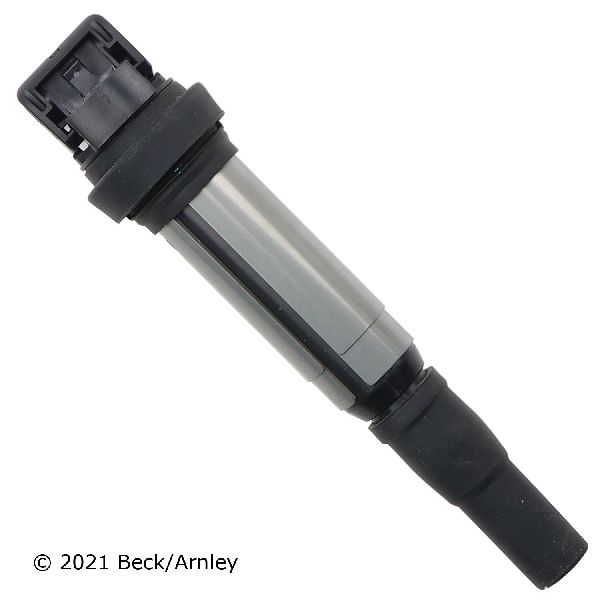
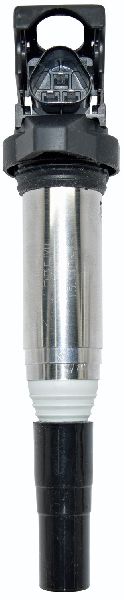
- Ignition Coil
(OEM #12138616153)— This is the most common failure part for a single-cylinder misfire on this platform. This part number supersedes several previous versions.
Trusted brands: Bosch, Delphi, Eldor
OEM price range: $60-$80
Aftermarket price range: $25-$50 - Spark Plugs (Set of 4)
(OEM #12120035531 (NGK ILZKBR7B8G / 97968 for N14))— Worn spark plugs are a frequent cause of misfires and should be replaced as part of regular maintenance or when replacing coils.
Trusted brands: NGK, Bosch
OEM price range: $60-$80
Aftermarket price range: $40-$60 - High-Pressure Fuel Pump (N14 Engine)
(OEM #13517588879)— A well-documented failure point on the turbocharged N14 engine that can lead to misfires and starting issues. An extended warranty was offered by MINI for this part.
Trusted brands: Genuine MINI, PSA (Peugeot/Citroën)
OEM price range: $500-$800
Aftermarket price range: $250-$400
Related Codes That Often Appear With This One
- P0300 — If the underlying issue, like a failing HPFP, widespread carbon buildup, or a stretched timing chain affects multiple cylinders, you may see a P0300 (Random/Multiple Cylinder Misfire) code alongside P0303.
- P0301, P0302, P0304 — These codes indicate misfires in other cylinders. Seeing them with P0303 points towards a systemic problem rather than a single component failure on cylinder 3.
- P2880 — Specific to the N14 engine, this code means 'High Pressure System Plausibility.' It often appears with misfire codes when the High-Pressure Fuel Pump (HPFP) is failing.
Technical Service Bulletins (TSBs) & Recalls
- SI M12 02 10 (December 2012): Details diagnostic procedures for misfire faults on the N14 engine, acknowledging multiple causes including carbon buildup and recommending the use of ISTA/D test plans. It advises performing compression/leak-down tests for repeat issues and outlines the carbon cleaning procedure.
- SI M01 04 10 (August 2010): Announces the extended emissions warranty for the High-Pressure Fuel Pump (HPFP) on N14 engines to 10 years or 120,000 miles, citing durability issues. It specifies the replacement part number (13 51 7 588 879).
- SI M13 01 15 (March 2015): Discusses the increase in drivability complaints due to carbon deposits on intake valves and injectors, attributing it to fuel quality. Recommends the use of MINI Fuel Additive, but notes that carbon cleaning is not covered by warranty.
- SI M01 01 16 (July 2016): Extends the HPFP limited warranty for the N18 engine, but also reaffirms the N14 warranty extension.
Platform-Specific Known Issues
- Carbon Buildup: The direct-injection N14 engine (Cooper S) does not wash the intake valves with fuel, leading to heavy carbon deposits that cause misfires and poor performance. Walnut blasting is the standard fix and is often needed every 30-40k miles.
- Timing Chain Tensioner Failure: Early N14 engines were prone to timing chain tensioner failures, causing a "death rattle" on startup. While this usually causes timing-related codes, a stretched chain can contribute to rough running and misfires.
- HPFP Failure: The high-pressure fuel pump on the N14 engine is a known weak point and was subject to an extended warranty/recall by MINI (10 years/120,000 miles). Failure leads to hard starts, stumbling, and misfires, often with code P2880.
Mechanic-Grade Diagnostic Values
- High-Pressure Fuel Pump (HPFP) Pressure at Idle (N14) — expected: ~700 psi (approx. 50 Bar). Failure: Pressure significantly below spec, especially during cold start where it may be below 1 Bar (14.5 psi) when 5 Bar (72.5 psi) is required to start.
- Low-Pressure Fuel Pump Pressure (In-tank) — expected: 5 Bar (approx. 72.5 psi). Failure: Pressure does not hold at 5 Bar for 15 minutes with key-on-engine-off, indicating a weak in-tank pump or leak.
- Engine Compression (N14) — expected: Healthy engines should be over 100 PSI, with readings typically between 140-170 PSI and less than 10% variation between cylinders.. Failure: A cylinder reading significantly lower than others (e.g., 100 PSI when others are 150 PSI) indicates a mechanical issue like worn rings, or a poor valve seal from carbon or damage.
- VANOS Adaptation Values (ISTA Scan Tool) — expected: Intake: 140-160 degrees. Exhaust: 40-60 degrees (for N12, similar for N14).. Failure: Values outside of the specified range after an adaptation reset can indicate a problem with the VANOS solenoids, phasers, or timing chain system.
- Ignition Coil Primary Resistance — expected: Approximately 0.4 to 2.0 ohms between the + and - terminals.. Failure: A reading of zero ohms indicates a short, while a very high or infinite reading indicates an open circuit within the coil.
Hidden / Shadow Codes Worth Checking
- 2EFE, 2F01, 2EE0, etc.: These are BMW hexadecimal fault codes for misfires on specific cylinders. For example, a generic P0303 code may be accompanied by a more specific BMW code like '2EE7' (Misfire, cylinder 3). A generic scanner may only show P0303, while a BMW-specific tool like ISTA will show the hex code. (see via BMW/MINI specific scan tools like ISTA, Autologic, or advanced consumer tools with manufacturer-specific software.)
Scan Tool Commands That Help
- ISTA (or equivalent BMW diagnostic software): VANOS Adaptation Reset — After replacing VANOS solenoids, camshaft sensors, or performing timing chain work. The procedure involves resetting the learned values, letting the engine idle, and then running it at a higher RPM to allow the DME to re-learn the camshaft position limits.
- Advanced Scan Tool: Fuel Rail Pressure Monitoring (Live Data) — Essential for diagnosing N14 HPFP issues. Monitor 'desired' vs 'actual' fuel rail pressure during a cold start. A large discrepancy where actual pressure lags far behind desired pressure points to a failing HPFP.
Wiring & Ground Locations
- Engine-to-Body Ground Strap — A braided strap typically running from the engine block or transmission to the vehicle's chassis, often near the passenger side engine mount.. A corroded or loose main engine ground can cause a weak or inconsistent spark, leading to misfires that are difficult to diagnose. The ignition coils rely on a solid ground path to function correctly.
- Valve Cover Ground Points — Small ground wires bolted directly to the valve cover, providing a ground path for the ignition coils.. These are the direct ground connections for the coils. If they are loose, oily, or corroded, it can cause a misfire on one or more cylinders.
- Main Loom Ground Points (under fuse box) — On the driver's side, in front of the firewall, under the main fuse box and ECM. Requires removing the ECM/fuse box to access.. These are critical chassis grounds for multiple engine management systems. A TSB (M61 05 07) was issued for various electrical problems caused by loose grounds in this area.
Real Owner Repair Stories
- YouTube user 'Mike MDs' (R56 Mini Cooper S (N14 Engine)) — Persistent engine misfire that was not resolved by replacing spark plugs or ignition coils.
❌ Tried (didn't work) Swapping ignition coils, Replacing spark plugs
✅ What actually fixed it A compression test revealed one cylinder was significantly lower than the others. Upon removing the cylinder head, a cracked exhaust valve was found in the misfiring cylinder. Replacing the exhaust valves resolved the misfire. - North American Motoring user 'mkov608' (2007 MINI (N12/N14 not specified)) — Misfire on cylinder #2.
❌ Tried (didn't work) Initial diagnosis pointed towards common ignition issues.
✅ What actually fixed it The misfire was ultimately caused by an intermittent #2 fuel injector. - YouTube user 'Nathan's DIY Garage' (2008 Mini Cooper Clubman (N14 Engine)) — Running rough, weird cold start, random misfire codes.
❌ Tried (didn't work) New spark plugs, Replacing intake tube, Mass air flow sensor
✅ What actually fixed it The integrated PCV valve diaphragm in the valve cover had failed. Since the diaphragm is not sold separately by MINI, a $30 aftermarket repair kit (cap and diaphragm) from an online seller was used to fix the valve cover, which resolved the rough running and misfires.
Documented NHTSA Reports
- An owner reported in NHTSA ODI #10608012 that their vehicle experienced misfire codes P0300, P0301, and P0303, along with P1492 for a downstream throttle air leak, which was ultimately caused by a shattered guide rail for the timing chain.
"I Checked Everything" — The Actual Cause
- A failed PCV system integrated into the N14's valve cover can create a vacuum leak that is difficult to trace with a smoke test. The diaphragm can tear, causing unmetered air to enter the engine, leading to lean conditions and misfires. One owner reported that even spraying carb cleaner around the area did not change the idle, but replacing the PCV diaphragm with an aftermarket kit fixed the issue.
Model Year Variations Within This Range
- 2007-2010 (Cooper S), 2007-2010 (Base): These models use the N12 (Base) and N14 (Cooper S) engines. The N14 is particularly known for timing chain tensioner failures ('death rattle'), HPFP failures, and severe intake valve carbon buildup.
- 2011-2013: In 2011, MINI introduced the LCI (Life Cycle Impulse) update. The N12 was replaced by the N16, and the problematic N14 was replaced by the N18 engine in the Cooper S. The N18 engine featured significant revisions to the timing system, PCV, and fuel management that resolved many of the common causes of misfires seen in the N14.
- 2009-2012 (JCW Models): John Cooper Works (JCW) models continued to use the N14 engine up to 2012, even after the Cooper S switched to the N18. Therefore, a 2011 or 2012 JCW is still susceptible to the common N14 issues like carbon buildup and HPFP failure.
Diagnostic Flowchart
Real Owner Stories
Aggregated from forums and TSBs cited above. Mileages and costs reflect what owners reported in those sources.
2012 Mini Cooper S
Symptoms: Owner experienced a persistent cylinder 3 misfire (P0303) that did not resolve after swapping the ignition coil and spark plug.
What fixed it: A compression and leak-down test revealed a burnt valve, requiring mechanical engine repair.
Source hint: North American Motoring thread titled 'R56 P0303 cylinder 3 misfire'
2007 Mini Cooper
Symptoms: Owner experienced an intermittent misfire specifically on cylinder 3.
What fixed it: Replaced a faulty fuel injector.
Source hint: North American Motoring thread titled 'R56 P0303 cylinder 3 misfire'
2009 Mini Cooper S — 133000 miles
Symptoms: Owner had a constant P0303 code. They confirmed spark was present but noticed a faint smell of gasoline.
What fixed it: Diagnosed as a clogged or failed fuel injector.
Source hint: North American Motoring thread titled 'MISFIRE - constant cylinder 3'
Mini Cooper N14
Symptoms: Owner experienced hard starts, stumbling, and misfires. A shop without proper MINI/BMW software misdiagnosed the issue as standard cylinder-specific misfires (P0301, P0302, P0304).
What fixed it: A second shop with the correct diagnostic tools found code P2880 and replaced the failed High-Pressure Fuel Pump (HPFP).
Source hint: North American Motoring thread titled 'High Pressure Fuel Pump failure symptoms'
2007 Mini Cooper S (N14) — ~150000 miles
Symptoms: Prospective buyer noted a history of common high-mileage N14 engine failures that can relate to overall engine health and misfires.
What fixed it: Previous owner had to replace timing chain brackets and the auxiliary water pump.
Source hint: Reddit r/MINI thread titled 'To buy or not to buy? 2007 Cooper S with the 174hp N14'
Related OBD-II Codes
Frequently Asked Questions
Is the carbon cleaning required for my N14 engine covered under the Mini Cooper warranty?
Does the extended warranty for the High-Pressure Fuel Pump (HPFP) apply to my 2007-2013 Mini Cooper?
What spark plugs should I use to fix a P0303 code on my N14 engine?
Why does my Mini Cooper have a 'death rattle' on startup along with rough running?
How often should I perform walnut blasting on my N14 Mini Cooper?
My scanner shows both P0303 and P2880. What does this mean?
Helpful Videos
Used OEM Parts in Stock
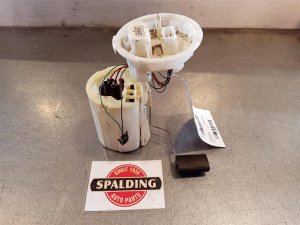


New Aftermarket Parts Available



The information in this article is provided for general reference and educational purposes only. Vehicle specifications, procedures, and part compatibility can vary by production date, trim level, and region. Always consult your vehicle's factory service manual and verify part numbers before purchasing or performing repairs. Safety-critical components such as airbags, seat belts, and braking systems should be installed by a qualified professional.
- Mini Cooper:
- 🎬 Helpful Videos
- 🛍️ Shop This Part
- What's Unique About the 2007-2013 Mini Cooper
- Symptoms You May Notice
- Most Likely Causes
- Rare But Worth Checking
- Diagnosis Steps
- Parts You'll Likely Need
- Related Codes That Often Appear With This One
- Technical Service Bulletins (TSBs) & Recalls
- Platform-Specific Known Issues
- Mechanic-Grade Diagnostic Values
- Hidden / Shadow Codes Worth Checking
- Scan Tool Commands That Help
- Wiring & Ground Locations
- Real Owner Repair Stories
- Documented NHTSA Reports
- "I Checked Everything" — The Actual Cause
- Model Year Variations Within This Range
- Diagnostic Flowchart
- Real Owner Stories
- 2012 Mini Cooper S
- 2007 Mini Cooper
- 2009 Mini Cooper S — 133000 miles
- Mini Cooper N14
- 2007 Mini Cooper S (N14) — ~150000 miles
- Related OBD-II Codes
- Frequently Asked Questions
- 🎟️ Get 5% Off