

P0303 on 2004-2011 Mazda RX-8: Understanding an Invalid Misfire Code
The code P0303 is not valid for the two-rotor engine in a Mazda RX-8. It indicates a misfire on 'Cylinder 3,' which doesn't exist. If you see this code, your actual issue is a misfire that the scanner is misinterpreting. The real problem is almost always failing ignition coils, spark plugs, or low engine compression.
- P0303 is an invalid code for an RX-8; the engine only has two rotors, identified by codes P0301 (front) and P0302 (rear).
- A misfire is almost always caused by the ignition system: coils, spark plugs, and wires. These are maintenance items with a short life of about 30,000 miles.
- Always replace all four coils, all four spark plugs (using correct leading/trailing types), and the wires together as a set.
- If you experience difficulty starting the engine when hot, get a rotary-specific compression test. This is a classic sign of a worn engine requiring a rebuild.
- Do not drive with a flashing check engine light. You will quickly destroy your catalytic converter.
What's Unique About the 2004-2011 Mazda RX-8
The Mazda RX-8 does not have conventional cylinders; it has two rotating triangular rotors inside individual housings. The Powertrain Control Module (PCM) identifies misfires by rotor, with Rotor 1 (front) and Rotor 2 (rear) being the only possibilities. A P0303 code is a ghost code for this platform. The diagnostic process should ignore the 'Cylinder 3' designation and instead focus on the universal causes of misfires on a Renesis engine, which differ significantly from piston engines, especially concerning ignition health and internal compression. Unlike a piston engine that fires once every two revolutions per cylinder, a rotary engine's spark plugs fire with every single revolution of the rotor, leading to significantly faster wear on ignition components.
Generation note: This guide covers the entire RX-8 production run, which includes the Series 1 (S1, 2004-2008) and Series 2 (S2, 2009-2011). While the causes of misfires are largely the same, S2 models have an updated ignition system (starting with some late 2008 models), a more robust starter, and an additional oil injector per rotor housing to improve lubrication. However, ignition coils and spark plugs remain common failure points on both generations, with a service life often cited around 30,000 miles.
Symptoms You May Notice
- Rough or unstable idle
- Hesitation or stumbling during acceleration
- Noticeable loss of engine power
- Flashing Check Engine Light (CEL)
- Difficulty starting the engine, especially when hot (a classic sign of low compression)
- Increased fuel consumption
- Backfiring or a smell of fuel from the exhaust
- Engine coughing or shaking
- A glowing hot catalytic converter (visible at night)
- Searching for 'Cylinder 3'. Mechanics or owners not familiar with rotary engines may waste time trying to locate a non-existent third cylinder.
- Replacing only one spark plug or coil. Ignition components on the RX-8 should always be replaced as a complete set due to their shared wear and tear from the high-heat, high-RPM environment.
- Using incorrect spark plugs. Installing four of the same plug type or mixing up the leading/trailing positions will cause poor performance and potential engine damage.
Most Likely Causes
- Failing Ignition Coils 🔴 High Probability The original equipment ignition coils on the RX-8 are a known weak point with a notoriously short service life, often cited as around 30,000 miles. Heat from the rotary engine degrades them quickly, leading to a weak spark. Mazda released several revisions to improve reliability, with the latest version being 'C'.
How to confirm: Test the coils with an in-line spark tester to check for a strong, consistent spark, especially while revving the engine. A common DIY method is to swap a suspected bad coil with a known good one and see if the misfire code changes (e.g., from P0301 to P0302), though this is not possible for a P0303 code. Visual inspection may reveal white or greyish burn spots or cracks on the coil housing, which are definitive signs of failure.
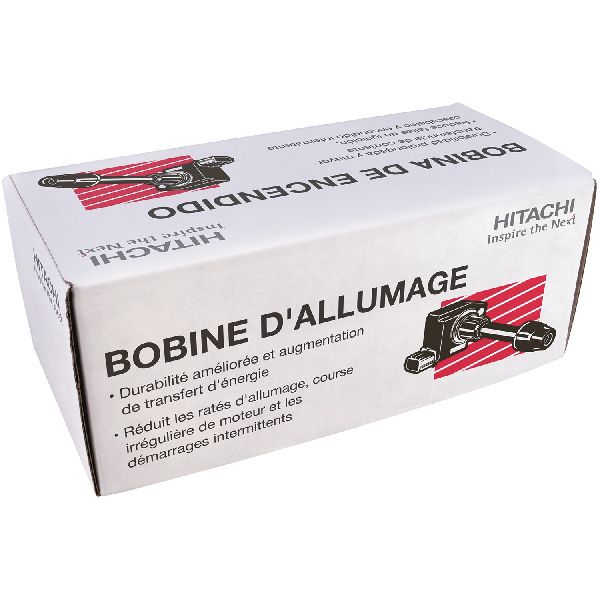
Typical fix: Replace all four ignition coils as a set. It is highly recommended to replace spark plugs and wires at the same time. Many owners opt for upgraded aftermarket coils, such as those from Black Halo Racing (BHR), for improved durability and performance.
Est. part cost: $100-$250 for a set of four OEM-style coils, $500+ for high-performance aftermarket kits. - Worn or Fouled Spark Plugs 🔴 High Probability The Renesis engine uses two different types of spark plugs per rotor (a 'leading' plug for initiation and a 'trailing' plug for complete combustion) that are critical to proper operation. They have a limited service life (approx. 30,000 miles) and are sensitive to carbon fouling and oil contamination, especially if ignition is weak or the engine is frequently shut down before warming up.
How to confirm: Remove and inspect the spark plugs. Look for heavy black carbon buildup, oil or fuel fouling, or a worn/melted electrode. The plugs are located on the driver's side of the engine and are best accessed by removing the front driver's side wheel.
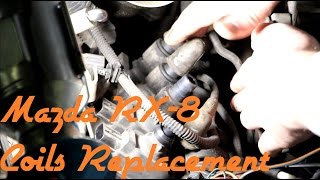
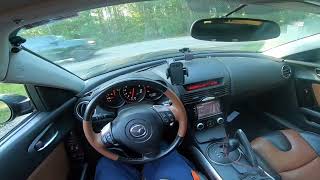
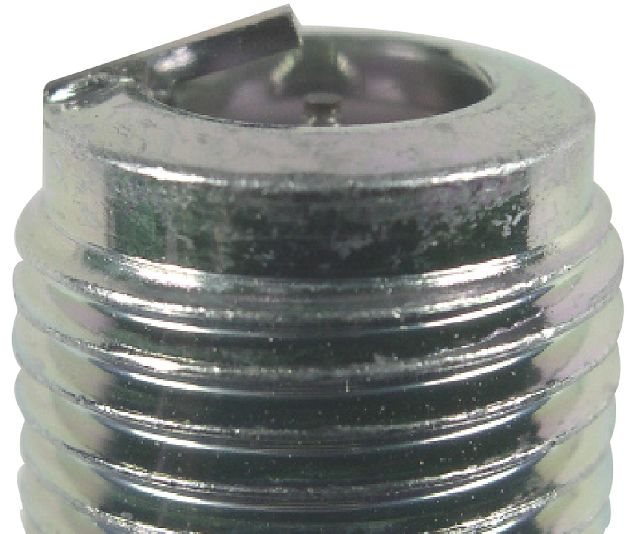
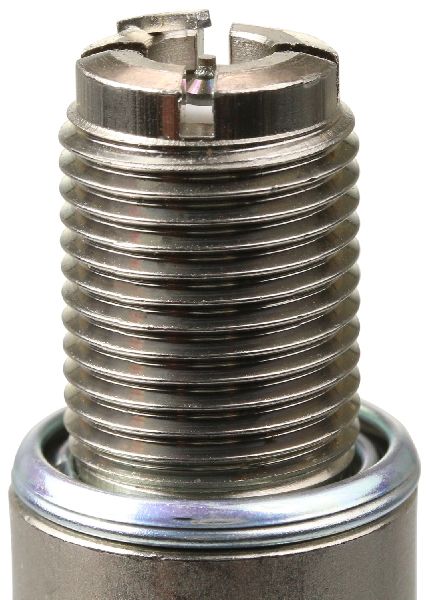
Typical fix: Replace all four spark plugs. 🎬 Watch: Step-by-step guide to replacing RX-8 coils and spark plugs. Ensure you install the correct type (Leading vs. Trailing) in the correct positions (L for lower, T for upper). The housings are stamped 'L' and 'T' for guidance. Using the correct NGK Laser Iridium plugs is standard practice.
Est. part cost: $80-$120 for a set of four NGK plugs. - Low Engine Compression 🟡 Medium Probability Wear on the engine's internal seals (apex seals, side seals, and corner seals) is a fundamental failure mode for the Renesis engine, leading to a loss of compression. This is often accelerated by failing ignition components which cause unburnt fuel to wash lubricating oil off the seals, or by overheating.
How to confirm: The primary symptom is difficulty starting the engine when it's hot. A definitive diagnosis requires a special rotary engine compression tester to measure the pressure of all three faces of each rotor at a specific cranking speed. A standard piston engine tester 🎬 See how to perform a proper rotary engine compression test. will not work and will give inaccurate readings.
Typical fix: This is a major repair requiring a complete engine rebuild or replacement. Mazda dealerships may offer a remanufactured engine, but specialist rotary shops often provide more robust rebuilds.
Est. part cost: $3,500-$7,000+ for a rebuilt engine and labor. - Failing Spark Plug Wires ⚪ Low Probability
How to confirm: Visually inspect the wires for any cracks, burns, or corrosion on the terminals. Test their resistance with a multimeter to ensure they are within spec. Ensure they 'click' firmly onto the spark plugs and coils. The NGK wire set uses blue boots for leading plugs and black boots for trailing plugs.
Typical fix: Replace the spark plug wires as a set. NGK is a common OEM-quality brand.
Est. part cost: $40-$80 for a set of wires.
Rare But Worth Checking
- Clogged Fuel Injectors: Less common than ignition issues, but can cause a misfire on a single rotor if one injector becomes clogged or fails.
- Dirty or Failing Eccentric Shaft Sensor (ESS): This is the rotary's equivalent of a crankshaft position sensor. If it's dirty with metallic debris or failing, it can send incorrect timing data to the PCM, causing misfires. Cleaning the sensor and performing an NVRAM reset (the '20-brake-stomp') can sometimes resolve this.
- Vacuum Leak: A leak in a vacuum hose or the intake manifold can introduce unmetered air and cause a lean condition, leading to misfires.
- Engine Flooding: Not a root cause of failure, but a condition that causes a no-start and can be mistaken for other issues. It occurs when the engine is shut off cold, leaving excess fuel in the housings that fouls the plugs. A healthy ignition system, battery, and starter can typically overcome this, so flooding is often a symptom of a weak link in that chain.
Diagnosis Steps
- Acknowledge that P0303 is an invalid code for the RX-8. Your goal is to diagnose a general misfire condition.
- Scan for other codes. Check if P0300, P0301, or P0302 are present, as these are the true misfire codes for this engine.
- If the Check Engine Light is flashing, stop driving as soon as safely possible to prevent catalytic converter damage.
- Assess the age of ignition components. If coils, plugs, and wires have over 30,000 miles, they are the primary suspects.
- Inspect the full ignition system. Remove the driver's side front wheel for access to the spark plugs.
- Remove and inspect all four spark plugs. Note their condition (fouled, oily, etc.) and replace them if they are worn or old. Ensure correct Leading (lower) and Trailing (upper) placement upon installation.
- Inspect all four ignition coils for cracks or white/grey burn marks on the casing. Given their high failure rate, if they are over 30,000 miles old, replacement is strongly recommended regardless of appearance.
- Inspect spark plug wires for damage and ensure they are securely connected with an audible 'click'.
- If ignition components are new or known-good, assess for symptoms of low compression, primarily hard starting when the engine is hot.
- If hot start issues are present, seek a specialist with a rotary compression tester for a definitive diagnosis.
Parts You'll Likely Need
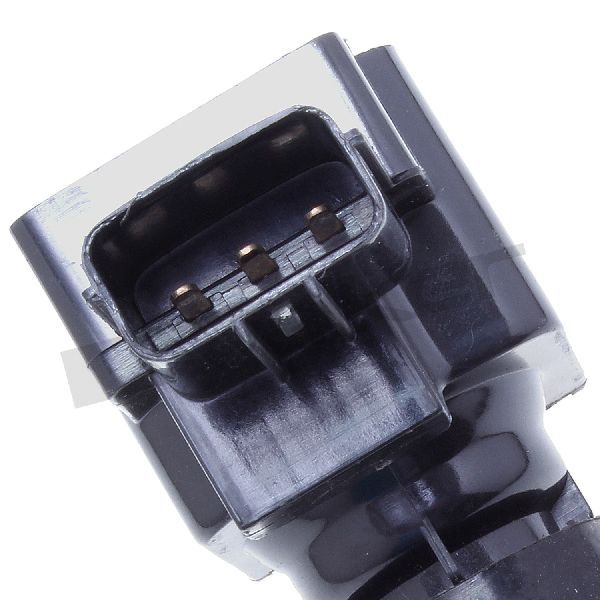
- Ignition Coil Set (x4)
(OEM #N3H1-18-100C)— This is the highest probability fix for any RX-8 misfire. They are a maintenance item with a short lifespan. Be wary of cheap counterfeits on sites like eBay.
Trusted brands: Mazda OE, NGK, Black Halo Racing (BHR) - Spark Plug Set (2x Leading, 2x Trailing)
(OEM #RE7C-L (L), RE9B-T (T))— Almost always replaced with ignition coils as a set. They foul easily from weak spark or short trips.
Trusted brands: NGK - Spark Plug Wire Set
(OEM #NGK RC-ZE81)— Replaced as preventative maintenance along with coils and plugs to ensure a strong spark.
Trusted brands: NGK, Magnecor
Related Codes That Often Appear With This One
- P0300 — Random/Multiple Misfire Detected. This is a more likely code to appear with a P0303, as it indicates a general misfire condition not isolated to a single, identifiable rotor.
- P0301 — Cylinder 1 (Front Rotor) Misfire Detected. This is the actual code for a misfire on the front rotor.
- P0302 — Cylinder 2 (Rear Rotor) Misfire Detected. This is the actual code for a misfire on the rear rotor.
Technical Service Bulletins (TSBs) & Recalls
- Canada Special Service Program 76 - Recall for corroding oil cooler lines due to road salt, affecting vehicles from 2003-2007.
- Manufacturer TSB Bulletin #01-012-19-3612 notes that some Mazda vehicles may experience the Check Engine Light on with DTC P0300:00, P0301:00, P0302:00, and P0303:00 stored in memory.
- Manufacturer TSB Bulletin #01-005-20-3704 describes symptoms of rough running, lack of power, and the MIL on with DTCs P0300 through P0304.
- Manufacturer TSB Bulletin #01-010-18-3442b highlights that an engine misfire during acceleration may occur with a flashing check engine light and DTCs P0302:00 or P0303:00, noting that even if a misfire occurred, DTCs may not be stored until a continuous misfire is detected.
- Manufacturer TSB Bulletin #01-001-23a reports that customers may complain about poor acceleration and rough idling with DTCs P0301:00 through P0304:00.
- Manufacturer TSB Bulletin #01-007-19-3541 indicates that P0300 through P0304 may be caused by frozen water accumulated in the main silencer, restricting exhaust flow.
Platform-Specific Known Issues
- Engine Flooding: Weak ignition can lead to engine flooding, where excess fuel prevents the engine from starting at all. A 'de-flooding' procedure may be necessary.
- Catalytic Converter Failure: A direct result of persistent misfires. Unburnt fuel superheats and melts the catalyst material, causing a major exhaust blockage and a very expensive repair.
- Premature Engine Wear: Driving with a misfire caused by bad ignition accelerates the wear of internal engine seals, leading to low compression and eventual engine failure.
Mechanic-Grade Diagnostic Values
- Eccentric Shaft Position (ESS) Sensor Resistance — expected: 950 - 1,250 Ohms at room temperature. Failure: A reading outside this range indicates a faulty sensor. Also, visually inspect the sensor tip for metallic debris.
- Ignition Coil Primary Resistance (Good Coil) — expected: Approximately 1.4 to 1.6 kΩ. Failure: Significantly lower readings (e.g., under 1.0 kΩ) or an open circuit (infinite resistance) suggest a bad coil. Note that resistance tests are not always conclusive for coils.
- Engine Compression (Rotary Specific) — expected: Normalized to 250 RPM, a healthy engine should show values around 6.9 bar (100 psi) or higher, with minimal variation between rotor faces and between rotors. The exact minimum spec varies by source, but numbers below 6.0 bar (87 psi) are a major concern.. Failure: Low readings on one or more faces of a rotor, or a significant difference (e.g., > 1.0 bar) between faces on the same rotor.
- Fuel Pressure — expected: Approximately 58 psi at idle.. Failure: Low or inconsistent fuel pressure can cause lean misfires across both rotors.
Scan Tool Commands That Help
- Manual Procedure (No Scan Tool): NVRAM Reset ('20-Brake-Stomp') — For Series 1 (2004-2008) models, this procedure clears the Keep Alive Memory (KAM) and the eccentric shaft profile learned by the PCM. It should be performed after replacing the ESS, ignition components, or engine, or to clear persistent 'ghost' misfire codes after a repair. The procedure is to turn the key to 'ON' (engine off) and pump the brake pedal at least 20 times within 8 seconds. On later S1 models, the oil pressure gauge will sweep to confirm success.
- Manual Procedure (No Scan Tool): NVRAM Reset (S2 Models) — For Series 2 (2009-2011) models, the procedure is different: disconnect the negative battery cable for at least one minute, press the brake pedal once, and then reconnect the battery. This is used for the same reasons as the S1 reset.
Wiring & Ground Locations
- Engine Block to Chassis Ground — A primary ground strap is located on the lower intake manifold, connecting the engine to the chassis.. A poor engine ground can cause a weak or inconsistent spark, leading to misfires. The ignition coils rely on a solid ground path through the engine block.
- Alternator Ground — The alternator grounds to the engine block near the driver's side motor mount.. Insufficient alternator grounding can lead to low system voltage, which weakens ignition coil output and can cause random misfires.
- Main Harness Grounds — Several key grounds for the main wiring harness are located in the engine bay: two on the crossmember under the battery/airbox, two on the passenger side chassis (near strut tower and washer bottle), and one on the driver's side by the brake booster.. These points ground the PCM and various sensors. Corrosion or looseness here can cause erratic sensor readings and incorrect PCM calculations, leading to misfires.
- Eccentric Shaft Sensor (ESS) Wiring — The harness running to the ESS, located on the front of the engine near the main pulley.. This wiring is sensitive. Damage or chafing can disrupt the signal to the PCM, causing incorrect ignition timing and misfires. The wiring harness shield must have an uninterrupted path to ground at the ECU.
Real Owner Repair Stories
- Reddit user 'frenris' on r/RX8 (Year not specified) — Flashing Check Engine Light (CEL) on a cold morning.
❌ Tried (didn't work) Recently replaced spark plugs, so they were not the initial suspect.
✅ What actually fixed it The user replaced all four ignition coils, which resolved the misfire. Upon inspection, one old coil was completely dead, one was bad, and the other two were beginning to fail. - RX8Club.com user 'L8APEX' (2007 RX-8) — P0335 (Eccentric Shaft Position Sensor Circuit Problem), car would not idle properly, running very rich (AFR 11.0-12.7).
❌ Tried (didn't work) Initial cleaning of the ESS and NVRAM reset provided only a temporary fix.
✅ What actually fixed it A second, more thorough cleaning of the Eccentric Shaft Position Sensor resolved the issue. This indicates that even a small amount of debris can cause significant running problems and misfire-like symptoms.
OEM Part Supersession History
N3H1-18-100A, N3H1-18-100B→N3H1-18-100C— Improved reliability and heat resistance. The original coils were a major weak point.
Heads up: While all versions are physically compatible, it is critical to replace coils as a full set of four with the latest 'C' revision. Be wary of counterfeit coils on sites like eBay, which often lack proper embossing, have a shiny black finish instead of matte grey/black, and use a solid metal sleeve for the mounting bolt instead of a rolled sleeve with a visible seam.
Model Year Variations Within This Range
- 2009-2011 (Series 2): Series 2 engines feature a significantly improved oiling system, with three oil injectors per rotor housing instead of two on the S1. They also use two electric oil metering pumps instead of the S1's single mechanical pump. This provides better lubrication to the apex seals, potentially increasing engine longevity, but does not change the fundamental causes of ignition-related misfires.
- 2004-2008 (Series 1) vs 2009-2011 (Series 2): The NVRAM reset procedure is different. S1 models use the '20-brake-stomp' method, while S2 models require disconnecting the battery.
Diagnostic Flowchart
Other Known Issues on This Vehicle
Issues unrelated to this code that are worth knowing about as an owner of this generation:
- Premature Engine Wear / Low Compression 🔴 High — Very common, especially on engines over 60,000 miles. Accelerated by poor maintenance, ignition failure, or overheating. Hot start difficulty is the primary symptom.
- Engine Flooding 🟠 Medium — Commonly occurs if the car is started cold and shut off before reaching operating temperature. It's a condition, not a failure, but indicates an underlying weakness in the ignition, battery, or starter.
- Weak Starter Motor (Series 1) 🟠 Medium — The original starter on 2004-2008 models cranks too slowly, exacerbating hot/cold start issues and increasing the risk of flooding. Upgrading to the faster S2 starter or an aftermarket high-torque unit is a very common and recommended modification.
- Corroding Oil Cooler Lines 🔴 High — The steel oil cooler lines, especially in rust-prone climates, can corrode and burst, leading to catastrophic oil loss and engine failure if not caught immediately. (Ref: A recall was issued in Canada (SSP 76) but not in the US.)
- Catalytic Converter Failure 🟠 Medium — Often a direct consequence of failing ignition components. Unburnt fuel from misfires enters the exhaust and destroys the catalyst material, leading to a blockage.
- Stationary Gear and Main Bearing Wear 🔴 High — Can occur from oil starvation (e.g., a burst cooler line) or from high-G cornering on a track with low oil levels. Leads to low oil pressure and requires a full engine rebuild.
Used vs. New Parts: Buying Guide for This Vehicle
When a used part is the smart pick: For this specific issue, using used parts is generally not recommended for the primary failure components. A used Eccentric Shaft Sensor (ESS) from a verified low-mileage car could be a viable option if cleaned and tested. Structural components like mounting brackets are perfectly fine to source from a junkyard.
Donor-vehicle mileage cap: roughly under 40000 miles for the part to have meaningful remaining life.
What to inspect on the donor part:
- For an ESS, check for physical damage and test resistance to ensure it's within the 950-1,250 Ohm spec.
- For ignition coils, only consider used if they are confirmed to be the latest 'C' revision and show no signs of cracking or arcing (white/grey burn marks). Even then, it's a significant risk.
OEM-only on this vehicle (don't cheap out):
- Spark Plugs (NGK RE7C-L and RE9B-T are the standard)
- Engine Seals (Apex, side, corner seals for a rebuild)
- Eccentric Shaft Sensor (due to its criticality)
Aftermarket brands forum-validated for this vehicle:
- Ignition Coils: Black Halo Racing (BHR) is a highly regarded, durable upgrade in the owner community.
- Spark Plug Wires: NGK (RC-ZE81) is the OEM equivalent and trusted choice.
Brands owners have reported issues with on this vehicle:
- Generic/unbranded ignition coils from eBay or Amazon. These are notorious for being counterfeit or having extremely high failure rates, sometimes being dead-on-arrival or failing within a few thousand miles, leading to repeat misfires and potential catalytic converter damage.
Real Owner Stories
Aggregated from forums and TSBs cited above. Mileages and costs reflect what owners reported in those sources.
2004-2011 Mazda RX-8 13B-MSP — ~30000 miles
Symptoms: Rough or unstable idle, engine coughing or shaking, and a noticeable loss of engine power.
What fixed it: Replaced all four ignition coils with the latest 'C' revision (N3H1-18-100C) and installed a new set of NGK Laser Iridium spark plugs and wires.
Cost: $220-$450
Source hint: https://www.rx8club.com/series-i-tech-garage-22/suffering-misfire-start-here-212269/
2004-2011 Mazda RX-8 13B-MSP — ~60000 miles
Symptoms: Difficulty starting the engine, especially when hot; loss of compression due to worn internal seals.
What fixed it: Complete engine rebuild or replacement with a remanufactured unit from a dealership or rotary specialist.
Cost: $3,500-$7,000+
Source hint: vehicle_specific_issues - Premature Engine Wear / Low Compression
2004-2011 Mazda RX-8 13B-MSP
Symptoms: Engine would not start at all after being shut down cold; excess fuel prevented ignition.
What fixed it: Performed a specific 'de-flooding' procedure to clear excess fuel from the rotor housings.
Source hint: https://www.rx8club.com/series-i-tech-garage-22/how-fix-your-flooded-engine-127011/
Related OBD-II Codes
Frequently Asked Questions
Is P0303 a valid code for my 2004-2011 Mazda RX-8?
My RX-8 is a 2005 model; does the oil cooler line recall apply to me?
Which revision of the ignition coils should I buy for my Renesis engine?
How often should I be replacing my spark plugs and coils to avoid misfires?
Why is my RX-8 having a hard time starting only when the engine is hot?
Can I use a standard piston engine compression tester to check my 13B-MSP?
What happens if I continue to drive with a flashing Check Engine Light?
Helpful Videos
We Have This Part in Stock



The information in this article is provided for general reference and educational purposes only. Vehicle specifications, procedures, and part compatibility can vary by production date, trim level, and region. Always consult your vehicle's factory service manual and verify part numbers before purchasing or performing repairs. Safety-critical components such as airbags, seat belts, and braking systems should be installed by a qualified professional.
- Mazda RX-8:
- 🎬 Helpful Videos
- 🛍️ Shop This Part
- What's Unique About the 2004-2011 Mazda RX-8
- Symptoms You May Notice
- Most Likely Causes
- Rare But Worth Checking
- Diagnosis Steps
- Parts You'll Likely Need
- Related Codes That Often Appear With This One
- Technical Service Bulletins (TSBs) & Recalls
- Platform-Specific Known Issues
- Mechanic-Grade Diagnostic Values
- Scan Tool Commands That Help
- Wiring & Ground Locations
- Real Owner Repair Stories
- OEM Part Supersession History
- Model Year Variations Within This Range
- Diagnostic Flowchart
- Other Known Issues on This Vehicle
- Used vs. New Parts: Buying Guide for This Vehicle
- Real Owner Stories
- 2004-2011 Mazda RX-8 13B-MSP — ~30000 miles
- 2004-2011 Mazda RX-8 13B-MSP — ~60000 miles
- 2004-2011 Mazda RX-8 13B-MSP
- Related OBD-II Codes
- Frequently Asked Questions
- 🎟️ Get 5% Off