

P0303 on 2021-2025 Genesis GV80 3.5T: Cylinder 3 Misfire Causes and Fixes
The P0303 code on a Genesis GV80 3.5T indicates a misfire in cylinder #3. The most common causes are a faulty ignition coil or a worn spark plug. Swapping the coil from cylinder 3 to another cylinder is a quick way to diagnose the problem. Less common but possible causes include a faulty fuel injector or carbon buildup on the intake valves.
- P0303 on your GV80 3.5T means cylinder #3 is misfiring.
- The most likely culprit is a bad ignition coil, which can be easily diagnosed by swapping it with another cylinder's coil.
- If it's not the coil, a worn spark plug is the next most probable cause.
- While less common, faulty fuel injectors are a known possibility on this engine platform.
- Do not drive extensively with a flashing check engine light, as you risk damaging your catalytic converter.
What's Unique About the 2021-2025 Genesis GV80
The Genesis GV80's Lambda III 3.5T is a modern twin-turbo, gasoline direct injection (GDI) engine. Unlike traditional port injection engines that spray fuel over the intake valves (cleaning them in the process), GDI systems inject fuel directly into the combustion chamber. This design improves efficiency but leaves the intake valves susceptible to carbon buildup from oil vapors and combustion byproducts, which can restrict airflow and cause misfires over time. Additionally, while no specific TSBs for P0303 exist for the 3.5T, related Hyundai/Genesis GDI engines have known fuel injector issues, and some owner discussions for the 3.5T platform mention injector failures at low mileage. It is important to follow a logical diagnostic path starting with the most common ignition system faults before suspecting injectors or carbon buildup. The 3.5T engine features a dual fuel injection system (GDI + MPI) and a water-cooled intercooler, adding complexity to diagnostics.
Symptoms You May Notice
- Check engine light is on (solid or flashing)
- Rough or shaky idle
- Engine hesitation or stumbling during acceleration
- Noticeable loss of power
- Reduced fuel economy
- Smell of raw fuel from the exhaust
- Replacing oxygen sensors. While a misfire can affect O2 sensor readings, the sensor itself is rarely the cause of a single-cylinder misfire code.
Most Likely Causes
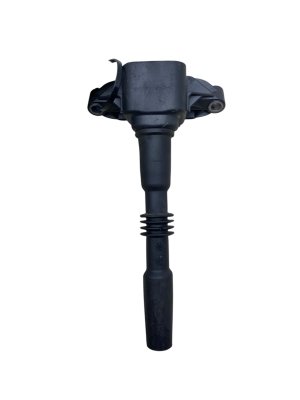
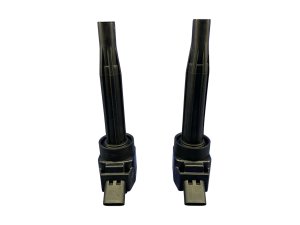
- Faulty Ignition Coil 🔴 High Probability Coil-on-plug systems are a common failure point on most modern engines as they age. Heat and vibration eventually cause the internal windings to fail.
How to confirm: Swap the ignition coil from cylinder #3 with another cylinder (e.g., #1). Cylinder #3 is the middle cylinder on the passenger side (Bank 1). Clear the codes and drive the vehicle. If the code changes to P0301, the ignition coil is confirmed to be faulty.
Typical fix: Replace the faulty ignition coil. It is often recommended to replace all six coils at the same time, especially on higher mileage vehicles, as others may fail soon.
Est. part cost: $50-$100 per coil - Worn or Defective Spark Plug 🟡 Medium Probability Spark plugs are a regular maintenance item with a finite lifespan. A worn electrode, incorrect gap, carbon fouling, or a cracked porcelain insulator will prevent a strong spark, causing a misfire.
How to confirm: After ruling out the ignition coil, remove the spark plug from cylinder #3. Inspect it for excessive wear, carbon fouling, oil, or damage. Compare it to a new plug or a plug from a working cylinder.
Typical fix: Replace the spark plug in cylinder #3. It is best practice to replace all six spark plugs at the same time to ensure even performance and to follow the manufacturer's service interval.
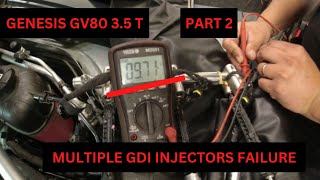
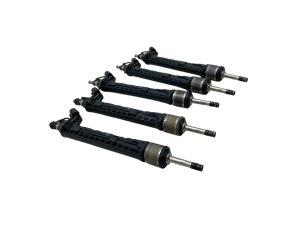
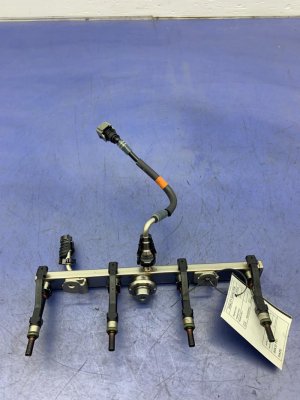
Est. part cost: $15-$30 per plug - Clogged or Faulty Fuel Injector ⚪ Low Probability As a GDI engine, the fuel injectors operate under very high pressure and can be susceptible to clogging or electronic failure. A technician in a YouTube video documented multiple GDI injector failures on a 3.5T GV80, identifying one with an open circuit via a resistance test. A Reddit user with a 2022 GV80 reported a bad fuel injector at only 3,000 miles, and a Genesis technician on the same forum noted that injector failures are a common issue they see.
How to confirm: A professional can use a scan tool to monitor fuel trims and perform an injector balance test. A multimeter can be used to check the resistance of the injector; a reading of 9-10 kOhms or higher indicates an open circuit, whereas a good injector should read around 2.2 ohms. TSBs for the related 2.5L GDI engine (e.g., 23-FL-002H) outline a pressure-drop test to identify leaking injectors, a similar principle would apply here.
Typical fix: Replace the faulty fuel injector. This is a more involved job on a GDI engine and may require replacing high-pressure fuel lines and seals as well.
Est. part cost: $100-$250 per injector - Carbon Buildup on Intake Valves ⚪ Low Probability While the 3.5T engine has a dual injection system (GDI + MPI) which should help keep valves clean, significant carbon buildup can still occur. Oil vapor from the PCV system can bake onto the valves, restricting airflow and causing turbulence that leads to misfires, rough idle, and hesitation.
How to confirm: Diagnosis typically requires a borescope to visually inspect the back of the intake valves. This is usually done after ruling out ignition and fuel delivery issues.
Typical fix: A 'walnut blasting' service is performed, where crushed walnut shells are used as a media to safely blast the carbon off the valves without damaging the engine. Some shops also offer chemical cleaning services.
Est. part cost: $0 (service-based)
Rare But Worth Checking
- Vacuum Leak: A leak in a vacuum hose or intake manifold gasket near cylinder #3 can lean out the air/fuel mixture and cause a misfire. This can be tested with a smoke machine.
- Low Engine Compression: This is a serious mechanical issue, such as a bad valve, worn piston rings, or a damaged cylinder wall. A compression test is needed to diagnose this and would likely be accompanied by other symptoms like smoke from the exhaust or high oil consumption.
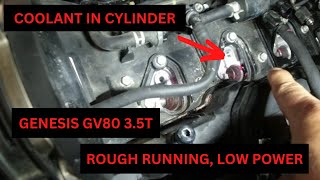
- Internal Coolant Leak (Water-Cooled Intercooler): A technician documented a case on a 3.5T GV80 where a misfire returned after an ignition coil replacement. A borescope inspection revealed coolant inside the cylinder. The suspected cause was a leak from the water-cooled intercooler allowing coolant to enter the intake tract.
Diagnosis Steps
- Read the trouble codes with an OBD-II scanner and confirm P0303 is present. Note any other codes.
- Check for a flashing check engine light, which indicates a severe misfire that could damage the catalytic converter.
- To test the ignition coil, swap the coil from cylinder #3 with an easily accessible coil from another cylinder (e.g., cylinder #1). Cylinder #3 is the middle cylinder on the passenger side (Bank 1).
- Clear the codes, start the engine, and let it run or drive it briefly.
- Re-scan for codes. If the code has moved to P0301, the ignition coil is the culprit and needs to be replaced.
- If the code remains P0303, the next step is to inspect the spark plug. Remove the plug from cylinder #3.
- Examine the spark plug for wear, fouling, or damage. If it looks bad, replace it. It's best to replace all six plugs at once for consistent performance.
- If the coil and plug are good, the issue may be with the fuel injector. Test the injector's resistance with a multimeter. A good injector should read around 2.2 ohms, while a reading in the kOhm range indicates failure.
- If ignition and fuel components check out, use a borescope to inspect the cylinder for coolant, which could indicate a leaking water-cooled intercooler.
- A technician can check for vacuum leaks near cylinder #3's intake runner using a smoke machine.
- As a final step if all else fails, a mechanical compression test should be performed on cylinder #3 to check for internal engine problems.
Parts You'll Likely Need
- Ignition Coil — This is the most frequent cause of a single-cylinder misfire on modern engines.
Trusted brands: Bosch, Delphi, NGK, OEM Genesis
OEM price range: $80-$120
Aftermarket price range: $50-$90 - Spark Plug
(OEM #18877-09085)— Spark plugs are a routine wear item and a common cause of misfires if neglected.
Trusted brands: NGK, Denso, OEM Hyundai/Genesis
OEM price range: $25-$40
Aftermarket price range: $15-$30 - High-Pressure Fuel Injector — While less common than ignition parts, injector failure is a known issue on some GDI engines and can cause a persistent P0303.
Trusted brands: OEM Genesis, Bosch
OEM price range: $150-$250
Aftermarket price range: $100-$180
Related Codes That Often Appear With This One
- P0300 — If the misfire is intermittent or begins to affect other cylinders, a P0300 (Random/Multiple Cylinder Misfire) may be stored alongside P0303.
- P0301, P0302, P0304, P0305, P0306 — If there is a systemic problem like a large vacuum leak, bad fuel, or clogged catalytic converter, misfires may occur on other cylinders as well.
Technical Service Bulletins (TSBs) & Recalls
- TSB #23-FL-002H-1 (for 2.5L GDI engine): Provides diagnostic procedure for misfire DTCs caused by internally leaking GDI injectors. While not for the 3.5T, it shows a pattern of this failure type.
- TSB #23-TR-005H: Describes inspection and repair for a rear differential noise condition on GV70, GV80, and G80 models.
Platform-Specific Known Issues
- While multiple NHTSA TSBs (e.g., #23-FL-002H-1) mention misfire codes including P0303 for Genesis vehicles, they are specifically for the 2.5L T-GDI engine and address ECM updates or leaking injectors. These TSBs do not officially apply to the 3.5T V6 engine but highlight a known sensitivity to injector issues within the brand's GDI engine family.
- NHTSA Recall 22V231000 was issued for the 2021-2022 GV80 for a failing low-pressure fuel pump, which can cause stalling and loss of power. While this would typically set fuel pressure codes, severe fuel starvation could potentially contribute to misfire symptoms.
- A technician documented a complex misfire case on a 3.5T GV80 that started with an intermittent misfire, progressed to an open circuit on an injector, and was later suspected to involve a coolant leak from the water-cooled intercooler into the cylinders.
Mechanic-Grade Diagnostic Values
- GDI Fuel Injector Resistance — expected: ~2.2 ohms. Failure: A reading of 9.0 kOhms or higher indicates an open circuit within the injector.
- Fuel Injection Pressure (High Pressure) — expected: Up to 250 bar (3625 psi). Failure: Significantly lower pressure under load could indicate a failing high-pressure fuel pump (HPFP).
- Engine Oil Capacity — expected: 7.4 quarts (with filter). Failure: N/A - Maintenance Information
- Engine Compression Ratio — expected: 11.0:1. Failure: A compression test showing one cylinder significantly lower than others indicates a mechanical engine problem.
Scan Tool Commands That Help
- Genesis GDS-M: Misfire Counter Data — To view live misfire counts for each individual cylinder to confirm which one is actively misfiring, even if the code is intermittent.
- Genesis GDS-M: ECU Upgrade (Auto Mode) — To apply any available software updates to the Engine Control Module, which can sometimes resolve misfire logic issues. This is a common procedure for many Hyundai/Genesis DTCs.
Wiring & Ground Locations
- Cylinder Numbering — Bank 1 (Passenger Side, front to back): Cylinders 1, 3, 5. Bank 2 (Driver Side, front to back): Cylinders 2, 4, 6.. Correctly identifying Cylinder #3 as the middle cylinder on the passenger side is critical for swapping coils, checking plugs, and testing the correct injector and wiring.
- ECM (Engine Control Module) — Generally located in the engine bay, often near the battery or firewall, housed in a protective casing.. The ECM is the source of the P0303 code. All wiring for the ignition coils and fuel injectors originates here. Checking for clean, tight connections at the ECM is a valid, though less common, diagnostic step.
Real Owner Repair Stories
- YouTube channel 'Gears and Tech' (2021 Genesis GV80 3.5T) — Intermittent misfire on first startup, check engine light. Initially a cylinder 2 misfire code, which moved to cylinder 4 after swapping coils.
❌ Tried (didn't work) The initial diagnosis pointed to an ignition coil, as swapping it moved the misfire code from P0302 to P0304.
✅ What actually fixed it The final fix was replacing the faulty ignition coil on cylinder 4 (which was originally from cylinder 2). The coil swap successfully isolated the failing component. - YouTube channel 'Gears and Tech' (Genesis GV80 3.5T (year not specified, but same vehicle as other story)) — Comeback repair for a persistent, rough running misfire with a flashing check engine light after a previous repair.
❌ Tried (didn't work) Ignition coil replacement, cleaning coolant from the cylinder provided a temporary fix.
✅ What actually fixed it The technician found multiple GDI fuel injectors had failed (tested open with a multimeter). After replacing the injectors and all 6 spark plugs, the misfire was resolved. The root cause of the initial coolant in the cylinder was suspected to be a leak from the water-cooled intercooler.
Model Year Variations Within This Range
- 2023-2025 (with e-Supercharger): Starting with the G90 and GV80 Coupe, a version of the 3.5T engine includes a 48V electric supercharger. While this system primarily aids low-RPM torque and shouldn't directly cause a single-cylinder misfire, its integration adds complexity to the engine's electrical and intake systems.
Diagnostic Flowchart
Other Known Issues on This Vehicle
Issues unrelated to this code that are worth knowing about as an owner of this generation:
- Rear Differential Noise 🟠 Medium — Reported in multiple model years. A whining or grinding noise may occur during acceleration or deceleration. (Ref: Genesis TSB 23-TR-005H describes the inspection and repair procedure, which may involve tightening a lock nut or replacing the differential assembly.)
- Low-Pressure Fuel Pump Failure 🔴 High — Affects certain 2021-2022 models. Can result in a sudden loss of drive power. (Ref: NHTSA Recall #22V231000. Dealers will replace the low-pressure fuel pump assembly free of charge.)
- Exploding Seatbelt Pretensioners 🔴 High — Affects certain 2021-2022 models. In a crash, the pretensioner can deploy abnormally and project metal fragments. (Ref: NHTSA Recall #21V796000. Dealers will install protective caps on the pretensioners.)
- Premature Battery Failure 🟡 Low — Anecdotally reported by owners and technicians, especially if the vehicle is not driven frequently, leading to various electrical issues. (Ref: No specific TSB, but mentioned in forums. A Hyundai/Genesis technician noted that batteries 'go bad on GV80s if they aren't driven a lot'.)
- Spontaneously Cracking Windshields 🟡 Low — Multiple owner complaints to NHTSA describe the windshield being unusually susceptible to cracking from minor impacts. (Ref: No TSB or recall, but a documented pattern of owner complaints.)
Used vs. New Parts: Buying Guide for This Vehicle
When a used part is the smart pick: For a P0303 code, using a tested, low-mileage used ignition coil from a reputable salvage yard is a reasonable cost-saving measure. Since it's an easy part to swap, the labor risk is low if the used part is faulty.
Donor-vehicle mileage cap: roughly under 50000 miles for the part to have meaningful remaining life.
What to inspect on the donor part:
- Check for cracks, corrosion on the electrical connector, or damage to the boot.
- Ask for the VIN of the donor vehicle to verify mileage and ensure it's from the same engine type.
- Prefer parts from vehicles with documented front-end damage over ones with unknown engine failure.
OEM-only on this vehicle (don't cheap out):
- High-Pressure Fuel Injector: Due to the precision and high pressures involved in a GDI system, and the critical nature of fuel delivery, using new OEM injectors is strongly recommended to avoid repeat failures and potential engine damage.
- Spark Plugs: These are inexpensive wear items; there is no benefit to using used spark plugs.
Aftermarket brands forum-validated for this vehicle:
- Ignition Coils: NGK, Bosch, Delphi are generally considered reliable alternatives to OEM.
- Spark Plugs: NGK and Denso are often the original equipment manufacturers and are excellent choices.
Brands owners have reported issues with on this vehicle:
- Avoid unbranded, 'white-box' ignition coils and fuel injectors from online marketplaces, as their quality control is often poor and can lead to premature failure.
Real Owner Stories
Aggregated from forums and TSBs cited above. Mileages and costs reflect what owners reported in those sources.
2022 Genesis GV80 3.5T — 3000 miles
Symptoms: Misfire symptoms leading to a diagnosis of a bad fuel injector.
What fixed it: Replacement of the faulty fuel injector.
Source hint: Reddit r/GenesisMotors - Comment by user Wobblez9 (Hyundai/Genesis Tech)
2021 Genesis GV80 3.5T
Symptoms: Intermittent misfire that progressed to an open circuit on an injector and was later suspected to involve a coolant leak into the cylinders.
What fixed it: Diagnosis identified an open circuit on an injector (resistance test) and a potential leak from the water-cooled intercooler.
Source hint: Technician documented case
Related OBD-II Codes
Frequently Asked Questions
Does TSB #23-FL-002H-1 apply to my 3.5T GV80?
Where is cylinder #3 located on the 3.5T V6 engine?
Could the low-pressure fuel pump recall cause my P0303 misfire?
How can I tell if my P0303 is caused by a faulty injector or a bad ignition coil?
Is carbon buildup a concern for the 3.5T engine even though it has dual injection?
Can a coolant leak cause a P0303 code on this vehicle?
Helpful Videos
We Have This Part in Stock


The information in this article is provided for general reference and educational purposes only. Vehicle specifications, procedures, and part compatibility can vary by production date, trim level, and region. Always consult your vehicle's factory service manual and verify part numbers before purchasing or performing repairs. Safety-critical components such as airbags, seat belts, and braking systems should be installed by a qualified professional.
- Genesis GV80:
- 🎬 Helpful Videos
- 🛍️ Shop This Part
- What's Unique About the 2021-2025 Genesis GV80
- Symptoms You May Notice
- Most Likely Causes
- Rare But Worth Checking
- Diagnosis Steps
- Parts You'll Likely Need
- Related Codes That Often Appear With This One
- Technical Service Bulletins (TSBs) & Recalls
- Platform-Specific Known Issues
- Mechanic-Grade Diagnostic Values
- Scan Tool Commands That Help
- Wiring & Ground Locations
- Real Owner Repair Stories
- Model Year Variations Within This Range
- Diagnostic Flowchart
- Other Known Issues on This Vehicle
- Used vs. New Parts: Buying Guide for This Vehicle
- Real Owner Stories
- 2022 Genesis GV80 3.5T — 3000 miles
- 2021 Genesis GV80 3.5T
- Related OBD-II Codes
- Frequently Asked Questions
- 🎟️ Get 5% Off