

P0303 on 2019-2025 Ford Ranger: Cylinder 3 Misfire Causes and Fixes
P0303 on a 2019-2025 Ford Ranger almost always indicates a failed ignition coil or spark plug in cylinder 3, often caused by water leaking into the spark plug well from a faulty cowl seal. Expect to pay $40-$100 for a new coil and plug, a straightforward DIY fix. Ford has issued TSB 23-2011 to address the water leak.
- P0303 on a 2019-2025 Ranger is a misfire in cylinder 3, the third cylinder from the front of the engine.
- The most likely cause, especially on 2019-2022 models, is water leaking from the cowl into the spark plug well, destroying the ignition coil and spark plug.
- Diagnosis is straightforward: check for water in the plug well and swap the cylinder 3 ignition coil with another cylinder to see if the fault code moves.
- The fix is DIY-friendly and typically involves replacing the coil and plug for cylinder 3 and applying dielectric grease.
- Do not ignore a flashing check engine light, as it signals a severe misfire that can quickly damage your expensive catalytic converter.
What's Unique About the 2019-2025 Ford RANGER
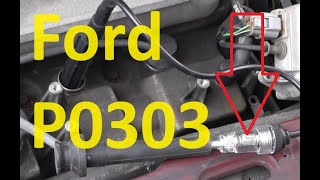
On the 2019-2022 Ranger, the most notorious cause for a P0303 misfire is water intrusion. A poor cowl seal at the base of the windshield allows water to drip directly onto the engine and pool in the spark plug wells, shorting out the ignition coil and corroding the spark plug. Ford has issued multiple Technical Service Bulletins (TSBs) acknowledging this specific problem, with TSB 23-2011 being the most prominent. The official fix involves replacing damaged components and installing an engine appearance cover that was deleted on some model years to act as a shield. While later models may have this addressed, standard ignition component failure remains a common cause 🎬 Watch: A breakdown of common causes for the P0303 code across all years, as noted in a TSB for 2025 models. [SSM 53971]
Diagnostic Flowchart
Tap your situation to follow the diagnostic path that matches what you're seeing on this vehicle.
Symptoms You May Notice
- Check Engine Light is on or flashing
- Rough or shaky idle
- Engine hesitation or stumbling during acceleration
- Noticeable loss of engine power
- Reduced fuel economy
- Smell of raw fuel from the exhaust
- Engine shaking or shuddering, especially when stopped or accelerating from a stop.
- Replacing only the spark plug without checking for water or testing the ignition coil. If water caused the initial failure, the new plug may soon fail as well if the coil is damaged or the well is still wet.
- Assuming a fuel injector is bad when the PCM has intentionally disabled it due to a severe ignition-related misfire.
Most Likely Causes
- Water in Spark Plug Well #3 🔴 High Probability A design flaw in the cowl panel seal on 2019-2022 models allows rainwater or car wash water to leak directly into the spark plug wells. This is well-documented by owners on forums like Ranger5G.com and acknowledged by Ford in multiple TSBs. [TSB 23-2011, SSM 51239, SSM 51051, TSB 21-2147] The leak often occurs at the seam between the two plastic cowl pieces. Parking nose-down can exacerbate the problem.
How to confirm: Remove the ignition coil from cylinder 3. Visually inspect the well for any signs of moisture, rust, or corrosion on the coil boot and spark plug. A borescope can be used to see the top of the piston, which may appear steam-cleaned from water/coolant.
Typical fix: Thoroughly dry the spark plug well using compressed air. Replace the ignition coil and the spark plug in cylinder 3, as they are likely damaged by the water. Apply dielectric grease to the inside of the new coil boot to seal it against the spark plug. Ford's official fix under TSB 23-2011 also includes installing an engine appearance cover. Some owners perform a DIY fix by sealing the cowl seam with butyl tape or placing foam pipe insulation over it to divert water.
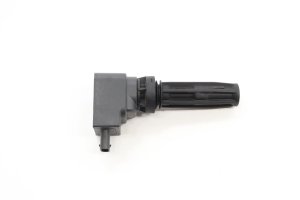
Est. part cost: $40-$100 - Failed Ignition Coil 🔴 High Probability Coil-on-plug systems are common failure points. The issue is exacerbated by the water leak problem on this truck, which can short out the coil. A 2025 model year TSB also points to ignition coils as a primary cause of misfires. [SSM 53971] The OEM Motorcraft part number is DG-576.
How to confirm: Swap the ignition coil from cylinder 3 with another cylinder (e.g., cylinder 2). Clear the codes and run the engine. If the code changes to P0302, the ignition coil is faulty.
Typical fix: Replace the failed ignition coil. It is held in by a single 8mm bolt. Torque the new bolt to 10 Nm (89 lb-in).
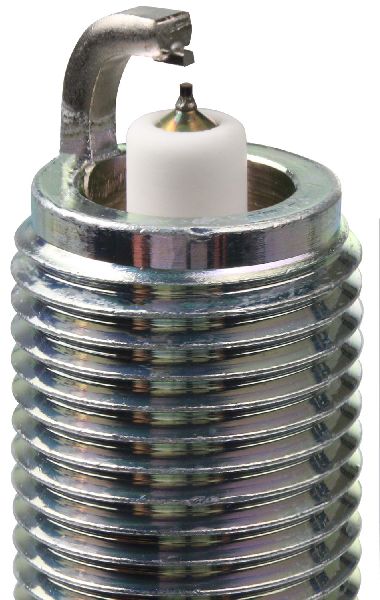
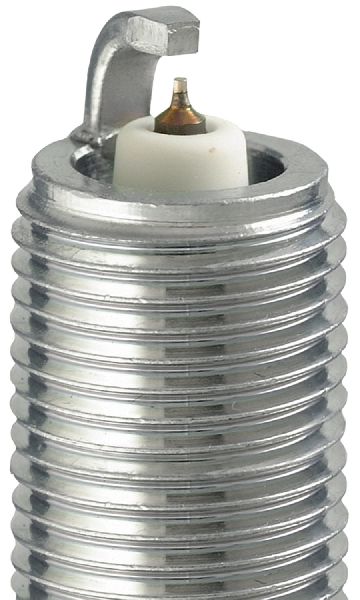
Est. part cost: $30-$80 - Worn or Fouled Spark Plug 🟡 Medium Probability Spark plugs are a regular maintenance item. If they are original and have high mileage, or have been contaminated by water, they can easily cause a misfire. [SSM 53971] If water intrusion is severe and prolonged, the plug can corrode and seize in the cylinder head, potentially requiring head replacement if it breaks during removal.
How to confirm: After removing the ignition coil, remove the spark plug from cylinder 3. Inspect it for wear, carbon buildup, oil fouling, or corrosion from water. The porcelain insulator may be cracked.
Typical fix: Replace the spark plug. It is recommended to replace all four spark plugs at the same time 🎬 See this quick 20-minute spark plug and air filter walkthrough for even performance. Ford specifies not to remove plugs when the engine is hot to avoid thread damage.
Est. part cost: $10-$25 per plug - Faulty Fuel Injector ⚪ Low Probability
How to confirm: If ignition components are confirmed good, listen to the injector with a mechanic's stethoscope to ensure it's clicking. You can also test its resistance with a multimeter or have it professionally flow-tested. A scan tool may show an injector circuit code like P0203.
Typical fix: Replace the fuel injector for cylinder 3. The PCM may disable the injector during a severe misfire to protect the catalytic converter, so it's important to confirm the injector is the cause and not a symptom.
Est. part cost: $50-$150
Rare But Worth Checking
- Low Engine Compression: This indicates a more serious internal engine problem, such as a bad valve, worn piston rings, or a leaking head gasket. A compression test is needed to diagnose this. Some 2.3L EcoBoost engines have experienced head gasket failures, which can present with a misfire and coolant loss.
- Vacuum Leak: A vacuum leak can introduce unmetered air and cause a lean misfire. While it often causes random misfires (P0300), a leak near the intake runner for cylinder 3 could isolate the issue.
Diagnosis Steps
- Read the trouble codes with an OBD-II scanner. Note any other codes present, especially P0316 or other cylinder misfires.
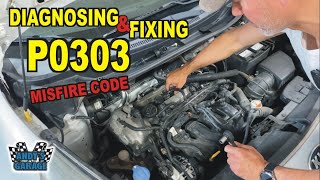
- Identify cylinder 3. On the 2.3L EcoBoost, 🎬 Watch: Step-by-step guide to diagnosing and fixing a P0303 misfire the cylinders are numbered 1-2-3-4 from front (radiator) to back (firewall). Cylinder 3 is the third one back from the front of the truck.
- Swap the ignition coil from cylinder 3 to another cylinder (e.g., cylinder 2). This is the easiest first step.
- Clear the codes, start the engine, and see if the misfire code moves to the new cylinder (e.g., P0302). If it does, the ignition coil is bad and needs replacement.
- If the code remains P0303, remove the coil and inspect the spark plug well for water, oil, or corrosion. This is a critical step for this vehicle, especially after rain or a car wash.
- If water is present, dry the well completely. Replace both the spark plug and ignition coil for cylinder 3, as both are likely compromised. Inspect the cowl area for the source of the leak.
- If no water is present, remove and inspect the spark plug. Replace if it appears worn, fouled, or damaged. Check the gap.
- If ignition components are good, investigate the fuel injector for cylinder 3 by listening for its operation or testing its electrical circuit.
- If all else fails, perform an engine compression test to check for mechanical issues like a leaking head gasket, which is a known, though less common, issue on this engine family.
Parts You'll Likely Need
- Ignition Coil (Coil-on-Plug)
(OEM #DG-576)— This is the most common failure part for a P0303 code, especially when damaged by water intrusion. [21, SSM 53971]
Trusted brands: Motorcraft, Delphi, NGK, Standard Motor Products
OEM price range: $60-$90
Aftermarket price range: $30-$60 - Spark Plug
(OEM #SP-578)— A worn or fouled spark plug is a primary cause of misfires. It should always be replaced if it has been submerged in water. [SSM 53971]
Trusted brands: Motorcraft, NGK, Bosch
OEM price range: $10-$15
Aftermarket price range: $8-$12 - Dielectric Grease — Applying to the coil boot helps seal out moisture and prevent future corrosion, a crucial step on this vehicle.
Trusted brands: Permatex, CRC
OEM price range: $5-$10
Aftermarket price range: $5-$10 - Engine Appearance Cover Kit
(OEM #M-9680-RA23 (Ford Performance Kit))— This is part of Ford's official fix in TSB 23-2011 to shield the spark plug wells from water. It was deleted on some model years. The kit includes the cover, studs, and nuts.
Related Codes That Often Appear With This One
- P0300 — If the cause (like a vacuum leak or the water issue) affects multiple cylinders, a P0300 (Random Misfire) may be stored alongside the specific cylinder code.
- P0301, P0302, P0304 — These codes indicate misfires in other cylinders. Seeing them together with P0303 strongly points to a systemic issue like the cowl water leak, bad fuel, or a major vacuum leak. TSB 23-2011 specifically lists these codes as related to the water intrusion issue.
- P0316 — This code means 'Misfire Detected on Startup (First 1000 Revolutions)' and is often seen with other P030x codes on Fords, as noted in several TSBs. It indicates the misfire is present immediately when the engine starts.
Technical Service Bulletins (TSBs) & Recalls
- SSM 53971: Notes that 2025 models with the 2.3L EcoBoost may exhibit misfire codes (P0301-P0304) due to spark plugs and/or ignition coils.
- TSB 23-2011: Addresses misfire DTCs on 2019-2022 Rangers due to water buildup in spark plug wells. The service procedure is to resolve the misfire (replace plug/coil as needed) and install an engine appearance cover.
- SSM 51239 / SSM 51051 / TSB 21-2147: Earlier bulletins that also address the water intrusion and misfire issue, superseded by TSB 23-2011.
Platform-Specific Known Issues
- Cowl Water Leak: Multiple TSBs (TSB 23-2011, SSM 51239, etc.) confirm that a poor seal at the base of the windshield can cause water to enter the spark plug wells, leading to misfires. The leak often originates from the seam where the two-piece plastic cowl joins. Ford's official fix involves installing an engine cover that was deleted on some model years. Some owners have created DIY fixes using foam pipe insulation or silicone/butyl sealant on the cowl seam to prevent this.
- Seized Spark Plugs: A severe consequence of the water leak is advanced corrosion that can cause the spark plug to seize in the aluminum cylinder head. Attempts to remove a seized plug can result in it breaking, necessitating a costly cylinder head replacement. It is recommended to address any water intrusion promptly and use caution when removing plugs from a potentially affected engine.
Mechanic-Grade Diagnostic Values
- Spark Plug Resistance — expected: ~5000 Ohms. Failure: Significantly higher or infinite resistance (open circuit).
- Spark Plug Gap — expected: 0.7–0.8 mm (0.027-0.031 in). Failure: Gap outside of this range can lead to weak spark and misfires.
- Low-Side Fuel Pressure (Key On, Engine Off) — expected: Varies by specific vehicle, but a sample test on a similar truck showed ~50 PSI.. Failure: Significantly lower pressure (e.g., 25 PSI) could indicate a weak fuel pump or clogged filter.
- Low-Side Fuel Pressure (Engine Idling) — expected: Typically slightly lower than KOEO pressure; a sample test showed 30-35 PSI.. Failure: Pressure that is very low or fluctuates wildly can indicate a failing pump or a clogged fuel filter.
Hidden / Shadow Codes Worth Checking
- Mode $06, Test ID $53: This is not a trouble code but a diagnostic monitor that tracks misfire counts per cylinder. It can show misfires happening even before they are frequent enough to trigger a P0303 code and illuminate the Check Engine Light. (see via Requires a scan tool capable of reading Mode $06 data. The data will be listed by Test ID (TID) and Component ID (CID). For Ford, TID $53 is for cylinder-specific misfire counts, and CID $01 through $04 would correspond to cylinders 1 through 4.)
Scan Tool Commands That Help
- Ford IDS, FORScan, high-end Snap-on/Autel scanners: Power Balance Test — This is a powerful bidirectional test to pinpoint a weak cylinder when a misfire is felt but the cause is unclear. The tool disables one cylinder at a time (by cutting fuel) and graphically displays the RPM drop for each. A cylinder that shows little to no RPM drop when disabled is not contributing power, confirming it's the source of the misfire. This is extremely useful for confirming a P0303 is accurate and not a sensor error.
Wiring & Ground Locations
- Cylinder 3 Firing Order — The 2.3L EcoBoost engine has a firing order of 1-3-4-2. The cylinders are numbered 1-2-3-4 from the front (radiator) to the back (firewall).. Correctly identifying cylinder #3 (the third cylinder from the front) is the first step to any diagnosis.
- Ignition Coil Connector C1E305 (Cylinder 3) — The electrical connector on the ignition coil for cylinder 3.. This connector supplies power and the trigger signal from the PCM. A wiring diagram for a similar Ford Ranger shows Pin 1 (BU-OG wire) is the signal from the PCM and Pin 2 (WH-OG wire) is the power feed. Checking for power and signal here is a key diagnostic step if a new coil doesn't fix the issue.
- Engine Block / Cylinder Head Grounds — There are multiple ground straps and connection points between the engine block/head and the vehicle's chassis/firewall.. A poor engine ground can cause a weak spark across all cylinders, potentially leading to intermittent misfires. While less likely to isolate to a single cylinder, checking that the main ground straps are clean and tight is a fundamental step in diagnosing any ignition issue.
OEM Part Supersession History
JX6Z-12029-A→JX6Z-12029-B— Part revision by the manufacturer, likely for improved durability or performance.CM5Z-12029-A→CM5Z-12029-K— Part revision for a similar coil used in other Ford applications, indicating a pattern of updates.
Heads up: This is for a different but related part number, showing Ford's practice of superseding ignition components.
Model Year Variations Within This Range
- 2024-2025: For the 2024 model year, the Ranger underwent a significant refresh. While the base engine remains the 2.3L EcoBoost I-4, a 2.7L EcoBoost V6 became available as an option. The exterior and interior were completely redesigned. While the base 2.3L engine specifications are identical, it's possible that changes to the cowl and engine bay design may affect the water intrusion issue seen in earlier 2019-2022 models.
Helpful Videos
Used OEM Parts in Stock


New Aftermarket Parts Available

The information in this article is provided for general reference and educational purposes only. Vehicle specifications, procedures, and part compatibility can vary by production date, trim level, and region. Always consult your vehicle's factory service manual and verify part numbers before purchasing or performing repairs. Safety-critical components such as airbags, seat belts, and braking systems should be installed by a qualified professional.
- Ford RANGER:
- 🎬 Helpful Videos
- 🛍️ Shop This Part
- What's Unique About the 2019-2025 Ford RANGER
- Diagnostic Flowchart
- Symptoms You May Notice
- Most Likely Causes
- Rare But Worth Checking
- Diagnosis Steps
- Parts You'll Likely Need
- Related Codes That Often Appear With This One
- Technical Service Bulletins (TSBs) & Recalls
- Platform-Specific Known Issues
- Mechanic-Grade Diagnostic Values
- Hidden / Shadow Codes Worth Checking
- Scan Tool Commands That Help
- Wiring & Ground Locations
- OEM Part Supersession History
- Model Year Variations Within This Range
- 🎟️ Get 5% Off