

P0303 on 2016-2017 Ford F-150 2.7L EcoBoost: Cylinder 3 Misfire Causes and Fixes
P0303 on a 2.7L EcoBoost F-150 is most often caused by a bad ignition coil or a worn spark plug on cylinder 3. It's a common DIY fix, with parts costing between $40 and $100. Always swap the coil to another cylinder first to confirm it's the cause before buying parts. For 2016-2017 models with specific build dates, this code can also be a symptom of a more serious internal engine issue (TSB 19-2384) causing oil consumption.
- P0303 specifically identifies a misfire on cylinder 3, the rear cylinder on the passenger side.
- The most likely cause is a bad ignition coil, followed by a worn spark plug.
- Always diagnose by swapping the cylinder 3 coil with another cylinder's coil to see if the misfire code follows.
- For trucks built between April 2016 and January 2017, P0303 accompanied by high oil use or blue smoke is a strong indicator of the serious valve guide issue covered by TSB 19-2384.
What's Unique About the 2016-2017 Ford F-150

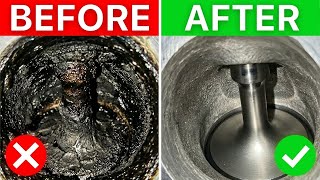
The 2.7L EcoBoost is a twin-turbocharged and direct-injected (GDI) engine. This technology puts more stress on ignition components, often leading to a shorter lifespan for spark plugs compared to non-turbo engines. Additionally, some 2016-2017 models were subject to a Technical Service Bulletin (TSB 19-2384) for excessive oil consumption due to cylinder head valve guide issues, which could foul spark plugs and lead to misfire codes like P0303. The GDI design also makes the intake valves susceptible to carbon buildup over time, as they are not cleaned by fuel spray, which can restrict airflow and cause misfires.
Symptoms You May Notice
- Rough idle or shaking, especially at a stop
- Hesitation or stumbling during acceleration
- Noticeable loss of power 🎬 Watch: A breakdown of P0303 causes and common fixes
- Flashing or solid Check Engine Light
- Reduced fuel economy
- Feeling of jerks or thuds under load, like passing or going up a hill
- Smell of fuel from the exhaust
- Replacing spark plugs without first swapping the ignition coil. The coil is a very common failure point and swapping it is a free, definitive diagnostic step.
- Chasing ignition or fuel issues when the vehicle falls within the build dates for TSB 19-2384 and is also exhibiting high oil consumption and blue smoke.
Most Likely Causes

- Faulty Ignition Coil 🔴 High Probability The coil-on-plug design is a frequent failure point on many modern engines, including the EcoBoost. Heat and vibration lead to eventual failure, and forum discussions frequently cite a bad coil as the fix for a P0303 code.
How to confirm: Swap the ignition coil from cylinder 3 with another cylinder (e.g., cylinder 1). Clear the codes and drive. If the code changes to P0301, the coil is bad. This is the definitive, no-cost first diagnostic step.
Typical fix: Replace the faulty ignition coil. It is held on by a single 8mm bolt.
Est. part cost: $30-$75 - Worn or Fouled Spark Plug 🔴 High Probability Turbocharged engines are harder on spark plugs, requiring more frequent changes. A plug can also be fouled by oil if the engine has the valve guide issue noted in TSB 19-2384. Some owners on forums have also noted that an incorrect spark plug gap can cause misfires under load.
How to confirm: After confirming the coil is good, remove the spark plug from cylinder 3. Inspect for wear (worn electrode), cracks in the porcelain, or black/oily deposits. The correct gap is critical; check it against OEM specs.
Typical fix: Replace the spark plug. It is recommended to replace all six spark plugs 🎬 See this step-by-step spark plug replacement walkthrough at the same time for even performance. Ensure they are gapped correctly.
Est. part cost: $8-$20 per plug - Faulty Fuel Injector 🟡 Medium Probability Direct injection (GDI) systems operate under very high pressure, and injectors can become clogged or fail electronically. A stuck-open injector can flood the cylinder with fuel, causing a misfire and other codes.
How to confirm: This is more difficult to diagnose. A professional can perform a fuel injector balance test. A DIY method involves swapping injectors between cylinders, but this is more labor-intensive than swapping coils and requires care due to the high-pressure fuel system.
Typical fix: Replace the faulty fuel injector for cylinder 3.
Est. part cost: $50-$150
Rare But Worth Checking
- Internal Engine Damage (Valve Guides): For 2016-2017 models built between April 1, 2016, and Jan 1, 2017, Ford issued TSB 19-2384 for a condition where faulty cylinder head valve guides could cause excessive oil consumption, rough idle, and misfires. If your truck has these symptoms along with P0303, blue exhaust smoke, and oil consumption greater than 1 quart per 3,000 miles, this TSB may apply. The fix is a cylinder head replacement, which is a major repair.
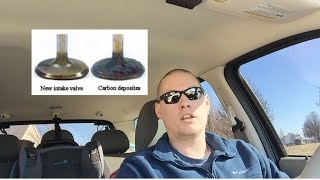
- Intake Valve Carbon Buildup: Direct injection engines spray fuel directly into the cylinder, so gasoline detergents don't clean the intake valves. Over time, carbon can build up, restricting airflow and causing misfires, hesitation, and rough idle. This typically requires professional cleaning (e.g., walnut blasting) 🎬 Watch: What you need to know about EcoBoost carbon deposits, which can cost $400-$600.
- Intercooler Condensation: On EcoBoost engines, a mixture of oil and water vapor can accumulate in the intercooler, especially with short-trip driving. During hard acceleration, this liquid can be ingested by the engine, causing a sudden misfire. Some owners drill a small 'weep hole' in the intercooler to allow this to drain, though this is a modification and not a factory-approved fix.
Diagnosis Steps

- Confirm the code is P0303 using an OBD-II scanner. Check for other codes like P0300, P0316, or oil pressure codes (P0524, P06DD).
- Locate cylinder 3. On the 2.7L V6, it is the rearmost cylinder on the passenger side (right bank).
- Check your vehicle's build date on the driver's door jamb sticker. If it's between April 1, 2016, and Jan 1, 2017, be aware of TSB 19-2384 and monitor for high oil consumption or blue smoke.
- Swap the ignition coil from cylinder 3 with the coil from cylinder 1 (front cylinder, passenger side).
- Clear the codes with the scanner, then drive the vehicle until the check engine light returns.
- Re-scan for codes. If the code is now P0301, the ignition coil you moved is faulty and needs to be replaced.
- If the code remains P0303, the coil is likely good. The next step is to inspect the spark plug.
- Remove the spark plug from cylinder 3. Check for excessive wear, damage, or fouling (black, wet, or white deposits). An oil-fouled plug is a strong indicator of the TSB 19-2384 issue.
- If the plug is worn or fouled, replace it. It is best practice to replace all six plugs at once and ensure they are gapped to the correct specification.
- If the coil and spark plug are good, the issue may be a faulty fuel injector, carbon buildup on the intake valves, or a more complex mechanical problem, which may require professional diagnosis.
Parts You'll Likely Need
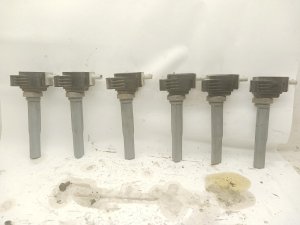
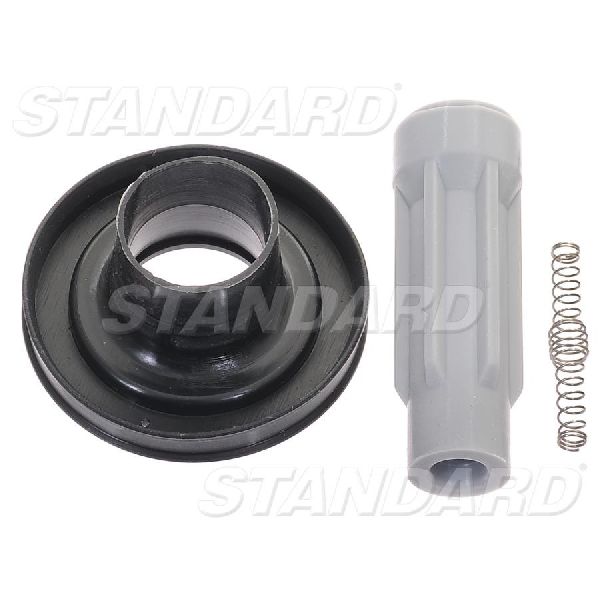
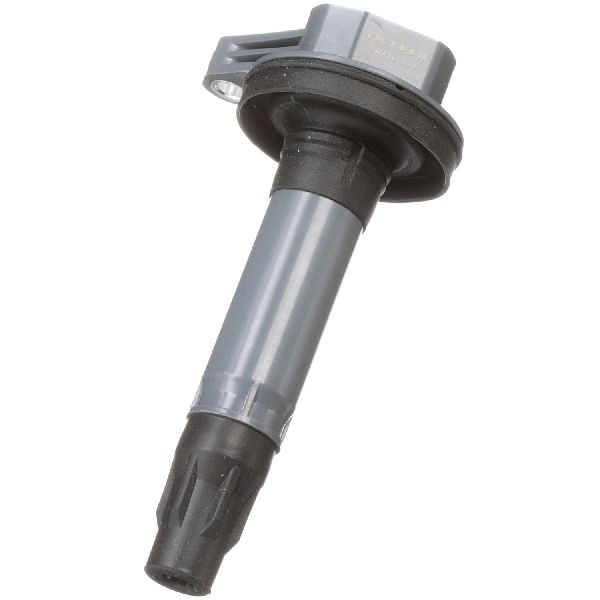
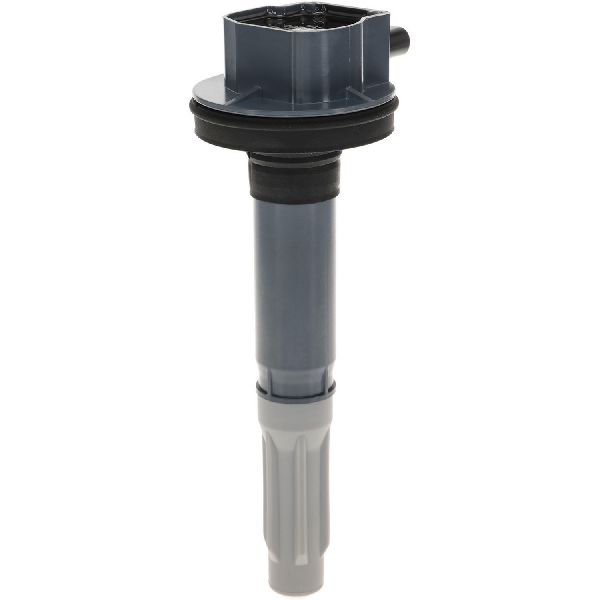
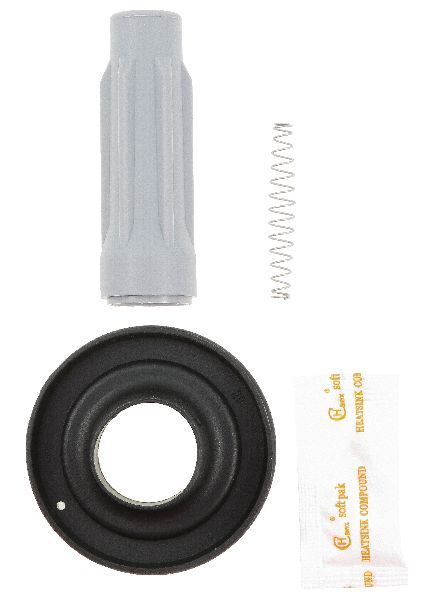
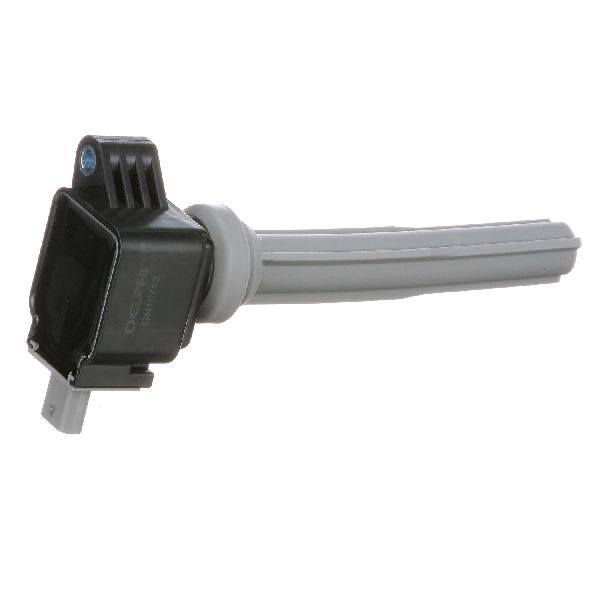
- Ignition Coil
(OEM #FT4Z-12029-A)— This is the most common cause of a single-cylinder misfire on this engine. The coil-on-plug design is subject to failure from heat and vibration.
Trusted brands: Motorcraft, NGK, Denso, Standard Motor Products
OEM price range: $40-$60
Aftermarket price range: $25-$50 - Spark Plug
(OEM #Motorcraft SP-594 (CYFS-12Y-RT3))— Spark plugs are a routine maintenance item that wear out faster in turbocharged engines. A worn or fouled plug cannot create a strong enough spark.
Trusted brands: Motorcraft, NGK, Champion
OEM price range: $12-$20
Aftermarket price range: $8-$15
Related Codes That Often Appear With This One
- P0300 — If the misfire becomes more widespread or random, a P0300 (Random/Multiple Cylinder Misfire) code may appear alongside the specific cylinder code.
- P0316 — This code indicates a misfire was detected within the first 1,000 engine revolutions on startup, and often appears with other P030x codes, especially if the issue is pronounced on a cold engine.
- P0524 / P06DD — These codes for 'Engine Oil Pressure Too Low' are specifically mentioned in TSB 19-2384. If seen with a P0303 on a 2016-2017 2.7L, it strongly points towards the valve guide/cylinder head issue.
Technical Service Bulletins (TSBs) & Recalls

- 19-2384: 2.7L EcoBoost - Oil Consumption, Rough Idle, Misfire With Or Without Blue Exhaust Smoke - Built On 1-Apr-2016 And Through 1-Jan-2017.
- 19-2243: A related TSB for other Ford/Lincoln models with the 2.7L/3.0L EcoBoost engine for the same oil consumption and misfire issue within the same build dates.
Platform-Specific Known Issues
- TSB 19-2384: Some 2016-2017 F-150s with the 2.7L engine built between 01-Apr-2016 and 01-Jan-2017 may experience excessive oil consumption, rough idle, and misfires (including P0303) due to a cylinder head valve guide issue. The fix is a cylinder head replacement.
- Carbon Buildup on Intake Valves: As a first-generation GDI engine, the 2016-2017 2.7L is prone to carbon deposits on the intake valves, which are not washed by fuel. This can cause misfires, especially on cold starts. The second-generation 2.7L (2018+) added port injection to mitigate this.
Mechanic-Grade Diagnostic Values
- Low-Pressure Fuel System Pressure (at idle) — expected: 51 - 87 psi (350 - 600 kPa). Failure: Pressure below this range indicates a failing in-tank fuel pump or fuel pump driver module.
- High-Pressure Fuel System Pressure (engine running) — expected: Up to 2175 psi (150 bar). Failure: Significantly lower pressure, especially under load, can cause lean misfires across multiple cylinders. May be accompanied by code P0087.
- Direct Fuel Injector Resistance — expected: 0.5 to 1.0 ohms. Failure: A reading outside this very narrow range indicates a faulty injector coil.
- Manual Compression Test — expected: ~150 PSI per cylinder (healthy engine). Failure: Ford's official specification is that the lowest cylinder must be at least 75% of the highest cylinder. A reading of 95 PSI when others are at 150 PSI indicates a significant mechanical issue.
Hidden / Shadow Codes Worth Checking
- Mode 6, Test ID $A3: This is not a standard DTC, but an onboard monitor that stores the raw count of misfire events for cylinder 3. It can confirm an intermittent misfire on cylinder 3 even if the count is not yet high enough to trigger the P0303 check engine light. (see via Requires an advanced OBD-II scanner or software like FORScan that can display Mode $06 test results.)
Scan Tool Commands That Help
- Ford IDS, FORScan, or equivalent professional scanner: Misfire Monitor Neutral Profile Correction — This is a mandatory relearn procedure after major engine or transmission repairs (e.g., timing chain, engine replacement). The PCM learns the crankshaft's rotational profile; failing to perform this relearn can cause the system to incorrectly flag false misfires, leading to codes like P0303 or P0300.
- Ford IDS or equivalent professional scanner: Power Balance Test — This test graphically displays the power contribution of each cylinder by measuring the drop in crankshaft speed. A cylinder that is misfiring will show a significantly smaller drop (or none at all) compared to healthy cylinders, helping to confirm the location of the misfire in real-time.
- Ford IDS or equivalent professional scanner: Relative Compression Test — This is a quick, non-invasive way to check for a mechanical compression issue without removing spark plugs. The test measures the electrical current drawn by the starter motor as it cranks the engine through each cylinder's compression stroke. A cylinder with low compression will show a noticeable variation (speeding up) compared to the others.
Wiring & Ground Locations
- G103 / G104 — Typically located on the lower front or side of the engine block, or on the inner fender near the battery.. These are primary engine block and chassis ground points. A loose or corroded connection here can cause unstable voltage and erratic signals for the ignition coils and PCM, potentially leading to misfire detection.
- C175B Connector at PCM — This is one of the main electrical connectors at the Powertrain Control Module (PCM), located in the engine compartment, typically on the firewall.. This connector contains the individual control circuits (trigger wires) from the PCM to each ignition coil. For a persistent P0303 where the coil and plug are good, testing the continuity of the cylinder 3 coil control wire from this connector to the coil itself is a critical step to find a wiring fault.
- Cylinder 3 Ignition Coil Connector — Directly on top of the ignition coil for cylinder 3 (rear-most cylinder, passenger side).. The connector itself or its wiring can become brittle from heat and vibration, leading to a poor connection. A visual inspection for cracked plastic, backed-out pins, or corrosion is necessary. The red locking tab can be fragile and break easily.
Real Owner Repair Stories
- Ford F150 Forum (2016 F-150 2.7L, 93,000 miles) — Check engine light with codes P0304 (Cylinder 4 Misfire) and P0316 (Startup Misfire).
❌ Tried (didn't work) Initial diagnosis suggested a bad fuel injector.
✅ What actually fixed it A manual compression test revealed low compression in the affected cylinder (95 PSI vs 150 PSI in others). The cause was a leaking fuel injector washing out the cylinder. After replacing the injector and adding oil to the cylinder to reseat the rings, compression returned to an acceptable level. This highlights how a fuel system fault can lead to a temporary mechanical (compression) failure reading. - YouTube User Video (2016 F-150 2.7L, 121,000 miles) — Dead miss, rough running, CEL with codes P0300, P0303, P0306, P0316. Extremely high oil consumption (oil level was off the dipstick).
❌ Tried (didn't work) A simple coil/plug swap would not have addressed the root cause.
✅ What actually fixed it A professional diagnosis using a Power Balance test confirmed dead misses on cylinders 3 and 6. A subsequent Relative Compression test showed very low compression on cylinder 6. The diagnosis, confirmed by the vehicle's build date, pointed to the known issue in TSB 19-2384 (excessive valve guide clearance). The final recommendation was an engine replacement due to the high mileage and severity of the internal damage. - Chrysler Sebring Convertible Club Forum (similar issue) (2002 Chrysler Sebring 2.7L) — Persistent P0303 code that would not clear.
❌ Tried (didn't work) Swapping ignition coil to another cylinder., Replacing all spark plugs.
✅ What actually fixed it The original spark plugs that were removed had cracked ceramic insulators. While new plugs were installed, this story highlights that a cracked insulator can be the root cause of the misfire, not just a worn electrode. It's a specific failure mode to look for during inspection.
OEM Part Supersession History
SP-542, SP-578, CYFS-12Y-PT, CYFS-092-YPT→Motorcraft SP-594 (also CYFS-12Y-RT3)— Standard part evolution for improved performance, durability, or material changes.Unknown→FT4Z-12029-A— This is the current OEM part number for the ignition coil for the 2016-2017 2.7L F-150.
Heads up: Also listed under alternate part number DG555.
Model Year Variations Within This Range
- 2016-2017: The 2.7L EcoBoost in these model years uses only gasoline direct injection (GDI). The second-generation engine, introduced in the 2018 F-150, added a port fuel injection system to run in tandem with GDI. This change was made specifically to combat the intake valve carbon buildup that the 2016-2017 models are more prone to.
- 2017: While the 2.7L engine remained the first generation, the 3.5L EcoBoost was updated to its second generation in 2017 and paired with the new 10-speed automatic transmission. Buyers should not confuse the updates to the 3.5L with the 2.7L in the same model year.
Diagnostic Flowchart
Other Known Issues on This Vehicle
Issues unrelated to this code that are worth knowing about as an owner of this generation:
- Leaking RTV Oil Pan Seal 🟠 Medium — Common on 2015-2017 models. The original RTV sealant can degrade, causing oil leaks. Later models were updated with a better gasket design. (Ref: TSB 23-2330 (supersedes previous versions))
- Intake Valve Carbon Buildup 🟠 Medium — Common on first-generation (2015-2017) 2.7L engines due to the direct-injection-only design. Typically becomes noticeable after 40,000-60,000 miles, causing rough idle or misfires.
- Excessive Oil Consumption (Valve Guides) 🔴 High — Affects a specific batch of engines built from April 2016 to January 2017. Can lead to major engine damage if not addressed. (Ref: TSB 19-2384)
- Turbocharger Coolant/Oil Line Leaks 🟠 Medium — Less common than oil pan leaks, but fittings and lines for the twin turbochargers can develop leaks over time, leading to coolant or oil loss.
Used vs. New Parts: Buying Guide for This Vehicle
When a used part is the smart pick: For this repair, using a used part is generally not recommended for wear items like ignition coils and spark plugs. The only component where a used part might be considered is if a wiring harness pigtail/connector is damaged and needs to be spliced in, as this is not a wear item.
Donor-vehicle mileage cap: roughly under 75000 miles for the part to have meaningful remaining life.
What to inspect on the donor part:
- For a wiring pigtail, ensure the plastic is not brittle or cracked.
- Check for any signs of corrosion on the electrical pins.
- Ensure there is enough wire length for a proper splice.
OEM-only on this vehicle (don't cheap out):
- While not a direct cause of P0303, if the PCM itself is diagnosed as faulty, it is highly recommended to use an OEM Motorcraft unit. Aftermarket or improperly programmed modules can cause a host of other issues.
Aftermarket brands forum-validated for this vehicle:
- Ignition Coils: Motorcraft (OEM), MSD, Delphi, Standard Motor Products.
- Spark Plugs: Motorcraft (OEM), NGK, Champion.
Brands owners have reported issues with on this vehicle:
- Unnamed, no-brand ignition coils and spark plugs from online marketplaces are frequently cited in forums as failing quickly or being dead-on-arrival. Sticking to known brands is a safer investment.
Real Owner Stories
Aggregated from forums and TSBs cited above. Mileages and costs reflect what owners reported in those sources.
2016 Ford F-150 2.7L EcoBoost
Symptoms: Rough idle and blue smoke from the exhaust.
What fixed it: The dealer diagnosed the issue based on TSB 19-2384, which involves a cylinder head valve guide issue.
Source hint: Reddit r/f150ecoboost thread titled '2016 F150 TSB 19-2384'
2016-2017 Ford F-150 2.7L EcoBoost
Symptoms: Rough idle and an illuminated malfunction indicator lamp (MIL).
What fixed it: Cylinder head replacement as specified by TSB 19-2384.
Source hint: CarComplaints.com report regarding TSB 19-2384
2016 Ford F-150 2.7L EcoBoost — ~50000 miles
Symptoms: Rough idle or misfires, typically occurring after 40,000-60,000 miles.
What fixed it: Cleaning of carbon deposits on the intake valves, a common issue for first-generation GDI engines.
Source hint: Known Issues: Intake Valve Carbon Buildup
Related OBD-II Codes
Frequently Asked Questions
Where is cylinder 3 located on my 2016 2.7L EcoBoost V6?
Does TSB 19-2384 apply to my 2017 F-150?
Why does my F-150 misfire specifically during cold starts?
What is the first diagnostic step I should take for a P0303 code?
Could my P0303 code be related to high oil consumption?
Are there any other TSBs for the 2.7L engine regarding this misfire?
Helpful Videos

Used OEM Parts in Stock




New Aftermarket Parts Available


The information in this article is provided for general reference and educational purposes only. Vehicle specifications, procedures, and part compatibility can vary by production date, trim level, and region. Always consult your vehicle's factory service manual and verify part numbers before purchasing or performing repairs. Safety-critical components such as airbags, seat belts, and braking systems should be installed by a qualified professional.
- Ford F-150:
- 🎬 Helpful Videos
- 🛍️ Shop This Part
- What's Unique About the 2016-2017 Ford F-150
- Symptoms You May Notice
- Most Likely Causes
- Rare But Worth Checking
- Diagnosis Steps
- Parts You'll Likely Need
- Related Codes That Often Appear With This One
- Technical Service Bulletins (TSBs) & Recalls
- Platform-Specific Known Issues
- Mechanic-Grade Diagnostic Values
- Hidden / Shadow Codes Worth Checking
- Scan Tool Commands That Help
- Wiring & Ground Locations
- Real Owner Repair Stories
- OEM Part Supersession History
- Model Year Variations Within This Range
- Diagnostic Flowchart
- Other Known Issues on This Vehicle
- Used vs. New Parts: Buying Guide for This Vehicle
- Real Owner Stories
- 2016 Ford F-150 2.7L EcoBoost
- 2016-2017 Ford F-150 2.7L EcoBoost
- 2016 Ford F-150 2.7L EcoBoost — ~50000 miles
- Related OBD-II Codes
- Frequently Asked Questions
- 🎟️ Get 5% Off