

P0303 on 2009-2016 Chevrolet Cruze 1.4L Turbo: Cylinder 3 Misfire Causes and Fixes
On a 1.4L Turbo Cruze, code P0303 is most often a failed ignition coil pack or an oil-fouled spark plug. The root cause is frequently a faulty PCV system, starting with a failed check valve in the intake manifold that causes the diaphragm in the valve cover to rupture, leaking oil into the spark plug tubes. Expect to pay $50-$150 for parts (coil, plugs, valve cover) for a DIY fix.
- P0303 on a 1.4L Cruze is most likely an ignition issue (coil or plug), but the root cause is often a failed PCV system.
- Before replacing a failed valve cover (indicated by a hissing sound), you MUST check the intake manifold port for its internal check valve. If it's missing, the new valve cover will fail again quickly.
- If you find oil in the spark plug tube for cylinder 3, you need to replace the valve cover assembly in addition to the spark plug and possibly the ignition coil.
- A flashing check engine light is serious. Pull over safely to prevent expensive damage to your catalytic converter.
What's Unique About the 2009-2016 Chevrolet Cruze

The first-generation Cruze with the 1.4L Turbo (LUJ/LUV) engine is uniquely susceptible to misfires due to a flawed Positive Crankcase Ventilation (PCV) system. A non-serviceable diaphragm inside the valve cover frequently tears, and a check valve inside the intake manifold can degrade and fail. This leads to a chain reaction: the intake check valve fails, allowing turbo boost pressure into the crankcase, which then ruptures the PCV diaphragm in the valve cover. This causes improper crankcase pressure, forcing oil past gaskets, which then fouls spark plugs and can damage the ignition coil pack, directly causing misfires like P0303.
Symptoms You May Notice
- Check Engine Light is on (solid or flashing)
- Rough or vibrating idle
- Engine hesitation or stumbling during acceleration
- Noticeable loss of engine power
- Reduced fuel economy
- Engine stalling
- High-pitched chirping or whistling sound at idle, which may stop when the oil dipstick is removed.
- Audible sucking or surging noise from the engine bay, particularly near the valve cover.
- Replacing only the spark plug without addressing the oil leak from the valve cover. The new plug will quickly become fouled, and the misfire will return.
- Replacing the valve cover without checking for the missing intake manifold check valve. Boost pressure will destroy the new valve cover's diaphragm, causing a repeat failure, often within a short period.
Most Likely Causes


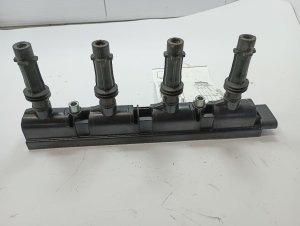
- Failed Ignition Coil Pack 🔴 High Probability The single coil-on-plug cassette is a very common failure item on this engine. Oil leaks from a bad valve cover gasket often pool in the spark plug wells, saturating and swelling the coil boots, causing premature failure and misfires. In some cases, the electrical connector to the coil pack itself can fail due to fretting corrosion, causing a persistent misfire even with a new coil.
How to confirm: Since this engine uses a single coil pack for all cylinders, you cannot swap it to test. After confirming the spark plug is good, the coil pack is the next most likely culprit. Visually inspect the coil boots for oil saturation, swelling, or corrosion. Check the coil pack connector for a secure fit and clean contacts. A multimeter can be used to check secondary resistance between the spark plug terminals, which should be between 6,000 and 10,000 ohms.
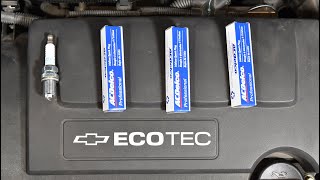
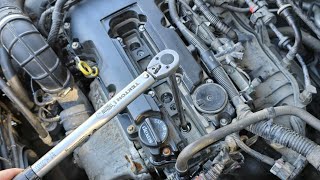
Typical fix: Replace the entire ignition coil pack assembly. 🎬 Watch: Step-by-step guide to replacing your spark plugs and coil pack. It is highly recommended to replace all four spark plugs at the same time. If the connector is damaged, it will need to be replaced with a pigtail kit.
Est. part cost: $50-$130 - Worn or Fouled Spark Plug 🔴 High Probability Spark plugs are a standard wear item, but the common PCV/valve cover issue on this engine causes oil to be forced into the spark plug tubes, fouling the plugs and causing a misfire in a specific cylinder.
How to confirm: Remove the ignition coil and inspect the spark plug for cylinder #3. Look for heavy carbon deposits, oil contamination, a cracked insulator, or a worn electrode. Compare its condition to the other plugs.
Typical fix: Replace all four spark plugs. The recommended gap is 0.028 inches. If oil is present, the valve cover and gasket must be replaced to prevent a repeat failure.
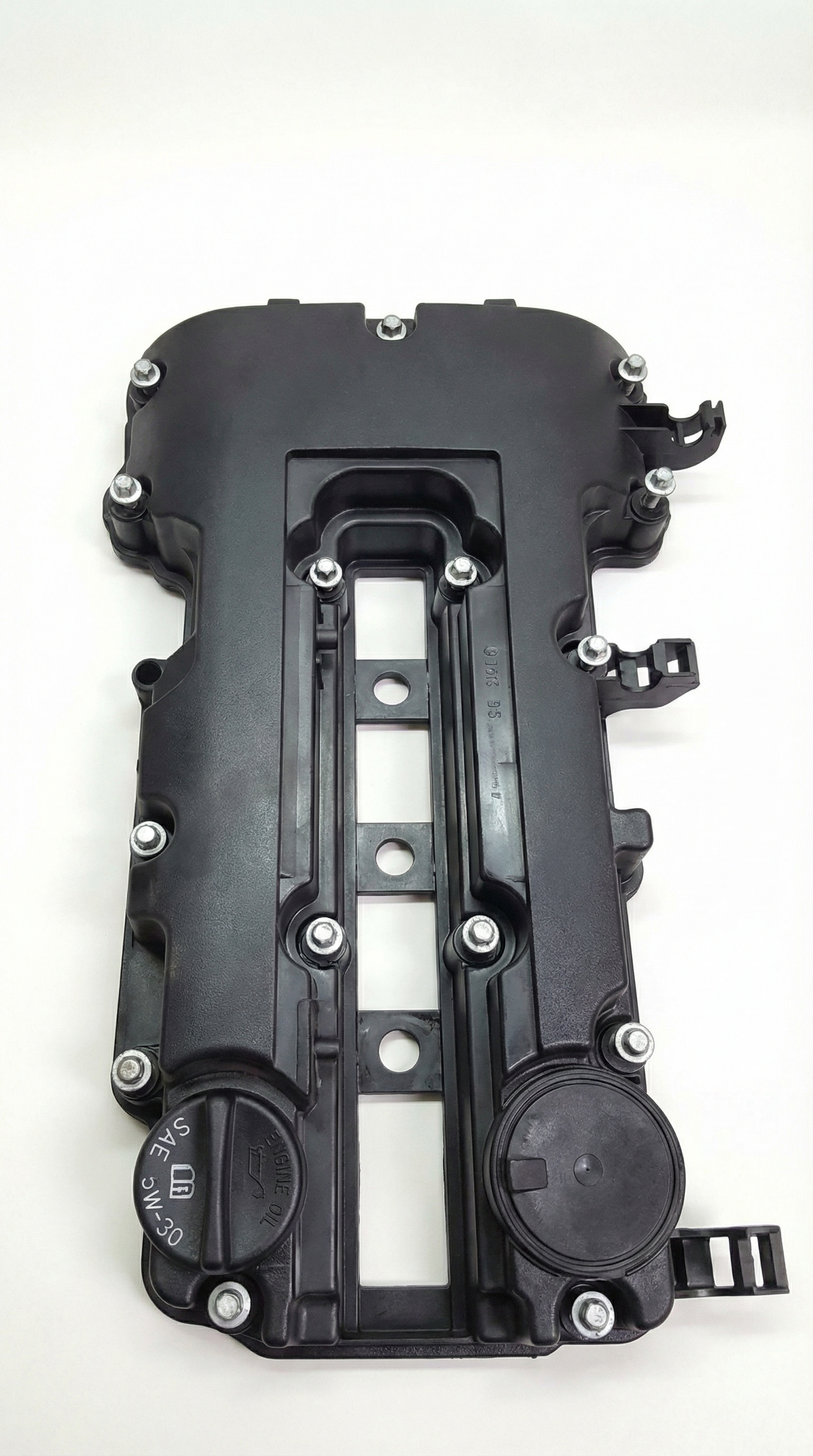
Est. part cost: $20-$50 - Failed Valve Cover & Integrated PCV Diaphragm 🟡 Medium Probability This is a notorious design flaw. A rubber diaphragm inside the valve cover tears, creating a large vacuum leak. This often happens because the check valve in the intake manifold fails first, allowing turbo boost pressure into the crankcase, which ruptures the diaphragm.
How to confirm: With the engine running, listen for a distinct hissing or whistling sound coming from the small circular cap on the valve cover. Another test is to remove the oil dipstick while the engine is running; if a loud sucking sound is heard and the idle changes, the PCV system has failed.
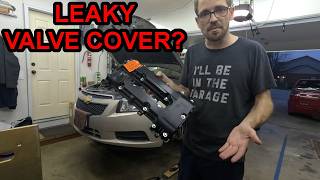
Typical fix: Replace the entire valve cover assembly, which includes a new integrated PCV diaphragm and gasket. 🎬 See how to replace the valve cover and fix PCV leaks. Before replacing, you MUST inspect the intake manifold port to ensure its internal check valve is still present.
Est. part cost: $60-$150 - Failed PCV Check Valve in Intake Manifold 🟡 Medium Probability This small, orange or red plastic check valve inside the intake manifold becomes brittle from heat and oil exposure, breaks, and gets ingested by the engine. Its absence allows boost pressure to destroy the PCV diaphragm in the valve cover, causing a chain reaction of failures.
How to confirm: Remove the PCV hose from the driver's side of the intake manifold. Use a light to look inside the port. If you see a small orange/red nipple with a cross shape, the valve is present. If you see an empty dark hole, the valve has failed.
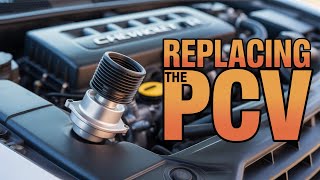
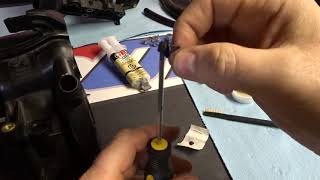
Typical fix: The official GM repair is to replace the entire intake manifold. A popular, more permanent DIY fix is to install an aftermarket external PCV check valve kit, which bypasses the faulty internal design. 🎬 Watch: How to install a permanent PCV bypass fix kit.
Est. part cost: $25 (Kit) - $250 (Manifold) - Clogged or Faulty Fuel Injector ⚪ Low Probability
How to confirm: After ruling out ignition and PCV issues, listen to the injector with a mechanic's stethoscope to confirm it's clicking. For a definitive test, swap the cylinder 3 injector with another cylinder (e.g., cylinder 2) and see if the misfire code changes to P0302. Resistance should be approximately 12 ohms.
Typical fix: Replace the faulty fuel injector.
Est. part cost: $40-$90
Rare But Worth Checking
- Low Engine Compression (Cracked Piston): As documented in GM TSB 19-NA-090, these 1.4L engines can suffer from broken piston ring lands, which causes low compression, excessive oil consumption, and persistent misfires. This is a serious mechanical failure requiring a compression and leak-down test to confirm. If cylinder walls are not scored, GM recommends replacing all four pistons and rings, not the entire engine.
- Coolant Contamination in Wiring: A failing thermostat housing, particularly aftermarket versions, can leak coolant into its integrated sensor connector. This coolant can wick through the wiring harness, causing shorts and erratic behavior, including potentially melting the ignition coil pack and causing misfires. Inspect the thermostat housing connector for any signs of green or crusty coolant residue.
Diagnosis Steps

- Read the trouble codes with an OBD-II scanner and confirm P0303 is present. Note any other codes like P0171 or P1101.
- Visually inspect the engine bay for obvious issues like disconnected hoses or oil leaks around the valve cover.
- With the engine running, listen for a hissing/whistling sound from the valve cover, which confirms a ruptured PCV diaphragm. Also listen for a high-pitched chirp; if present, remove the oil dipstick to see if the noise stops, which would indicate a leaking crankshaft seal due to PCV pressure.
- Remove the ignition coil pack. Inspect the spark plug tube for cylinder 3 for any pooled oil. Oil indicates a failed valve cover gasket.
- Remove and inspect the spark plug from cylinder 3. Check for wear, damage, or fouling from oil or carbon. Replace all four if necessary.
- If the plugs are good, the ignition coil pack is the next most likely cause. Inspect its boots for swelling or oil damage and check the electrical connector for damage or corrosion.
- Remove the PCV hose from the intake manifold and inspect the port for the presence of the small orange check valve. If it's missing, this is the root cause of the PCV failure.
- If ignition and PCV systems check out, consider testing the fuel injector on cylinder 3. You can swap it with another cylinder to see if the misfire code follows the injector. Resistance can be checked and should be ~12 ohms.
- Inspect the electrical connector at the thermostat housing for any signs of coolant leakage, which could be shorting ignition components.
- If the misfire persists after addressing all of the above, perform an engine compression and leak-down test to check for internal mechanical problems like a cracked piston ring land.
Parts You'll Likely Need

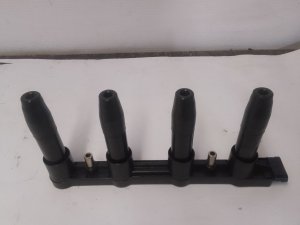
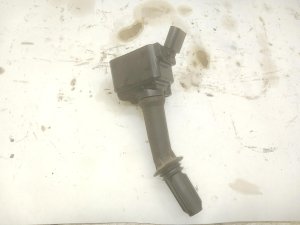
- Ignition Coil Pack
(OEM #55579072 (ACDelco D521C))— This is a high-failure item and a primary cause of misfires on the 1.4L Cruze engine, often damaged by oil leaks from the valve cover.
Trusted brands: ACDelco, Delphi, NGK
OEM price range: $90-$130
Aftermarket price range: $50-$80 - Engine Valve Cover
(OEM #25198874 (latest version is 25209141))— The integrated PCV diaphragm is a notorious failure point, causing vacuum leaks and misfires. GM has updated this part multiple times.
Trusted brands: ACDelco (GM Genuine), Dorman
OEM price range: $90-$150
Aftermarket price range: $60-$100 - Spark Plugs (Set of 4)
(OEM #25193473 (ACDelco 41-103))— Standard maintenance item and a common cause of single-cylinder misfires. Often fouled by oil from a failed valve cover.
Trusted brands: ACDelco, NGK
OEM price range: $30-$50
Aftermarket price range: $20-$40
Related Codes That Often Appear With This One
- P0300 — If the underlying cause, like a major vacuum leak from the PCV system, is severe enough, it can cause misfires on multiple/random cylinders, not just cylinder 3.
- P0171 — This code for 'System Too Lean' is very common alongside misfire codes on this engine. It's typically caused by the large, unmetered vacuum leak created when the PCV diaphragm in the valve cover ruptures.
- P1101 — Often appears with P0171. It indicates the measured airflow doesn't match expectations, a direct symptom of the large vacuum leak from a failed PCV system.
Technical Service Bulletins (TSBs) & Recalls
- TSB 19-NA-090: Details the condition of broken piston ring lands causing low compression, oil consumption, and misfire codes (P0300). It advises technicians to replace pistons and rings if cylinder walls are undamaged, rather than the whole engine.
- PIP5197L: A technical service bulletin that discusses the diagnosis of PCV system issues, including the intake manifold check valve and valve cover diaphragm, which are the root cause of many misfire codes.
- SB-10070046-0335: A summary document explaining the common PCV check valve failure inside the intake manifold on the 1.4L turbo engine and the resulting symptoms.
Platform-Specific Known Issues
- PCV System Failure Cascade: The most significant issue for this platform is the PCV failure sequence. It typically begins with the check valve in the intake manifold failing. This allows pressurized air from the turbo to enter the crankcase, which then ruptures the PCV diaphragm in the valve cover. This creates a vacuum leak (P0171) and pressurizes the crankcase, forcing oil past seals, into spark plug tubes, and fouling ignition components, leading to P0303.
- Cracked Piston Ring Lands: A known, though less common, major mechanical failure is cracked piston ring lands. This leads to a loss of compression in the affected cylinder, causing a persistent misfire that cannot be fixed with ignition or fuel system parts. Diagnosis requires a compression test. This issue is covered in GM TSB 19-NA-090.
Mechanic-Grade Diagnostic Values
- Fuel Injector Resistance — expected: ~12 Ohms. Failure: A reading that is significantly higher (open loop) or lower (shorted).
- Ignition Coil Primary Winding Resistance — expected: 0.4 - 2.0 Ohms. Failure: A reading outside this range indicates a fault in the primary coil circuit.
- Ignition Coil Secondary Winding Resistance — expected: 6,000 - 10,000 Ohms (6kΩ - 10kΩ). Failure: A reading outside this range, or an open circuit (OL), points to a failed secondary coil.
- Low-Side Fuel Pressure (Key On, Pump Primed) — expected: 50 - 94 PSI. Failure: Pressure below 50 PSI suggests a weak in-tank fuel pump or clogged filter.
- Long-Term Fuel Trim (LTFT) at Idle (with PCV leak) — expected: Close to 0% (+/- 5%). Failure: Stuck at a high positive value, often +25% or higher, indicating a major vacuum leak.
Hidden / Shadow Codes Worth Checking
- Mode 6 Misfire Counts: The ECM tracks misfire events for each cylinder even before they are frequent enough to set a P030x trouble code. Accessing Mode $06, Test ID $A2-$A7 (for a 4-cyl) will show these raw misfire counts. (see via An advanced OBD-II scan tool with Mode 6 capability or dealer software like GDS2.)
Scan Tool Commands That Help
- GDS2 (or advanced aftermarket scanner): Cylinder Power Balance Test — Use this when a P0303 is present to confirm cylinder 3 is not contributing power. The tool deactivates the cylinder's injector and measures the RPM drop. A small or no RPM drop from cylinder 3 compared to others confirms it's the source of the misfire, saving diagnostic time by not having to swap parts.
- GDS2 (or advanced aftermarket scanner): Misfire Graphic — To monitor real-time misfire counts per cylinder during a test drive under various load conditions. This is useful for diagnosing intermittent misfires that don't occur at idle.
Wiring & Ground Locations
- T8 Ignition Coil Connector — The 7-pin electrical connector that plugs directly into the top of the ignition coil pack assembly.. This connector is a known failure point. Per GM TSB 16-NA-015, fretting corrosion on the terminals can cause a poor connection, leading to intermittent stalling, hesitation, and misfires. The connector itself can fail before the coil pack.
- Engine Ground Strap — Typically runs from the engine block or transmission housing to the vehicle's chassis/frame rail.. A corroded or loose main engine ground strap can cause a host of intermittent electrical issues, including weak spark or erratic ignition coil operation, which can manifest as a misfire code for a single cylinder.
Real Owner Repair Stories
- CruzeTalk Forum Member (2012 Chevy Cruze 1.4L Turbo) — Persistent P0303 and P0300 codes, rough idle, hesitation.
❌ Tried (didn't work) Replaced spark plugs (twice), Replaced ignition coil pack, Replaced valve cover assembly, Cleaned fuel injectors
✅ What actually fixed it After all common ignition and PCV-related parts were replaced, a compression test revealed low compression in cylinder 3. A subsequent leak-down test confirmed a significant leak. Teardown of the engine revealed a cracked piston ring land on cylinder 3, a known but serious failure on this engine. The final fix was replacing all four pistons and rings. - NHTSA ODI #11417895 — An owner reported that after having a P0303 code fixed, the vehicle began emitting heavy smoke from the tailpipe, highlighting the high cost and frequency of repairs associated with this model.
"I Checked Everything" — The Actual Cause
- A common report for the P0171/P1101 codes that accompany P0303 is that a smoke test comes back clean. This is often because the leak is from the PCV diaphragm inside the valve cover, which may not show up with a low-pressure smoke test. The definitive test is to listen for a hiss or check for strong suction at the oil fill cap with the engine running, which confirms the internal diaphragm has ruptured.
OEM Part Supersession History
55573746→25198498, then 25198874, then 25209141 (or 25203036 in some catalogs)— Multiple revisions were made by GM to improve the durability of the integrated PCV diaphragm, which was prone to tearing.
Heads up: Always use the latest available part number to ensure you have the most robust design. Aftermarket repair kits for just the diaphragm exist but are not an official GM repair method.13355784 (Ignition Coil Connector Pigtail)→19300958 (per TSB 16-NA-015), now 19119634 / ACDelco PT3106— To provide a reliable service fix for fretting corrosion on the original connector terminals.
Model Year Variations Within This Range
- 2009-2016: The 1.4L Turbo engine is designated as either LUJ or LUV. The LUV is a slightly updated version but they share the same core architecture and are both susceptible to the same PCV and ignition issues.
- 2011-2012 vs 2013-2016: The 7-pin ignition coil connector housing design changed. Early models used a black connector with a large metal shield. Later models used a connector with a purple/magenta colored locking tab and no shield. The pinout and function remained the same, but the physical appearance differs.
Diagnostic Flowchart
Real Owner Stories
Aggregated from forums and TSBs cited above. Mileages and costs reflect what owners reported in those sources.
Chevrolet Cruze 1.4L Turbo
Symptoms: Experienced the dreaded P0303 cylinder 3 misfire code.
What fixed it: Successfully resolved the misfire by replacing the ignition coil pack and the spark plugs.
Source hint: CruzeTalk.com thread titled 'The dreaded P0303 code' (https://www.cruzetalk.com/threads/the-dreaded-p0303-code.242114/)
Chevrolet Cruze 1.4L Turbo
Symptoms: Triggered a P0303 Cylinder 3 Misfire code.
What fixed it: Replaced the spark plugs, the #3 fuel injector, and the ignition coil pack.
Source hint: Reddit r/cruze thread titled 'P0303 Cylinder 3 Misfire' (https://www.reddit.com/r/cruze/comments/vj3z3a/p0303_cylinder_3_misfire/)
Related OBD-II Codes
Frequently Asked Questions
Does TSB 19-NA-090 apply to my Cruze with a P0303 code?
Why do I hear a high-pitched chirping or whistling sound from my engine with this misfire?
Can I just replace the ignition coil for cylinder 3?
I found oil in my spark plug well. Do I just need a new valve cover gasket?
What is the PCV System Failure Cascade on the 1.4L Cruze?
How can I check if my intake manifold PCV check valve is bad?
Helpful Videos
We Have This Part in Stock

The information in this article is provided for general reference and educational purposes only. Vehicle specifications, procedures, and part compatibility can vary by production date, trim level, and region. Always consult your vehicle's factory service manual and verify part numbers before purchasing or performing repairs. Safety-critical components such as airbags, seat belts, and braking systems should be installed by a qualified professional.
- Chevrolet Cruze:
- 🎬 Helpful Videos
- 🛍️ Shop This Part
- What's Unique About the 2009-2016 Chevrolet Cruze
- Symptoms You May Notice
- Most Likely Causes
- Rare But Worth Checking
- Diagnosis Steps
- Parts You'll Likely Need
- Related Codes That Often Appear With This One
- Technical Service Bulletins (TSBs) & Recalls
- Platform-Specific Known Issues
- Mechanic-Grade Diagnostic Values
- Hidden / Shadow Codes Worth Checking
- Scan Tool Commands That Help
- Wiring & Ground Locations
- Real Owner Repair Stories
- "I Checked Everything" — The Actual Cause
- OEM Part Supersession History
- Model Year Variations Within This Range
- Diagnostic Flowchart
- Real Owner Stories
- Chevrolet Cruze 1.4L Turbo
- Chevrolet Cruze 1.4L Turbo
- Related OBD-II Codes
- Frequently Asked Questions
- 🎟️ Get 5% Off